Around one in three UK property sales falls through after an offer is accepted — and survey findings are among the most common triggers for buyers pulling out or renegotiating. That single statistic explains why a growing number of sellers are choosing to commission their own building survey before a property even reaches the market. Seller's pre-sale building surveys, widely known as vendor surveys, are reshaping how transparent and efficient the UK conveyancing process can be. This article examines whether vendor surveys genuinely accelerate sales, how they affect renegotiation risk, and how surveyors should structure reports that serve both the seller's and buyer's interests.
Key Takeaways
- A vendor survey is commissioned by the seller before listing and can be a Level 2 Home Survey or a Level 3 Building Survey, depending on the property's age and complexity.
- Proactively identifying defects allows sellers to repair issues, set realistic asking prices, and reduce the risk of late-stage buyer renegotiation.
- Once a defect is identified in a vendor survey, sellers have a legal obligation to disclose it — failure to do so can result in misrepresentation claims.
- Many buyers will still commission their own survey; a reliance letter from the surveyor can extend duty of care and increase buyer confidence in the vendor report.
- Vendor surveys are gaining mainstream support from RICS and the Home Buying and Selling Group as a tool for reducing transaction fall-through rates.
What Is a Vendor Survey and Why Are More UK Sellers Commissioning Them?
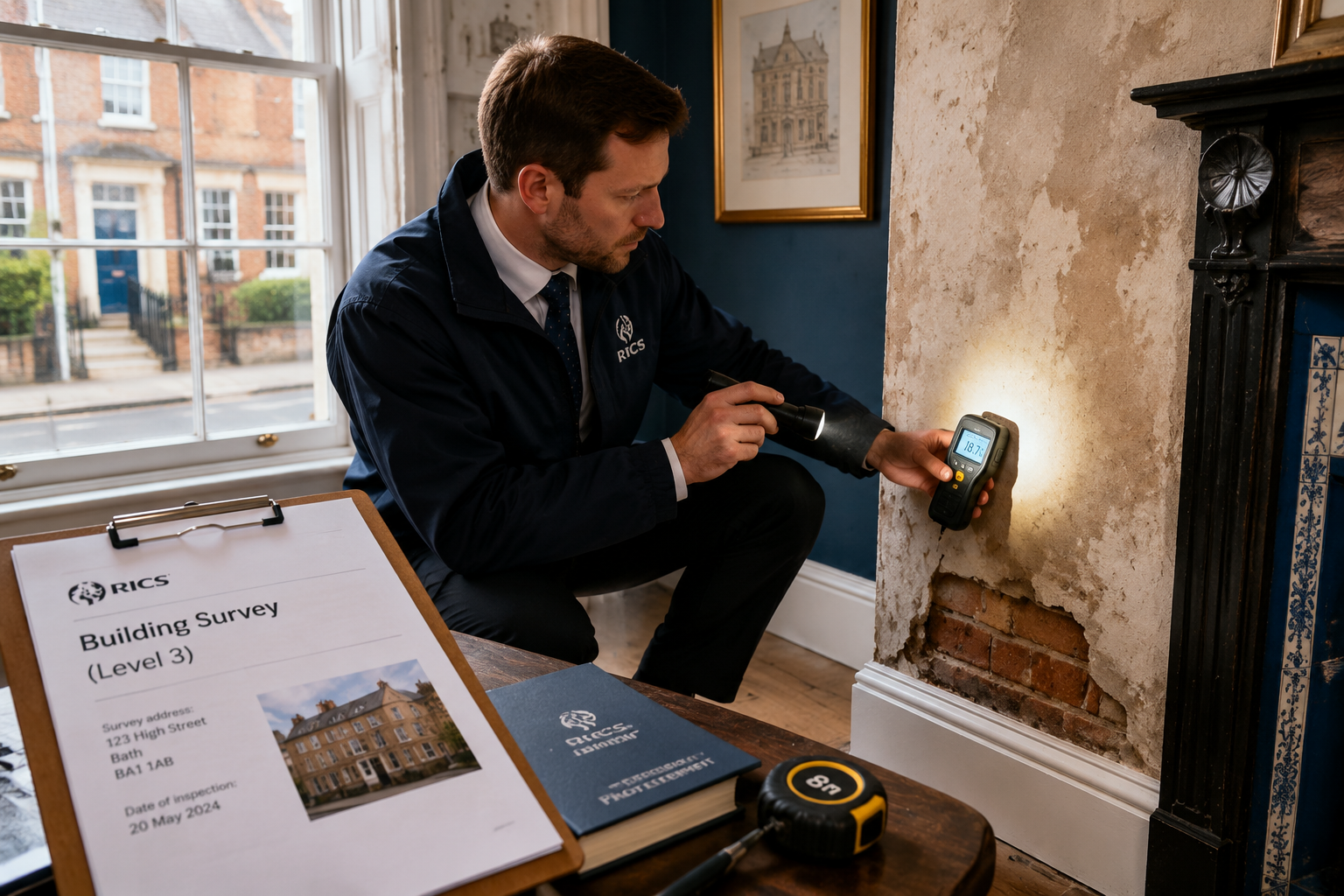
A vendor survey — also called a pre-sale building survey or seller's survey — is an independent property assessment carried out by a chartered surveyor on behalf of the seller, before the property is listed for sale [1]. Unlike a standard buyer's survey, which is commissioned after an offer is accepted, a vendor survey is completed at the marketing stage, giving the seller advance knowledge of the property's structural condition.
The concept is not new, but its adoption is accelerating. An increasing number of homeowners are commissioning vendor surveys to identify potential issues early, set realistic prices, and ensure smoother transactions [5]. Industry bodies including RICS and the Home Buying and Selling Group are actively advocating for upfront property information as a mechanism to reduce the UK's notoriously high fall-through rate [4].
Two survey levels are most commonly used in vendor surveys:
| Survey Level | Best Suited For | Typical Cost (2026) |
|---|---|---|
| Level 2 Home Survey (Homebuyer Report) | Modern or well-maintained properties | £400 – £700 |
| Level 3 Building Survey | Older, larger, or unusual properties | £600 – £1,500 |
Cost varies by property size, type, and location [2]. Sellers of Victorian terraces, converted properties, or homes with visible defects are generally advised to commission a Level 3 survey to avoid surprises. For a clearer picture of current pricing, reviewing a survey pricing guide can help sellers budget accurately before instructing a surveyor.
The choice between levels matters. A Level 2 report provides a condition rating for each element of the property, while a Level 3 RICS Building Survey goes deeper, offering detailed analysis of structure, materials, and defects — making it the more appropriate choice for pre-1920 stock or properties with known issues such as damp or subsidence.
The Core Benefits of Seller's Pre-Sale Building Surveys for Faster UK Property Sales
The primary argument for vendor surveys rests on a straightforward logic: problems discovered early are cheaper and less disruptive to resolve than those uncovered mid-transaction. Here is how that logic translates into tangible benefits.
Reducing Renegotiation Risk
One of the most damaging moments in a property sale is the post-survey renegotiation. A buyer receives a survey report highlighting defects, and suddenly the agreed price is back on the table. By conducting a pre-sale survey, sellers can identify and address defects before marketing, removing the ammunition buyers would otherwise use to chip the price [2].
"Conducting a pre-sale survey helps sellers prevent unexpected issues after accepting an offer, supports the asking price, and reduces the risk of buyers renegotiating due to unforeseen defects." [2]
This is particularly relevant for issues such as damp, which is frequently flagged in buyer surveys and can trigger significant price reductions. A professional damp survey carried out before listing allows the seller to either remediate the problem or price the property accordingly — both of which are preferable to a last-minute renegotiation.
Accelerating the Sales Chain
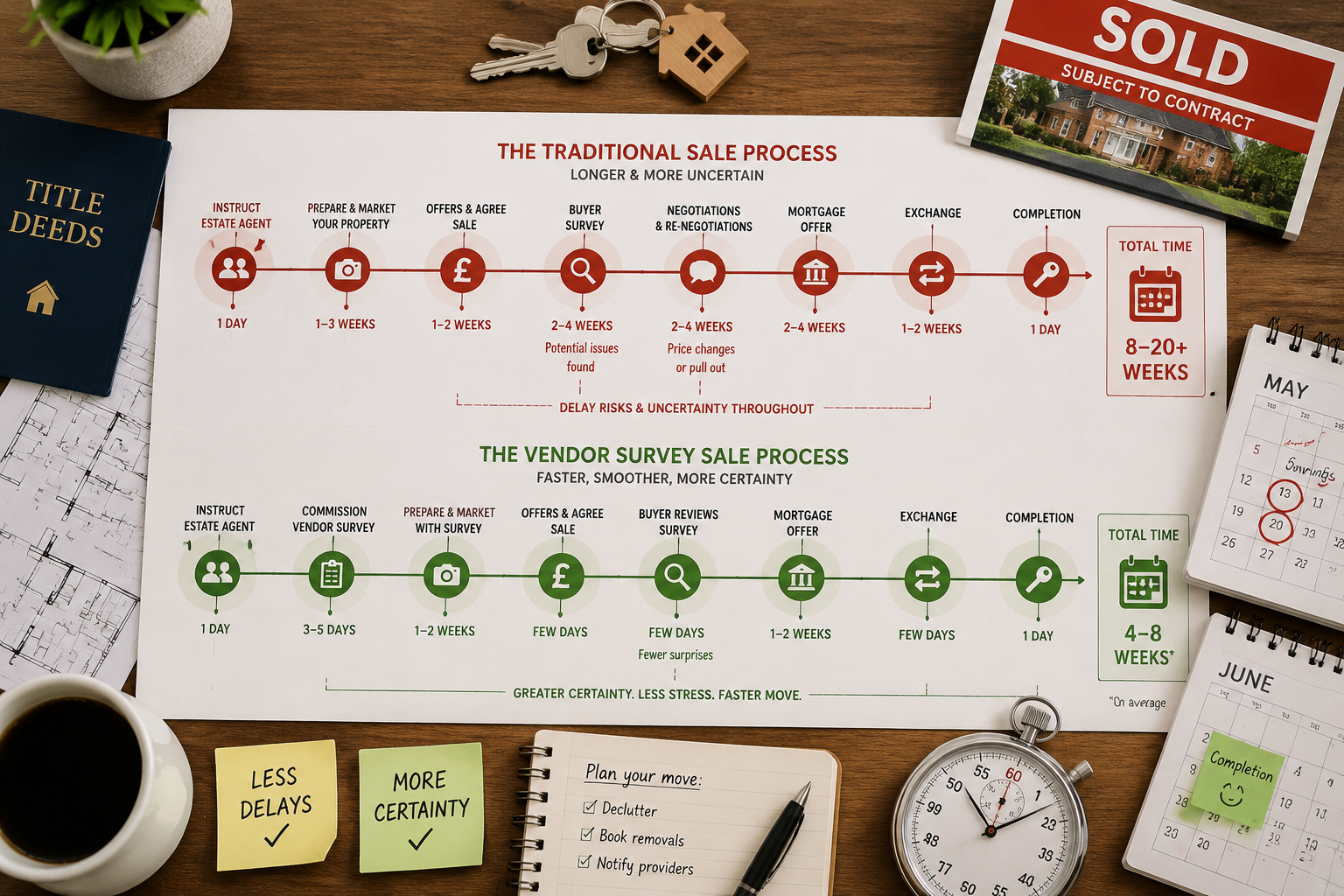
By addressing issues early, vendor surveys can streamline the sales process, reducing delays and increasing the likelihood of a successful transaction [3]. When a buyer receives a vendor survey alongside the marketing pack, the due diligence phase is compressed. Instead of waiting weeks for a buyer's surveyor to be instructed and a report to be produced, the structural condition of the property is already documented.
This has a meaningful impact on chain speed. In a typical UK sale, the period between offer acceptance and exchange of contracts averages 12 to 16 weeks. A significant portion of that time is consumed by survey-related queries, negotiations, and remedial investigations. A vendor survey, shared transparently at the outset, can cut that period materially.
Supporting the Asking Price
A clean or well-documented vendor survey acts as evidence that the asking price is justified. Buyers are less likely to challenge a price when a chartered surveyor has independently assessed the property and the seller has either resolved flagged issues or provided accurate cost estimates for any remaining works. This is especially valuable in slower markets where buyers have more leverage.
Building Buyer Confidence and Transparency
Providing a vendor survey can build trust with potential buyers, offering transparency about the property's condition and potentially reducing the need for buyers to commission their own surveys [3]. In a market where buyers are increasingly cautious, a seller who volunteers a professional survey signals confidence in the property and a willingness to transact openly.
Legal Obligations, Disclosure Risks, and the Duty of Care Question
Vendor surveys are not without complexity. Before commissioning one, sellers must understand the legal and practical implications of what the report may reveal.
The Disclosure Obligation
Once a seller obtains a survey, they are legally obligated to disclose any material defects identified [2]. This is a critical point. A seller cannot commission a vendor survey, discover a significant structural problem, and then choose not to mention it. Failure to disclose known material defects can lead to misrepresentation claims from buyers — a legal exposure that can be costly and time-consuming.
This means the vendor survey strategy only works if the seller is prepared to act on the findings. The three realistic responses to a flagged defect are:
- Repair the defect before marketing and include evidence of the remediation in the sales pack.
- Adjust the asking price to reflect the cost of the required works, with the survey report providing transparent justification.
- Disclose and provide quotes, allowing buyers to factor the cost into their offer with full information.
What is not an option is concealment. Sellers should approach a vendor survey with the mindset that the findings will become part of the property's public record for the purposes of the sale.
The Duty of Care and Reliance Letters
A surveyor's duty of care in a vendor survey extends to the seller who commissioned it [4]. This creates a complication for buyers who wish to rely on the report. Without a formal extension of that duty of care, a buyer has limited legal recourse against the surveyor if the report proves inaccurate.
The solution is a reliance letter — a document issued by the surveyor that formally extends their duty of care to the buyer. Many buyers and their solicitors will request this before accepting a vendor survey in lieu of their own [4]. Surveyors should factor the provision of reliance letters into their service offering when structuring vendor survey reports.
It is also worth noting that many buyers will still commission their own survey regardless of whether a vendor survey is available. This is particularly common for higher-value properties or where the buyer's lender requires an independent assessment. Sellers should not assume that providing a vendor survey eliminates the buyer's survey entirely — but it may reduce the scope of what the buyer's surveyor needs to investigate.
Specific Defect Investigations
Where a vendor survey identifies a particular concern — such as suspected subsidence, drainage issues, or structural movement — the seller may need to commission a more targeted investigation before marketing. A subsidence survey or a drainage survey can provide the detailed evidence needed to either reassure buyers or quantify the cost of remediation accurately. Including specialist reports alongside the vendor survey strengthens the property's information pack considerably.
How Surveyors Should Structure Vendor Survey Reports
The growing use of vendor surveys creates a specific challenge for chartered surveyors: the report must serve the seller who commissioned it while also being credible and useful to prospective buyers. These are not always identical interests, and surveyors must navigate that tension carefully.
Clarity and Accessibility
A vendor survey report that is dense with technical language may satisfy the seller's legal obligations but will do little to build buyer confidence. Reports should use plain English condition ratings — consistent with RICS Level 2 and Level 3 reporting conventions — and provide clear explanations of what each rating means in practical terms.
Effective vendor survey reports typically include:
- A clear executive summary of overall condition
- Condition ratings (1, 2, or 3) for each element, with explanations
- Photographs of all significant defects
- Cost estimates or cost ranges for recommended works
- A list of items requiring specialist investigation
- A statement of the surveyor's duty of care and instructions for obtaining a reliance letter
Photographs and Evidence
Visual evidence is particularly important in vendor surveys because the report may be reviewed by multiple prospective buyers who have not yet visited the property. High-quality photographs of defects, with annotations explaining their nature and significance, make the report far more useful as a marketing tool and reduce the number of follow-up queries.
Balancing Seller and Buyer Interests
Surveyors must maintain professional independence even when instructed by the seller. A vendor survey that appears to downplay defects will quickly lose credibility with buyers and their solicitors — and could expose the surveyor to professional liability. The RICS specific defect report format can be a useful complement to the main survey where particular elements require more detailed analysis.
Surveyors working in this space should also consider how their report interacts with the conveyancing process. Solicitors on both sides of the transaction will reference the survey findings when drafting and reviewing the contract pack, so clarity and precision in the report language reduces the risk of legal queries that slow the transaction.

Are Seller's Pre-Sale Building Surveys Worth It? Weighing the Evidence
The question of whether vendor surveys are worth the cost and effort depends on the property, the market conditions, and the seller's circumstances. The evidence points to a clear net benefit in most cases, but with important caveats.
Vendor surveys are most likely to add value when:
- The property is older (pre-1960) or has a complex construction history
- There are visible defects that buyers will inevitably query
- The seller wants to achieve a premium price and needs to justify it
- The local market is competitive and speed of transaction is a priority
- The seller has previously experienced a sale falling through due to survey findings
Vendor surveys are less likely to add significant value when:
- The property is a modern new-build with a builder's warranty (a snagging report may be more appropriate in that context)
- The seller is confident the property is in excellent condition and the buyer's survey is unlikely to flag anything material
- The buyer pool is likely to commission their own survey regardless
The cost of a Level 2 or Level 3 vendor survey — typically between £400 and £1,500 [2] — should be weighed against the potential cost of a failed sale. Estate agent fees, legal costs, and the time lost in a collapsed transaction routinely run into thousands of pounds. For most sellers of older or larger properties, the survey cost is a modest insurance premium against a far larger loss.
Conclusion
Seller's pre-sale building surveys represent one of the most practical tools available to UK homeowners who want to sell faster, with fewer surprises and less renegotiation. The vendor survey model works because it shifts the discovery of defects from the post-offer phase — where they are most damaging — to the pre-marketing phase, where the seller retains control and options.
The legal obligation to disclose identified defects means that vendor surveys are only suitable for sellers who are prepared to act transparently. But for those sellers, the benefits are clear: stronger buyer confidence, a defensible asking price, a compressed transaction timeline, and a reduced risk of fall-through.
Actionable next steps for sellers considering a vendor survey:
- Assess the age, condition, and complexity of the property to determine whether a Level 2 or Level 3 survey is appropriate.
- Instruct a RICS-accredited chartered surveyor with experience in pre-sale surveys and ask explicitly about the provision of reliance letters for buyers.
- Review the survey findings promptly and decide whether to remediate defects, adjust the asking price, or disclose with supporting quotes.
- Include the vendor survey, any specialist reports, and evidence of completed works in the property's information pack from day one of marketing.
- Work with a solicitor experienced in conveyancing to ensure the survey findings are correctly reflected in the contract documentation.
For sellers in the North West, London, and the South East, getting a quote from a chartered surveyor early in the selling process is the most straightforward first step toward a faster, more transparent sale.
References
[1] Rics Vendor Surveys – https://www.allcottassociates.co.uk/rics-surveys/rics-vendor-surveys/?utm_source=openai
[2] Pre Sale Survey For Sellers – https://www.propertypassport.uk/guides/pre-sale-survey-for-sellers?utm_source=openai
[3] Vendor Survey – https://www.watsons-property.co.uk/valuation-survey/survey-services/vendor-survey/?utm_source=openai
[4] Seller Commissioned Survey Explained – https://getpine.co.uk/guides/seller-commissioned-survey-explained?utm_source=openai
[5] Vendors Survey – https://www.richardrussellsurveyors.co.uk/vendors-survey?utm_source=openai