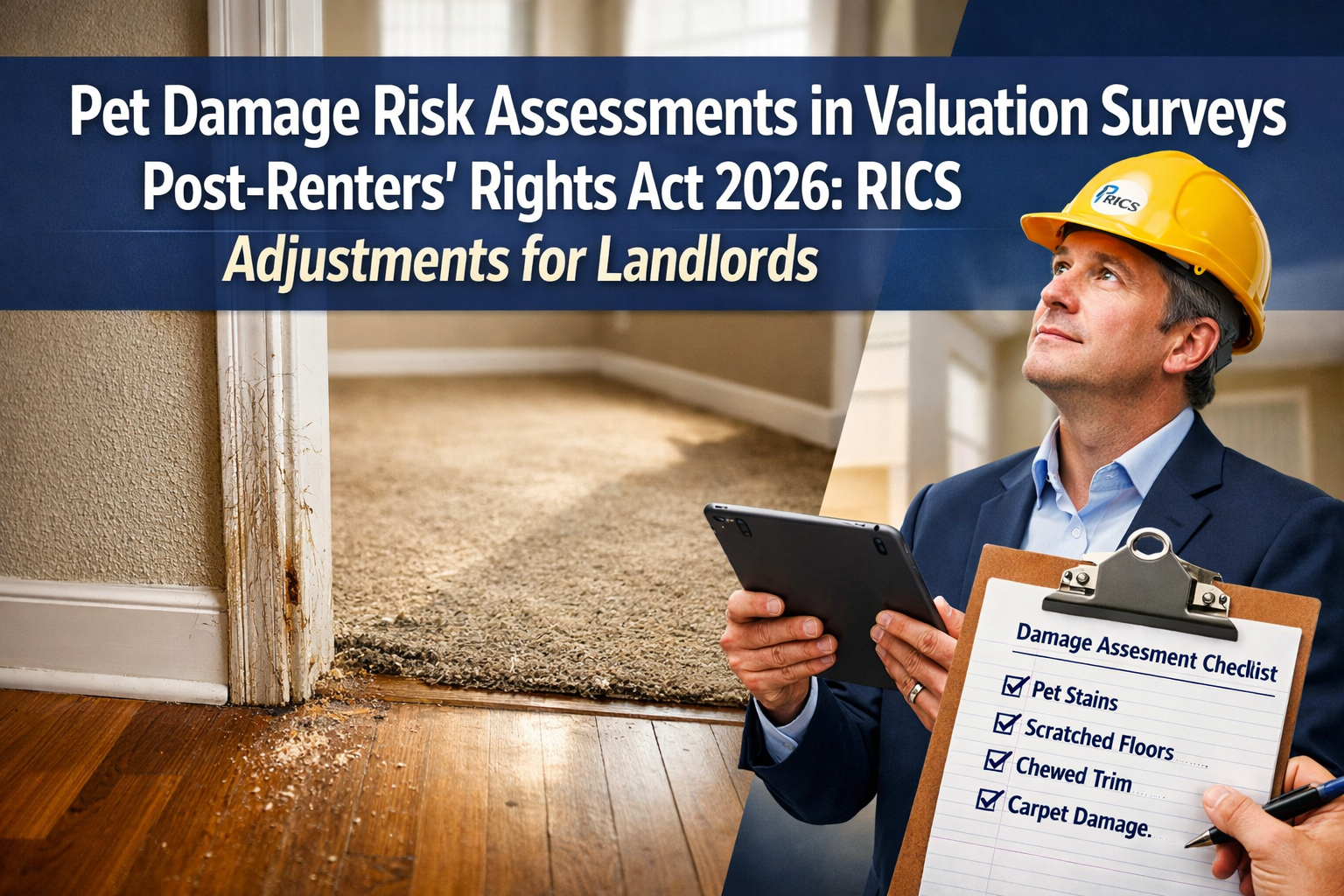
The Renters' Rights Act received Royal Assent on 27 October 2025, and Phase 1 implementation launches on 1 May 2026—just weeks away from fundamentally reshaping how landlords, tenants, and surveyors approach pet ownership in rental properties.[1][4] With 85.3% of landlords and agents reporting property damage caused by pets, the question is no longer whether pets will occupy rental properties, but how surveyors will accurately quantify the associated risks and value adjustments.[3] Pet Damage Risk Assessments in Valuation Surveys Post-Renters' Rights Act 2026: RICS Adjustments for Landlords represents a critical evolution in property valuation methodology, requiring chartered surveyors to develop standardized frameworks for assessing pet-related wear and tear while supporting landlords through evidence-based rental value adjustments and potential Section 8 possession proceedings.
Key Takeaways
- Phase 1 implementation on 1 May 2026 grants tenants the right to request pet ownership, with landlords unable to unreasonably refuse consent within 28 days[2][4]
- 85.3% of landlords report pet-related property damage, making systematic risk assessment essential for accurate property valuations[3]
- Pet insurance requirements can now be mandated under amended Tenant Fees Act provisions, providing landlords with damage cost protection[3][5]
- RICS guidance emphasizes case-by-case professional judgment rather than standardized pet damage deductions in valuation reports[1]
- Surveyors must document pet-related wear and tear systematically to support rental value adjustments and potential Section 8 possession disputes
Understanding the Renters' Rights Act 2026 Pet Provisions
The legislative landscape for rental properties has transformed dramatically with the Renters' Rights Act 2026. The Act replaces fixed-term Assured Shorthold Tenancies (ASTs) with monthly periodic tenancies, fundamentally altering the landlord-tenant dynamic and creating new challenges for property valuation professionals.[1]
Timeline and Implementation Phases
The implementation follows a structured three-phase approach:
| Phase | Implementation Date | Key Provisions |
|---|---|---|
| Phase 1 | 1 May 2026 | Tenant pet ownership rights, 28-day landlord response requirement |
| Phase 2 | 1 September 2026 | Transition of existing tenancies to new framework |
| Phase 3 | 2035-2037 | Decent Homes Standard application to private rental sector |
Phase 1, launching imminently, establishes the foundation for Pet Damage Risk Assessments in Valuation Surveys Post-Renters' Rights Act 2026: RICS Adjustments for Landlords by creating a presumption in favor of pet ownership.[4] Landlords can no longer implement blanket "no pets" policies but must assess each request individually, responding within 28 days.[2]
Landlord Rights and Protections
Despite the pro-tenant orientation of the legislation, landlords retain specific protections:
✅ Right to request pet insurance covering property damage as a condition of consent[3][5]
✅ Ability to refuse consent on reasonable grounds (property unsuitability, lease restrictions, specific pet concerns)
✅ Section 8 possession grounds for property damage exceeding normal wear and tear
✅ Documentation of pre-existing property condition through professional surveys
The amended Tenant Fees Act explicitly permits landlords to require tenants to obtain pet insurance, ensuring coverage for potential property damage costs.[3] This provision represents a critical risk mitigation tool that surveyors must factor into their valuation assessments.
For landlords seeking comprehensive property documentation before accepting pet requests, our RICS building surveys provide detailed condition reports that establish baseline property standards.
The Role of RICS Surveyors in Pet Damage Risk Assessments
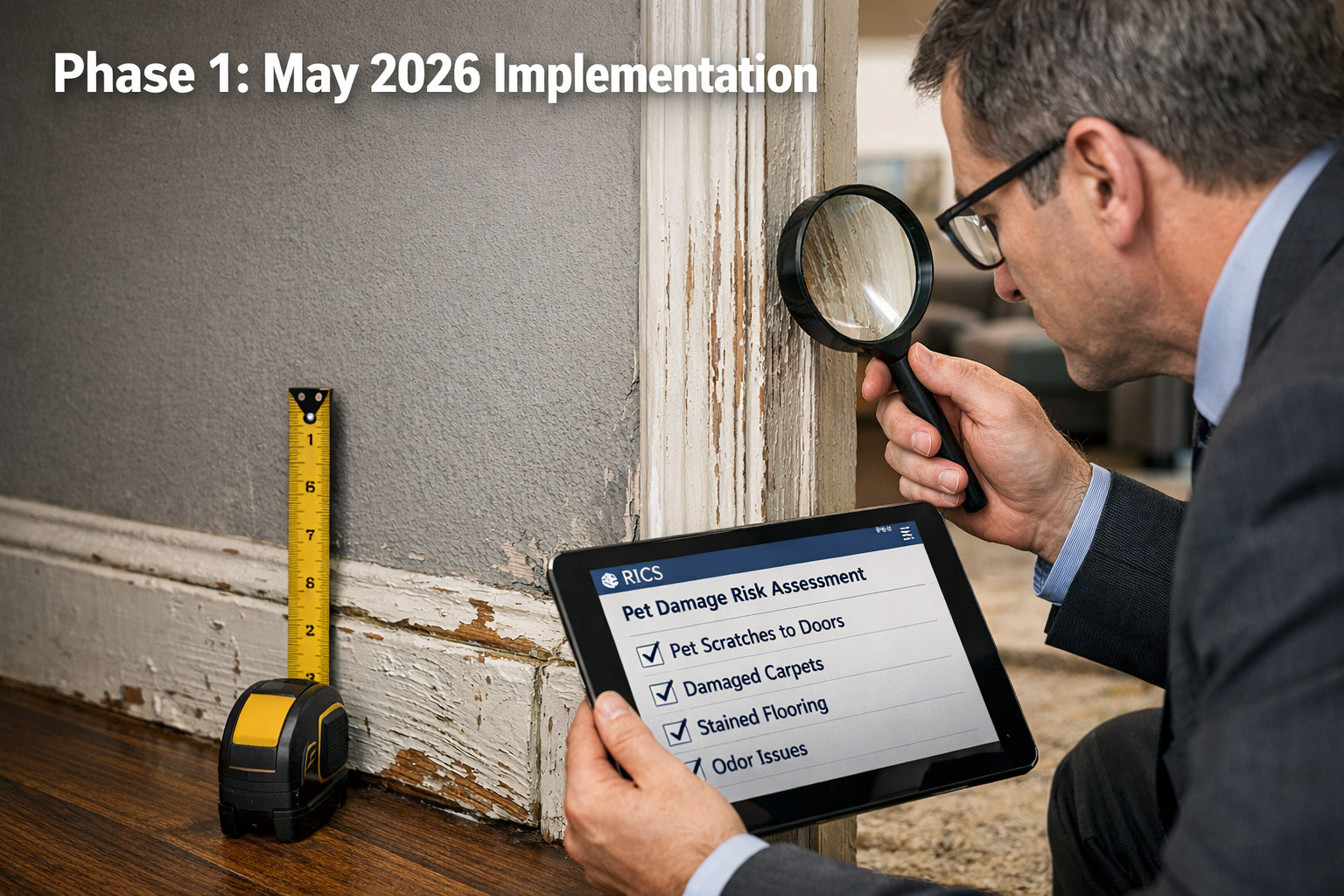
RICS chartered surveyors occupy a pivotal position in the new regulatory framework, bridging the gap between legislative requirements and practical property valuation. The Royal Institution of Chartered Surveyors has issued specific guidance emphasizing that Pet Damage Risk Assessments in Valuation Surveys Post-Renters' Rights Act 2026: RICS Adjustments for Landlords must be approached with professional judgment rather than formulaic deductions.[1]
Professional Standards and Valuation Principles
RICS Valuation – Global Standards (the "Red Book") requires valuers to:
🔍 Exercise case-by-case professional judgment regarding market impact
🔍 Evaluate the appropriateness of valuation assumptions, including vacant possession status
🔍 Consider material factors affecting property value and rental income potential
🔍 Document reasoning transparently in valuation reports
The guidance explicitly cautions against applying standardized pet damage risk adjustments without considering property-specific circumstances.[1] This approach recognizes that pet damage risk varies significantly based on property type, construction quality, tenant profile, and pet characteristics.
Establishing Baseline Property Condition
Before landlords accept pet ownership requests, establishing a comprehensive baseline property condition becomes essential. This documentation serves multiple purposes:
- Pre-tenancy condition evidence for future damage comparisons
- Rental value justification based on property quality and finish standards
- Insurance claim support should pet damage exceed policy thresholds
- Section 8 possession proceedings evidence demonstrating damage beyond normal wear and tear
A thorough RICS valuation conducted before pet occupancy provides landlords with professional documentation of property condition, finish quality, and market rental value. This baseline becomes invaluable when assessing whether subsequent damage constitutes reasonable wear and tear or actionable property deterioration.
Quantifying Pet Damage Risk Factors
Surveyors must develop systematic frameworks for assessing pet-related risk factors:
Property-Specific Factors:
- Flooring type and quality (hardwood vs. carpet vs. laminate)
- Door and trim material durability
- Garden/outdoor space availability and condition
- Property age and existing wear patterns
- Ventilation and odor control systems
Pet-Specific Factors:
- Animal size and breed characteristics
- Number of pets requested
- Indoor vs. outdoor pet designation
- Tenant's pet ownership history and references
- Pet insurance coverage limits and deductibles
Market Factors:
- Comparable rental properties accepting pets
- Local demand for pet-friendly rentals
- Premium or discount for pet-accepting properties
- Insurance cost implications for landlords
Our factors of valuation guide provides additional context on how various property characteristics influence market value and rental income potential.
Implementing Pet Damage Risk Assessments in Rental Valuations
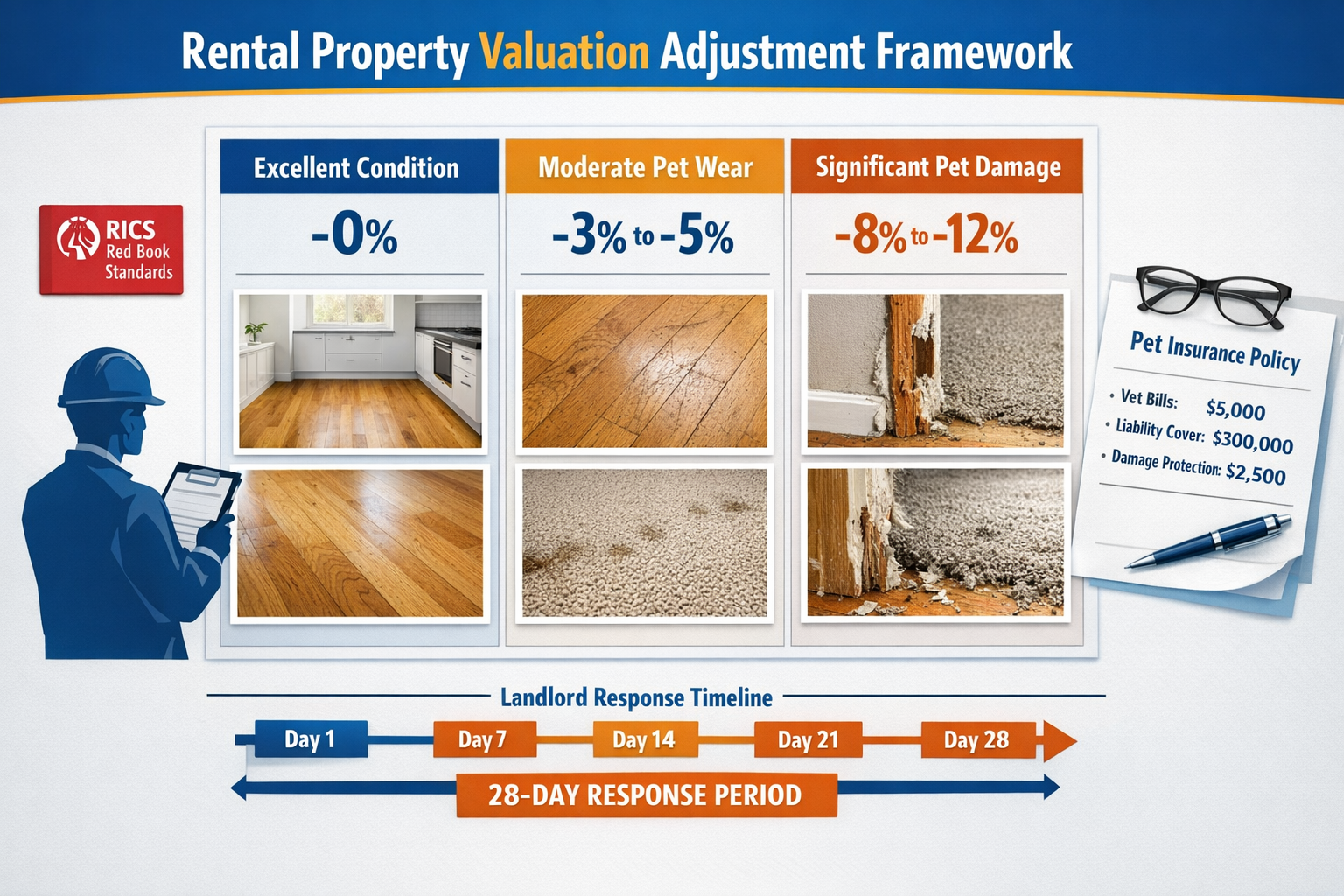
The practical implementation of Pet Damage Risk Assessments in Valuation Surveys Post-Renters' Rights Act 2026: RICS Adjustments for Landlords requires surveyors to develop structured methodologies that balance professional judgment with market evidence.
Rental Value Adjustment Frameworks
Based on property condition and pet damage risk profiles, surveyors can consider the following adjustment framework:
Minimal Risk Profile (0-2% rental value adjustment):
- Hardwood or tile flooring throughout
- Outdoor space available
- Single small pet with insurance
- Durable finishes and materials
- Recent property refurbishment
Moderate Risk Profile (3-5% rental value adjustment):
- Mixed flooring (some carpet)
- Limited outdoor access
- Medium-sized pet or multiple small pets
- Standard finish quality
- Adequate ventilation systems
Elevated Risk Profile (6-10% rental value adjustment):
- Extensive carpeting
- Upper-floor apartment with no outdoor space
- Large breed dog or multiple pets
- Older property with existing wear
- Limited insurance coverage
High Risk Profile (10%+ rental value adjustment or refusal):
- Premium finishes and materials
- Historical or listed property features
- Lease restrictions prohibiting pets
- Structural unsuitability for pets
- Inadequate insurance protection
These adjustments reflect market evidence from comparable properties and the statistical reality that 85.3% of landlords experience pet-related damage.[3] However, RICS guidance emphasizes that these ranges should inform rather than dictate professional judgment.[1]
Documentation Requirements for Valuation Reports
Comprehensive documentation distinguishes professional pet damage risk assessments from subjective estimates. Valuation reports should include:
📋 Photographic Evidence:
- All rooms and surfaces pre-tenancy
- Close-up details of flooring, doors, and trim
- Garden/outdoor space condition
- Existing wear or damage patterns
📋 Condition Descriptions:
- Material types and quality grades
- Age and expected remaining lifespan
- Existing defects or deterioration
- Maintenance and repair history
📋 Market Analysis:
- Comparable properties accepting pets
- Rental value premiums/discounts observed
- Local market demand for pet-friendly properties
- Insurance cost implications
📋 Risk Assessment Rationale:
- Specific pet characteristics considered
- Property suitability factors evaluated
- Insurance coverage adequacy
- Recommended rental value adjustment with justification
For properties requiring detailed condition documentation, our Level 3 building surveys provide the most comprehensive assessment of property condition, defects, and maintenance requirements.
Pet Insurance as Risk Mitigation
The amended Tenant Fees Act provisions allowing landlords to require pet insurance represent a significant risk mitigation tool.[3][5] Surveyors should evaluate insurance adequacy by considering:
Coverage Amount Adequacy:
- Minimum £5,000-£10,000 property damage coverage recommended
- Higher limits for premium properties or multiple pets
- Deductible amounts relative to typical damage costs
Policy Scope:
- Property damage specifically included
- Exclusions and limitations clearly understood
- Third-party liability coverage
- Policy renewal requirements and enforcement
Enforcement Mechanisms:
- Proof of insurance as tenancy condition
- Annual renewal verification requirements
- Landlord named as interested party
- Claims process and documentation requirements
When pet insurance provides adequate coverage, surveyors may justify reduced rental value adjustments, recognizing that financial risk has been partially transferred to the insurance provider.
Supporting Section 8 Possession Proceedings with Survey Evidence
The transition to periodic tenancies under the Renters' Rights Act 2026 eliminates Section 21 "no fault" evictions, making Section 8 possession grounds the primary mechanism for landlords to regain possession following significant property damage.[1] Pet Damage Risk Assessments in Valuation Surveys Post-Renters' Rights Act 2026: RICS Adjustments for Landlords must therefore provide evidence suitable for potential possession proceedings.
Section 8 Ground 12: Property Damage
Ground 12 allows possession where:
"The tenant or any person residing in or visiting the dwelling-house has caused serious deterioration of the dwelling-house or any of the common parts… by waste, neglect or default."
For pet-related damage to support Ground 12 proceedings, landlords must demonstrate:
✔️ Damage exceeds normal wear and tear for the tenancy duration
✔️ Baseline property condition was documented pre-tenancy
✔️ Damage is attributable to pets rather than general use
✔️ Financial impact on property value or rental potential is quantified
Surveyor's Role in Possession Proceedings
RICS chartered surveyors provide critical expert evidence in Section 8 proceedings:
Pre-Proceedings Assessment:
- Inspection and documentation of current property condition
- Comparison with baseline condition reports
- Quantification of damage extent and repair costs
- Professional opinion on whether damage constitutes "serious deterioration"
Expert Witness Testimony:
- Explanation of industry standards for wear and tear
- Differentiation between normal use and actionable damage
- Cost estimates for remediation and restoration
- Impact on property value and rental marketability
Valuation Impact Analysis:
- Reduction in market value due to damage
- Rental value diminution during repair period
- Long-term marketability concerns
- Comparable evidence from similar properties
Our expert witness services provide experienced chartered surveyors capable of delivering credible, professional testimony in possession proceedings and property disputes.
Distinguishing Normal Wear and Tear from Actionable Damage
The critical distinction in possession proceedings lies between acceptable wear and tear versus actionable property damage:
Normal Wear and Tear (Pet-Related):
- Minor scratches on door frames near handles
- Light carpet wear in high-traffic areas
- Faint odors removable through professional cleaning
- Minor garden wear from pet activity
- Superficial marks on walls or skirting boards
Actionable Property Damage:
- Deep scratches or gouges requiring door/trim replacement
- Extensive carpet damage with staining or odor penetration
- Persistent odors requiring subfloor treatment or replacement
- Structural damage to doors, walls, or fixtures
- Garden destruction requiring landscaping restoration
Professional surveyors apply industry knowledge and experience to make these distinctions, providing courts with objective assessments based on property standards and reasonable expectations for the tenancy duration.
Integrating Decent Homes Standard Considerations
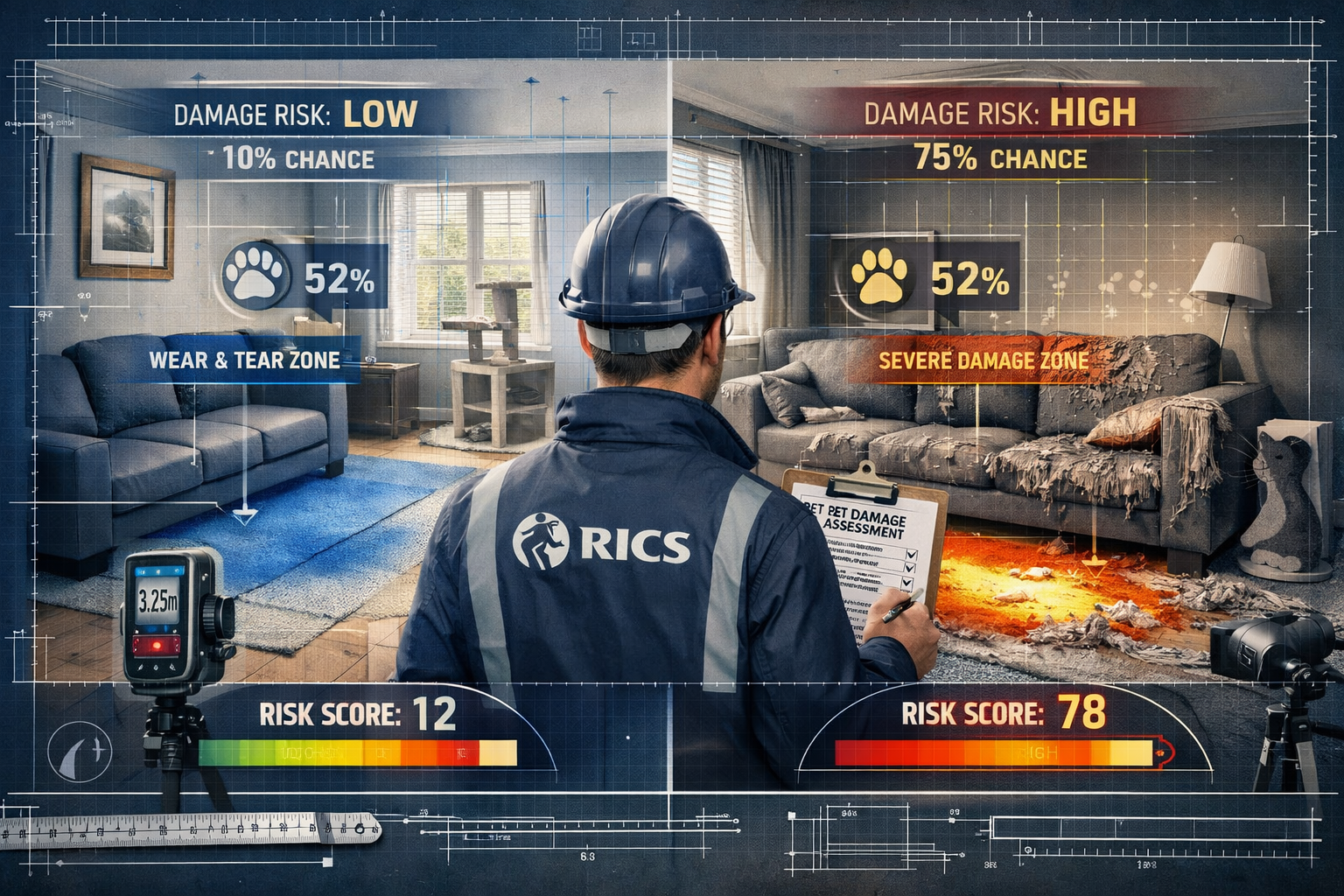
While Phase 3 implementation of the Decent Homes Standard for private rental properties won't occur until 2035-2037, forward-thinking landlords and surveyors should consider these future requirements when conducting Pet Damage Risk Assessments in Valuation Surveys Post-Renters' Rights Act 2026: RICS Adjustments for Landlords.[4]
Decent Homes Standard Core Requirements
The Decent Homes Standard establishes minimum property conditions:
🏠 Category 1 Hazards: Property must be free from serious hazards under the Housing Health and Safety Rating System (HHSRS)
🏠 Reasonable Repair: Property must be in a reasonable state of repair
🏠 Modern Facilities: Reasonably modern kitchen and bathroom facilities
🏠 Thermal Comfort: Effective heating and insulation
Pet-related damage that compromises these standards—such as flooring deterioration creating trip hazards, or odor penetration affecting indoor air quality—may trigger compliance obligations even before formal Phase 3 implementation.
Proactive Property Standards and Pet Policies
Landlords can position properties for long-term compliance by:
Selecting Durable Materials:
- Hardwood or luxury vinyl plank flooring instead of carpet
- Semi-gloss or satin paint finishes for easier cleaning
- Solid core doors resistant to scratching
- Sealed concrete or paving in outdoor areas
Implementing Preventive Maintenance:
- Regular professional cleaning schedules
- Periodic property inspections (with proper notice)
- Prompt repair of minor damage before escalation
- Documentation of maintenance activities
Establishing Clear Pet Policies:
- Written pet agreements specifying responsibilities
- Pet insurance verification procedures
- Damage reporting protocols
- Professional cleaning requirements at tenancy end
These proactive measures reduce long-term damage risk while positioning properties for future regulatory compliance. Our Manchester valuation report services help landlords understand current property standards and identify improvement opportunities.
Best Practices for Landlords and Property Managers
Navigating the new regulatory environment requires landlords to adopt systematic approaches to pet damage risk management:
Pre-Tenancy Procedures
1. Commission Professional Condition Survey
Engage RICS chartered surveyors to document comprehensive baseline property condition before accepting pet ownership requests. This investment provides essential evidence for future damage assessments and potential possession proceedings.
2. Conduct Pet-Specific Risk Assessment
Evaluate each pet request individually, considering:
- Property suitability for specific pet type and size
- Tenant's pet ownership history and references
- Adequacy of proposed insurance coverage
- Reasonable adjustments to rental terms
3. Implement Written Pet Agreements
Supplement tenancy agreements with specific pet addenda covering:
- Pet insurance requirements and verification
- Tenant responsibilities for damage and cleaning
- Inspection and maintenance protocols
- Consequences of policy violations
During Tenancy Management
4. Conduct Periodic Inspections
Schedule regular property inspections (with proper notice) to identify emerging damage early. Prompt intervention prevents minor issues from escalating into serious deterioration requiring possession proceedings.
5. Document Maintenance and Repairs
Maintain comprehensive records of:
- Inspection findings and photographs
- Maintenance activities and costs
- Tenant communications regarding property condition
- Insurance claims and resolutions
6. Verify Ongoing Insurance Coverage
Implement annual verification of pet insurance coverage, ensuring policies remain current and adequate throughout the tenancy.
End-of-Tenancy Procedures
7. Commission Professional Damage Assessment
Engage the same surveyor who conducted the baseline assessment to evaluate end-of-tenancy condition, providing direct comparison with pre-tenancy standards.
8. Differentiate Wear from Damage
Apply professional judgment to distinguish normal wear and tear from actionable damage, considering:
- Tenancy duration and expected wear patterns
- Property age and condition at tenancy start
- Maintenance history during tenancy
- Industry standards for reasonable wear
9. Quantify Financial Impact
Document repair costs, rental value impact during remediation, and any long-term marketability concerns resulting from pet-related damage.
For landlords managing multiple properties, our RICS Home Survey services provide scalable inspection solutions suitable for portfolio management.
Market Implications and Investment Considerations
The Renters' Rights Act 2026 fundamentally alters the risk-return profile for residential property investment, with implications for property valuations, rental yields, and portfolio strategies.
Rental Market Dynamics
The presumption favoring pet ownership creates several market effects:
Increased Demand for Pet-Friendly Properties:
Properties marketed as pet-friendly may command premium rents in markets with limited pet-accepting inventory. Surveyors should analyze local market data to identify whether pet acceptance represents a competitive advantage or standard expectation.
Differentiated Property Standards:
Properties with durable, pet-resistant finishes and outdoor space may achieve higher valuations and rental yields compared to properties with premium but fragile finishes unsuitable for pet occupancy.
Insurance Cost Implications:
Landlord insurance premiums may increase to reflect elevated pet-related damage risk, affecting net rental yields and property investment returns.
Portfolio Strategy Considerations
Property investors should evaluate portfolio composition in light of new pet ownership rights:
Property Type Suitability:
- Ground-floor units with gardens: High pet suitability, potential rental premium
- Upper-floor apartments: Moderate pet suitability, may require rental adjustments
- Premium/luxury properties: Lower pet suitability, potential value protection through selective pet policies
Refurbishment Priorities:
- Replace carpeting with hardwood or luxury vinyl plank
- Upgrade to durable paint finishes and materials
- Enhance outdoor spaces to accommodate pets
- Improve ventilation systems for odor control
Valuation Methodology Adjustments:
Investors should work with RICS chartered surveyors to incorporate pet damage risk into investment valuations, adjusting projected rental income and maintenance costs to reflect realistic operating conditions under the new regulatory framework.
Our RICS valuation surveyor services provide investors with professional property valuations incorporating market conditions, regulatory requirements, and risk factors affecting investment returns.
Technology and Innovation in Pet Damage Assessment
Emerging technologies offer opportunities to enhance the accuracy and efficiency of Pet Damage Risk Assessments in Valuation Surveys Post-Renters' Rights Act 2026: RICS Adjustments for Landlords:
Digital Documentation Tools
360-Degree Photography:
Comprehensive visual documentation of property condition using 360-degree cameras creates immersive records suitable for baseline comparisons and dispute resolution.
Drone Surveys:
For properties with significant outdoor space, drone surveys provide aerial documentation of garden condition and boundary features that may be affected by pet activity.
Mobile Inspection Apps:
Specialized software enables surveyors to create structured inspection reports with integrated photography, annotations, and damage quantification directly from mobile devices.
Predictive Analytics
Machine Learning Models:
Analysis of historical pet damage data can identify risk factors and patterns, enabling more accurate rental value adjustments based on property characteristics and pet profiles.
Comparative Market Analysis:
Automated systems can identify comparable properties accepting pets, analyzing rental premiums or discounts to inform valuation adjustments.
Remote Monitoring Technologies
Smart Home Sensors:
Environmental sensors monitoring humidity, temperature, and air quality can provide early warning of conditions associated with pet-related property deterioration.
Periodic Video Inspections:
With tenant consent, periodic video walkthroughs can supplement in-person inspections, identifying emerging issues requiring attention.
Conclusion
The implementation of the Renters' Rights Act 2026 on 1 May 2026 fundamentally transforms the landscape for Pet Damage Risk Assessments in Valuation Surveys Post-Renters' Rights Act 2026: RICS Adjustments for Landlords. With 85.3% of landlords experiencing pet-related property damage, systematic risk assessment frameworks become essential for protecting property values while complying with new tenant rights.[3]
RICS chartered surveyors occupy a critical position in this evolving regulatory environment, providing professional judgment that balances legislative requirements with practical property valuation principles. The guidance emphasizing case-by-case assessment rather than standardized deductions reflects the complexity of pet damage risk factors and the diversity of property types and tenant circumstances.[1]
Actionable Next Steps for Landlords
Immediate Actions (Before 1 May 2026):
- Commission comprehensive RICS building surveys to document current property condition
- Review and update tenancy agreements to incorporate pet insurance requirements
- Develop written pet policies and risk assessment procedures
- Evaluate property suitability for pet occupancy and identify necessary improvements
Short-Term Actions (May-September 2026):
5. Implement systematic pet request evaluation procedures
6. Establish relationships with RICS chartered surveyors for ongoing assessment needs
7. Review landlord insurance policies to ensure adequate pet damage coverage
8. Monitor market developments and rental value trends for pet-friendly properties
Long-Term Strategic Actions:
9. Plan property refurbishments prioritizing durable, pet-resistant materials
10. Develop portfolio strategies reflecting differentiated pet suitability
11. Prepare for Phase 3 Decent Homes Standard implementation
12. Build evidence-based frameworks for rental value adjustments and possession proceedings
The transition to a presumption favoring pet ownership represents a fundamental shift in landlord-tenant relationships and property valuation methodology. Landlords who proactively engage with these changes—commissioning professional surveys, implementing systematic risk assessment procedures, and working with experienced RICS chartered surveyors—will be best positioned to protect property values while complying with new legislative requirements.
For comprehensive property assessment services supporting Pet Damage Risk Assessments in Valuation Surveys Post-Renters' Rights Act 2026: RICS Adjustments for Landlords, contact our team of experienced RICS chartered surveyors to discuss your specific property needs and valuation requirements.
References
[1] Consideration Of Implications Of Renters Rights Act On Valuation – https://www.rics.org/news-insights/consideration-of-implications-of-renters-rights-act-on-valuation
[2] Renters Rights Bill New Pet Rules For Tenants And Landlords – https://anthonygold.co.uk/insight/renters-rights-bill-new-pet-rules-for-tenants-and-landlords/
[3] Renting With Pets Survey – https://www.propertymark.co.uk/resource/renting-with-pets-survey.html
[4] Renters Rights Act Implementation Roadmap – https://ww3.rics.org/uk/en/journals/property-journal/renters-rights-act-implementation-roadmap.html
[5] Your Questions Answered Pet Provisions In The Renters Rights Bill – https://www.cluttons.com/insights/blog/your-questions-answered-pet-provisions-in-the-renters-rights-bill/