
The April 2026 RICS survey recorded landlord instructions at a net balance of -17%, even as tenant demand held at a positive net balance of +14% — a gap that tells a clear story: a meaningful volume of former rental stock is being repositioned for sale rather than re-let [2]. For surveyors, conveyancers, and buyers active in England's residential market, this shift creates a specific and underappreciated challenge. Party Wall Surveys for Ex-Rental Properties Entering the Sales Market: 2026 Opportunities in England sit at the intersection of legislative change, structural disclosure obligations, and buyer due diligence — and getting them right can mean the difference between a smooth transaction and a costly legal dispute.
Key Takeaways
- The Renters' Rights Act 2026, effective from May 2026, has accelerated the release of ex-rental stock onto the sales market, increasing demand for party wall surveys during conveyancing.
- Party wall agreements and awards are not registered with the Land Registry, meaning buyers of ex-rental properties may inherit undisclosed structural works without knowing it [3].
- The Party Wall etc. Act 1996 imposes strict notice requirements and dispute resolution procedures that apply regardless of whether a property was previously tenanted [5].
- A Schedule of Condition prepared before any notifiable works is one of the most important protective documents for both sellers and buyers of ex-rental properties.
- Surveyors who understand the interplay between the Renters' Rights Act 2026 and party wall obligations are well-placed to serve a growing client base in 2026.
Why Ex-Rental Properties Create Distinct Party Wall Challenges
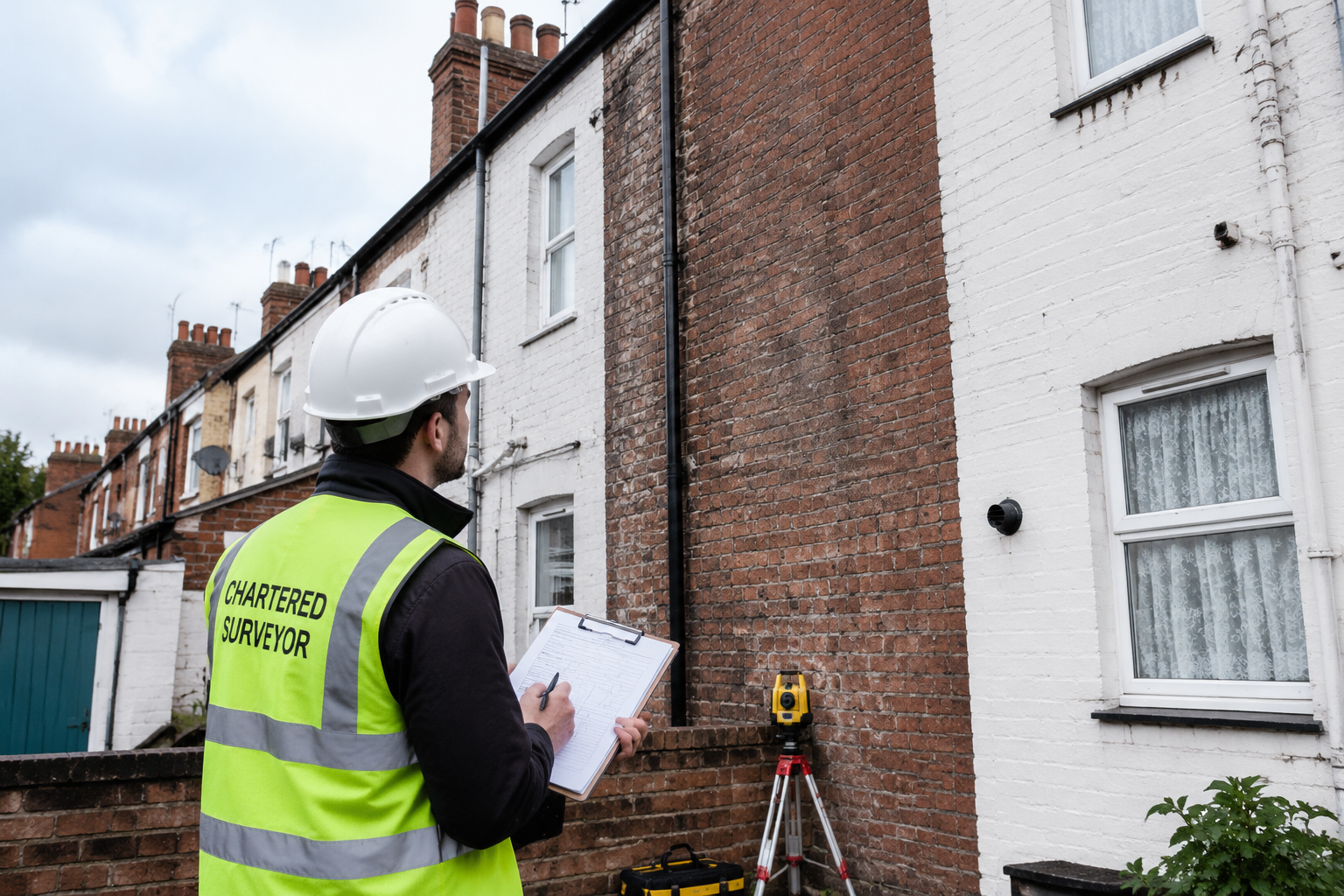
When a landlord decides to exit the private rental sector and sell, the property enters the market carrying a history that owner-occupied homes rarely share. Rental properties are frequently altered — loft conversions added to maximise rental yield, extensions built to accommodate more tenants, insulation retrofitted to meet energy performance requirements. Each of these works may have triggered obligations under the Party Wall etc. Act 1996 [5].
The core problem is transparency. Party wall agreements and awards are private documents. They are not lodged with the Land Registry and do not surface in standard conveyancing searches [3]. A buyer purchasing an ex-rental property has no automatic way of knowing whether a previous landlord served the correct notices before excavating near a boundary, raising a shared wall, or cutting into a party structure for steel beams. If those works were carried out without proper party wall procedures, the liability does not disappear at the point of sale — it transfers.
Three common scenarios where ex-rental properties carry hidden party wall risk:
| Scenario | Typical Work Involved | Party Wall Act Section |
|---|---|---|
| Loft conversion added for HMO use | Cutting into party wall for steel beams | Section 2 |
| Rear extension for additional living space | Excavation within 3 or 6 metres of neighbour's foundations | Section 6 |
| Insulation retrofit to meet EPC requirements | Works to or through a party wall | Section 2 |
For buyers, understanding these scenarios is essential before exchange. For sellers, proactively addressing them can prevent a sale from collapsing during the conveyancing process. A Schedule of Condition prepared at the time of any notifiable works provides the clearest evidence of the pre-works state of adjoining properties — and its absence is itself a red flag.
The Renters' Rights Act 2026 and Its Effect on Party Wall Surveys for Ex-Rental Properties Entering the Sales Market
The Renters' Rights Act 2026, which came into force on 1 May 2026, abolished Section 21 no-fault evictions and converted all assured shorthold tenancies into assured periodic tenancies [1]. The practical consequence for landlords considering structural works — extensions, loft conversions, or significant repairs — is that vacating a property to carry out those works has become considerably more difficult. Landlords can no longer serve a Section 21 notice to clear a property ahead of construction.
This legislative shift has produced two distinct effects on the party wall survey market:
First, some landlords who had planned renovation works before selling are now choosing to sell the property in its current condition rather than navigate the complexity of working around protected tenants. This accelerates the volume of ex-rental stock entering the market with unresolved or undocumented party wall histories.
Second, landlords who do proceed with works while tenants remain in occupation face a more complex party wall process. Serving party wall notices, managing surveyor access, and executing a Party Wall Award all become harder when tenants have enhanced rights to remain and to refuse or limit access [1]. Surveyors advising landlord clients in 2026 must factor tenant protection obligations into their timeline and risk assessments.
"Landlords are advised to engage with party wall surveyors early in the planning process to ensure compliance and minimize potential disputes — particularly given the new tenant protections introduced in 2026." [1]
For buyers, this environment means that ex-rental properties coming to market in 2026 are more likely than in previous years to have deferred maintenance, incomplete party wall documentation, or works carried out without the correct notices. A RICS Level 3 Building Survey is strongly recommended for any ex-rental property that shares a wall, boundary, or structural element with a neighbouring building.
Understanding the Party Wall etc. Act 1996: Core Obligations for Sellers and Buyers
The Party Wall etc. Act 1996 provides a statutory framework for preventing and resolving disputes related to party walls, boundary walls, and excavations near neighbouring buildings [5]. Its obligations apply to the building owner — the person carrying out the works — and they do not expire simply because the property changes hands.
What Works Require a Party Wall Notice
The Act covers a wide range of common residential works [5]:
- Repairing, cutting into, or raising a party wall
- Inserting a damp-proof course through a party wall
- Underpinning a party wall or a building near a boundary
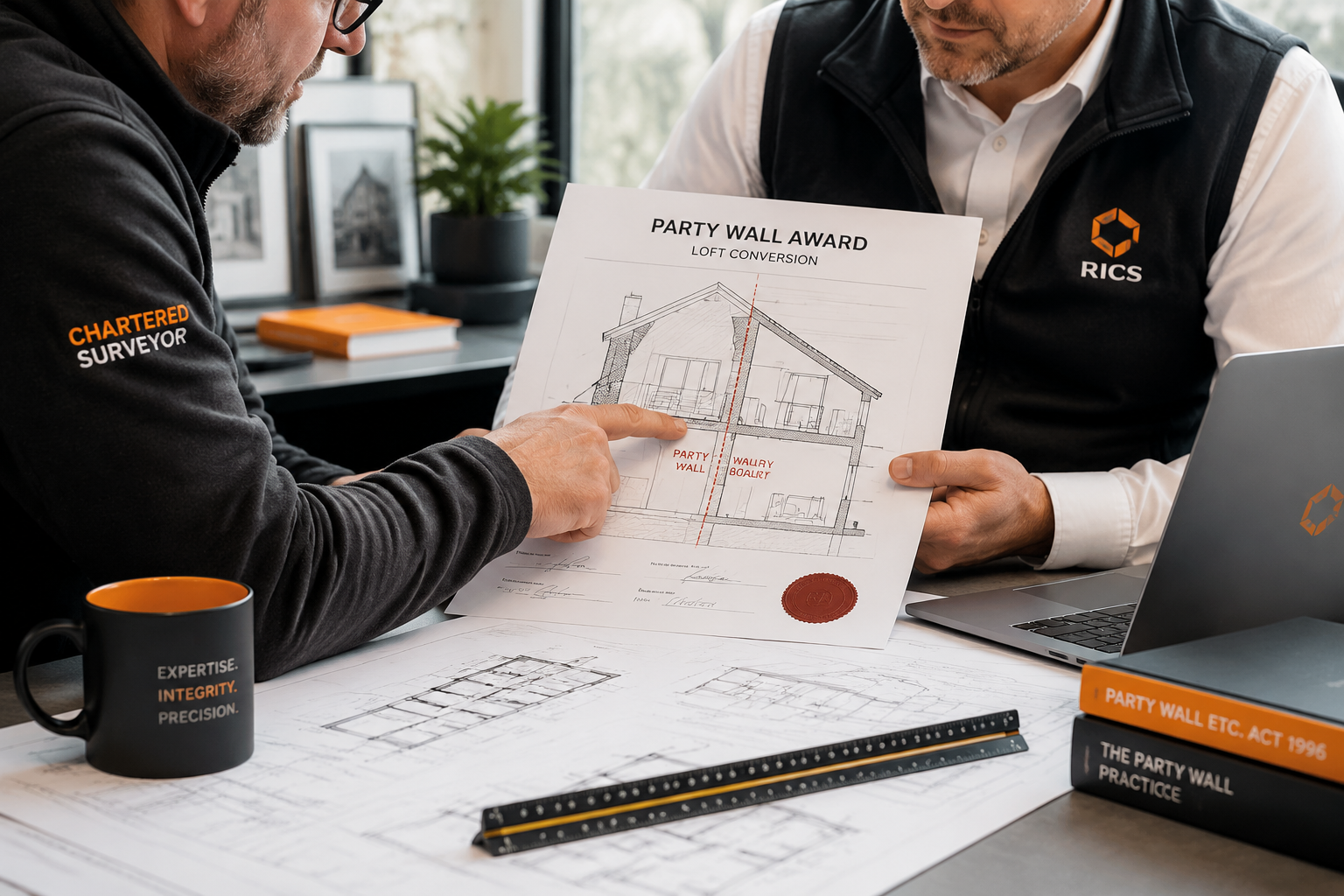
- Cutting into a party wall to bear beams (common in loft conversions)
- Excavating within 3 metres of a neighbouring building where the excavation goes deeper than the neighbour's foundations (see the 3-metre rule)
- Building a new wall on or astride the boundary line
Notice Periods That Apply
Notice requirements vary by the type of work involved [6]:
- Section 1 (new boundary wall): One month's notice
- Section 2 (works to existing party walls): Two months' notice
- Section 6 (excavations near neighbouring buildings): One month's notice
If an adjoining owner does not respond within 14 days of receiving a notice, or formally dissents, a dispute is deemed to have arisen. At that point, both parties must appoint a surveyor — or agree on a single agreed surveyor — to produce a Party Wall Award that governs how the works proceed [7].
A recent High Court decision confirmed that the Act does not apply in the absence of a notice, which creates a practical difficulty: where a previous owner carried out notifiable works without serving notice, there is no Award in place, and the rights and protections the Act would have provided are effectively absent [4]. For a buyer inheriting this situation, the risk is real and largely unquantifiable without a thorough survey.
The Registration Gap and Its Consequences for Buyers
Because party wall agreements are not registered anywhere centrally [3], the only reliable way for a buyer to identify whether previous works were carried out correctly is through:
- Direct enquiry of the seller via property information forms
- Inspection of the property by a qualified surveyor
- Review of any documents held by the seller or their solicitor
If a seller cannot produce party wall notices, consents, or an Award relating to works that clearly affected a shared wall or boundary, buyers should treat this as a material gap. Understanding what happens if you do not have a party wall agreement is essential context for any buyer's solicitor.
Party Wall Surveys for Ex-Rental Properties Entering the Sales Market: Practical Steps for 2026

The 2026 sales market in England presents a genuine opportunity for surveyors, but capturing it requires a clear service offering tailored to the specific needs of ex-rental property transactions. The following steps represent best practice for all parties involved.
For Sellers (Former Landlords)
Conduct a pre-sale party wall audit. Before listing, commission a surveyor to review any works carried out during the rental period. Identify which works were notifiable under the Act and whether the correct procedures were followed. Where gaps exist, take legal advice on how to disclose them accurately.
Locate and collate all party wall documentation. This includes original notices served, consents received, any Party Wall Awards, and — critically — any Schedule of Condition reports prepared before works commenced. Providing this documentation upfront reduces the risk of buyer enquiries stalling the transaction.
Address outstanding disputes proactively. If a party wall dispute was never formally resolved, it may still be live. Resolving it before marketing the property is far preferable to disclosing an active dispute to prospective buyers.
For Buyers
Commission a Level 3 Building Survey for any ex-rental property sharing a party wall. A standard mortgage valuation will not identify party wall defects or documentation gaps. A full structural survey will.
Ask specific questions on the property information form. Buyers' solicitors should ask sellers to confirm whether any works were carried out that required party wall notices, and to provide copies of all relevant documentation.
Understand the implications of shared structures. Issues such as party wall insulation or shared chimneys can carry ongoing maintenance obligations that are not always obvious from a visual inspection.
Check whether any neighbour is currently carrying out works. If an adjoining owner is mid-works at the time of purchase, the buyer steps into the seller's position as the adjoining owner. Understanding the status of any live party wall process is essential before exchange.
For Surveyors
The volume of ex-rental stock entering the market in 2026 creates a clear commercial opportunity. Surveyors who can offer a combined service — incorporating a party wall overview alongside a structural survey — are well-positioned to serve both seller and buyer clients. Where works were carried out without notices, surveyors can advise on retrospective documentation strategies and help parties understand their legal exposure.
The April 2026 RICS data also highlights that geopolitical volatility is influencing party wall risk assessments for developer projects [2]. For surveyors working with developers who are converting ex-rental blocks or HMO properties for individual sale, this adds another layer of complexity to the risk assessment process.
Geopolitical and Market Context: Why 2026 Is a Pivotal Year
The convergence of legislative, economic, and market forces in 2026 makes this an unusually active period for party wall survey demand. Three factors stand out:
Legislative pressure from the Renters' Rights Act 2026 is pushing landlords to sell rather than renovate, increasing the supply of ex-rental properties with complex structural histories [1].
RICS market data confirms that landlord instructions are falling while buyer enquiries are improving — a combination that increases transaction volumes and, with them, the need for pre-sale survey activity [2].
The party wall registration gap means that as this stock moves through conveyancing, the absence of documentation will generate survey instructions, legal queries, and in some cases formal disputes that require surveyor involvement [3].
For surveyors, solicitors, and buyers, understanding the full picture — from the Act's notice requirements to the practical implications of the Renters' Rights Act 2026 — is not optional. It is the foundation of a competent transaction.
Conclusion
Party Wall Surveys for Ex-Rental Properties Entering the Sales Market: 2026 Opportunities in England represent one of the most clearly defined growth areas in the residential surveying sector this year. The combination of the Renters' Rights Act 2026 driving ex-rental stock to market, the structural complexity that rental properties often carry, and the absence of any central registration system for party wall agreements creates a situation where professional surveying input is not merely helpful — it is essential.
Actionable next steps for each stakeholder:
- Former landlords selling in 2026: Commission a pre-sale party wall audit and gather all documentation before instructing an estate agent. Transparency at the outset protects the sale price and prevents transaction delays.
- Buyers of ex-rental properties: Insist on a Level 3 Building Survey, ask pointed questions about party wall history, and understand what shared structures may mean for future maintenance obligations.
- Conveyancers: Build party wall disclosure questions into standard property information form reviews for any property with a shared wall, boundary, or structural element.
- Surveyors: Position combined party wall and structural survey services to capture the growing ex-rental market, and stay current on the interplay between the Renters' Rights Act 2026 and party wall obligations.
The window for proactive engagement is open. The market data, the legislative backdrop, and the structural realities of England's ex-rental housing stock all point in the same direction: thorough, early, and expert party wall survey work is the single most effective way to protect all parties in these transactions.
References
[1] Party Wall Surveys Under Renters Rights Act 2026 Managing Landlord Extensions With New Tenant Protections – https://kingstonsurveyors.com/party-wall-surveys-under-renters-rights-act-2026-managing-landlord-extensions-with-new-tenant-protections/?utm_source=openai
[2] Geopolitical Volatility In April 2026 Rics Surveys Party Wall Risk Adjustments For Developer Projects – https://kingstonsurveyors.com/geopolitical-volatility-in-april-2026-rics-surveys-party-wall-risk-adjustments-for-developer-projects/?utm_source=openai
[3] Where Are Party Wall Agreements Registered – https://partywalldiy.com/guides/where-are-party-wall-agreements-registered?utm_source=openai
[4] Is The Party Wall Act Now Obsolete – https://ww3.rics.org/uk/en/journals/built-environment-journal/is-the-party-wall-act-now-obsolete-.html?utm_source=openai
[5] The Party Wall Etc Act 1996 Explanatory Booklet – https://www.gov.uk/government/publications/preventing-and-resolving-disputes-in-relation-to-party-walls/the-party-wall-etc-act-1996-explanatory-booklet?utm_source=openai
[6] partywallspecialists – https://partywallspecialists.com/wp-json/wp/v2/posts/24226?utm_source=openai
[7] Party Wall Act 1996 – https://www.fairburnspartywall.co.uk/party-wall-act-1996?utm_source=openai