The Royal Institution of Chartered Surveyors (RICS) updated its Expert Witness standard in 2026 for the first time since 2014, establishing clearer duties to tribunals over clients and enhancing independence requirements[5]. This fundamental shift arrives precisely as the Draft Commonhold and Leasehold Reform Bill undergoes pre-legislative scrutiny, creating unprecedented complexity for expert witnesses preparing valuation evidence in leasehold reform disputes. Understanding Expert Witness Preparation for Leasehold Reform Disputes: Valuation Evidence Under 2026 Commonhold Shifts has become essential for property professionals navigating tribunal challenges in an environment where building safety regulations, energy efficiency standards, and evolving commonhold frameworks intersect.
Key Takeaways
- Updated RICS Expert Witness standards (2026) prioritize tribunal duties over client relationships, fundamentally changing how valuers prepare and present evidence
- Valuation methodology remains unresolved in the Draft Commonhold Bill, creating uncertainty for expert witnesses assessing transitional properties
- Building safety and EPC requirements add significant complexity to valuations in higher-risk buildings, requiring specialized technical knowledge
- 50% consent threshold changes necessitate robust professional advice frameworks for expert witnesses supporting leaseholder disputes
- RICS-compliant report structures must integrate Land Registry protocols and updated site survey standards to withstand tribunal scrutiny
Understanding the 2026 Legislative Landscape for Expert Witness Preparation
The Draft Commonhold and Leasehold Reform Bill, published on 27 January 2026, represents the most significant property tenure reform in decades[3]. For expert witnesses preparing valuation evidence, this legislative shift creates both opportunities and challenges that demand careful navigation.
The Consultation Timeline and Its Impact
The government consultation on banning new leasehold flats runs from 27 January to 24 April 2026[3], establishing an immediate deadline for professional input. This compressed timeline means expert witnesses must stay current with rapidly evolving guidance while preparing evidence for ongoing disputes. The Housing, Communities and Local Government Committee's pre-legislative scrutiny process continues to refine valuation protocols, meaning standards may shift during active tribunal cases.
Outstanding Valuation Methodology Questions
RICS has explicitly raised concerns that valuation methodology remains among the "outstanding and unanswered questions" in the Bill[1]. The legislation refers back to the Leasehold and Freehold Reform Act 2024, which still awaits further consultation and secondary legislation. For expert witnesses, this creates a challenging environment where:
- 📋 Established valuation precedents may not apply to transitional properties
- ⚖️ Tribunal expectations for methodology transparency have increased
- 🔍 Professional standards require explicit acknowledgment of methodology uncertainties
- 📊 Comparative evidence must account for properties at different reform stages
Professional Standards Consistency Challenges
Implementation challenges identified by RICS include ensuring consistent professional standards across managing agents, valuation, and dispute resolution activity[1]. Expert witnesses must navigate evolving professional benchmarks while maintaining the independence now explicitly required under updated RICS standards[5].
The intersection of these reforms with existing lease extension valuation frameworks creates particular complexity. Expert witnesses preparing evidence must demonstrate familiarity with both legacy valuation approaches and emerging commonhold methodologies.
Expert Witness Preparation for Leasehold Reform Disputes: Building Safety and Energy Efficiency Considerations
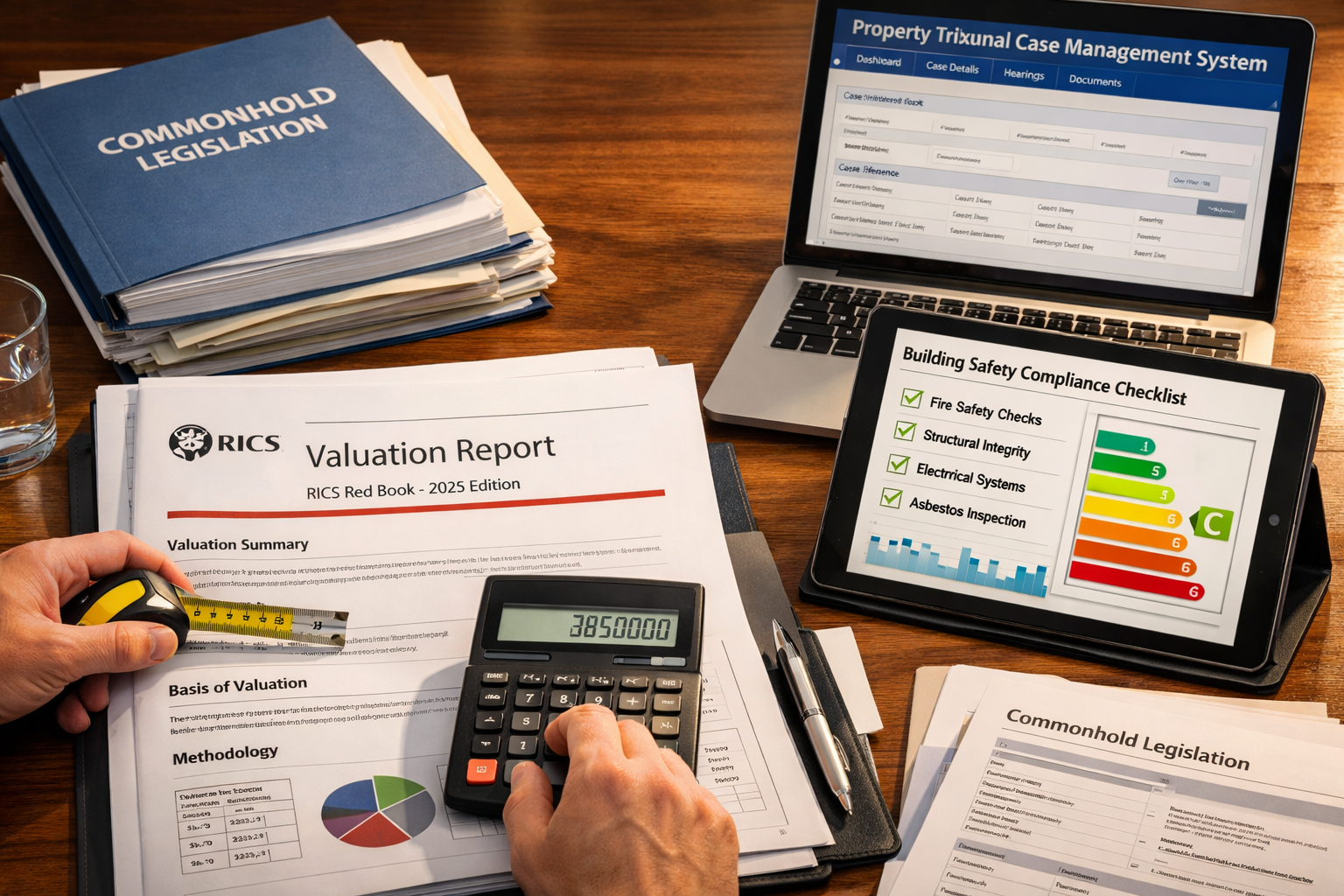
The 2026 commonhold reforms arrive alongside stringent building safety regulations and energy performance requirements, fundamentally changing how expert witnesses approach valuations in higher-risk buildings.
Building Safety Act Integration in Valuation Evidence
Expert witnesses preparing evidence for leasehold disputes involving buildings with historical safety concerns must now incorporate:
Safety-Related Valuation Adjustments:
| Factor | Valuation Impact | Evidence Requirements |
|---|---|---|
| Cladding remediation costs | 15-40% reduction | BSF application status, remediation timeline |
| Fire safety compliance gaps | 10-25% reduction | Fire Risk Assessment reports, compliance certificates |
| Structural safety concerns | 20-50% reduction | Structural engineer reports, remediation cost estimates |
| Building Safety Fund eligibility | Potential offset | Government funding confirmation, leaseholder liability analysis |
The 50% consent threshold changes in the Bill mean that leaseholders will need access to professional advice and appropriate insurance[1], particularly relevant for expert witnesses preparing dispute evidence in mixed-use or higher-risk buildings. Valuation evidence must explicitly address how safety liabilities distribute under both current leasehold arrangements and potential commonhold conversion.
Energy Performance Certificate (EPC) Requirements
Energy efficiency standards increasingly affect property valuations, with expert witnesses needing to demonstrate competence in:
- Current EPC ratings and their market impact on comparable properties
- Retrofit cost estimates for properties below minimum standards
- Future regulatory trajectory and its effect on long-term value projections
- Green financing availability and its influence on buyer demand
When preparing freehold valuation evidence, experts must distinguish between leasehold properties where improvement obligations remain unclear and freehold properties where responsibility is unambiguous.
Higher-Risk Building Classifications
Expert witnesses must understand how building risk classifications affect valuation evidence preparation:
Risk Category Framework:
🏢 Low Risk Buildings
- Below 11 meters height
- Standard valuation methodology applies
- Minimal safety-related adjustments
🏗️ Medium Risk Buildings
- 11-18 meters height
- Enhanced fire safety requirements
- Moderate valuation complexity
🏙️ High Risk Buildings
- Above 18 meters height
- Full Building Safety Act compliance
- Significant valuation adjustments required
For each category, expert witnesses must prepare evidence that addresses both current market conditions and anticipated changes under commonhold reforms. The RICS valuation surveyor standards require explicit consideration of these factors in tribunal evidence.
Practical Evidence Preparation Checklist
✅ Obtain complete building safety documentation including Fire Risk Assessments and structural reports
✅ Verify EPC ratings and identify any improvement obligations
✅ Research comparable properties with similar safety profiles
✅ Calculate remediation costs with supporting contractor quotations
✅ Assess insurance availability and premium impacts on value
✅ Document government funding applications and their status
✅ Analyze leaseholder liability distribution under current and proposed frameworks
RICS-Compliant Report Structures for Tribunal Challenges
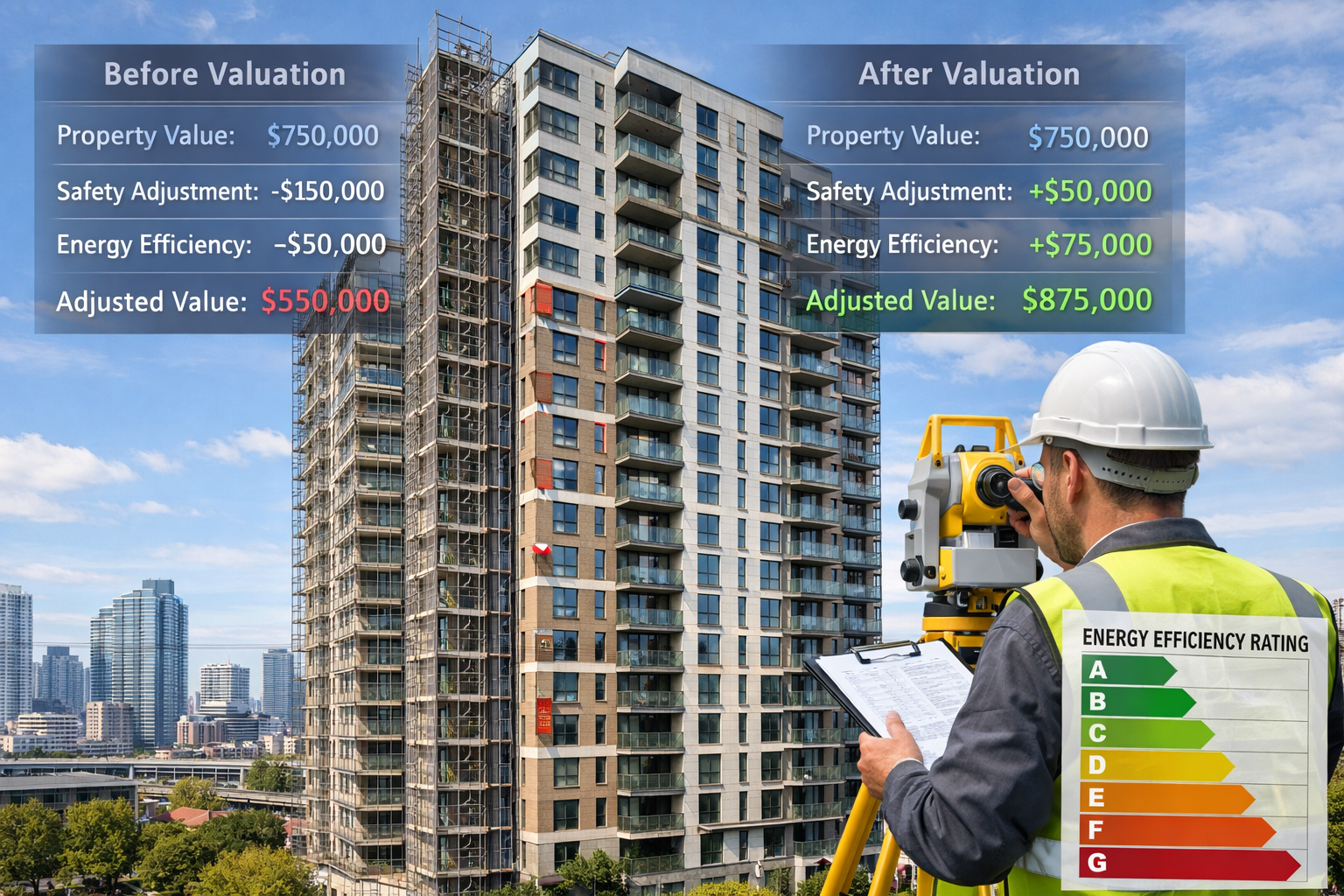
The updated RICS Expert Witness standards emphasize duties to tribunals over clients[5], fundamentally changing how expert witnesses structure valuation reports for leasehold reform disputes.
Core RICS Expert Witness Obligations (2026 Standards)
The enhanced independence requirements mean expert witnesses must:
Primary Duty Framework:
- Tribunal primacy – Overriding duty to assist the tribunal impartially
- Independence declaration – Explicit statement of no conflict between tribunal duty and client relationship
- Methodology transparency – Complete disclosure of valuation approaches and limitations
- Assumption clarity – Explicit statement of all assumptions underlying valuation conclusions
Essential Report Structure Components
A tribunal-ready expert witness report for leasehold reform disputes must include:
📑 Section 1: Expert Declaration and Qualifications
- RICS membership status and relevant experience
- Confirmation of understanding of expert witness duties
- Declaration of independence and absence of conflicts
- Statement of compliance with RICS Expert Witness standards
📊 Section 2: Instructions and Scope
- Precise statement of questions to be addressed
- Documents and information reviewed
- Site inspection details and limitations
- Assumptions and special assumptions explicitly stated
🏘️ Section 3: Property and Context Analysis
- Physical property description
- Tenure details and lease terms
- Building safety status and compliance position
- Energy performance and improvement obligations
- Commonhold conversion feasibility assessment
💰 Section 4: Valuation Methodology and Evidence
- Methodology selection and justification
- Comparable evidence with adjustment explanations
- Building safety impact quantification
- Reform scenario modeling (current leasehold vs. potential commonhold)
- Sensitivity analysis for key assumptions
📋 Section 5: Conclusions and Limitations
- Clear valuation conclusions
- Explicit statement of limitations and uncertainties
- Areas requiring further investigation or clarification
- Methodology uncertainties acknowledged
Integrating Updated RICS Site Survey Protocols
Valuation adjustments in the 2026 context involve updated RICS Site Survey Protocols and Land Registry Integration[2], which expert witnesses must incorporate into their evidence. This includes:
- Digital documentation standards – Photographic evidence requirements
- Measurement protocols – IPMS compliance for tribunal evidence
- Land Registry verification – Title document accuracy confirmation
- Comparable property verification – Enhanced due diligence on market evidence
When preparing evidence involving collective enfranchisement disputes, expert witnesses must demonstrate compliance with these enhanced protocols to withstand cross-examination.
Addressing Valuation Methodology Uncertainties
Given that RICS has identified valuation methodology as an "outstanding and unanswered question" in the Bill[1], expert witnesses must explicitly address this uncertainty in tribunal reports:
Recommended Approach:
"The valuation methodology applied in this report follows established RICS Red Book principles for leasehold property valuation. However, it should be noted that the Draft Commonhold and Leasehold Reform Bill 2026 has not yet finalized valuation methodology for transitional properties. This report therefore presents valuation conclusions under current legislative framework, with sensitivity analysis showing potential impacts under anticipated reform scenarios."
This transparent acknowledgment of methodology uncertainty demonstrates the enhanced independence required under 2026 RICS standards while providing tribunals with practical valuation guidance.
Cross-Examination Preparation Strategies
Expert witnesses must prepare for increasingly rigorous cross-examination on:
Building Safety Evidence:
- How remediation costs were calculated and verified
- Whether alternative remediation approaches were considered
- Impact of government funding on net leaseholder liability
- Comparable property selection in safety-affected markets
Commonhold Transition Assumptions:
- Basis for estimating conversion costs and timelines
- Management structure assumptions and their valuation impact
- Reserve fund adequacy under commonhold framework
- Consent threshold achievement probability
Methodology Selection:
- Why particular valuation approach was chosen
- Alternative methodologies considered and rejected
- Treatment of uncertainty in final conclusions
- Compliance with RICS guidance on methodology disclosure
Preparing robust responses to these anticipated challenges requires thorough documentation throughout the valuation process, supported by comprehensive working papers that demonstrate methodological rigor.
Leveraging Professional Valuation Standards
Expert witnesses should explicitly reference relevant professional standards in tribunal reports:
- RICS Red Book valuation compliance for market value assessments
- Factors of valuation framework for adjustment justification
- Building survey integration where structural concerns affect value
- Insurance valuation standards for buildings with safety liabilities
This explicit professional standards framework strengthens the credibility of expert evidence and demonstrates compliance with enhanced RICS Expert Witness requirements.
Practical Implementation: Sequential Approach to Expert Witness Preparation
RICS emphasizes the need for a clear and sequenced implementation timetable to avoid market uncertainty[1], which directly affects how expert witnesses prepare evidence during the transition period.
Phase 1: Initial Case Assessment (Weeks 1-2)
🔍 Preliminary Analysis:
- Review tribunal instructions and identify key valuation questions
- Assess whether property falls within reform scope
- Identify building safety and EPC compliance status
- Determine applicable valuation methodology framework
📋 Documentation Gathering:
- Obtain lease documents and title information
- Request building safety documentation (Fire Risk Assessments, EWS1 forms)
- Collect EPC certificates and improvement notices
- Gather service charge accounts and reserve fund details
Phase 2: Technical Investigation (Weeks 3-4)
🏗️ Site Inspection and Analysis:
- Conduct comprehensive property inspection following RICS protocols
- Document building safety features and deficiencies
- Photograph evidence of condition and compliance issues
- Interview managing agents regarding safety remediation plans
💡 Comparable Evidence Research:
- Identify comparable properties with similar characteristics
- Adjust for building safety status differences
- Consider commonhold properties where available
- Document market evidence supporting valuation conclusions
Phase 3: Valuation Analysis (Weeks 5-6)
📊 Methodology Application:
- Apply appropriate valuation methodology with full justification
- Calculate building safety adjustments with supporting evidence
- Model commonhold conversion scenarios where relevant
- Perform sensitivity analysis on key assumptions
✍️ Report Drafting:
- Prepare comprehensive expert witness report following RICS structure
- Include all required declarations and compliance statements
- Ensure methodology transparency and assumption clarity
- Prepare supporting appendices and working papers
Phase 4: Quality Review and Finalization (Week 7)
🔎 Internal Review Process:
- Verify all calculations and supporting evidence
- Confirm compliance with RICS Expert Witness standards
- Review for clarity and tribunal accessibility
- Prepare for anticipated cross-examination challenges
📤 Delivery and Follow-Up:
- Submit report within tribunal timelines
- Prepare supplementary evidence if required
- Coordinate with legal representatives on presentation strategy
- Maintain availability for tribunal questions
Navigating the Transition Period: Strategic Considerations
The period between Bill publication (January 2026) and full implementation presents unique challenges for expert witnesses preparing valuation evidence.
Understanding Sequential Implementation Impacts
The sequential implementation timetable advocated by RICS[1] means different reform elements will take effect at different times:
Anticipated Implementation Sequence:
Phase A (2026-2027): Ground rent reforms and enhanced leaseholder rights
Phase B (2027-2028): Simplified enfranchisement procedures
Phase C (2028-2029): Commonhold conversion framework operational
Phase D (2029+): Ban on new leasehold flats fully implemented
Expert witnesses must prepare evidence that accounts for which reform phase applies to the property in question, creating valuation scenarios that reflect the applicable regulatory environment.
Managing Professional Standards Evolution
With professional standards consistency across managing agents, valuers, and dispute resolution activity still being established[1], expert witnesses should:
- Monitor RICS guidance updates throughout case preparation
- Document methodology selection rationale with reference to available guidance at time of valuation
- Maintain professional development on emerging commonhold valuation approaches
- Engage with professional networks to share best practices during transition
Addressing Insurance and Risk Transfer Issues
The 50% consent threshold changes mean leaseholders will need appropriate insurance[1], creating new valuation considerations:
Insurance-Related Valuation Factors:
- 🏢 Building insurance availability for properties with safety defects
- 💼 Professional indemnity coverage for managing agents in commonhold structures
- 🛡️ Leaseholder liability insurance during remediation periods
- 📉 Market impact of insurance cost increases on property values
Expert witnesses should obtain insurance quotations and availability confirmations to support valuation adjustments for properties with elevated risk profiles.
Conclusion
Expert Witness Preparation for Leasehold Reform Disputes: Valuation Evidence Under 2026 Commonhold Shifts requires navigating an unprecedented convergence of legislative reform, enhanced professional standards, and complex building safety considerations. The updated RICS Expert Witness standards establish clearer duties to tribunals over clients, fundamentally changing how valuers prepare and present evidence in this evolving landscape[5].
The Draft Commonhold and Leasehold Reform Bill creates both opportunities and challenges for expert witnesses, with valuation methodology remaining among the "outstanding and unanswered questions" that professionals must address transparently in tribunal evidence[1]. Building safety regulations and energy efficiency requirements add significant complexity to valuations in higher-risk buildings, requiring specialized technical knowledge and robust documentation.
Actionable Next Steps for Property Professionals
For Expert Witnesses:
- ✅ Review and confirm compliance with updated RICS Expert Witness standards (2026)
- 📚 Develop expertise in building safety valuation adjustments and EPC impact assessment
- 📋 Establish robust report templates that meet enhanced tribunal evidence requirements
- 🔄 Monitor legislative developments through the pre-legislative scrutiny process
- 🤝 Engage with professional networks to share best practices during the transition period
For Property Owners and Leaseholders:
- 🏢 Obtain comprehensive building safety documentation before initiating disputes
- 💰 Commission RICS-compliant valuations from qualified expert witnesses
- ⚖️ Understand the sequential implementation timeline and its impact on your specific property
- 📊 Request sensitivity analysis showing valuation under different reform scenarios
- 🔍 Verify expert witness qualifications and independence before appointment
For Legal Representatives:
- 📝 Brief expert witnesses thoroughly on specific tribunal requirements and timelines
- 🎯 Identify key valuation methodology questions early in case preparation
- 🔗 Coordinate evidence preparation across building safety, valuation, and legal teams
- 📅 Allow adequate time for comprehensive expert witness report preparation (minimum 7 weeks)
- 💬 Prepare experts for cross-examination on methodology uncertainties and reform impacts
The transition to commonhold represents a fundamental shift in UK property tenure, and expert witnesses who master the technical, professional, and regulatory complexities will provide invaluable support to tribunals navigating these unprecedented reforms. Success requires combining rigorous RICS-compliant methodology with transparent acknowledgment of ongoing legislative uncertainties, all while maintaining the enhanced independence now required of expert witnesses in 2026.
For property professionals seeking guidance on lease extension valuations or collective enfranchisement disputes, engaging qualified expert witnesses who understand these 2026 commonhold shifts has become essential to achieving favorable tribunal outcomes in this complex and evolving regulatory environment.
References
[1] Rics Responds To Latest Government Reforms On Leasehold And Commonhold – https://www.rics.org/news-insights/rics-responds-to-latest-government-reforms-on-leasehold-and-commonhold
[2] Valuing Freehold Vs Leasehold Reforms In 2026 Surveyor Adjustments Post Latest Legislation Changes – https://nottinghillsurveyors.com/blog/valuing-freehold-vs-leasehold-reforms-in-2026-surveyor-adjustments-post-latest-legislation-changes
[3] Moving To Commonhold Banning Leasehold For New Flats – https://www.gov.uk/government/consultations/moving-to-commonhold-banning-leasehold-for-new-flats/moving-to-commonhold-banning-leasehold-for-new-flats
[4] Why The Government Must Consult With Professionals On Leasehold Reform – https://ifamagazine.com/why-the-government-must-consult-with-professionals-on-leasehold-reform/
[5] Expert Witness Roles In 2026 Homebuying Reform Disputes Defending Survey Evidence Under New Upfront Standards – https://nottinghillsurveyors.com/blog/expert-witness-roles-in-2026-homebuying-reform-disputes-defending-survey-evidence-under-new-upfront-standards