The abolition of Section 21 'no-fault' evictions in May 2026 has fundamentally altered the landscape for landlords undertaking property alterations. With tenants now holding significantly stronger legal protections and the ability to challenge works through enhanced dispute mechanisms, party wall surveys have transformed from routine administrative procedures into critical compliance safeguards. Landlords who fail to adapt their surveying protocols to the new Renters' Rights Act framework risk costly legal challenges, work stoppages, and potential injunctions from empowered tenants.
The 2026 legislative changes have made tenant rights central to all party wall notices and procedures for institutional buy-to-let properties, triggering significant compliance requirements for landlords[1][2]. This shift demands a complete rethinking of how Party Wall Surveys for Renters' Rights Act 2026 Compliance: Protecting Landlord Works from Tenant Challenges are conducted, documented, and defended.
Key Takeaways
- 🏛️ Section 21 abolition from May 2026 gives tenants unprecedented power to challenge landlord-initiated party wall works without fear of retaliatory eviction
- 📋 Schedule of condition surveys are now essential legal protection, documenting pre-work property status to defend against tenant damage claims
- ⏱️ Strict notice periods (2 months for building works, 1 month for excavations) must be followed precisely, with tenants having 14 days to respond
- 💰 Party wall awards costing approximately £1,000 provide binding legal frameworks that protect landlords from tenant disputes during periodic tenancies
- ⚖️ RICS-compliant protocols are mandatory for navigating the new regulatory environment where tenant rights intersect with party wall procedures
Understanding the Renters' Rights Act 2026 Impact on Party Wall Procedures
The Renters' Rights Act 2026 represents the most significant overhaul of tenant protections in decades. By eliminating Section 21 evictions, the legislation has created a new dynamic where tenants in periodic tenancies can challenge landlord works without fearing immediate removal from their homes. This fundamental shift directly impacts how Party Wall Surveys for Renters' Rights Act 2026 Compliance: Protecting Landlord Works from Tenant Challenges must be approached.
The New Tenant-Landlord Power Balance
Previously, landlords could rely on Section 21 notices to regain possession of properties within two months without providing grounds. This created an implicit deterrent against tenant challenges to building works. Now, landlords can only evict tenants using Section 8 grounds, which require specific reasons such as rent arrears, antisocial behaviour, or genuine property sale requirements[1].
Key implications include:
- Tenants can freely object to party wall notices without eviction risk
- Dispute resolution timelines extend significantly due to tenant protections
- Landlords must demonstrate genuine necessity for works affecting tenant enjoyment
- Enhanced documentation requirements to justify works under new compliance frameworks
Unprecedented Wave of Compliance Surveys
Landlords are rushing to complete compliance upgrades following the 2026 regulatory shift, creating an unprecedented wave of party wall surveys[2]. Properties requiring energy efficiency improvements, structural repairs, and safety upgrades now face heightened scrutiny from tenants who understand their enhanced rights.
The surge in compliance work includes:
| Work Type | Party Wall Trigger | Tenant Challenge Risk |
|---|---|---|
| Loft conversions | Party wall notice required | High – noise, access issues |
| Damp-proofing | Boundary wall excavation | Medium – temporary disruption |
| Extension builds | Building on party line | Very High – major disruption |
| Roof repairs | Party structure notice | Low – external work |
| Basement conversions | Excavation within 3m | Very High – structural concerns |
Understanding which works trigger party wall requirements is essential. If a landlord fails to serve a required party wall notice, a neighbour or tenant may apply for a party wall injunction to stop the work until proper notice is served[3]. This legal remedy has become increasingly common in 2026 as tenants become more aware of their rights.
Essential Party Wall Survey Components for Landlord Protection

Proper documentation forms the cornerstone of Party Wall Surveys for Renters' Rights Act 2026 Compliance: Protecting Landlord Works from Tenant Challenges. The surveying process must now account for tenant rights at every stage, from initial notice through to post-work verification.
Schedule of Condition: Your Primary Defence
Before party wall work begins, a schedule of condition should be prepared documenting the pre-work state of adjoining properties, which acts as critical evidence in case of disputes about damage caused by building work[3]. This document has evolved from a recommended practice to an absolute necessity under the 2026 framework.
A comprehensive schedule of condition must include:
✅ Photographic evidence – High-resolution images of all walls, ceilings, floors, and external boundaries
✅ Detailed written descriptions – Precise documentation of existing cracks, settlement, dampness, and defects
✅ Measurement records – Crack width measurements using calibrated gauges
✅ Dated and witnessed – Professional surveyor signature with date and time stamps
✅ Digital backup – Cloud-stored copies with metadata preservation
For landlords, the schedule of condition serves multiple purposes. It protects against false claims of damage to property in party wall situations, provides baseline evidence for insurance claims, and demonstrates professional diligence in compliance procedures.
Notice Period Compliance
Party wall notice periods are 2 months for building works affecting a party wall or boundary, and 1 month for excavation work or building a new boundary wall[3]. These timelines are non-negotiable, and failure to comply can result in work stoppages and legal challenges.
Critical notice requirements:
- Serve notices in writing – Verbal agreements hold no legal weight
- Include detailed work descriptions – Vague descriptions invite tenant objections
- Provide technical drawings – Show exact party wall locations and work scope
- Allow 14-day response period – Neighbours have 14 days to respond to a party wall notice[3]
- Document delivery – Proof of service essential for dispute resolution
When tenants or adjoining owners receive party wall notices, they have three response options: consent in writing, dissent and appoint a surveyor, or fail to respond (deemed dissent after 14 days). Each outcome triggers different procedural requirements that landlords must navigate carefully.
Surveyor Selection and Appointment
Party wall surveyors charge between £150-£200 per hour, with a complete party wall award costing approximately £1,000[3]. While this represents a significant investment, the cost is minimal compared to potential legal disputes, work stoppages, or tenant compensation claims under the new regulatory framework.
Surveyor appointment options:
- Agreed surveyor – Both parties appoint the same surveyor (most cost-effective)
- Two surveyors – Each party appoints their own surveyor who then appoint a third surveyor
- Three surveyors – Used for complex disputes or high-value properties
For landlords navigating Party Wall Surveys for Renters' Rights Act 2026 Compliance: Protecting Landlord Works from Tenant Challenges, selecting an RICS-qualified surveyor with specific experience in tenanted properties is crucial. The surveyor must understand both party wall legislation and tenant rights frameworks to provide effective protection.
Party Wall Award Strategies for Periodic Tenancies
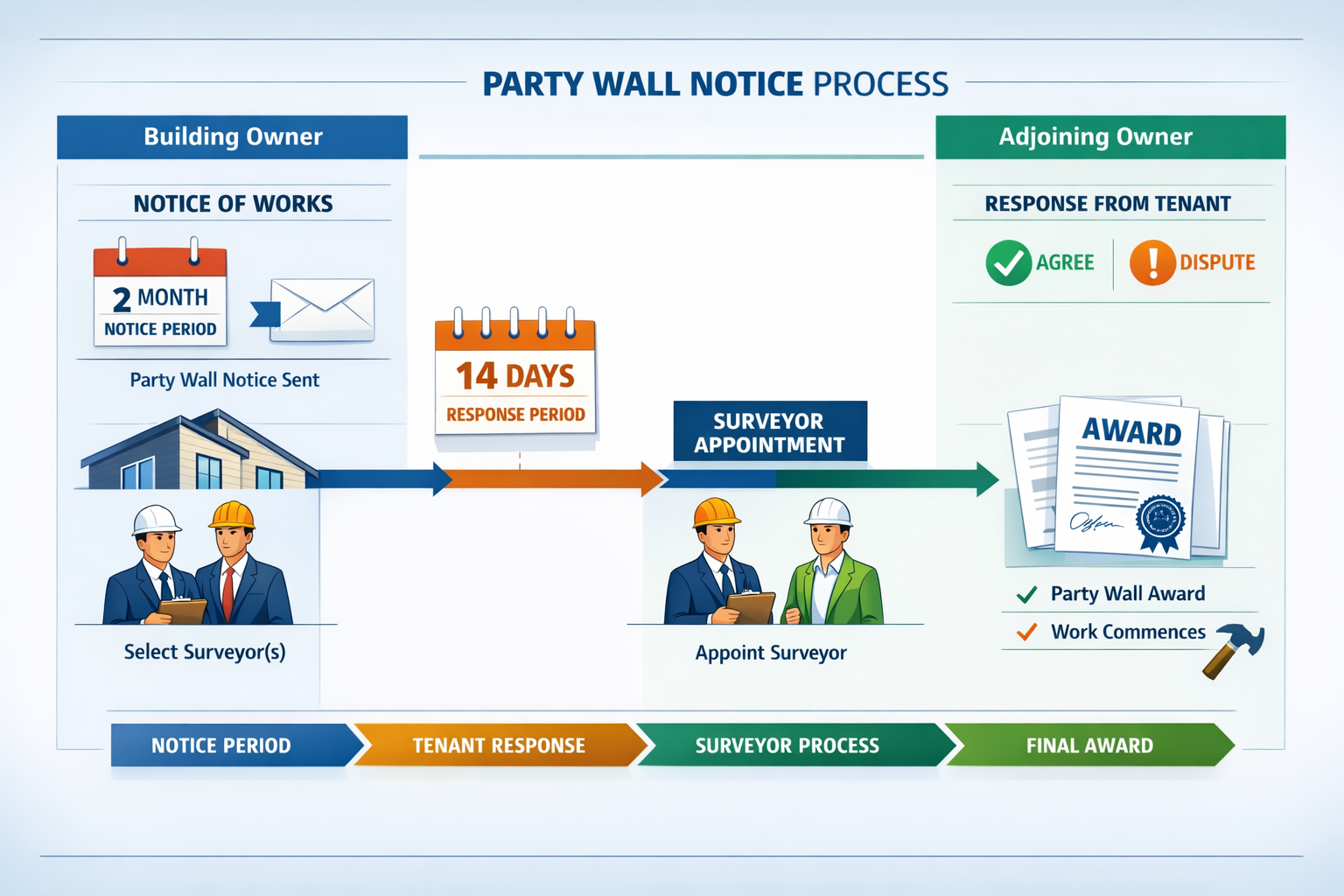
The party wall award guidance process has become significantly more complex in 2026 due to the intersection of tenant rights and party wall procedures. Building works covered by the Party Wall Act cannot legally commence before reaching agreement with the neighbour[3], and this principle now extends to tenant consultation requirements.
Crafting Tenant-Proof Awards
A party wall award is a legally binding document that sets out the rights and responsibilities of all parties during building works. Under the Renters' Rights Act 2026, awards must now explicitly address tenant concerns and incorporate specific protections that were previously optional.
Essential award components:
📄 Work scope definition – Precise technical descriptions leaving no room for interpretation
📄 Access arrangements – Specific dates, times, and duration limits for property access
📄 Noise and disruption controls – Maximum decibel levels and permitted working hours
📄 Damage compensation protocols – Pre-agreed remediation procedures and cost allocation
📄 Tenant notification requirements – Advance warning systems for disruptive work phases
📄 Dispute resolution mechanisms – Clear escalation procedures for tenant complaints
The award must balance the landlord's right to maintain and improve their property with the tenant's right to quiet enjoyment. This balance has shifted significantly in favour of tenants under the 2026 legislation, requiring more restrictive work conditions than previously standard.
Cost Allocation and Fee Recovery
Understanding the cost of party wall procedures helps landlords budget appropriately for compliance. Beyond the basic surveyor fees, landlords must account for:
- Schedule of condition preparation – £300-£600 depending on property size
- Award preparation and administration – £1,000-£2,000 for standard works
- Monitoring visits during works – £200-£400 per visit
- Post-work verification surveys – £400-£800 for completion documentation
- Dispute resolution costs – £1,500-£5,000+ if tenant challenges arise
Importantly, the party wall legislation allows the building owner (landlord) to recover reasonable costs from adjoining owners in certain circumstances. However, costs related to tenant consultation and enhanced documentation required under the Renters' Rights Act 2026 typically cannot be recovered and must be absorbed by the landlord.
Managing Pet Permissions and Property Alterations
The Renters' Rights Act 2026 also introduced new provisions around pet ownership in rental properties, creating additional complexity for party wall procedures. Landlords undertaking works that might impact pet safety or welfare must now consider:
- Temporary pet accommodation during noisy or dangerous work phases
- Secure boundary maintenance to prevent pet escape during construction
- Noise impact assessments for pets sensitive to construction sounds
- Access route planning that maintains pet containment
These considerations must be incorporated into party wall awards to prevent tenant challenges based on pet welfare grounds, which can now form legitimate objections to works under the expanded tenant rights framework.
Protecting Against Tenant Challenges: Proactive Strategies
The enhanced tenant protections in 2026 mean that reactive approaches to party wall disputes are no longer viable. Landlords must implement proactive strategies that anticipate and prevent tenant challenges before they escalate into legal disputes.
Pre-Work Tenant Consultation
While not strictly required by party wall legislation, voluntary tenant consultation has become a best practice for Party Wall Surveys for Renters' Rights Act 2026 Compliance: Protecting Landlord Works from Tenant Challenges. This involves:
Early notification – Inform tenants of planned works 3-4 months in advance
Detailed explanation meetings – Face-to-face discussions about work scope, duration, and impact
Written information packs – Comprehensive documentation of rights, procedures, and contact information
Feedback mechanisms – Formal channels for tenants to raise concerns before works commence
Reasonable accommodation – Consider tenant requests for work timing or methodology adjustments
This consultative approach significantly reduces the likelihood of formal objections and demonstrates the landlord's commitment to tenant welfare, which can prove valuable if disputes later arise.
When Neighbours Are Carrying Out Works
The party wall framework also protects landlords and their tenants when neighbours are carrying out works without party wall agreement. Landlords should educate tenants about their rights to object to neighbouring works that lack proper notices, as this knowledge prevents tenants from incorrectly attributing neighbouring disturbances to landlord actions.
Professional Survey Integration
Integrating party wall surveys with other professional surveying services creates comprehensive protection. Landlords should consider combining party wall procedures with:
- RICS Building Surveys Level 3 – Detailed structural assessments before major works
- Structural surveys – Engineering analysis for complex alterations
- Dilapidation surveys – Comprehensive condition documentation
- Expert witness reports – Pre-emptive legal documentation for high-risk works
This integrated approach ensures that all aspects of property condition, structural integrity, and legal compliance are documented to professional standards that will withstand tenant challenges and potential court scrutiny.
Documentation and Evidence Management
Meticulous record-keeping has always been important in party wall procedures, but the 2026 regulatory environment demands exceptional documentation standards. Landlords must maintain:
Digital audit trails – Time-stamped electronic records of all communications
Photographic progression logs – Weekly or daily photo documentation during works
Contractor compliance records – Proof that appointed contractors followed award conditions
Tenant communication logs – Detailed records of all tenant interactions and responses
Professional certification – Surveyor sign-offs at key work milestones
This evidence becomes invaluable if tenants later claim that works exceeded agreed parameters, caused undisclosed damage, or violated their rights under the tenancy agreement.
Navigating Dispute Resolution in the 2026 Framework
Despite best efforts, some tenant challenges to party wall works are inevitable. The key to successful resolution lies in understanding the new dispute mechanisms available under the Renters' Rights Act 2026 and how they interact with traditional party wall dispute procedures.
Formal Dispute Procedures
When tenants formally object to party wall works, the dispute follows a structured escalation path:
- Initial surveyor mediation – The appointed party wall surveyor(s) attempt to resolve concerns through award modifications
- Third surveyor involvement – If two surveyors disagree, the third surveyor makes binding determinations
- Tribunal consideration – Tenants may escalate to housing tribunals under enhanced 2026 rights
- County court proceedings – Final legal remedy for unresolved disputes
Each stage involves specific timelines, documentation requirements, and cost implications. Landlords who have followed proper procedures and maintained comprehensive records typically prevail at early stages, avoiding costly court proceedings.
Common Tenant Objections and Responses
Understanding typical tenant objections allows landlords to prepare effective responses:
| Tenant Objection | Landlord Response Strategy |
|---|---|
| "Works are unnecessary" | Provide technical reports demonstrating necessity for safety/compliance |
| "Disruption is excessive" | Show award conditions limiting work hours and noise levels |
| "Damage has occurred" | Reference schedule of condition proving pre-existing conditions |
| "Access is unreasonable" | Demonstrate advance notice and minimal intrusion protocols |
| "My pets are distressed" | Evidence of pet welfare provisions in work planning |
Each response must be supported by professional surveyor documentation and compliance with both party wall legislation and tenancy law requirements.
Insurance Considerations
Landlords should ensure their insurance policies adequately cover party wall dispute scenarios. Key coverage areas include:
- Legal expenses insurance – Covers dispute resolution costs
- Professional indemnity – Protects against surveyor negligence claims
- Public liability – Covers accidental damage during works
- Loss of rent – Compensates for tenant departures due to work disruptions
Reviewing and updating insurance coverage before commencing party wall works provides an additional layer of financial protection against tenant challenges.
Future-Proofing Your Party Wall Compliance Strategy
The regulatory landscape continues to evolve, and landlords must adopt forward-looking strategies that anticipate further changes to tenant rights and property compliance requirements.
Emerging Best Practices
Professional surveyors are developing new protocols specifically for Party Wall Surveys for Renters' Rights Act 2026 Compliance: Protecting Landlord Works from Tenant Challenges. These include:
🔍 Enhanced digital documentation – 3D scanning and photogrammetry for indisputable condition records
🔍 Tenant rights training – Educating contractors about new tenant protection requirements
🔍 Proactive monitoring systems – Vibration and noise sensors providing real-time compliance data
🔍 Mediation-first approaches – Structured negotiation protocols before formal procedures
🔍 Sustainability integration – Combining party wall works with energy efficiency improvements
These innovations help landlords demonstrate exceptional diligence in protecting both their property interests and tenant rights.
Technology and Compliance
Digital tools are transforming party wall survey procedures. Modern approaches include:
- Cloud-based document management – Secure storage and instant access to all compliance records
- Mobile surveying apps – Real-time condition documentation with GPS and time stamps
- Automated notice generation – Template systems ensuring legal compliance in all communications
- Dispute tracking software – Comprehensive case management for multi-property portfolios
- Tenant portals – Self-service access to work schedules and progress updates
Landlords who invest in these technologies gain significant advantages in managing compliance obligations and defending against tenant challenges.
Building a Compliance Culture
Successful navigation of the 2026 regulatory environment requires more than procedural compliance—it demands a fundamental shift in how landlords approach tenant relationships during property works. This includes:
Transparency – Open communication about work necessity, scope, and impact
Respect – Genuine consideration of tenant concerns and reasonable accommodation
Professionalism – Engaging qualified surveyors and contractors with tenant rights training
Accountability – Taking responsibility for disruptions and providing fair compensation
Continuous improvement – Learning from each project to enhance future procedures
Landlords who embrace this cultural shift find that tenant challenges decrease significantly, as tenants feel heard and respected throughout the process.
Conclusion
The Renters' Rights Act 2026 has fundamentally transformed how landlords must approach party wall procedures. The abolition of Section 21 evictions means tenants can now challenge works without fear of retaliatory eviction, creating a new compliance landscape where professional surveying and meticulous documentation are not optional—they are essential.
Party Wall Surveys for Renters' Rights Act 2026 Compliance: Protecting Landlord Works from Tenant Challenges requires a comprehensive strategy encompassing proper notice procedures, detailed schedules of condition, professionally drafted awards, and proactive tenant consultation. The investment in RICS-qualified surveyors, typically around £1,000 for a complete party wall award, provides invaluable protection against disputes that could cost tens of thousands in legal fees and work stoppages.
Actionable Next Steps
For landlords planning property works in 2026 and beyond:
- Engage an RICS-qualified surveyor with specific experience in tenanted properties and 2026 compliance requirements
- Commission a schedule of condition before any works commence, ensuring comprehensive photographic and written documentation
- Serve party wall notices with precise timing (2 months for building works, 1 month for excavations) and detailed work descriptions
- Consult tenants voluntarily even when not strictly required, building goodwill and reducing objection likelihood
- Maintain meticulous records of all communications, work progress, and compliance measures
- Review insurance coverage to ensure adequate protection for dispute resolution and damage claims
- Stay informed about evolving best practices and regulatory developments in tenant rights and party wall procedures
The intersection of party wall legislation and enhanced tenant protections creates complexity, but landlords who approach this challenge with professionalism, proper surveying protocols, and respect for tenant rights will successfully navigate the new regulatory environment while protecting their property investments.
For expert guidance on your specific party wall situation, consider getting a quote from qualified professionals who understand both the technical and legal dimensions of 2026 compliance requirements.
References
[1] Party Wall Surveys For Renters Rights Act Compliance Managing Notices When Landlord Initiated Works Face New Section 8 Ground Requirements – https://nottinghillsurveyors.com/blog/party-wall-surveys-for-renters-rights-act-compliance-managing-notices-when-landlord-initiated-works-face-new-section-8-ground-requirements
[2] Party Wall Notice Requirements For Prs Database Compliance Works Surveyor Tactics Post Renters Rights Act Registration In 2026 – https://nottinghillsurveyors.com/blog/party-wall-notice-requirements-for-prs-database-compliance-works-surveyor-tactics-post-renters-rights-act-registration-in-2026
[3] Party Wall Agreement – https://hoa.org.uk/advice/guides-for-homeowners/i-am-improving/party-wall-agreement/