
Approximately 1% of party wall disputes escalate to require a third surveyor's intervention, yet these rare cases often involve the most complex disagreements and highest stakes for both building and adjoining owners. When two appointed surveyors reach an impasse during negotiations over a Party Wall Award, the statutory framework under the Party Wall etc. Act 1996 provides a clear resolution mechanism—but understanding how Third Surveyor Selection and Dispute Resolution in Party Wall Awards: When Appointed Surveyors Cannot Agree actually works in practice remains essential for property owners, developers, and construction professionals navigating these challenging situations.
The process of appointing a third surveyor represents the Act's final safeguard against project deadlock, yet many parties remain unclear about when this mechanism triggers, how neutral arbitrators are selected, and what costs they should expect when disagreements escalate beyond normal negotiation.
Key Takeaways
- Third surveyors are appointed only when two appointed surveyors cannot reach agreement on specific matters within a Party Wall Award, serving as neutral arbitrators whose determinations are legally binding
- The two appointed surveyors themselves must select the third surveyor "forthwith" upon their own appointments, not the building or adjoining owners, with local authority intervention available if they cannot agree
- Third surveyor fees typically range from £1,500 to £5,000+ depending on dispute complexity, with costs usually shared equally between parties unless the Award specifies otherwise
- Determinations must be appealed within 14 days to County Court under Section 10(17), making these rulings effectively final in most cases
- RICS is conducting active consultation through May 2026 on updated party wall practice guidance that will shape professional standards for surveyors working under the Act [7]
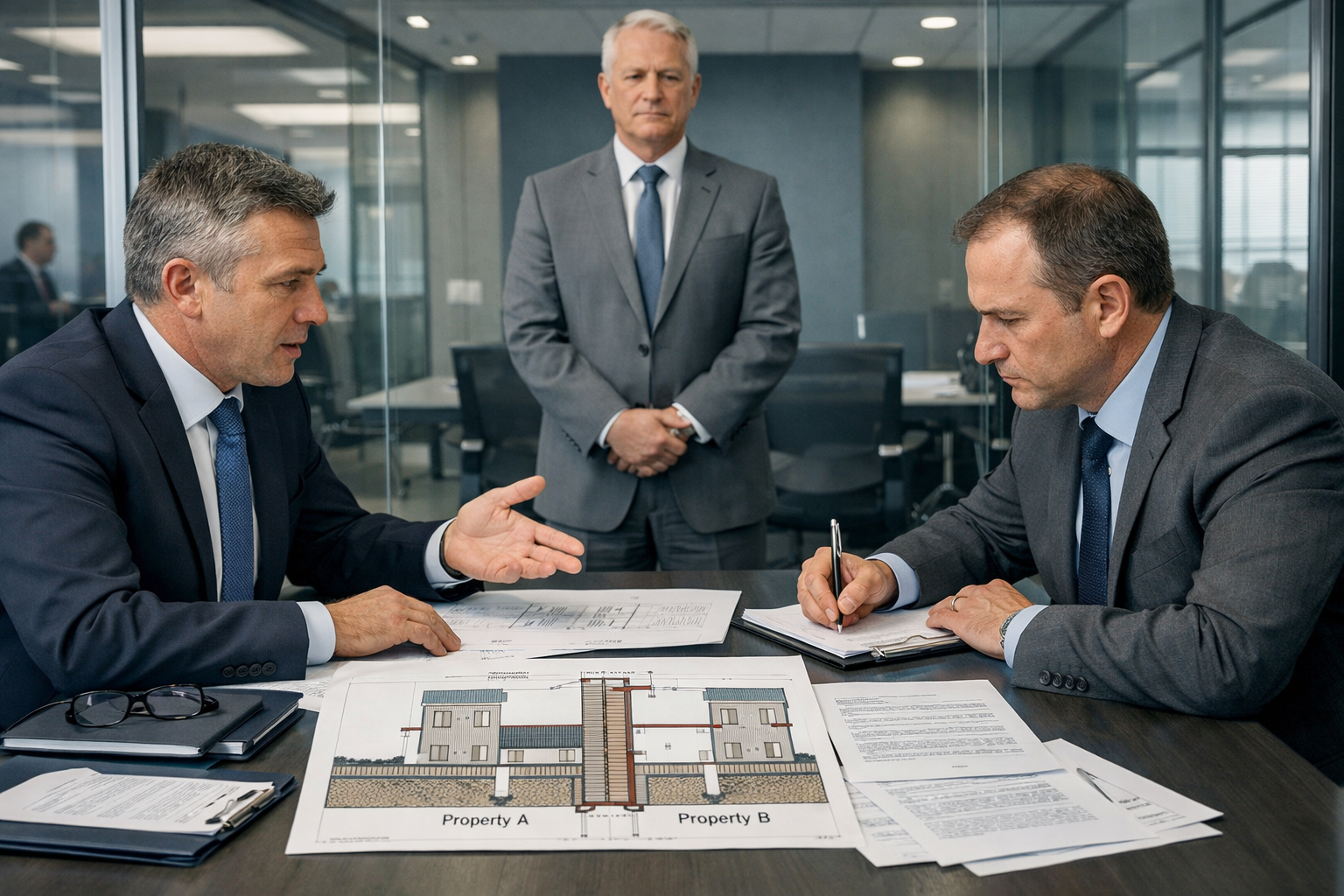
Understanding When Third Surveyor Selection and Dispute Resolution in Party Wall Awards: When Appointed Surveyors Cannot Agree Becomes Necessary
The Role of Appointed Surveyors in Party Wall Matters
Under the Party Wall etc. Act 1996, both the building owner (the party undertaking works) and the adjoining owner (the affected neighbour) have the right to appoint surveyors to represent their interests. However, these surveyors carry a fundamental legal duty that extends beyond simple client advocacy—they must act impartially and uphold the proper execution of the Act itself [3].
The two appointed surveyors work together to:
- Inspect the properties and assess the proposed works
- Prepare schedules of condition documenting the pre-work state of affected structures
- Negotiate protective measures and working methods
- Agree on the terms of the Party Wall Award
- Determine cost allocation between parties
In approximately 99% of cases, these two professionals successfully negotiate and agree upon all terms, allowing them to jointly issue the Award [2]. Their shared professional standards, RICS guidance, and statutory obligations typically provide sufficient common ground for resolution.
Common Points of Disagreement Between Appointed Surveyors
Despite professional obligations toward impartiality, genuine disagreements do arise. The most frequent disputes requiring third surveyor intervention include:
🔧 Technical Disagreements:
- Extent of underpinning or foundation work required
- Appropriate protective measures for existing structures
- Working hours and access arrangements
- Structural adequacy of proposed methods
💰 Financial Disputes:
- Cost allocation between building and adjoining owners
- Reasonable surveyor fee levels
- Scope of compensable damage or inconvenience
- Security for expenses under Section 12
📋 Procedural Conflicts:
- Interpretation of notice validity
- Scope of works covered by the Act
- Whether works constitute notifiable party wall matters
- Appropriate conditions and time limits
⚖️ Scope and Jurisdiction Issues:
- Whether certain works fall within the Act's remit
- Appropriate extent of schedule of condition documentation
- Rights of access frequency and duration
When appointed surveyors cannot reconcile these differences through negotiation, the Act's dispute resolution mechanism automatically engages.
The Third Surveyor Selection Process: How Neutral Arbitrators Are Appointed
Statutory Requirements Under Section 10
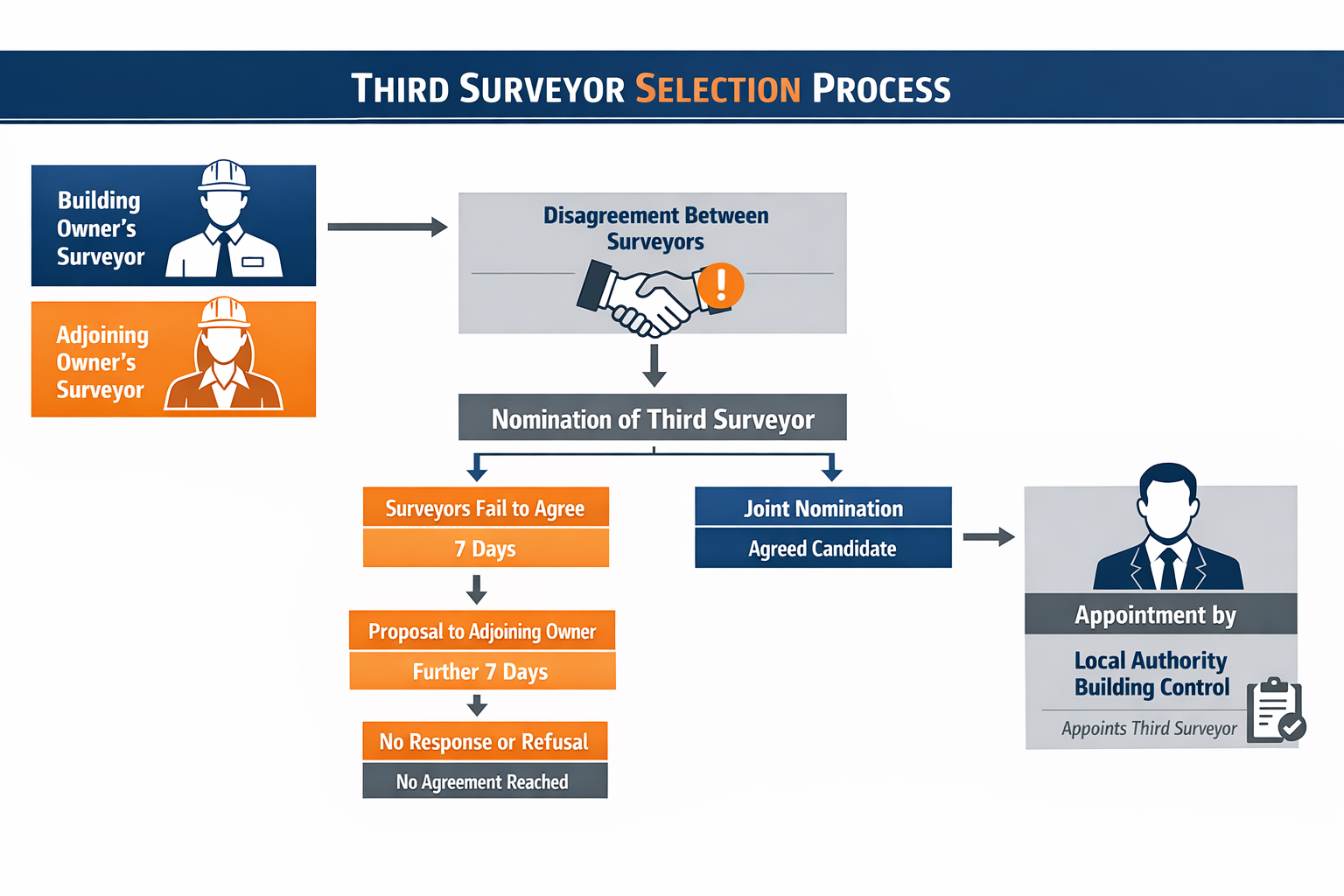
Section 10(1)(b) of the Party Wall etc. Act 1996 establishes the framework for third surveyor appointment with remarkable clarity: the two appointed surveyors must select a third surveyor "forthwith"—meaning immediately upon their own appointments being confirmed [5].
This proactive timing requirement serves an important purpose. Rather than waiting until disagreement emerges, best practice dictates that surveyors should identify and agree upon a potential third surveyor at the outset of their engagement. This advance preparation ensures that if disputes arise during negotiations, resolution can proceed without additional delay.
Standard Selection Protocol and Nomination Process
The practical process for Third Surveyor Selection and Dispute Resolution in Party Wall Awards: When Appointed Surveyors Cannot Agree typically follows this sequence:
Step 1: Initial Nomination
The building owner's surveyor typically initiates the process by proposing three potential third surveyor candidates to the adjoining owner's surveyor. These nominations should include professionals with:
- Extensive party wall experience (typically 10+ years)
- RICS membership and relevant qualifications
- No prior relationship with either appointed surveyor
- Demonstrated expertise in complex dispute resolution
- Geographic availability for site inspections
Step 2: Review and Agreement
The adjoining owner's surveyor reviews the proposed candidates and either:
- Agrees to one of the three nominees
- Proposes alternative candidates
- Requests additional information about nominees' qualifications
Step 3: Formal Appointment
Once both surveyors agree, they jointly appoint the third surveyor in writing, clearly defining:
- The specific matters in dispute
- The scope of the third surveyor's authority
- Fee arrangements and payment responsibility
- Timeline expectations for determination
When Appointed Surveyors Cannot Agree on a Third Surveyor
If the two appointed surveyors cannot reach consensus on selecting a third surveyor—a relatively rare occurrence—Section 10(1)(b) provides a fallback mechanism [2]:
The Appointing Officer
The task of selecting the third surveyor passes to the "appointing officer," typically the head of Building Control at the relevant local authority. This official:
✅ Must select a qualified party wall surveyor
✅ Exercises independent judgment without party influence
✅ Typically chooses from established local practitioners
✅ Issues a formal appointment notice to all parties
Special Circumstances
If the local authority itself is a party to the dispute (for example, if council-owned property is involved), the appointment power transfers to the Secretary of State to ensure complete neutrality [5].
Qualities and Qualifications of Effective Third Surveyors
Professional third surveyors possess specific characteristics that enable effective dispute resolution:
| Qualification | Why It Matters |
|---|---|
| RICS Membership | Ensures professional standards and accountability |
| Extensive Experience | Typically 15+ years in party wall matters |
| Dispute Resolution Training | Formal mediation or arbitration qualifications |
| Technical Expertise | Deep understanding of construction methods and structural issues |
| Legal Knowledge | Thorough command of the Act and case law |
| Independence | No prior relationship with parties or appointed surveyors |
| Communication Skills | Ability to explain complex technical decisions clearly |
The 2026 RICS consultation on updated party wall practice guidance emphasizes that surveyors' appointments are personal and statutory, independent of client instruction, addressing concerns about cases where awards have been challenged due to surveyors acting without proper jurisdiction [7].
How Third Surveyors Navigate Conflicting Recommendations and Issue Determinations
The Referral Process: Defining the Dispute
When appointed surveyors determine they cannot agree on a specific matter, they must formally refer the dispute to the third surveyor. This referral document is critical and should include:
📄 Essential Referral Components:
- Clear Statement of Disagreement – Precise identification of the unresolved issue(s)
- Each Surveyor's Position – Detailed written submissions explaining their respective recommendations
- Supporting Evidence – Technical reports, photographs, calculations, or expert opinions
- Relevant Correspondence – Previous negotiation attempts and areas of agreement
- Site Access Arrangements – Coordination for third surveyor inspection
- Specific Questions – Exact matters requiring determination
The third surveyor's jurisdiction is strictly limited to the specific points referred—they cannot expand their determination to cover matters the appointed surveyors have already agreed upon [3].
Investigation and Evidence Gathering
Upon receiving the referral, the third surveyor undertakes a thorough investigation process:
Site Inspection
The third surveyor conducts an independent site visit to:
- Examine the party wall structure and surrounding properties
- Assess the proposed works' scope and potential impact
- Evaluate existing conditions documented in schedules
- Understand practical constraints and site-specific factors
Document Review
Comprehensive analysis of:
- Original party wall notices and counter-notices
- Building plans and structural calculations
- Schedule of condition reports
- Previous correspondence between surveyors
- Relevant technical standards and guidance
Surveyor Consultations
The third surveyor may:
- Request additional written submissions
- Conduct meetings with both appointed surveyors
- Seek clarification on technical points
- Commission independent expert opinions if necessary
Decision-Making Framework and Considerations
Third surveyors apply a structured analytical framework when evaluating conflicting recommendations:
Legal Compliance
- Does each proposed solution comply with the Act's requirements?
- Are statutory rights and obligations properly balanced?
- Does the recommendation align with established case law?
Technical Soundness
- Is the proposed methodology structurally appropriate?
- Does it adequately protect both properties?
- Are the specified materials and methods suitable?
Reasonableness and Proportionality
- Are protective measures proportionate to actual risks?
- Do costs align with benefits achieved?
- Are working restrictions reasonable given circumstances?
Precedent and Industry Standards
- How have similar disputes been resolved?
- What do RICS guidance and industry standards recommend?
- Are there relevant technical publications or research?
The Determination: Format and Legal Effect
The third surveyor's determination takes the form of a formal written decision that:
Must Include:
- Clear identification of the matter(s) in dispute
- Summary of each appointed surveyor's position
- Findings of fact based on evidence reviewed
- Reasoning supporting the decision
- Specific determination on each disputed point
- Date and signature of the third surveyor
Legal Characteristics:
✅ Binding on All Parties – Building owner, adjoining owner, and both appointed surveyors must accept the determination [3]
✅ Enables Award Completion – The appointed surveyors incorporate the determination into the final Party Wall Award
✅ Immediately Effective – Works may proceed in accordance with the determined terms
✅ Limited Appeal Rights – Can only be challenged in County Court within 14 days under Section 10(17) [3]
The determination effectively resolves the impasse, allowing the appointed surveyors to finalize and serve the complete Award.
Negotiation Strategies to Avoid Third Surveyor Referral
Experienced party wall surveyors employ several strategies to resolve disagreements before escalation:
🤝 Early Communication
- Establish professional rapport at the outset
- Discuss potential contentious issues proactively
- Agree on technical standards and reference materials
📊 Evidence-Based Positions
- Support recommendations with technical data
- Reference comparable cases and precedents
- Commission joint expert reports when helpful
💡 Creative Problem-Solving
- Explore alternative protective measures
- Consider phased or conditional approaches
- Identify areas for compromise without compromising safety
⏰ Structured Negotiation
- Set clear timelines for position exchanges
- Use "without prejudice" discussions to explore options
- Document areas of agreement progressively
These approaches resolve most disagreements, reserving third surveyor referral for genuinely intractable disputes.
Fee Structures, Cost Allocation, and Financial Implications of Third Surveyor Appointments
Typical Third Surveyor Fee Ranges
Third surveyor fees vary significantly based on dispute complexity, but general ranges include:
| Dispute Complexity | Typical Fee Range | Factors Influencing Cost |
|---|---|---|
| Simple Single-Issue | £1,500 – £2,500 | Clear technical question, limited evidence review |
| Moderate Multi-Issue | £2,500 – £4,000 | Multiple points, site inspection, detailed analysis |
| Complex Technical | £4,000 – £7,000+ | Structural calculations, expert consultation, extensive documentation |
| Highly Contentious | £7,000 – £15,000+ | Multiple site visits, formal hearings, complex legal issues |
These fees typically cover:
- Initial referral review and case assessment
- Site inspection(s) and photography
- Document review and evidence analysis
- Consultation with appointed surveyors
- Research and technical analysis
- Preparation of written determination
- Administration and correspondence
Additional costs may include:
- Expert consultant fees (structural engineers, etc.)
- Travel expenses for distant properties
- Legal advice on jurisdictional questions
- Extended investigation for complex matters
Cost Allocation Principles
The Party Wall Act provides flexibility in allocating third surveyor costs, with several common approaches:
Equal Sharing (Most Common)
Both building and adjoining owners split third surveyor fees 50/50, regardless of which party's surveyor's position prevails. This approach:
- Reflects shared responsibility for dispute escalation
- Avoids deterring legitimate disagreements
- Simplifies administration and payment
Proportionate Allocation
Costs may be allocated based on:
- Extent to which each party's position was upheld
- Reasonableness of each surveyor's original position
- Whether one party unnecessarily prolonged negotiations
Building Owner Bears Full Cost
Less common, but may apply when:
- The proposed works are particularly complex or unusual
- The building owner's surveyor adopted unreasonable positions
- The Award specifically assigns costs this way
The third surveyor or the appointed surveyors typically determine cost allocation as part of the final Award.
Managing Costs and Preventing Unnecessary Escalation
Property owners can take proactive steps to minimize the risk and cost of third surveyor involvement:
✅ For Building Owners:
- Appoint experienced, reasonable surveyors at the outset
- Ensure proposed works are properly designed and documented
- Provide complete information promptly
- Consider adjoining owner concerns seriously
- Budget for potential third surveyor fees (1-2% of cases)
✅ For Adjoining Owners:
- Understand that party wall agreements are statutory, not optional
- Appoint qualified surveyors, not general contractors
- Respond to reasonable proposals constructively
- Focus objections on legitimate protection concerns
- Recognize that most works proceed with appropriate safeguards
✅ For Both Parties:
- Select surveyors with strong negotiation track records
- Encourage direct surveyor communication
- Avoid instructing surveyors to adopt inflexible positions
- Understand that third surveyor determinations are final
- Consider mediation before formal referral
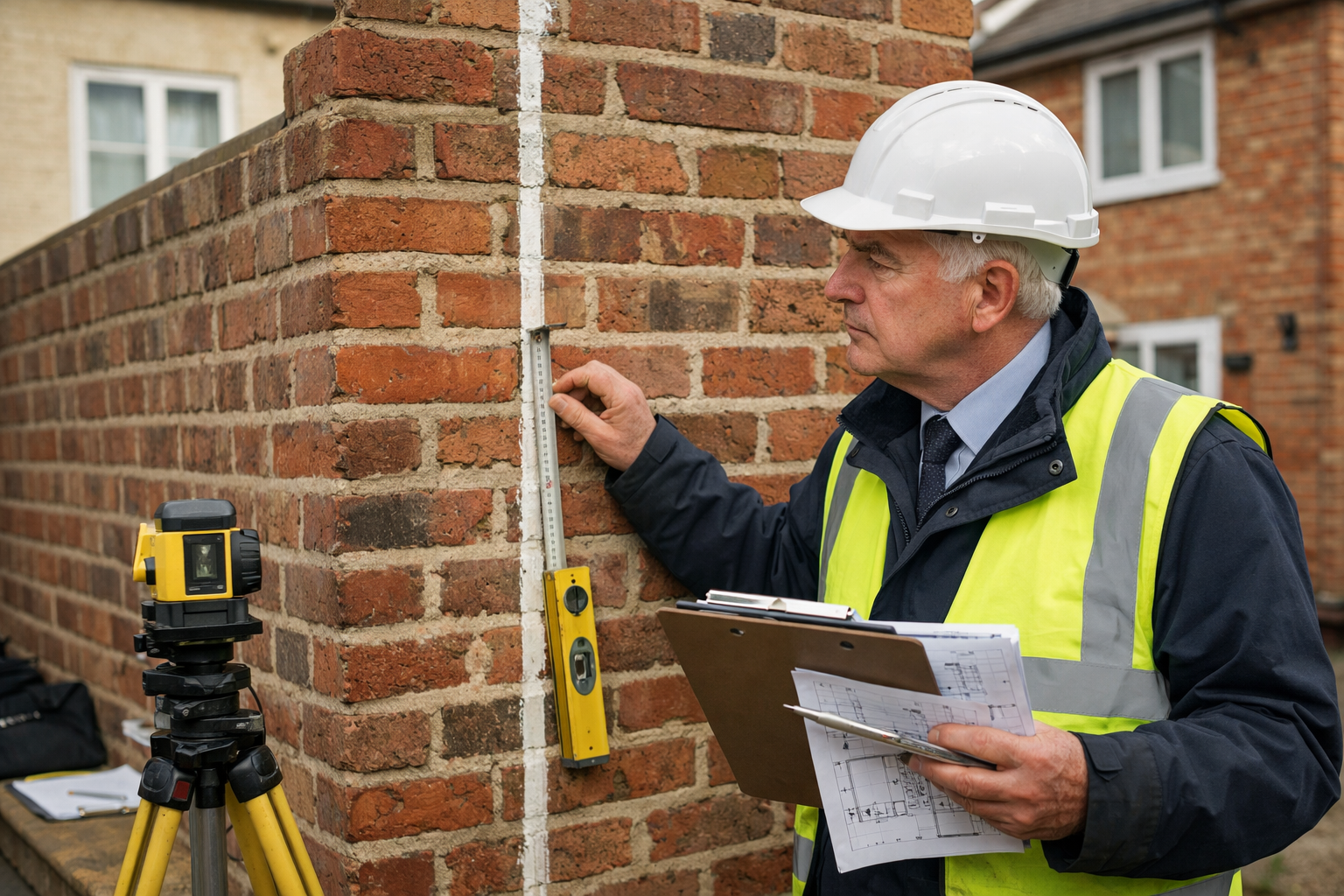
Appeals, Remedies, and What Happens After a Third Surveyor Determination
The 14-Day Appeal Window
Section 10(17) of the Party Wall etc. Act 1996 provides a narrow right to appeal third surveyor determinations to the County Court, but with strict limitations [3]:
⏱️ Timing Requirements:
- Appeals must be filed within 14 days of the determination being served
- This deadline is absolute and strictly enforced
- Courts have no discretion to extend the period
- Service date typically means when posted or delivered
📋 Grounds for Appeal:
Appeals are not a general rehearing but must demonstrate:
- Jurisdictional error – The third surveyor exceeded their authority
- Procedural irregularity – Failure to follow proper process
- Legal error – Misapplication of the Act or case law
- Manifest unreasonableness – Decision no reasonable surveyor could reach
💰 Cost Considerations:
County Court appeals involve:
- Legal representation costs (typically £5,000-£20,000+)
- Court fees and administrative expenses
- Risk of adverse costs orders if unsuccessful
- Significant time delays to project completion
Given these factors, appeals remain extremely rare in practice. Most parties accept third surveyor determinations as final.
Remedies for Surveyor Refusal, Neglect, or Incapacity
Section 10(9) addresses situations where a third surveyor cannot or will not act [2]:
Circumstances Requiring Replacement:
- Refusal to act – Third surveyor declines appointment after initial acceptance
- Neglect – Unreasonable delay in investigating or determining the dispute
- Death or incapacity – Third surveyor becomes unable to complete the process
- Conflict of interest – Previously undisclosed relationship emerges
Replacement Process:
The two appointed surveyors may select another third surveyor to act, following the same nomination and agreement process. If they cannot agree on a replacement, the appointing officer again intervenes.
Incorporating the Determination into the Final Award
Once the third surveyor issues their determination, the appointed surveyors must:
- Accept the binding decision on the disputed matter(s)
- Incorporate the determination into the draft Party Wall Award
- Complete any remaining agreed terms not subject to dispute
- Jointly sign and serve the Award on both owners
- Specify cost allocation including third surveyor fees
The completed Award then has full legal effect, and works may proceed in accordance with its terms. If neighbours are carrying out works without a party wall agreement, the Award provides the legal framework for enforcement.
Practical Implications for Construction Projects
Third surveyor determinations have several practical effects on project timelines and execution:
Timeline Impact:
- Typical third surveyor process: 4-8 weeks from referral to determination
- Additional delay if surveyors cannot initially agree on third surveyor selection
- Further delay if County Court appeal filed (though rare)
- Total potential delay: 2-4 months for complex disputes
Project Adjustments:
Contractors and project managers should:
- Build contingency time into schedules for potential disputes
- Maintain communication with the building owner's surveyor
- Prepare to implement determined protective measures
- Document compliance with Award terms carefully
- Coordinate access and working methods as specified
Relationship Management:
Even after determination, parties must:
- Continue working with the same appointed surveyors through project completion
- Cooperate on post-work inspections and damage assessment
- Maintain professional relationships for future matters
- Address any damage claims through the Award framework
Current Developments: RICS 2026 Consultation and Evolving Standards
The Royal Institution of Chartered Surveyors is conducting an active consultation through April and May 2026 on updated party wall practice guidance, which will significantly shape professional standards for Third Surveyor Selection and Dispute Resolution in Party Wall Awards: When Appointed Surveyors Cannot Agree [7].
Key Consultation Themes
The consultation addresses several critical issues that have emerged in recent party wall practice:
🎯 Surveyor Independence and Jurisdiction
The guidance emphasizes that a surveyor's appointment is personal and statutory, independent of client instruction. This addresses concerns about cases where awards have been challenged due to surveyors acting without proper jurisdiction or where no genuine dispute existed [7].
⚖️ Impartiality Requirements
Updated standards will clarify surveyors' duties to:
- Act impartially regardless of which party appointed them
- Prioritize proper execution of the Act over client preferences
- Recognize when matters fall outside the Act's scope
- Decline appointments where conflicts of interest exist
📊 Professional Standards for Third Surveyors
The consultation considers enhanced requirements for third surveyor qualifications, including:
- Minimum experience thresholds
- Specialized dispute resolution training
- Continuing professional development requirements
- Quality assurance and peer review mechanisms
💼 Fee Transparency and Reasonableness
New guidance will address surveyor fee disputes, which often contribute to third surveyor referrals, by establishing:
- Clearer fee disclosure requirements
- Benchmarks for reasonable fees based on work complexity
- Standards for fee agreement documentation
- Mechanisms for fee dispute resolution
Implications for Future Practice
The 2026 guidance updates will likely influence Third Surveyor Selection and Dispute Resolution in Party Wall Awards: When Appointed Surveyors Cannot Agree in several ways:
Enhanced Professionalism
Stricter standards may reduce disputes requiring third surveyor intervention by improving initial surveyor selection and conduct.
Clearer Procedures
Standardized processes for referral, investigation, and determination will increase consistency and predictability.
Greater Accountability
Professional consequences for surveyors who unnecessarily escalate disputes or fail to act impartially may encourage more effective negotiation.
Improved Outcomes
Better-qualified third surveyors applying clearer standards should produce more consistent, defensible determinations.
Property owners, developers, and construction professionals should monitor the consultation outcomes and ensure their appointed surveyors remain current with evolving professional standards.
Conclusion
Third Surveyor Selection and Dispute Resolution in Party Wall Awards: When Appointed Surveyors Cannot Agree represents the Party Wall etc. Act 1996's essential safeguard against project deadlock, providing a clear statutory mechanism for resolving genuine impasses between appointed surveyors. While only about 1% of party wall matters escalate to require third surveyor intervention, understanding this process remains crucial for anyone undertaking construction work affecting shared boundaries.
The selection process—where appointed surveyors themselves must choose a neutral, experienced arbitrator "forthwith" upon their own appointments—ensures that disputes can be resolved by qualified professionals without court involvement. Third surveyors' determinations, based on thorough investigation of technical evidence and legal principles, are binding on all parties and enable projects to proceed with appropriate protections in place.
Key Action Steps
If you're a building owner planning works:
- Appoint an experienced, reasonable party wall surveyor early in your project planning
- Ensure your surveyor selects a potential third surveyor at the outset
- Budget for possible third surveyor fees (£1,500-£5,000+) as a contingency
- Provide complete, accurate information to facilitate negotiation
- Review our party wall award guidance for comprehensive information
If you're an adjoining owner receiving notice:
- Appoint a qualified party wall surveyor, not a general contractor
- Understand that reasonable works with proper safeguards will typically proceed
- Focus concerns on legitimate protection issues rather than attempting to prevent works entirely
- Recognize that third surveyor determinations are final and rarely successfully appealed
For both parties:
- Encourage direct communication between appointed surveyors
- Avoid instructing surveyors to adopt inflexible positions that prevent compromise
- Understand that third surveyor involvement adds time (4-8 weeks) and cost
- Consider whether genuine technical disagreement exists before escalating
- Stay informed about evolving professional standards through the 2026 RICS consultation
If a third surveyor has been appointed:
- Cooperate fully with investigation and evidence requests
- Respect the limited 14-day appeal window if considering challenge
- Prepare to implement the determination promptly once issued
- Maintain professional relationships for project completion
The third surveyor mechanism, while rarely invoked, provides essential certainty that party wall disputes can be resolved definitively, allowing construction projects to proceed while protecting all parties' legitimate interests. By understanding this process and working with qualified professionals committed to reasonable negotiation, property owners can navigate even complex party wall matters efficiently and cost-effectively.
For specific advice on your party wall situation, contact experienced chartered surveyors who can guide you through the process and help avoid unnecessary disputes.
References
[1] Third Surveyor Referral – https://iconsurveyors.co.uk/blog/third-surveyor-referral/
[2] Disputes Resolution – Section 10 of the Party Wall Act – https://www.designingbuildings.co.uk/wiki/Disputes%20Resolution%20-%20Section%2010%20of%20the%20Party%20Wall%20Act
[3] Appointing The Third Surveyor When Disagreements Arise And Why This Costly Step Is Necessary – https://www.partywallslimited.com/blog/appointing-the-third-surveyor-when-disagreements-arise-and-why-this-costly-step-is-necessary
[4] Surveying Party Walls – https://www.isurv.com/downloads/20/surveying_party_walls
[5] Role Of The Third Surveyor In Party Wall Matters – https://taylor-mitchell.co.uk/blog/role-of-the-third-surveyor-in-party-wall-matters/
[6] RICS Launches Consultation On Party Wall Guidance – https://thenegotiator.co.uk/news/regulation-law-news/rics-launches-consultation-on-party-wall-guidance/
[7] RICS Launches Consultation On Updated Party Wall Practice Guidance – https://www.rics.org/news-insights/rics-launches-consultation-on-updated-party-wall-practice-guidance