Mortgage lending volumes across regional UK markets climbed 14% in the final quarter of 2025, signaling cautious buyer confidence returning to property sectors hit hardest by rate volatility.[1] Yet this recovery brings fresh risk: bungalows—prized for accessibility and single-storey convenience—carry hidden structural vulnerabilities that superficial inspections routinely miss. Level 3 Surveys for Bungalows in Recovering 2026 Markets: Spotting Roof Spread and Damp Pre-Purchase have become essential due diligence tools, protecting buyers from costly defects like roof spread and penetrating damp that threaten both property value and structural integrity in older single-storey homes.
As regional markets stabilize in 2026, bungalow purchases require deeper scrutiny than standard property types. The combination of wide roof spans, shallow foundations, and aging construction methods creates a perfect storm of structural risk that only comprehensive RICS Building Surveys Level 3 can properly identify and quantify.
Key Takeaways
- Level 3 surveys cost £700–£1,200 in 2026 and are recommended for all bungalows built before 1990 or those with extensions, where hidden structural defects pose significant financial risk.[2]
- Roof spread—a critical bungalow vulnerability—occurs when heavy roof loads push walls outward due to inadequate bracing, causing progressive structural damage that Level 3 inspections specifically target.[2]
- Damp penetration affects most older bungalows due to low ground clearance and poor ventilation, requiring specialist moisture assessment and remedial planning before purchase completion.[2]
- RICS Level 3 surveys provide prioritized repair guidance and cost awareness, enabling confident negotiation and informed decision-making in recovering market conditions.[6]
- Specialist follow-up reports from structural engineers or damp specialists are frequently required after Level 3 findings, adding £500–£1,500 to total survey costs but preventing far greater future expenditure.[2]
Why Level 3 Surveys Matter for Bungalow Purchases in 2026
Understanding Bungalow-Specific Structural Risks
Bungalows present unique architectural challenges that distinguish them from two-storey properties. Their single-storey design concentrates all roof loads onto perimeter walls without the lateral support provided by upper floors in conventional homes. This structural configuration makes bungalows particularly susceptible to roof spread, subsidence, and moisture-related deterioration.[2]
The 2026 market recovery has increased competition for bungalows, especially among downsizers and accessibility-focused buyers. However, many bungalows were constructed during the 1960s–1980s building boom using methods now recognized as structurally inadequate. These properties often lack sufficient roof bracing, have deteriorating timber components, and feature outdated damp-proofing systems that fail under modern weather patterns.
When to Choose Level 3 Over Level 2 Surveys
A Level 2 HomeBuyer Survey may suffice for newer bungalows in good condition, but properties built before 1990, those with extensions, or homes showing visible signs of structural movement require the comprehensive assessment that RICS Home Survey Level 3 provides.[2][3]
| Property Characteristic | Recommended Survey Level | Rationale |
|---|---|---|
| Bungalow built post-1990, no extensions | Level 2 | Lower structural risk, modern construction standards |
| Bungalow built pre-1990 | Level 3 | Higher defect probability, aging materials |
| Any bungalow with extensions | Level 3 | Complex structural interactions, potential load distribution issues |
| Visible cracks, damp, or sagging | Level 3 | Evidence of existing structural problems |
| Flat or low-pitch roof design | Level 3 | Increased water penetration and structural stress risk |
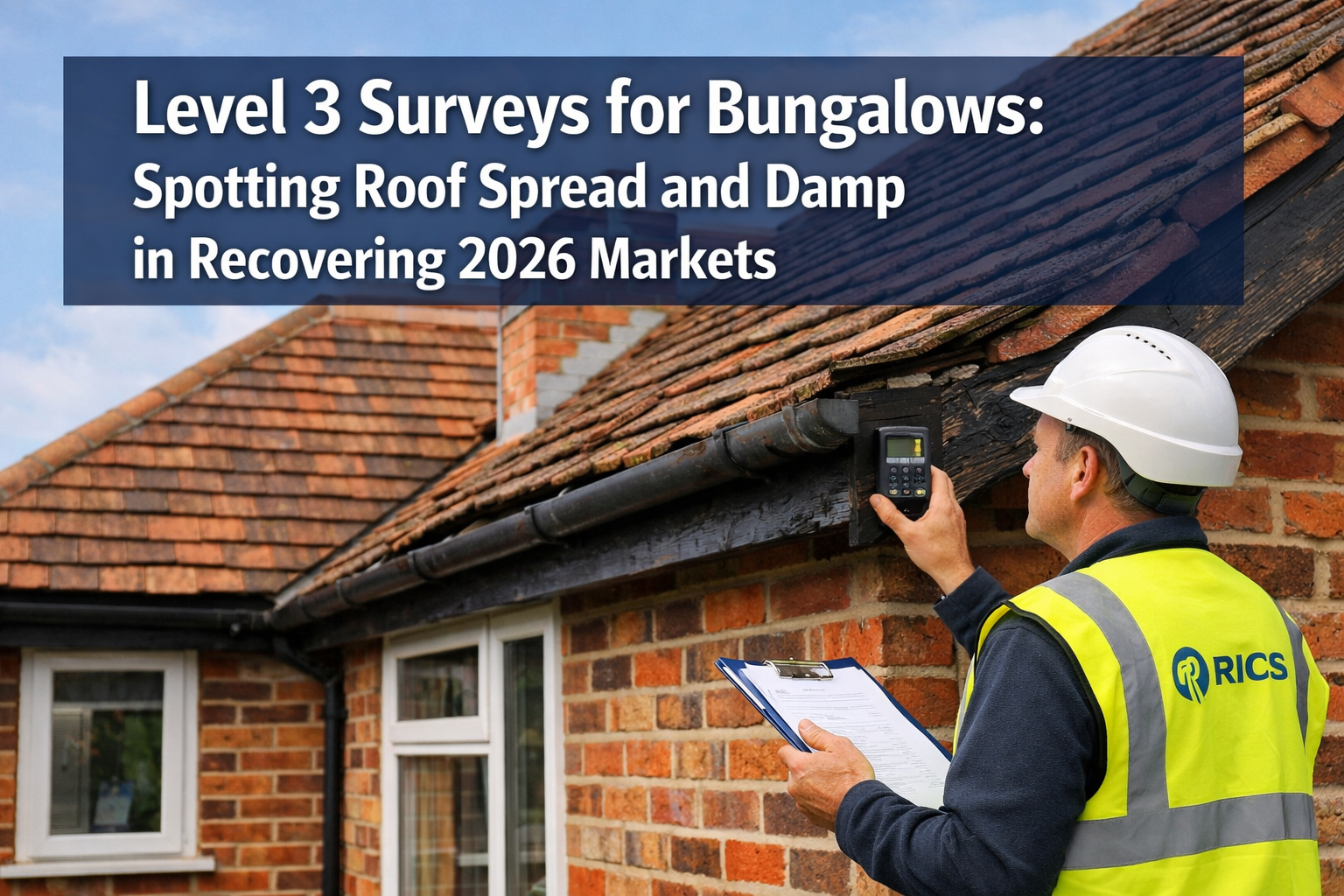
Level 3 surveys deliver detailed loft and roof space assessment where surveyors probe timbers with moisture meters, check roof bracing adequacy, and document issues like roof spread, slipped tiles, and daylight penetration through deteriorating felt.[4] This forensic approach identifies hidden deterioration that standard valuations and Level 2 surveys cannot detect.
The 2026 Market Context: Recovery and Risk
Regional property markets across the UK are experiencing subdued but steady recovery in early 2026, with transaction volumes improving as mortgage rates stabilize below 5%.[1] However, this recovery remains fragile, and buyers face heightened scrutiny from lenders who increasingly require comprehensive survey evidence before approving finance on older properties.
RICS protocols ensure survey quality meets lender requirements while protecting buyers from overpaying for properties requiring substantial remedial work. In recovering markets where price discovery remains uncertain, Level 3 survey findings provide crucial negotiating leverage and realistic cost awareness for post-purchase repairs.[6]
The combination of returning buyer confidence and persistent structural risk in aging bungalow stock makes 2026 a critical year for survey diligence. Properties that appear competitively priced may harbor expensive defects that only chartered surveyors can properly identify and quantify.
Spotting Roof Spread: The Primary Structural Threat in Bungalows
What Is Roof Spread and Why Does It Occur?
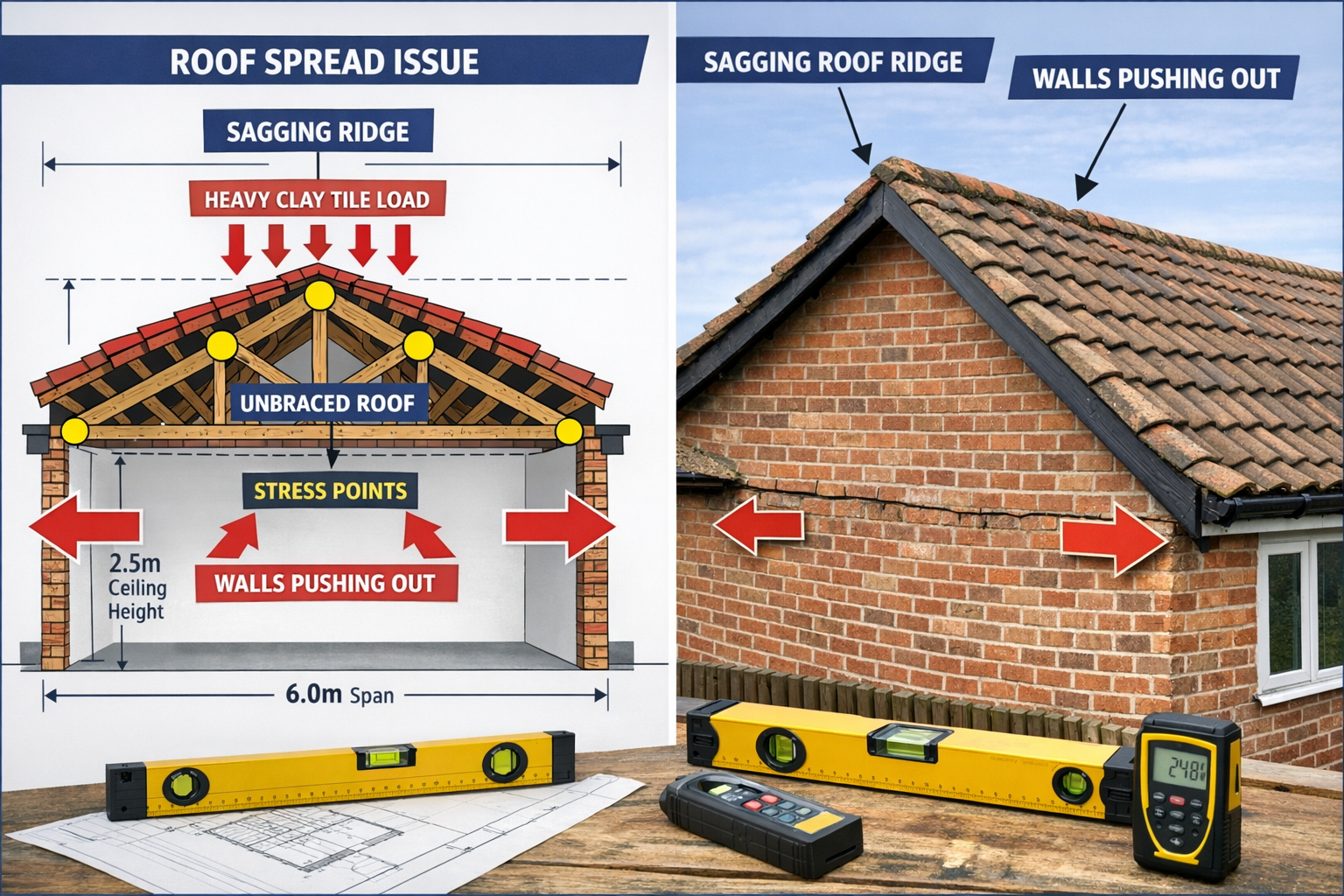
Roof spread is the outward movement of walls caused by excessive roof loads pushing down and out on perimeter structures. In bungalows, this defect occurs when roof timbers lack adequate horizontal restraint—typically collar ties, purlins, or properly installed roof trusses—allowing the weight of tiles or slates to force walls apart over time.[2]
The physics are straightforward: a typical bungalow roof with clay tiles can exert several tonnes of downward and outward force on supporting walls. Without proper bracing, this force gradually pushes walls outward, creating progressive structural damage that worsens with each weather cycle.
Visual Indicators of Roof Spread
Level 3 surveyors specifically look for these telltale signs during roof surveys:
🔍 External wall bulging – Visible outward bowing of brickwork, particularly near eaves level
🔍 Sagging ridge lines – Roof apex drooping in the middle when viewed from street level
🔍 Cracking at wall-roof junctions – Stepped cracks where walls meet roof structures
🔍 Displaced or slipped roof tiles – Evidence of structural movement affecting tile alignment
🔍 Internal ceiling cracks – Parallel cracks running along ceiling-wall boundaries
🔍 Door and window frame distortion – Sticking doors or gaps around frames indicating wall movement
Surveyors access loft spaces to measure roof spread directly, using spirit levels and laser measuring tools to quantify wall displacement. Measurements exceeding 25mm typically trigger recommendations for immediate structural engineer assessment.[4]
The Cost Implications of Undetected Roof Spread
Ignoring roof spread leads to exponential repair costs as damage progresses. Early-stage intervention might involve installing steel tie rods or additional roof bracing at £3,000–£8,000. However, advanced roof spread requiring wall rebuilding, complete roof restructuring, and foundation underpinning can exceed £40,000–£80,000.[2]
"Roof spread is the single most expensive defect we identify in bungalow surveys. Buyers who skip Level 3 inspections often discover the problem only after purchase, when remedial costs eliminate any perceived savings from a cheaper survey." – RICS Chartered Surveyor[4]
Level 3 surveys identify roof spread before purchase, enabling buyers to either negotiate substantial price reductions, require seller remediation, or walk away from properties with uneconomic repair requirements. This protection alone justifies the £700–£1,200 survey investment in 2026's recovering markets.[2]
Structural Engineer Follow-Up Requirements
When Level 3 surveys flag roof spread concerns, surveyors recommend immediate engagement with structural engineers who provide detailed assessment of:
- Load distribution analysis and stress calculations
- Remedial options ranging from bracing installation to complete roof reconstruction
- Detailed repair specifications and contractor requirements
- Cost estimates for various intervention scenarios
- Building control compliance requirements
Structural engineer reports typically cost £500–£1,500 but provide essential information for purchase negotiations and post-acquisition planning.[2] Many mortgage lenders refuse to advance funds on properties with identified roof spread until structural engineers confirm remediation plans.
Identifying Damp Issues: Moisture Risks Unique to Bungalows
Why Bungalows Are Particularly Vulnerable to Damp
Bungalows face heightened damp risk due to their low ground clearance and single-storey configuration. Unlike two-storey homes where ground-floor rooms benefit from upper-floor thermal mass and ventilation patterns, bungalows sit closer to ground moisture sources with limited natural air circulation.[2]
Three primary damp types affect bungalows:
Rising Damp ⬆️ – Ground moisture wicking up through walls via capillary action, particularly where damp-proof courses (DPC) have failed or were never properly installed in pre-1960s construction.
Penetrating Damp ➡️ – External moisture breaching walls through deteriorated pointing, cracked render, or failed roof coverings, common in aging bungalows with deferred maintenance.
Condensation Damp 💧 – Internal moisture accumulation from inadequate ventilation, especially problematic in bungalows with solid walls and limited air movement between rooms.
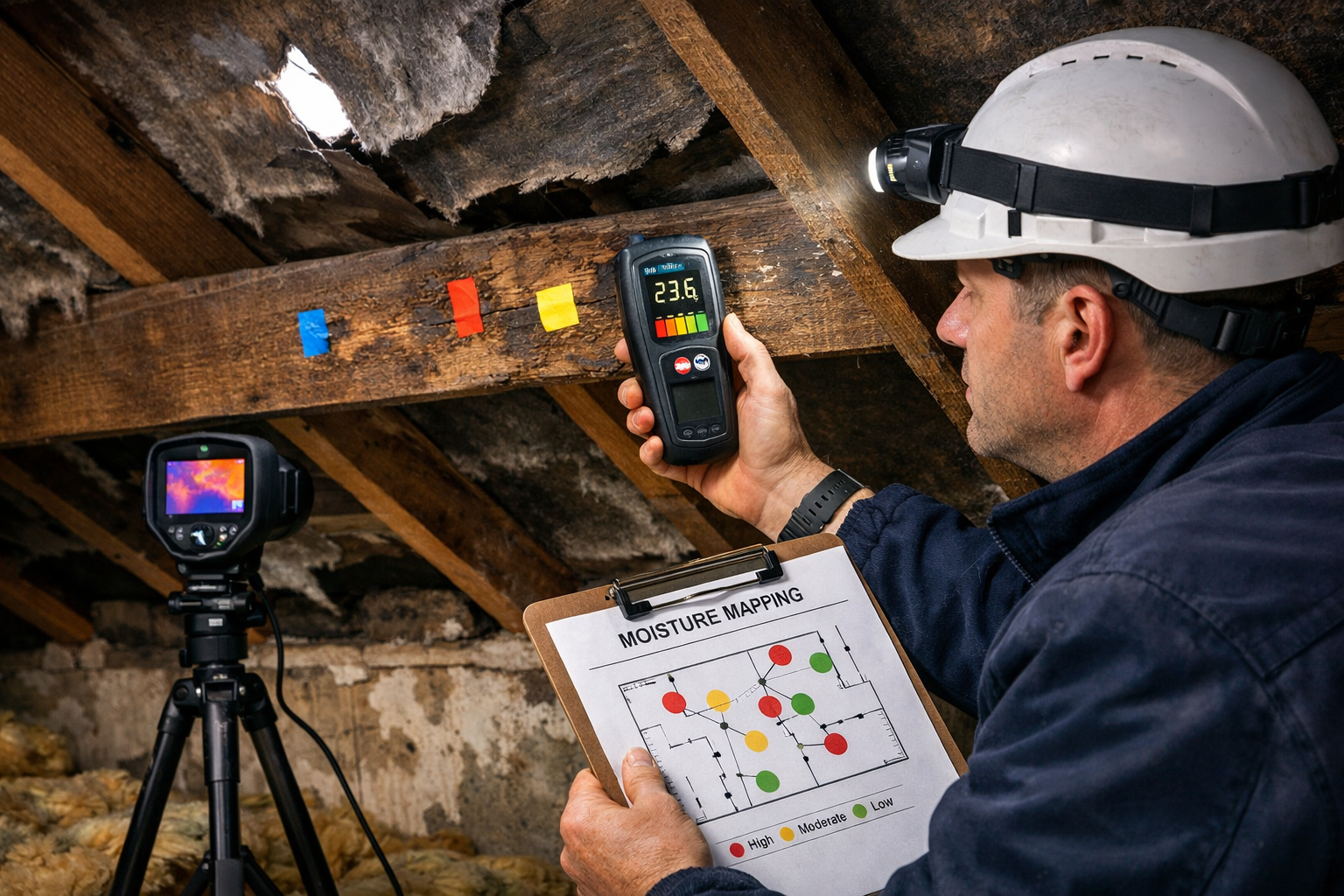
Level 3 surveys include comprehensive moisture assessment using electronic damp meters, thermal imaging (where appropriate), and visual inspection of all accessible areas including loft spaces, subfloor voids, and external walls.[4]
Common Damp Locations in Bungalow Surveys
Experienced surveyors conducting damp surveys focus particular attention on these high-risk areas:
🏠 External Wall Base – The junction between walls and ground where DPC failure most commonly occurs
🏠 Chimney Breasts – Moisture penetration through deteriorating flashing and porous brickwork
🏠 Window and Door Frames – Failed seals and deteriorated timber allowing water ingress
🏠 Loft Spaces – Condensation on cold surfaces and roof leak evidence
🏠 Bathroom and Kitchen Areas – Steam-related condensation and plumbing leak damage
🏠 Subfloor Voids – Ground moisture affecting timber floor joists and causing timber decay
Moisture meter readings above 20% wood moisture equivalent trigger immediate concern, requiring specialist damp and timber surveys to determine decay extent and treatment requirements.[2]
The Health and Structural Consequences of Damp
Untreated damp causes progressive property deterioration and health hazards:
- Timber rot and structural weakness – Wet rot and dry rot destroying floor joists, roof timbers, and window frames
- Masonry decay – Freeze-thaw cycles spalling brickwork and crumbling mortar
- Mold growth – Respiratory health risks and allergic reactions for occupants
- Decoration failure – Peeling paint, stained plaster, and damaged wallpaper
- Electrical safety risks – Moisture affecting wiring and increasing fire/shock hazards
Level 3 surveys document damp severity and distribution, providing evidence for negotiating purchase price reductions or requiring seller remediation before completion. Comprehensive damp treatment including DPC installation, timber replacement, and replastering typically costs £3,000–£15,000 depending on property size and damage extent.[2]
Specialist Damp Survey Requirements
When Level 3 inspections identify significant moisture issues, surveyors recommend follow-up specialist damp and timber surveys from Property Care Association (PCA) registered contractors who provide:
- Detailed moisture mapping across all affected areas
- Timber decay assessment with destructive testing where necessary
- Treatment specifications including chemical DPC injection, timber replacement, and ventilation improvements
- Insurance-backed guarantees (typically 20–30 years) for completed remedial work
- Detailed cost breakdowns for all recommended interventions
These specialist reports cost £150–£400 but provide essential protection and enable accurate budgeting for post-purchase work.[2] Many buyers use specialist findings to negotiate purchase price reductions equivalent to 1.5× the quoted treatment costs, reflecting both direct expenses and disruption impact.
The Level 3 Survey Process: What Buyers Should Expect
Comprehensive Inspection Methodology
RICS Level 3 Building Surveys represent the most thorough pre-purchase property assessment available, typically requiring 4–6 hours on-site for standard bungalows and longer for larger or more complex properties.[3] Surveyors examine:
✅ All accessible areas including loft spaces, subfloor voids, and external perimeters
✅ Structural elements – walls, roofs, foundations, floors, and load-bearing components
✅ Building services – heating, electrics, plumbing, and drainage (visual assessment only)
✅ External features – roofs, chimneys, guttering, walls, windows, and doors
✅ Grounds and boundaries – drainage, paths, fencing, and outbuildings
Surveyors use specialist equipment including moisture meters, binoculars for roof inspection, spirit levels for checking alignment, and ladders for accessing loft spaces. While not destructive, Level 3 surveys involve moving furniture, lifting carpets, and probing suspect areas to identify hidden defects.[4]
Report Structure and Content
Level 3 survey reports typically span 30–60 pages and include:
Executive Summary – Prioritized defects requiring immediate attention, structural concerns, and major repair cost estimates
Detailed Findings – Room-by-room and element-by-element analysis with photographs documenting defects
Repair Recommendations – Specific guidance on remedial work, suggested contractors, and urgency ratings
Cost Awareness – Indicative repair cost ranges (not formal quotations) for budgeting purposes
Maintenance Advice – Ongoing property care recommendations to prevent future deterioration
Risk Assessment – Evaluation of structural, moisture, and safety concerns with severity ratings
Reports use traffic light color coding (red for urgent, amber for significant, green for minor) enabling buyers to quickly identify critical issues requiring immediate attention or negotiation.[6]
Timing and Coordination in the Purchase Process
Level 3 surveys should be commissioned immediately after offer acceptance and before significant legal costs accumulate. Typical timelines in 2026 markets:
- Day 1–3: Survey booking and initial deposit payment
- Day 7–14: On-site inspection conducted
- Day 14–21: Draft report delivery
- Day 21–28: Buyer review, specialist follow-up surveys commissioned if required
- Day 28–35: Price renegotiation or remediation requests submitted
Strategic timing protects buyers' interests while maintaining transaction momentum. Delaying surveys until late in the conveyancing process risks wasted legal fees and emotional investment if serious defects emerge.[3]
Using Survey Findings for Negotiation
Level 3 survey findings provide powerful negotiation leverage in recovering 2026 markets where sellers remain motivated but buyers exercise increased caution. Effective negotiation strategies include:
Price Reduction Requests – Seeking reductions equivalent to 1.5–2× estimated repair costs to account for disruption and contingency
Seller Remediation – Requiring specific repairs before completion, particularly for urgent structural or damp issues
Retention Arrangements – Holding back funds in escrow until post-completion repairs are verified
Conditional Offers – Making purchase contingent on acceptable structural engineer or specialist reports
Transaction Withdrawal – Walking away from properties with uneconomic repair requirements or concealed major defects
Successful negotiation requires professional presentation of survey findings with supporting quotations from specialist contractors and clear articulation of risk implications. Many buyers engage structural surveyors to support negotiations on complex defect issues.
Cost Considerations and Return on Investment
Survey Pricing in 2026 Markets
Level 3 surveys for bungalows cost £700–£1,200 in 2026, with pricing influenced by:
- Property size and complexity
- Geographic location and surveyor availability
- Report detail level and photographic documentation
- Urgency and scheduling requirements
- Surveyor qualifications and experience
Additional specialist reports add further costs:
- Structural engineer assessment: £500–£1,500
- Specialist damp and timber survey: £150–£400
- Drainage survey: £200–£500
- Electrical safety inspection: £150–£300
While these costs appear substantial, they represent 0.2–0.5% of typical bungalow purchase prices and provide protection against defects costing tens of thousands to remediate.[2]
Comparing Survey Options and Value
Understanding different types of survey helps buyers make informed decisions:
| Survey Type | Cost Range | Suitable For | Limitations |
|---|---|---|---|
| Mortgage Valuation | £250–£400 | Lender protection only | No buyer protection, minimal inspection |
| Level 2 HomeBuyer | £400–£700 | Modern properties, good condition | Limited detail, no hidden defect investigation |
| Level 3 Building Survey | £700–£1,200 | Older properties, structural concerns | Higher cost, may require specialist follow-up |
For pre-1990 bungalows, Level 3 surveys deliver optimal value by identifying expensive defects before financial commitment and providing detailed cost awareness for informed decision-making.[5]
Real-World ROI Examples
Case Study 1: Roof Spread Detection
A buyer commissioned a £950 Level 3 survey on a 1970s bungalow listed at £285,000. The survey identified significant roof spread requiring £12,000 remediation. Armed with structural engineer confirmation, the buyer negotiated a £20,000 price reduction, achieving a net benefit of £19,050 after survey and engineer costs.
Case Study 2: Damp Discovery
Level 3 inspection of a 1965 bungalow revealed extensive rising damp affecting 60% of external walls, requiring £8,500 treatment. The buyer used findings to withdraw from the purchase, saving £8,500 in remediation costs plus unknown consequential damage. The £850 survey cost prevented a potentially disastrous purchase.
Case Study 3: Clean Bill of Health
A £1,100 Level 3 survey on a 1982 bungalow identified only minor maintenance items totaling £1,200. The comprehensive report provided purchase confidence, eliminated post-completion surprises, and enabled the buyer to proceed with certainty in a recovering market where property quality varies significantly.
Selecting the Right Surveyor for Bungalow Inspections
RICS Qualification Requirements
Only RICS (Royal Institution of Chartered Surveyors) qualified professionals should conduct Level 3 surveys, ensuring adherence to rigorous professional standards and ethical requirements. RICS members carry professional indemnity insurance protecting buyers against negligent survey work.[3]
When selecting surveyors, verify:
✓ Full RICS membership (MRICS or FRICS designation)
✓ Specialist experience with bungalows and single-storey properties
✓ Local market knowledge of regional construction methods and common defects
✓ Professional indemnity insurance with adequate coverage limits
✓ Recent continuing professional development in structural and damp assessment
Request sample reports to evaluate detail level, photographic quality, and clarity of recommendations before commissioning surveys.[4]
Questions to Ask Potential Surveyors
Before appointing a surveyor, buyers should ask:
- How many bungalow Level 3 surveys have you conducted in the past year?
- What specific equipment do you use for moisture and structural assessment?
- Will you personally conduct the inspection, or will it be delegated?
- What is your typical report turnaround time?
- Do you provide post-report telephone consultations to discuss findings?
- Can you recommend specialist contractors if follow-up surveys are required?
- What is your experience with roof spread and subsidence in bungalows?
Professional surveyors welcome these questions and provide clear, confident responses demonstrating their expertise and commitment to thorough inspection.[6]
Regional Availability and Scheduling
Surveyor availability varies significantly across UK regions in 2026, with high-demand areas experiencing 2–3 week booking delays during peak spring and summer buying seasons. Buyers in recovering markets should:
- Book surveys immediately after offer acceptance to minimize transaction delays
- Consider midweek inspections when surveyor availability is typically better
- Request expedited service if transaction timelines are compressed (usually £100–£200 premium)
- Coordinate with sellers to ensure property access for comprehensive inspection
Early booking protects transaction momentum while ensuring adequate time for specialist follow-up surveys if Level 3 inspections identify significant concerns.[3]
Conclusion: Protecting Your Investment in 2026's Recovering Bungalow Market
The resurgence of regional property markets in 2026 brings renewed opportunity for bungalow buyers seeking accessible, single-storey living. However, this recovery also amplifies risk: older bungalows harbor structural vulnerabilities like roof spread and damp penetration that threaten both property value and long-term habitability. Level 3 Surveys for Bungalows in Recovering 2026 Markets: Spotting Roof Spread and Damp Pre-Purchase represent essential due diligence, protecting buyers from costly hidden defects while providing negotiation leverage in competitive market conditions.
The £700–£1,200 investment in comprehensive RICS Level 3 surveys delivers exceptional value by identifying expensive structural and moisture issues before financial commitment. With roof spread remediation costing £3,000–£80,000 and damp treatment requiring £3,000–£15,000, the survey cost represents a fraction of potential repair expenses while enabling informed decision-making and confident negotiation.
Actionable Next Steps
For buyers currently pursuing bungalow purchases:
- Commission Level 3 surveys immediately after offer acceptance to maximize transaction protection and maintain momentum
- Engage RICS-qualified surveyors with specific bungalow experience and verified professional credentials
- Budget for potential specialist follow-up reports (structural engineer, damp specialist) if survey findings warrant detailed assessment
- Use survey findings strategically in negotiations, presenting clear evidence and cost estimates to support price reduction requests
- Coordinate with solicitors and mortgage brokers to ensure survey timing aligns with conveyancing and finance approval processes
For buyers considering bungalow purchases in 2026:
- Research local market recovery indicators to understand pricing trends and negotiation dynamics in target areas
- Factor survey costs into purchase budgets alongside legal fees, stamp duty, and removal expenses
- Review survey pricing options to understand cost ranges and value propositions across different inspection levels
- Establish relationships with qualified surveyors early to ensure availability when suitable properties emerge
The recovering property markets of 2026 reward diligent buyers who prioritize comprehensive inspection over superficial assessment. Level 3 surveys transform bungalow purchases from risky gambles into informed investments, providing the detailed structural and moisture intelligence necessary for confident decision-making in an evolving market landscape. Whether negotiating price reductions, planning post-purchase repairs, or simply achieving peace of mind, the insights delivered by professional RICS surveys prove invaluable for protecting your property investment in the years ahead.
References
[1] Valuation Strategies Amid January 2026 Rics Residential Survey Spotting Early Market Recovery Signals – https://nottinghillsurveyors.com/blog/valuation-strategies-amid-january-2026-rics-residential-survey-spotting-early-market-recovery-signals
[2] Survey For Bungalows 2025 – https://surveymatch.co.uk/survey-for-bungalows-2025/
[3] Building Survey Checklists For Bungalow Purchases 2026 Rics Guidance On Structural Risks And Costs – https://nottinghillsurveyors.com/blog/building-survey-checklists-for-bungalow-purchases-2026-rics-guidance-on-structural-risks-and-costs
[4] Understanding The Significance Of A Level 3 Building Survey A Case Study By A Rics Surveyor – https://www.peerkingsurveyors.com/post/understanding-the-significance-of-a-level-3-building-survey-a-case-study-by-a-rics-surveyor
[5] Difference Between Level 2 Level 3 Survey – https://www.comparemymove.com/guides/surveying/difference-between-level-2-level-3-survey
[6] Watch – https://www.youtube.com/watch?v=EF7I6GpyGmw