.
Social housing landlords now face legal timeframes to address hazards like damp and mould, but the extension of these requirements to the private rental sector in 2026 creates unprecedented challenges for property valuations. With over 4.6 million private rental properties in England potentially affected by expanded hazard classifications, expert witnesses must navigate complex protocols when testifying about property values impacted by newly regulated conditions including fire safety, electrical hazards, and excess cold.
The Awaab's Law 2026 Expansion: Expert Witness Protocols for New Hazards in Rental Valuation Disputes represents a fundamental shift in how property professionals assess and present evidence about rental property conditions. This legislation, named after two-year-old Awaab Ishak who died from prolonged exposure to mould in 2020, initially applied only to social housing but now extends comprehensive hazard management requirements across the entire rental market[4].
Key Takeaways
- Expanded hazard scope: Awaab's Law now covers fire safety, electrical hazards, excess cold, and structural issues beyond the original damp and mould focus in private rental properties
- Expert witness obligations: Professionals must apply person-centered approaches when assessing hazards, prioritizing vulnerable tenant needs over standard HHSRS classifications[1]
- Valuation impact protocols: New methodologies required for quantifying how hazard remediation timeframes affect property market values and rental income streams
- Impartiality requirements: Expert witnesses must maintain strict duty to tribunals above client interests, following Civil Procedure Rules Part 35 in all rental valuation disputes[1]
- 2026 timeline pressures: Private landlords face immediate compliance requirements, creating surge in expert witness demand for property assessments and court testimonies
Understanding the Awaab's Law 2026 Expansion Framework
From Social Housing to Private Rental Sector
The original Awaab's Law regulations came into force on 27 October 2025 for social housing providers, establishing strict timeframes for investigating and remediating hazards[4]. Social landlords must now investigate reported health hazards within 14 days and complete necessary repairs within specified timeframes based on hazard severity.
The 2026 expansion extends these requirements to the private rental sector (PRS), fundamentally changing landlord obligations across England's rental market. This extension creates immediate implications for property valuations, as rental properties must now meet enhanced standards or face potential enforcement action and reduced market values.
New Hazard Classifications Beyond Damp and Mould
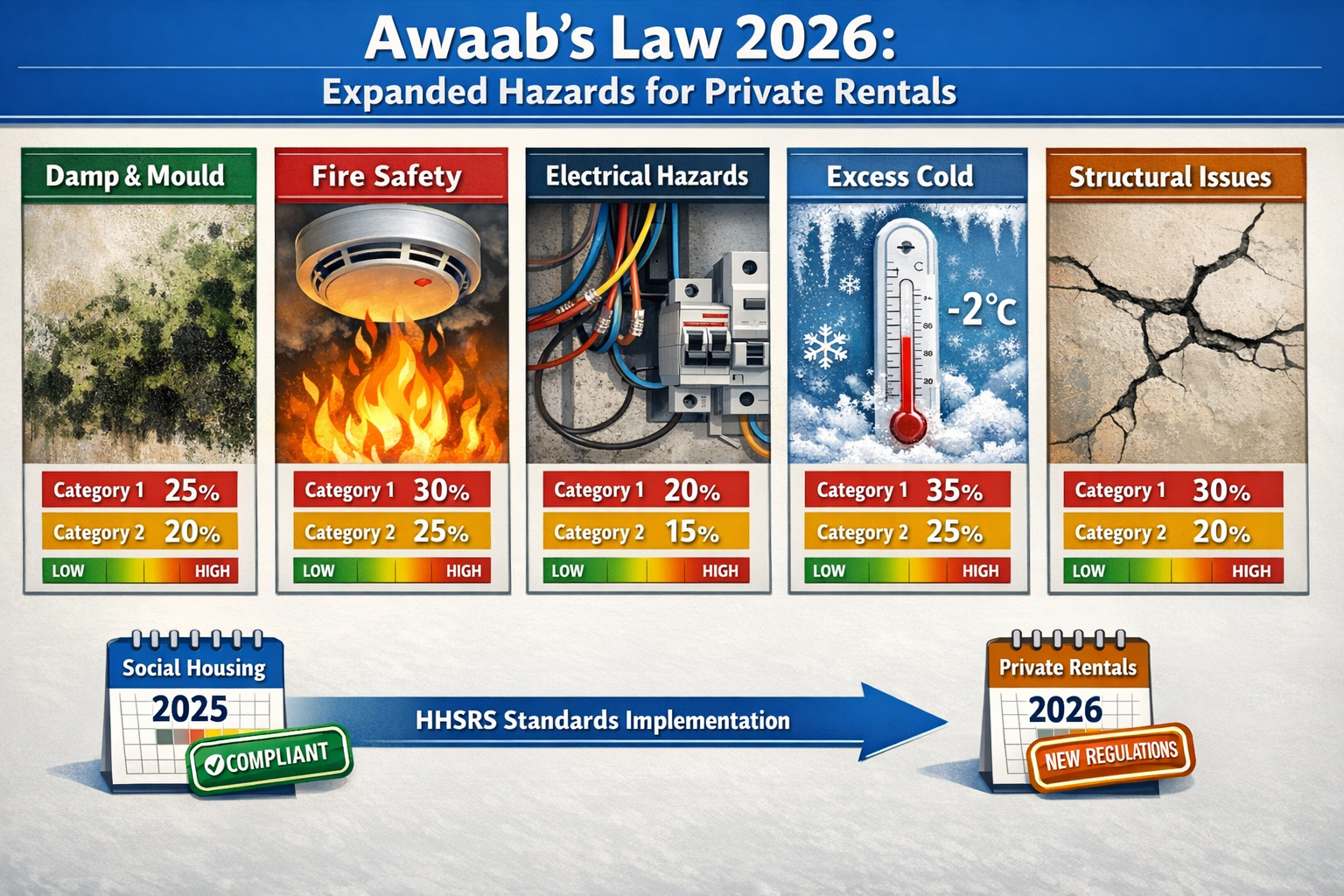
While Awaab's Law initially focused on damp and mould conditions, the 2026 expansion incorporates a broader range of hazards under the Housing Health and Safety Rating System (HHSRS):
🔥 Fire Safety Hazards
- Inadequate fire detection systems
- Blocked escape routes
- Combustible materials in common areas
- Non-compliant electrical installations creating fire risks
⚡ Electrical Hazards
- Outdated or damaged wiring systems
- Insufficient earthing and bonding
- Overloaded circuits
- Non-compliant consumer units
❄️ Excess Cold
- Inadequate heating systems
- Poor insulation and thermal efficiency
- Condensation-prone building fabric
- Fuel poverty considerations
🏚️ Structural and Damp Issues
- Penetrating damp from building defects
- Rising damp affecting habitable rooms
- Condensation and mould growth
- Structural movement affecting weatherproofing
These expanded categories require expert witnesses to possess multidisciplinary knowledge when providing testimony in rental valuation disputes. A comprehensive expert witness report must now address multiple hazard types and their cumulative impact on property value.
Awaab's Law 2026 Expansion: Expert Witness Protocols for Court Testimony
The Person-Centered Approach Requirement
Expert witnesses operating under the Awaab's Law 2026 Expansion: Expert Witness Protocols for New Hazards in Rental Valuation Disputes must adopt a person-centered approach when assessing hazards[1]. This methodology considers the specific vulnerabilities of tenants occupying the property, rather than relying solely on standardized HHSRS classifications.
A hazard classified as Category 2 under HHSRS might pose significant risks to vulnerable tenants, including:
- Young children and infants
- Elderly residents
- Individuals with respiratory conditions
- People with compromised immune systems
- Pregnant women
Expert witnesses must evaluate how these vulnerabilities affect both the severity of hazards and the urgency of remediation, which directly impacts property valuation calculations. This approach requires detailed tenant demographic analysis and medical evidence consideration in valuation disputes.
Civil Procedure Rules Part 35 Compliance
All expert witnesses providing testimony in rental valuation disputes must comply with Civil Procedure Rules Part 35, which establishes fundamental obligations[1]:
Primary Duty to the Tribunal
Expert witnesses owe their primary duty to the court or tribunal, not to the party instructing them. This principle becomes particularly challenging in rental valuation disputes where landlords or tenants may seek favorable valuations to support their positions.
Independence and Impartiality
Experts must provide objective opinions based on their professional expertise, regardless of which party has instructed them. When assessing how hazards affect property values, witnesses cannot advocate for client interests but must present balanced analysis.
Statement of Truth
All expert reports must include a statement confirming the expert understands their duty to the tribunal and has complied with that duty. This declaration carries significant legal weight in rental valuation proceedings.
Disclosure of Instructions
Experts must be prepared to disclose the substance of their instructions, ensuring transparency in how they approached their valuation assessment.
Valuation Methodology for Hazard-Affected Properties
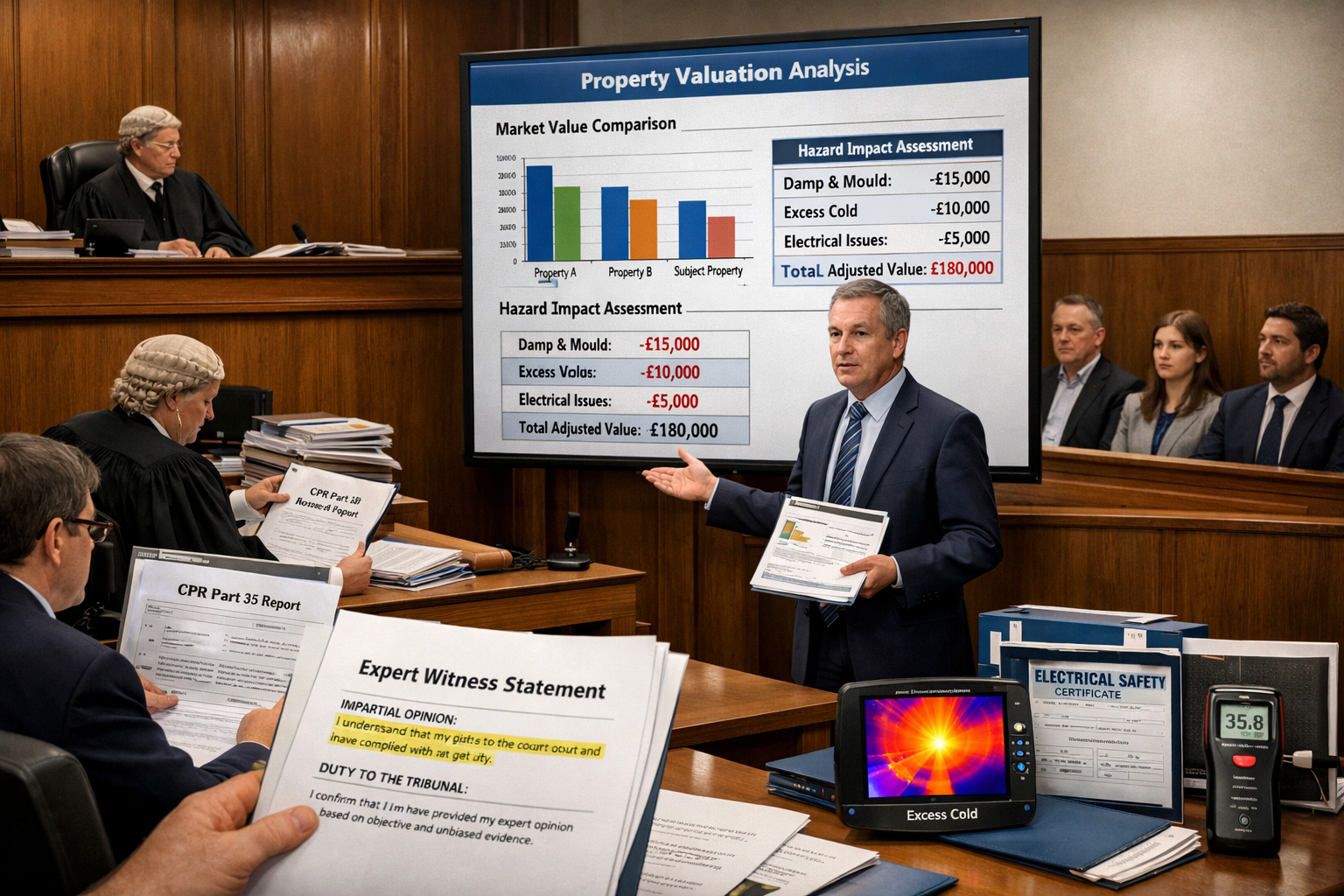
When providing expert testimony on rental property valuations affected by Awaab's Law hazards, witnesses must employ robust methodologies that quantify the impact of required remediation work. This process typically involves:
Comparative Market Analysis Adjustments
Expert witnesses compare the subject property against similar rental properties without hazards, applying percentage adjustments for:
- Cost of remediation works
- Lost rental income during repair periods
- Market stigma from hazard disclosure requirements
- Future maintenance obligations
A RICS valuation surveyor following Red Book standards must document these adjustments with supporting market evidence and technical specifications.
Income Capitalization Adjustments
For investment properties, experts must calculate how hazard remediation timeframes affect rental income streams:
| Hazard Type | Investigation Period | Remediation Timeframe | Income Impact |
|---|---|---|---|
| Damp & Mould (Category 1) | 14 days | 7-14 days | Immediate void period |
| Electrical (Category 1) | 14 days | 14-28 days | Extended vacancy + certification costs |
| Excess Cold | 14 days | 28+ days | Seasonal demand reduction |
| Fire Safety | 14 days | 7-21 days | Insurance premium increases |
These timeframes directly reduce net operating income and affect capitalization rates applied in valuation calculations. Expert witnesses must provide detailed cash flow projections demonstrating the financial impact of compliance requirements.
Cost Approach Considerations
When hazards affect the physical condition of rental properties, experts may employ cost approach methodologies, calculating:
- Replacement cost of defective building elements
- Depreciation from functional obsolescence
- Economic obsolescence from regulatory compliance burdens
- Entrepreneurial profit adjustments
This approach proves particularly relevant for properties requiring substantial electrical rewiring, heating system upgrades, or structural damp remediation to achieve Awaab's Law compliance.
Practical Expert Witness Strategies for Rental Valuation Disputes
Pre-Instruction Due Diligence
Before accepting instructions in rental valuation disputes involving Awaab's Law hazards, expert witnesses should conduct thorough due diligence:
Conflict Checking
Verify no previous relationship with either party that could compromise independence. This includes checking for prior valuations of the subject property or related properties in the landlord's portfolio.
Competency Assessment
Ensure appropriate qualifications and experience across all relevant hazard types. Multi-hazard assessments may require collaboration with specialists in fire safety, electrical systems, or building pathology.
Scope Definition
Clearly establish the valuation purpose, date, and assumptions with instructing parties. Ambiguous instructions create vulnerabilities during cross-examination in tribunal proceedings.
Evidence Gathering and Documentation
Comprehensive evidence collection forms the foundation of credible expert testimony in rental valuation disputes:
Technical Inspections
Conduct detailed property inspections documenting:
- Photographic evidence of all identified hazards
- Thermal imaging for excess cold and damp issues
- Electrical testing certificates and compliance reports
- Fire safety equipment functionality assessments
- Moisture meter readings and damp penetration mapping
Tenant Vulnerability Assessment
Gather evidence regarding occupant characteristics:
- Tenant demographic information (with appropriate privacy protections)
- Medical evidence of health impacts from hazards
- Duration of exposure to hazardous conditions
- Previous complaints and landlord response records
Market Data Collection
Compile comparable evidence demonstrating hazard impacts:
- Rental values for similar properties without hazards
- Transaction prices for properties with disclosed hazards
- Cost data for remediation works from qualified contractors
- Insurance premium variations for properties with safety issues
When preparing valuation reports that may be used in legal proceedings, experts must maintain detailed working papers supporting all conclusions and assumptions.
Cross-Examination Preparation
Expert witnesses providing testimony on the Awaab's Law 2026 Expansion: Expert Witness Protocols for New Hazards in Rental Valuation Disputes must prepare for rigorous cross-examination:
Anticipate Challenge Areas
Common cross-examination topics include:
- Methodology selection and alternative approaches
- Comparables selection and adjustment justifications
- Assumptions regarding remediation costs and timeframes
- Person-centered approach application and vulnerability assessments
- Independence and potential bias indicators
Document Review Mastery
Experts must thoroughly understand all documents in the case bundle, including:
- Previous valuation reports from opposing experts
- Tenant complaints and landlord correspondence
- Local authority enforcement notices
- Remediation quotes and technical specifications
- HHSRS assessments and hazard classifications
Clear Communication Skills
Effective expert witnesses explain complex valuation concepts in accessible language for tribunal members who may lack property expertise. Avoid technical jargon without explanation, and use visual aids to illustrate valuation adjustments and hazard impacts.
Collaborative Expert Discussions
Courts and tribunals increasingly encourage joint expert discussions to narrow areas of disagreement in rental valuation disputes. These discussions require:
Professional Courtesy
Maintain respectful dialogue with opposing experts, focusing on technical issues rather than adversarial positioning. Remember the shared duty to assist the tribunal.
Transparent Methodology Sharing
Openly discuss valuation approaches, data sources, and adjustment calculations. Identify areas of agreement and clearly articulate remaining differences with supporting rationale.
Joint Statement Preparation
Produce comprehensive joint statements that:
- List agreed facts and valuation inputs
- Specify areas of disagreement with each expert's position
- Quantify the range of reasonable valuation opinions
- Explain technical reasons for divergent conclusions
These collaborative processes often resolve disputes without full hearings, reducing costs and delays for all parties.
Impact on Property Valuation Practice and Market Dynamics
Valuation Adjustments for Compliance Costs
The Awaab's Law 2026 Expansion: Expert Witness Protocols for New Hazards in Rental Valuation Disputes creates measurable impacts on rental property values across England. Expert witnesses must quantify these effects through systematic adjustment processes.
Immediate Remediation Costs
Properties with identified hazards require deductions for:
- Direct repair costs (materials and labor)
- Professional fees for surveys and certifications
- Temporary accommodation costs for displaced tenants
- Lost rental income during remediation periods
For a typical rental property with multiple hazards, these costs can range from £5,000 to £25,000 depending on severity and building type.
Ongoing Compliance Obligations
Beyond immediate remediation, expert witnesses must consider long-term compliance costs:
- Enhanced maintenance schedules for electrical and heating systems
- Regular damp and mould inspections
- Fire safety equipment testing and certification
- Energy efficiency improvements to address excess cold
These ongoing obligations affect capitalization rates and investment yields, requiring adjustments of 0.5% to 1.5% to discount rates in income approaches.
Market Stigma and Disclosure Requirements
Properties with hazard histories may suffer market stigma even after remediation, particularly when:
- Local authority enforcement actions are publicly recorded
- Tenant legal proceedings receive media attention
- Serious health impacts occurred from hazard exposure
Expert witnesses must research comparable transactions to quantify stigma effects, which typically range from 2% to 8% of market value depending on hazard severity and publicity.
Sector-Specific Valuation Considerations
Different rental property types face varying impacts from Awaab's Law expansion:
Houses in Multiple Occupation (HMOs)
HMO properties face heightened scrutiny due to:
- Multiple vulnerable tenants potentially affected
- Complex electrical systems serving numerous occupants
- Fire safety requirements for shared accommodation
- Higher likelihood of condensation and mould from occupancy density
Expert witnesses valuing HMOs must apply more conservative adjustments, often 15-25% higher than single-family rentals with comparable hazards.
Purpose-Built Flats
Apartment buildings present unique challenges:
- Shared building systems affecting multiple units
- Service charge implications for remediation costs
- Leaseholder versus freeholder responsibility questions
- Common area hazards impacting individual unit values
Lease extension valuations become particularly complex when building-wide hazards exist, requiring careful analysis of responsibility allocation and cost recovery mechanisms.
Student Accommodation
Student rental properties face specific vulnerabilities:
- High turnover increasing wear and condensation risks
- Young adult tenant demographic with potential health vulnerabilities
- Seasonal vacancy patterns affecting remediation scheduling
- Multiple landlord types (private, institutional, university-owned)
Expert witnesses must consider academic calendar constraints when calculating income loss from remediation works in student accommodation valuations.
Regulatory Enforcement and Expert Witness Implications
Local Authority Powers and Enforcement Actions
The extension of Awaab's Law to the private rental sector in 2026 significantly expands local authority enforcement capabilities. Expert witnesses must understand these powers when providing valuation testimony:
Improvement Notices
Local authorities can serve improvement notices requiring hazard remediation within specified timeframes. Properties subject to improvement notices suffer valuation impacts from:
- Mandatory compliance costs
- Potential rental restrictions during works
- Public record of enforcement action
- Increased regulatory scrutiny for future issues
Prohibition Orders
For severe hazards, authorities may prohibit property use until remediation completes. Expert witnesses must value properties subject to prohibition orders considering:
- Complete loss of rental income
- Carrying costs during prohibition period
- Potential tenant compensation claims
- Market stigma from serious hazard findings
Civil Penalties
Landlords failing to comply with Awaab's Law requirements face civil penalties up to £30,000 per offense. These penalties create additional valuation considerations:
- Contingent liability provisions in investment valuations
- Increased risk premiums for non-compliant portfolios
- Insurance implications and premium increases
When providing expert testimony, witnesses must distinguish between actual penalties imposed and potential future liabilities, clearly stating assumptions about compliance status.
Tenant Rights and Compensation Claims
Awaab's Law expansion strengthens tenant rights to safe, hazard-free accommodation, creating new valuation considerations:
Rent Repayment Orders
Tenants can seek rent repayment for periods when properties contained serious hazards. Expert witnesses may need to:
- Calculate fair rental values for properties with hazards
- Determine appropriate rent reductions for hazard periods
- Assess reasonableness of landlord remediation responses
- Quantify tenant damages from hazard exposure
Housing Disrepair Claims
Tenants increasingly pursue disrepair claims for hazard-related health impacts. Expert witnesses providing valuation evidence must consider:
- Diminution in rental value from hazard presence
- Cost of alternative accommodation during repairs
- Property value impacts from successful tenant claims
- Insurance implications for landlords with claim histories
These tenant rights create downward pressure on rental property values, particularly for portfolios with poor maintenance records or multiple hazard complaints.
Future Developments and Emerging Protocols
Anticipated Regulatory Enhancements
The Awaab's Law 2026 Expansion: Expert Witness Protocols for New Hazards in Rental Valuation Disputes continues evolving as the government monitors implementation effectiveness. Expert witnesses should anticipate:
Shorter Remediation Timeframes
Current consultation processes suggest potential reductions in allowable remediation periods, particularly for Category 1 hazards affecting vulnerable tenants. Shorter timeframes would increase landlord compliance costs and expert valuation adjustments.
Expanded Hazard Categories
Future regulations may incorporate additional hazards beyond current HHSRS classifications, including:
- Poor indoor air quality from ventilation deficiencies
- Noise pollution affecting tenant health
- Overcrowding and space standards
- Pest infestations and vermin issues
Mandatory Hazard Disclosure
Proposed requirements for landlords to disclose hazard histories to prospective tenants would increase market transparency but potentially reduce property values through enhanced stigma effects.
Technology Integration in Expert Evidence
Expert witnesses increasingly employ advanced technologies when assessing hazards and preparing valuation evidence:
Thermal Imaging and Moisture Mapping
Infrared cameras and moisture meters provide objective evidence of excess cold and damp issues, creating compelling visual evidence for tribunal proceedings.
Indoor Air Quality Monitoring
Continuous monitoring devices measure humidity, temperature, and air quality parameters, documenting hazard conditions over extended periods rather than relying on single inspection dates.
Digital Documentation Systems
Cloud-based platforms enable comprehensive evidence management, including:
- Timestamped photographic records
- Annotated floor plans with hazard locations
- Automated report generation with consistent formatting
- Secure evidence sharing with instructing parties and tribunals
These technologies enhance expert witness credibility and provide more robust evidence foundations for valuation conclusions.
Professional Development Requirements
As Awaab's Law protocols evolve, expert witnesses must maintain current knowledge through:
Continuing Professional Development (CPD)
RICS and other professional bodies offer specialized training on:
- Awaab's Law compliance requirements
- Person-centered hazard assessment methodologies
- Expert witness duties and Civil Procedure Rules
- Valuation adjustments for regulatory compliance costs
Cross-Disciplinary Collaboration
Effective expert witnesses develop networks with specialists in:
- Building pathology and damp investigation
- Electrical safety and fire risk assessment
- Environmental health and tenant welfare
- Legal practitioners specializing in housing disputes
This collaborative approach ensures comprehensive expertise when addressing the multifaceted challenges of rental valuation disputes under Awaab's Law expansion.
Strategic Guidance for Property Professionals
For Landlords and Property Investors
Property owners facing potential valuation disputes under Awaab's Law should:
Proactive Hazard Management
Implement regular inspection schedules identifying hazards before tenant complaints or enforcement actions. Early detection and remediation minimize valuation impacts and demonstrate responsible property management.
Comprehensive Documentation
Maintain detailed records of:
- Regular maintenance activities
- Tenant complaint responses and resolution timelines
- Professional inspection reports and certifications
- Remediation works with contractor invoices and completion certificates
This documentation provides crucial evidence when expert witnesses assess property values and landlord compliance efforts.
Strategic Valuation Timing
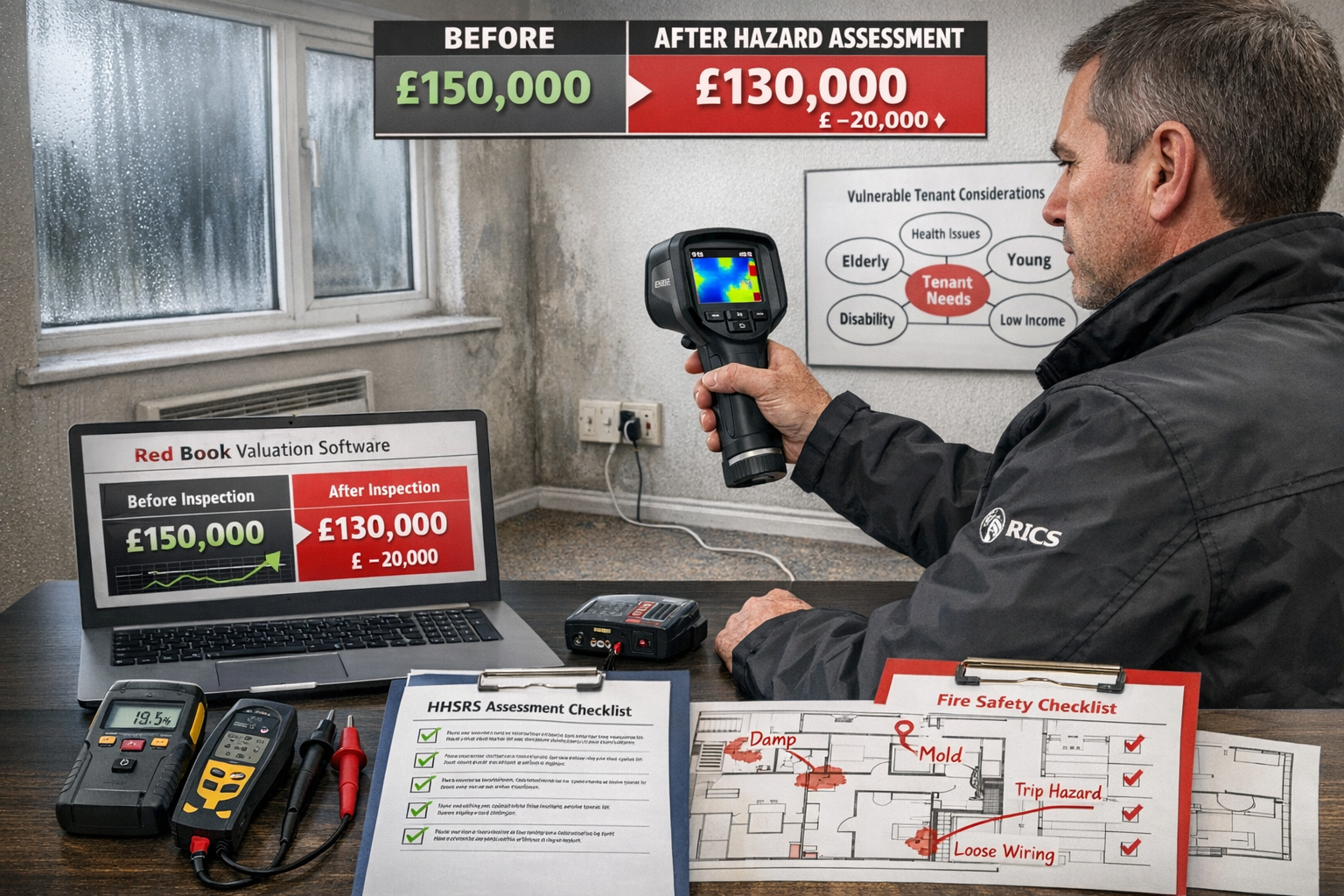
Consider obtaining Red Book valuations before and after hazard remediation to document value recovery and support investment decision-making.
For Tenants and Tenant Representatives
Tenants pursuing compensation or rent reductions should:
Evidence Collection
Document hazard conditions through:
- Dated photographs showing hazard progression
- Written complaints to landlords with delivery confirmation
- Medical evidence linking health issues to property conditions
- Records of temporary accommodation costs during remediation
Expert Instruction Considerations
When instructing expert witnesses for valuation evidence:
- Verify appropriate qualifications and experience
- Ensure understanding of person-centered approach requirements
- Request clear explanations of valuation methodologies
- Confirm compliance with Civil Procedure Rules Part 35
Alternative Dispute Resolution
Consider mediation or expert determination before formal tribunal proceedings, potentially reducing costs and achieving faster resolutions.
For Surveyors and Valuation Professionals
Property professionals providing expert witness services should:
Specialization Development
Build expertise in specific hazard types or property sectors to differentiate services and command premium fees for specialized knowledge.
Professional Indemnity Insurance
Ensure adequate coverage for expert witness activities, which carry different risk profiles than standard valuation services. Typical coverage should exceed £1 million for professionals regularly providing court testimony.
Quality Assurance Systems
Implement robust quality control processes including:
- Peer review of expert reports before submission
- Standardized templates ensuring CPR Part 35 compliance
- Conflict checking procedures
- Continuing professional development tracking
These systems protect professional reputations and minimize liability exposure in high-stakes rental valuation disputes.
Conclusion
The Awaab's Law 2026 Expansion: Expert Witness Protocols for New Hazards in Rental Valuation Disputes fundamentally transforms how property professionals assess and testify about rental property values affected by health and safety hazards. With the extension to the private rental sector, expert witnesses must navigate complex protocols addressing fire safety, electrical hazards, excess cold, and structural issues beyond the original damp and mould focus.
Successful expert witnesses in this evolving landscape must master person-centered assessment approaches that prioritize vulnerable tenant needs, maintain strict impartiality under Civil Procedure Rules Part 35, and employ robust valuation methodologies quantifying hazard impacts on property values. The intersection of regulatory compliance, tenant welfare, and property economics creates unprecedented challenges requiring multidisciplinary expertise and sophisticated analytical frameworks.
Actionable Next Steps
For Property Professionals:
- Pursue specialized CPD training on Awaab's Law requirements and expert witness protocols
- Develop relationships with specialists in building pathology, electrical safety, and fire risk assessment
- Invest in technology tools for objective hazard documentation and evidence management
- Review professional indemnity insurance coverage for expert witness activities
For Landlords:
- Conduct comprehensive hazard assessments across rental portfolios
- Implement proactive maintenance programs addressing electrical, heating, and damp issues
- Establish documentation systems tracking compliance efforts and tenant communications
- Obtain professional valuations before major remediation works to quantify value recovery
For Tenants:
- Document hazard conditions thoroughly with dated evidence
- Submit written complaints to landlords triggering Awaab's Law investigation timeframes
- Seek independent expert advice when pursuing compensation or rent reduction claims
- Consider alternative dispute resolution before formal tribunal proceedings
The expansion of Awaab's Law represents a watershed moment in rental property regulation, placing tenant health and safety at the forefront of property valuation considerations. Expert witnesses who adapt their protocols to address these new requirements while maintaining professional standards will find themselves in high demand as the market adjusts to this transformative legislation. The combination of regulatory enforcement, enhanced tenant rights, and market transparency creates a new paradigm where hazard-free properties command premium values, while non-compliant properties face significant valuation penalties and investment risks.
As 2026 progresses and enforcement actions increase, the body of case law and tribunal decisions will further refine expert witness protocols and valuation methodologies. Property professionals must remain vigilant, continuously updating their knowledge and approaches to serve tribunals effectively while advancing the fundamental goal of safe, healthy rental accommodation for all tenants across England.
References
[1] Expert Evidence In Housing Conditions Claims – https://www.localgovernmentlawyer.co.uk/housing-law/315-housing-features/99171-expert-evidence-in-housing-conditions-claims
[2] Expert Witness Testimonies In 2026 Rental Regulation Disputes Preparing For Awaabs Law And Tenant Demand Surges – https://nottinghillsurveyors.com/blog/expert-witness-testimonies-in-2026-rental-regulation-disputes-preparing-for-awaabs-law-and-tenant-demand-surges
[3] Awaabs Law Private Rented Sector Extension – https://awaabs-law.com/awaabs-law-private-rented-sector-extension
[4] Awaabs Law Guidance For Social Landlords – https://www.gov.uk/government/publications/awaabs-law-guidance-for-social-landlords