
Research shows that over 40% of party wall disputes in 2026 stem from perceived surveyor bias when property owners attempt to use a single agreed surveyor. This statistic reveals a fundamental flaw in how many building owners approach party wall procedures, particularly for complex renovation projects where impartiality becomes paramount. The Evergreen Guide to Three Surveyor Party Wall Agreements: When and How to Appoint for Impartial Awards provides a comprehensive framework for navigating the three surveyor appointment process, ensuring fair outcomes when construction work affects shared boundaries.
This evergreen guide addresses the critical protocols for selecting and managing three surveyors under the Party Wall etc. Act 1996, including detailed cost allocation mechanisms and dispute escalation procedures. Understanding when to invoke the three surveyor process—rather than defaulting to an agreed surveyor—can save thousands in dispute resolution costs and prevent construction delays that plague 2026 renovations.
Key Takeaways
- Three surveyor appointments provide maximum impartiality when trust between neighbors is compromised or complex structural work requires independent oversight
- Cost allocation follows specific statutory guidelines, with the building owner typically bearing surveyor fees but with provisions for unreasonable expense challenges
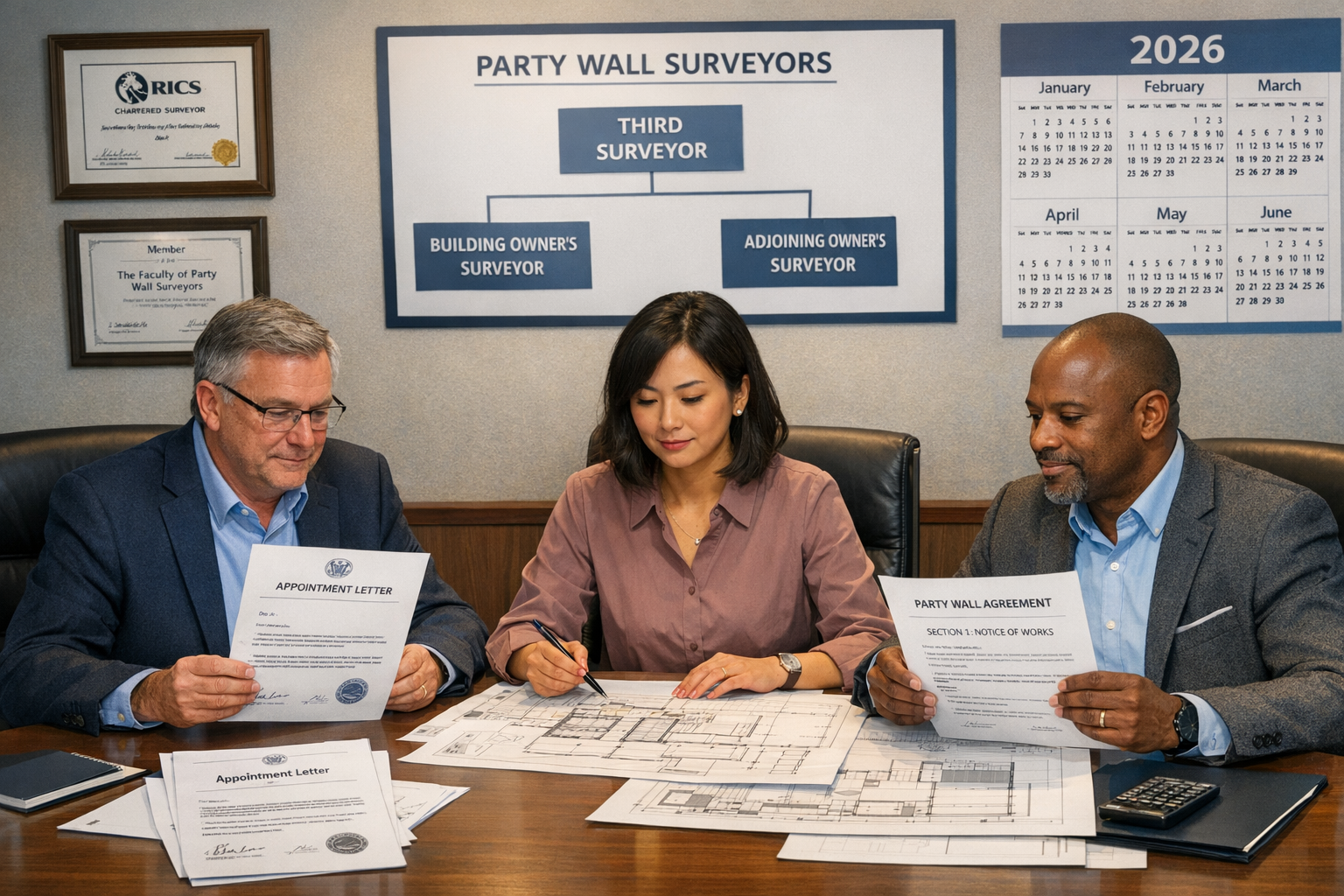
- The third surveyor acts as an impartial arbitrator selected by the two appointed surveyors, not by the property owners themselves
- Proper appointment procedures must follow strict timelines and documentation requirements to ensure awards are legally enforceable
- Dispute escalation protocols exist when surveyors cannot reach consensus, protecting both parties' interests throughout the construction process
Understanding the Three Surveyor Framework in Party Wall Agreements
The three surveyor approach represents the most robust mechanism for resolving party wall disputes under the Party Wall etc. Act 1996. Unlike the agreed surveyor route where both parties consent to a single professional, the three surveyor process automatically engages when either property owner dissents to the proposed works or explicitly requests separate representation.
When Three Surveyors Become Necessary
Several scenarios make the three surveyor appointment essential for achieving impartial awards:
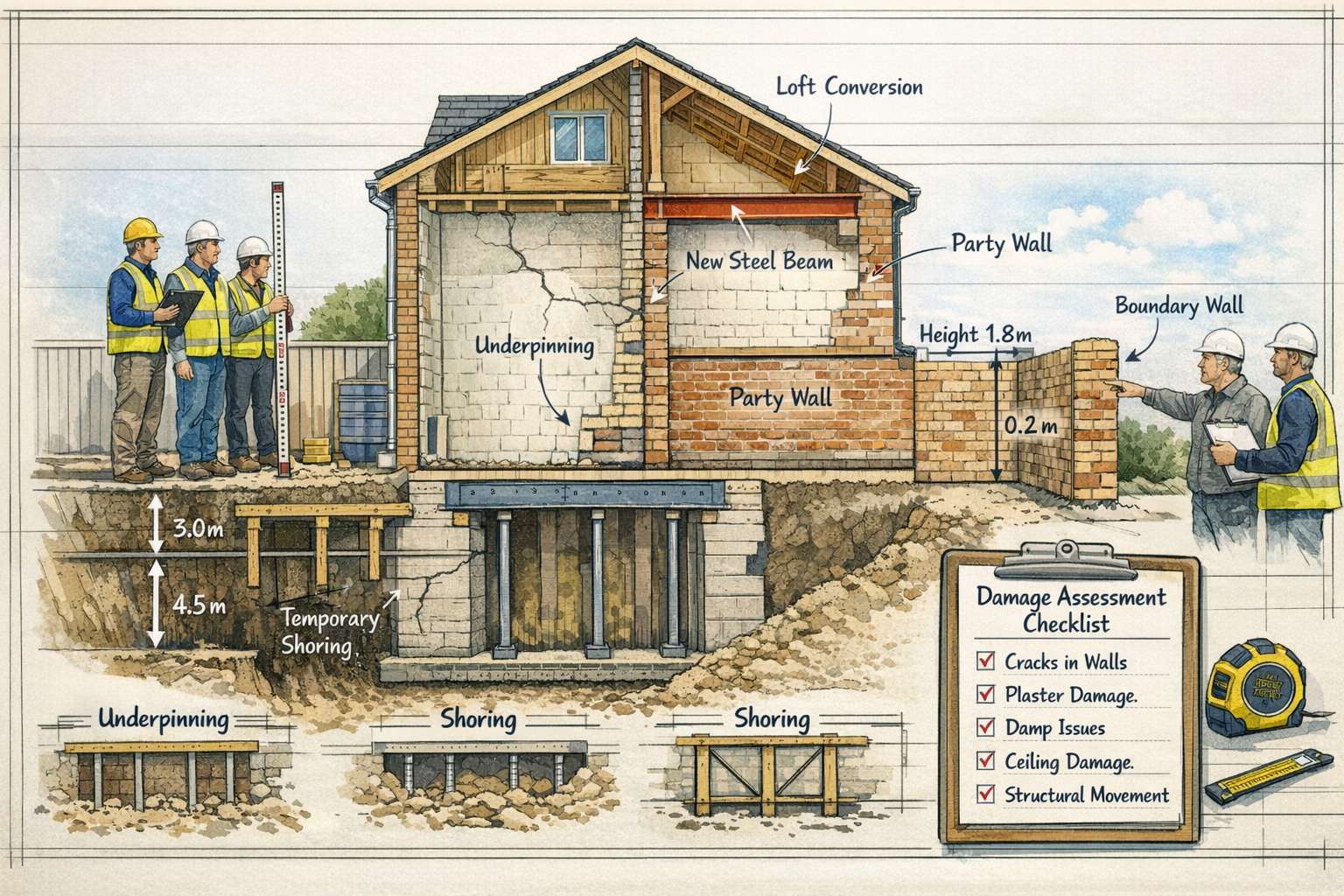
🏗️ Complex structural alterations involving basement excavations within three meters of a neighboring property
🔨 Major loft conversions requiring steel beam insertion through party walls
🏚️ Significant demolition work affecting the structural integrity of adjoining properties
💰 High-value properties where potential damage claims could exceed £50,000
⚖️ Pre-existing disputes between neighbors that compromise trust in a single surveyor's objectivity
The three surveyor structure provides checks and balances absent in agreed surveyor arrangements. Each property owner appoints their own surveyor who advocates for their interests while maintaining professional standards. These two appointed surveyors then jointly select a third surveyor who serves as the impartial decision-maker when disagreements arise.
The Legal Framework and Statutory Obligations
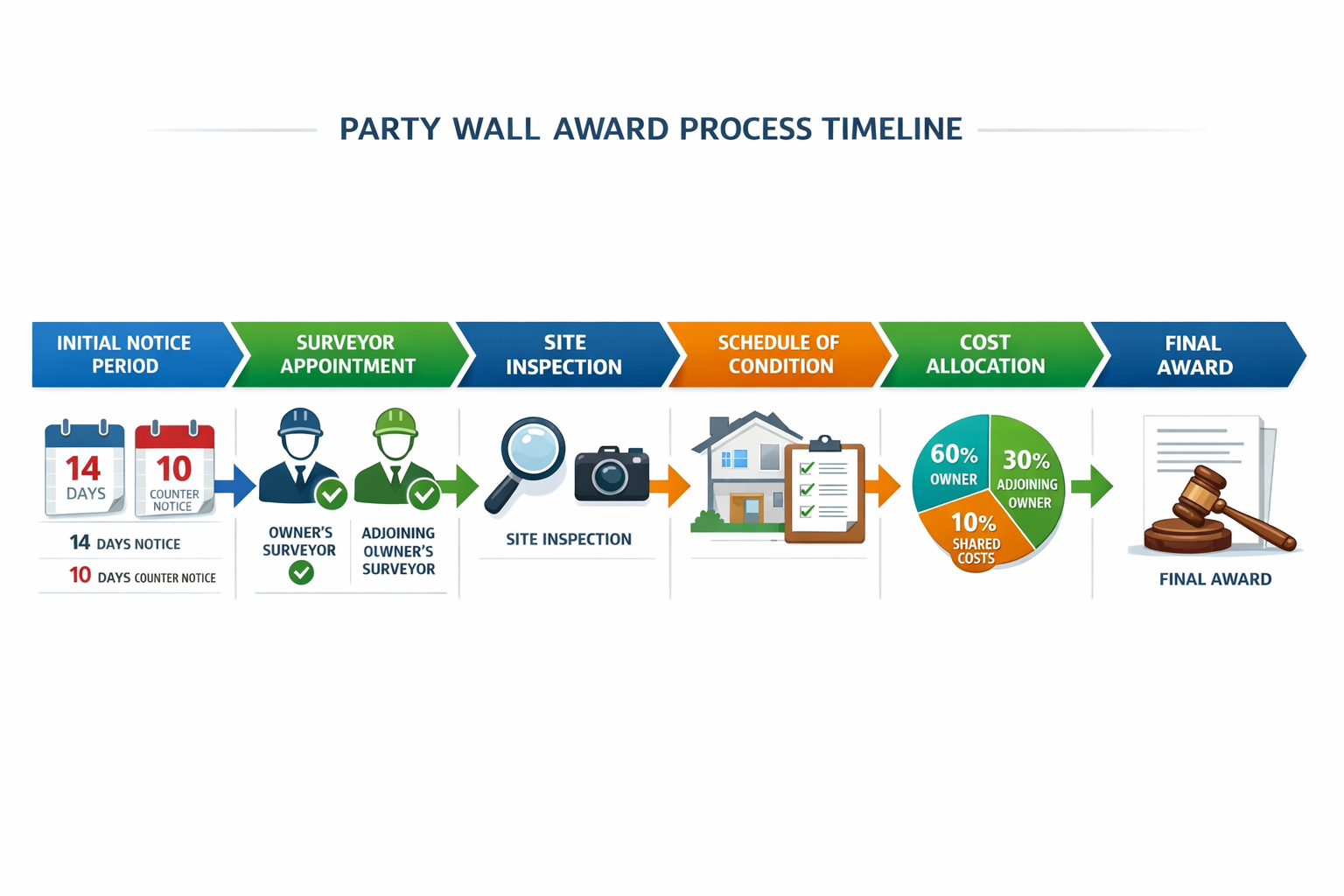
Under Section 10 of the Party Wall etc. Act 1996, the three surveyor appointment follows a prescribed sequence. The building owner must serve proper notice of intended works, typically 2 months for party wall works or 1 month for excavation works. If the adjoining owner dissents or fails to respond within 14 days, a dispute is deemed to have arisen.
At this point, each owner must appoint a surveyor within 10 days of the dispute arising. The appointed surveyors should be qualified professionals—typically RICS Chartered Building Surveyors with party wall expertise. These surveyors then have 10 days to select the third surveyor, who must also possess appropriate qualifications and experience.
Critical appointment requirements include:
- Written appointment letters clearly stating the surveyor's name and address
- Confirmation of the surveyor's willingness to act
- Specification of which property owner they represent
- Acknowledgment of statutory duties under the Act
Failure to follow these procedures can invalidate subsequent awards, leading to costly legal challenges. The party wall award guidance provides detailed protocols that surveyors must observe throughout the process.
Detailed Protocols for Appointing Three Surveyors: The Evergreen Guide Approach
The Evergreen Guide to Three Surveyor Party Wall Agreements emphasizes systematic appointment procedures that withstand legal scrutiny while maintaining professional relationships between all parties. Proper surveyor selection forms the foundation of successful party wall awards.
Selecting Your Appointed Surveyor: Key Criteria
Building owners and adjoining owners should evaluate potential surveyors against specific criteria:
Professional qualifications ✓
- RICS Chartered Building Surveyor status
- Demonstrated party wall expertise with minimum 5 years experience
- Professional indemnity insurance covering party wall work
- Local knowledge of construction practices and building regulations
Independence and conflicts ✓
- No prior relationship with the opposing party
- No financial interest in the construction project
- Clear conflict of interest disclosure
- Ability to commit time to the project timeline
Communication skills ✓
- Responsiveness to inquiries and concerns
- Clear explanation of technical matters
- Regular progress updates throughout the process
- Ability to negotiate effectively with the other appointed surveyor
The cost of party wall procedures varies significantly based on surveyor selection. Experienced party wall surveyors typically charge £150-£300 per hour in 2026, with total fees for straightforward cases ranging from £800-£1,500 per surveyor. Complex projects involving extensive structural work may generate fees exceeding £5,000 per surveyor.
The Third Surveyor Selection Process
Unlike the two appointed surveyors who advocate for their respective clients, the third surveyor must maintain absolute impartiality. The two appointed surveyors jointly select this individual, and neither property owner has direct input into the choice.
Third surveyor characteristics:
| Attribute | Requirement | Rationale |
|---|---|---|
| Seniority | Typically 10+ years party wall experience | Provides authority to resolve disputes |
| Independence | No connection to either appointed surveyor | Ensures unbiased decision-making |
| Availability | Commitment to respond within 10 days | Prevents project delays |
| Jurisdiction | Knowledge of local construction standards | Enables practical, enforceable awards |
| Reputation | Recognized expertise in party wall matters | Encourages appointed surveyors to reach agreement |
The third surveyor only becomes actively involved when the two appointed surveyors cannot reach consensus on specific matters within the award. This creates a powerful incentive for the appointed surveyors to negotiate effectively, as neither wants to cede control to the third surveyor whose decision becomes final and binding.
Documentation and Appointment Letters
Proper documentation prevents disputes about surveyor authority and responsibilities. Each appointment should include:
Building Owner's Surveyor Appointment Letter:
- Full name and professional credentials of appointed surveyor
- Postal address and contact details
- Explicit statement: "I hereby appoint [Name] as my surveyor under the Party Wall etc. Act 1996"
- Date of appointment
- Signature of building owner
- Acknowledgment from surveyor accepting the appointment
Adjoining Owner's Surveyor Appointment Letter:
- Mirror format of building owner's letter
- Clear identification of which property is represented
- Reference to the specific notice that triggered the appointment
- Confirmation of surveyor's independence
Third Surveyor Appointment Letter:
- Joint letter from both appointed surveyors
- Statement of third surveyor's role as impartial decision-maker
- Specification of fee arrangements
- Confirmation of acceptance
These documents create an auditable trail that courts recognize if the award faces subsequent challenge. When neighbours are carrying out works without party wall agreement, proper documentation becomes even more critical for establishing the legal framework.
Cost Allocation, Dispute Escalation, and Award Management in 2026
The financial and procedural aspects of three surveyor appointments require careful management to avoid excessive costs and construction delays. The Evergreen Guide to Three Surveyor Party Wall Agreements provides specific protocols for handling these practical challenges.
Understanding Cost Allocation Under the Act
Section 10(13) of the Party Wall etc. Act 1996 establishes that the building owner—the party proposing the works—typically bears all reasonable costs associated with the party wall process. This includes:
💷 Fees for both appointed surveyors (building owner's and adjoining owner's)
💷 Third surveyor fees if their involvement becomes necessary
💷 Schedule of condition costs for documenting pre-work property status
💷 Award preparation and service expenses
However, "reasonable" remains a critical qualifier. If the adjoining owner acts unreasonably—for example, by refusing reasonable works or instructing their surveyor to adopt obstructive positions—the award may allocate costs differently. The appointed surveyors must document any unreasonable behavior in the award to justify alternative cost allocation.
Typical cost breakdown for standard three surveyor appointments in 2026:
- Building owner's surveyor: £1,200-£2,000
- Adjoining owner's surveyor: £1,200-£2,000
- Third surveyor (if required): £800-£1,500
- Schedule of condition: £300-£600
- Award preparation: £200-£400
- Total range: £3,700-£6,500
Complex projects involving multiple properties or extensive structural work can generate significantly higher costs. Building owners should budget 1-2% of construction costs for party wall procedures when using the three surveyor approach.
Dispute Escalation Protocols
The three surveyor structure includes built-in escalation mechanisms when the appointed surveyors cannot agree. The process follows this hierarchy:
Level 1: Direct negotiation between the two appointed surveyors
- Most issues resolve at this stage through professional discussion
- Surveyors exchange technical assessments and proposed solutions
- Timeline: Typically 2-4 weeks for straightforward matters
Level 2: Third surveyor consultation
- Appointed surveyors jointly refer specific disputed points
- Third surveyor reviews submissions from both parties
- Third surveyor issues binding determination on contested matters
- Timeline: 10-14 days for third surveyor decision
Level 3: Award appeal to county court
- Available only on points of law, not technical disagreement
- Requires demonstration that surveyors exceeded statutory authority
- Expensive and time-consuming (£5,000+ in legal costs)
- Timeline: 3-6 months minimum
The party wall consent process benefits from clear escalation protocols that prevent minor disagreements from derailing entire projects.
Managing the Award Process
Once appointed, the three surveyors must work systematically to prepare and serve the party wall award. This document becomes the legally binding agreement governing the construction work.
Essential award components:
- Preamble identifying all parties, properties, and appointed surveyors
- Description of works with sufficient technical detail for enforcement
- Schedule of condition documenting pre-work property status
- Rights granted specifying access requirements and working hours
- Protective measures required to prevent damage
- Dispute resolution procedures if issues arise during construction
- Cost allocation for surveyor fees and award preparation
- Service details confirming proper delivery to all parties
The appointed surveyors must conduct joint inspections of both properties, typically accompanied by the building owner's contractor. These inspections inform the schedule of condition guidance that establishes baseline property status before work commences.
Avoiding Common Pitfalls in Three Surveyor Appointments
Even experienced property owners make mistakes that compromise the three surveyor process:
❌ Delaying surveyor appointment beyond the 10-day statutory period
❌ Selecting unqualified surveyors without proper party wall expertise
❌ Failing to respond to surveyor requests for information or access
❌ Instructing surveyors to adopt unreasonable positions that increase costs
❌ Commencing work before the award is served and expires the 14-day appeal period
❌ Ignoring award conditions during construction, triggering breach claims
The consequences of these errors range from invalid awards requiring complete restart of the process to significant damage to property in party wall scenarios that generate expensive litigation.
Best Practices for 2026 Renovations
Modern construction projects in 2026 present unique challenges that the three surveyor process must address:
🔧 Complex structural engineering requiring specialized technical assessment
📱 Digital documentation using photographic and video evidence for schedules of condition
⚡ Accelerated timelines demanding responsive surveyor communication
🌍 Sustainability requirements affecting construction methods and materials
🏗️ Building regulation changes influencing party wall work specifications
Professional surveyors adapt traditional party wall procedures to accommodate these contemporary factors while maintaining statutory compliance. The three surveyor approach provides flexibility to address novel technical challenges through collaborative problem-solving.
Monitoring Work Progress and Award Compliance
The party wall award remains a living document throughout construction. The appointed surveyors retain ongoing responsibilities to:
- Monitor compliance with award conditions
- Inspect work at critical stages
- Address unforeseen issues requiring award variations
- Resolve disputes about working methods or protective measures
- Document any damage and determine remediation requirements
- Certify work completion and final property condition
Building owners should maintain regular communication with their appointed surveyor, providing advance notice of key construction milestones. This proactive approach prevents surprises that could trigger disputes or work stoppages.
The party wall procedures extend beyond initial award service, encompassing the entire construction period until final completion and any necessary remediation work.
Conclusion
The Evergreen Guide to Three Surveyor Party Wall Agreements: When and How to Appoint for Impartial Awards provides essential protocols for property owners undertaking complex renovations in 2026. The three surveyor approach offers maximum protection against bias and ensures fair outcomes when construction work affects shared boundaries, despite higher initial costs compared to agreed surveyor arrangements.
Success depends on understanding when three surveyors become necessary—typically for complex structural work, high-value properties, or situations where trust between neighbors has eroded. Proper surveyor selection based on qualifications, experience, and independence forms the foundation of effective party wall awards.
Cost allocation follows statutory guidelines with building owners bearing reasonable expenses, while dispute escalation protocols provide clear pathways for resolving technical disagreements without resorting to expensive litigation. The third surveyor's role as impartial arbitrator creates powerful incentives for the appointed surveyors to negotiate effectively.
Actionable Next Steps
Property owners planning construction work affecting party walls should:
- Assess project complexity to determine whether three surveyors or an agreed surveyor best serves the situation
- Research qualified surveyors with proven party wall expertise and appropriate professional credentials
- Serve proper notices following statutory timelines and documentation requirements
- Budget appropriately for surveyor fees, typically 1-2% of construction costs for three surveyor appointments
- Maintain open communication with appointed surveyors throughout the construction process
- Document everything to create an auditable trail if disputes arise
- Comply fully with award conditions to avoid breach claims and relationship damage
The three surveyor process may seem bureaucratic and expensive, but it provides essential protection for both building owners and adjoining owners. By following the protocols outlined in this evergreen guide, property owners can navigate party wall procedures confidently, achieving impartial awards that enable successful construction projects while preserving neighborly relationships.
For projects beginning in 2026, early engagement with qualified party wall surveyors prevents delays and cost overruns. The investment in proper procedure pays dividends through smoother construction, reduced dispute risk, and legally enforceable awards that protect all parties' interests throughout the building process.
References
[1] 2026 Alta Survey Standards Updates – https://www.hklaw.com/en/insights/publications/2026/03/2026-alta-survey-standards-updates
[3] Harmonizing Discrepancies Us Land Surveying Laws Guidelines Compa – https://landsurveyorsunited.com/articles/harmonizing-discrepancies-us-land-surveying-laws-guidelines-compa
SEO Meta Title: Three Surveyor Party Wall Agreements: Appointment Guide 2026