
The UK's digital infrastructure rollout has triggered a 340% increase in party wall disputes involving telecommunications installations since 2024. As network operators race to deploy 5G antennas and fibre optic cables through residential blocks, building owners and surveyors face unprecedented challenges in navigating Party Wall Agreements for 5G and Fibre Infrastructure in Residential Blocks: 2026 Surveyor Checklists. The intersection of the Party Wall etc. Act 1996 with modern telecommunications infrastructure demands rigorous documentation, precise notice procedures, and comprehensive schedules of condition to prevent costly disputes.
This guide provides essential frameworks for chartered surveyors, building owners, and telecommunications operators managing installations that affect shared walls in multi-occupancy residential properties. Understanding these procedures is critical as the digital rollout accelerates throughout 2026.
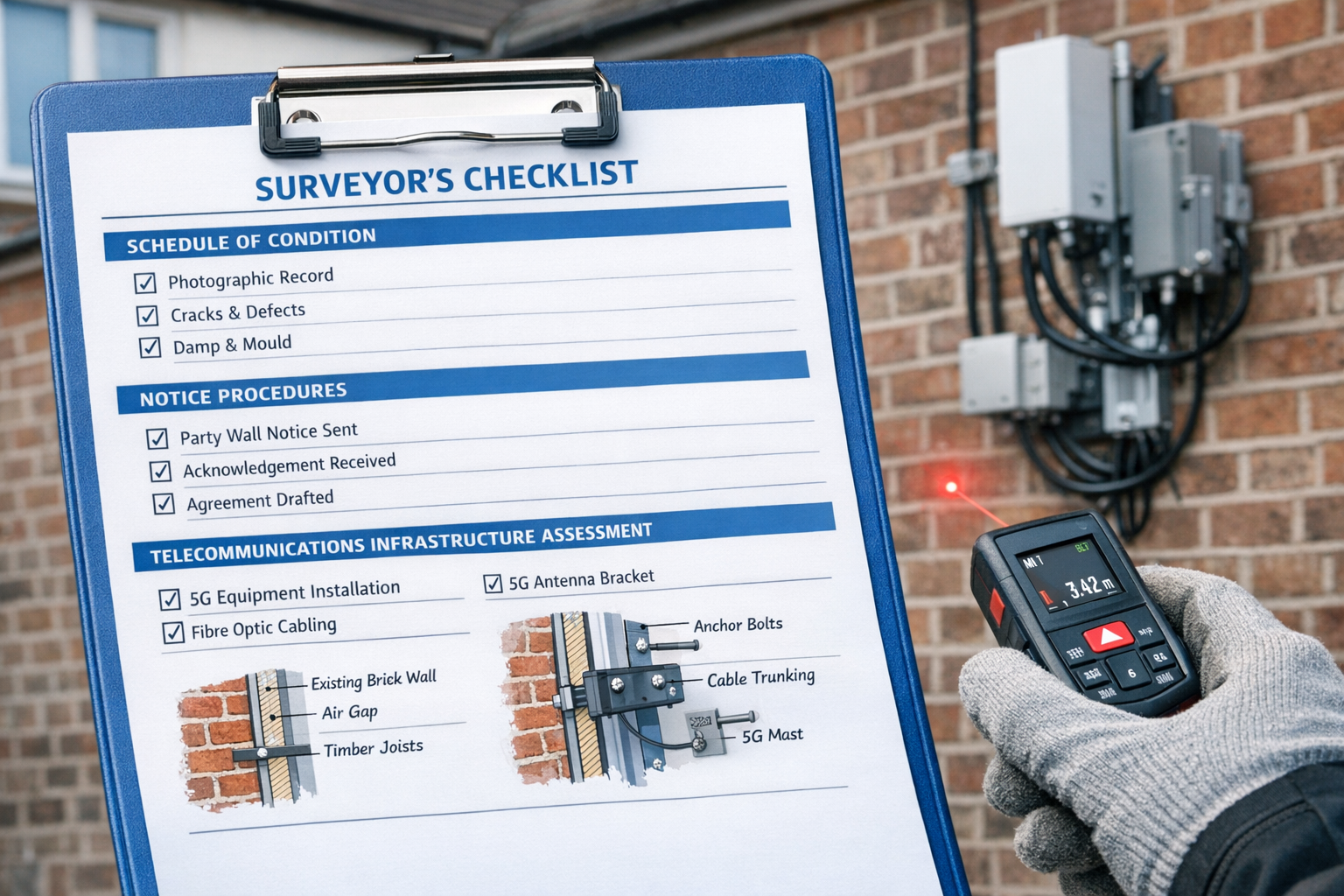
Key Takeaways
- Proper notice procedures under the Party Wall Act are mandatory for all 5G and fibre installations affecting shared walls, with 14-day minimum response periods
- Schedules of condition must document pre-installation wall integrity using photographic evidence, structural assessments, and detailed measurements
- Surveyor checklists should address telecommunications-specific concerns including cable routing, equipment mounting, structural loading, and fire safety compliance
- Dispute prevention requires clear communication between building owners, operators, and appointed surveyors throughout the installation process
- 2026 compliance standards incorporate updated RICS guidance on digital infrastructure within residential party wall procedures
Understanding Party Wall Requirements for Telecommunications Infrastructure
The Party Wall etc. Act 1996 governs all work affecting shared walls, boundaries, and structures between properties. When telecommunications operators install 5G equipment or fibre optic cables in residential blocks, these installations frequently trigger party wall procedures[1].
When Party Wall Agreements Apply to Digital Infrastructure
Telecommunications installations require party wall procedures in the following scenarios:
Structural Penetrations: Drilling through party walls to route fibre cables between flats creates openings that require formal notices and agreements.
Equipment Mounting: Installing 5G antenna systems, distribution boxes, or equipment cabinets on shared walls adds structural loading requiring engineering assessment.
External Wall Work: Mounting external cabling, conduits, or wireless equipment on building exteriors shared between properties.
Roof Installations: 5G antenna installations on shared roofs or roof structures serving multiple residential units.
Basement and Riser Installations: Running fibre infrastructure through shared basements, stairwells, or vertical service risers.
The legal framework remains unchanged, but the technical complexity of modern telecommunications equipment demands enhanced surveyor expertise. Traditional party wall awards must now address digital infrastructure specifications alongside conventional building concerns.
Key Differences from Traditional Party Wall Work
Telecommunications installations present unique challenges:
Ongoing Access Requirements: Unlike one-time building works, digital infrastructure may require periodic maintenance access to shared walls and spaces.
Fire Safety Considerations: Cable penetrations through fire-rated party walls must maintain compartmentation standards under Building Regulations Part B.
Electromagnetic Compatibility: 5G equipment generates electromagnetic fields requiring assessment for residential safety compliance.
Multi-Party Coordination: Installations often affect multiple flats simultaneously, requiring coordination among numerous building owners.
Future-Proofing: Infrastructure designed for upgrades and capacity expansion necessitates flexible agreement terms.
Essential Components of Party Wall Agreements for 5G and Fibre Infrastructure in Residential Blocks: 2026 Surveyor Checklists
Professional surveyors managing telecommunications installations must develop comprehensive checklists addressing both traditional party wall concerns and digital infrastructure-specific requirements[2].
Pre-Installation Assessment Checklist
Building Survey and Documentation 📋
- Complete photographic survey of all affected party walls and shared structures
- Detailed measurements of wall thickness, structural condition, and existing penetrations
- Identification of load-bearing elements and structural support systems
- Assessment of existing services (electrical, plumbing, gas) within party wall zones
- Documentation of pre-existing defects, cracks, or structural concerns
- Review of building construction type (masonry, concrete, timber frame)
- Fire resistance ratings of party walls and compartmentation integrity
Telecommunications Infrastructure Requirements 📡
- Cable routing plans showing entry points, pathways, and exit locations
- Equipment specifications including weight, dimensions, and mounting requirements
- Power supply needs and electrical installation specifications
- Ventilation and heat dissipation requirements for active equipment
- Access requirements for installation and ongoing maintenance
- Compliance documentation for electromagnetic emissions and safety standards
- Future expansion provisions and capacity planning
Regulatory Compliance Verification ✅
- Building Regulations approval for structural alterations
- Fire safety compliance for cable penetrations and equipment installations
- Planning permission status for external antenna or equipment installations
- Telecommunications operator licensing and authorization
- Health and safety risk assessments and method statements
- Insurance coverage verification for installation works
Notice Procedures and Timeline Management
The Party Wall etc. Act 1996 establishes strict notice requirements that apply equally to telecommunications installations[1]. Surveyors must ensure proper procedural compliance to avoid disputes and potential party wall conflicts.
Standard Notice Timeline
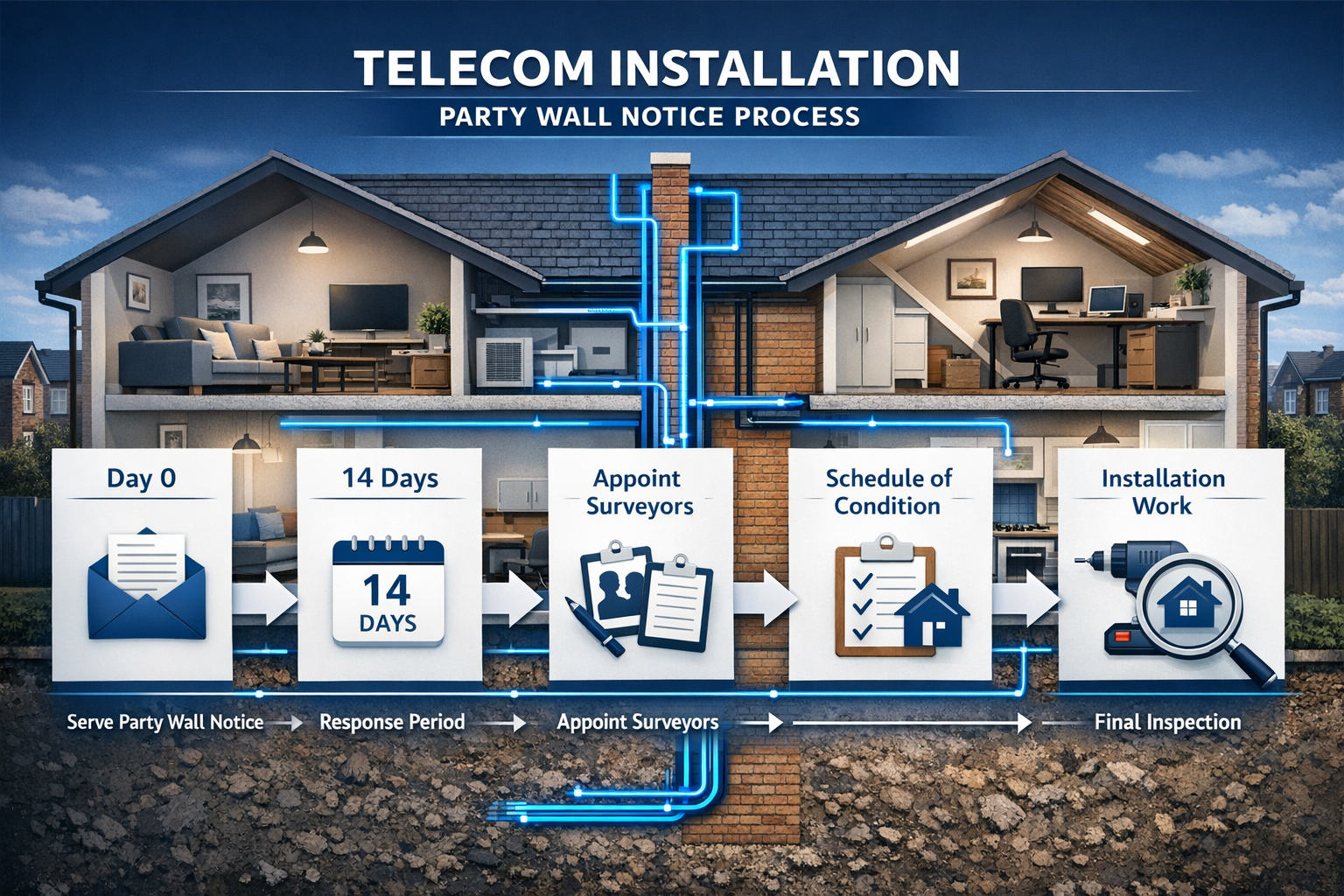
| Stage | Timeline | Action Required |
|---|---|---|
| Initial Notice | Day 0 | Building owner serves notice to adjoining owners |
| Response Period | Days 1-14 | Adjoining owners consent or dissent |
| Surveyor Appointment | Days 15-24 | Parties appoint surveyors if dissent occurs |
| Schedule of Condition | Days 25-35 | Pre-installation documentation completed |
| Party Wall Award | Days 36-50 | Formal award drafted and served |
| Installation Window | Day 51+ | Work proceeds under award terms |
Critical Notice Content for Telecommunications Work
Notices must specify:
- Exact nature of telecommunications equipment being installed
- Precise locations of all wall penetrations and equipment mounting points
- Structural alterations required including dimensions and materials
- Installation methodology and duration
- Operator identity and contact information
- Proposed start and completion dates
- Access requirements during and after installation
Schedule of Condition: Telecommunications-Specific Documentation
A comprehensive schedule of condition forms the foundation of dispute prevention. For digital infrastructure installations, this document must exceed traditional building survey standards.
Photographic Evidence Requirements 📸
- High-resolution images (minimum 12MP) of all affected wall surfaces
- Multiple angles showing wall condition, junctions, and adjacent structures
- Close-up detail of existing cracks, staining, or defects
- Wide shots establishing spatial relationships and room layouts
- Dated and GPS-tagged images with metadata preservation
- Video walkthroughs providing comprehensive condition records
Technical Measurements and Testing
- Crack width measurements using calibrated gauges (recorded in millimeters)
- Wall plumb and alignment checks using laser levels
- Moisture content readings at multiple wall locations
- Structural integrity assessment including tap testing for hollow areas
- Thermal imaging to identify hidden defects or moisture ingress
- Vibration baseline measurements for sensitive installations
Documentation Standards
Professional schedules of condition should follow RICS guidance[2] and include:
- Detailed written descriptions complementing photographic evidence
- Scaled floor plans marking all affected areas
- Cross-sectional diagrams showing proposed cable routes
- Material specifications for existing wall construction
- Existing service locations and potential conflict points
- Signature and date verification by all appointed surveyors
Party Wall Agreements for 5G and Fibre Infrastructure in Residential Blocks: 2026 Surveyor Checklists for Installation Phase
Once agreements are in place, surveyors must monitor installation compliance and document the work progression.
Installation Monitoring Checklist
Structural Protection Measures 🛡️
- Temporary protective coverings installed on floors and adjacent surfaces
- Dust suppression systems operational during drilling and cutting
- Vibration monitoring equipment positioned if required
- Structural support systems in place before penetration work begins
- Fire-stopping materials and methods verified before wall breaching
Work Quality Verification
- Cable penetration sizes match approved specifications
- Drilling locations align with agreed plans (tolerance ±50mm)
- Fire barrier installation meets Building Regulations standards
- Cable management systems properly secured without wall damage
- Equipment mounting brackets installed with appropriate fixings
- Load distribution plates used where required for heavy equipment
- All penetrations properly sealed and finished
Compliance Documentation During Installation
- Daily work logs recording progress and any deviations
- Photographic evidence of each installation stage
- Material certifications for fire-stopping products
- Structural engineer sign-off for significant alterations
- Building control inspection records
- Operator commissioning test results
Common Installation Issues and Surveyor Interventions
Experienced surveyors anticipate potential problems:
Unexpected Obstructions: Discovery of obstructions within party walls such as concealed steel beams, flues, or services may require route modifications.
Structural Concerns: Evidence of wall weakness, deterioration, or inadequate support necessitates immediate work suspension and structural assessment.
Adjacent Property Damage: Any cracks, movement, or damage to neighboring properties requires immediate documentation and remedial planning.
Fire Safety Compromises: Inadequate fire-stopping or compartmentation breaches demand immediate correction before work proceeds.
Access Disputes: Conflicts over access timing or methods require surveyor mediation and potential award amendments.
Post-Installation Verification and Final Documentation
The surveyor's role extends beyond installation completion.
Final Inspection Checklist ✓
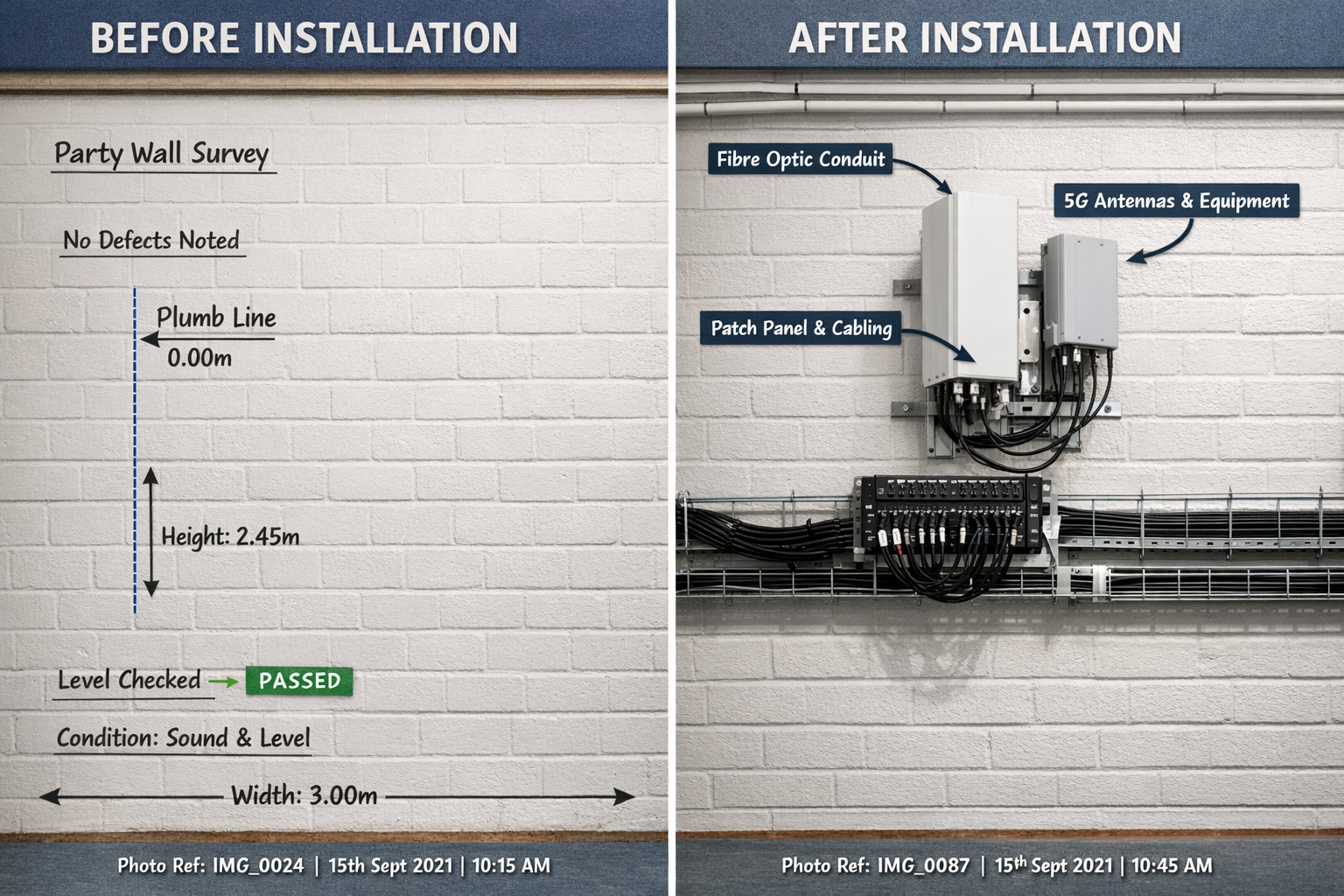
- Complete walk-through comparing final condition to pre-installation schedule
- Verification that all temporary protection has been removed
- Confirmation that all surfaces have been properly reinstated
- Testing of fire-stopping integrity using approved methods
- Documentation of any variations from original specifications
- Photographic evidence matching pre-installation documentation angles
- Structural stability verification if significant alterations occurred
Party Wall Award Completion Requirements
The final award documentation should include:
- Comprehensive description of completed works
- Variations from original specifications with justifications
- Schedule of any identified defects requiring remediation
- Maintenance access provisions for future servicing
- Dispute resolution procedures for post-installation issues
- Cost allocations and payment schedules
- Sign-off by all appointed surveyors confirming satisfactory completion
Dispute Prevention Strategies for Telecommunications Infrastructure Projects
Proactive surveyor management significantly reduces conflict potential in complex multi-party telecommunications installations.
Communication Protocols
Stakeholder Coordination Framework 🤝
Effective projects maintain clear communication channels:
- Weekly progress meetings during installation phases involving all surveyors and the telecommunications operator
- Digital documentation platforms providing real-time access to schedules, photographs, and reports
- Emergency contact protocols for immediate issue escalation
- Resident communication plans keeping building occupants informed of work schedules and impacts
Technical Expertise Requirements
Surveyors managing telecommunications infrastructure installations in 2026 require specialized knowledge:
Essential Competencies
- Understanding of 5G and fibre optic technology fundamentals
- Familiarity with telecommunications regulatory frameworks
- Knowledge of electromagnetic compatibility standards
- Fire safety engineering principles for cable installations
- Structural assessment capabilities for equipment loading
- Building services coordination skills
- Digital documentation and BIM (Building Information Modeling) proficiency
Many surveyors supplement traditional party wall expertise with telecommunications-specific training to address the unique challenges of digital infrastructure projects.
Legal and Insurance Considerations
Insurance Coverage Verification 💼
All parties should maintain appropriate coverage:
- Building owners: Property insurance with telecommunications installation endorsements
- Telecommunications operators: Public liability (minimum £10 million) and professional indemnity coverage
- Appointed surveyors: Professional indemnity insurance covering telecommunications-related advice
- Contractors: Contract works insurance and employer's liability coverage
Contractual Protections
Party wall awards should address:
- Liability allocation for equipment failure or malfunction
- Responsibility for future maintenance and upgrades
- Decommissioning obligations if equipment becomes obsolete
- Indemnification provisions protecting building owners
- Dispute resolution mechanisms including mediation and arbitration options
Regulatory Developments and 2026 Compliance Updates
The telecommunications sector continues evolving rapidly, with regulatory frameworks adapting to technological advances.
Recent Guidance and Standards
RICS Updated Guidance
The Royal Institution of Chartered Surveyors has enhanced party wall guidance to address digital infrastructure, emphasizing:
- Enhanced schedule of condition requirements for telecommunications installations
- Specific competency standards for surveyors managing digital infrastructure projects
- Updated fee guidance reflecting the increased complexity of telecommunications work
- Best practice recommendations for multi-party coordination in residential blocks
Building Regulations Amendments
Recent updates to Building Regulations Part B (Fire Safety) have strengthened requirements for cable penetrations through party walls, mandating:
- Third-party certification of fire-stopping systems
- Enhanced inspection regimes for compartmentation breaches
- Detailed as-built documentation of all penetrations
- Periodic inspection requirements for ongoing compliance
Emerging Technologies and Future Considerations
6G Planning Horizon 🚀
While 5G deployment dominates 2026 infrastructure projects, forward-thinking surveyors consider future technology evolution:
- Infrastructure designed for capacity expansion and equipment upgrades
- Flexible agreement terms accommodating technology evolution
- Conduit over-sizing to enable future cable additions
- Equipment mounting systems with upgrade provisions
Smart Building Integration
Telecommunications infrastructure increasingly integrates with building management systems, creating additional party wall considerations:
- Sensor installations affecting shared spaces
- Data cabling connecting building systems across property boundaries
- Power supply requirements for distributed smart building equipment
- Cybersecurity implications of connected building infrastructure
Case Studies: Lessons from 2026 Telecommunications Installations
Successful Multi-Unit Residential Block Installation
A 45-flat residential block in Manchester required full fibre infrastructure installation affecting 23 party walls. The project succeeded through:
- Early surveyor appointment: All three appointed surveyors engaged during planning stages
- Comprehensive pre-installation surveys: Detailed schedules of condition completed for all affected properties
- Phased installation approach: Work progressed floor-by-floor minimizing disruption
- Resident liaison officer: Dedicated communication resource addressing occupant concerns
- Flexible scheduling: Installation work timed to minimize impact on residents
Outcome: Zero disputes, completion within agreed timeframe, and full building connectivity achieved.
Dispute Resolution: Equipment Mounting Concerns
A 5G antenna installation on a shared roof structure generated concerns from adjoining owners regarding structural loading and electromagnetic exposure. Resolution involved:
- Independent structural engineer assessment: Third-party verification of load calculations
- Electromagnetic field testing: Pre- and post-installation measurements demonstrating compliance
- Enhanced monitoring provisions: Six-month structural monitoring program
- Modified mounting design: Equipment repositioned to distribute loads more effectively
Outcome: Concerns addressed through technical evidence and design modifications, avoiding formal dispute proceedings.
Conclusion
Party Wall Agreements for 5G and Fibre Infrastructure in Residential Blocks: 2026 Surveyor Checklists represent an essential evolution of traditional party wall practice. As the UK's digital infrastructure rollout continues throughout 2026 and beyond, chartered surveyors must combine established party wall expertise with telecommunications-specific knowledge to manage these complex installations effectively.
Success requires meticulous attention to notice procedures, comprehensive schedules of condition, and rigorous installation monitoring. The checklists and frameworks outlined in this guide provide surveyors with the tools necessary to prevent disputes, ensure regulatory compliance, and protect the interests of all parties involved in telecommunications infrastructure projects.
Actionable Next Steps
For Building Owners 🏢
- Engage qualified surveyors experienced in telecommunications installations at the earliest planning stages
- Ensure all party wall procedures are properly followed before authorizing any work
- Maintain comprehensive documentation throughout the installation process
- Review insurance coverage to confirm telecommunications work is adequately covered
For Appointed Surveyors 📋
- Develop telecommunications-specific competencies through professional development
- Create standardized checklists incorporating the frameworks detailed in this guide
- Establish relationships with structural engineers and telecommunications specialists for technical support
- Implement digital documentation systems enabling efficient multi-party coordination
For Telecommunications Operators 📡
- Budget adequate time and resources for proper party wall compliance
- Engage with surveyors early in project planning to identify potential issues
- Provide comprehensive technical specifications enabling informed surveyor assessments
- Maintain transparent communication with building owners and residents throughout installations
The convergence of digital infrastructure deployment with party wall legislation creates both challenges and opportunities. Surveyors who master the specialized requirements of telecommunications installations position themselves as essential professionals in the ongoing digital transformation of UK residential buildings. By following the comprehensive checklists and procedures outlined in this guide, all parties can navigate these complex projects successfully, preventing disputes while enabling the critical digital connectivity that modern residential buildings require.
References
[1] Party Walls Limited Checklist For Homeowners – https://www.partywallslimited.com/party-walls-limited-checklist-for-homeowners
[2] Jan 22 Party Wall Legislation And Procedure 7th Edition – https://www.rics.org/content/dam/ricsglobal/documents/standards/jan_22_party_wall_legislation_and_procedure_7th_edition.pdf
[3] Frequency One Releases 2026 Infrastructure Maintenance Checklist For Rural Broadband – https://insidetowers.com/frequency-one-releases-2026-infrastructure-maintenance-checklist-for-rural-broadband/
[4] Building Survey Checklists For Awaabs Law Compliance 2026 Rental Health And Safety Mandates For Landlords – https://nottinghillsurveyors.com/blog/building-survey-checklists-for-awaabs-law-compliance-2026-rental-health-and-safety-mandates-for-landlords