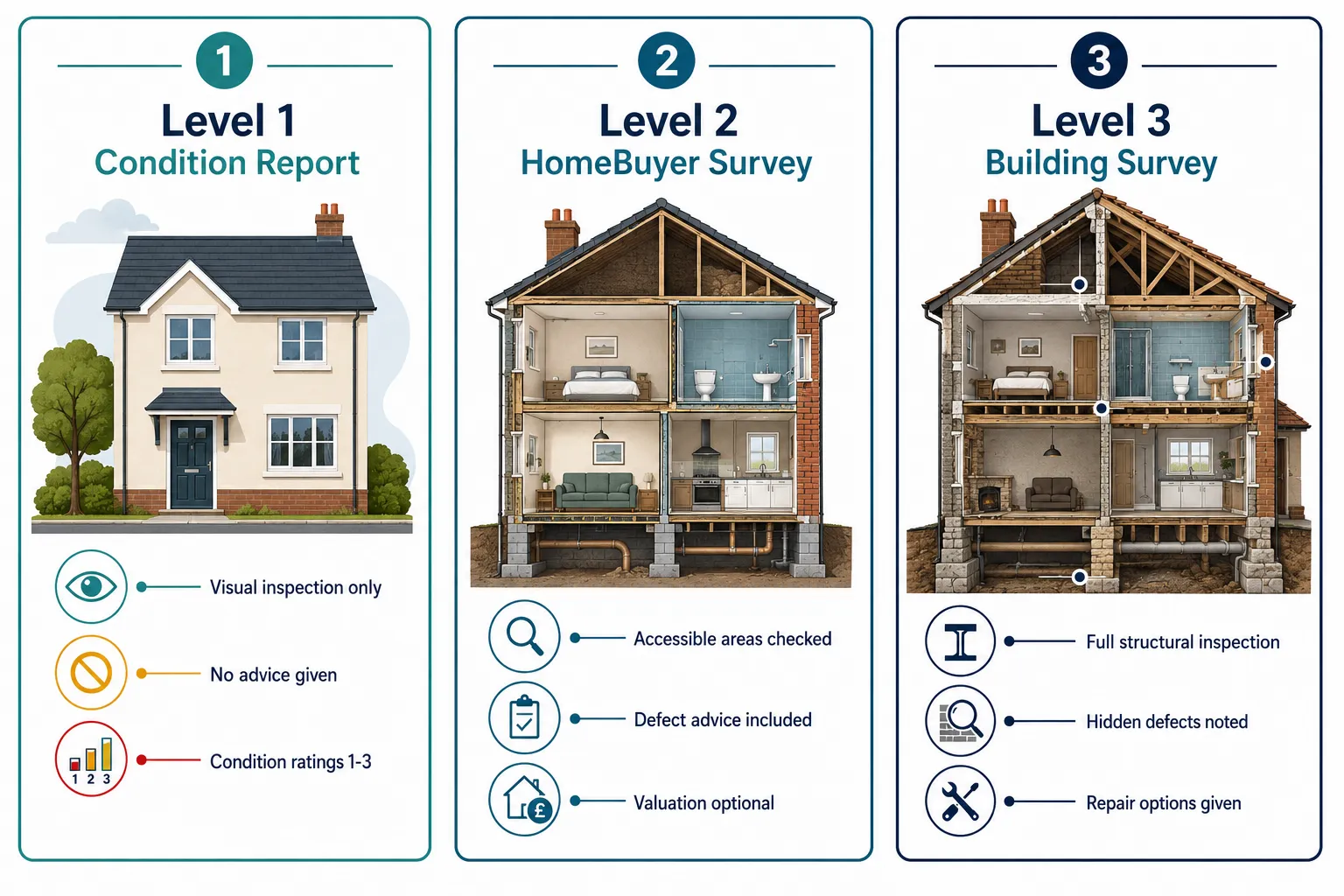
Surveying New Builds for Future Homes Standard: 2026 Sustainability and Defect Protocols

The landscape of new build construction in the UK is undergoing its most significant transformation in decades. As the government confirms implementation of the Future Homes Standard from 2027, property surveyors face an unprecedented challenge: assessing compliance with revolutionary sustainability requirements while identifying defects in high-performance building designs that differ fundamentally from traditional construction. Surveying New Builds for Future Homes Standard: 2026 Sustainability and Defect Protocols represents a critical evolution in building assessment methodology, requiring surveyors to master new technologies, understand complex energy systems, and develop specialized inspection techniques for next-generation homes.

Professional () hero image featuring 'Surveying New Builds for Future Homes Standard: 2026 Sustainability and Defect

The stakes have never been higher. With homes built from 2027 required to achieve 75-80% lower carbon emissions than previous standards [3], and thousands of properties currently under construction facing potential costly retrofits, surveyors must adapt their inspection protocols immediately. This comprehensive guide provides building professionals with detailed checklists, defect identification strategies, and compliance assessment frameworks specifically designed for Future Homes Standard properties.

Key Takeaways

  • 🏗️ 2027 implementation confirmed: The Future Homes Standard will apply to homes commenced from 2027, with "commencement" defined as slab and DPC level in most cases [1]
  • 🔍 Three non-tradeable compliance metrics: Surveyors must verify Dwelling Primary Energy Rate, Dwelling Fabric Energy Efficiency, and Dwelling Emission Rate independently—no compensation between metrics allowed [4]
  • 🔥 Heat pumps become mandatory: Gas boilers, including hydrogen-ready units, will not comply; air-source or ground-source heat pumps become the default heating standard [3]
  • 📊 Enhanced building fabric performance: Homes must achieve significantly improved U-values, airtightness of approximately 5 m³/m²/h, and minimized thermal bridging [4]
  • Solar PV density increases 45%: The notional specification assumes approximately 222 W/m² of panel power, with most new homes expected to include solar PV as standard [3]

Understanding the Future Homes Standard Framework for Survey Assessment

The Regulatory Timeline and Commencement Definition

The government's March 5, 2026 announcement confirmed that new building standards will be introduced for homes built from 2027 [1]. This represents a critical shift from earlier 2025 targets that faced repeated delays. For surveyors conducting RICS specific defect surveys, understanding the precise definition of "commencement" proves essential.

The new definition establishes commencement at slab and DPC (damp proof course) level in most cases [2]. This creates significant timing implications for projects already locked in through planning permission or procurement. Properties that commence construction before the 2027 implementation date may legally comply with the weaker 2021 Interim Standard, potentially requiring costly retrofits in the future.

Survey Protocol Consideration: When assessing new builds in 2026, surveyors should verify the construction commencement date and applicable regulatory standard. Properties built to 2021 standards may represent higher long-term ownership costs and reduced marketability.

The Three Non-Tradeable Compliance Metrics

Unlike previous building regulations that allowed some flexibility in achieving overall performance targets, the Future Homes Standard introduces three non-tradeable metrics that must be met simultaneously [4]:

  1. Dwelling Primary Energy Rate (DER): Measures total energy consumption
  2. Dwelling Fabric Energy Efficiency (DFEE): Assesses building envelope performance independent of heating systems
  3. Dwelling Emission Rate (TER): Calculates carbon emissions from regulated energy use

"The three metrics cannot compensate for each other—poor performance in fabric efficiency cannot be offset by installing additional solar panels or upgrading the heat pump specification." [4]

This fundamental change requires surveyors to assess each metric independently during compliance verification. A property might achieve excellent energy ratings through renewable technology while harboring critical fabric defects that compromise long-term performance and occupant comfort.

Surveying New Builds for Future Homes Standard: Building Fabric Assessment Protocols

() detailed technical illustration showing cross-section cutaway view of Future Homes Standard compliant new build wall

Enhanced Insulation and U-Value Verification

The Future Homes Standard mandates significantly improved thermal performance across all building elements [4]. Surveyors must verify that actual installed insulation meets or exceeds specification requirements:

Wall Assembly Inspection Checklist:

  • ✅ Insulation thickness matches approved drawings (typically 150-200mm for cavity walls)
  • ✅ Continuous insulation with no gaps, compression, or displacement
  • ✅ Correct insulation material specification (check thermal conductivity ratings)
  • ✅ Proper installation around service penetrations and junction details
  • ✅ Cavity closers and window reveals fully insulated
  • ✅ No evidence of moisture ingress affecting insulation performance

Roof and Floor Insulation Assessment:

  • ✅ Roof insulation depth verification (typically 300mm+ between/over joists)
  • ✅ Floor insulation continuity in suspended and solid floor constructions
  • ✅ Perimeter insulation at floor edges to prevent thermal bridging
  • ✅ Proper integration with foundation details

For properties requiring structural surveys, thermal imaging surveys should be conducted to identify insulation defects not visible during standard inspections.

Airtightness Testing and Defect Identification

The Future Homes Standard requires airtightness performance of approximately 5 cubic meters per square meter per hour (m³/m²/h) [4]. This represents a significant improvement over previous standards and demands meticulous attention to construction quality.

Common Airtightness Defects in New Builds:

Defect Location Common Issues Survey Detection Method
Window installations Inadequate sealing, gaps in reveals Visual inspection, smoke pencil testing
Service penetrations Unsealed cable/pipe entries Thermal imaging, pressurization testing
Junction details Wall-to-floor, wall-to-roof gaps Blower door test, infrared camera
Electrical outlets Missing airtight back boxes Socket testing, visual inspection
Loft hatches Poor sealing, no compression gaskets Physical inspection, draft detection
MVHR ductwork Unsealed connections, poor taping Duct leakage testing, visual inspection

Survey Protocol: Request copies of official airtightness test certificates (required for Building Control approval). Results should show measured air permeability significantly below the 5 m³/m²/h threshold to account for deterioration over time. Properties approaching the limit may indicate poor construction quality.

Thermal Bridging Assessment

Minimized thermal bridging represents a critical component of Future Homes Standard compliance [4]. Thermal bridges create localized areas of heat loss and potential condensation risk, compromising both energy performance and building durability.

Key Thermal Bridge Locations to Survey:

  • 🔍 Wall-to-floor junctions (particularly at ground floor slab edges)
  • 🔍 Wall-to-roof eaves and verge details
  • 🔍 Around window and door frames
  • 🔍 Balcony connections and cantilevered elements
  • 🔍 Structural steel or concrete elements penetrating the insulation layer
  • 🔍 Party wall junctions in semi-detached and terraced properties

Defect Identification: Thermal imaging surveys conducted during heating season provide the most effective method for identifying thermal bridges. Look for distinctive temperature patterns indicating heat loss pathways. Compare findings against approved thermal bridge calculations (Psi-values) submitted for Building Regulations approval.

Surveying New Builds for Future Homes Standard: Mechanical Systems and Ventilation Compliance

() photograph of professional building surveyor conducting thermal imaging inspection on new build property exterior at

Heat Pump Installation Assessment

Gas boilers, including hydrogen-ready units, will not comply with Future Homes Standard requirements [3]. Heat pumps—either air-source, ground-source, or heat network-connected—become the default heating standard. This fundamental shift creates new survey requirements and potential defect scenarios unfamiliar to many building professionals.

Air Source Heat Pump (ASHP) Survey Checklist:

Location and Installation:

  • Adequate clearance for airflow (minimum 1-2 meters from obstructions)
  • Positioned to minimize noise impact on occupants and neighbors
  • Secure mounting on appropriate foundation or wall brackets
  • Protection from falling ice/snow from roof edges
  • Compliance with permitted development rules (distance from boundaries)

System Components:

  • Correctly sized unit for property heat loss calculation
  • Proper refrigerant line installation with appropriate insulation
  • Condensate drainage properly connected and functioning
  • Electrical supply correctly rated and protected
  • Weather protection and anti-vibration mounting

Integration with Distribution System:

  • Low-temperature heating system (underfloor or oversized radiators)
  • Buffer tank installed where required
  • Hot water cylinder properly sized and insulated
  • Controls and thermostats correctly configured
  • System commissioning certificates available

Common ASHP Installation Defects:

  • Undersized heat pumps unable to meet design temperatures
  • Poor refrigerant line installation causing efficiency losses
  • Inadequate noise isolation creating nuisance
  • Incorrect control settings resulting in suboptimal performance
  • Missing or inadequate condensate drainage leading to ice formation

For properties requiring commercial property surveying expertise, multi-unit developments may incorporate shared heat networks requiring additional assessment protocols.

MVHR System Inspection Protocols

Mechanical Ventilation with Heat Recovery (MVHR) becomes the "de facto standard" for Future Homes Standard properties [4]. These systems maintain indoor air quality while recovering heat from exhaust air, essential for highly insulated, airtight homes. However, MVHR systems introduce complex defect scenarios rarely encountered in traditional construction.

MVHR System Survey Assessment:

1. Ductwork Installation Quality:

  • ✅ Rigid or semi-rigid ductwork used (flexible ducting minimized)
  • ✅ Smooth, straight runs with minimal bends
  • ✅ All joints sealed with appropriate tape/mastic
  • ✅ Proper support and securing to prevent sagging
  • ✅ Insulation on ducts passing through unconditioned spaces
  • ✅ Fire dampers installed where required

2. Unit Installation and Access:

  • ✅ MVHR unit securely mounted in accessible location
  • ✅ Adequate space for filter maintenance
  • ✅ Condensate drainage properly connected
  • ✅ Electrical connection correctly rated
  • ✅ Outdoor air intake and exhaust properly terminated
  • ✅ Intake positioned away from pollution sources

3. Distribution and Termination:

  • ✅ Supply and extract valves correctly positioned in each room
  • ✅ Appropriate valve types for room function (supply in habitable rooms, extract in wet rooms)
  • ✅ Balanced airflow rates matching design specifications
  • ✅ No excessive noise from valves or ductwork
  • ✅ Controls accessible and properly labeled

Critical Defect: Poorly installed MVHR systems can create worse indoor air quality than natural ventilation while consuming energy unnecessarily. Surveyors should request commissioning certificates demonstrating balanced airflow rates and heat recovery efficiency testing.

Solar PV Integration and Electrical System Assessment

The Future Homes Standard assumes approximately 222 W/m² of panel power—roughly 45% higher than earlier standards—with most new homes expected to include solar PV as standard [3]. This significant increase in renewable generation capacity creates new survey considerations.

Solar PV Installation Survey Checklist:

Structural Integration:

  • ✅ Roof structure adequately designed for additional panel weight
  • ✅ Mounting system appropriate for roof covering type
  • ✅ Proper weatherproofing at all roof penetrations
  • ✅ Adequate ventilation behind panels to prevent overheating
  • ✅ Lightning protection integrated where required

Electrical Installation:

  • ✅ Inverter correctly sized and positioned
  • ✅ DC cabling properly protected and isolated
  • ✅ AC connection to consumer unit correctly rated
  • ✅ Generation meter installed and commissioned
  • ✅ Emergency shutdown procedures clearly labeled
  • ✅ System monitoring equipment functional

Performance Verification:

  • ✅ Panel orientation optimized (south-facing in UK)
  • ✅ Minimal shading from chimneys, trees, or adjacent buildings
  • ✅ System capacity matches Building Regulations submission
  • ✅ MCS certification documentation available
  • ✅ Warranty and maintenance documentation provided

Survey Consideration: Properties with undersized solar PV installations may struggle to achieve Future Homes Standard compliance metrics. Verify that installed capacity matches or exceeds the notional specification used in energy calculations.

Surveying New Builds for Future Homes Standard: Compliance Documentation and Certification

() detailed infographic-style composite image showing three-column comparison layout of Future Homes Standard compliance

Essential Compliance Documents

Surveyors assessing Future Homes Standard properties must verify comprehensive documentation demonstrating regulatory compliance. The absence of proper certification represents a significant defect that may affect property value and marketability.

Required Documentation Checklist:

📄 Energy Performance Certification:

  • Home Energy Model (HEM) calculations (replacing SAP methodology)
  • Energy Performance Certificate (EPC) showing A or B rating
  • Predicted vs. actual performance comparison
  • As-built energy assessment reflecting actual construction

📄 Building Control Approval:

  • Final Building Regulations completion certificate
  • Approved plans showing compliance with Future Homes Standard
  • Schedule of inspections conducted during construction
  • Any amendments or variations approved during build process

📄 System Commissioning Certificates:

  • Heat pump commissioning and performance testing
  • MVHR system balancing and airflow verification
  • Solar PV installation and electrical testing
  • Airtightness test results with detailed report
  • Thermal imaging survey results (if conducted)

📄 Warranty and Guarantee Documentation:

  • NHBC or equivalent structural warranty
  • Heat pump manufacturer warranty (typically 5-7 years)
  • Solar PV system warranty (panels typically 25 years, inverter 10 years)
  • MVHR unit warranty and filter replacement schedule
  • Window and door performance warranties

Survey Protocol: Request all documentation before conducting physical inspection. Absence of key certificates may indicate incomplete work or non-compliance, warranting detailed investigation.

Home Energy Model (HEM) Assessment Challenges

As of March 2026, the Home Energy Model (HEM)—the core compliance assessment tool replacing SAP methodology—remains on version 0.34 with critical uncertainties [2]. This ongoing development creates challenges for surveyors attempting to verify compliance.

Current HEM Limitations:

  • Final user input requirements not yet confirmed
  • PCDB (Product Characteristics Database) release schedules uncertain
  • Industry conventions groups still forming
  • Limited software tools available for independent verification

Survey Implication: Surveyors may need to rely on Building Control approval and developer-provided calculations without ability to independently verify HEM compliance. This increases importance of thorough physical inspection to identify defects that would compromise predicted performance.

Hidden Defects in High-Performance Design: Advanced Detection Techniques

High-performance building designs introduce unique defect scenarios that may not manifest immediately but significantly impact long-term performance and occupant comfort.

Interstitial Condensation Risk

Highly insulated, airtight construction with complex vapor control layers creates potential for interstitial condensation—moisture accumulation within building fabric that can lead to mold growth, insulation degradation, and structural damage.

Survey Assessment:

  • Verify vapor control layer continuity and positioning
  • Check for potential condensation risk at thermal bridges
  • Assess ventilation adequacy in roof spaces and cavities
  • Review hygrothermal calculations if available
  • Look for early signs of moisture issues (staining, mold, musty odors)

High-Risk Locations:

  • Roof construction with room-in-roof or complex geometry
  • Timber frame construction with external insulation
  • Below-ground construction with internal insulation
  • Bathroom and kitchen areas with high moisture generation

Overheating Risk Assessment

Paradoxically, highly insulated homes with large glazed areas and insufficient solar shading may experience summer overheating, creating uncomfortable living conditions and potential health risks.

Overheating Survey Indicators:

  • Large south or west-facing glazed areas without external shading
  • Inadequate openable window area for purge ventilation
  • Dark external finishes increasing solar gain
  • MVHR system without summer bypass mode
  • Insufficient thermal mass to moderate temperature swings

Survey Protocol: Review thermal modeling calculations for overheating assessment. Properties without adequate mitigation strategies may require remedial work such as external shading, additional ventilation, or window film installation.

Acoustic Performance in Airtight Construction

Highly airtight construction can amplify noise transmission issues, particularly in semi-detached and terraced properties. Sound travels more readily through solid connections when air leakage paths are eliminated.

Acoustic Defect Assessment:

  • Party wall construction and sound insulation details
  • Impact sound transmission (footfall noise between floors)
  • External noise intrusion with high-performance windows
  • MVHR system noise transmission through ductwork
  • Heat pump noise impact on bedrooms

For properties requiring detailed acoustic assessment, consider recommending specialist acoustic testing, particularly if occupants report noise issues.

Practical Survey Checklists for Future Homes Standard Properties

Pre-Purchase Survey Checklist

For buyers considering Future Homes Standard properties, comprehensive survey assessment should include:

Building Fabric:

  • Thermal imaging survey conducted (heating season preferred)
  • Airtightness test results reviewed and acceptable
  • Insulation specification verified against approved plans
  • No visible thermal bridging or cold spots identified
  • Window and door installation quality assessed
  • Damp proof course and membranes properly installed

Mechanical Systems:

  • Heat pump correctly sized and installed
  • MVHR system commissioned and balanced
  • Solar PV system operational and generating
  • Hot water system adequate for household needs
  • Controls intuitive and properly configured
  • Maintenance requirements understood and documented

Compliance Documentation:

  • Building Control completion certificate obtained
  • Energy Performance Certificate shows A or B rating
  • All system commissioning certificates available
  • Manufacturer warranties registered and transferred
  • NHBC or equivalent warranty in place
  • Home Energy Model calculations reviewed

Long-Term Considerations:

  • Maintenance requirements and costs understood
  • Filter replacement schedules and costs identified
  • System lifespan and replacement costs estimated
  • Retrofit potential for future upgrades assessed
  • Resale marketability considerations evaluated

Developer Handover Inspection Checklist

For new homeowners receiving properties from developers:

Immediate Inspection Items:

  • All rooms heated to comfortable temperature
  • MVHR system operating quietly and effectively
  • Solar PV generating (check meter/monitoring system)
  • Hot water temperature and flow rate adequate
  • No condensation on windows or surfaces
  • All controls and thermostats functioning
  • External heat pump operating without excessive noise

Documentation Requirements:

  • User manuals for all systems received
  • Maintenance schedules clearly explained
  • Emergency contact information provided
  • Warranty registration completed
  • Energy performance predictions explained
  • Operating cost estimates provided

Snagging Items to Check:

  • All airtightness taping visible in loft space intact
  • MVHR filters clean and properly installed
  • Heat pump condensate drainage functioning
  • Solar PV system monitoring accessible
  • No gaps or defects in insulation visible
  • Window and door seals intact and effective

The Retrofit Challenge: Assessing 2021 Interim Standard Properties

Thousands of homes are currently being constructed to the weaker 2021 Interim Standard, which will require costly retrofits once Future Homes Standard is fully implemented [2]. Surveyors assessing these properties should identify potential upgrade requirements and associated costs.

Retrofit Assessment Considerations:

Heating System Replacement:

  • Current gas boiler will require replacement with heat pump
  • Low-temperature heating system may need installation (underfloor or larger radiators)
  • Hot water cylinder upgrade likely required
  • Estimated cost: £10,000-£18,000 depending on property size

Solar PV Installation:

  • Roof structure assessment for panel mounting
  • Electrical system upgrade for solar integration
  • Estimated cost: £5,000-£8,000 for typical installation

Fabric Upgrades:

  • Additional insulation may be required
  • Airtightness improvements through sealing works
  • Window upgrades if current specification inadequate
  • Estimated cost: Variable, potentially £5,000-£15,000

Survey Recommendation: Properties built to 2021 standards represent higher long-term ownership costs. Buyers should factor potential retrofit expenses into purchase decisions. For detailed cost assessment, consider recommending specialist project management services.

Regional Variations and Local Authority Requirements

While Future Homes Standard establishes national baseline requirements, local planning authorities may impose additional sustainability requirements through Local Plan policies or supplementary planning documents.

Enhanced Requirements to Check:

  • Higher energy performance standards (e.g., Passivhaus)
  • Additional renewable energy generation capacity
  • Water efficiency standards beyond Building Regulations
  • Biodiversity net gain requirements
  • Electric vehicle charging infrastructure
  • Sustainable drainage systems (SuDS) specifications

Survey Protocol: Review planning approval documentation to identify any conditions or requirements exceeding Future Homes Standard baseline. Verify compliance with all local authority conditions during physical inspection.

Future-Proofing Assessment: Beyond 2027 Requirements

Forward-thinking surveyors should assess properties not just for current compliance but for adaptability to likely future requirements.

Future-Proofing Checklist:

  • Roof structure capable of supporting additional solar PV
  • Electrical system capacity for electric vehicle charging
  • Space provision for battery storage installation
  • Heat pump system upgradeable to higher capacity
  • Smart home technology integration capability
  • Accessibility features for aging occupants
  • Climate adaptation measures (overheating, flood resilience)

Properties incorporating these features demonstrate superior long-term value and marketability compared to those meeting only minimum standards.

Professional Development for Surveyors

Surveying New Builds for Future Homes Standard: 2026 Sustainability and Defect Protocols requires significant professional development for building surveyors accustomed to traditional construction assessment.

Recommended Training and Qualifications:

  • 🎓 Thermography certification (Level 1 or 2)
  • 🎓 Air tightness testing qualification
  • 🎓 Heat pump technology training
  • 🎓 MVHR system design and commissioning courses
  • 🎓 Building physics and hygrothermal analysis
  • 🎓 Home Energy Model (HEM) software training
  • 🎓 Renewable energy systems assessment

Professional Resources:

  • RICS guidance on surveying sustainable buildings
  • Chartered Association of Building Engineers technical publications
  • BRE (Building Research Establishment) research papers
  • Manufacturer training programs for heat pumps and MVHR systems

For surveyors seeking to specialize in this area, consider developing expertise in structural engineering and property certification to provide comprehensive assessment services.

Cost Implications and Market Impact

The Future Homes Standard will significantly impact new build costs and market dynamics. Surveyors should understand these economic factors when advising clients.

Construction Cost Increases:

  • Heat pump installation vs. gas boiler: +£5,000-£8,000
  • Enhanced insulation and airtightness: +£3,000-£5,000
  • MVHR system installation: +£3,000-£5,000
  • Increased solar PV capacity: +£2,000-£3,000
  • Total estimated increase: £13,000-£21,000 per dwelling

Household Savings:

  • Households could save up to £530 annually through reduced energy consumption in FHS-compliant homes [1]
  • Payback period: Approximately 25-40 years on construction cost premium
  • Long-term value: Reduced exposure to energy price volatility
  • Enhanced marketability: Growing buyer preference for sustainable homes

Survey Consideration: When conducting valuations, consider both the construction cost premium and the long-term operational savings. Future Homes Standard properties may command premium prices as energy costs rise and sustainability becomes increasingly important to buyers.

Common Defects Summary Table

System/Component Common Defects Impact Severity Detection Method
Insulation Gaps, compression, moisture damage High Thermal imaging, visual inspection
Airtightness Unsealed penetrations, poor taping High Blower door test, smoke pencil
Heat Pump Undersizing, poor location, noise High Performance testing, monitoring
MVHR Unbalanced airflow, duct leakage Medium-High Commissioning test, airflow measurement
Solar PV Shading, undersizing, poor orientation Medium Generation monitoring, site assessment
Windows Poor installation, inadequate sealing Medium-High Visual inspection, thermal imaging
Thermal Bridges Junction details, penetrations Medium Thermal imaging, design review
Condensation Risk Vapor control defects, inadequate ventilation High Moisture monitoring, hygrothermal analysis

Conclusion

Surveying New Builds for Future Homes Standard: 2026 Sustainability and Defect Protocols represents a fundamental evolution in building assessment practice. The 2027 implementation of revolutionary sustainability requirements demands that surveyors develop new technical competencies, master emerging technologies, and adopt comprehensive inspection methodologies specifically designed for high-performance construction.

The three non-tradeable compliance metrics—Dwelling Primary Energy Rate, Dwelling Fabric Energy Efficiency, and Dwelling Emission Rate—require independent assessment, eliminating the flexibility of previous regulations. Surveyors must verify not just that properties meet overall performance targets, but that building fabric, mechanical systems, and renewable energy installations each achieve specified standards.

The mandatory transition to heat pumps, MVHR systems, and significantly enhanced solar PV capacity introduces complex defect scenarios rarely encountered in traditional construction. Thermal bridging, interstitial condensation, airtightness failures, and system integration issues can severely compromise predicted performance while remaining invisible during standard visual inspections.

Actionable Next Steps

For building surveyors preparing for Future Homes Standard assessments:

  1. Invest in Professional Development: Obtain thermography certification, heat pump technology training, and airtightness testing qualifications to provide comprehensive assessment services.

  2. Acquire Specialized Equipment: Thermal imaging cameras, airtightness testing equipment, and airflow measurement tools become essential for effective Future Homes Standard surveys.

  3. Develop Documentation Review Protocols: Establish systematic processes for reviewing Home Energy Model calculations, commissioning certificates, and compliance documentation before conducting physical inspections.

  4. Build Specialist Networks: Develop relationships with mechanical engineers, energy assessors, and renewable technology specialists to provide comprehensive assessment services for complex properties.

  5. Update Survey Templates: Revise inspection checklists, report templates, and defect categorization systems to address Future Homes Standard-specific requirements and common issues.

For property buyers and homeowners:

  1. Request Comprehensive Documentation: Ensure all compliance certificates, commissioning reports, and warranty documentation are provided before completing purchase.

  2. Commission Specialist Surveys: Standard homebuyer surveys may not adequately assess Future Homes Standard compliance—consider thermal imaging surveys and mechanical system assessments.

  3. Understand Maintenance Requirements: Future Homes Standard properties require regular maintenance of heat pumps, MVHR filters, and solar PV systems to maintain predicted performance.

  4. Factor Long-Term Costs: While operational costs are lower, maintenance and eventual system replacement costs should be considered in purchase decisions.

The Future Homes Standard represents the most significant advancement in building sustainability requirements in UK history. Properties achieving genuine compliance will deliver substantial energy savings, reduced carbon emissions, and enhanced occupant comfort. However, the complexity of high-performance design creates unprecedented opportunities for defects that compromise predicted performance.

Surveyors who develop specialized expertise in assessing these properties will provide invaluable service to buyers, developers, and the broader construction industry. By implementing the comprehensive inspection protocols, defect identification strategies, and compliance verification frameworks outlined in this guide, building professionals can ensure that Future Homes Standard properties deliver their promised sustainability benefits while maintaining the construction quality standards essential for long-term durability and occupant satisfaction.

For professional survey services tailored to Future Homes Standard properties, including thermal imaging assessments, mechanical system evaluations, and comprehensive compliance verification, get a quote from qualified specialists equipped to assess next-generation sustainable construction.


References

[1] Future Homes – https://mcsfoundation.org.uk/campaigns/future-homes/

[2] Future Homes Standards Update – https://wilkinsoncc.co.uk/future-homes-standards-update/

[3] What To Expect From The Future Homes Standard – https://www.atlanticrenewables.co.uk/contact-us/news-blog/what-to-expect-from-the-future-homes-standard.html

[4] Watch – https://www.youtube.com/watch?v=R6RrGkdW1wM

Share:

More Posts

Scroll to Top