The UK property market is experiencing a remarkable resurgence in 2026, with buy-to-let investments leading the charge. Professional landlords and institutional investors are seizing opportunities as forecasts predict a 22.2% average property value increase over the next five years.[3] However, this bullish sentiment brings heightened responsibility. Building Survey Protocols for Buy-to-Let Recovery: Identifying Risks in Institutional Portfolio Acquisitions have never been more critical, particularly as regulatory frameworks like Awaab's Law demand rigorous attention to property condition and tenant safety.
Institutional investors acquiring multiple properties face unique challenges. Unlike single-property purchases, portfolio acquisitions require standardized yet comprehensive assessment protocols that identify structural risks, compliance gaps, and retrofit requirements across diverse property types. The stakes are high: overlooked defects can derail entire investment strategies, while thorough surveying protects capital and ensures regulatory compliance.
Key Takeaways
- Level 3 surveys are essential for institutional buy-to-let portfolios, providing comprehensive structural assessments that identify critical risks like RAAC concrete, damp, and mould issues mandated under Awaab's Law
- The 2026 ALTA/NSPS Survey Standards introduce enhanced boundary reporting, independent deed record verification, and expanded certification flexibility that directly benefit large-scale property acquisitions[1]
- Standardized risk categorization frameworks enable institutional investors to compare properties consistently across portfolios, prioritizing remediation budgets and acquisition decisions
- Damp and mould assessments are now regulatory imperatives, not optional extras, with landlords facing legal consequences for non-compliance with tenant safety standards
- Retrofit potential evaluation during initial surveys identifies energy efficiency upgrade opportunities that enhance rental yields and property values in recovering markets
Understanding Building Survey Protocols for Buy-to-Let Recovery in 2026
The property surveying landscape has transformed significantly in 2026, driven by regulatory evolution and market recovery dynamics. Building Survey Protocols for Buy-to-Let Recovery: Identifying Risks in Institutional Portfolio Acquisitions now operate within a framework shaped by new standards and heightened expectations.
The Evolution of Survey Standards in 2026
The 2026 ALTA/NSPS Survey Standards, which became effective February 23, 2026, represent the most significant update to commercial property surveying practices in recent years.[1] While these standards primarily address US commercial real estate, their principles of enhanced risk allocation and improved communication protocols resonate globally, influencing UK institutional practices.
Key changes include:
- Independent deed record verification: Surveyors now obtain adjoining property deed records independently rather than relying on title insurers, creating more thorough boundary assessments but potentially extending timeline requirements[1]
- Enhanced easement reporting: Recognition that easements may terminate through various legal mechanisms reduces post-closing disputes—particularly valuable for portfolio acquisitions[1]
- Standardized encroachment disclosure: New optional Table A items allow structured summaries of significant observed conditions, including potential encroachments and setback violations[1]
For UK institutional investors, these international developments underscore the importance of comprehensive commercial building surveys that go beyond surface-level assessments.
Why Level 3 Surveys Matter for Portfolio Acquisitions
When acquiring multiple properties simultaneously, institutional investors face a critical decision: which survey level provides adequate protection without unnecessary cost duplication? The answer for buy-to-let portfolios is unequivocally Level 3 surveys (formerly Building Surveys).
Level 3 surveys provide:
✅ Comprehensive structural analysis including foundations, load-bearing walls, and roof structures
✅ Detailed defect identification with severity ratings and remediation cost estimates
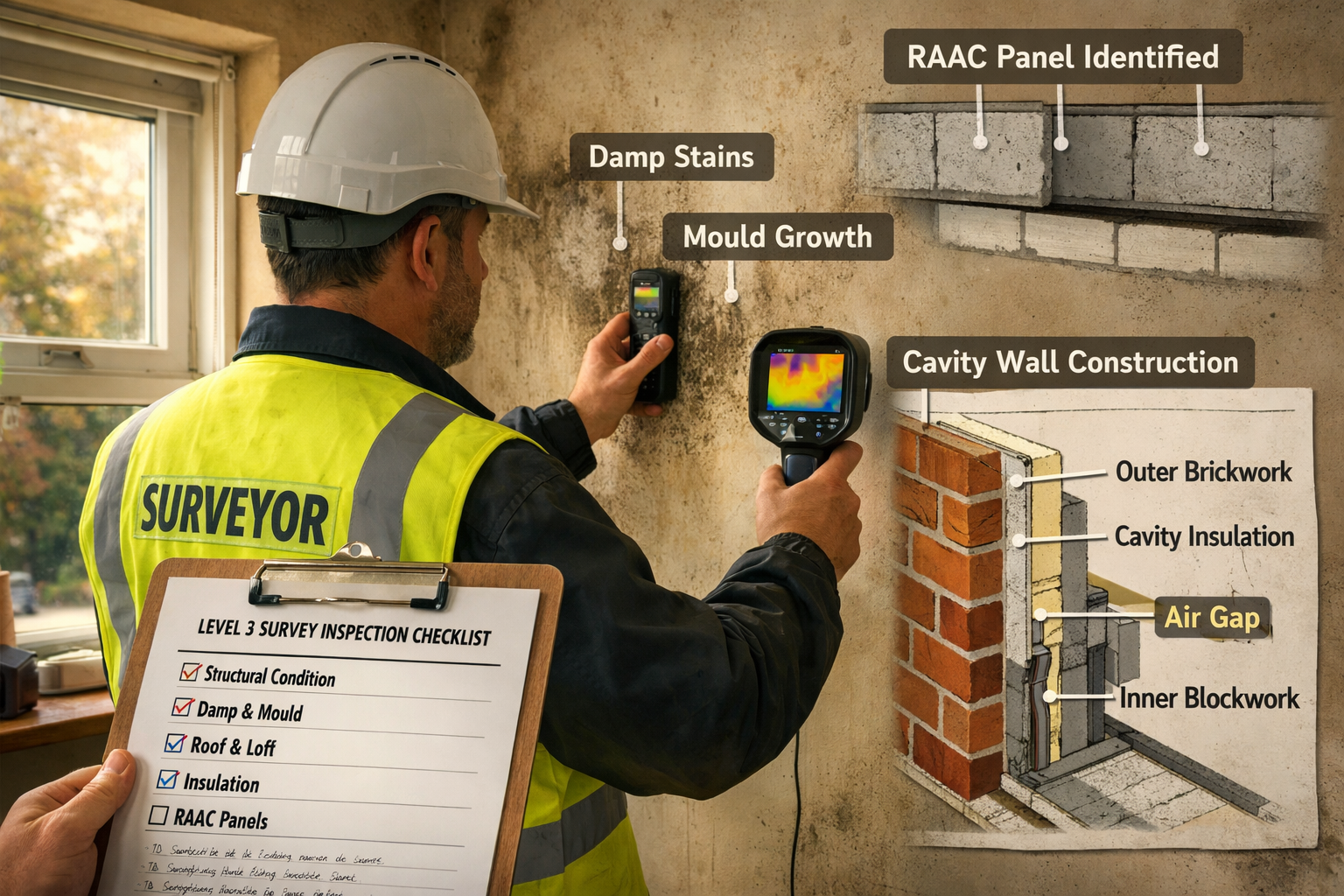
✅ Material condition assessments identifying RAAC concrete, hazardous materials, and aging systems
✅ Compliance gap analysis against current building regulations and safety standards
✅ Future maintenance forecasting enabling accurate lifecycle cost modeling
Unlike Level 2 surveys (HomeBuyer Reports), which offer standardized condition ratings, Level 3 surveys deliver bespoke assessments tailored to each property's unique characteristics. For institutional investors managing diverse portfolios spanning different construction eras, property types, and geographic locations, this granularity is essential.
Professional RICS commercial building surveys conducted by qualified chartered surveyors provide the foundation for informed acquisition decisions, protecting institutional capital from unexpected remediation costs.
Market Recovery Context: Opportunities and Risks
The 2026 property market recovery creates a unique investment environment. Rental income is forecast to climb by 12% alongside substantial capital appreciation, making buy-to-let portfolios increasingly attractive.[3] However, this recovery follows a period of market uncertainty that may have resulted in deferred maintenance across many properties.
Market dynamics influencing survey priorities:
| Factor | Impact on Survey Requirements |
|---|---|
| Deferred Maintenance | Properties may show accelerated deterioration requiring detailed condition assessments |
| Regulatory Tightening | Awaab's Law and energy efficiency standards demand compliance verification |
| Competitive Bidding | Fast-moving markets require efficient survey protocols without compromising thoroughness |
| Rental Yield Focus | Surveys must evaluate retrofit potential and rental optimization opportunities |
Institutional investors must balance acquisition speed with due diligence rigor. Standardized survey protocols enable rapid yet comprehensive assessments across portfolio properties, maintaining quality while meeting transaction timelines.
Critical Risk Categories in Building Survey Protocols for Buy-to-Let Recovery
Effective Building Survey Protocols for Buy-to-Let Recovery: Identifying Risks in Institutional Portfolio Acquisitions require systematic risk categorization. Institutional investors need frameworks that enable consistent property comparison and prioritized remediation planning.
Structural and Material Defects: The RAAC Challenge
Reinforced Autoclaved Aerated Concrete (RAAC) has emerged as a critical concern in 2026 property assessments. This lightweight concrete material, used extensively in construction between the 1950s and 1990s, has a limited lifespan and can fail suddenly without warning.[2]
RAAC identification protocols must include:
🔍 Visual inspection of ceiling panels, roof structures, and wall components
🔍 Construction date verification (properties built 1950-1995 require heightened scrutiny)
🔍 Structural engineering consultation for suspected RAAC presence
🔍 Load-bearing capacity assessment where RAAC is confirmed
🔍 Remediation cost estimation for replacement or reinforcement
Beyond RAAC, comprehensive structural surveys should identify:
- Foundation movement and subsidence indicators requiring specialized subsidence surveys
- Roof structure deterioration including timber decay, inadequate support, and weather damage
- Wall tie failure in cavity wall construction
- Lintel degradation above openings
- Concrete carbonation in reinforced concrete structures
Each defect should be categorized by severity (minor, moderate, serious, urgent) and assigned estimated remediation costs, enabling institutional investors to model total acquisition costs accurately.
Damp, Mould, and Awaab's Law Compliance
The tragic death of two-year-old Awaab Ishak in 2020 from prolonged mould exposure catalyzed significant regulatory change. Awaab's Law now mandates strict timelines for landlords to investigate and remediate damp and mould hazards reported by tenants.
Compliance requirements:
- 14-day investigation period following tenant reports of damp or mould
- 7-day remediation deadline for hazards identified during investigation
- Comprehensive record-keeping of all reports, investigations, and remediation actions
- Proactive prevention measures rather than reactive responses
For institutional portfolio acquisitions, pre-purchase surveys must thoroughly assess damp and mould risks:
Assessment protocols include:
- Moisture meter readings at multiple wall locations, particularly external walls and corners
- Thermal imaging surveys identifying cold bridging and insulation deficiencies
- Ventilation system evaluation assessing adequacy for property size and occupancy
- Condensation risk analysis considering heating systems and occupant behavior patterns
- Rising damp investigation including damp-proof course condition and ground level assessment
- Penetrating damp identification from roof leaks, damaged pointing, or failed seals
Properties with existing damp or mould issues require immediate remediation before tenant occupation. Institutional investors must budget accordingly and potentially delay rental income projections until compliance is achieved.
Chartered surveyors experienced in residential property assessment can provide detailed damp and mould reports that satisfy regulatory requirements and inform remediation strategies.
Fire Safety and Cladding Concerns
Following the Grenfell Tower tragedy, fire safety has remained a paramount concern for residential property investors. While cladding issues primarily affect higher-rise buildings, fire safety considerations extend across all buy-to-let properties.
Fire safety survey components:
⚠️ External cladding assessment (for buildings over 11 meters)
⚠️ Fire door condition and compliance verification
⚠️ Escape route adequacy and emergency lighting functionality
⚠️ Fire detection and alarm system testing and certification
⚠️ Compartmentation integrity in converted or multi-unit properties
⚠️ Electrical safety certification including consumer unit condition
Properties with non-compliant cladding face significant remediation costs and potential unmarketability. The 2026 market recovery has seen increased scrutiny of cladding issues, with lenders often refusing to finance properties without satisfactory External Wall System (EWS1) forms or similar certification.
Institutional investors must factor cladding remediation costs—which can reach hundreds of thousands of pounds per building—into acquisition valuations. Survey protocols should explicitly identify cladding types and flag potential compliance concerns for specialist fire engineering assessment.
Energy Efficiency and Retrofit Requirements
The UK's pathway to net-zero emissions by 2050 increasingly impacts buy-to-let property requirements. While current Minimum Energy Efficiency Standards (MEES) require properties to achieve at least an Energy Performance Certificate (EPC) rating of E, future regulations will likely tighten these requirements.
Retrofit assessment priorities:
🏠 Current EPC rating and improvement potential
🏠 Insulation adequacy (loft, cavity wall, solid wall)
🏠 Heating system efficiency and replacement timelines
🏠 Window and door thermal performance
🏠 Renewable energy installation potential (solar panels, heat pumps)
🏠 Ventilation system adequacy for improved airtightness
Properties requiring significant retrofit work present both challenges and opportunities. While remediation costs reduce immediate returns, improved energy efficiency enhances:
- Rental appeal to environmentally conscious tenants
- Rental premiums for high-efficiency properties
- Capital values as efficiency standards tighten
- Operating cost reductions benefiting landlords paying utilities
Institutional investors should commission energy assessments alongside structural surveys, identifying properties with cost-effective retrofit pathways that enhance portfolio performance.
Implementing Standardized Survey Protocols for Institutional Portfolio Acquisitions
Building Survey Protocols for Buy-to-Let Recovery: Identifying Risks in Institutional Portfolio Acquisitions require systematic implementation frameworks that balance thoroughness with efficiency. Institutional investors managing multiple simultaneous acquisitions need protocols that deliver consistent, comparable results.
Developing Consistent Assessment Frameworks
Standardization enables meaningful comparison across portfolio properties, but flexibility accommodates property-specific characteristics. Effective frameworks establish:
Core assessment categories:
- Structural integrity (foundations, walls, roof structures)
- Building envelope (external walls, windows, doors, weatherproofing)
- Internal condition (floors, ceilings, internal walls, finishes)
- Services (electrical, plumbing, heating, ventilation)
- Regulatory compliance (fire safety, energy efficiency, accessibility)
- Hazardous materials (asbestos, RAAC, lead paint)
- External areas (boundaries, drainage, outbuildings)
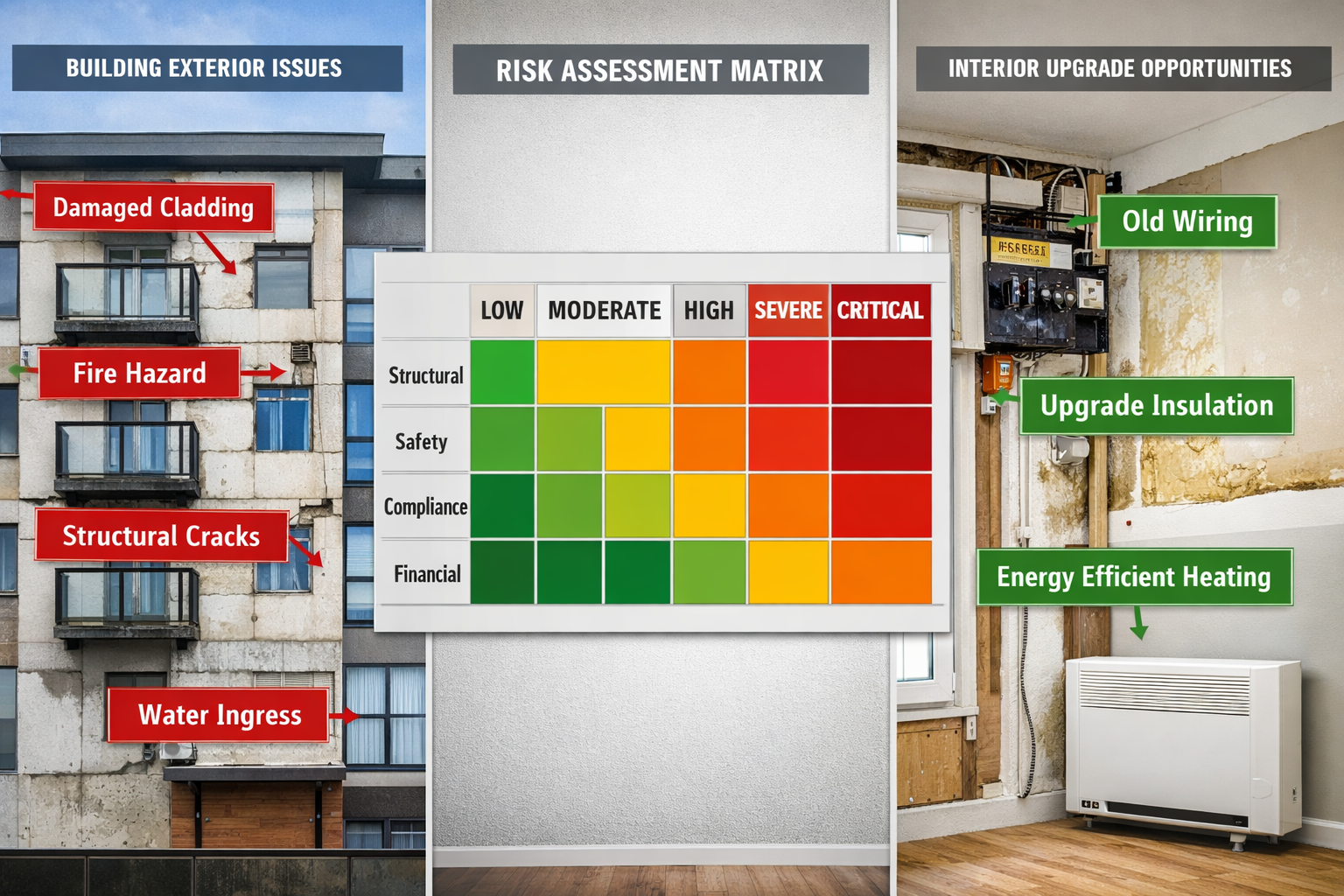
Each category should employ consistent rating scales (e.g., 1-5 severity ratings) enabling portfolio-wide risk aggregation and prioritization.
Sample risk rating framework:
| Rating | Description | Action Required | Budget Impact |
|---|---|---|---|
| 1 – Minor | Cosmetic issues, no structural impact | Routine maintenance | <£1,000 per item |
| 2 – Moderate | Functional issues requiring attention | Planned remediation within 12 months | £1,000-£5,000 |
| 3 – Serious | Significant defects affecting performance | Remediation within 6 months | £5,000-£20,000 |
| 4 – Urgent | Safety concerns or rapid deterioration | Immediate remediation required | £20,000-£50,000 |
| 5 – Critical | Structural failure risk or regulatory breach | Emergency intervention | >£50,000 |
This framework enables institutional investors to quickly identify high-risk properties requiring immediate attention or acquisition price adjustments.
Coordinating Multi-Property Assessment Teams
Large portfolio acquisitions require coordinated survey teams working simultaneously across multiple properties. Effective coordination ensures:
Team structure considerations:
- Lead surveyor oversight: Senior chartered surveyor providing quality assurance and consistency guidance
- Specialist consultants: Structural engineers, fire safety experts, energy assessors deployed as needed
- Standardized reporting templates: Consistent documentation formats enabling rapid comparison
- Digital survey platforms: Tablet-based applications with photo documentation and immediate cloud synchronization
- Communication protocols: Regular team briefings ensuring consistent interpretation of assessment criteria
The 2026 ALTA/NSPS standards emphasize early coordination among surveyors, title companies, developers, and lenders to mitigate closing delays.[1] This principle applies equally to UK institutional acquisitions, where survey findings must integrate with legal due diligence, financing arrangements, and acquisition timelines.
Experienced chartered surveyors in London and surrounding regions can provide coordinated multi-property assessment services tailored to institutional requirements.
Integrating Survey Findings with Acquisition Decisions
Survey reports generate substantial data requiring systematic analysis to inform investment decisions. Institutional investors need frameworks that translate technical findings into financial implications.
Decision integration process:
Step 1: Risk Aggregation
Compile all survey findings into centralized risk register, categorizing by severity and property
Step 2: Cost Estimation
Assign remediation cost estimates to each identified defect, including professional fees and contingencies
Step 3: Compliance Assessment
Identify regulatory non-compliance issues requiring mandatory remediation before tenant occupation
Step 4: Value Adjustment
Calculate total acquisition cost including purchase price, remediation, and holding costs during works
Step 5: Return Modeling
Project rental income and capital appreciation against total investment to determine portfolio-level returns
Step 6: Prioritization
Rank properties by risk-adjusted return potential, identifying acquisitions to proceed with, renegotiate, or abandon
This systematic approach ensures survey findings directly inform capital allocation decisions rather than remaining isolated technical reports.
Leveraging Technology for Portfolio Survey Management
Digital transformation enhances survey efficiency and data accessibility for institutional investors. Modern survey technology includes:
Digital survey platforms:
📱 Mobile applications enabling real-time data capture with photo documentation
📱 Cloud-based storage providing immediate access to survey reports across investment teams
📱 Automated report generation reducing administrative time and ensuring consistency
📱 Portfolio dashboards visualizing risk distribution and remediation priorities
📱 Integration capabilities connecting survey data with property management and financial systems
Advanced platforms incorporate thermal imaging, moisture detection, and structural analysis tools, providing objective measurements that supplement surveyor expertise.
For large portfolios, technology investment delivers significant efficiency gains, enabling faster acquisition cycles while maintaining comprehensive due diligence standards.
Specialized Survey Considerations for Buy-to-Let Properties
Buy-to-let properties present unique survey considerations beyond standard residential assessments. Institutional investors must evaluate properties through both structural and rental business lenses.

Tenant Impact and Rental Void Considerations
Survey findings directly impact rental income projections. Properties requiring significant remediation work may experience extended rental voids, affecting investment returns.
Tenant impact assessment:
- Occupied property surveys: Protocols for accessing tenanted properties with minimal disruption
- Remediation timing: Scheduling major works during tenancy transitions to minimize void periods
- Temporary accommodation costs: Budgeting for tenant relocation during extensive works
- Rental income loss: Modeling void periods in return calculations
- Tenant retention risk: Assessing whether remediation works may prompt tenant departures
Properties with urgent safety issues may require immediate tenant evacuation, creating substantial financial and reputational risks. Thorough pre-acquisition surveys identify these scenarios, enabling informed risk management.
Multi-Unit Property Complexities
Portfolios often include multi-unit buildings (HMOs, converted flats, purpose-built blocks) requiring specialized survey approaches.
Multi-unit survey protocols:
🏢 Common area assessments: Shared entrances, corridors, stairwells, and external areas
🏢 Individual unit surveys: Comprehensive assessment of each lettable space
🏢 Service distribution systems: Shared heating, water, electrical systems serving multiple units
🏢 Fire compartmentation: Integrity of fire-resistant construction between units
🏢 Regulatory compliance: HMO licensing requirements and fire safety standards
Multi-unit properties often reveal complex ownership and maintenance responsibility issues. Surveys should clearly identify which elements fall under landlord responsibility versus tenant obligations, informing management cost projections.
Boundary and Title Considerations
The 2026 ALTA/NSPS standards' enhanced boundary reporting provisions[1] highlight the importance of clear property boundary identification—particularly relevant for portfolio acquisitions where boundary disputes can affect multiple properties.
Boundary survey components:
- Physical boundary markers: Fences, walls, hedges defining property extents
- Boundary ownership: Responsibility for maintenance of boundary features
- Encroachment identification: Structures extending beyond legal boundaries
- Access rights: Easements, rights of way, and shared access arrangements
- Adverse possession risks: Evidence of neighboring occupation of property areas
Unclear boundaries create ongoing management challenges and potential legal disputes. Comprehensive boundary surveys provide certainty, protecting institutional investors from future complications.
Asbestos and Hazardous Materials
Properties built before 2000 frequently contain asbestos in various forms. Institutional landlords have legal duties to manage asbestos risks under the Control of Asbestos Regulations 2012.
Asbestos survey requirements:
⚠️ Management surveys: Identifying asbestos-containing materials (ACMs) in normal property condition
⚠️ Refurbishment/demolition surveys: Comprehensive intrusive surveys before major works
⚠️ Asbestos register: Documented location and condition of all identified ACMs
⚠️ Management plan: Protocols for monitoring, maintaining, and protecting ACMs
⚠️ Removal cost estimation: Budget implications for ACM removal during renovations
Professional asbestos surveys by licensed specialists should complement structural surveys for all pre-2000 properties. Institutional investors must budget for both ongoing management and eventual removal costs.
Best Practices for Building Survey Protocols in Recovering Markets
The 2026 market recovery creates specific challenges and opportunities for institutional buy-to-let investors. Optimizing Building Survey Protocols for Buy-to-Let Recovery: Identifying Risks in Institutional Portfolio Acquisitions requires market-responsive best practices.
Balancing Speed and Thoroughness
Recovering markets often feature competitive bidding and compressed transaction timelines. Institutional investors face pressure to move quickly while maintaining due diligence standards.
Strategies for efficient thoroughness:
✓ Pre-instruction preparation: Establish surveyor relationships and standardized protocols before identifying acquisition targets
✓ Preliminary desktop assessments: Review available documentation (EPCs, previous surveys, planning records) before commissioning full surveys
✓ Phased survey approaches: Conduct initial high-level assessments across portfolios, followed by detailed surveys for shortlisted properties
✓ Parallel processing: Commission surveys, legal due diligence, and financing arrangements simultaneously rather than sequentially
✓ Conditional offers: Structure offers subject to satisfactory survey findings, protecting withdrawal rights
Speed should never compromise safety-critical assessments. Properties with suspected RAAC, structural instability, or serious fire safety concerns require thorough investigation regardless of market pressure.
Building Surveyor Relationships
Institutional portfolio investors benefit significantly from established relationships with surveying firms capable of coordinating multi-property assessments.
Relationship advantages:
- Consistent quality: Familiarity with institutional requirements and reporting preferences
- Capacity assurance: Priority access to surveyor availability during busy market periods
- Cost efficiency: Volume-based fee structures for multiple simultaneous surveys
- Technical expertise: Access to specialist consultants within established firms
- Responsive communication: Direct contacts enabling rapid query resolution
Selecting RICS-chartered firms with commercial property experience and institutional client track records ensures professional standards and appropriate insurance coverage for high-value transactions.
Documentation and Record Management
Comprehensive survey documentation serves multiple purposes beyond initial acquisition decisions. Institutional investors should maintain:
Essential documentation:
📋 Full survey reports with photographic evidence
📋 Specialist consultant reports (structural engineers, fire safety, asbestos)
📋 Remediation cost estimates and contractor quotations
📋 Compliance certificates (electrical, gas, energy performance)
📋 Remediation completion records documenting works undertaken
📋 Ongoing maintenance schedules based on survey recommendations
This documentation supports:
- Asset management planning: Scheduled maintenance and capital expenditure forecasting
- Regulatory compliance: Evidence of due diligence and safety standard adherence
- Future disposals: Comprehensive property information for prospective purchasers
- Insurance claims: Pre-existing condition documentation supporting claims
- Dispute resolution: Objective evidence in tenant or contractor disputes
Digital document management systems enable efficient storage, retrieval, and sharing across investment teams and property managers.
Continuous Protocol Refinement
Effective survey protocols evolve based on experience and changing regulatory environments. Institutional investors should:
Protocol development practices:
- Post-acquisition reviews: Analyze survey accuracy by comparing findings to actual remediation requirements
- Cost variance analysis: Track estimated versus actual remediation costs, refining estimation methodologies
- Regulatory monitoring: Update protocols to reflect changing compliance requirements
- Market feedback integration: Incorporate lessons from acquisition successes and failures
- Surveyor performance evaluation: Assess surveyor accuracy, communication quality, and timeline adherence
This continuous improvement approach ensures protocols remain relevant and effective as markets and regulations evolve.
Conclusion
Building Survey Protocols for Buy-to-Let Recovery: Identifying Risks in Institutional Portfolio Acquisitions represent essential infrastructure for successful institutional property investment in 2026's recovering market. With buy-to-let valuations forecast to surge 22.2% over five years and rental income climbing 12%,[3] the opportunities are substantial—but only for investors who properly identify and manage acquisition risks.
The critical success factors include:
Comprehensive Level 3 surveys that identify structural defects, RAAC concrete, damp and mould issues, fire safety concerns, and retrofit requirements across portfolio properties
Standardized assessment frameworks enabling consistent property comparison and risk-adjusted return modeling across diverse acquisitions
Regulatory compliance focus particularly regarding Awaab's Law damp and mould requirements, fire safety standards, and energy efficiency mandates
Coordinated multi-property assessment teams leveraging experienced chartered surveyors and specialist consultants working within consistent protocols
Technology integration utilizing digital survey platforms, thermal imaging, and portfolio management dashboards to enhance efficiency and data accessibility
Systematic decision integration translating technical survey findings into financial implications that directly inform capital allocation decisions
The 2026 ALTA/NSPS Survey Standards' emphasis on enhanced risk allocation, independent verification, and improved communication protocols[1] reflects global recognition that property surveying must evolve to meet institutional investor needs. UK investors benefit from adopting similar principles: thorough, standardized, professionally coordinated assessments that provide genuine protection against acquisition risks.
Actionable Next Steps
For institutional investors preparing portfolio acquisitions in 2026's recovering buy-to-let market:
- Establish surveyor relationships with RICS-chartered firms experienced in multi-property commercial assessments
- Develop standardized protocols incorporating risk categorization frameworks, consistent reporting templates, and decision integration processes
- Commission specialist assessments for RAAC identification, damp and mould evaluation, fire safety compliance, and energy efficiency potential
- Implement digital survey platforms enabling efficient data capture, storage, and portfolio-wide analysis
- Budget comprehensively including not just survey costs but anticipated remediation expenses identified through thorough due diligence
- Monitor regulatory developments ensuring protocols remain current with evolving compliance requirements
- Review and refine protocols based on post-acquisition experience and actual remediation outcomes
The buy-to-let recovery presents exceptional opportunities for institutional investors who approach acquisitions with rigorous, professional survey protocols. Properties acquired with comprehensive risk identification and appropriate remediation planning will deliver superior returns while meeting tenant safety obligations and regulatory compliance standards.
Partnering with experienced professionals who understand both the technical complexities of building surveying and the commercial realities of institutional property investment ensures Building Survey Protocols for Buy-to-Let Recovery: Identifying Risks in Institutional Portfolio Acquisitions deliver genuine value protection and informed decision-making throughout the acquisition process.
References
[1] 2026 Alta Nsps Survey Standards Update Key Takeaways For Commercial Real Estate – https://www.taftlaw.com/news-events/law-bulletins/2026-alta-nsps-survey-standards-update-key-takeaways-for-commercial-real-estate/
[2] Building Survey Priorities In 2026 Market Recovery Raac Cladding And Latent Defects For Stabilising Prices – https://nottinghillsurveyors.com/blog/building-survey-priorities-in-2026-market-recovery-raac-cladding-and-latent-defects-for-stabilising-prices
[3] Buy To Let Valuation Surge 2026 Survey Strategies For Insti – https://nottinghillsurveyors.com/blog/buy-to-let-valuation-surge-2026-survey-strategies-for-insti