The UK property market is experiencing a significant new build boom in 2026, with modest price growth driving increased construction activity across the country. However, this expansion brings a hidden challenge: a rising tide of construction defect litigation. As more homeowners discover latent defects—from inadequate insulation to moisture penetration—the demand for qualified expert witnesses has never been greater. Understanding Expert Witness Strategies for New Build Defect Disputes in 2026: Latent Risks and Evidence Prep is now essential for chartered surveyors who want to provide credible, court-ready testimony that withstands rigorous legal scrutiny.
The landscape of expert witness testimony has evolved dramatically. Courts now demand more than simple opinions; they require independent investigations, validated methodologies, and evidence that meets strict admissibility standards. For surveyors specializing in expert witness services, mastering these strategies means the difference between testimony that influences case outcomes and opinions that get excluded entirely.
Key Takeaways
- Independent investigation is now mandatory: Expert witnesses must conduct their own testing and analysis rather than simply critiquing opposing experts' work to meet modern court standards
- Early engagement prevents evidence gaps: Engaging qualified experts at the dispute's outset ensures proper documentation, timely testing, and comprehensive evaluation of all relevant defects
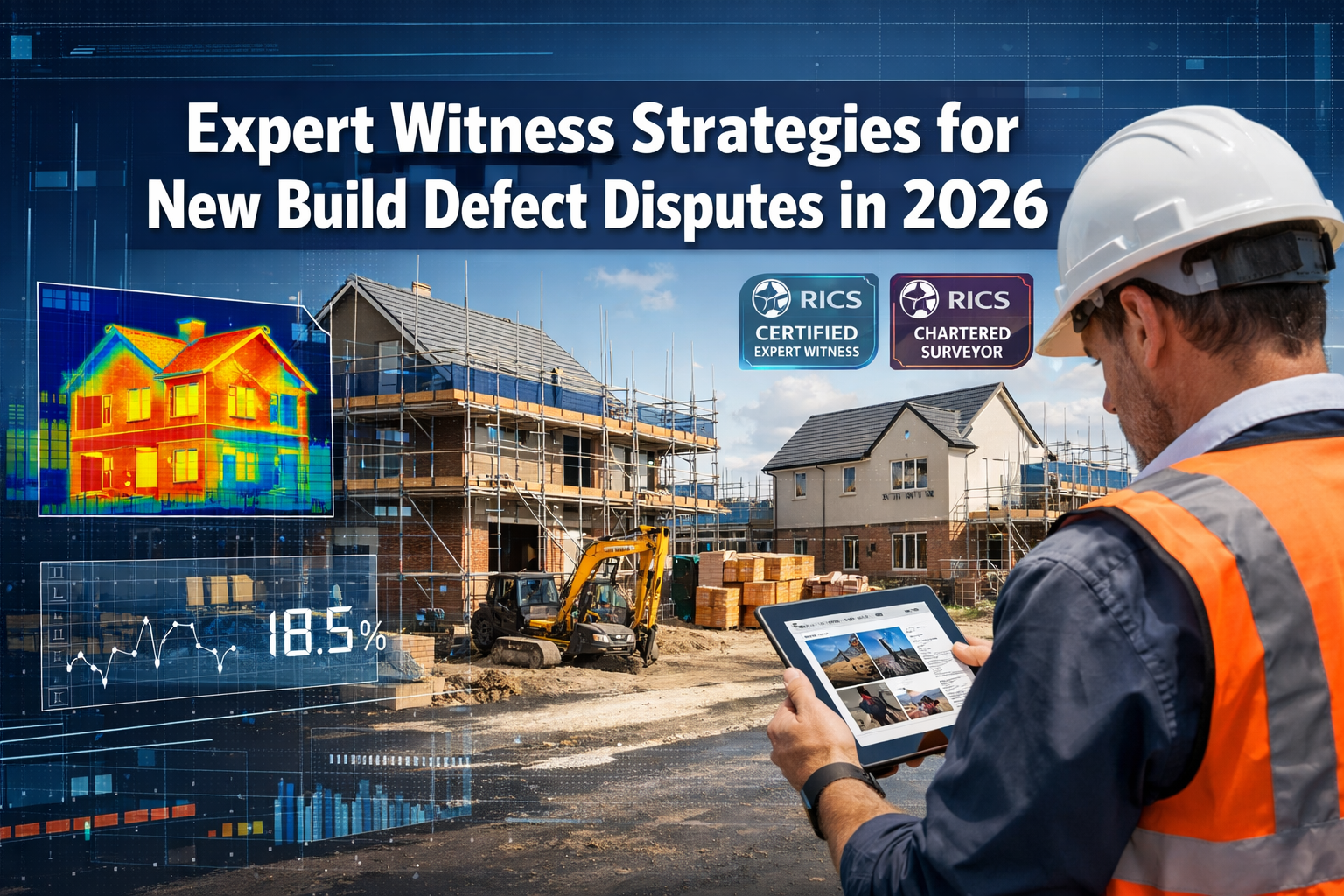
- Digital evidence management is critical: Systematic collection, organization, and chain-of-custody documentation of evidence—including thermal imaging, moisture readings, and photographic records—strengthens court credibility
- RICS standards provide litigation framework: Adherence to professional surveying standards enhances expert credibility and demonstrates methodological reliability in court proceedings
- Latent defects require specialized knowledge: Technical issues like poor insulation, inadequate waterproofing, and structural inadequacies exceed common knowledge and demand expert testimony backed by testing
Understanding the 2026 Landscape for New Build Defect Disputes
The New Build Boom and Defect Patterns
The construction industry in 2026 has witnessed unprecedented growth in new residential developments. With this expansion comes an inevitable increase in construction defect claims. Latent defects—those hidden flaws that don't become apparent until months or years after completion—pose particular challenges for homeowners and legal professionals alike.
Common latent defects in new builds include:
- Poor thermal insulation leading to excessive heat loss and energy inefficiency
- Inadequate waterproofing causing moisture penetration and dampness
- Defective window and door installations resulting in air leakage and water ingress
- Structural inadequacies affecting building stability and safety
- Electrical and plumbing deficiencies that violate building regulations
- Substandard materials that deteriorate prematurely
These defects often fall outside the "common experience" of ordinary individuals, making expert testimony essential for establishing causation, breach of duty, and damages.[1] For surveyors conducting RICS building surveys, recognizing these patterns early helps prevent disputes or strengthens the evidence base when litigation becomes unavoidable.
The Evolving Legal Standards for Expert Testimony
The legal framework governing expert witness testimony has become significantly more rigorous. While UK courts don't formally apply the US Daubert standard, similar principles of reliability and methodology have influenced judicial thinking. Courts increasingly scrutinize whether expert opinions rest on:
✅ Sufficient facts and data gathered through comprehensive investigation
✅ Reliable principles and methods consistent with professional standards
✅ Proper application of those methods to the specific case facts
This means that expert witnesses can no longer rely solely on qualifications and experience. They must demonstrate that their opinions derive from systematic investigation, validated testing procedures, and methodologies accepted within the surveying profession.[1]
Core Expert Witness Strategies for New Build Defect Disputes in 2026
Strategy 1: Conduct Independent Investigations
The most critical shift in expert witness practice involves the requirement for independent investigation. Courts have increasingly rejected expert testimony that merely critiques an opposing expert's work without conducting original analysis.[1]
What independent investigation means:
| Requirement | Implementation |
|---|---|
| Original site inspections | Visit the property personally; document conditions with photographs, measurements, and observations |
| Independent testing | Perform your own moisture readings, thermal imaging, and structural assessments rather than relying on previous reports |
| Methodology validation | If opposing experts used different testing methods, request permission to redo tests using your preferred, professionally accepted procedures |
| Documentation standards | Maintain detailed records of all inspection activities, testing protocols, and analytical processes |
For example, if a plaintiff's expert conducted moisture testing using Method A but you would typically employ Method B, you should request to perform independent testing using Method B. Simply challenging the plaintiff expert's methodology without conducting your own investigation may render your testimony inadmissible.[1]
This approach aligns with structural survey best practices, where comprehensive on-site evaluation forms the foundation of reliable professional opinions.
Strategy 2: Engage Experts Early in the Dispute Process
⏰ Timing matters tremendously in construction defect cases. Early expert engagement provides multiple strategic advantages:
Benefits of early engagement:
- Comprehensive defect identification: Experts can identify all relevant defects before evidence deteriorates or repairs obscure original conditions
- Proper testing protocols: Sufficient time allows for seasonal testing (e.g., water penetration during rainy periods) and multiple site visits
- Discovery deadline compliance: Early engagement ensures experts can complete investigations before court-imposed deadlines
- Cost-effective resolution: Early expert evaluation may facilitate settlement negotiations before expensive litigation proceeds
- Evidence preservation: Experts can advise on preserving critical evidence and preventing spoliation
"For construction defect disputes, qualified construction expert witnesses should be engaged early to evaluate causation, standard of care, applicable codes and standards, and likely liability exposure."[2]
Counsel and property owners should engage experts immediately upon discovering potential defects, not weeks before trial. This practice mirrors the proactive approach used in subsidence surveys, where early intervention prevents evidence loss and enables comprehensive monitoring.
Strategy 3: Master Digital Evidence Collection and Management
In 2026, digital evidence forms the backbone of successful construction defect litigation. Expert witnesses must employ sophisticated documentation techniques that create court-ready evidence packages.
Essential digital evidence components:
📸 High-resolution photography
- Document defects from multiple angles with proper lighting
- Include scale references (measuring tapes, rulers) in photographs
- Capture both close-up detail shots and wide-angle context images
- Timestamp and geotag all photographs
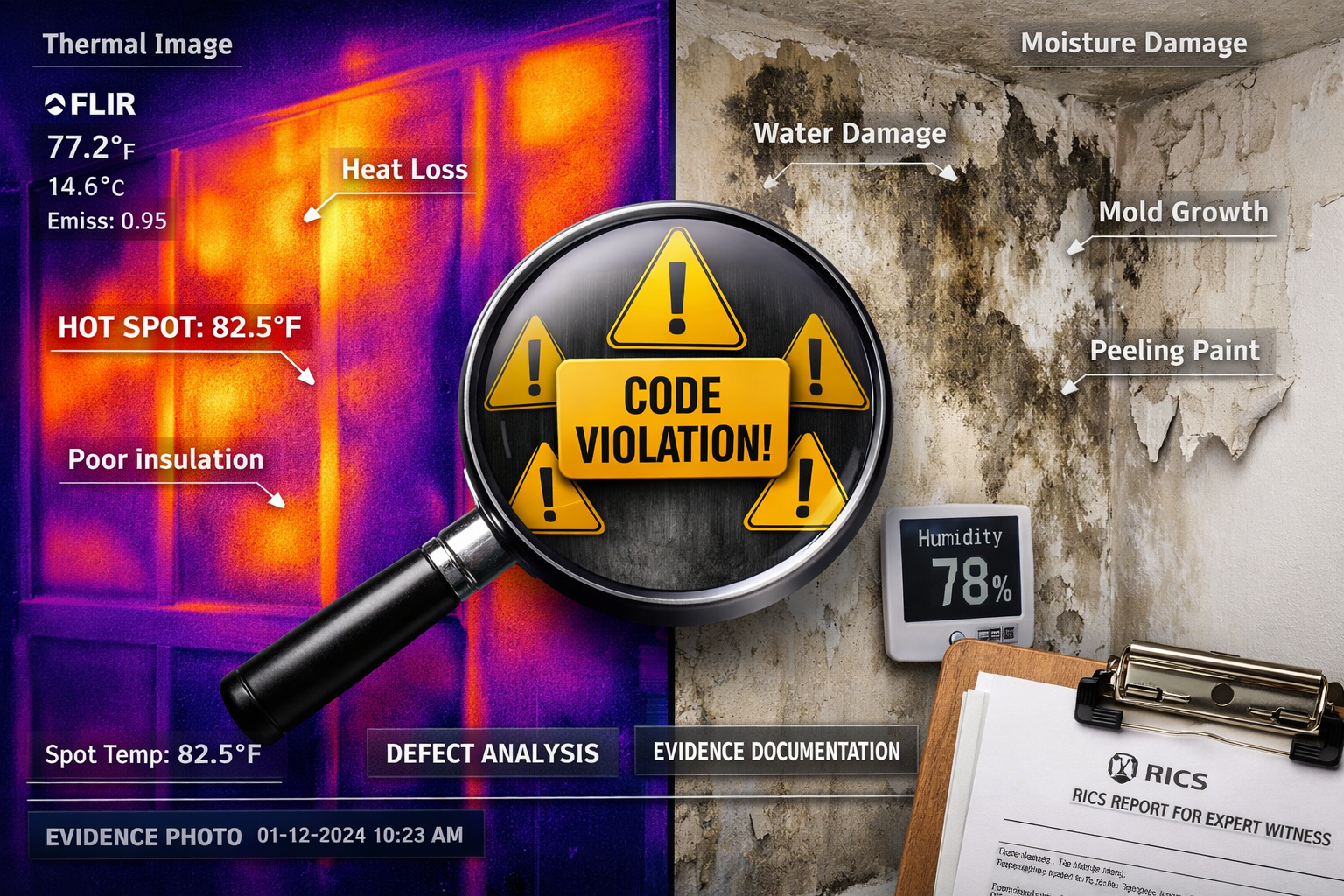
🌡️ Thermal imaging documentation
- Conduct thermal surveys during appropriate temperature differentials
- Document equipment calibration and environmental conditions
- Provide interpreted images with temperature scales and annotations
- Compare thermal patterns against building plans
💧 Moisture and environmental readings
- Record readings from multiple locations using calibrated equipment
- Document equipment specifications and calibration certificates
- Create moisture maps showing patterns of water penetration
- Conduct readings at multiple time points to establish trends
📊 Systematic organization
- Maintain clear chain-of-custody documentation for all evidence
- Organize files by defect type, location, and chronology
- Create searchable databases with metadata tags
- Backup all evidence to secure cloud storage with version control
This systematic approach ensures that evidence remains admissible and persuasive throughout litigation. Surveyors experienced in damp surveys understand how proper moisture documentation creates irrefutable evidence of building defects.
Identifying and Documenting Latent Risks in New Build Properties
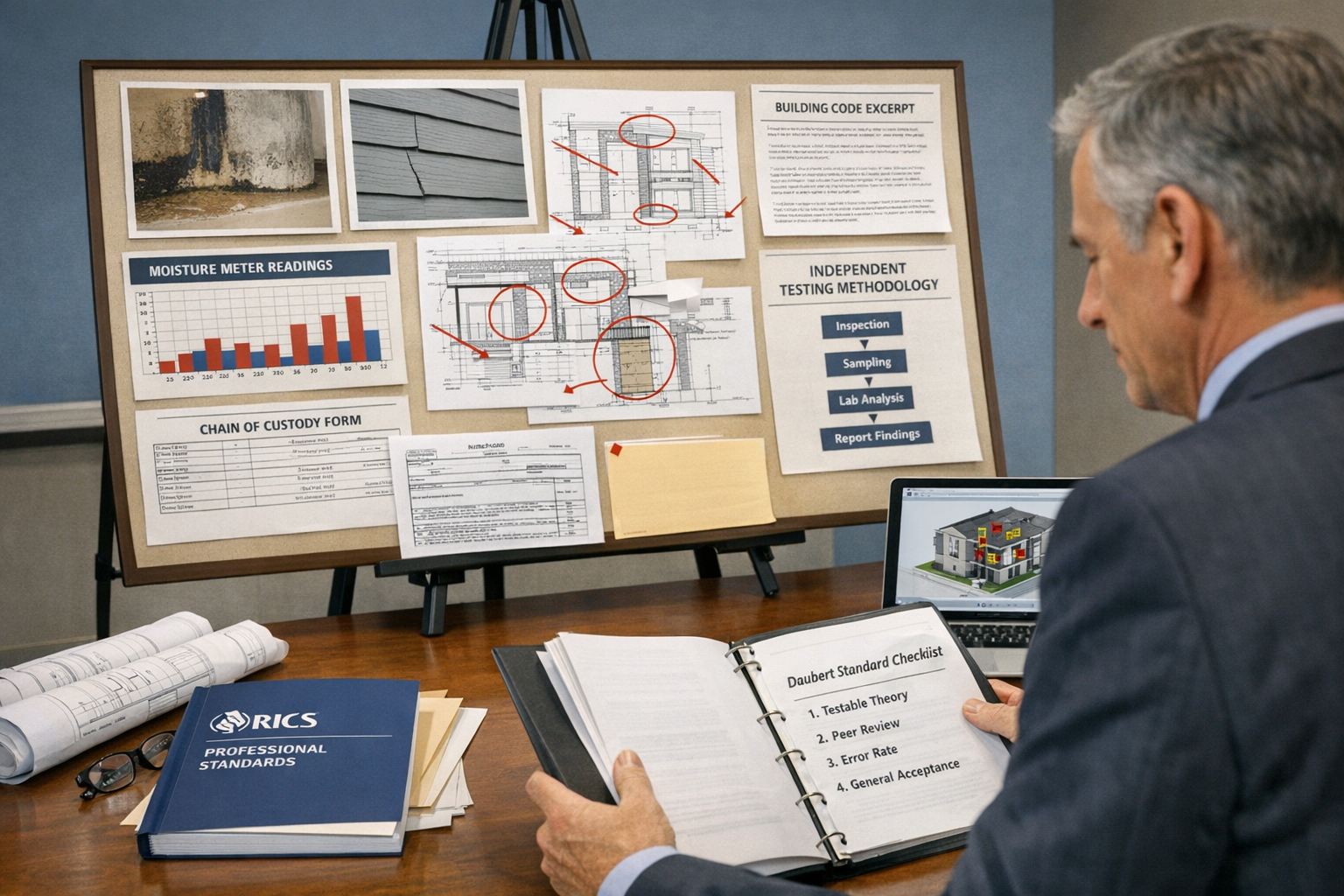
Common Latent Defects Requiring Expert Analysis
Not all construction issues require expert testimony. Courts recognize that some defects fall within the "common experience" of ordinary people.[1] However, most technical construction matters exceed common knowledge and demand expert evaluation.
Defects requiring expert testimony:
🏗️ Building envelope failures
- Window flashing inadequacies causing water intrusion
- Defective vapor barriers leading to condensation problems
- Inadequate insulation installation reducing thermal performance
- Roof membrane failures causing leaks
⚡ Systems deficiencies
- Electrical wiring that violates building codes
- Plumbing installations with improper venting or drainage
- HVAC systems inadequately sized for building loads
- Fire safety system deficiencies
🧱 Structural concerns
- Foundation settlement or movement issues
- Inadequate structural support for building loads
- Substandard concrete or masonry work
- Timber frame defects affecting structural integrity
Defects potentially within common experience:
- Obviously cracked walls or ceilings
- Visibly sagging floors or roofs
- Clearly non-functional doors or windows
- Apparent water stains or mold growth
Even when defects appear obvious, expert testimony remains valuable for establishing causation, standard of care breaches, and appropriate remediation costs.
Documentation Protocols for Latent Defects
Effective documentation of latent defects requires methodical protocols that create comprehensive evidence records:
Step-by-step documentation process:
1️⃣ Initial site assessment
- Review building plans, specifications, and as-built drawings
- Interview property owners about defect history and symptoms
- Conduct visual inspection of all accessible areas
- Identify areas requiring invasive investigation
2️⃣ Non-invasive testing
- Thermal imaging to identify insulation gaps and air leakage
- Moisture meter readings at suspected problem areas
- Infrared thermography for hidden water damage
- Visual documentation with professional photography
3️⃣ Invasive investigation (when necessary)
- Remove finishes to expose concealed conditions
- Document existing conditions before and after invasive work
- Collect material samples for laboratory testing
- Photograph all stages of invasive investigation
4️⃣ Testing and analysis
- Laboratory testing of material samples
- Structural load calculations and analysis
- Building code compliance review
- Industry standard comparison
5️⃣ Report preparation
- Detailed findings with supporting evidence
- Opinion on causation and responsibility
- Recommended remediation approaches
- Cost estimates for repairs
This systematic approach ensures no critical evidence gets overlooked. Professionals conducting commercial building surveys apply similar methodologies to large-scale projects.
Evidence Preparation Strategies That Withstand Court Scrutiny
Building a Defensible Methodology
Courts evaluate expert testimony based on the reliability of the methodology employed. Expert witnesses must demonstrate that their investigation methods align with professional standards and accepted practices within the surveying industry.
Key methodology requirements:
✔️ Professional standards compliance
- Follow RICS guidance documents and practice statements
- Apply relevant British Standards and building regulations
- Use testing methods accepted within the surveying profession
- Document deviations from standard procedures with justification
✔️ Peer-reviewed techniques
- Employ testing methods validated through professional research
- Reference published literature supporting methodology choices
- Avoid novel or experimental techniques unless properly validated
- Maintain continuing professional development in testing technologies
✔️ Equipment calibration
- Use properly calibrated testing equipment with current certification
- Document equipment specifications and calibration dates
- Maintain calibration records for all instruments
- Replace or recalibrate equipment according to manufacturer specifications
✔️ Reproducible procedures
- Document testing procedures in sufficient detail for replication
- Maintain consistent methodology across similar cases
- Create written protocols for standard investigation types
- Train assistants in standardized procedures
This methodological rigor transforms expert opinions from subjective assessments into scientifically defensible conclusions. The same principles apply to specialized investigations like asbestos surveys, where methodology directly impacts health and safety conclusions.
Coordinating with Legal Counsel
Effective expert witness work requires close coordination with legal counsel to ensure investigations address all relevant legal issues and meet procedural requirements.[1]
Essential coordination practices:
📋 Initial case briefing
- Review all relevant pleadings, allegations, and legal theories
- Understand specific defects claimed and damages sought
- Identify key legal issues requiring expert opinion
- Clarify scope of expert engagement and deliverables
🗓️ Timeline management
- Understand discovery deadlines and expert disclosure requirements
- Schedule site visits and testing to meet court deadlines
- Provide preliminary findings to support settlement negotiations
- Reserve sufficient time for report preparation and revisions
🔍 Scope definition
- Clarify which defects fall within expert's scope
- Identify areas requiring additional specialists
- Define boundaries between expert roles in multi-expert cases
- Ensure investigation addresses all material allegations
📢 Communication protocols
- Establish regular update schedules with counsel
- Report significant findings immediately
- Discuss proposed testing procedures before implementation
- Notify counsel of any limitations or obstacles encountered
💰 Budget considerations
- Provide fee estimates for proposed investigation scope
- Obtain approval before conducting expensive testing
- Track time and expenses systematically
- Justify costs for invasive investigations or specialized testing
This collaborative approach ensures expert work supports the legal strategy while maintaining professional independence and objectivity.
Creating Court-Ready Reports and Testimony
The final work product—the expert report and testimony—must communicate complex technical information clearly while demonstrating methodological reliability.
Expert report essentials:
1. Qualifications section
- Professional credentials and certifications (RICS membership, specializations)
- Relevant experience with similar defect types
- Continuing education in relevant technical areas
- Previous expert witness experience
2. Scope and methodology
- Clear statement of investigation scope and limitations
- Detailed description of testing procedures employed
- List of all documents reviewed and site visits conducted
- Explanation of analytical methods and standards applied
3. Findings and observations
- Systematic presentation of defects identified
- Supporting evidence (photographs, test results, measurements)
- Comparison to applicable standards and codes
- Discussion of causation factors
4. Opinions and conclusions
- Clear statement of professional opinions
- Explanation of reasoning supporting each opinion
- Discussion of alternative explanations considered and rejected
- Confidence levels where appropriate
5. Recommendations
- Appropriate remediation approaches
- Cost estimates for repairs
- Timeline considerations
- Preventive measures for similar defects
Testimony preparation tips:
🎯 Use plain language to explain technical concepts
🎯 Prepare visual aids (diagrams, photographs, charts) to illustrate key points
🎯 Anticipate cross-examination challenges to methodology
🎯 Remain objective and acknowledge limitations of opinions
🎯 Avoid advocacy—present facts and professional opinions impartially
Expert witnesses who present clear, methodologically sound opinions earn credibility with judges and juries, significantly influencing case outcomes.
RICS Standards and Professional Practice in Expert Witness Work
Leveraging RICS Guidance for Litigation Credibility
Membership in the Royal Institution of Chartered Surveyors (RICS) provides expert witnesses with a professional framework that enhances courtroom credibility. RICS standards establish recognized methodologies and ethical guidelines that courts respect.
RICS advantages for expert witnesses:
🏆 Professional credibility
- RICS membership demonstrates commitment to professional standards
- Chartered status signals advanced competency and experience
- Professional indemnity insurance requirements protect clients
- Continuing professional development ensures current knowledge
📘 Guidance documents
- RICS practice statements provide authoritative methodology guidance
- Professional standards establish recognized investigation protocols
- Guidance notes address specific defect types and investigation techniques
- Conflict of interest rules ensure independence and objectivity
⚖️ Expert witness standards
- RICS Practice Statement on Surveyors Acting as Expert Witnesses
- Requirements for impartiality and objectivity
- Standards for report preparation and testimony
- Professional conduct rules governing expert work
When expert witnesses cite RICS standards in reports and testimony, they ground their opinions in professionally recognized frameworks. This approach transforms subjective assessments into opinions based on authoritative industry standards.
Surveyors offering RICS valuations understand how professional standards enhance report credibility across all practice areas, including litigation support.
Maintaining Independence and Objectivity
Courts demand that expert witnesses function as impartial advisors to the court, not advocates for the party retaining them. RICS professional standards reinforce this independence requirement.
Independence principles:
✅ Duty to the court supersedes duty to client
✅ Opinions must reflect genuine professional judgment
✅ Acknowledge limitations and uncertainties honestly
✅ Disclose potential conflicts of interest
✅ Resist pressure to modify opinions for litigation advantage
"The expert witness's primary duty is to the court, not to the party instructing them. Opinions must be independent, objective, and unbiased regardless of the pressures of litigation."
This independence distinguishes expert witnesses from advocates and gives their testimony persuasive weight. Maintaining objectivity sometimes means acknowledging facts unfavorable to the retaining party—a practice that ultimately enhances credibility.
Practical Implementation: Case Study Approach
Scenario: Poor Insulation in New Build Development
Background: A homeowner purchased a new build property in 2025. During the winter of 2025-2026, they experienced excessive heating costs and cold interior temperatures despite a modern heating system. Thermal imaging revealed significant heat loss through exterior walls, suggesting inadequate insulation installation.
Expert witness strategy implementation:
Phase 1: Early engagement and initial assessment
- Expert engaged within weeks of defect discovery
- Initial site visit conducted during cold weather to maximize thermal differential
- Thermal imaging survey documented heat loss patterns
- Building plans reviewed to identify specified insulation requirements
Phase 2: Independent investigation
- Invasive investigation performed with homeowner consent
- Wall sections opened at representative locations
- Insulation thickness measured and compared to specifications
- Photographs documented gaps, compression, and installation defects
- Material samples collected for laboratory testing
Phase 3: Testing and analysis
- Laboratory testing confirmed insulation R-values
- Thermal performance calculations compared actual vs. specified performance
- Building regulation compliance analysis
- Industry standard installation practice review
- Energy cost impact quantification
Phase 4: Evidence preparation
- Comprehensive photographic documentation organized chronologically
- Thermal images annotated with temperature differentials
- Test results compiled with equipment calibration certificates
- Chain-of-custody documentation maintained for all evidence
- Digital evidence stored with secure backup
Phase 5: Report and testimony
- Expert report detailed findings, methodology, and opinions
- Clear explanation of insulation deficiencies and causation
- Remediation recommendations with cost estimates
- Visual aids prepared for testimony
- Deposition and trial testimony provided
Outcome: The expert's methodologically sound investigation and clear testimony established the builder's breach of contract and building regulations. The case settled favorably before trial based on the strength of expert evidence.
This scenario illustrates how proper Expert Witness Strategies for New Build Defect Disputes in 2026: Latent Risks and Evidence Prep create compelling evidence that drives case resolution.
Emerging Technologies and Future Trends
Digital Tools Transforming Evidence Collection
Technology continues to revolutionize how expert witnesses document and analyze construction defects in 2026:
🚁 Drone surveys
- Aerial photography documents roof and upper-level defects
- 3D modeling creates comprehensive building records
- Thermal imaging from aerial platforms identifies heat loss patterns
- Cost-effective alternative to scaffolding for high-level inspections
Surveyors offering drone surveys leverage this technology for comprehensive defect documentation.
📱 Mobile evidence management apps
- Real-time evidence logging during site visits
- Automatic GPS tagging and timestamping
- Cloud synchronization for team collaboration
- Integrated voice notes and annotations
🤖 Artificial intelligence analysis
- Automated defect detection in photographs
- Pattern recognition for similar defects across properties
- Predictive analytics for latent defect risk assessment
- Natural language processing for document review
💻 Virtual site inspections
- 3D virtual tours for remote expert review
- Collaborative platforms for multi-expert cases
- Video conferencing for real-time consultation
- Digital markup tools for defect identification
These technologies enhance investigation efficiency while creating more comprehensive evidence records. However, experts must ensure new technologies meet reliability standards and don't replace necessary physical inspections.
Preparing for Evolving Legal Standards
The legal landscape for expert witness testimony continues to evolve. Forward-thinking experts should:
📚 Stay current on case law affecting expert admissibility
📚 Monitor professional standards updates from RICS and other bodies
📚 Invest in continuing education on emerging testing technologies
📚 Develop specialized expertise in high-demand defect areas
📚 Build relationships with legal professionals specializing in construction law
📚 Document methodology evolution to demonstrate continuous improvement
As courts demand increasingly rigorous methodology and independence, experts who invest in professional development and systematic practices will thrive in the litigation support market.
Conclusion
The new build boom of 2026 has created unprecedented opportunities—and challenges—for property owners, developers, and the chartered surveyors who serve them. As latent defects emerge in recently completed developments, the demand for qualified expert witnesses who can navigate complex litigation has never been greater.
Successful Expert Witness Strategies for New Build Defect Disputes in 2026: Latent Risks and Evidence Prep require a fundamental shift from traditional surveying practice. Experts must conduct independent investigations using validated methodologies, engage early in disputes to preserve critical evidence, and master digital documentation techniques that create court-ready evidence packages.
The evolving legal standards demand more than credentials and experience. Courts now scrutinize the reliability of investigation methods, the independence of expert opinions, and the sufficiency of supporting evidence. Expert witnesses who embrace these higher standards—grounded in RICS professional guidance and systematic investigation protocols—will provide testimony that influences case outcomes and protects their professional reputations.
Actionable Next Steps
For chartered surveyors seeking to excel in expert witness work:
✅ Develop systematic investigation protocols that ensure methodological consistency across cases
✅ Invest in digital evidence management systems that maintain chain-of-custody and organize documentation
✅ Establish relationships with legal counsel specializing in construction defect litigation
✅ Pursue continuing education in emerging testing technologies and legal standards
✅ Review and update professional indemnity insurance to cover expert witness activities
✅ Join professional networks focused on expert witness practice and construction defect litigation
For property owners and legal professionals:
✅ Engage qualified experts early when construction defects are discovered
✅ Select experts with relevant RICS credentials and demonstrated expertise in specific defect types
✅ Ensure experts conduct independent investigations rather than simply critiquing opposing opinions
✅ Provide complete information about allegations, timelines, and legal theories
✅ Coordinate testing and evidence collection to meet discovery deadlines
✅ Budget appropriately for comprehensive investigation and expert fees
The construction defect disputes of 2026 will be won or lost based on the quality of expert evidence presented. By implementing these strategies and maintaining unwavering commitment to professional standards, expert witnesses can provide the credible, methodologically sound testimony that courts demand and clients deserve.
Whether you're a surveyor expanding into expert witness work or a legal professional seeking qualified experts for construction defect cases, the principles outlined here provide a roadmap for success in this challenging but rewarding practice area. For comprehensive surveying services and expert witness support, consider consulting with qualified chartered surveyors who understand both the technical and legal dimensions of construction defect litigation.
References
[1] Increased Burdens For Expert Witnesses And Counsel In Construction Defect Actions – https://www.taylordaylaw.com/2026/03/increased-burdens-for-expert-witnesses-and-counsel-in-construction-defect-actions/
[2] Understanding The Statute Of Limitations For Construction Defects Key Considerations For Legal Professionals – https://www.forensisgroup.com/resources/expert-legal-witness-blog/understanding-the-statute-of-limitations-for-construction-defects-key-considerations-for-legal-professionals