The UK property market stands at a pivotal moment. As 2026 unfolds, building surveyors face unprecedented changes to their daily operations, training requirements, and business models. The government's ambitious homebuying reforms—introducing mandatory upfront condition surveys—promise to reshape how properties change hands across England and Wales. For chartered building surveyors, this transformation represents both challenge and opportunity, demanding rapid adaptation to new workflows, enhanced digital capabilities, and expanded professional competencies.
Level 3 Surveys Under Homebuying Reforms: Training and Workflow Shifts for Building Surveyors encompasses far more than regulatory compliance. It signals a fundamental reimagining of the surveying profession's role in property transactions, moving from reactive post-offer inspections to proactive pre-listing assessments that inform the entire sales process.
Key Takeaways
- 🏠 Mandatory upfront surveys now require sellers to commission condition assessments before listing properties, shifting survey timing from post-offer to pre-marketing phases
- 📈 Survey demand expected to surge by significant margins as upfront requirements become standard, with only 30-40% of buyers currently commissioning detailed surveys [3]
- 🎓 RICS CPD requirements expanding to include digital reporting tools, upfront assessment protocols, and new workflow management competencies
- ⚙️ Workflow transformation essential as surveyors adapt scheduling, reporting, and client communication systems to handle pre-listing volume increases
- 🗺️ Regional variation anticipated with phased implementation across England and Wales throughout 2026, requiring flexible operational strategies [1]
Understanding the 2026 Homebuying Reforms and Their Impact on Level 3 Surveys
The Housing Reform 2026 represents the most significant overhaul of the UK property transaction process in decades. At its core, the reform mandates that sellers commission condition surveys or provide verified property information before listing homes for sale [1]. This seemingly straightforward requirement creates ripple effects throughout the entire surveying ecosystem.
What Changed and Why It Matters
Previously, property surveys occurred after buyers made offers and entered into negotiations. This timing created several problems:
- Transaction failures due to unexpected defects discovered late in the process
- Wasted costs when surveys revealed deal-breaking issues after legal fees accumulated
- Market inefficiency as the same property might undergo multiple surveys by different buyers
- Information asymmetry favoring sellers who knew their property's condition
The 2026 reforms address these issues by requiring upfront transparency. However, this doesn't eliminate the need for independent RICS Building Surveys (Level 3), which remain crucial for buyers seeking comprehensive, independent professional assessment tailored to their specific circumstances [1].
The Scope: England and Wales Only
Building surveyors must understand the geographic limitations of these reforms. The Housing Reform 2026 applies exclusively to England and Wales [1]. Scotland has operated under mandatory Home Reports since 2008, providing a useful precedent for implementation challenges. Northern Ireland maintains its own distinct framework.
This geographic variation creates operational complexity for surveying firms working across UK borders, requiring different protocols depending on property location.
Phased Implementation Throughout 2026
Rather than a single "big bang" launch, the reforms roll out in phases across 2026 [1]. This staged approach allows:
- Market adjustment periods for surveyors, estate agents, and solicitors
- Technology infrastructure development for digital reporting platforms
- Professional training completion before full implementation
- Regional adaptation to local market conditions
Surveyors should monitor implementation timelines in their operating regions and prepare workflows accordingly.
Training Requirements for Building Surveyors: RICS CPD and Digital Tools
The shift to upfront surveys demands new competencies beyond traditional building assessment skills. Level 3 Surveys Under Homebuying Reforms: Training and Workflow Shifts for Building Surveyors requires comprehensive professional development across multiple domains.
RICS Continuing Professional Development (CPD) Expansion
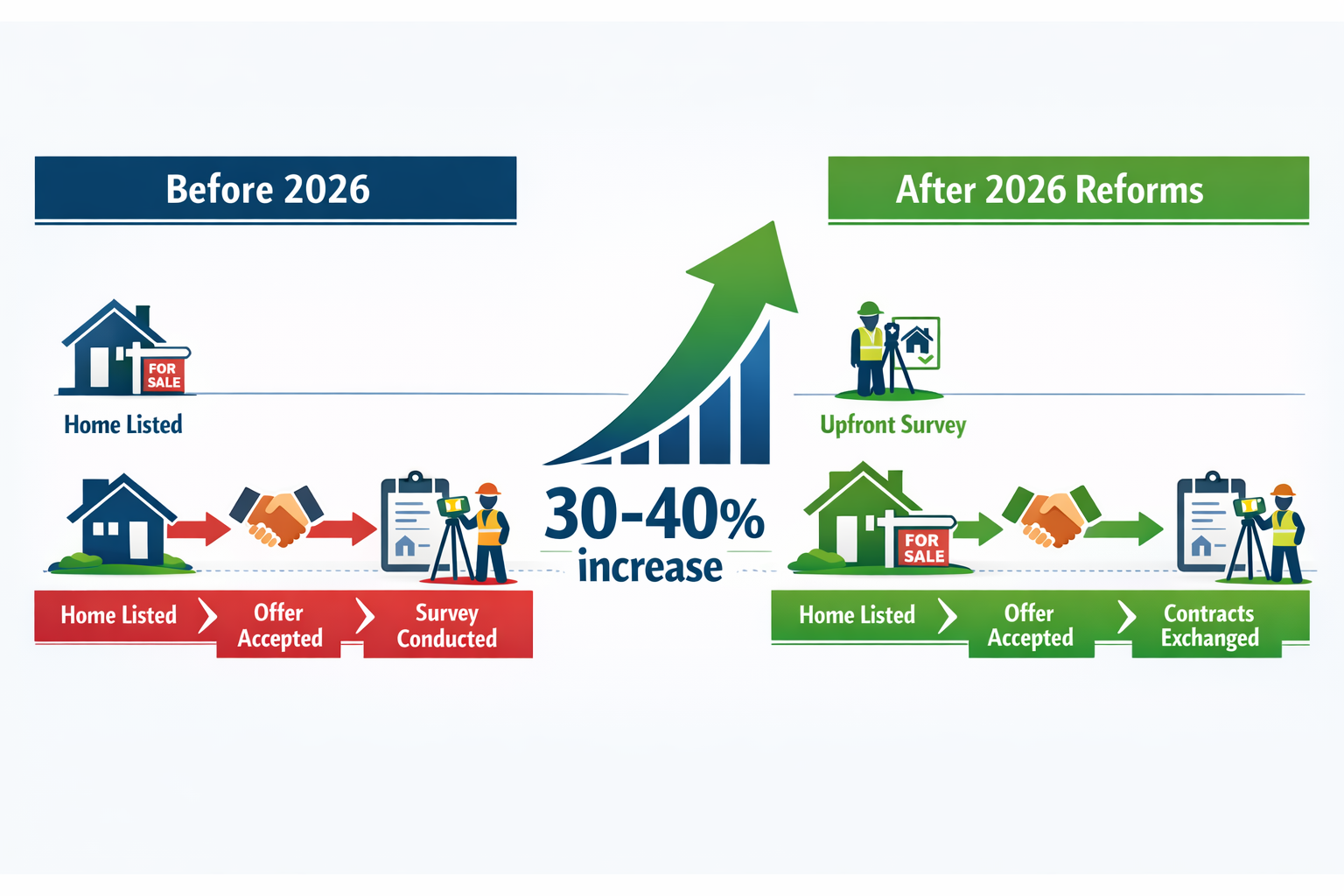
The Royal Institution of Chartered Surveyors (RICS) has recognized that existing competency frameworks require enhancement to meet 2026 reform demands. Building surveyors must now demonstrate proficiency in:
Core Technical Competencies:
- ✅ Pre-listing assessment methodologies
- ✅ Accelerated inspection protocols without compromising thoroughness
- ✅ Seller-focused reporting formats (distinct from traditional buyer-focused reports)
- ✅ Risk assessment for properties entering the market
- ✅ Defect prioritization for pre-sale remediation recommendations
Digital and Technology Competencies:
- 💻 Digital survey platforms and mobile reporting applications
- 💻 Cloud-based documentation systems for rapid report delivery
- 💻 Photographic and video documentation standards
- 💻 Integration with property listing platforms
- 💻 Data security and GDPR compliance for digital records
Business Process Competencies:
- 📊 Upfront survey scheduling and workflow management
- 📊 Client communication for seller-commissioned work
- 📊 Quality assurance under increased volume demands
- 📊 Professional indemnity considerations for pre-listing assessments
Digital Training Platforms and Resources
RICS and industry bodies have developed specialized CPD modules delivered through digital learning platforms. These resources enable surveyors to:
- Complete training flexibly around existing workloads
- Access updated guidance as implementation progresses
- Demonstrate competency through digital assessments
- Maintain CPD records electronically for annual compliance
The surveying sector anticipates that these reforms "could significantly increase demand for surveys earlier in the process and fundamentally change how and when we operate" [2]. This reality makes continuous professional development non-negotiable for practitioners aiming to remain competitive.
Specialized Training for Level 3 Survey Adaptations
While building surveys have always represented the most comprehensive assessment option, the pre-listing context introduces unique considerations:
Timing Pressures: Sellers want properties listed quickly, creating pressure for faster turnaround without sacrificing thoroughness.
Audience Shift: Reports must serve dual purposes—informing potential buyers while helping sellers understand necessary pre-sale improvements.
Liability Considerations: Surveyors must navigate professional indemnity implications when multiple parties rely on a single report.
Defect Communication: Balancing honest assessment with market positioning requires refined communication skills.
Training programs specifically address these nuances, ensuring surveyors can deliver comprehensive RICS-certified assessments under the new framework.
Workflow Transformations: Managing Increased Upfront Survey Demand
The operational implications of mandatory upfront surveys extend far beyond individual surveyor competencies. Level 3 Surveys Under Homebuying Reforms: Training and Workflow Shifts for Building Surveyors requires fundamental business process redesign.
Anticipated Volume Increases
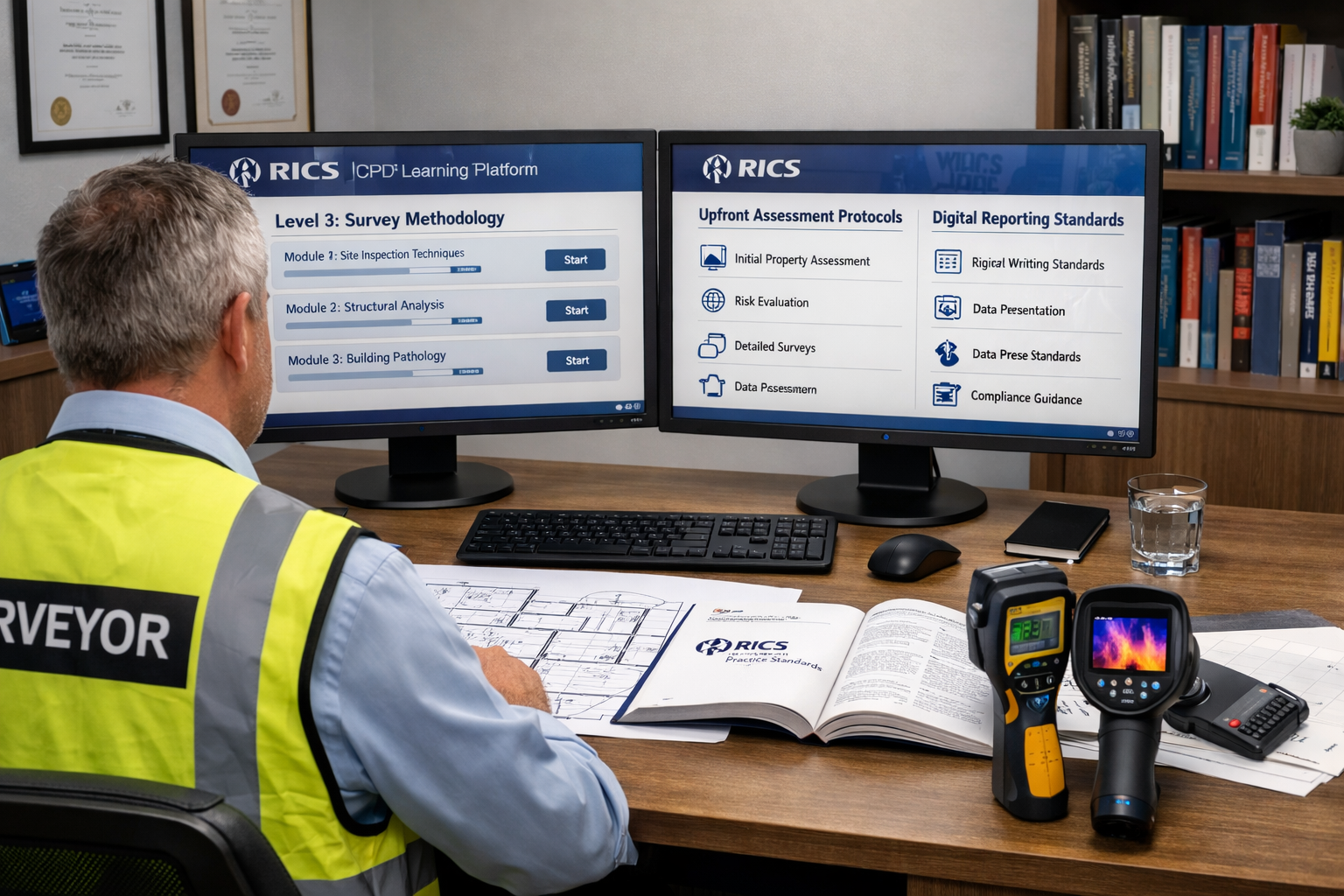
Current market data reveals that approximately 30-40% of buyers commission detailed Level 2 or Level 3 surveys [3]. Under the new framework, every property entering the market requires an upfront condition assessment. While seller-commissioned surveys may differ from comprehensive Level 3 surveys, the overall demand for professional surveying services will increase substantially.
This volume surge creates several operational challenges:
| Challenge Area | Traditional Model | 2026 Reformed Model |
|---|---|---|
| Survey Timing | After offer acceptance | Before property listing |
| Client Type | Primarily buyers | Sellers and buyers |
| Scheduling Predictability | Reactive, offer-driven | Proactive, listing-driven |
| Report Turnaround | 5-10 working days | 3-5 working days expected |
| Annual Volume | Moderate, steady | Significant increase anticipated |
Scheduling System Overhauls
Traditional surveying practices often operated with relatively informal scheduling—surveyors managed diaries manually or through basic calendar systems. The upfront survey requirement demands more sophisticated approaches:
Digital Scheduling Platforms: Cloud-based systems allowing estate agents and sellers to book survey slots directly, with automated confirmation and reminder systems.
Capacity Planning Tools: Analytics-driven forecasting to ensure adequate surveyor availability during peak listing seasons (typically spring and autumn).
Geographic Optimization: Intelligent routing to minimize travel time between inspections, maximizing daily survey capacity.
Priority Systems: Protocols for managing urgent pre-listing requests while maintaining quality standards.
Report Production and Delivery Acceleration
Sellers want properties listed quickly, creating pressure for faster report delivery. Surveyors must balance speed with thoroughness through:
Template Optimization: Standardized report structures that maintain comprehensive coverage while enabling efficient completion.
Mobile Reporting: On-site data entry using tablets and smartphones, reducing post-inspection transcription time.
Automated Sections: Digital tools that auto-populate standard clauses, property details, and boilerplate content.
Quality Assurance Checkpoints: Systematic review processes ensuring accelerated production doesn't compromise accuracy.
Digital Delivery: Immediate electronic report transmission upon completion, eliminating postal delays.
Client Communication Adaptations
The shift from buyer-commissioned to seller-commissioned surveys changes client relationships fundamentally:
Pre-Inspection Consultations: Helping sellers understand the survey process, what inspectors will examine, and how to prepare properties.
Defect Discussion Protocols: Sensitive communication about identified issues, balancing honesty with constructive guidance on remediation priorities.
Buyer Transparency: Ensuring seller-commissioned reports remain genuinely independent and comprehensive, maintaining professional integrity.
Multi-Party Communication: Managing information flow between sellers, estate agents, and potential buyers who review reports.
Integration with Estate Agency Workflows
Successful implementation requires seamless coordination between surveyors and estate agents. Many surveying firms are developing:
- Partnership agreements with local estate agencies for streamlined referral processes
- Joint training sessions ensuring agents understand survey requirements and timelines
- Shared digital platforms for report access and property information exchange
- Feedback mechanisms to continuously improve the upfront survey process
The surveying profession recognizes that "fundamentally change how and when we operate" [2] extends beyond individual practices to entire ecosystem collaboration.
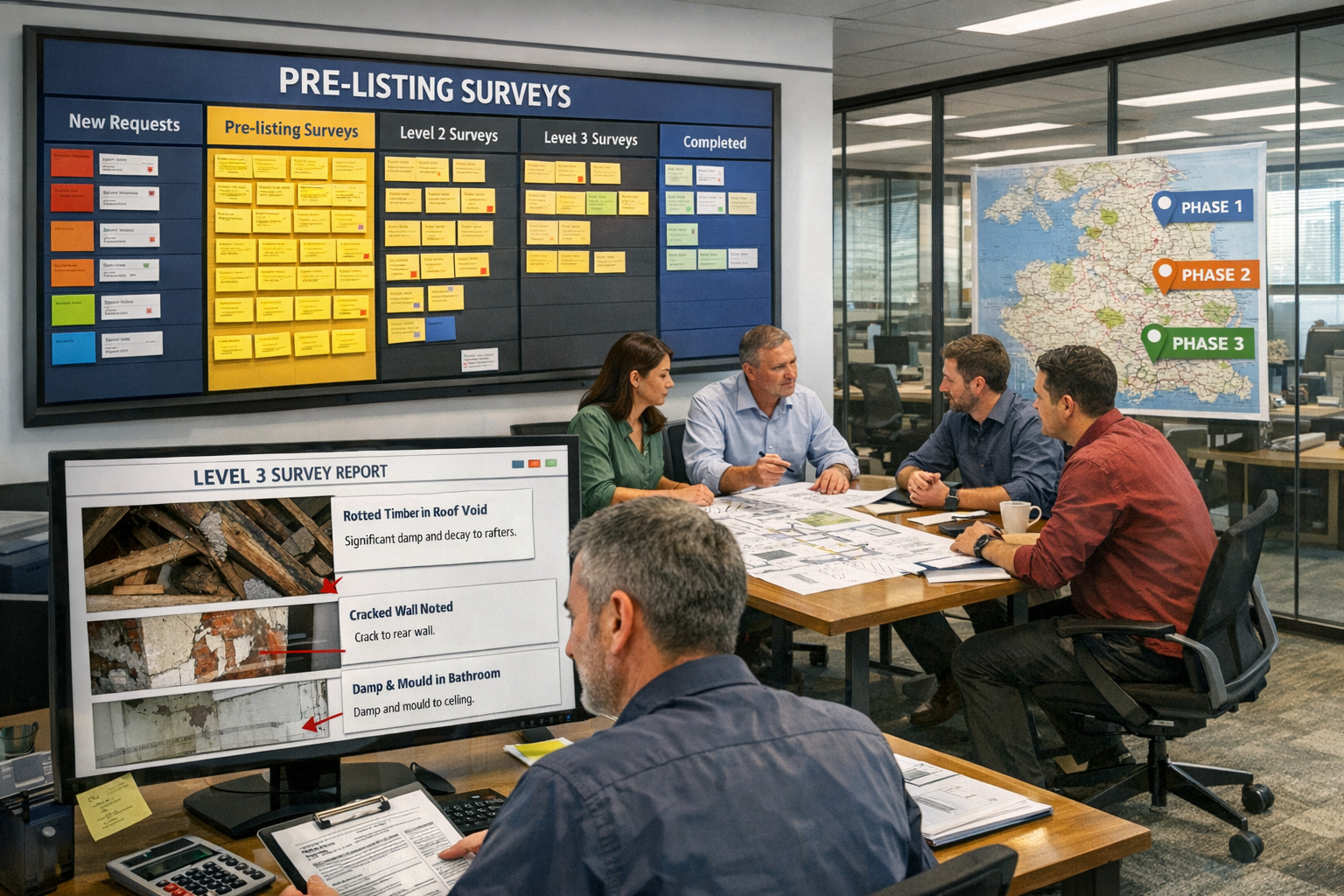
Regional Variations and Implementation Timelines Across England and Wales
While the Housing Reform 2026 provides a national framework, practical implementation varies significantly across regions. Building surveyors must adapt strategies to local market conditions and regulatory timelines.
London and Southeast England
These high-value, high-volume markets often lead property innovation adoption. Expectations include:
- Earlier implementation as estate agents and solicitors prepare for reforms
- Higher survey volumes due to transaction density
- Greater digital infrastructure investment by surveying firms
- Premium pricing for expedited pre-listing surveys
Surveyors operating in areas like North London, Surrey, and West London should anticipate early adoption pressures [4].
Regional Markets
Areas with lower transaction volumes and more traditional property practices may experience:
- Gradual adoption with longer transition periods
- Educational initiatives to familiarize sellers with upfront survey benefits
- Capacity considerations as smaller surveying firms adapt to volume increases
- Pricing adjustments as market competition develops
Specific Regional Considerations
Different property types and market characteristics create localized implementation challenges:
Historic Properties: Areas with significant heritage housing stock require specialized Level 3 survey expertise, potentially creating capacity constraints.
New Build Dominance: Regions with substantial new construction may see different survey patterns, as newer properties often require less comprehensive assessments.
Rural vs. Urban: Access challenges, property diversity, and surveyor availability vary dramatically between rural and urban contexts.
Economic Factors: Regional economic conditions influence seller willingness to invest in upfront surveys and buyer expectations for report comprehensiveness.
Surveyors should monitor local implementation through regional RICS chapters and professional networks, adapting workflows to match market readiness.
The Continued Importance of Independent Buyer-Commissioned Level 3 Surveys
A critical distinction often misunderstood in reform discussions: seller-provided condition surveys do not replace independent buyer-commissioned Level 3 surveys [1]. Both serve distinct purposes within the transaction process.
Why Buyers Still Need Independent Surveys
Seller-commissioned upfront surveys provide baseline property information, but buyers benefit from independent assessment for several reasons:
Buyer-Specific Concerns: Individual buyers have unique priorities—families with young children prioritize different safety features than retirees; renovation enthusiasts view defects differently than those seeking move-in-ready homes.
Independent Professional Opinion: Buyer-commissioned surveyors owe professional duties solely to the buyer, without potential conflicts inherent in seller-commissioned work.
Negotiation Leverage: Independent surveys provide objective evidence for price negotiations based on identified defects or necessary repairs.
Detailed Investigation: Buyers can request focused investigation of specific concerns through specific defect surveys or structural surveys beyond standard upfront assessments.
Timing Advantages: Buyer surveys occur after offer acceptance, allowing more thorough investigation without seller time pressures.
Dual Survey Scenarios
The reformed market will likely see properties undergo multiple surveys:
- Seller-commissioned upfront survey before listing (mandatory)
- Buyer-commissioned Level 3 survey after offer acceptance (optional but recommended)
This creates opportunities for surveyors to provide comparative survey analysis, reviewing seller-provided reports and identifying areas requiring deeper investigation.
Professional Guidance for Buyers
Surveyors must educate buyers about the distinction between upfront condition surveys and comprehensive Level 3 surveys. Key messaging includes:
"While seller-provided surveys offer valuable baseline information, an independent Level 3 survey provides personalized assessment tailored to your specific circumstances, priorities, and concerns—representing your interests exclusively throughout the transaction."
This educational role positions surveyors as trusted advisors rather than mere service providers, building long-term client relationships.
Practical Implementation Strategies for Surveying Firms
Successfully navigating Level 3 Surveys Under Homebuying Reforms: Training and Workflow Shifts for Building Surveyors requires deliberate strategic planning. Forward-thinking firms are implementing comprehensive adaptation strategies.
Immediate Action Steps (2026 Q1-Q2)
✓ Complete RICS CPD Requirements: Ensure all surveyors complete mandatory training modules for upfront survey protocols and digital reporting standards.
✓ Audit Technology Infrastructure: Evaluate current scheduling, reporting, and communication systems against anticipated demand increases.
✓ Develop Estate Agent Partnerships: Establish relationships with local estate agencies to secure upfront survey referrals.
✓ Review Professional Indemnity Insurance: Confirm coverage adequately addresses seller-commissioned survey scenarios and increased volume.
✓ Create Seller-Focused Report Templates: Design report formats that serve both seller preparation and buyer information needs.
Medium-Term Developments (2026 Q3-Q4)
📈 Scale Capacity: Recruit additional surveyors or develop associate networks to handle volume increases without compromising quality.
📈 Implement Digital Workflows: Fully transition to cloud-based scheduling, mobile reporting, and automated quality assurance systems.
📈 Establish Quality Metrics: Develop key performance indicators (KPIs) tracking turnaround times, report quality, and client satisfaction.
📈 Expand Service Offerings: Consider complementary services like monitoring surveys or specific defect reports to provide comprehensive solutions.
📈 Regional Market Analysis: Monitor implementation progress across operating regions, adjusting strategies to match local adoption rates.
Long-Term Strategic Positioning (2027 and Beyond)
🎯 Specialization Development: Cultivate expertise in specific property types (period properties, new builds, non-standard construction) to differentiate services.
🎯 Technology Leadership: Invest in emerging technologies like thermal imaging, drone surveys, and AI-assisted defect identification.
🎯 Educational Content Marketing: Develop resources explaining survey types, reform implications, and property maintenance to establish thought leadership.
🎯 Cross-Sector Collaboration: Build relationships with solicitors, mortgage brokers, and property developers to create integrated service ecosystems.
🎯 Continuous Improvement Culture: Establish regular review processes incorporating client feedback, industry developments, and regulatory updates.
Quality Assurance Under Increased Demand Pressures
Perhaps the greatest risk accompanying reform implementation is quality degradation under volume pressure. Maintaining professional standards while scaling operations requires deliberate quality assurance strategies.
Professional Standards Maintenance
RICS standards remain unchanged by reforms—comprehensive, accurate, and professionally conducted surveys remain mandatory regardless of timing or commissioning party. Surveyors must resist pressure to:
- ❌ Rush inspections to accommodate seller timelines
- ❌ Reduce report comprehensiveness to accelerate delivery
- ❌ Minimize defect reporting to favor seller interests
- ❌ Skip quality review processes to increase throughput
Systematic Quality Controls
Effective quality assurance under increased demand requires systematic approaches:
Peer Review Systems: Rotating report reviews by senior surveyors before delivery, ensuring consistency and comprehensiveness.
Checklist Protocols: Standardized inspection checklists ensuring no property areas or building elements are overlooked during accelerated surveys.
Photographic Standards: Mandatory documentation requirements providing visual evidence for all significant defects and observations.
Client Feedback Loops: Structured post-survey feedback collection identifying service improvement opportunities.
Continuing Education: Ongoing technical training beyond minimum CPD requirements, maintaining cutting-edge competency.
Managing Client Expectations
Clear communication about survey scope, limitations, and timelines prevents misunderstandings that could compromise quality:
- Realistic Turnaround Times: Honest scheduling that allows thorough inspection and reporting rather than promising unrealistic delivery.
- Scope Clarification: Explicit explanation of what surveys do and don't cover, preventing assumption-based disappointments.
- Access Requirements: Clear guidance on property access needs, ensuring inspections can be completed comprehensively.
- Follow-Up Availability: Commitment to answering questions and providing clarification after report delivery.
Technology Integration: Digital Tools Transforming Survey Practice
The 2026 reforms accelerate technology adoption across the surveying profession. Digital tools enable the workflow efficiency necessary for handling increased upfront survey demand while maintaining quality standards.
Mobile Survey Applications
Modern survey apps allow on-site data entry, photograph annotation, and voice-to-text observations, dramatically reducing post-inspection report writing time. Key features include:
- Offline functionality for properties with poor connectivity
- Template-based data entry ensuring comprehensive coverage
- Integrated photography with automatic organization by property area
- Cloud synchronization enabling seamless office-to-field workflows
Digital Report Platforms
Cloud-based reporting systems provide:
- Automated formatting maintaining professional presentation standards
- Version control tracking report revisions and updates
- Secure client portals for report access and document sharing
- Analytics dashboards monitoring business performance metrics
Scheduling and Customer Relationship Management (CRM)
Sophisticated scheduling systems integrate with CRM platforms to:
- Automate appointment booking reducing administrative overhead
- Send automated reminders to clients and surveyors
- Track client interactions building comprehensive relationship histories
- Generate performance reports identifying operational bottlenecks
Emerging Technologies
Forward-thinking surveyors are exploring:
Thermal Imaging: Identifying insulation deficiencies, moisture ingress, and heating system issues invisible to visual inspection.
Drone Surveys: Safely inspecting roofs, chimneys, and tall structures without expensive access equipment.
3D Scanning: Creating detailed property models for comprehensive documentation and future reference.
AI-Assisted Analysis: Machine learning tools identifying potential defects in photographs and suggesting investigation priorities.
These technologies enhance rather than replace professional judgment, providing surveyors with powerful tools for delivering comprehensive assessments efficiently.
Financial Implications: Pricing Strategies and Business Models
The reformed market creates both opportunities and challenges for surveying firm finances. Strategic pricing and business model adaptations position practices for sustainable growth.
Pricing Considerations for Upfront Surveys
Seller-commissioned surveys introduce unique pricing dynamics:
Volume Discounts: Estate agencies referring multiple properties may negotiate preferential rates, requiring careful margin analysis.
Turnaround Premiums: Expedited service commands premium pricing, but surveyors must ensure premiums adequately compensate for workflow disruption.
Property Complexity: Transparent pricing tiers based on property size, age, and complexity prevent underpricing challenging assessments.
Geographic Factors: Travel time and regional market conditions influence sustainable pricing structures.
Business Model Adaptations
Successful firms are exploring diverse revenue models:
Subscription Services: Retainer agreements with estate agencies guaranteeing survey capacity in exchange for predictable monthly revenue.
Tiered Service Offerings: Basic upfront surveys, comprehensive Level 3 surveys, and premium services with additional testing or specialist consultations.
Value-Added Services: Complementary offerings like reinstatement valuations, maintenance planning, or remediation project management.
Technology Licensing: Firms developing proprietary digital tools may license platforms to other surveyors, creating additional revenue streams.
Investment Requirements
Adapting to reforms requires capital investment in:
- Digital infrastructure and software subscriptions
- Professional training and CPD compliance
- Marketing and business development
- Additional staff or associate surveyor networks
- Professional indemnity insurance enhancements
Strategic financial planning ensures investments generate positive returns through increased market share and operational efficiency.
Conclusion: Embracing Change and Positioning for Success
The Housing Reform 2026 represents a watershed moment for the UK surveying profession. Level 3 Surveys Under Homebuying Reforms: Training and Workflow Shifts for Building Surveyors encompasses comprehensive transformation touching every aspect of professional practice—from technical competencies and digital capabilities to business models and client relationships.
While the reforms create undeniable challenges, they also present significant opportunities for surveyors who adapt proactively. The anticipated surge in survey demand [2], combined with the continued importance of independent buyer-commissioned assessments [1], positions well-prepared practices for substantial growth.
Key Success Factors
Professional Excellence: Maintaining rigorous quality standards despite volume pressures preserves professional reputation and client trust.
Digital Competency: Embracing technology enables the efficiency necessary for competitive service delivery under reformed timelines.
Strategic Partnerships: Collaborative relationships with estate agents, solicitors, and other property professionals create sustainable referral networks.
Continuous Learning: Ongoing professional development beyond minimum CPD requirements maintains cutting-edge expertise.
Client Education: Helping buyers and sellers understand survey value positions surveyors as trusted advisors rather than transactional service providers.
Actionable Next Steps
For building surveyors navigating the 2026 reforms:
- Complete mandatory RICS CPD training for upfront survey protocols immediately
- Audit current workflows and technology identifying gaps requiring investment
- Develop estate agent partnerships securing upfront survey referral agreements
- Create seller-focused report templates balancing comprehensiveness with market positioning
- Implement quality assurance systems preventing standards erosion under volume pressure
- Monitor regional implementation timelines adapting strategies to local market readiness
- Educate clients about the distinction between upfront surveys and independent Level 3 assessments
The reforms fundamentally reshape the property transaction landscape, but the core professional mission remains unchanged: providing comprehensive, accurate, and independent property assessments that protect clients' interests and facilitate informed decision-making. Surveyors who embrace this transformation while maintaining unwavering commitment to professional standards will thrive in the reformed market.
For property buyers seeking comprehensive protection, independent Level 3 building surveys remain essential despite seller-provided upfront assessments. For surveyors, the path forward requires balancing operational efficiency with professional excellence—a challenge the profession is well-equipped to meet.
References
[1] Housing Reform 2026 Key Changes – https://www.cjbloor.co.uk/news/housing-reform-2026-key-changes/
[2] Surveying In 2026 Reform Recovery And Renewed Demand – https://www.lrg.co.uk/news-and-insights/surveying-in-2026-reform-recovery-and-renewed-demand/
[3] Homebuying Process Reforms 2026 How Mandatory Upfront Surve – https://nottinghillsurveyors.com/blog/homebuying-process-reforms-2026-how-mandatory-upfront-surve
[4] Building Surveys Under New Homebuying Rules Earlier Inspections And Risk Mitigation In 2026 – https://nottinghillsurveyors.com/blog/building-surveys-under-new-homebuying-rules-earlier-inspections-and-risk-mitigation-in-2026