The British property market stands on the brink of its most significant transformation in decades. As 2026 unfolds, surveyors across the UK are watching closely as the government's proposed home buying and selling reforms move closer to reality. These changes promise to reshape how properties are bought and sold—and could fundamentally alter the demand for building surveys in ways that will challenge traditional business models while creating unprecedented opportunities for forward-thinking professionals.
Understanding the Impact of RICS Home Buying Reforms on 2026 Building Survey Demand: Preparation Guide for Surveyors has never been more critical. The proposed reforms center on mandatory upfront surveys before properties are listed, potentially transforming surveyors from reactive service providers into essential gatekeepers of the property transaction process. For chartered surveyors, the question isn't whether change is coming—it's how quickly they can adapt their practices, pricing structures, and service delivery models to capitalize on this seismic shift.
Key Takeaways
- 🏠 Mandatory upfront surveys before listing could dramatically increase survey demand, requiring surveyors to build additional capacity and streamline workflows
- ⏱️ 24-month minimum implementation period requested by RICS provides a critical window for professional development, standards updates, and business model adjustments
- 💰 New revenue opportunities emerge through estate agent partnerships, digital logbook integration, and expanded service offerings beyond traditional reactive surveys
- 📊 Quality and consistency standards will become paramount as surveys move from optional buyer protection to mandatory seller obligations with public scrutiny
- 🔄 Workflow transformation from reactive to proactive service delivery requires investment in digital tools, scheduling systems, and client relationship management
Understanding the Proposed RICS Home Buying Reforms
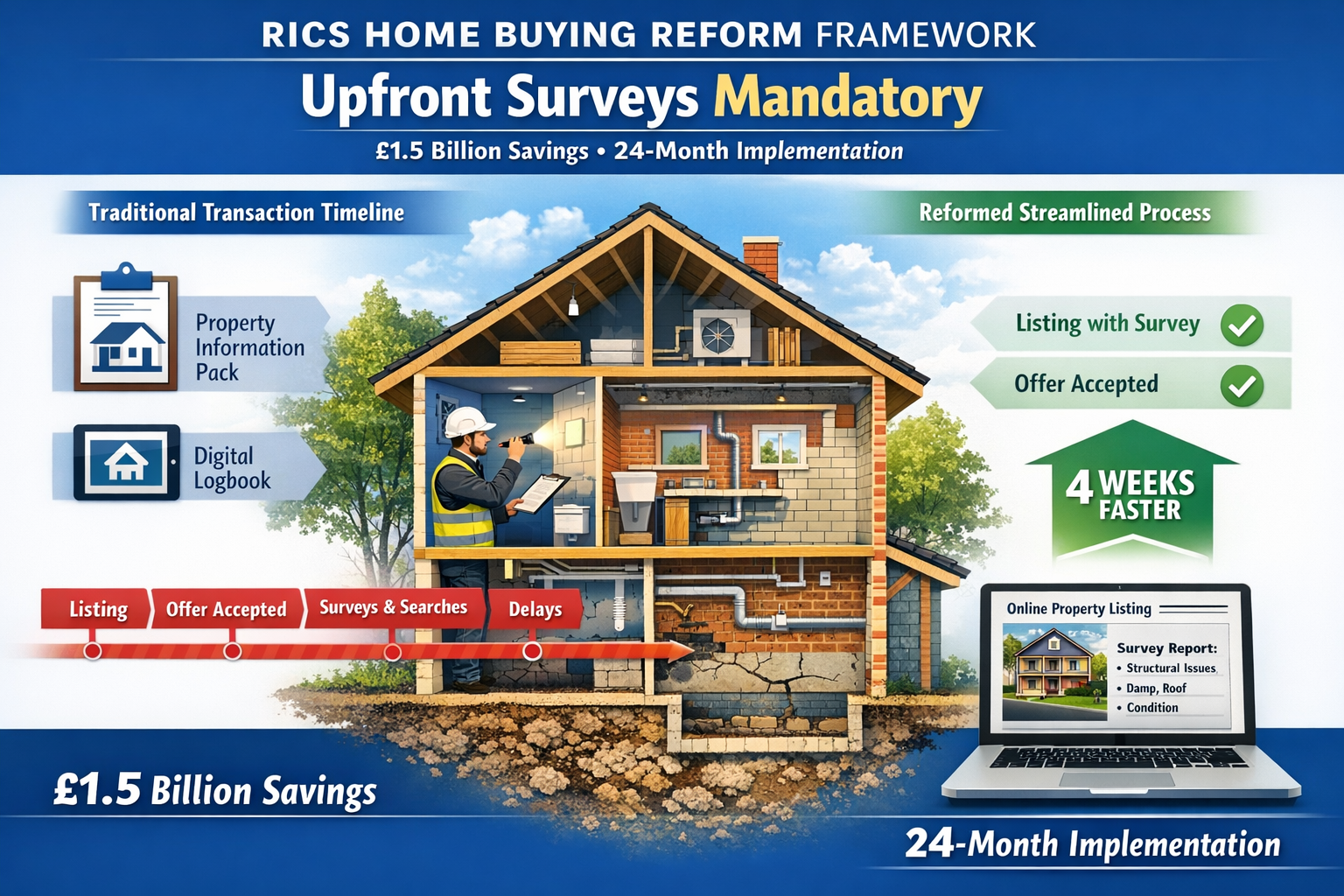
The government's consultation on home buying and selling reform, which closed in December 2025, represents the most ambitious overhaul of the property transaction process in the country's history.[2] At the heart of these proposals lies a fundamental shift: moving property surveys from a buyer's optional safeguard to a seller's mandatory upfront requirement.
Core Elements of the Reform Package
The proposed reforms encompass several interconnected components designed to create a more transparent, efficient, and reliable property market:
Upfront Property Information Requirements 📋
Under the new framework, sellers will be required to commission property surveys and searches before listing their homes. These results must be published online, allowing potential buyers to review physical condition, structural characteristics, and environmental risks (including flood data) before making offers.[2] This represents a complete reversal of current practice, where buyers typically commission surveys only after their offer has been accepted.
Digital Property Logbooks 💻
The reforms include deployment of digital property logbooks—comprehensive digital records that track a property's history, modifications, repairs, and condition assessments over time.[5] These logbooks will integrate survey findings, creating a permanent record that follows the property through subsequent transactions.
Professional Standards and Regulation ⚖️
Mandatory qualifications and a Code of Practice for estate agents will be introduced, with RICS supporting a Designated Professional Body model to ensure consistent standards and enforcement.[3] Additionally, a public register of conveyancers, estate agents, and their professional specialisms will allow consumers to compare services and performance benchmarks.[2]
Quality and Accuracy Standards ✅
RICS has emphasized that upfront property information must be accurate, objective, and delivered by competent, regulated professionals working to consistent standards.[3] This requirement places chartered surveyors at the center of the reform's success, as their professional expertise becomes the foundation for market transparency.
Timeline and Implementation Uncertainty
As of early 2026, no definitive implementation timeframe has been announced, though the government continues reviewing consultation feedback.[1] This uncertainty creates both challenges and opportunities for surveyors preparing for the transition.
RICS has formally requested a minimum 24-month implementation period to allow adequate time for capacity building, standards development, and clear guidance for surveyors and businesses.[1] The organization recognizes that rushing implementation could compromise quality and overwhelm existing surveying capacity.
The government is still determining how many proposed reforms will require further consultation or primary legislation, adding additional uncertainty to the rollout timeline.[1] This means surveyors should prepare for implementation potentially beginning in late 2026 or extending into 2027-2028.
Impact of RICS Home Buying Reforms on 2026 Building Survey Demand: Market Projections
The shift to mandatory upfront surveys represents a fundamental change in when, why, and how building surveys are commissioned. Understanding these changes is essential for surveyors planning capacity, pricing, and service delivery models.
Projected Demand Increases
The reforms are expected to generate substantial increases in survey demand through several mechanisms:
Universal Coverage vs. Selective Commissioning 📈
Currently, many property transactions proceed without professional surveys. Buyers often waive surveys to save costs or speed up competitive offers, particularly in hot markets. The reform would eliminate this option, requiring every listed property to have an upfront survey regardless of buyer preferences.
This shift from selective to universal coverage could potentially double or triple the number of residential surveys commissioned annually, though exact projections depend on final reform specifications and exemptions.
Timing Shift Creates Capacity Challenges ⏰
Under current practice, survey demand is distributed throughout the transaction process, with buyers commissioning surveys after offers are accepted. The reform concentrates this demand at the listing stage, creating potential bottlenecks as sellers rush to obtain surveys before marketing their properties.
Surveyors may experience:
- Peak demand periods when sellers prepare to list properties during traditional spring and autumn selling seasons
- Compressed timelines as sellers seek quick turnaround to avoid listing delays
- Capacity constraints requiring additional staff, subcontractors, or workflow optimization
Economic Impact and Transaction Efficiency
The reforms project significant economic benefits that indirectly affect surveying demand:
Reduced Failed Sales 💷
Currently, failed property sales cost the UK economy approximately £1.5 billion annually.[2] By providing upfront condition information, the reforms aim to halve the number of failed transactions. This reduction means more properties successfully completing sales, potentially increasing overall market velocity and creating sustained demand for surveys.
Accelerated Transaction Times ⚡
The reforms could accelerate transaction completion by approximately four weeks.[2] Faster transactions mean higher market turnover, potentially increasing the annual volume of properties changing hands and requiring surveys.
Better Decision-Making 🎯
Earlier access to reliable property condition information has potential to reduce late-stage surprises and limit avoidable delays.[3] When buyers can review comprehensive survey findings before making offers, they can factor repair costs into their bids or avoid problematic properties entirely, creating more informed and stable transactions.
For surveyors conducting RICS building surveys, this transparency shift means their reports become marketing documents as much as technical assessments, requiring careful attention to clarity, presentation, and professional liability considerations.
Preparation Guide for Surveyors: Adapting to the New Framework
The Impact of RICS Home Buying Reforms on 2026 Building Survey Demand: Preparation Guide for Surveyors requires strategic planning across multiple dimensions of practice management. Surveyors who begin preparation now will be positioned to capture market share when reforms are implemented.
1. Capacity Building and Workforce Planning
Assess Current Capacity 📊
Begin by evaluating your practice's current survey capacity:
- How many surveys can your team complete monthly?
- What is your average turnaround time from instruction to report delivery?
- Where are your capacity bottlenecks (site visits, report writing, quality review)?
Develop Expansion Strategies 🚀
Consider multiple approaches to increasing capacity:
| Strategy | Advantages | Challenges |
|---|---|---|
| Hiring Additional Surveyors | Permanent capacity increase, quality control | Recruitment costs, training time, salary commitments |
| Subcontractor Network | Flexible capacity scaling | Quality consistency, professional liability, management overhead |
| Technology Investment | Efficiency gains, competitive advantage | Upfront costs, learning curve, integration complexity |
| Workflow Optimization | Cost-effective, immediate impact | Limited scaling potential, requires process redesign |
Professional Development 🎓
RICS is updating its Home Survey Standard to meet evolving market needs.[4] Surveyors should:
- Monitor RICS announcements for standard updates and new guidance
- Invest in continuing professional development (CPD) focused on digital tools and reporting technologies
- Develop expertise in areas likely to gain prominence (energy efficiency, flood risk, environmental hazards)
2. Service Model Transformation
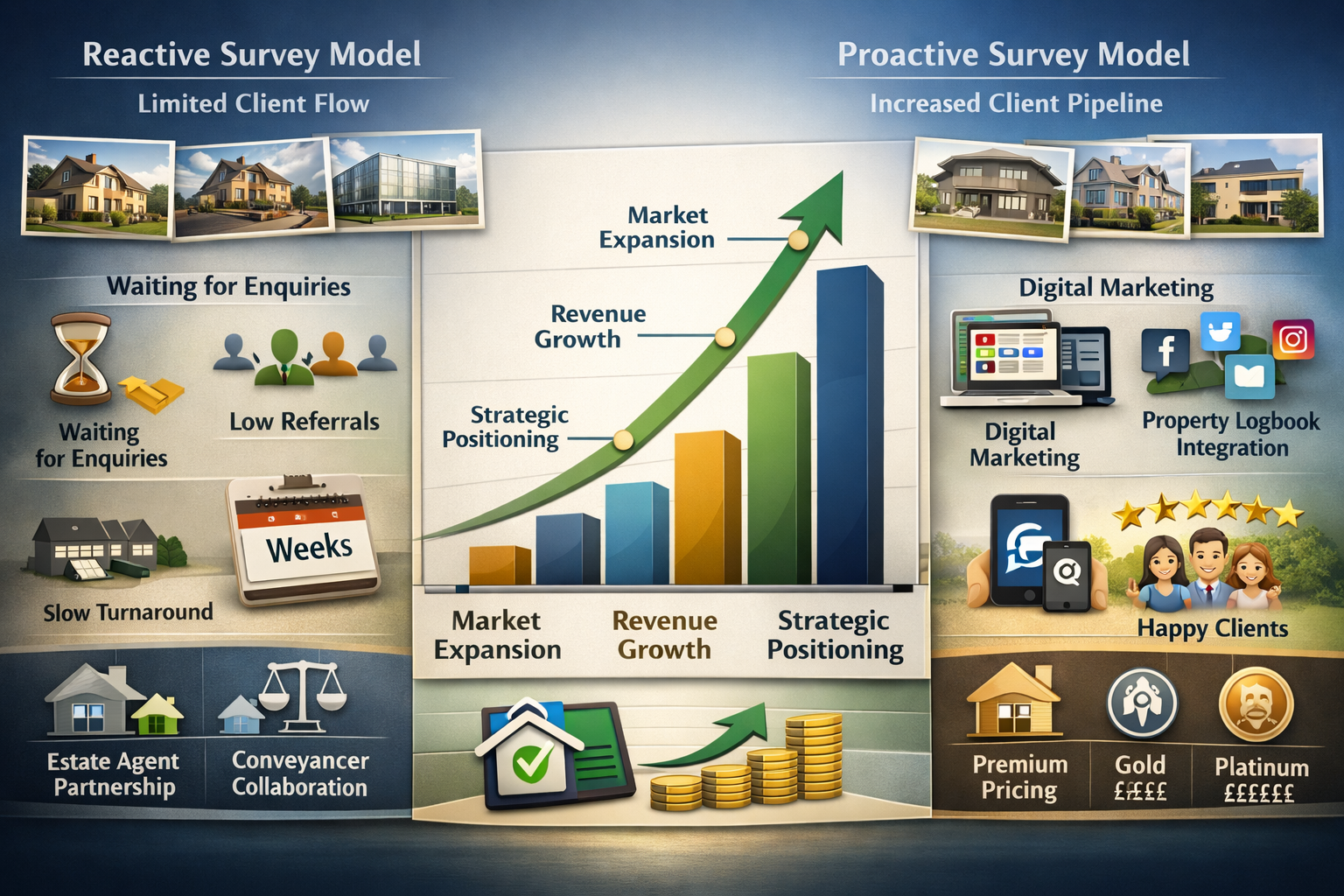
From Reactive to Proactive Service Delivery 🔄
The shift from buyer-commissioned to seller-commissioned surveys fundamentally changes client relationships:
Traditional Model:
- Client: Buyer seeking protection
- Timing: After offer acceptance
- Focus: Identifying defects to renegotiate or withdraw
- Relationship: One-time transaction
Reformed Model:
- Client: Seller preparing to market
- Timing: Before listing
- Focus: Accurate condition assessment for marketing
- Relationship: Potential for ongoing property logbook updates
This transformation requires rethinking client communication, report presentation, and service positioning.
Developing Estate Agent Partnerships 🤝
Under the reformed system, estate agents will likely play a coordinating role in arranging upfront surveys for sellers. Surveyors should:
- Establish preferred provider relationships with local estate agencies
- Develop streamlined referral processes and communication protocols
- Create agent-friendly service packages with guaranteed turnaround times
- Consider commission or referral fee structures where ethically appropriate
Expanding Service Offerings 📦
The upfront survey requirement creates opportunities for bundled services:
- Survey + Energy Performance Certificate (EPC) packages
- Digital property logbook creation and maintenance services
- Pre-listing consultation to help sellers address defects before marketing
- Reinstatement cost assessments for insurance purposes (see RICS reinstatement valuations)
3. Pricing Strategy Adjustments
Market Dynamics Shift 💰
The move to seller-paid surveys changes pricing dynamics:
Current Market:
- Buyers shop for surveys, comparing prices
- Price sensitivity high (buyers already stretching budgets)
- Competition primarily on cost
Reformed Market:
- Sellers commission surveys as marketing investment
- Price sensitivity potentially lower (sellers motivated to achieve best sale price)
- Competition on speed, quality, and agent relationships
Pricing Considerations:
✅ Premium Pricing Opportunities: Sellers may accept higher fees for faster turnaround or enhanced reporting that presents their property favorably
✅ Volume Discounts: Estate agents referring multiple properties monthly may negotiate preferential rates
✅ Tiered Service Models: Offer basic compliance surveys alongside premium options with enhanced photography, digital presentations, or ongoing logbook services
⚠️ Transparency Requirements: Public registers may include pricing information, requiring competitive yet sustainable fee structures
4. Quality and Compliance Standards
Enhanced Professional Liability ⚖️
When surveys become publicly available marketing documents, professional liability exposure increases:
- Multiple reliance parties: Buyers, sellers, agents, and conveyancers may all rely on survey findings
- Public scrutiny: Online publication increases reputational risk from errors or omissions
- Longer liability periods: Digital logbooks preserve surveys indefinitely, extending potential claim periods
Risk Management Strategies:
🛡️ Professional Indemnity Insurance: Review coverage limits and ensure policies cover reformed market structure
🛡️ Quality Assurance Processes: Implement peer review or technical checking for all reports before release
🛡️ Clear Scope Limitations: Explicitly define survey scope, limitations, and assumptions in reports
🛡️ Continuing Education: Stay current with RICS standards, building pathology developments, and regulatory changes
For surveyors offering RICS Level 3 Building Surveys, maintaining the highest quality standards becomes even more critical as these comprehensive reports form the foundation of upfront property information.
5. Technology and Digital Integration
Digital Workflow Tools 💻
Efficiency gains through technology become essential for managing increased demand:
Survey Software Solutions:
- Mobile inspection apps for on-site data capture and photography
- Template-based reporting systems with automated formatting
- Cloud-based collaboration platforms for team coordination
- Client portals for report delivery and communication
Digital Property Logbook Integration 📱
Understanding and preparing for digital logbook systems positions surveyors as value-added service providers:
- Research emerging logbook platforms and standards
- Develop processes for uploading and formatting survey data
- Consider offering logbook creation and maintenance as ancillary services
- Ensure report formats are compatible with digital storage and retrieval systems
Digital ID Verification and Security 🔐
The reforms include digital ID verification and standardized data sharing systems to enhance transparency and security.[5] Surveyors should:
- Implement secure client verification processes
- Ensure data protection compliance (GDPR and sector-specific requirements)
- Adopt secure file sharing and storage systems
- Develop cybersecurity protocols to protect sensitive property information
6. Marketing and Positioning
Communicating Value in the Reformed Market 📣
As the reforms approach implementation, surveyors should proactively communicate their readiness:
Target Audiences:
- Sellers: Emphasize quick turnaround, professional presentation, and competitive pricing
- Estate Agents: Highlight reliability, quality consistency, and streamlined processes
- Buyers: Maintain visibility for additional specific defect surveys or specialist assessments beyond upfront reports
Content Marketing Strategies:
- Publish guidance articles explaining reform implications for sellers
- Create video content demonstrating survey processes and value
- Develop case studies showing how quality surveys facilitate successful sales
- Position as reform experts through webinars, speaking engagements, and professional publications
Professional Credentials 🏆
Emphasize RICS chartered status and professional qualifications, as reforms emphasize competent, regulated professionals.[3] Highlighting RICS chartered building surveyor credentials becomes increasingly important in a quality-focused market.
Navigating Implementation Uncertainty
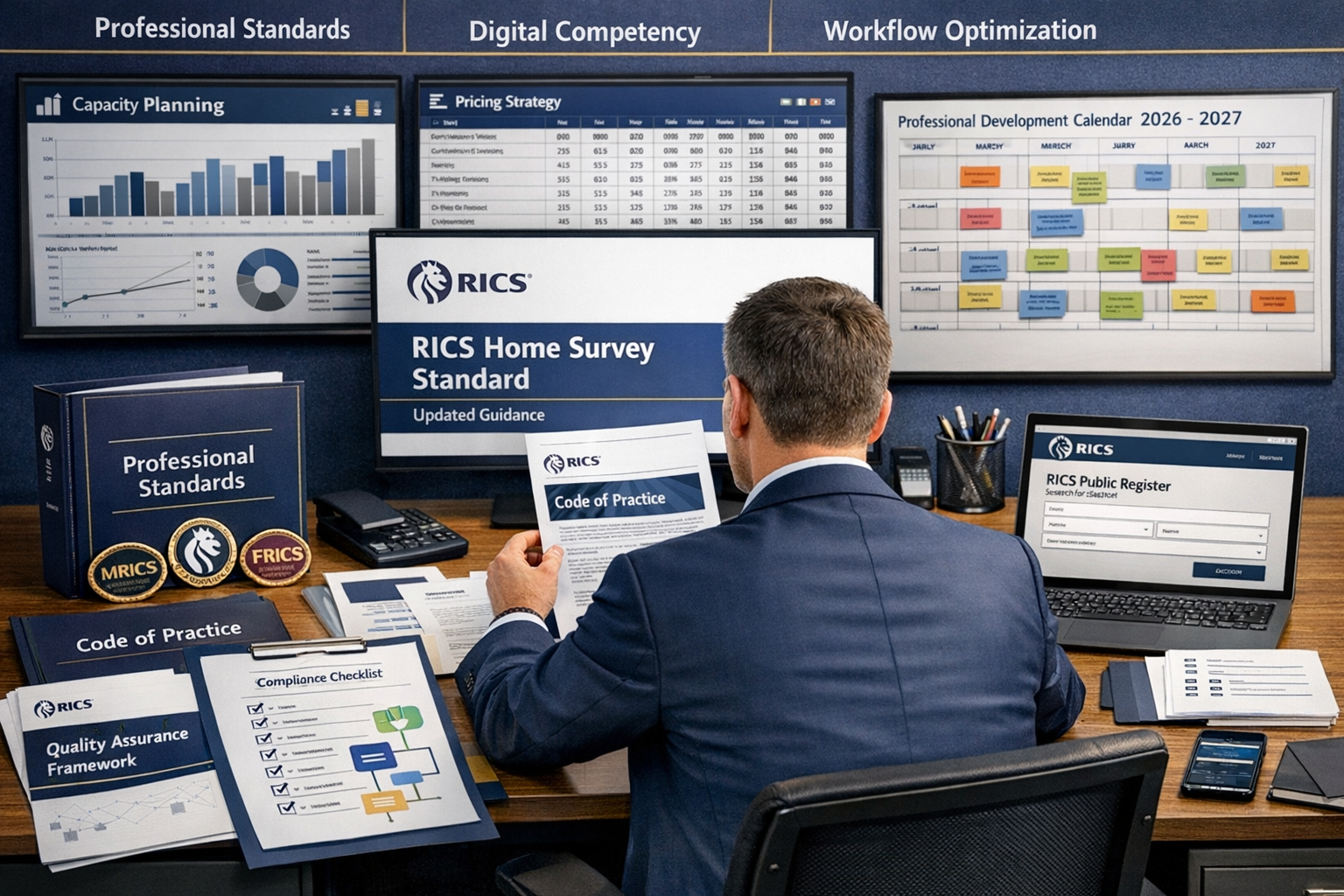
The lack of a definitive implementation timeline creates planning challenges but also provides opportunities for early movers.
Scenario Planning Approaches
Develop contingency plans for different implementation scenarios:
Scenario A: Rapid Implementation (Late 2026) ⚡
- Immediate capacity constraints
- Premium pricing opportunities for early-prepared surveyors
- Potential quality pressures from rushed rollout
- Action: Prioritize immediate capacity building and agent partnerships
Scenario B: Phased Implementation (2027-2028) 📅
- Gradual demand increases
- Time for measured capacity expansion
- Opportunity to refine service models based on early feedback
- Action: Focus on technology investment and service development
Scenario C: Delayed or Modified Implementation (2028+) ⏳
- Extended preparation period
- Possible reform modifications based on continued consultation
- Risk of competitive overcapacity if many surveyors expand prematurely
- Action: Maintain flexibility, avoid overcommitment to specific models
Monitoring and Adaptation
Stay informed through:
- RICS communications: The RICS Home Buying and Selling Reform Hub provides ongoing updates[1]
- Government announcements: Monitor Ministry of Housing, Communities and Local Government publications
- Industry forums: Participate in professional discussions and peer networks
- Pilot programs: Watch for early implementation trials or regional rollouts
Opportunities Beyond Residential Surveys
While residential surveys dominate reform discussions, related opportunities emerge across the surveying profession:
Commercial Property Applications
Though reforms focus on residential transactions, commercial property stakeholders may adopt similar transparency practices voluntarily. Surveyors offering commercial building surveys should consider how upfront information models could apply to commercial transactions.
Specialist Survey Services
The emphasis on comprehensive upfront information may increase demand for specialist assessments:
- Subsidence surveys for properties with structural movement history
- Drainage surveys for older properties or those with drainage concerns
- Damp surveys for properties showing moisture-related defects
- Asbestos surveys for pre-2000 construction
Valuation Services Integration
Upfront property information requirements may create opportunities for integrated survey and valuation services, particularly for:
- RICS valuations supporting pricing decisions
- Shared ownership valuations in the affordable housing sector
- Right to Buy valuations for social housing purchases
Conclusion: Positioning for Success in the Reformed Market
The Impact of RICS Home Buying Reforms on 2026 Building Survey Demand: Preparation Guide for Surveyors represents both a challenge and an extraordinary opportunity for the surveying profession. While implementation timelines remain uncertain, the direction of travel is clear: property surveys are moving from optional buyer protections to mandatory seller requirements, fundamentally transforming market dynamics.
Surveyors who begin preparation now—building capacity, developing partnerships, investing in technology, and refining service models—will be positioned to capture significant market share when reforms are implemented. Those who wait risk being overwhelmed by sudden demand increases or losing competitive advantage to better-prepared peers.
Actionable Next Steps 🎯
Immediate Actions (Next 3 Months):
- Assess current capacity and identify bottlenecks in your survey delivery process
- Review professional indemnity insurance to ensure adequate coverage for reformed market
- Begin estate agent outreach to establish relationships before reforms create urgency
- Invest in survey software or digital tools to improve efficiency and presentation quality
Medium-Term Planning (3-12 Months):
- Develop tiered service offerings suitable for different property types and seller needs
- Create marketing materials positioning your practice as reform-ready
- Establish quality assurance processes to maintain consistency as volume increases
- Monitor RICS guidance and participate in professional development focused on updated standards
Long-Term Strategic Positioning (12+ Months):
- Build scalable capacity through hiring, training, or strategic partnerships
- Integrate digital logbook services into your service portfolio
- Develop data analytics to demonstrate value and differentiate your practice
- Consider geographic expansion to capture opportunities in underserved markets
The reforms aim to reduce failed sales, accelerate transactions, and create a more transparent property market—objectives that align perfectly with the professional values of chartered surveyors. By embracing these changes proactively, surveyors can transform potential disruption into sustainable growth, positioning themselves as essential partners in a modernized property transaction ecosystem.
For surveyors committed to professional excellence and client service, the reformed market offers unprecedented opportunities to demonstrate value, expand practices, and elevate the profession's role in property transactions. The time to prepare is now.
References
[1] Home Buying And Selling Reform Hub – https://www.rics.org/news-insights/current-topics-campaigns/home-buying-and-selling-reform-hub
[2] Government Announces Biggest Shake Up Home Buying Process Countrys History – https://todaysconveyancer.co.uk/government-announces-biggest-shake-up-home-buying-process-countrys-history/
[3] Rics Response To The Home Buying And Selling Reform Consultation – https://www.rics.org/news-insights/rics-response-to-the-home-buying-and-selling-reform-consultation
[4] Understanding The Rics Home Survey Standard Proposal – https://www.rics.org/news-insights/understanding-the-rics-home-survey-standard-proposal
[5] Coverage Of Our Proposals To Shakeup Home Buying And Selling Process – https://mhclgmedia.blog.gov.uk/2025/10/06/coverage-of-our-proposals-to-shakeup-home-buying-and-selling-process/