The UK solar retrofit market grew by over 40% between 2022 and 2025, and government subsidy schemes in 2026 are pushing thousands more homeowners toward rooftop installations. For properties sharing a party wall — terraced houses, semi-detached homes, and converted flats — that surge creates a sharp legal question: when does fitting solar panels trigger the Party Wall etc. Act 1996, and what must a properly drafted award contain? Understanding Party Wall Awards for Solar Panel Retrofits: Notices, Mounting Safeguards, and Cost Allocation in 2026 is now an essential skill for surveyors, building owners, and adjoining neighbours alike.
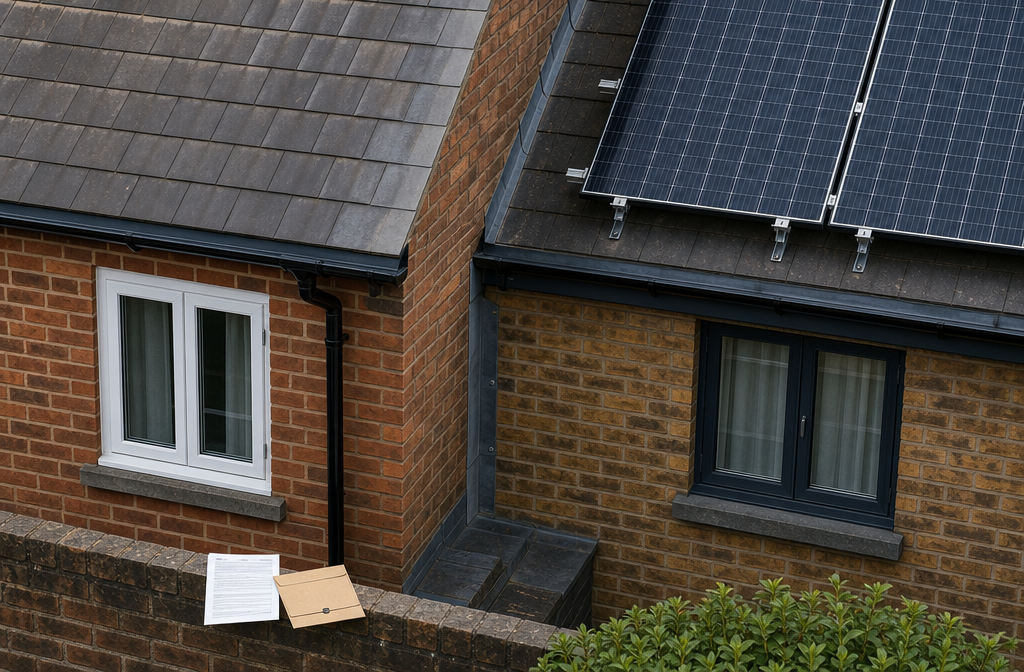
Key Takeaways
- Solar panel installations affecting a party wall or party structure require a formal Party Wall Notice served at least two months before work begins.
- Adjoining owners have 14 days to respond; failure to respond is treated as dissent and triggers the surveyor appointment process.
- A well-drafted Party Wall Award for a solar retrofit must cover mounting specifications, structural safeguards, working hours, and a pre-work Schedule of Condition.
- The building owner generally bears all reasonable costs, including the adjoining owner's surveyor fees, unless the award specifies otherwise.
- Failing to serve notice or ignoring award conditions exposes building owners to injunctions, claims for damage, and significant legal costs.
When Does a Solar Retrofit Trigger the Party Wall Act?
Not every solar installation requires a Party Wall Notice. The Act is engaged when proposed works fall within the specific categories it covers. For rooftop solar retrofits, three scenarios commonly apply.
1. Works to a party wall or party structure. If mounting brackets, structural fixings, or cable routes penetrate, cut into, or bear upon a shared wall or roof structure, Section 2 of the Act is engaged. This is the most frequent trigger in terraced and semi-detached properties.
2. Excavations within 3 or 6 metres of a neighbouring foundation. Ground-mounted solar arrays or battery storage units installed close to a boundary may trigger notice requirements under Sections 6 of the Act. For further detail on how proximity rules operate, see the guidance on the 3-metre rule.
3. New walls on or astride the boundary line. Freestanding solar structures built on or near the boundary line engage Section 1 of the Act.
Where none of these scenarios apply — for example, a straightforward panel installation on a detached house roof with no shared structure — the Act does not apply and no notice is required.
"The critical question is not whether solar panels are being installed, but whether the method of installation physically affects a shared structure."
Identifying the Shared Structure
In terraced properties, the roof space and the party wall beneath it are often co-owned or jointly maintained. Surveyors should inspect whether the roof timbers bear on the party wall, whether existing flashing is shared, and whether cable routes must pass through any shared element. Each of these factors can independently engage the Act.
Serving the Notice: Requirements and Timelines
Once the Act is engaged, the building owner must serve a valid Party Wall Notice before any work begins. Party Wall Award guidance sets out the formal requirements, but the key elements for a solar retrofit notice are as follows.
What the Notice Must Contain
- Full names and addresses of both the building owner and the adjoining owner
- A clear description of the proposed works, including the type of solar panel system, the number of panels, and the mounting method
- Details of any structural alterations to the party wall, including fixing types, depths, and load calculations
- The proposed start date
For solar retrofits, attaching a copy of the solar panel roof engineer calculations to the notice is strongly recommended. This demonstrates that the structural impact has been professionally assessed and often reduces neighbour concern at the outset. [1]
Notice Periods
The Act mandates a two-month notice period for works involving party walls under Section 2. This period runs from the date the adjoining owner receives the notice, not the date it is sent. Building owners planning to start work in spring or summer — the most popular installation season — should serve notice well in advance to avoid delays. [2]
The Adjoining Owner's Response
Upon receiving the notice, the adjoining owner has 14 days to respond in writing. Three outcomes are possible:
| Response | Effect |
|---|---|
| Written consent | Works may proceed; no award needed |
| Written dissent | Surveyor appointment process begins |
| No response within 14 days | Treated as dissent; surveyor process begins |
Dissent does not mean the works cannot proceed. It means the parties must resolve the matter through the surveyor mechanism provided by the Act. [2] For a broader overview of how disputes arise and are resolved, the guide on what is a party wall dispute provides useful context.
Drafting the Party Wall Award: Core Components for Solar Retrofits
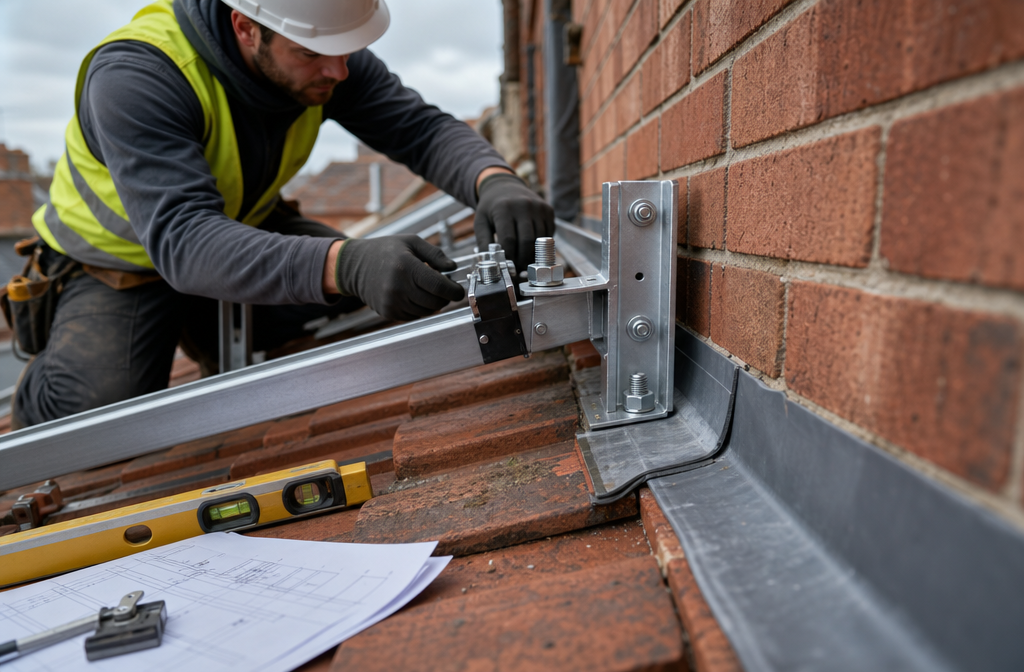
When dissent is registered — or when consent is withheld — the appointed surveyors must draft a Party Wall Award. This is a legally binding document that governs how the works are carried out. For Party Wall Awards for Solar Panel Retrofits: Notices, Mounting Safeguards, and Cost Allocation in 2026, the award must address several specific elements that differ from standard extension or loft conversion awards.
Description of Works
The award must contain a precise technical description of the solar installation. This should include:
- Panel type, dimensions, and weight per square metre
- Mounting system type (rail-based, ballasted, or direct-fix)
- Fixing specification, including bolt diameter, embedment depth, and load rating
- Cable routing plan, particularly where cables pass through or along the party wall
- Details of any waterproofing or flashing works at the party wall junction
Vague descriptions such as "installation of solar panels" are insufficient. The more precise the description, the less room there is for dispute during or after the works. [3]
Mounting Safeguards
This is the section of the award that requires the most careful technical input. The structural integrity of the party wall must not be compromised by the installation. Key safeguards to include are:
- Structural engineer sign-off: Confirmation that fixing loads have been calculated and will not exceed the capacity of the shared structure. A structural engineering assessment should be referenced within the award.
- Fixing restrictions: Prohibitions on fixing into specific zones of the party wall where structural weakness has been identified.
- Waterproofing requirements: Specification of approved flashing and sealant materials at all penetration points.
- Vibration and impact controls: Requirements for anti-vibration mounts or hand-fixing methods near the party wall to prevent cracking.
- Access provisions: Clear terms governing when and how the building owner's contractors may access the adjoining owner's property or airspace, including notice periods for each access event. [4]
Schedule of Condition
Before any work begins, a Schedule of Condition must be prepared. This is a photographic and written record of the current state of the adjoining property, focusing on areas most likely to be affected by the installation — typically the party wall, shared roof structure, ceilings in rooms below the roof, and any shared chimney stacks.
The Schedule of Condition serves two purposes. First, it provides a baseline against which any post-work damage can be assessed. Second, it protects the building owner from spurious claims for pre-existing defects. [3]
Working Hours
The award should specify permitted working hours. Standard provisions for solar retrofit awards in 2026 are:
- Monday to Friday: 8:00 am to 6:00 pm
- Saturday: 8:00 am to 1:00 pm
- No noisy works on Sundays or Bank Holidays
Noisy works include drilling, cutting, and mechanical lifting. Cable routing and panel placement may be permitted outside these hours at the surveyors' discretion. [3]
Damage Provisions
The award must include clear terms on how damage to the adjoining property will be addressed. This typically involves:
- An obligation on the building owner to make good any damage caused, to a standard equivalent to the pre-works condition documented in the Schedule of Condition
- A timeframe for making good (commonly within 28 days of the damage being identified)
- A dispute resolution mechanism if the parties disagree on whether damage was caused by the works
For further guidance on how damage claims are handled under the Act, the resource on damage to property in party wall matters is a valuable reference.
Cost Allocation in Party Wall Awards for Solar Panel Retrofits in 2026

Cost allocation is one of the most frequently contested aspects of Party Wall Awards for Solar Panel Retrofits: Notices, Mounting Safeguards, and Cost Allocation in 2026. The general rule under the Act is straightforward, but solar retrofits introduce some nuances worth examining.
The General Rule
The building owner — the party carrying out the works — bears all reasonable costs associated with the Party Wall process. This includes: [5]
- Their own surveyor's fees
- The adjoining owner's surveyor's fees (where those fees are reasonable)
- The cost of preparing the Schedule of Condition
- Any costs associated with making good damage
This principle reflects the fact that the building owner is the party creating the disruption and potential risk.
When Cost Allocation May Differ
There are limited circumstances in which the adjoining owner may bear some costs. Section 11(11) of the Act provides that where an adjoining owner requests additional works — for example, asking the building owner to upgrade shared flashing while the roof is accessible — the cost of those additional works falls on the adjoining owner. [6]
Similarly, if an adjoining owner appoints a surveyor who acts unreasonably or runs up disproportionate fees, the award may apportion those excess costs differently. Surveyors drafting the award should be alert to this and document any instances of unreasonable conduct.
Typical Cost Ranges in 2026
While costs vary by location and complexity, the following ranges reflect typical 2026 figures for solar retrofit party wall matters:
| Item | Typical Cost Range |
|---|---|
| Building owner's surveyor fee | £700 – £1,500 |
| Adjoining owner's surveyor fee | £600 – £1,200 |
| Schedule of Condition | £200 – £500 |
| Third surveyor (if appointed) | £1,000 – £2,500 |
| Structural engineer report | £400 – £900 |
For a detailed breakdown of how party wall costs are calculated and what influences them, the guide on cost of party wall provides current benchmarks.
Subsidy-Driven Retrofit Pressures
In 2026, government energy efficiency grants and solar subsidies are incentivising rapid installation. Building owners sometimes feel pressure to complete works quickly to meet grant deadlines. Surveyors should be aware that this pressure does not override the Act's requirements. An award must be in place before notifiable works begin, regardless of subsidy timelines. Failing to obtain an award before starting work is a breach of the Act and can result in injunctions, even where the works themselves are technically sound. [1]
Access Rights and Practical Considerations
Access to the adjoining owner's property is often necessary for solar retrofits — for scaffolding, for inspecting the party wall from the neighbour's side, or for cable routing. The Act grants the building owner a right of access for the purposes of executing the works, but this right must be exercised reasonably and on reasonable notice.
The award should specify:
- Minimum notice period before each access event (typically 14 days for planned access, shorter for emergencies)
- Hours during which access is permitted
- Requirements to leave the adjoining property clean and secure after each access event
- Insurance requirements for contractors entering the adjoining property
Where the installation involves shared chimneys — for example, where cable routes pass near or through a shared chimney stack — additional provisions may be needed. The guidance on party wall shared chimneys addresses these specific scenarios.
What Happens If No Notice Is Served?
Proceeding without a valid notice and award is a significant legal risk. The adjoining owner can apply to the court for an injunction to halt the works, even if installation is already underway. Courts have consistently held that the Act's procedural requirements are mandatory, not discretionary. [5]
Beyond injunctions, the building owner may face:
- Claims for damage to the adjoining property, with no Schedule of Condition baseline to limit those claims
- Liability for the adjoining owner's legal costs
- Difficulty selling the property, as the absence of a party wall award will be flagged in conveyancing searches
For a detailed look at the consequences of proceeding without an agreement, the resource on what if you do not have a party wall agreement is essential reading.
Conclusion
Party Wall Awards for Solar Panel Retrofits: Notices, Mounting Safeguards, and Cost Allocation in 2026 represent a growing and technically demanding area of practice for surveyors. The combination of subsidy-driven installation pressure, complex roof structures in older housing stock, and the legal obligations of the Party Wall etc. Act 1996 means that poorly drafted awards — or no award at all — carry real consequences for all parties.
Actionable next steps for building owners and surveyors:
- Confirm whether the proposed solar installation engages the Act by reviewing the mounting method, fixing locations, and proximity to shared structures before any design is finalised.
- Serve a detailed Party Wall Notice at least two months before the planned start date, attaching structural engineer calculations and a full specification of the mounting system.
- Ensure the Party Wall Award contains a precise description of works, mounting safeguards, a pre-work Schedule of Condition, clear working hours, damage provisions, and an explicit cost allocation clause.
- Address access rights in the award with specific notice periods and contractor obligations.
- Never allow installation to begin before the award is formally signed by all appointed surveyors.
Taking these steps protects the building owner's investment, preserves the adjoining owner's rights, and ensures that green retrofit projects proceed without costly legal interruption.
References
[1] Difference Between Party Wall Notices And Awards – https://www.partywallslimited.com/blog/difference-between-party-wall-notices-and-awards?utm_source=openai
[2] Know The Facts What Is A Party Wall Award And How Much Will It Cost Me – https://www.calsurv.co.uk/surveyorsnotes/2019/2/1/know-the-facts-what-is-a-party-wall-award-and-how-much-will-it-cost-me?utm_source=openai
[3] Party Wall Act 1996 Step By Step Guide To Notices Awards And Surveyor Models For 2026 Projects – https://wimbledonsurveyors.com/party-wall-act-1996-step-by-step-guide-to-notices-awards-and-surveyor-models-for-2026-projects/?utm_source=openai
[4] A Clear Guide To Typical Party Wall Award Terms For Lofts – https://www.simplesurvey.co.uk/uncategorised/a-clear-guide-to-typical-party-wall-award-terms-for-lofts/?utm_source=openai
[5] Your Party Wall Rights And Responsibilities – https://legalclarity.org/your-party-wall-rights-and-responsibilities/?utm_source=openai
[6] Understanding Section 1111 Of The Party Wall Act Enclosure Cost Payments – https://www.peterbarry.co.uk/blog/understanding-section-1111-of-the-party-wall-act-enclosure-cost-payments/?utm_source=openai