Rents across Britain's 21 biggest cities climbed 6% in just three months. At the same time, more than a third of landlords nationally have already sold up or tried to. Those two numbers should not sit together comfortably, yet they do. For Manchester landlords rents October 2026 figures are becoming impossible to ignore, because they point to a private rented sector that is simultaneously shrinking and getting more expensive.
Ringley Group's October 2026 study, reported by Landlord Today on 16 October 2026, puts hard numbers behind something many Manchester landlords have felt for months: rising rents are not a sign of a healthy market. They are a symptom of supply disappearing faster than demand.
Key Takeaways
- National asking rents in the UK's 21 largest cities rose 6% in the three months after the Renters' Rights Act took effect, accelerating from 5.6% in the first two months.
- Ringley estimates 35% of private landlords sold or attempted to sell in the past 12 months, a measure of action taken, not just intent.
- England's private rented sector shrank by roughly 354,000 homes in the three years to May 2025.
- North West private rents rose 5.8% annually to August 2026 (ONS), with the North West delivering a 7.4% average landlord yield versus 6.6% for Great Britain (Rightmove Q3 2026).
- No Manchester-specific rent figures exist in Ringley's data, but Manchester's Build to Rent pipeline makes the national trend especially relevant locally.
What the Ringley Study Found About Manchester Landlords Rents October 2026
Ringley's research did not break results down by city. There is no published Manchester-only rent figure in this study, and it would be misleading to invent one. What the study does provide is a national picture that Manchester landlords should read carefully, because the forces driving it, regulatory change, landlord exits and institutional capital, are all playing out locally too.
The headline figures are stark. Asking rents across the 21 largest UK towns and cities rose 6% in the three months since the Renters' Rights Act came into force, up from 5.6% in the first two months. That is acceleration, not a one-off spike. Ringley separately estimates that 35% of private landlords sold or tried to sell a property in the past year. The firm is careful to note this measures action taken, including unsuccessful attempts, rather than simple intent to sell at some future point.
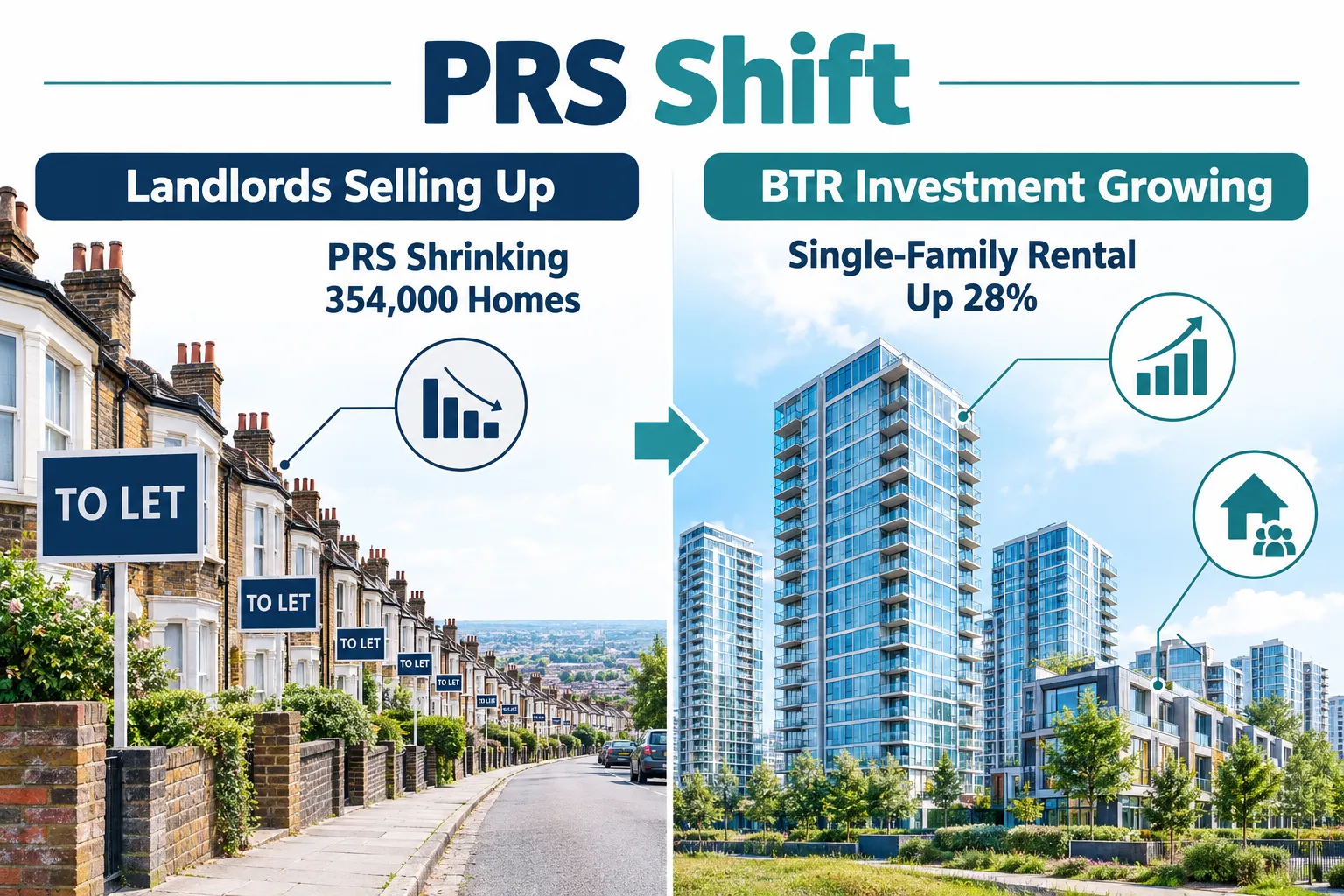
Behind both figures sits a sector-wide contraction. England's private rented sector lost an estimated 354,000 homes in the three years to May 2025. Ringley's own verdict is blunt: "This PRS erosion matters more than ever." For Manchester landlords, that erosion is not abstract. Fewer private rental homes competing for tenants, alongside faster rent growth, describes a market where demand is outstripping supply in exactly the way local agents are already reporting.
Why Rents Keep Rising While Landlords Leave
It sounds contradictory: landlords exiting the market while rents climb. In practice, the two trends feed each other. When private landlords sell, the rental homes they owned often leave the sector entirely, sold to owner-occupiers rather than passed to new landlords. Fewer rental homes chasing the same number of tenants pushes rents upward. Regulatory tightening, higher mortgage costs and tax changes have made smaller-scale, mortgaged landlords particularly likely to reconsider their position, even while institutional and cash-rich investors expand.
Manchester's Context: Build to Rent, Yields and Local Demand
Manchester has become one of the UK's most active Build to Rent markets, and that matters directly for how the national Ringley figures translate locally. UK-wide BTR investment reached about £5.0bn in 2024, rose to £5.3bn in 2025, and is forecast to top £5.7bn in 2026. Single-family rental investment, a fast-growing subset of BTR, exceeded £3bn in 2025, up 28% year on year, and now accounts for close to 60% of all BTR investment, compared with just 6% in 2019.
BTR schemes currently deliver around 10% of new UK homes, roughly 17,000 units annually, against an estimated potential of 30,000. Manchester, alongside Salford and the wider conurbation, has attracted a significant share of this institutional capital, with large-scale schemes around the city centre and Salford Quays. That matters for private landlords because BTR is increasingly competing for the same tenants, often with professionally managed amenities and clearer rent-setting processes.

Regionally, the fundamentals remain supportive for landlords who stay invested. ONS data released 16 September 2026 shows North West private rents up 5.8% in the year to August 2026, ahead of the UK average of 3.8%, though still below the UK average rent level of £1,400. Rightmove's Q3 2026 tracker, published 15 October 2026, recorded an average landlord yield of 7.4% in the North West, up 0.1 points, comfortably ahead of the 6.6% Great Britain average. Lancashire hotspots such as Lytham St Annes (£1,372, up 22.5% annually) and Rossendale (£1,224, up 22.0%) illustrate how strong rental growth can be in commuter towns around Greater Manchester.
Richard Antrobus, Director at VitalSpace in South Manchester, has noted that demand continues to outstrip the supply of quality homes, while regulatory pressures are making some landlords more cautious about expanding their portfolios. That caution, set against strong yields and rising rents, is precisely the tension the Ringley study captures nationally.
Tribunal Risk and Rent-Setting Caution
One further local data point deserves attention. Propertymark reported on 14 October 2026 a Manchester tribunal case involving a furnished two-bedroom flat. The tribunal set the rent at £1,450, below both the existing £1,650 and the landlord's proposed £1,700. This is a reminder that rent reviews under the new rules are not automatic, and tribunals can push figures down, not just arbitrate upward disputes. Manchester landlords planning once-a-year rent reviews should treat this as a signal to base new asking rents on robust, evidenced local comparables rather than optimistic uplift targets.
Policy Pressure: Multiple Dwellings Relief and the BTR Pipeline
Ringley's study also flags a specific policy issue with direct relevance to Manchester's rental supply. The abolition of Multiple Dwellings Relief is estimated to have cut £4bn from BTR portfolio values and stalled around 25,000 homes nationally. Ringley argues that reintroducing a targeted relief would cost the Treasury roughly £155m but could generate approximately £650m in tax revenue, a case for policy that supports rather than suppresses institutional investment in rental housing.
For a city like Manchester, where BTR has become a meaningful part of new housing delivery, stalled schemes translate into fewer new rental homes reaching the market, reinforcing the same supply squeeze driving rent inflation elsewhere.
What This Means for Manchester Landlords Right Now
| Factor | National Picture (Ringley/ONS/Rightmove) | Implication for Manchester Landlords |
|---|---|---|
| Rent growth | 6% in 3 months post-Renters' Rights Act; North West up 5.8% annually | Review rents against real local comparables, not just national averages |
| Landlord exits | 35% sold or tried to sell in 12 months | Portfolio landlords should assess hold-versus-sell value with a current valuation |
| Yields | North West yield 7.4% vs GB 6.6% | Greater Manchester remains relatively yield-attractive |
| Tribunal risk | Manchester case set rent below both current and proposed figures | Rent reviews need evidence, not assumption |
| BTR competition | £5.3bn invested in 2025, forecast above £5.7bn in 2026 | Private landlords compete with professionally managed stock |
For Manchester landlords rents October 2026 decisions increasingly hinge on accurate, independent valuations, whether that is for a sale, a refinance, or a defensible rent review ahead of the annual cycle. A RICS chartered valuation provides the evidence base needed to set a rent that will withstand tribunal scrutiny, or to price a property correctly if selling becomes the right call.
"This PRS erosion matters more than ever.", Ringley Group, October 2026
FAQ: Manchester Landlords Rents October 2026
Did Ringley publish a specific rent figure for Manchester?
No. The study covers the UK's 21 largest towns and cities collectively, with a 6% rent rise over three months. No Manchester-only figure was published.
Is the 35% landlord-exit figure about intent to sell or actual sales?
It measures landlords who sold or attempted to sell in the past 12 months, which is action taken rather than stated future intention.
How do Greater Manchester yields compare nationally?
Rightmove's Q3 2026 data puts the North West average landlord yield at 7.4%, above the 6.6% Great Britain average, based on the regional, not city-specific, figure.
Why are Build to Rent schemes relevant to private landlords?
BTR and single-family rental investment are growing fast and now make up around 60% of BTR investment. These schemes compete directly with private landlords for tenants in Manchester, Salford, Trafford and Stockport.
What does the Manchester tribunal case signal for rent reviews?
It shows tribunals can set rents below both the existing and proposed figures, so landlords need solid comparable evidence before raising rents.
Conclusion
The Ringley study draws a clear national picture: rents rising fast while landlords leave the sector in large numbers, with England's private rented sector down roughly 354,000 homes in three years. No city-specific Manchester figures exist, but the underlying pressures, regulatory tightening, strong Build to Rent competition, and tribunal rulings that can cut proposed rents, are all live issues for landlords across Greater Manchester.
The most useful next step is not guesswork. Manchester landlords weighing a sale, a refinance or an upcoming rent review should commission a current RICS chartered valuation to establish accurate market value and a defensible rental figure, grounded in genuine local comparables rather than national headlines alone.
Manchester landlords, rental market 2026, Renters Rights Act, Build to Rent Manchester, private rented sector, landlord exits, rent reviews, buy-to-let yields, RICS valuation, Greater Manchester property, portfolio landlords, Ringley study