Japanese knotweed (Fallopia japonica) is present on roughly 4% of UK residential properties, yet it continues to cause disproportionate anxiety among buyers, sellers and lenders alike. Understanding how surveyors assess Japanese knotweed risk in a UK building survey, covering identification, valuation and lender concerns, can mean the difference between a sale proceeding smoothly and a transaction collapsing unnecessarily. This article sets out what a general building survey can record, when a specialist inspection is warranted, and how plant-related risk feeds into marketability, repair planning and mortgage lending decisions in 2026.
Key Takeaways
- Japanese knotweed no longer triggers an automatic mortgage refusal; lenders assess risk using formal management categories, not a blanket rule.
- RICS guidance replaced the old seven-metre rule with a risk-category system (broadly A, D) that drives both surveyor reporting and lender responses. [1]
- A standard RICS Level 2 or Level 3 building survey records visible knotweed and flags the need for a specialist report; it does not replace one.
- Valuation impact depends on proximity to the structure, category of infestation, and whether a professional management plan with an insurance-backed guarantee is in place. [2]
- Disclosure obligations and the existence of a management plan are now central to negotiation, not just to lending.
What Japanese Knotweed Looks Like and Why Surveyors Must Record It
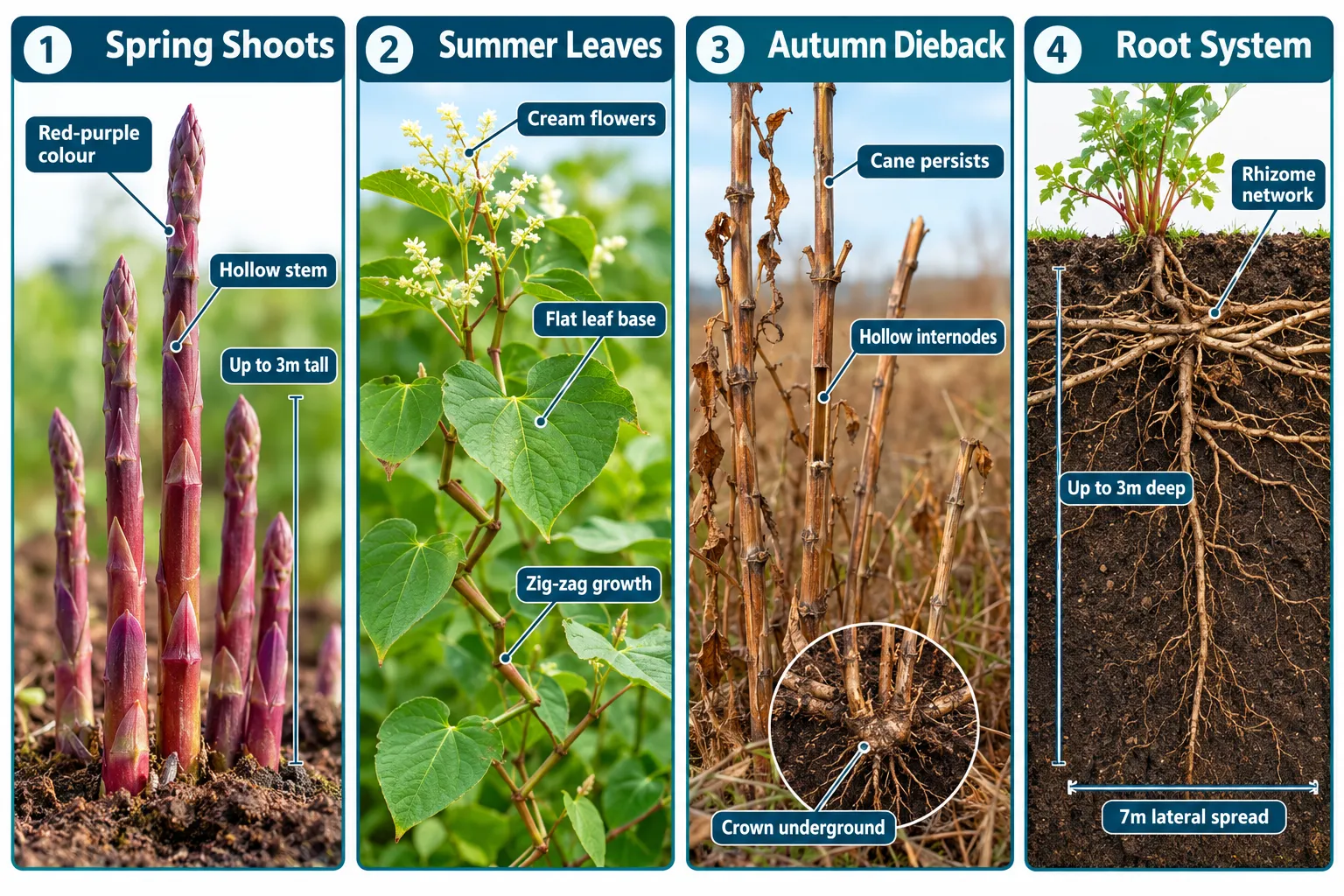
Correct identification is the foundation of every risk assessment. A surveyor who mistakes knotweed for bindweed or bamboo will either miss a genuine problem or raise a false alarm, both of which carry professional consequences.
Key identification features by season:
| Season | Visible signs |
|---|---|
| Spring | Red-purple, asparagus-like shoots emerging from crown; hollow internodes |
| Summer | Heart-shaped leaves with flat base; zig-zag stems; cream-white flower clusters; canes up to 3 m tall |
| Autumn | Leaves yellow and drop; brown hollow canes remain standing |
| Winter | Dead canes persist; crown and rhizome network survive underground |
The rhizome system is the structural concern. Roots can extend up to 3 m below ground and 7 m laterally, penetrating gaps in concrete, brickwork, drainage pipes and foundations. [2] This is why proximity to the building matters far more than the visible footprint above ground.
RICS guidance requires surveyors to record knotweed systematically whenever it is identified within or adjacent to a property. [1] Under the current RICS professional standard, surveyors must note the location, estimated extent and proximity to structures, then recommend a specialist report where appropriate. Failure to record visible knotweed in a building survey report is a professional shortcoming that can expose a surveyor to a negligence claim.
For buyers considering a RICS Level 3 Building Survey, the inspection will include a visual check of the garden, boundaries and any accessible outbuildings. A Level 3 report will describe what the surveyor saw, assign a condition rating, and advise on next steps, but it is not a specialist knotweed survey. Where knotweed is suspected or confirmed, a specialist assessment from a firm accredited by the Property Care Association (PCA) or the Invasive Non-Native Specialists Association (INNSA) should follow.
How Surveyors Assess Japanese Knotweed Risk: The RICS Category System
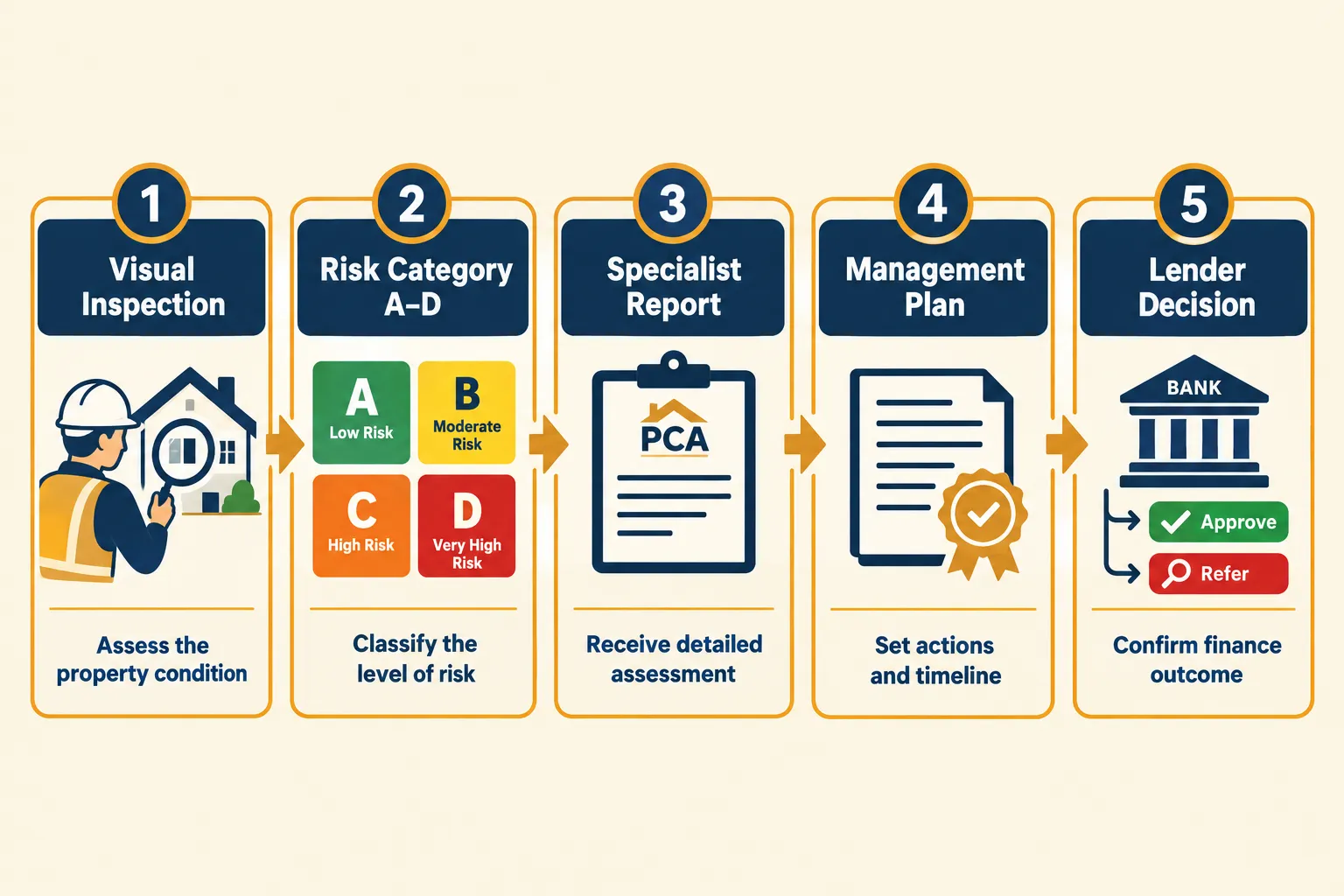
The old seven-metre rule, under which any knotweed within seven metres of a habitable space triggered a standard lender response, was abolished when RICS updated its guidance. The replacement framework uses risk categories that reflect actual structural threat rather than distance alone. [3]
The four risk categories (broadly A, D) work as follows:
Category A, Knotweed is within 7 m of a habitable space or ancillary structure and is causing, or likely to cause, damage. This is the highest-risk classification and typically requires immediate management before a lender will proceed.
Category B, Knotweed is within 7 m of a habitable space or ancillary structure but is not yet causing damage. A management plan is required; many lenders will lend subject to the plan being in place.
Category C, Knotweed is on the property but more than 7 m from any structure. Lower structural risk; a management plan is still advisable, and some lenders require one.
Category D, Knotweed is on neighbouring land only, not within 7 m of the subject property's boundary. The surveyor records the risk but the valuation impact is generally modest. [1] [2]
This category system gives surveyors a structured basis for reporting and gives lenders a consistent framework for credit decisions. It also means that a buyer's solicitor, a vendor and an estate agent can all interpret a surveyor's finding in the same terms.
Where a general building survey identifies or suspects knotweed, the surveyor will typically recommend a specialist knotweed survey. That specialist report will confirm the category, map the rhizome extent and propose a management plan. The management plan, usually a multi-year herbicide treatment programme, must come with an insurance-backed guarantee (IBG) to satisfy most lenders. [10]
Typical costs in 2026 (indicative ranges only; always obtain site-specific quotes):
| Item | Typical range |
|---|---|
| Specialist knotweed survey | £200, £500 |
| Herbicide treatment programme (per year) | £300, £1,500+ depending on extent |
| Full management plan with IBG (5-10 years) | £1,500, £5,000+ |
| Excavation and removal (severe cases) | £5,000, £20,000+ |
These figures affect negotiation. A buyer who commissions a specialist survey before exchange can use the cost of the management plan as a basis for a price reduction or ask the seller to put a plan in place before completion.
Valuation Impact and Lender Concerns in 2026
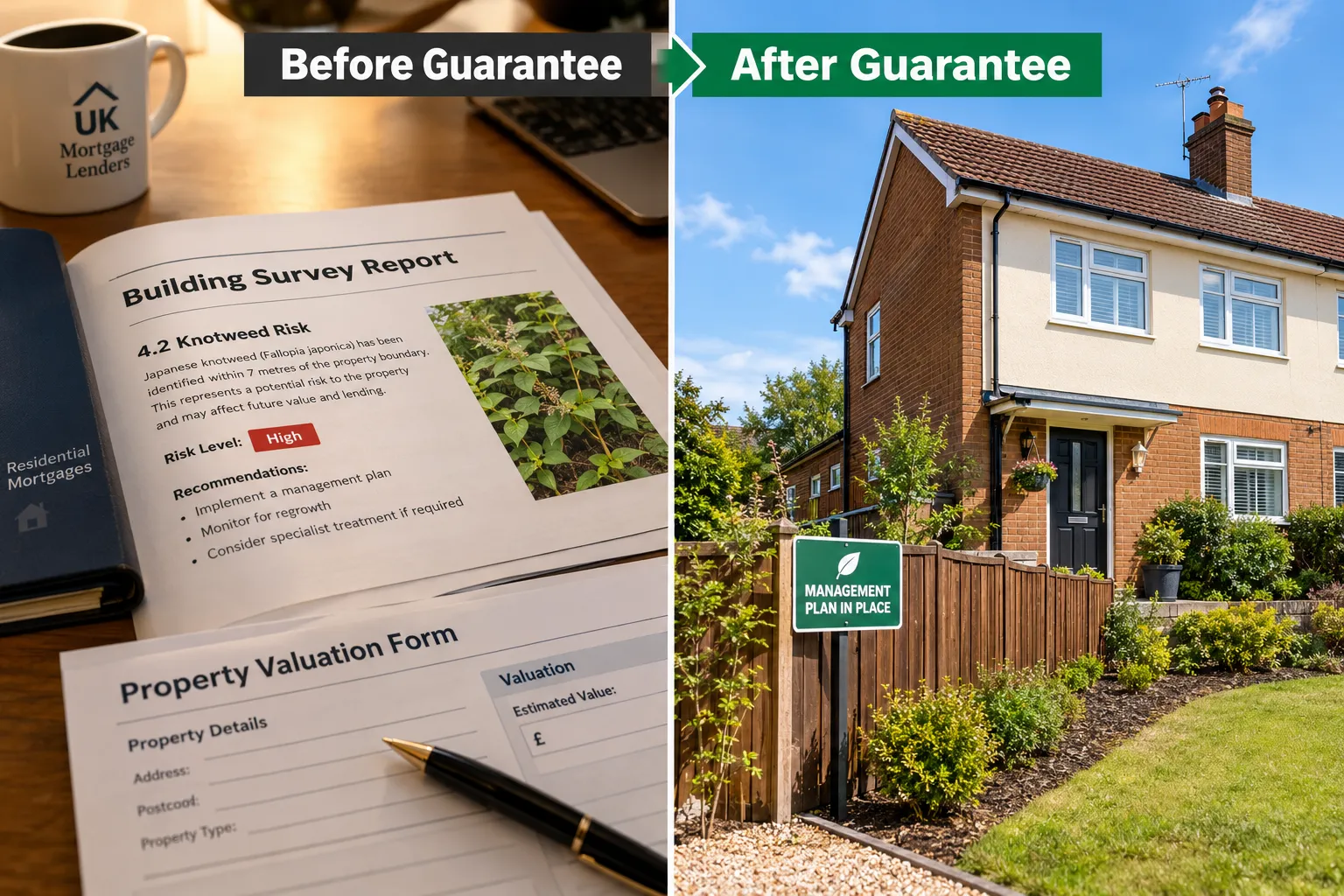
The valuation question is where many transactions stall. Surveyors carrying out RICS valuations must apply the RICS Red Book and the knotweed professional standard together. [2] The key shift in current guidance is that valuation should reflect a holistic assessment of actual risk, not an automatic percentage deduction triggered by the plant's presence alone.
Factors a valuer considers:
- Category of infestation (A, D as above)
- Proximity to the main structure and any outbuildings
- Whether a management plan with an IBG is already in place
- Local market evidence of comparable sales affected by knotweed
- The cost of treatment relative to the property's open market value
Where no management plan exists and the infestation is Category A or B, a valuer may apply a material reduction to reflect the cost of remediation and the reduced marketability. Where a professional plan and IBG are already in place, the valuation impact can be modest, sometimes negligible for lower categories. [9]
Lender positions in 2026:
Most high-street mortgage lenders now follow a risk-based approach rather than a blanket refusal policy. The general position is:
- Category A/B with no plan: Retention of funds or refusal to lend until a management plan and IBG are in place.
- Category A/B with plan and IBG: Many lenders will proceed, sometimes with a retention to cover the first year's treatment cost.
- Category C/D: Most lenders will proceed subject to the surveyor's report confirming the category and recommending monitoring. [1] [10]
Buyers should ask their mortgage broker to check the specific lender's current knotweed policy before exchange. Lender criteria change, and a policy that applied two years ago may have been updated.
The valuation red book framework requires valuers to report knotweed as a material fact. Suppressing or omitting it is not an option, and sellers who fail to disclose known knotweed on the TA6 property information form face potential misrepresentation claims. [7]
When a Standard Building Survey Is Not Enough
A standard RICS Level 2 or Level 3 building survey is a visual, non-invasive inspection. The surveyor will note knotweed if it is visible above ground during the inspection, but cannot dig up a garden, probe rhizome depth or confirm the precise lateral extent of the root system.
This creates a gap that matters in practice. Knotweed is often dormant in winter, meaning canes may not be visible at the time of inspection. A surveyor who inspects in December may see nothing above ground but still has a duty to check for dead canes, crown material and any previous treatment evidence. [8]
Where there is any doubt, for example, where neighbours have reported knotweed, where the garden has recently been landscaped, or where dead hollow canes are visible, the surveyor should flag the risk and recommend a specialist survey even if active growth is absent.
Specialist knotweed surveyors from PCA or INNSA-accredited firms can:
- Confirm species identification (knotweed is frequently confused with other plants)
- Map the rhizome extent using ground investigation where necessary
- Assign the correct RICS risk category
- Produce a management plan that satisfies lender requirements
- Provide the IBG that lenders and future buyers will expect
This specialist report sits alongside, not instead of, the building survey. Both documents will be reviewed by the buyer's solicitor as part of due diligence. For buyers who want to understand what a building survey red flag looks like in practice, knotweed at Category A or B is one of the clearest examples.
Practical Steps for Buyers, Sellers and Their Advisers
For buyers:
- Read the building survey report carefully. If knotweed is mentioned, do not proceed to exchange without a specialist report.
- Check whether a management plan and IBG already exist. Ask the seller for documentation.
- Obtain the management plan documents before exchange and ensure the IBG is transferable to a new owner.
- Notify your mortgage lender and broker of the finding before exchange, not after.
- Factor the cost of any required treatment into your offer or renegotiation.
For sellers:
- Disclose known knotweed on the TA6 form. Non-disclosure is a legal risk.
- Consider commissioning a specialist survey and management plan before listing. A plan in place at the point of marketing removes a significant buyer objection.
- Keep records of all treatment, including dates, products used and IBG documentation.
For solicitors and estate agents:
- Treat a knotweed finding as a material fact requiring immediate action, not a reason to suppress information.
- Ensure the IBG is assignable on sale; some guarantees are property-specific but not automatically transferable.
- Check that the specialist firm is PCA or INNSA accredited, lenders and future surveyors will ask.
Sellers who want to understand the value of commissioning a report before listing should read about seller-side building surveys, which explains why pre-listing condition reports are increasingly standard practice.
FAQ: Japanese Knotweed and UK Building Surveys
Does Japanese knotweed always reduce a property's value?
Not automatically. Valuation impact depends on the risk category, proximity to structures and whether a management plan with an IBG is in place. A Category D infestation on neighbouring land with no encroachment may have a negligible effect on value. [2]
Will a mortgage lender always refuse to lend if knotweed is found?
No. Most lenders in 2026 follow a risk-category approach. Categories C and D rarely prevent lending. Categories A and B may require a management plan and IBG before funds are released. [1] [10]
Is a specialist knotweed survey the same as a building survey?
No. A building survey is a general condition inspection carried out by a chartered surveyor. A specialist knotweed survey is a focused assessment by a PCA or INNSA-accredited specialist. Both may be needed.
Can knotweed be completely eradicated?
Herbicide treatment is the standard approach and takes typically three to five years. Full eradication is difficult; management to a point where the plant poses no structural risk is the realistic goal. [8]
What is an insurance-backed guarantee (IBG)?
An IBG is a warranty provided by a specialist firm confirming that the management plan will be completed and that the guarantee remains valid even if the treating company ceases to trade. Lenders and future buyers will expect one.
Does knotweed on a neighbour's land affect my property's value?
It can. If the rhizome is encroaching or likely to encroach, the surveyor will note this. Neighbouring knotweed that has not reached the subject property's boundary (Category D) typically has a modest valuation impact. [1]
What should I do if knotweed appears after completion?
Contact a PCA or INNSA-accredited specialist immediately. If the seller failed to disclose known knotweed on the TA6 form, there may be grounds for a misrepresentation claim, take legal advice.
Conclusion
Japanese knotweed is a manageable problem, not an automatic transaction-stopper. The RICS risk-category framework gives surveyors, valuers, lenders and buyers a consistent language for assessing and responding to the plant's presence. A general building survey will record visible knotweed and recommend further action; a specialist report from a PCA or INNSA-accredited firm will confirm the category, map the risk and produce the management plan that lenders require.
Actionable next steps:
- If you are buying: instruct a chartered surveyor for a Level 2 or Level 3 survey before exchange, and act promptly on any knotweed finding.
- If you are selling: commission a specialist survey before listing if you have any reason to suspect knotweed; a plan in place accelerates the sale.
- If you are a solicitor or agent: treat knotweed disclosure and IBG transferability as standard due-diligence items on every transaction where the plant has been identified.
- If you need a valuation: instruct a RICS-qualified valuer who is familiar with the current RICS knotweed professional standard and can apply the risk-category framework correctly.
The plant is invasive and persistent, but with the right professional advice and a properly documented management plan, transactions can and do proceed.
References
[1] Japanese Knotweed And Residential Property – rics.org
[2] Japanese Knotweed October 2022 – rics.org
[3] Japanese Knotweed New Guidance Comes Into Effect – ww3.rics.org
[7] Japanese Knotweed – hoa.org.uk
[8] Japanese Knotweed Survey – surveyorlocal.co.uk
[9] Buyers Survey Found Japanese Knotweed What Now UK 2026 – valuq.co.uk
[10] Surveyors Valuers – property-care.org