Only 2% of all remote-work-driven relocations end up in truly rural areas — yet that small percentage is reshaping an entire profession. The impact of remote work trends on rural land surveying demands in 2026 is disproportionately large relative to the number of people actually moving to the countryside. Vacation home purchases, rural land investments, and second-property acquisitions are surging among remote workers who never fully relocate but still need land surveyed, boundaries confirmed, and properties assessed before they commit to buying. The result is a demand spike that a thinning workforce of rural surveyors is struggling to meet.
Key Takeaways
- Remote work has not triggered mass urban-to-rural migration, but it has significantly increased vacation home purchases and rural land investment, driving surveying demand.
- Approximately 80% of geospatial and land surveying roles cannot be performed remotely, meaning field presence remains essential even as digital tools expand.
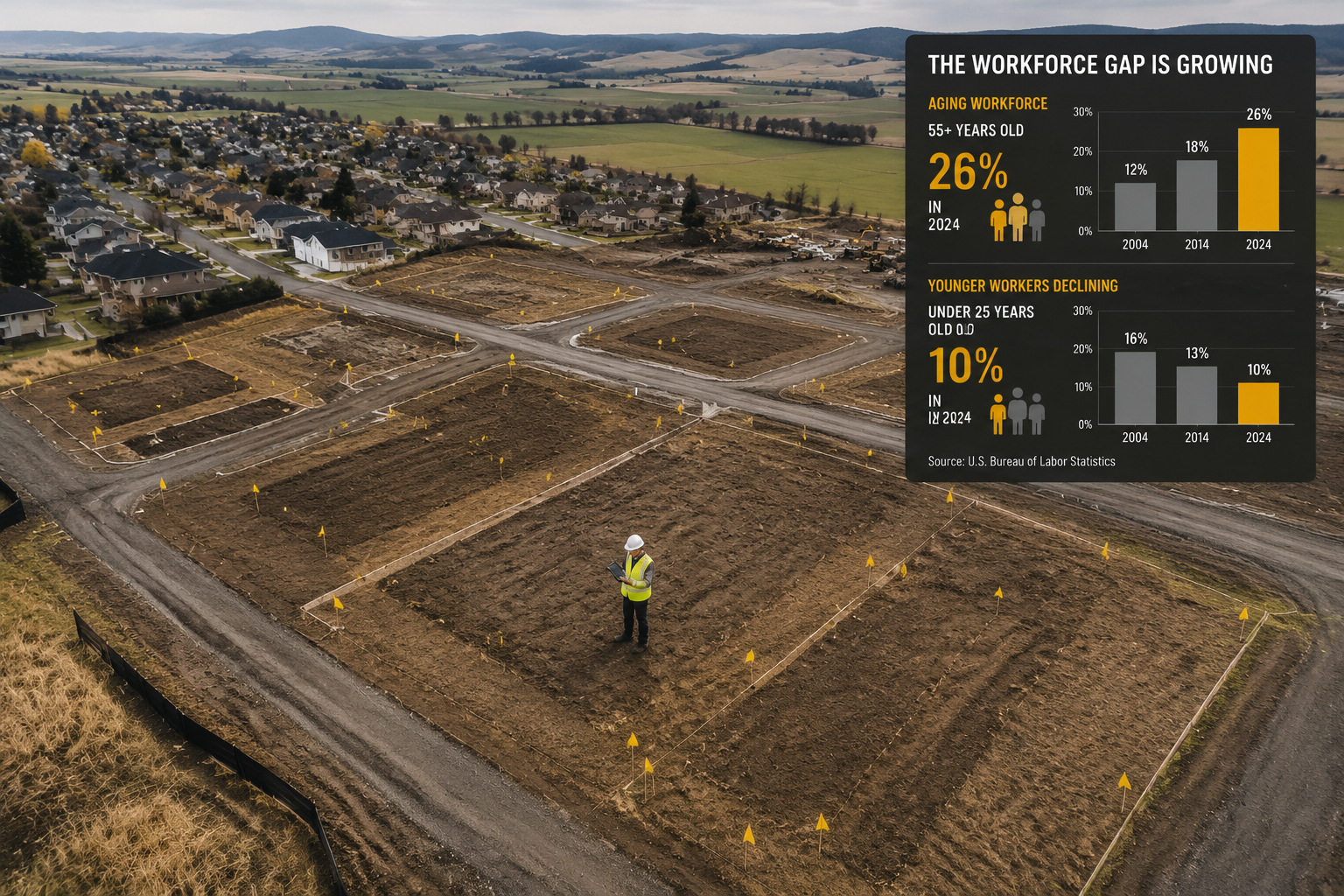
- The median age of surveyors is 45, with nearly one-third aged 55 or older, creating a looming workforce shortage in rural markets.
- Drone and LiDAR technology is improving efficiency for large rural properties, but capital costs and training requirements create barriers for smaller firms.
- Surveying fees have risen sharply in 2026 due to wage inflation, equipment investment, and a 12% construction boom in residential markets.
How Remote Lifestyles Are Reshaping Rural Property Markets
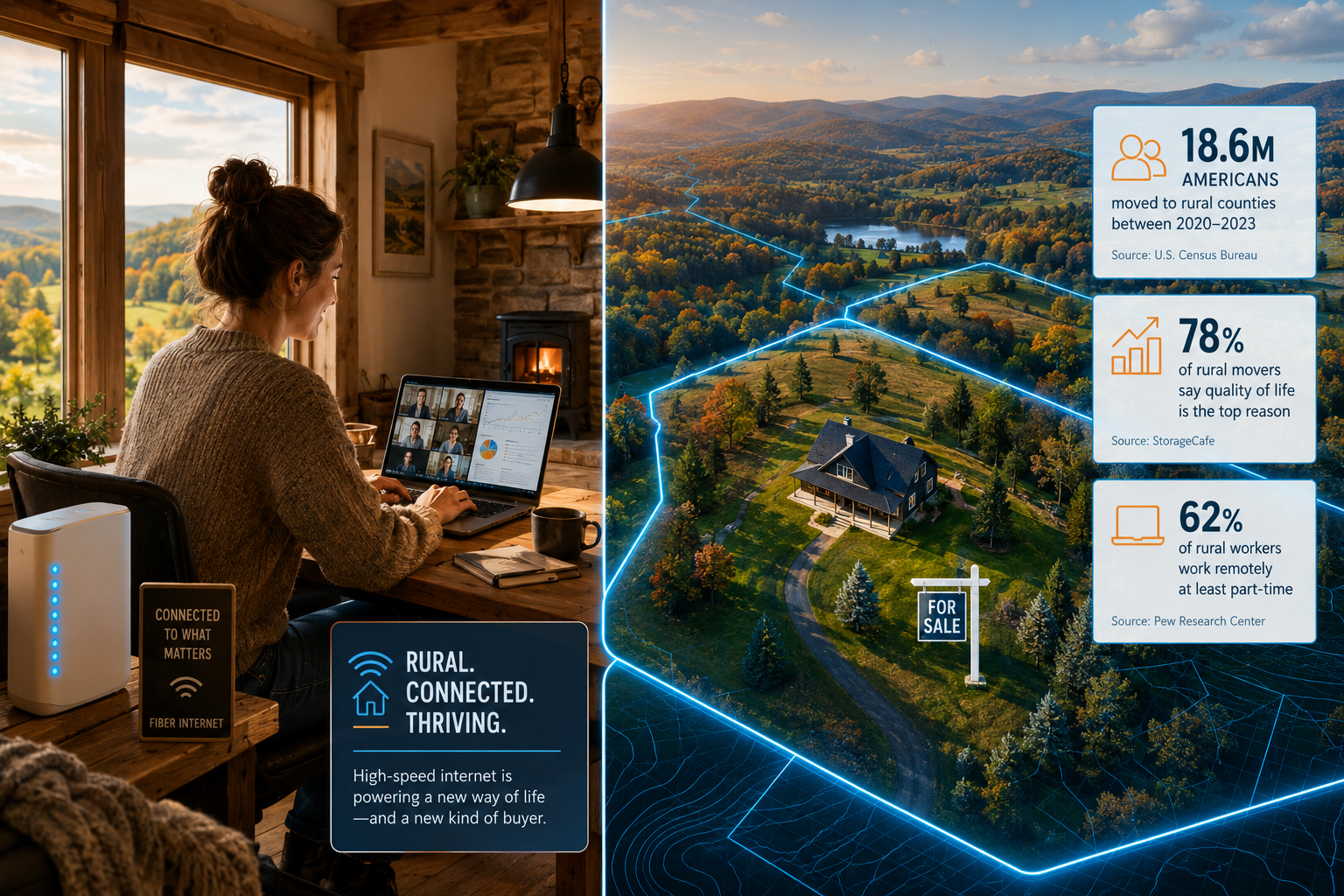
The narrative around remote work and geography has been oversimplified. Studies confirm that most remote-enabled relocations happen within the same urbanization tier — urban workers moving to other urban or suburban areas, not to farms and forests [6]. However, a distinct secondary pattern has emerged: remote workers with stable incomes are purchasing rural vacation properties, agricultural land, and second homes at rates not seen since the early 2000s housing boom.
This is not about permanently leaving cities. It is about using remote income to invest in rural real estate as a lifestyle asset or financial hedge. A remote software engineer based in Manchester can now justify owning a weekend property in the Peak District or a rural holding in Hampshire. Each of those purchases triggers a chain of professional services — and land surveying sits near the top of that chain.
What this means for surveyors:
- More boundary surveys on previously undivided rural parcels
- Increased demand for RICS home surveys on older rural properties with complex structural histories
- Greater need for specific defect surveys on rural buildings that have sat vacant or been converted from agricultural use
- Rising requests for valuations to support capital gains tax as investment properties are sold or transferred
The shift is not uniform across the country. Rural regions with reasonable proximity to major cities — within a two-hour commute or drive — are seeing the sharpest increases. Areas in the home counties, Hampshire, and parts of the North West are experiencing demand that their local surveying capacity was not built to handle.
"The demand is real, but it is concentrated. Rural surveyors are not seeing a nationwide flood — they are seeing intense local surges in specific corridors where remote workers are buying."
The Workforce Gap at the Heart of Rural Surveying
The impact of remote work trends on rural land surveying demands in 2026 collides directly with a structural workforce problem that predates the remote work era. The median age of surveyors in the United States is 45, and 32.8% of the profession is aged 55 or older [2]. The United Kingdom faces a comparable demographic profile. A significant portion of the experienced rural surveying workforce is within a decade of retirement, and the pipeline of younger professionals entering the field has not kept pace.
This matters because land surveying — particularly in rural settings — is not a job that can be easily redistributed or performed remotely. Approximately 80% of geospatial roles, including land surveying, require on-site presence for field measurements, boundary inspections, and physical assessments [1]. There is no remote workaround for walking a property line or inspecting a subsidence-prone foundation.
The Generational Divide in Surveying Adoption
Younger surveyors entering the field are more comfortable with digital tools, drone operation, and cloud-based data management. Older practitioners often hold the deep regulatory knowledge and client relationships that rural markets depend on. When senior surveyors retire, that institutional knowledge does not automatically transfer.
The OECD has noted that younger workers (aged 15-29) are more likely to engage with remote-compatible digital workflows, while outcomes for workers aged 50-64 depend heavily on their capacity to transition to digitally-intensive roles [8]. In surveying, this creates a knowledge gap: the professionals most capable of adopting new technology are the least experienced in complex rural terrain, while the most experienced professionals are the least likely to adopt new workflows before retiring.
Workforce pressure points in rural surveying:
| Factor | Impact Level |
|---|---|
| Aging workforce nearing retirement | High |
| Insufficient new entrants to rural roles | High |
| Urban concentration of younger surveyors | Medium |
| Limited remote work options for field roles | High |
| Rising demand from vacation home purchases | High |
Technology, Costs, and the New Economics of Rural Surveys
Drone and LiDAR Adoption
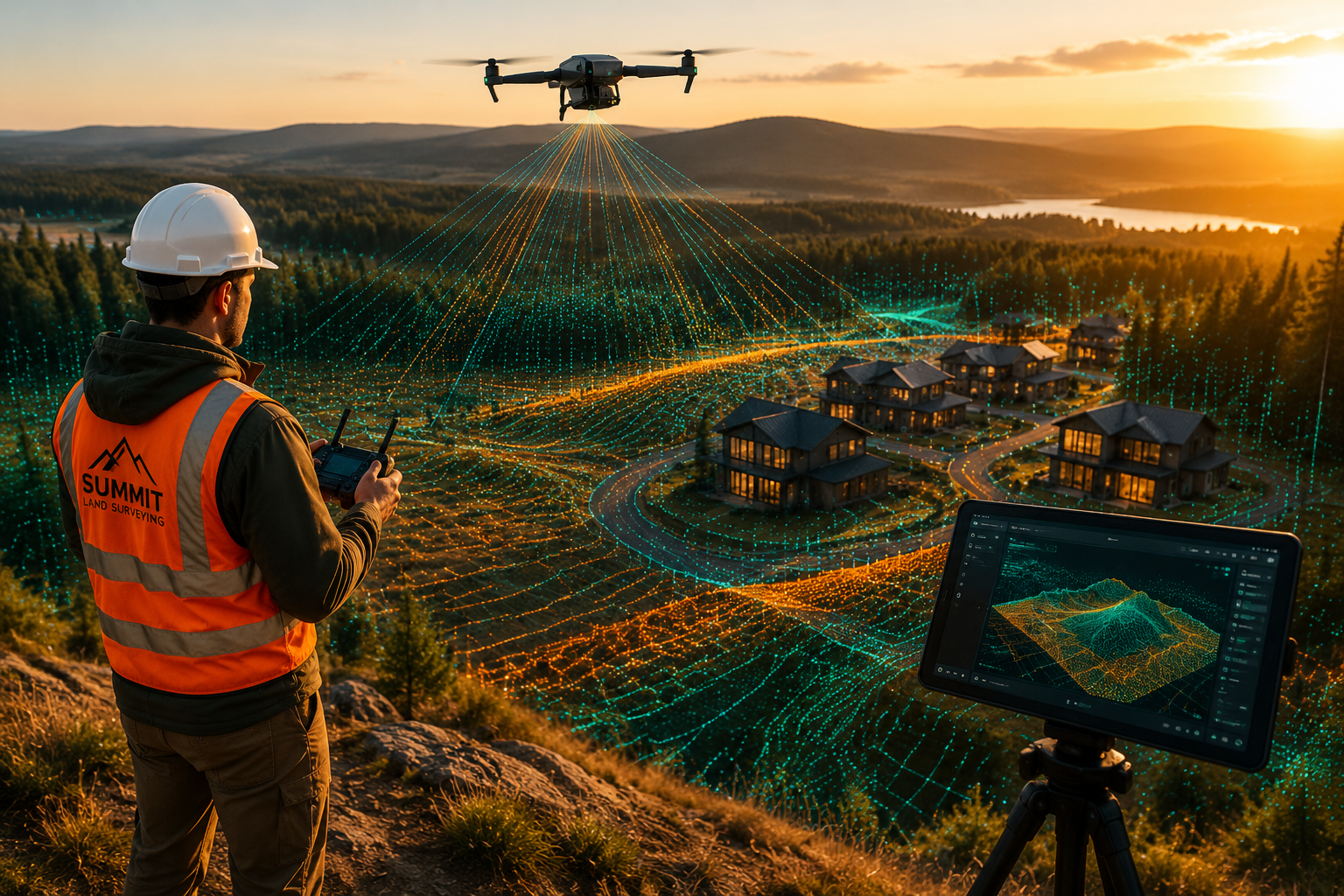
The most significant technological shift in rural land surveying is the adoption of drone-based surveys and LiDAR (Light Detection and Ranging) scanning. These tools allow surveyors to cover large rural properties far more efficiently than traditional ground-based methods. A drone survey can map hundreds of acres in a fraction of the time that manual measurement would require, generating high-resolution topographic data that supports boundary identification, planning applications, and environmental assessments.
For rural vacation home buyers and land investors, this technology is genuinely transformative. It means faster turnaround times on surveys for large parcels, more accurate elevation data for flood risk assessment, and detailed visual records that support due diligence.
However, the economics are not straightforward. Drone equipment, LiDAR sensors, and the software required to process the data represent substantial capital investment. Smaller surveying firms operating in rural areas — often sole practitioners or two-person operations — face real barriers to adoption [4]. The upfront cost of professional-grade equipment can exceed the annual revenue of a small rural practice, and the training required to operate and certify drone use adds further overhead.
Rising Fees and Inflation Pressures
Surveying costs have risen sharply. Since 2023, wage inflation of 5-8% annually has pushed experienced licensed surveyor hourly rates to between $75 and $150 per hour [3]. In the UK, comparable pressures have driven RICS-regulated surveying fees upward across most property types and regions.
A 12% increase in residential construction across major markets in 2026 has compounded this pressure [3]. When construction activity rises, surveyors are pulled toward high-volume residential development work, reducing availability for individual rural property surveys. Buyers of vacation homes and rural investment properties find themselves competing for surveying slots with large housebuilders who can offer bulk work — and surveyors often prioritize the more predictable income stream.
Understanding which type of survey is needed before approaching a surveyor can save both time and money. Rural properties often require more comprehensive assessments than standard residential purchases, particularly when the property includes outbuildings, agricultural land, or has not been formally surveyed in decades.
The Urban-Rural Digital Divide and Its Limits on Remote Surveying
A persistent assumption in discussions about remote work is that digital infrastructure will eventually equalize opportunity between urban and rural areas. The evidence in 2026 suggests this has not happened at the pace required. An Oxford Internet Institute study found that remote work is failing to bridge the urban-rural divide, with rural areas continuing to face significant disadvantages due to limited high-speed internet access and digital infrastructure [5].
This has direct implications for the impact of remote work trends on rural land surveying demands in 2026. Even where surveying tasks could theoretically be performed remotely — data processing, report writing, client communication — rural-based surveying firms often lack the reliable broadband connectivity that would make remote collaboration seamless. Meanwhile, urban-based surveying firms capable of handling remote administrative tasks still need to deploy field teams to rural locations, adding travel time and cost to every instruction.
What Cannot Be Delegated Remotely
It is worth being precise about which surveying tasks remain irreducibly physical:
- Boundary determination: Requires physical inspection of existing markers, fences, and historical evidence on the ground
- Structural condition assessment: A structural survey of a rural property cannot be conducted from a desk
- Subsidence investigation: Subsidence surveys require direct observation of ground conditions, crack patterns, and soil composition
- Schedule of condition reporting: Documenting the state of a property for legal or tenancy purposes demands physical presence
AI and automation are increasingly integrated into data analysis and report generation, but the profession retains a moderate vulnerability to full automation due to the necessity of human judgment, regulatory expertise, and stakeholder interaction — particularly in complex rural terrains [7]. The human surveyor is not being replaced; they are being augmented, and the augmentation still requires boots on the ground.
Strategic Implications for Buyers, Investors, and the Surveying Profession
For Rural Property Buyers and Investors
Anyone purchasing a rural property in 2026 — whether as a vacation home, investment asset, or permanent relocation — should treat the surveying process as a priority, not an afterthought. Demand is high, experienced rural surveyors are scarce, and delays in securing a survey can stall or derail a purchase.
Practical steps for buyers:
- Instruct a surveyor early — ideally before making an offer, or immediately upon acceptance
- Clarify the scope — rural properties often need more than a standard valuation; comparing different types of survey helps identify the right level of inspection
- Budget for higher fees — 2026 surveying costs reflect genuine market pressures, not opportunism
- Check surveyor coverage — not all firms cover rural locations; reviewing surveyor locations confirms geographic reach before making contact
- Allow extra time — rural surveys, particularly for large or complex properties, take longer to schedule and complete than urban equivalents
For the Surveying Profession
The impact of remote work trends on rural land surveying demands in 2026 presents both a challenge and an opportunity for the profession. Firms that invest in drone capability, expand their rural coverage, and develop clear service offerings for vacation home buyers and rural investors will be well-positioned to capture growing demand.
Workforce development is the longer-term imperative. Attracting younger surveyors to rural practice — through competitive pay, technology investment, and flexible working arrangements for office-based tasks — is essential to preventing a capacity crisis as the senior cohort retires.
Conclusion
The relationship between remote work and rural land surveying in 2026 is more nuanced than headlines suggest. Mass migration to the countryside has not materialized, but a sustained wave of rural property investment, vacation home purchases, and land acquisitions by remote-income earners has created real and growing demand for surveying services in areas that were already underserved.
The profession faces this demand surge with an aging workforce, a digital infrastructure gap in rural areas, and rising costs driven by inflation and construction activity. Technology — particularly drone surveys and LiDAR — offers meaningful efficiency gains, but adoption barriers remain significant for smaller rural practices.
Actionable next steps:
- Rural property buyers should instruct a qualified chartered surveyor as early as possible in the purchase process
- Investors acquiring rural land should seek a comprehensive boundary survey and structural assessment before committing funds
- Surveying firms should evaluate drone survey capability and rural service expansion as strategic priorities for 2026 and beyond
- Industry bodies should accelerate workforce development initiatives targeting younger professionals and rural practice incentives
The rural surveying market is not broken — but it is under pressure. Those who understand that pressure, and plan around it, will be better positioned whether they are buying, selling, investing, or practising.
References
[1] Geospatial Jobs Remote Work – https://www.geo-careers.com/posts/geospatial-jobs-remote-work/?utm_source=openai
[2] papers.ssrn – https://papers.ssrn.com/sol3/Delivery.cfm/6621799.pdf?abstractid=6621799&mirid=1&utm_source=openai
[3] Land Survey Costs In 2026 Complete Pricing Guide Amid Inflation Tech Advances And Construction Booms – https://www.canterburysurveyors.com/blog/land-survey-costs-in-2026-complete-pricing-guide-amid-inflation-tech-advances-and-construction-booms/?utm_source=openai
[4] Remote Vs In Person Land Surveyor – https://surveyslate.com/blog/remote-vs-in-person-land-surveyor/?utm_source=openai
[5] New Oxford Study Reveals Remote Work Failing To Bridge The Urban Rural Divide – https://www.oii.ox.ac.uk/news-events/new-oxford-study-reveals-remote-work-failing-to-bridge-the-urban-rural-divide/?utm_source=openai
[6] arxiv – https://arxiv.org/abs/2604.08252?utm_source=openai
[7] Surveyors – https://jobripper.ai/job/surveyors/?utm_source=openai