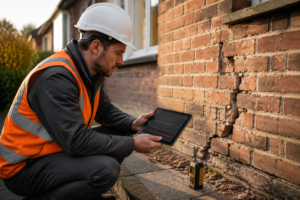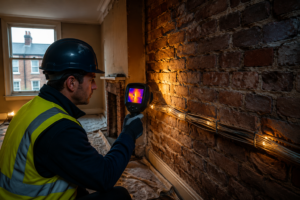
Fewer than one in five commercial dilapidations claims that reach formal proceedings ever proceed to a full trial — yet the quality of the expert building surveyor's evidence determines the outcome of almost every settlement negotiated in the shadow of litigation. That single fact explains why the role of the expert witness building surveyor has become one of the most technically demanding and legally scrutinised positions in UK property practice.
This article examines how Expert Witness Building Surveyors in Dilapidations Disputes: CPR Compliance and RICS Valuation Protocols for 2026 operate across the full lifecycle of a lease-end claim — from the first physical inspection through to joint statements and, where necessary, courtroom testimony. It covers the duties imposed by the Civil Procedure Rules, the RICS frameworks that govern both building surveys and valuation opinion, and the practical steps surveyors must take to remain instructable in an increasingly regulated environment.
Key Takeaways
- Expert witness building surveyors in dilapidations disputes owe their primary duty to the court, not to the instructing party — impartiality is non-negotiable under CPR Part 35.
- A CPR-compliant expert report in dilapidations must clearly separate factual survey findings from expert opinion, and must address quantum as well as condition.
- RICS guidance anchors both the technical assessment of disrepair and the valuation of diminution in value — two distinct disciplines that often require the same surveyor to demonstrate dual competence.
- Rising MEES obligations, stricter landlord-compliance regimes, and complex service-charge disputes are driving dilapidations claims upward in 2026, increasing demand for specialist expert witnesses.
- Alternative dispute resolution — particularly expert determination — is now a primary forum for dilapidations claims, meaning CPR-standard evidence must be prepared from the outset regardless of whether court proceedings follow.
The Legal Framework: CPR Part 35 and the Expert Building Surveyor's Duty
The foundation of all expert witness work in England and Wales is CPR Part 35 and its accompanying Practice Direction. The rules are unambiguous: an expert's overriding duty is to the court, and that duty overrides any obligation to the party who instructs and pays the expert [3]. For building surveyors working in dilapidations, this creates a structural tension that must be managed from the moment instructions are accepted.
What CPR Part 35 Requires in Practice
A CPR-compliant expert report in a dilapidations dispute must:
- Set out the expert's qualifications and the scope of their instructions
- Identify the documents and inspections relied upon
- Distinguish clearly between factual observations (what was seen during the survey) and expert opinion (the professional interpretation of those observations)
- State where the expert is unable to reach a definitive opinion and explain why
- Confirm compliance with the expert's duty to the court via a signed declaration
Courts have repeatedly criticised expert building surveyors who blur the line between factual survey evidence and advocacy for their client's position [2]. A schedule of dilapidations prepared initially as a client document carries significant risks if it is later repurposed as CPR-governed expert evidence without being restructured to meet these requirements.
"The moment a building survey report enters litigation — whether as a Scott Schedule exhibit or as the basis of an expert's opinion — it is subject to the same scrutiny as any other piece of court evidence."
This is why leading practitioners advise that instructions anticipating any dispute should be framed for CPR compliance from the outset, even when the immediate purpose is pre-action negotiation [4].
Joint Statements and Hot-Tubbing
Two procedural mechanisms deserve particular attention in 2026 practice:
Joint statements (sometimes called Scott Schedules in dilapidations) require opposing experts to meet, identify areas of agreement and disagreement, and produce a written record. Courts expect these to narrow the issues genuinely — not to entrench positions. A surveyor who approaches a joint statement meeting as a negotiation rather than a genuine attempt to resolve technical disagreement risks judicial criticism.
Hot-tubbing (concurrent expert evidence) is increasingly used in property disputes. Surveyors give evidence simultaneously, answering the same questions in turn, with the judge able to probe both experts directly. This format rewards experts who can articulate the reasoning behind their opinions clearly and concisely, and exposes those whose positions are not independently grounded.
RICS Valuation Protocols and Dilapidations Quantum: The Dual Competence Requirement

Dilapidations disputes are not purely about condition — they are fundamentally about money. The landlord's claim is for the cost of remedying breaches of the tenant's repairing, decorating, and reinstatement obligations, subject to the statutory cap imposed by Section 18(1) of the Landlord and Tenant Act 1927. That cap limits recovery to the diminution in the value of the landlord's reversion caused by the breach — a valuation question that sits squarely within RICS competence frameworks.
This creates the dual competence requirement that defines expert witness building surveyors in dilapidations disputes: they must be credible both as building surveyors (assessing condition and costing remedies) and as valuers (or must work alongside a qualified valuer) to address the Section 18(1) cap.
RICS Guidance Anchoring 2026 Practice
RICS professional statements and guidance notes remain the primary technical reference for both limbs of this analysis:
| Area of Assessment | Relevant RICS Framework |
|---|---|
| Schedule of Dilapidations | RICS Dilapidations guidance note (England and Wales) |
| Costing of remedial works | RICS New Rules of Measurement / NRM3 |
| Diminution in value (S.18(1)) | RICS Valuation — Global Standards (Red Book) |
| Expert evidence | RICS professional statement: Surveyors acting as expert witnesses |
For RICS valuations underpinning a Section 18(1) defence, the valuer must assess the property in its actual condition (with the dilapidations) against its hypothetical condition (if the tenant had complied with all covenants), and express the difference as a capital sum. This is not a simple exercise — it requires comparable evidence, an understanding of the relevant market, and a clear audit trail that will withstand cross-examination.
Surveyors seeking to understand how factors of valuation interact with physical condition assessments in complex property disputes will find that the two disciplines are inseparable in high-value dilapidations claims.
The Workman-Style Approach: Combining Defect Diagnosis with Quantum
The most effective expert witness building surveyors in dilapidations disputes operate in a manner consistent with established specialist practice — combining rigorous physical inspection with disciplined cost analysis and valuation awareness. This approach, associated with dedicated dilapidations specialists, involves:
- Systematic inspection against the lease covenants — not a generic condition survey
- Itemised Scott Schedule setting out each alleged breach, the required remedy, and the estimated cost
- Commentary on the Section 18(1) cap — either as a valuer or in coordination with one
- Assessment of supersession — where the landlord's intended works would have rendered the tenant's breaches irrelevant
- Future use analysis — addressing whether the landlord's redevelopment or refurbishment plans affect the quantum of the claim [7]
Understanding what a dilapidations surveyor does across these stages is essential context for any party entering a lease-end dispute.
Expert Witness Building Surveyors in Dilapidations Disputes: CPR Compliance and RICS Valuation Protocols for 2026 — Emerging Pressures and Specialisation
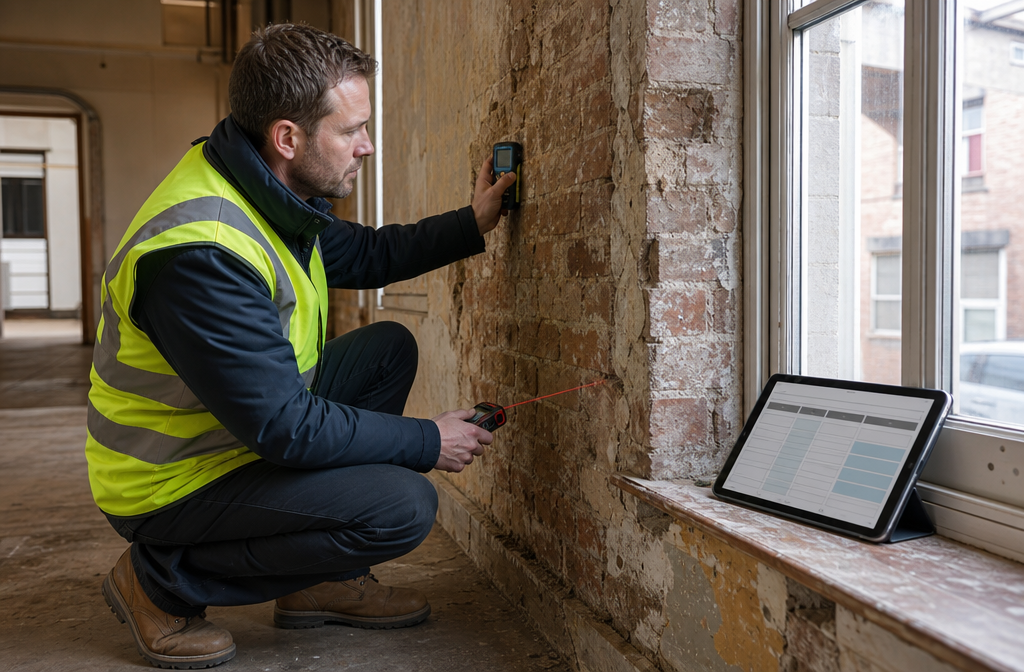
The demand for expert building surveyor witnesses in dilapidations is rising in 2026, driven by several converging factors that are reshaping both the volume and complexity of claims [4].
MEES, Energy Efficiency, and Repair Obligations
The Minimum Energy Efficiency Standards (MEES) regime has created a new category of dilapidations dispute. Where a commercial property fails to meet the required EPC rating, questions arise about whether energy-efficiency improvements fall within the tenant's repair obligations, whether the landlord can claim the cost of upgrades as part of a dilapidations settlement, and how the Section 18(1) cap applies where the landlord intends to carry out significant energy-efficiency works regardless of the tenant's compliance.
Expert building surveyors must now be conversant with energy-efficiency assessment methodology alongside traditional building pathology. A specific defect survey approach — isolating individual building elements for detailed technical analysis — is often the most defensible methodology for addressing these issues in expert evidence.
Service Charge Disputes and Dilapidations Overlap
Complex commercial leases frequently create overlapping obligations between repair covenants and service charge provisions. Expert building surveyors in dilapidations disputes are increasingly asked to address whether works claimed under a dilapidations schedule should properly have been recovered through the service charge during the lease term — a question that requires both technical building knowledge and lease interpretation skills [5].
Specialisation as a Credibility Requirement
In 2026, courts and tribunals are applying greater scrutiny to the scope of an expert's claimed expertise [6]. A building surveyor instructed as an expert witness in a complex dilapidations dispute involving high-value commercial premises will face questions about:
- Their specific experience in dilapidations (as distinct from general building surveying)
- Their familiarity with the relevant property type and market
- Whether they have previously given expert evidence in similar disputes
- Their understanding of the RICS professional statement on expert witnesses
The practical implication is that generalist building surveyors who occasionally accept expert witness instructions are at a disadvantage compared with those who have developed a defined dilapidations specialism. This mirrors the broader trend toward specialisation in expert witness practice across property and construction disciplines [8].
Alternative Dispute Resolution as the Primary Forum
Expert determination is now a primary resolution mechanism for dilapidations disputes, particularly those involving mid-range commercial properties where full litigation costs are disproportionate [9]. The critical point for surveyors is that expert determination does not reduce the standard required of expert evidence — it changes the forum, not the quality threshold.
A surveyor whose report would not withstand CPR scrutiny is unlikely to produce evidence that satisfies an experienced expert determiner either. The discipline of CPR compliance is therefore the appropriate baseline for all expert evidence in dilapidations, regardless of the forum in which it will ultimately be tested [2].
This is equally relevant for disputes that begin in mediation. A surveyor who has prepared a rigorous, impartial, CPR-standard report is in a far stronger position to support their client's negotiating position in mediation than one whose schedule is perceived as partisan advocacy.
Practical Steps for Surveyors Accepting Dilapidations Expert Instructions in 2026
The following checklist reflects current best practice for building surveyors accepting expert witness instructions in dilapidations disputes:
Before accepting instructions:
- Confirm that no conflict of interest exists with either party or their advisers
- Assess whether the instruction falls within your defined area of expertise
- Agree the scope of the expert's role in writing — factual witness, expert witness, or single joint expert
During inspection and report preparation:
- Inspect the property against the specific lease covenants, not against a generic standard
- Photograph and record all alleged breaches systematically
- Separate factual observations from expert opinion throughout the report
- Address the Section 18(1) cap explicitly, either personally or by reference to a jointly instructed valuer
- Consider supersession, future use, and the landlord's intentions for the property [7]
When engaging with the opposing expert:
- Approach the joint statement meeting as a genuine technical exercise
- Document areas of agreement fully — courts value narrowed issues
- Where disagreement persists, articulate the precise technical basis for the difference of opinion
If proceedings are issued:
- Review the report against CPR Part 35 requirements before filing
- Ensure the expert declaration is signed and accurate
- Prepare for hot-tubbing by being able to explain the reasoning behind every opinion concisely
For parties and solicitors seeking to understand the full scope of dilapidation surveys and how they translate into expert evidence, early engagement with a specialist surveyor is consistently the most cost-effective approach.
It is also worth noting that the physical condition of a property at lease end rarely tells the whole story in isolation. A Level 3 building survey conducted at or near lease expiry can provide the detailed structural and condition baseline that expert evidence in dilapidations requires, particularly for older or complex commercial buildings.
Where disputes involve party wall matters alongside dilapidations — as they sometimes do in terraced or semi-detached commercial premises — understanding the interaction between party wall disputes and lease-end obligations adds another layer of technical complexity that the expert must address.
Conclusion
Expert Witness Building Surveyors in Dilapidations Disputes: CPR Compliance and RICS Valuation Protocols for 2026 represent a convergence of technical building knowledge, valuation discipline, and legal procedural awareness that few other surveying roles demand. The stakes are high: a poorly prepared expert report can undermine a legitimate claim, expose a surveyor to professional criticism, and waste the resources of all parties.
Actionable next steps for surveyors and their instructing parties:
-
Engage a specialist early. Dilapidations expert witnesses should be instructed before the schedule of dilapidations is served, not after proceedings are threatened. Early specialist input shapes the claim strategy and the evidence simultaneously.
-
Audit your CPR compliance. Any surveyor accepting expert witness instructions in 2026 should review their standard report format against CPR Part 35 and the RICS professional statement on expert witnesses before the next instruction arrives.
-
Address quantum from the outset. A schedule of dilapidations that does not engage with the Section 18(1) cap is incomplete as expert evidence. Ensure the valuation dimension is addressed — either personally or through a jointly instructed valuer — in every instruction.
-
Prepare for ADR as the primary forum. Draft every expert report as if it will be tested in court, even when the immediate forum is mediation or expert determination. The discipline protects the surveyor and strengthens the client's position.
-
Develop and document your specialism. Courts and tribunals in 2026 are scrutinising the scope of expert qualifications more closely than ever. Surveyors who can demonstrate a defined, evidenced specialism in dilapidations are more instructable and more credible.
The combination of rigorous physical inspection, disciplined cost analysis, RICS-compliant valuation methodology, and CPR procedural awareness is what separates a truly effective dilapidations expert witness from a generalist building surveyor who occasionally gives evidence. In 2026, that distinction matters more than ever.
References
[1] Watch – https://www.youtube.com/watch?v=DY929GTGr-E
[2] From Condition Report To Courtroom When A Building Survey Becomes Evidence In Defect And Dilapidation Disputes – https://princesurveyors.co.uk/blog/from-condition-report-to-courtroom-when-a-building-survey-becomes-evidence-in-defect-and-dilapidation-disputes/
[3] Building Surveyors In Legal Cases Explained – https://www.expertcourtreports.co.uk/blog/building-surveyors-in-legal-cases-explained/
[4] Expert Witness Preparation For 2026 Rental Regulation Disputes Surveyor Evidence Amid Stricter Landlord Compliance – https://nottinghillsurveyors.com/blog/expert-witness-preparation-for-2026-rental-regulation-disputes-surveyor-evidence-amid-stricter-landlord-compliance
[5] Detail – https://www.lexology.com/library/detail.aspx?g=3e447830-ad18-46f0-ac9e-b0fb298a6ade
[6] Expert Witness Surveyor Specializations In 2026 Building Your Practice Across Land Property And Construction Disputes – https://wimbledonsurveyors.com/expert-witness-surveyor-specializations-in-2026-building-your-practice-across-land-property-and-construction-disputes/
[7] Expert Witness – https://www.dilapsolutions.com/services/expert-witness/
[8] Building Surveying – https://www.jspubs.com/expert-witness/si/b/building-surveying/
[9] Ashfords In Dilapidations Disputes The Strength Of Activity – https://www.linkedin.com/posts/ashfords_in-dilapidations-disputes-the-strength-of-activity-7452693995295711233-Xwb8
[10] Dilapidations Survey – https://kingstonsurveyors.com/dilapidations-survey/