Nearly 70% of homeowners who embark on extension or loft conversion projects underestimate their party wall costs by at least 40% — a surprise that can derail budgets and delay construction starts. Understanding the full cost breakdown of party wall agreements in 2026: surveyor fees, who pays what, and budgeting for disputes before breaking ground is one of the most practical things any building owner can do.
This guide cuts through the confusion. Whether planning a rear extension, loft conversion, or basement dig, the figures below reflect current 2026 market rates, regional variations, and the real cost difference between cooperative and contested party wall processes.
Key Takeaways 📋
- The building owner pays almost all party wall costs by default under Section 11(1) of the Party Wall etc. Act 1996.
- Hourly rates for party wall surveyors range from £80–£200 in regional areas and £200–£400 in London.
- Choosing a single agreed surveyor can cut total costs by 30–50% compared to appointing two separate surveyors.
- Dispute resolution via a third surveyor adds £500–£1,500 to the bill and should be avoided where possible.
- Early notice service and proactive communication with neighbours are the most effective cost-control strategies available.

Understanding the Core Cost Breakdown of Party Wall Agreements in 2026
Before diving into specific numbers, it helps to understand what the party wall process actually involves — and where each cost originates.
What Triggers Party Wall Costs?
Under the Party Wall etc. Act 1996, any building owner who intends to:
- Build on or near a boundary line
- Carry out work on a shared (party) wall
- Excavate within 3 or 6 metres of a neighbour's foundations
…must serve formal notice and, if the neighbour dissents, appoint a surveyor. For a detailed overview of when the Act applies, the party wall FAQ covers the key triggers comprehensively.
Costs typically fall into these categories:
| Cost Component | Regional Range | London Range |
|---|---|---|
| Party Wall Notice Service | £50–£120 | £100–£200 |
| Simple Party Wall Award | £700–£1,200 | £1,200–£2,000 |
| Schedule of Condition | £300–£600 | £600–£1,000 |
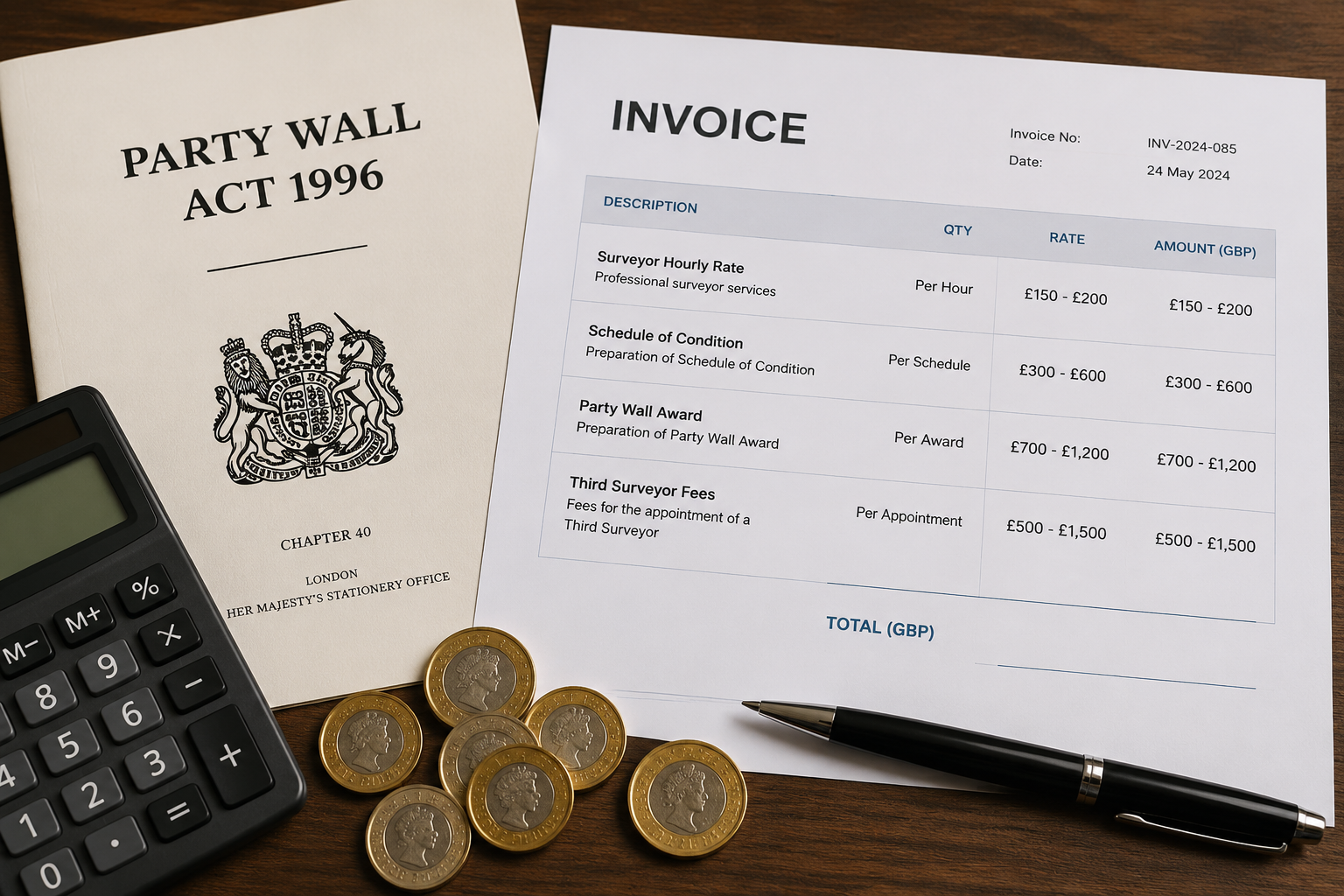
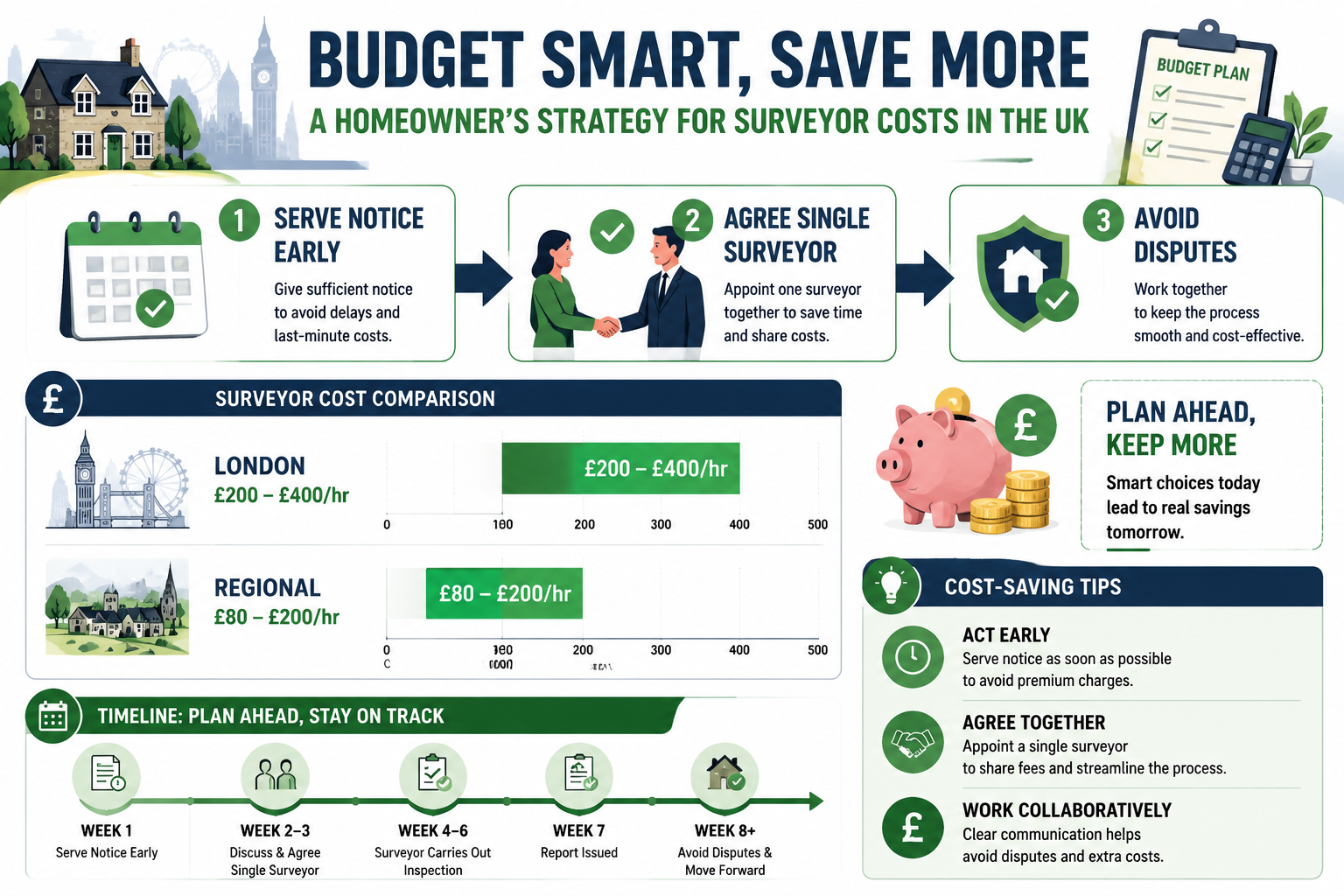
| Hourly Surveyor Rate | £80–£200/hr | £200–£400/hr |
| Third Surveyor (Dispute) | £500–£1,500 | £500–£1,500+ |
[1][5]
💡 Pull Quote: "The average straightforward party wall agreement in 2026 costs around £1,000–£1,500 — but complex projects or disputes can push that figure to £10,000 or beyond."
Hourly Rates vs. Fixed Fees: Which Is More Common?
Most party wall surveyors offer fixed fees for standard work (notice serving, Award preparation, Schedule of Condition) but revert to hourly billing for disputes, monitoring visits, and third-surveyor referrals. [1]
In 2026, national hourly rates sit between £100–£400, with the typical regional surveyor charging £150–£200 per hour — a figure that reflects both professional expertise and the ongoing shortage of qualified party wall surveyors across the UK. [5]
London-based surveyors command a 100–150% premium over regional counterparts, driven by higher overheads and concentrated demand in dense urban areas. [1]
Project-Specific Cost Benchmarks
Different project types carry very different cost profiles:
🏠 Loft Conversions
- Single agreed surveyor: £900–£1,200
- Two separate surveyors: £1,800–£2,400
For more detail on what the loft conversion process involves from a party wall perspective, see this guide on loft conversions and party wall requirements. [2]
🏗️ Rear Extensions
- Agreed surveyor: £1,200–£1,500
- Two separate surveyors: £1,500–£3,500
⛏️ Basement Conversions
- Single surveyor: £1,800–£2,700
- Multiple adjoining owners, separate surveyors: £5,000–£10,000+
Basement works are the most expensive category because of structural complexity, the need for engineer reviews (starting at approximately £500), and construction monitoring visits billed separately on top of surveyor fees. [2][5]
Who Pays What: Surveyor Fees, Disputes, and Exceptions
The Default Rule: Building Owner Pays
Section 11(1) of the Party Wall etc. Act 1996 is unambiguous: the building owner undertaking the works is responsible for all reasonable party wall costs. This includes: [1][5]
- ✅ Their own surveyor's fees
- ✅ The adjoining owner's surveyor fees (if separately appointed)
- ✅ The Party Wall Award preparation
- ✅ Schedule of Condition costs
- ✅ Third surveyor fees (in most cases)
This surprises many building owners who assume their neighbour will share costs. In reality, the neighbour can appoint their own surveyor at the building owner's expense simply by dissenting to the notice. For a deeper look at what happens if no agreement is reached, see what happens without a party wall agreement.
When the Adjoining Owner Becomes Liable
There are limited exceptions where the adjoining owner may bear additional costs: [1]
- They request unnecessary additional work — such as demanding extra structural surveys beyond what the project requires.
- Their actions unreasonably inflate costs — for example, refusing reasonable proposals without justification, forcing third-surveyor referral.
Even in these cases, the building owner typically remains the primary payer, with the adjoining owner liable only for the excess costs their behaviour caused.
The Single Surveyor vs. Two Surveyor Decision 💰
This is the single biggest cost lever available to building owners.
Option 1: Agreed (Single) Surveyor
Both parties appoint one surveyor jointly. Total costs: £900–£2,700 depending on complexity. [3] This model works well when neighbours have a cooperative relationship and the project is straightforward.
Option 2: Two Separate Surveyors
Each party appoints their own surveyor. Total costs: £1,800–£5,400 for standard projects, and potentially £10,000+ for complex basement or multi-boundary works. [2]
The two-surveyor route is not inherently adversarial — both surveyors are duty-bound to act impartially — but it does double the administrative overhead and billable hours involved in producing the Award.
⚠️ Important: Even if a neighbour appoints a separate surveyor, that surveyor has a statutory duty of impartiality. They are not acting as the neighbour's advocate. This is a common misconception that leads to unnecessary anxiety and escalation.
Third Surveyor Costs: The Dispute Premium
When two appointed surveyors reach deadlock, either party can refer the matter to a third surveyor — pre-selected at the time of appointment. Third surveyor fees range from £500–£1,500 depending on complexity. [1]
Fee allocation at this stage can be fault-based: if one party's unreasonable position caused the deadlock, they may be directed to bear the additional costs. However, the building owner generally remains responsible by default. [1]
For situations where a neighbour is carrying out works without proper notice, the guidance on neighbours working without a party wall agreement explains the options available.
Budgeting for Disputes and Minimising Costs in 2026
Building a Realistic Party Wall Budget
A practical budget for a typical residential project in 2026 should include the following line items:
| Budget Item | Low Estimate | High Estimate |
|---|---|---|
| Notice preparation & service | £50 | £200 |
| Party Wall Award (agreed surveyor) | £700 | £1,200 |
| Schedule of Condition | £300 | £600 |
| Structural engineer review | £500 | £1,000 |
| Contingency for dispute/third surveyor | £500 | £1,500 |
| Total (regional, standard project) | £2,050 | £4,500 |
London projects should apply a 1.5–2x multiplier to surveyor line items. [1][5]
The Schedule of Condition: Non-Negotiable Protection
A Schedule of Condition documents the existing state of the adjoining property before works begin. Costs range from £300–£600 regionally and £600–£1,000 in London. [1]
Skipping this step is a false economy. Without a pre-works record, any claim for damage to property during party wall works becomes a dispute about what existed before — an expensive and stressful situation for all parties.
The 3-Metre Rule and Excavation Costs
Projects involving excavation near boundary lines trigger additional notice requirements. Understanding the 3-metre rule is essential for accurately scoping which works require party wall procedures — and therefore which costs apply.
Excavation projects frequently require:
- Structural engineer sign-off (from ~£500)
- Monitoring visits during construction (hourly billed)
- More complex Awards covering foundation protection
These add-ons can push a basement project's party wall costs well above the base surveyor fee. [5]
7 Practical Strategies to Reduce Party Wall Costs 🛠️
- Serve notice early. The statutory notice period is 1–2 months. Serving early avoids rushed appointments and premium rates.
- Talk to neighbours first. A brief conversation before serving notice often leads to consent, eliminating the need for a surveyor entirely.
- Propose an agreed surveyor. Clearly explain the cost-sharing benefit to neighbours — they pay nothing, and you pay less than two separate surveyors would cost.
- Get multiple quotes. Party wall surveyor fees are not regulated. Comparing 2–3 quotes for the same scope can yield meaningful savings.
- Avoid scope creep. Keep the works described in the notice accurate and focused. Expanding scope mid-process generates additional Award amendments and fees.
- Respond promptly. Delays in responding to surveyor correspondence generate additional chaser correspondence — all billed at hourly rates.
- Use a RICS-registered surveyor. While not always the cheapest, RICS-regulated professionals carry indemnity insurance and adhere to professional standards, reducing the risk of costly errors. The cost of a party wall agreement page provides further context on what good value looks like.
Regional Variations: What Location Means for Your Budget
The UK's party wall surveyor market is far from uniform. Key regional patterns in 2026:
- London: £200–£400/hour; Awards from £1,200; Schedules from £600 [1]
- South East & Home Counties: £150–£250/hour; broadly 20–30% below London rates
- Midlands & North: £80–£150/hour; Awards from £700; most cost-effective market [5]
- Major regional cities (Manchester, Birmingham, Leeds): Rates trending upward due to construction boom and surveyor shortages
📍 Note on Surveyor Shortages: The UK is experiencing a shortage of qualified party wall surveyors in 2026, particularly outside London. This is pushing regional rates upward and extending appointment lead times. Booking a surveyor early — ideally 6–8 weeks before serving notice — is strongly advisable.
What Happens If You Skip the Process?
Proceeding without the required party wall procedures is a false economy with serious consequences. Courts have awarded injunctions halting construction mid-project, and building owners have faced substantial compensation claims. The costs of retrospective compliance — including legal fees — routinely exceed what proper process would have cost. [6]
For homeowners unsure whether their specific works require a party wall agreement, the party wall FAQ is an excellent starting point.
Conclusion: Take Control of Your Party Wall Costs in 2026
The cost breakdown of party wall agreements in 2026 — surveyor fees, who pays what, and budgeting for disputes — is more manageable than most homeowners expect, provided the process is approached proactively.
The core message is straightforward:
- Budget realistically — allocate £1,000–£2,500 for a standard project, more for basement works or London locations.
- Opt for a single agreed surveyor wherever the neighbourly relationship allows — it is the single most effective cost-reduction tool available.
- Protect yourself with a Schedule of Condition — the upfront cost is always less than a disputed damage claim.
- Serve notice early and communicate openly — most disputes arise from poor communication, not genuine legal disagreement.
- Factor in contingency — set aside £500–£1,500 for unexpected complications, engineer reviews, or third-surveyor referrals.
Actionable Next Steps:
- ✅ Confirm whether your planned works trigger the Party Wall etc. Act 1996
- ✅ Speak to your neighbour informally before serving formal notice
- ✅ Request quotes from at least two RICS-registered party wall surveyors
- ✅ Propose the agreed surveyor model in writing to your neighbour
- ✅ Commission a Schedule of Condition before any work begins
Taking these steps now prevents the far greater costs — financial and relational — that disputes create later.
References
[1] Party Wall Dispute – https://onlinearchitecturalservices.com/party-wall-dispute/
[2] Party Wall Surveyor Cost – https://hoa.org.uk/advice/guides-for-homeowners/i-am-improving/party-wall-surveyor-cost/
[3] Costs – https://westvilleassociates.com/party-wall-surveyor/costs
[4] Party Wall Surveyor Cost Analysis How Much Does A Party Wall Agreement Cost – https://www.surveymerchant.com/blog/party-wall-surveyor-cost-analysis-how-much-does-a-party-wall-agreement-cost
[5] Who Pays For Party Wall Surveyor – https://blackacresurveyors.com/2026/03/12/who-pays-for-party-wall-surveyor/
[6] Is A Party Wall Surveyor Worth The Cost – https://thepartywallguru.com/is-a-party-wall-surveyor-worth-the-cost/
[7] Party Wall Award Costs – https://acdesignsolution.com/party-wall-award-costs/
[9] Party Wall Enclosure Costs – https://akt-surveyors.com/party-wall-enclosure-costs/