Over one million property transactions fall through in England and Wales every year — costing buyers, sellers, and agents an estimated £400 million in wasted fees, surveys, and legal costs. The root cause, according to successive government reviews, is simple: buyers commit emotionally and financially to a property before they know its true condition. Government homebuying reforms in 2026 are set to change that permanently. Mandatory Upfront Property Condition Assessments 2026: How Building Surveyors Can Prepare for Government Homebuying Reforms is not just a policy headline — it is a structural shift that will reshape how chartered surveyors operate, market their services, and scale their practices.

Key Takeaways 📋
- Responsibility shifts to sellers: Under proposed reforms, sellers — not buyers — will commission property condition assessments before a home is listed for sale.
- Surveyor demand will surge at the listing stage: The traditional buyer-initiated inspection model will be replaced by a seller-led, pre-listing survey requirement, dramatically front-loading workload [1].
- RICS protocols and digital tools will be essential: Surveyors who invest in scalable systems, technology integration, and standardised reporting will be best positioned to absorb increased volume.
- Regulatory changes extend beyond surveys: New federal-level reporting requirements and appraisal modernisation programmes signal a broader global shift toward transaction transparency [2][5].
- Early movers gain competitive advantage: Practices that adapt now — before reforms are fully enacted — will capture market share in a rapidly evolving landscape.
Why Government Homebuying Reforms Are Happening in 2026
The case for reform has been building for decades. The UK homebuying process remains one of the slowest and most opaque in the developed world. A typical transaction takes 20–24 weeks from offer acceptance to completion — double the time seen in comparable markets such as Scotland, where upfront information packs have long been standard practice.
Government proposals centre on a straightforward principle: sellers should provide verified property condition information at the point of listing, not weeks or months after a buyer has invested in legal and survey fees. This mirrors the logic behind Home Reports in Scotland, which have been mandatory since 2008.
The policy rationale is compelling:
- 🏠 Reduced fall-through rates: When buyers have full information upfront, they make more informed offers and are less likely to withdraw after survey.
- ⚡ Faster completions: Removing the post-offer survey bottleneck could shave weeks off the average transaction timeline.
- 💷 Lower consumer costs: Buyers currently pay for surveys that often simply confirm what a seller already knows — or suspects — about their property.
- 📊 Greater market transparency: Standardised condition reports create a more level playing field between informed sellers and often-uninformed buyers.
These reforms align with a broader international trend. In the United States, beginning March 1, 2026, new federal rules require certain residential real estate transfers to be reported to FinCEN (Financial Crimes Enforcement Network), representing the first federal-level real estate transaction reporting requirement beyond previous state-level measures [2]. Meanwhile, Florida adopted updated FAR/BAR contracts in January 2026 with expanded disclosure language and refined inspection period terms [3] — further evidence that governments worldwide are demanding greater upfront transparency in property transactions.
Understanding the Responsibility Transfer Model
"The shift is not merely administrative — it is a fundamental rebalancing of risk and information in the property market."
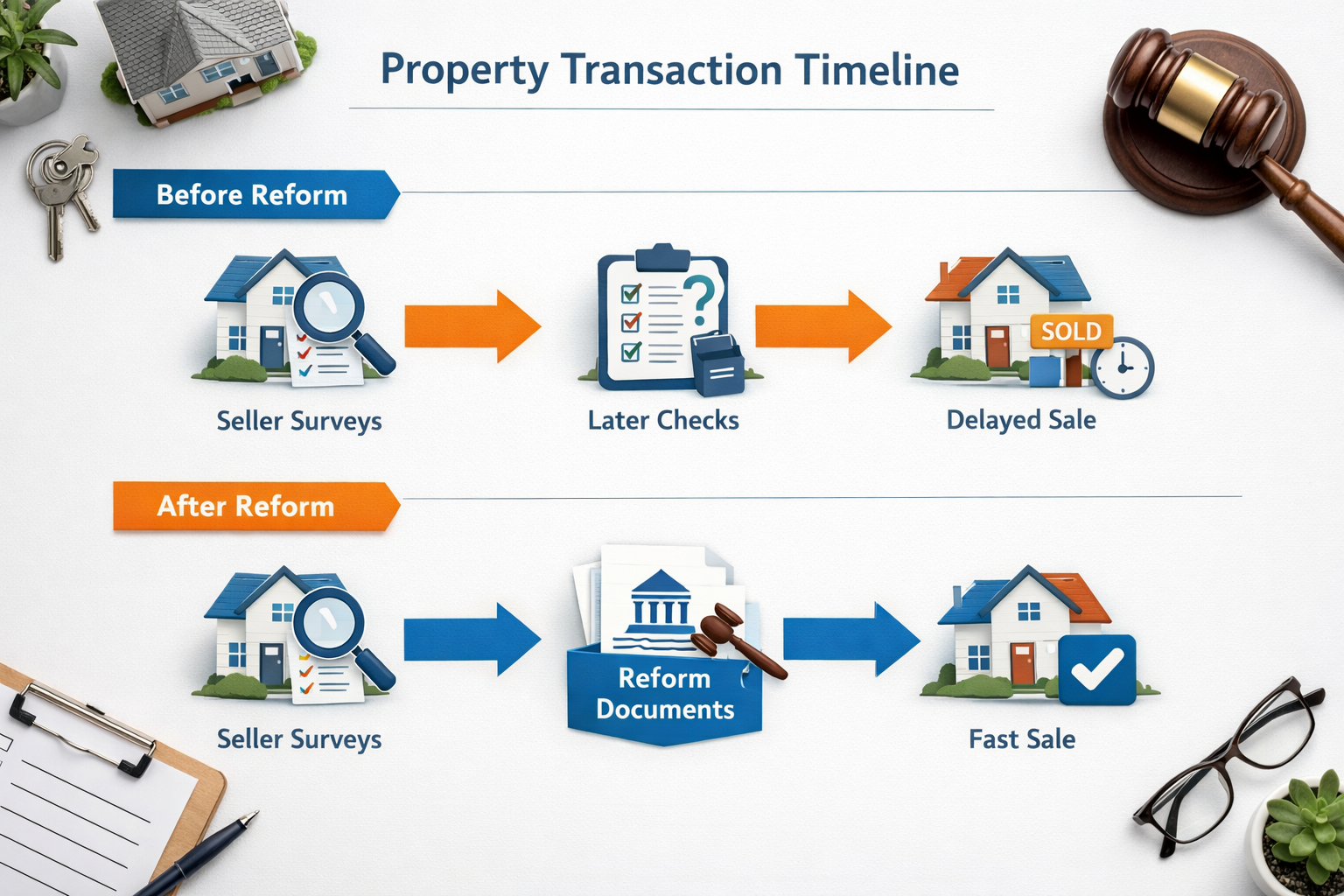
At the heart of Mandatory Upfront Property Condition Assessments 2026: How Building Surveyors Can Prepare for Government Homebuying Reforms is what analysts are calling the Responsibility Transfer Model [1]. Under this framework:
| Current Model | Post-Reform Model |
|---|---|
| Buyer commissions survey post-offer | Seller commissions survey pre-listing |
| Survey results shared only with buyer | Condition report available to all prospective buyers |
| Multiple buyers may survey the same property | Single standardised report reduces duplication |
| Survey delays can stall completion | Upfront data accelerates the legal process |
| Surveyor engaged weeks after listing | Surveyor engaged before the property goes to market |
This model does not eliminate the buyer's right to commission an independent survey — particularly for complex or high-value properties. However, it does mean that a baseline condition assessment must accompany every listing, much like an Energy Performance Certificate (EPC) is required today.
For building surveyors, this creates both opportunity and operational pressure. The volume of instructions will increase substantially, but the timeline for delivering reports will compress. Practices that rely on manual processes, paper-based reporting, or informal scheduling systems will struggle to cope.
Understanding what RICS-certified surveyors look for in a property inspection becomes even more important in this context — because the upfront report must be thorough enough to withstand scrutiny from multiple prospective buyers, not just one.
How Surveyor Workloads Will Transform Under the New Regime
The workload implications of mandatory upfront surveys are significant and multidimensional [1]. Consider the mathematics: in a market where approximately 1.2 million residential properties are listed for sale each year in England and Wales, even a phased rollout of mandatory pre-listing surveys would generate hundreds of thousands of additional survey instructions annually.
🔄 Shifting Demand Patterns
Previously, surveying practices could predict demand based on mortgage application volumes and buyer activity. Under the new model, listing volumes become the primary demand driver. This means:
- Demand will spike in spring and autumn — traditional listing seasons — rather than tracking buyer mortgage activity.
- Estate agents will become key referral partners, since sellers will need to commission surveys before instructing an agent to list.
- Surveyors will need to turn around reports faster, as sellers will not want to delay their listing by weeks waiting for a survey.
📈 Capacity Planning Imperatives
Practices should conduct an honest capacity audit now. Key questions include:
- How many Level 2 and Level 3 surveys can the practice complete per week at current staffing?
- What is the average turnaround time from instruction to report delivery?
- Are there bottlenecks in the report-writing or quality-assurance process?
- Can the practice absorb a 30–50% increase in volume without quality degradation?
For practices offering RICS Level 3 Building Surveys, the upfront model may actually increase demand for more comprehensive assessments, as sellers of older or more complex properties seek thorough documentation to pre-empt buyer queries.
Similarly, schedule of condition reporting expertise will be directly transferable to the new upfront assessment format, giving practices with this capability a head start.
Practical Steps for Building Surveyors to Prepare in 2026
Mandatory Upfront Property Condition Assessments 2026: How Building Surveyors Can Prepare for Government Homebuying Reforms demands a proactive rather than reactive approach. The following framework gives surveying practices a structured path to readiness.
Step 1: Standardise Your Reporting Templates 📄
The upfront assessment model will likely require standardised report formats — possibly mandated by RICS or government guidance. Practices should:
- Review current report templates against RICS Home Survey Standard requirements.
- Develop modular, condition-rated sections that can be completed consistently across different surveyors.
- Invest in report-writing software that supports structured data entry and automated formatting.
Standardisation also reduces the risk of omissions and supports faster quality assurance review.
Step 2: Invest in Technology Integration 💻
Digital tools are no longer optional for high-volume surveying practices. Key technologies to evaluate include:
- Mobile data capture apps: Allow surveyors to record findings on-site using tablets or smartphones, reducing transcription errors and saving time.
- Drone and thermal imaging: Useful for roof inspections and identifying moisture issues that might otherwise require scaffolding — reducing cost and time per inspection.
- Practice management software: Automates scheduling, client communication, and invoicing, freeing surveyors to focus on technical work.
- AI-assisted report drafting: Emerging tools can convert structured site notes into draft report language, significantly reducing post-inspection desk time.
The appraisal industry is already moving in this direction — a new appraisal process (UAD 3.6) becomes mandatory in November 2026, representing significant changes to how properties are appraised and reported [5]. Building surveyors should watch this space closely, as similar standardisation requirements may follow in the UK.
Step 3: Build Relationships with Estate Agents and Developers 🤝
Under the upfront model, estate agents become the primary gatekeepers of survey instructions. Sellers will ask their agent for a recommended surveyor — just as they currently ask for a recommended solicitor. Practices that invest in agent relationships now will be first in line when reforms take effect.
Practical steps include:
- Hosting CPD sessions for local estate agent teams on the new survey requirements.
- Offering service level agreements (SLAs) that guarantee turnaround times — a key selling point for agents who need to manage vendor expectations.
- Creating co-branded marketing materials that agents can share with sellers.
Step 4: Expand Geographic Coverage Strategically 🗺️
Increased demand will not be evenly distributed. High-turnover markets — particularly in London and the South East — will see the sharpest volume increases. Practices should consider whether their current geographic footprint matches projected demand.
For example, practices serving North London, East London, or South West London — areas with consistently high listing volumes — may need to recruit additional surveyors or establish associate partnerships to meet demand.
Similarly, suburban and commuter belt markets in Surrey, Essex, and Hertfordshire are likely to see strong listing activity as the market recovers.
Step 5: Review Fee Structures and Service Tiers 💰
The upfront model creates a new client relationship: the seller as primary client. This requires a fresh look at fee structures. Sellers will be cost-conscious — they are already paying estate agent fees, legal fees, and potentially mortgage redemption penalties. Survey fees must be competitive but must also reflect the liability surveyors carry when their report is relied upon by multiple prospective buyers.
Consider offering tiered service packages:
| Tier | Product | Suitable For |
|---|---|---|
| Essential | Condition Report (Level 1) | Modern properties in good condition |
| Standard | HomeBuyer Report (Level 2) | Conventional properties, no major concerns |
| Comprehensive | Building Survey (Level 3) | Older, larger, or complex properties |
Understanding factors of valuation and how condition interacts with market value will also help surveyors provide sellers with a more complete picture of their property's marketability.
RICS Protocols and Compliance Readiness
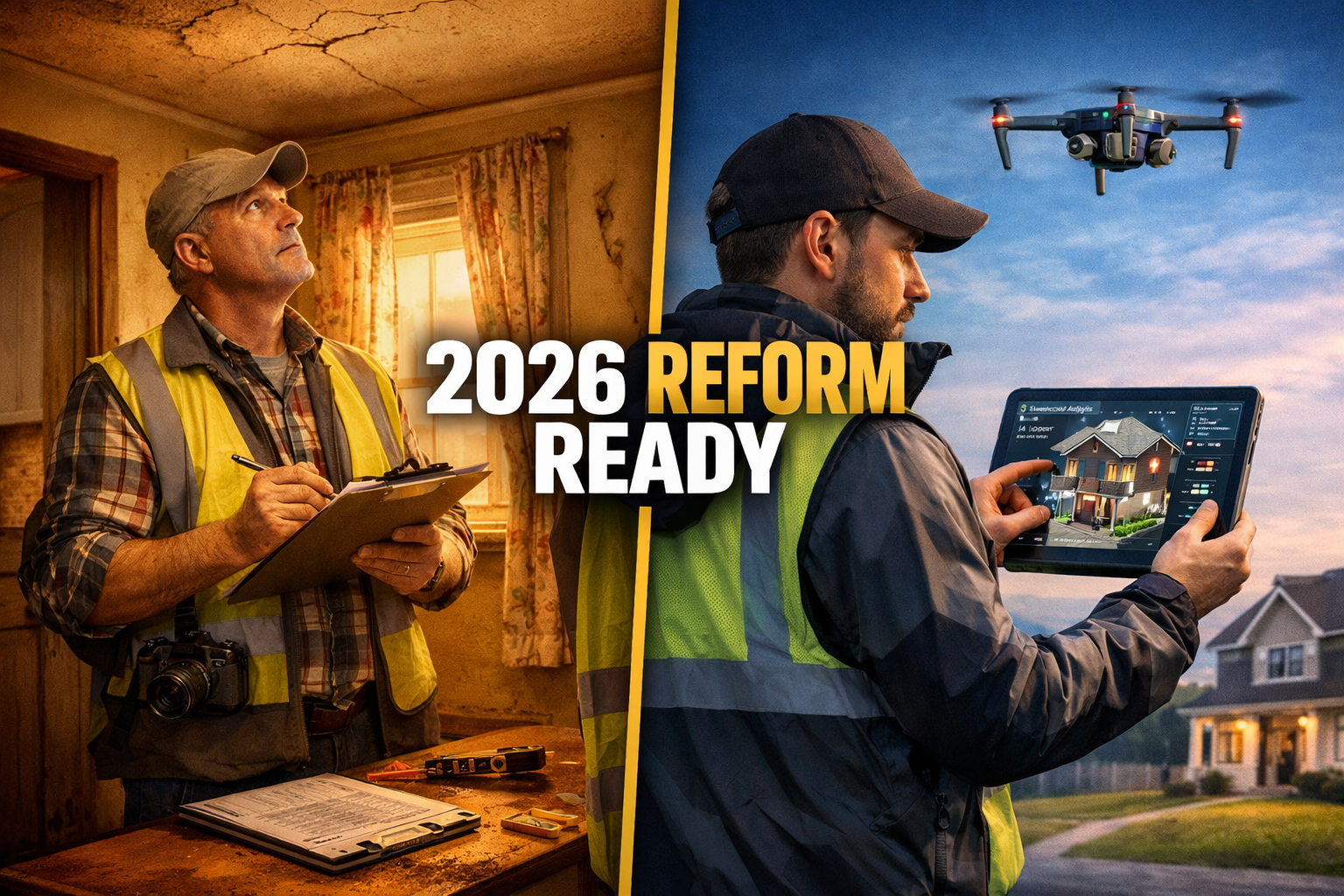
RICS has been actively developing guidance to support the profession through this transition. The RICS Home Survey Standard, introduced in 2021, already provides a framework for consistent, condition-rated reporting. The upfront assessment model is likely to build on this foundation.
Key compliance considerations for 2026 include:
- Professional indemnity insurance: When a survey report is shared with multiple buyers, the liability exposure increases. Surveyors should review their PI cover limits and policy terms with their insurer.
- Data protection: Upfront reports will contain detailed information about a property and potentially its occupants. GDPR compliance in report storage and sharing is essential.
- Conflicts of interest: Surveyors commissioned by sellers must maintain independence and objectivity. RICS ethical standards prohibit any arrangement that compromises impartiality.
- Continuing professional development: RICS members should prioritise CPD focused on the new regulatory environment, digital tools, and upfront assessment methodologies.
Practices offering property certification services will find their expertise directly applicable to the upfront assessment framework, particularly where energy efficiency, fire safety, and structural compliance are concerned.
It is also worth noting that federal regulatory initiatives in the US are streamlining permitting processes and reducing barriers to housing construction [4] — a trend that may influence UK policy thinking as governments seek to increase housing supply alongside improving transaction quality.
The Competitive Landscape: Who Will Win?
The practices best positioned to thrive under mandatory upfront property condition assessments are those that combine technical excellence with operational scalability. The following characteristics will define market leaders:
✅ RICS accreditation and demonstrable expertise — buyers and sellers alike will scrutinise the credentials behind an upfront report.
✅ Fast turnaround times — sellers need reports quickly; practices that can deliver within 5–7 working days will command premium positioning.
✅ Clear, accessible reporting — reports that are readable by non-experts will reduce buyer queries and support faster transactions.
✅ Strong digital presence — sellers searching for a surveyor before listing will start online; practices with strong SEO and clear service pages will capture this traffic.
✅ Specialist capabilities — practices offering damp surveys, roof surveys, and structural engineering assessments alongside standard condition reports will be able to upsell specialist investigations when the baseline report flags concerns.
Smaller practices that cannot scale independently should consider consortium arrangements — pooling resources with other RICS firms to share scheduling, report-writing, and quality-assurance functions while maintaining independent branding.
Conclusion: Act Now, Not Later
The direction of travel is clear. Mandatory Upfront Property Condition Assessments 2026: How Building Surveyors Can Prepare for Government Homebuying Reforms is not a distant hypothetical — it is an unfolding reality that will reshape the residential survey market within this decade. The practices that thrive will be those that treat this moment as a strategic opportunity rather than a compliance burden.
Actionable Next Steps for Surveying Practices 🎯
- Audit current capacity — calculate maximum weekly survey output and identify bottlenecks in the instruction-to-report pipeline.
- Standardise report templates — align with RICS Home Survey Standard and prepare modular, condition-rated formats.
- Invest in digital tools — prioritise mobile data capture, practice management software, and report-writing technology.
- Build estate agent partnerships — introduce the practice to local agents now, before reforms make these relationships competitively critical.
- Review PI insurance — ensure cover reflects the increased liability of seller-commissioned, publicly shared survey reports.
- Expand geographic reach — identify high-turnover markets within reach and develop capacity to serve them.
- Monitor RICS and government guidance — subscribe to RICS policy updates and engage with consultation processes to shape the final regulatory framework.
The homebuying process is changing. Building surveyors who prepare today will not just survive the transition — they will lead it.
References
[1] Homebuying Process Reforms 2026 How Mandatory Upfront Surveys Will Transform Building Surveyor Workloads – https://nottinghillsurveyors.com/blog/homebuying-process-reforms-2026-how-mandatory-upfront-surveys-will-transform-building-surveyor-workloads
[2] New Federal Reporting Requirements Residential Real Estate Effective March 1 2026 – https://remboltlawfirm.com/new-federal-reporting-requirements-residential-real-estate-effective-march-1-2026
[3] New Year Mortgage Policy Changes – https://www.midflorida.com/resources/insights-and-blogs/insights/mortgage/new-year-mortgage-policy-changes
[4] Removing Regulatory Barriers To Affordable Home Construction – https://www.whitehouse.gov/presidential-actions/2026/03/removing-regulatory-barriers-to-affordable-home-construction/
[5] Watch – https://www.youtube.com/watch?v=Ccm9Nkt-pF4