


Landlords face potential fines of up to £40,000 for serious compliance breaches under the new Private Rented Sector (PRS) Database system launching in late 2026.[1] This unprecedented enforcement regime has transformed property valuations from routine assessments into critical legal evidence, with Expert Witness Valuations for PRS Database Compliance Disputes: Defending Assessments Post-Renters' Rights Act Registration emerging as an essential safeguard for landlords navigating tribunal challenges.
The Renters' Rights Act, effective 1 May 2026, has abolished Section 21 'no-fault' evictions and introduced mandatory database registration for all private landlords.[1][4] When landlords pursue Section 8 possession proceedings—now the only route to regain property—tenants frequently challenge the property's registered condition, safety compliance, and declared market value. These disputes require independent expert witnesses who can validate assessments using RICS (Royal Institution of Chartered Surveyors) methodology and defend them under cross-examination.
Key Takeaways
- PRS Database registration becomes mandatory in late 2026, requiring landlords to register property details, safety certifications, and compliance records with potential fines reaching £40,000 for fraudulent information
- Section 8 eviction proceedings now trigger valuation disputes, as tenants challenge registered property conditions and market values to contest possession claims
- Expert witness valuations provide RICS-compliant evidence that can defend landlord assessments in tribunal hearings and Ombudsman investigations
- Property valuations have undergone "the most significant recalibration" due to compliance costs and regulatory changes affecting rental property market values[5]
- Documentation standards have intensified, with landlords requiring impeccable record-keeping to survive scrutiny from the new PRS Ombudsman[3]
Understanding the PRS Database Registration Framework
What the PRS Database Requires
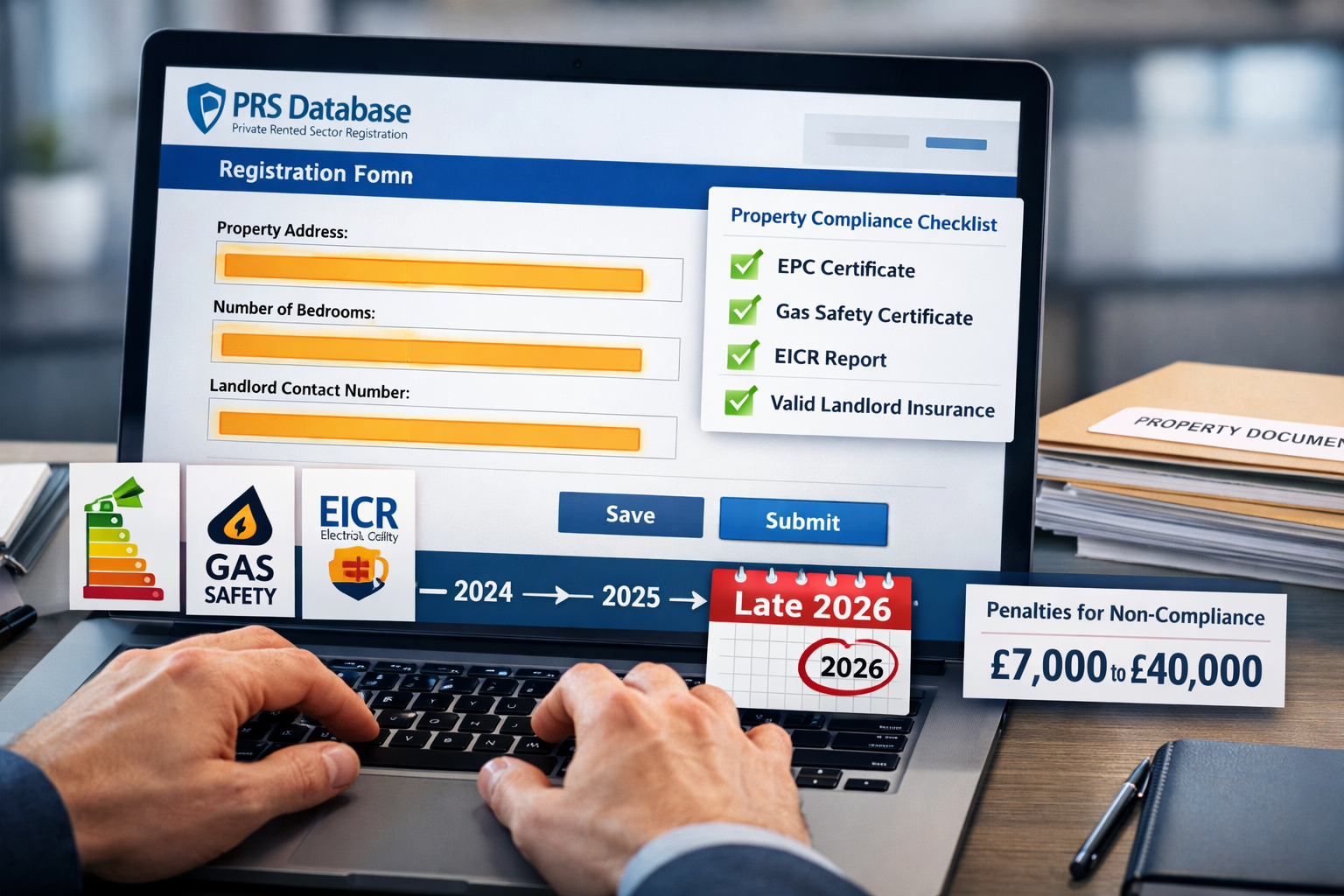
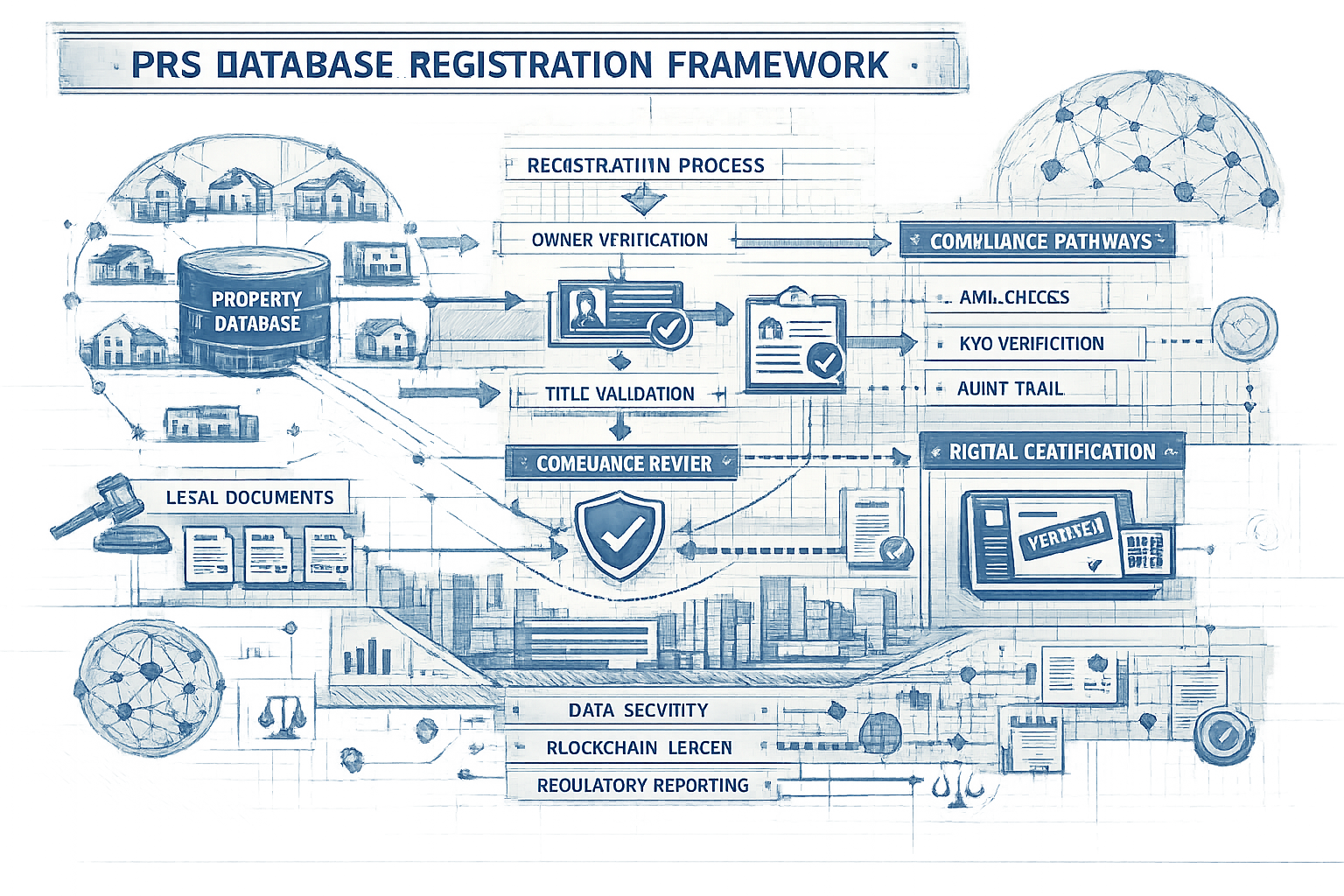
The PRS Database represents the most comprehensive landlord registration system in UK history. Beginning in late 2026, all private landlords must register:[1][4]
✅ Personal details (landlord identity and contact information)
✅ Property specifications (address, type, size, facilities)
✅ Safety certifications (Gas Safety, EICR, EPC ratings)
✅ Compliance records (licensing, HMO status, planning permissions)
✅ Tenancy information (current occupancy, rent levels, deposit protection)
The database creates a permanent, searchable record that enforcement authorities, tenants, and tribunal panels can access. This transparency fundamentally changes how property valuations are scrutinized.
Penalty Structure for Non-Compliance
The financial consequences for registration failures follow a tiered structure:[1]
| Violation Type | Fine Amount | Examples |
|---|---|---|
| Procedural breaches | £7,000 | Late registration, incomplete information |
| Serious offences | £40,000 | Fraudulent data, repeated violations |
| Criminal prosecution | Unlimited | Systematic fraud, endangering tenants |
These penalties make accurate property assessments critical. Overstating property condition or understating compliance costs can result in database discrepancies that trigger investigations.
The Ombudsman's Expanded Powers
All private landlords must now join a formal redress scheme, extending mandatory Ombudsman membership beyond letting agents.[3] The PRS Ombudsman can:
- Investigate tenant complaints about registered property conditions
- Order corrective action and compliance improvements
- Award compensation for misrepresented property standards
- Enforce legally binding decisions with tribunal backing
When tenants dispute property valuations during Section 8 proceedings, Ombudsman investigations often run parallel to tribunal hearings, requiring consistent evidence across both forums.
Expert Witness Valuations for PRS Database Compliance Disputes: The New Evidentiary Standard
Why Section 8 Evictions Trigger Valuation Challenges
With Section 21 abolished on 1 May 2026, landlords can only regain possession through Section 8 grounds requiring proof of fault:[1]
📌 Rent arrears (mandatory and discretionary grounds)
📌 Anti-social behaviour (nuisance, illegal activity)
📌 Property sale or owner occupation (landlord's genuine need)
📌 Breach of tenancy terms (unauthorized subletting, damage)
Tenants increasingly defend against Section 8 notices by challenging the property's registered database condition. Common arguments include:
- "The property wasn't maintained to the standard declared in the PRS Database"
- "Safety certificates were invalid or expired during the tenancy"
- "The market rent was inflated based on compliance features the property lacks"
- "The landlord's valuation contradicts the actual property condition"
These defenses require landlords to provide expert evidence that their database registration accurately reflects property condition and value.
How Expert Witnesses Defend Property Assessments
Expert witness valuations provide independent, RICS-compliant assessments that can withstand tribunal scrutiny. The process involves:
1. Comprehensive Property Inspection
Chartered surveyors conduct detailed examinations documenting:
- Structural condition and building fabric
- Mechanical and electrical systems
- Safety compliance (gas, electrical, fire safety)
- Decorative condition and maintenance standards
- Compliance with licensing and regulatory requirements
2. RICS Red Book Valuation Methodology
Expert witnesses apply formal RICS valuation standards to determine:
- Market value reflecting actual property condition
- Rental value adjustments for compliance factors
- Comparable evidence from similar properties
- Impact of regulatory changes on property values
3. Evidence Compilation and Documentation
The expert witness prepares a formal report including:
- Photographic evidence of property condition
- Analysis of safety certificates and compliance records
- Comparison with PRS Database registered information
- Professional opinion on valuation accuracy
- Responses to tenant's specific challenges
4. Tribunal Testimony and Cross-Examination
Expert witnesses attend hearings to:
- Present findings under oath
- Explain technical valuation methodology
- Respond to opposing expert evidence
- Defend assessments under cross-examination
This rigorous process provides the evidentiary foundation tribunals require when property valuations are disputed.
Defending Assessments Post-Renters' Rights Act Registration: Practical Strategies
Proactive Valuation Documentation
The best defense against valuation disputes begins before registration. Landlords should commission professional property valuations that:
Document baseline condition – Obtain detailed condition reports before PRS Database registration, creating contemporaneous evidence of property standards
Quantify compliance costs – Calculate and record expenses for safety upgrades, licensing requirements, and regulatory improvements that affect property value
Establish market positioning – Compare rental values with similar compliant properties to justify registered rent levels
Create audit trails – Maintain comprehensive records linking safety certificates, compliance work, and valuation assessments
This documentation becomes invaluable when tenants challenge registered information during Section 8 proceedings.
Addressing Valuation Recalibration Under the Act
Building surveyors report that the Renters' Rights Act has triggered "the most significant recalibration of UK rental property valuations" in recent history.[5] Key valuation adjustments include:
Compliance cost capitalization – Properties requiring significant safety or licensing upgrades experience value reductions reflecting capital expenditure requirements
Rental yield compression – Increased regulatory burdens and eviction restrictions reduce investor returns, lowering capital values by 8-15% in some markets[5]
Risk premium adjustments – Properties with marginal compliance status or complex licensing requirements face valuation discounts reflecting enforcement risk
Decent Homes Standard impact – Anticipated minimum property standards (expected 2027-2028) create deferred maintenance liabilities affecting current valuations
Expert witnesses must explain these market-wide adjustments to tribunals, distinguishing between general regulatory impact and property-specific condition issues.
Responding to Tenant Valuation Challenges
When tenants dispute registered property assessments, landlords should:
1. Immediately Instruct Expert Witness
Engage chartered surveyors with expert witness experience early in the dispute process, allowing adequate time for inspection and report preparation.
2. Provide Complete Documentation
Supply the expert with:
- Original PRS Database registration details
- All safety certificates and compliance records
- Maintenance and repair documentation
- Photographic evidence from registration date
- Tenant correspondence and complaint history
3. Request Tenant's Evidence
Obtain the tenant's specific valuation challenges, including:
- Alleged property defects or non-compliance
- Alternative valuation evidence or expert reports
- Photographs or documentation supporting their claims
- Timeline of reported maintenance issues
4. Conduct Joint Inspection (if possible)
When both parties appoint experts, request a joint inspection to:
- Identify agreed facts about property condition
- Narrow disputed issues for tribunal determination
- Potentially reach settlement before hearing
- Reduce hearing time and costs
5. Prepare Comprehensive Expert Report
Ensure the expert witness report addresses:
- Each specific tenant allegation
- Reconciliation with PRS Database registration
- Market evidence supporting valuation
- Professional opinion on compliance status
- Alternative scenarios if defects are proven
This systematic approach maximizes the probative value of expert evidence.
Common Valuation Dispute Scenarios
Scenario 1: Safety Certificate Validity
Tenant claim: "The Gas Safety Certificate was expired for three months, making the registered property condition false."
Expert response: Inspection confirms current compliance; valuation analysis shows negligible impact on market value; expert explains regulatory breach doesn't automatically invalidate property valuation.
Scenario 2: Maintenance Standard Disputes
Tenant claim: "The property has damp issues not disclosed in the PRS Database registration."
Expert response: Detailed moisture survey identifies localized condensation from tenant lifestyle factors; expert distinguishes between structural defects affecting value and maintenance issues within normal parameters.
Scenario 3: Comparable Evidence Challenges
Tenant claim: "Similar properties rent for £200 less monthly, proving the registered rent is inflated."
Expert response: Comparable analysis demonstrates tenant's examples lack equivalent compliance features, location advantages, or condition standards; expert provides adjusted comparables supporting registered rent level.
Scenario 4: Licensing Compliance Questions
Tenant claim: "The property required selective licensing that wasn't obtained, invalidating the valuation."
Expert response: Expert confirms licensing status, quantifies any value impact from compliance costs, and explains market value reflects actual condition regardless of licensing procedural issues.
These scenarios illustrate how expert witnesses bridge technical property assessment and legal evidentiary requirements.
The Role of RICS Standards in Compliance Dispute Valuations
Red Book Valuation Requirements
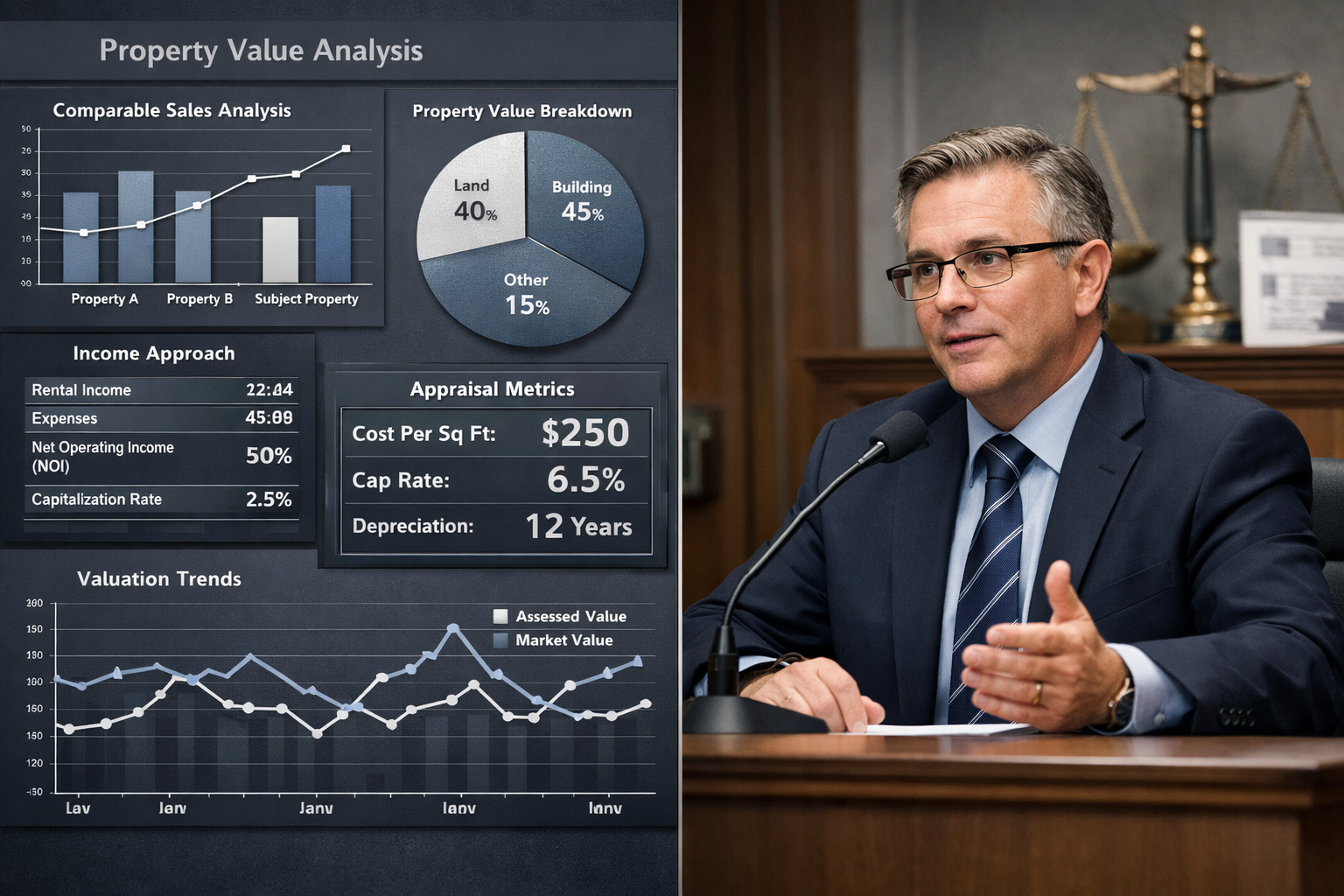
The RICS Valuation – Global Standards (Red Book) provides the professional framework for expert witness valuations in PRS disputes. Key requirements include:
Terms of Engagement – Clear scope defining valuation purpose, basis, and assumptions
Independence and Objectivity – Expert witnesses must maintain impartiality regardless of who instructs them
Competence and Due Care – Valuers must possess appropriate qualifications and local market knowledge
Reporting Standards – Comprehensive written reports meeting prescribed content requirements
Basis of Value – Clear statement whether assessing market value, market rent, or alternative basis
Tribunals expect expert witnesses to demonstrate Red Book compliance, with departures from standards requiring explicit justification.
Inspection and Investigation Standards
RICS practice statements require expert witnesses to:
- Conduct physical property inspections (desktop valuations insufficient for dispute resolution)
- Verify information through independent investigation rather than relying solely on client representations
- Identify and disclose limitations or restrictions on inspection
- Document inspection methodology and extent
- Photograph key property features and defects
These standards ensure expert evidence meets the threshold of reliability tribunals require.
Market Evidence and Comparables
Expert witnesses must demonstrate valuation conclusions through:
Transaction evidence – Recent sales or lettings of comparable properties
Market analysis – Rental yield trends, investor demand, and market conditions
Adjustment methodology – Transparent explanation of how comparables are adjusted for differences
Location factors – Analysis of micro-location advantages or disadvantages
Time adjustments – Consideration of market movements between comparable dates and valuation date
Tribunals scrutinize comparable evidence closely, particularly when tenant and landlord experts reach significantly different conclusions.
Compliance-Specific Valuation Factors
Post-Renters' Rights Act valuations must explicitly address:
📊 Regulatory compliance costs – Capital expenditure required for licensing, safety standards, and database requirements
📊 Enforcement risk premiums – Value impact of marginal compliance or enforcement history
📊 Ombudsman complaint history – Reputational factors affecting marketability
📊 Section 8 eviction restrictions – Reduced investor returns from limited possession grounds
📊 Anticipated regulatory changes – Decent Homes Standard and future compliance requirements
Expert witnesses who fail to address these factors risk having their evidence discounted as incomplete or outdated.
Building an Effective Expert Witness Defense Strategy
Selecting the Right Expert Witness
Not all property valuers possess the skills required for tribunal work. Landlords should seek experts with:
✔️ RICS chartered surveyor status (MRICS or FRICS designation)
✔️ Specific expert witness training and experience
✔️ Local market knowledge in the property's location
✔️ Regulatory compliance expertise understanding PRS requirements
✔️ Tribunal experience with cross-examination skills
✔️ Professional indemnity insurance covering expert witness work
Chartered surveyors specializing in expert witness services typically maintain higher professional standards than general valuers.
Timing and Cost Considerations
Expert witness valuations for PRS compliance disputes typically involve:
Timeline: 3-6 weeks from instruction to final report
Inspection: Half-day to full-day site visit depending on property complexity
Report preparation: 10-20 hours for comprehensive tribunal-quality documentation
Hearing attendance: Full-day tribunal hearing plus preparation time
Cost structure:
- Initial inspection and report: £2,500-£5,000
- Tribunal attendance: £1,500-£3,000 per day
- Additional work (responses to opposing expert, supplementary reports): £150-£300 per hour
While significant, these costs are modest compared to potential £40,000 fines or lost property value from adverse tribunal decisions.
Coordinating with Legal Representation
Expert witnesses work most effectively when integrated into the broader legal strategy:
Early consultation – Instruct experts before formal tribunal proceedings to identify evidentiary strengths and weaknesses
Clear instructions – Provide solicitors' specific questions and issues requiring expert opinion
Evidence coordination – Ensure expert report addresses legal elements of the claim or defense
Pre-hearing conferences – Arrange meetings between legal team and expert to prepare testimony strategy
Cross-examination preparation – Review potential challenges and prepare responses
This coordination ensures expert evidence directly supports legal arguments rather than existing in isolation.
Alternative Dispute Resolution
Expert witness valuations can facilitate settlement before tribunal hearings:
Independent expert determination – Both parties agree to be bound by a single expert's assessment
Mediation support – Expert provides technical information helping parties understand realistic outcomes
Early neutral evaluation – Expert offers preliminary opinion encouraging settlement discussions
Joint expert approach – Parties share a single expert, reducing costs and narrowing disputes
These alternatives often resolve disputes faster and cheaper than full tribunal proceedings.
Future Developments and Emerging Trends
Anticipated Decent Homes Standard
The government plans to extend Decent Homes Standards to the private rented sector, likely requiring:[5]
- Minimum Energy Performance Certificate (EPC) ratings (potentially EPC C by 2028)
- Prescribed standards for heating, insulation, and ventilation
- Bathroom and kitchen facility requirements
- Structural repair and maintenance obligations
These standards will create additional valuation considerations, with non-compliant properties facing significant value discounts.
Technology Integration in Compliance Monitoring
Emerging technologies are transforming PRS compliance verification:
Digital inspection platforms – Smartphone apps documenting property condition with timestamped photographs and GPS verification
IoT monitoring devices – Smart sensors tracking temperature, humidity, and safety system functionality
Blockchain certification – Immutable records of compliance work and safety certifications
AI-assisted valuations – Machine learning models incorporating compliance factors into automated valuations
Expert witnesses will increasingly need to understand and validate these technological evidence sources.
Standardization of Compliance Valuation Methodology
RICS is developing specific guidance for post-Renters' Rights Act valuations, likely including:
- Standardized compliance cost schedules
- Regulatory risk adjustment frameworks
- Comparable evidence databases for compliant properties
- Best practice guidance for PRS dispute valuations
This standardization will increase consistency across expert witness evidence but also raise the bar for professional competence.
Increased Scrutiny of Expert Evidence
As compliance disputes become routine, tribunals are developing greater sophistication in evaluating expert evidence:
- Closer examination of comparable evidence quality
- Challenges to valuation assumptions and methodology
- Requirement for explicit compliance factor quantification
- Stricter adherence to RICS professional standards
Expert witnesses must maintain rigorous professional standards to retain credibility in this evolving environment.
Conclusion
Expert Witness Valuations for PRS Database Compliance Disputes: Defending Assessments Post-Renters' Rights Act Registration has transformed from a niche service into an essential component of landlord risk management in 2026. With Section 21 abolished and mandatory database registration creating permanent compliance records, property valuations now serve as critical legal evidence subject to intense scrutiny.
The combination of potential £40,000 fines, expanded Ombudsman powers, and tenant challenges to Section 8 possession proceedings makes professional expert witness support indispensable. Landlords who commission RICS-compliant valuations, maintain comprehensive documentation, and engage qualified expert witnesses position themselves to successfully defend assessments and navigate compliance disputes.
Actionable Next Steps
- Commission baseline valuations before PRS Database registration to establish contemporaneous evidence of property condition and market value
- Audit existing compliance documentation to identify gaps that could undermine registered property assessments
- Establish relationships with qualified expert witnesses before disputes arise, ensuring rapid response capability
- Implement systematic record-keeping linking safety certificates, maintenance work, and compliance expenditure to property valuations
- Review insurance coverage to ensure policies cover expert witness costs and tribunal defense expenses
- Stay informed on regulatory developments including Decent Homes Standards and RICS guidance updates
The regulatory landscape for private rented sector property has fundamentally changed. Landlords who recognize expert witness valuations as strategic investments rather than reactive expenses will navigate this new environment most successfully, protecting both their property values and their ability to manage tenancies effectively.
For landlords facing PRS Database compliance disputes or Section 8 possession challenges, early engagement with qualified expert witnesses and comprehensive property valuation services provides the foundation for effective defense strategies in 2026's transformed regulatory environment.
References
[1] The 40000 Risk Why Compliance Is The New Competitive Edge For Professional Landlords In The 2026 Uk Rental Market – https://www.elliotleigh.com/post/the-40000-risk-why-compliance-is-the-new-competitive-edge-for-professional-landlords-in-the-2026-uk-rental-market/
[2] Party Wall Implications Of Renters Rights Act 2026 Survey Protocols For Prs Database And Section 8 Notice Compliance – https://nottinghillsurveyors.com/blog/party-wall-implications-of-renters-rights-act-2026-survey-protocols-for-prs-database-and-section-8-notice-compliance
[3] Uk Landlord Compliance In 2026 Navigating The Prs Ombudsman And New Database – https://www.martinco.com/guides/landlord/uk-landlord-compliance-in-2026-navigating-the-prs-ombudsman-and-new-database/
[4] Renters Rights – https://www.nrla.org.uk/resources/renters-rights
[5] Valuation Adjustments For Renters Rights Act 2026 How Building Surveyors Must Assess Landlord Tenant Compliance – https://nottinghillsurveyors.com/blog/valuation-adjustments-for-renters-rights-act-2026-how-building-surveyors-must-assess-landlord-tenant-compliance









