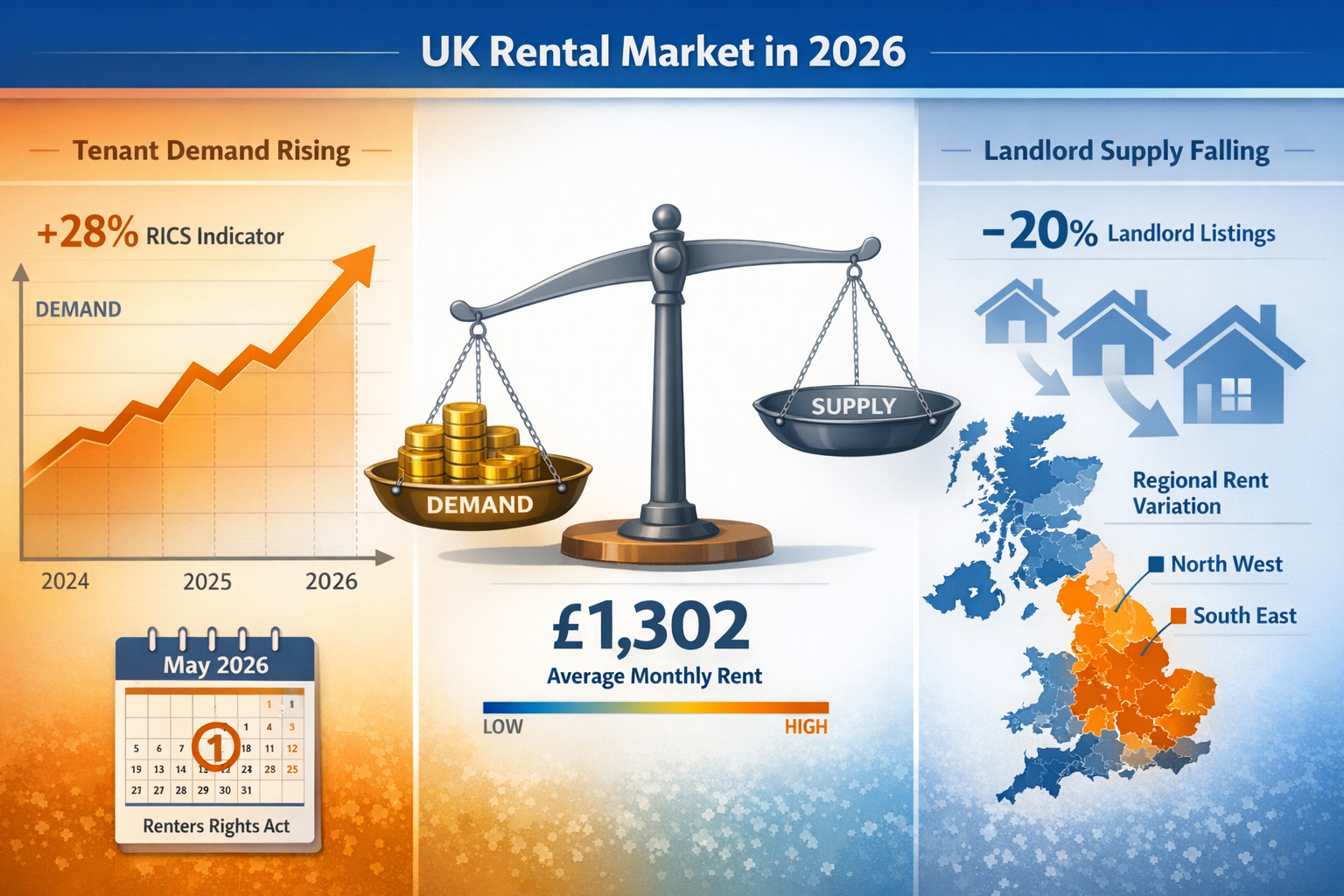
The UK lettings market in 2026 stands at a critical crossroads. While average monthly rents fell 1.1% in January to £1,302, tenant demand is rebounding sharply after months of stagnation[1]. This creates a paradox: declining headline rents alongside rising tenant competition and persistent supply shortages. For property professionals, institutional investors, and regulated landlords, this volatile environment has intensified the need for robust Expert Witness Valuations in Lettings Market Disputes: Defending Assessments as Tenant Demand Surges and Supply Constraints Tighten. With the Renters' Rights Act fundamentally reshaping tenancy agreements from May 2026, valuation disputes are becoming more complex and consequential than ever before.
Key Takeaways
- 🏘️ Market volatility demands precision: UK rents remain 2.4% higher year-on-year despite three consecutive monthly declines, creating valuation complexity
- ⚖️ Regulatory transformation: The Renters' Rights Act abolishing Section 21 evictions from May 2026 directly impacts property valuation methodologies
- 📊 Tenant demand recovery: RICS data shows a net +28% of respondents expecting rental price rises, signaling market tension between supply and demand
- 🔍 Evidence-based frameworks: Expert witnesses must defend assessments using comprehensive comparable analysis, market data, and regulatory compliance
- 💼 Institutional stakes: Buy-to-let valuation activity surges as investors navigate recovering markets with tighter supply constraints[4]
Understanding the Current Lettings Market Landscape in 2026
The Demand-Supply Imbalance
The UK rental market is experiencing a fundamental mismatch between tenant demand and available properties. Recent RICS data indicates a modest but significant pick-up in tenant demand during January 2026, ending two consecutive quarters of flat or negative readings[1]. This recovery signals renewed confidence among renters, yet it arrives at precisely the moment when landlord supply remains severely constrained.
Regional variations paint a complex picture. Most UK regions saw small monthly rent decreases in early 2026, with only the North West and South East avoiding declines[1]. This geographic disparity creates challenges for expert witness valuations that must account for local market conditions rather than relying on national averages.
The Renters' Rights Act Impact
Beginning May 1, 2026, the Renters' Rights Act introduces transformative changes to England's lettings market. The legislation abolishes Section 21 "no-fault" evictions and introduces rolling periodic tenancies, fundamentally altering the risk-return profile for landlords[1]. These changes directly impact property valuation assessments in several ways:
- Reduced landlord flexibility affects rental yield calculations
- Rolling periodic tenancies change cash flow predictability models
- Ban on rental bidding wars constrains market-clearing mechanisms
- Evidence-based rent increase requirements demand more rigorous valuation support
For institutional investors and professional landlords, these regulatory shifts necessitate more sophisticated valuation approaches that account for changing legal frameworks.
Expert Witness Valuations in Lettings Market Disputes: The Essential Framework
What Constitutes a Defensible Valuation?
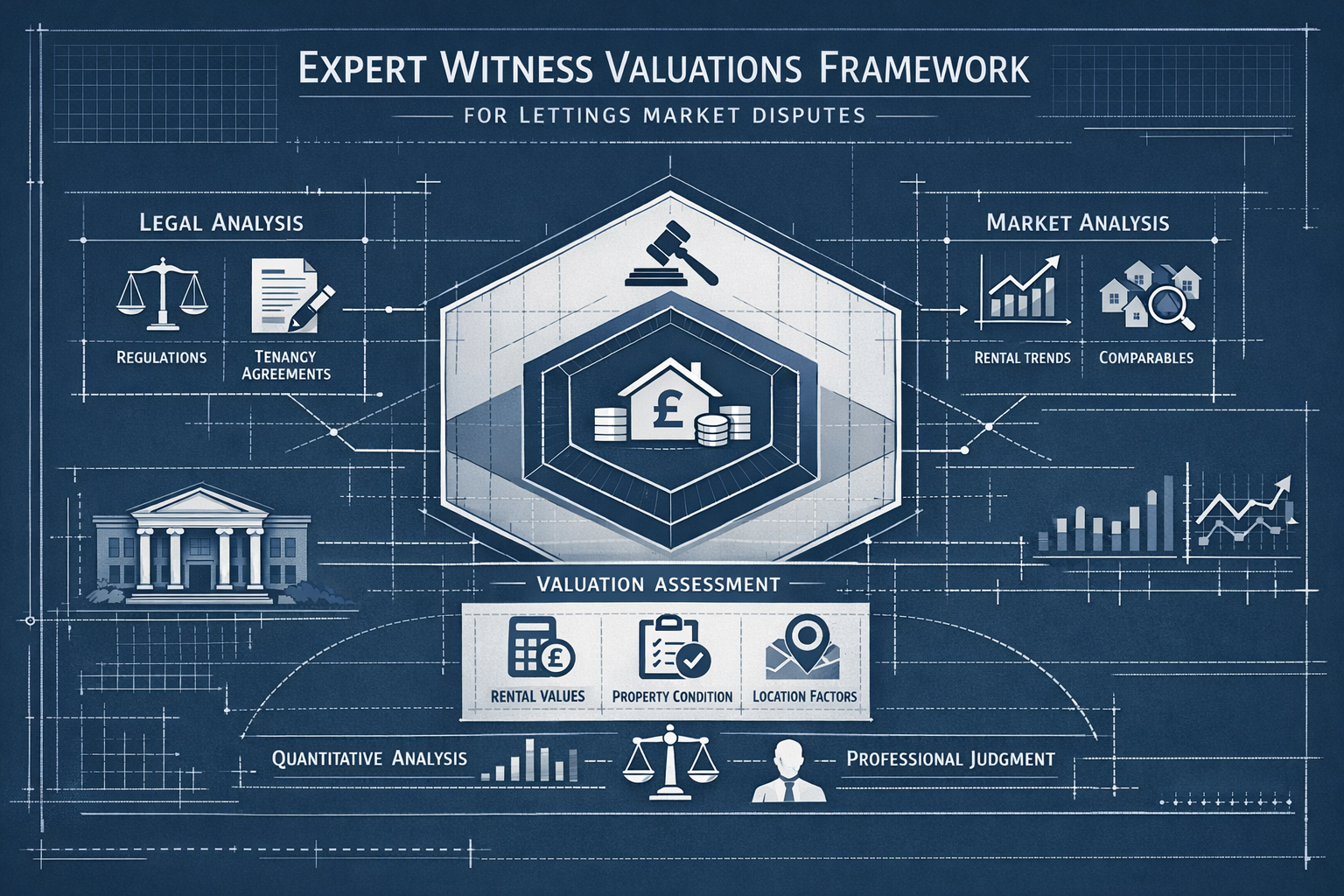
RICS Registered Valuers provide expert witness valuation advice based on comprehensive analysis of relevant facts, circumstances, and market conditions at the date of the report[3]. In the context of lettings disputes, a defensible valuation must demonstrate:
- Comparable evidence analysis – Recent lettings of similar properties in comparable locations
- Market condition assessment – Current supply-demand dynamics and trend analysis
- Regulatory compliance – Adherence to RICS Red Book standards and legal requirements
- Transparent methodology – Clear documentation of assumptions, adjustments, and reasoning
Key Components of Lettings Dispute Valuations
When defending assessments in Expert Witness Valuations in Lettings Market Disputes: Defending Assessments as Tenant Demand Surges and Supply Constraints Tighten, professionals must address multiple valuation layers:
| Valuation Component | Key Considerations | 2026 Market Impact |
|---|---|---|
| Rental Value | Comparable evidence, property condition, location | Tenant demand +28% expectation for rises[1] |
| Yield Analysis | Net income, void periods, management costs | Section 21 abolition affects risk premium |
| Capital Value | Investment demand, financing costs, exit strategy | Buy-to-let valuation surge ongoing[4] |
| Market Rent | Current lettings, tenant demand, supply constraints | Regional variation significant (NW/SE resilient)[1] |
The Role of Comparable Evidence
Comparable evidence forms the bedrock of any defensible rental valuation. However, in 2026's volatile market, selecting appropriate comparables requires careful judgment:
- ✅ Recent transactions (ideally within 3-6 months) reflecting current market conditions
- ✅ Similar property characteristics including size, condition, and amenities
- ✅ Comparable locations with similar tenant demographics and transport links
- ✅ Adjustment transparency for differences in property features or market timing
The challenge intensifies when defending valuations during periods of rapid change. With rents declining monthly yet year-on-year figures remaining positive[1], expert witnesses must clearly articulate which timeframe and trend analysis supports their assessment.
Defending Assessments in Lettings Market Disputes: Practical Strategies

Building a Robust Evidence Base
When institutional investors or regulated landlords face rent review disputes or valuation challenges, the strength of the evidence base determines outcomes. Expert witnesses should compile:
Primary Evidence Sources:
- Actual lettings data from property portals and letting agents
- RICS residential market surveys and regional reports
- Land Registry rental price indices
- Local authority housing market assessments
- Institutional investor transaction data
Supporting Documentation:
- Property inspection reports detailing condition and features
- Photographs and floor plans demonstrating property characteristics
- Tenancy agreements showing actual achieved rents
- Marketing evidence including time-to-let and tenant demand indicators
- RICS valuations for comparable properties
Addressing Supply Constraints in Valuations
The persistent supply shortage in the UK lettings market creates upward pressure on rents even as monthly figures fluctuate. Expert witnesses must demonstrate how supply constraints affect their assessments:
🏠 Landlord exit trends: Many landlords have left the market due to tax changes and regulatory burdens, reducing available stock
📈 New supply limitations: Planning constraints and development costs restrict new rental property creation
🔄 Conversion patterns: Properties converting from rental to owner-occupation further tighten supply
When defending valuations, experts should quantify local supply metrics such as void rates, time-to-let, and the ratio of prospective tenants to available properties. A net +28% of RICS respondents expecting rental price rises in the near term[1] provides powerful evidence of supply-demand imbalance.
Navigating the Tenant Demand Surge
The recent recovery in tenant demand creates both opportunities and challenges for valuation assessments. Expert witnesses must distinguish between:
- Seasonal fluctuations versus sustained demand increases
- Pent-up demand from previous quarters versus genuine market strengthening
- Regional variations where demand patterns differ significantly
For chartered surveyors and valuers, demonstrating awareness of these nuances strengthens credibility when defending assessments under cross-examination or challenge.
Accounting for Regulatory Changes
The May 2026 implementation of the Renters' Rights Act requires expert witnesses to adjust valuation methodologies. Key considerations include:
Section 21 Abolition Impact:
- Reduced landlord flexibility may justify lower capital values
- However, supply constraints may offset this through higher rental demand
- Institutional investors may value stability over flexibility, affecting yield expectations
Rolling Periodic Tenancies:
- Eliminates fixed-term premium that some landlords achieved
- May reduce void periods if tenants prefer flexibility
- Affects cash flow modeling for investment valuations
Rental Bidding Ban:
- Prevents market-clearing through competitive bidding
- May lead to non-price competition (longer tenancies, better maintenance)
- Requires evidence-based justification for any rent increases
Expert witnesses providing freehold valuations or lease extension valuations must incorporate these regulatory impacts into their assessments.
Expert Witness Valuations in Lettings Market Disputes: Advanced Methodologies
Comparative Method Refinements
The traditional comparative method remains the primary approach for rental valuations, but 2026's market conditions demand refinements:
Time Adjustments:
Given the 1.1% monthly decline in average rents[1], expert witnesses must apply time adjustments to comparables. A letting agreed six months ago may not reflect current market value without adjustment for the intervening trend.
Quality Adjustments:
Property condition, energy efficiency ratings, and amenity provision have become increasingly important differentiators. Expert witnesses should quantify these adjustments with evidence:
- Energy Performance Certificate (EPC) rating differences: £X per rating band
- Parking provision: £Y monthly premium in urban areas
- Garden/outdoor space: £Z adjustment based on size and quality
Location Micro-Analysis:
Even within the same postcode area, location quality varies significantly. Proximity to transport, schools, and amenities requires granular analysis supported by tenant demand data.
Investment Method Considerations
For institutional investors and buy-to-let portfolios experiencing valuation surges[4], the investment method provides capital value assessments based on rental income streams:
Formula: Capital Value = Net Annual Income ÷ Capitalization Rate
However, determining the appropriate capitalization rate in 2026's market requires careful judgment:
- Risk premium adjustments for Section 21 abolition
- Growth expectations reflecting the +28% net balance expecting rent rises[1]
- Liquidity considerations as some landlords exit the market
- Financing cost impacts from prevailing interest rate environment
Residual Method for Development Sites
For properties with development potential or requiring significant refurbishment, the residual method calculates value by subtracting development costs from the completed development value:
Formula: Site Value = Gross Development Value – (Construction Costs + Professional Fees + Finance Costs + Profit)
This approach proves particularly relevant when valuing properties that could be converted to higher-value uses or improved to achieve premium rents.
Practical Challenges in Defending Lettings Valuations
Cross-Examination Preparation
Expert witnesses must prepare for rigorous questioning about their assessments. Common challenge areas include:
❓ "Why did you select these comparables over others?"
- Response requires transparent criteria and documented search methodology
❓ "How do you reconcile declining monthly rents with your assessment?"
- Response must address short-term volatility versus longer-term trends and supply-demand fundamentals
❓ "Have you accounted for the Renters' Rights Act impact?"
- Response demands specific adjustments and reasoning for regulatory changes
❓ "What if tenant demand falls again next quarter?"
- Response should distinguish between valuation date conditions and future speculation
Documentation Standards
RICS Red Book standards require comprehensive documentation of valuation assumptions, methodology, and evidence. For lettings disputes, this includes:
- Inspection notes detailing property condition and features
- Comparable evidence schedules with full property details and adjustments
- Market analysis supporting supply-demand assessments
- Regulatory compliance demonstrating adherence to professional standards
- Limitations and assumptions clearly stated and justified
Poor documentation undermines even sound valuation judgments, making thorough record-keeping essential.
Managing Client Expectations
Institutional investors and landlords often seek valuations that support predetermined positions. Ethical expert witnesses must maintain independence while clearly communicating:
- Market realities even when unfavorable to client interests
- Valuation ranges rather than false precision
- Uncertainty factors affecting assessment confidence
- Alternative scenarios showing sensitivity to assumption changes
This independence protects professional reputation and ensures valuations withstand scrutiny in dispute resolution proceedings.
The Future of Expert Witness Valuations in Lettings Disputes
Emerging Trends Shaping Valuation Practice
Several trends will influence Expert Witness Valuations in Lettings Market Disputes: Defending Assessments as Tenant Demand Surges and Supply Constraints Tighten beyond 2026:
Data Analytics Integration:
Advanced analytics and artificial intelligence are enhancing comparable evidence analysis, allowing more sophisticated market trend identification and valuation accuracy.
ESG Considerations:
Environmental, social, and governance factors increasingly affect rental values, particularly energy efficiency requirements and sustainability credentials.
Build-to-Rent Sector Growth:
Institutional build-to-rent developments create new comparable evidence but may not directly compare to traditional buy-to-let properties due to different management models and amenity provision.
Regulatory Evolution:
The Renters' Rights Act represents just one phase of ongoing regulatory change. Expert witnesses must stay current with legislative developments affecting valuation methodologies.
Professional Development Requirements
Maintaining expertise in lettings valuations requires continuous professional development:
- 📚 RICS CPD requirements ensuring current knowledge of valuation standards
- 📊 Market intelligence through regular review of rental market reports and data
- ⚖️ Legal updates tracking regulatory changes affecting property valuations
- 🤝 Peer consultation discussing challenging valuation scenarios and methodologies
For professionals seeking to provide expert witness services, specialized training in courtroom procedures, report writing, and cross-examination techniques proves invaluable.
Technology's Role in Valuation Defense
Modern valuation practice increasingly leverages technology to strengthen evidence and defend assessments:
Automated Valuation Models (AVMs):
While not replacing professional judgment, AVMs provide supporting evidence and help identify comparable properties efficiently.
Geographic Information Systems (GIS):
Mapping tools visualize location factors affecting rental values and demonstrate spatial relationships between comparables.
Data Visualization:
Charts, graphs, and infographics help communicate complex valuation evidence clearly to non-specialist audiences in dispute proceedings.
Digital Evidence Management:
Cloud-based systems organize comparable evidence, inspection records, and supporting documentation for efficient retrieval during disputes.
Conclusion
Expert Witness Valuations in Lettings Market Disputes: Defending Assessments as Tenant Demand Surges and Supply Constraints Tighten represents a critical challenge for property professionals in 2026. The UK lettings market's unique combination of recovering tenant demand, persistent supply shortages, declining monthly rents, and transformative regulatory change creates unprecedented complexity for valuation assessments.
Successful expert witnesses must build robust evidence bases using comprehensive comparable analysis, transparent methodologies, and clear documentation meeting RICS Red Book standards. The abolition of Section 21 evictions, introduction of rolling periodic tenancies, and ban on rental bidding wars from May 2026 fundamentally alter the valuation landscape, requiring sophisticated adjustments to traditional approaches.
For institutional investors and regulated landlords, engaging qualified expert witness services provides essential protection when rental valuations face challenge. The stakes are substantial: accurate valuations affect investment decisions, dispute outcomes, and financial performance across portfolios worth millions of pounds.
Actionable Next Steps
✅ Engage RICS-qualified valuers with specific lettings market expertise and expert witness experience
✅ Document comprehensively from initial inspection through final valuation report, anticipating potential challenges
✅ Monitor market data continuously, tracking tenant demand indicators, supply metrics, and regulatory developments
✅ Update methodologies to reflect the Renters' Rights Act impact on rental values and investment yields
✅ Invest in professional development ensuring current knowledge of valuation standards, market conditions, and legal frameworks
The lettings market will remain volatile throughout 2026 as new regulations take effect and supply-demand imbalances persist. Property professionals who master the art and science of defending valuations in this environment will provide invaluable service to clients navigating these challenging conditions. Whether you require RICS valuations for investment decisions or expert witness testimony for dispute resolution, selecting qualified professionals with proven expertise in lettings market assessments remains essential for protecting your interests and achieving favorable outcomes.
References
[1] Article – https://www.daviesandpartners.co.uk/news-and-updates/article.html?id=1773065752
[3] Rics Redbook Expert Witness Valuations – https://www.briksurveyors.co.uk/RICS-Redbook-Expert-Witness-Valuations
[4] Buy To Let Valuation Surge 2026 Survey Strategies For Institutional Investors In A Recovering Market – https://nottinghillsurveyors.com/blog/buy-to-let-valuation-surge-2026-survey-strategies-for-institutional-investors-in-a-recovering-market