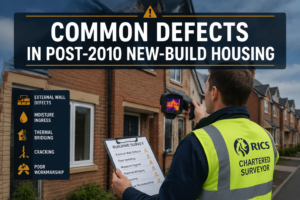
London's flat market is experiencing a notable shift in 2026. After months of uncertainty, lower-priced flats are attracting renewed buyer interest as asking prices adjust to realistic levels. This emerging recovery demands that surveyors adopt targeted inspection protocols specifically designed for flat-specific defects and shared structure risks. Building Survey Protocols for Flats in London's Stabilising Market: RICS Tools for Capturing Lower-Priced Segment Recovery represents a critical framework for professionals navigating this evolving landscape.
The stabilising market presents unique challenges. Buyers are more cautious, condition issues influence negotiated prices, and regulatory requirements—particularly around cladding and fire safety—have intensified scrutiny. Meanwhile, RICS quality strengthening initiatives implemented in 2026 are transforming survey standards, requiring enhanced compliance and systematic risk identification.[2][4]

Key Takeaways
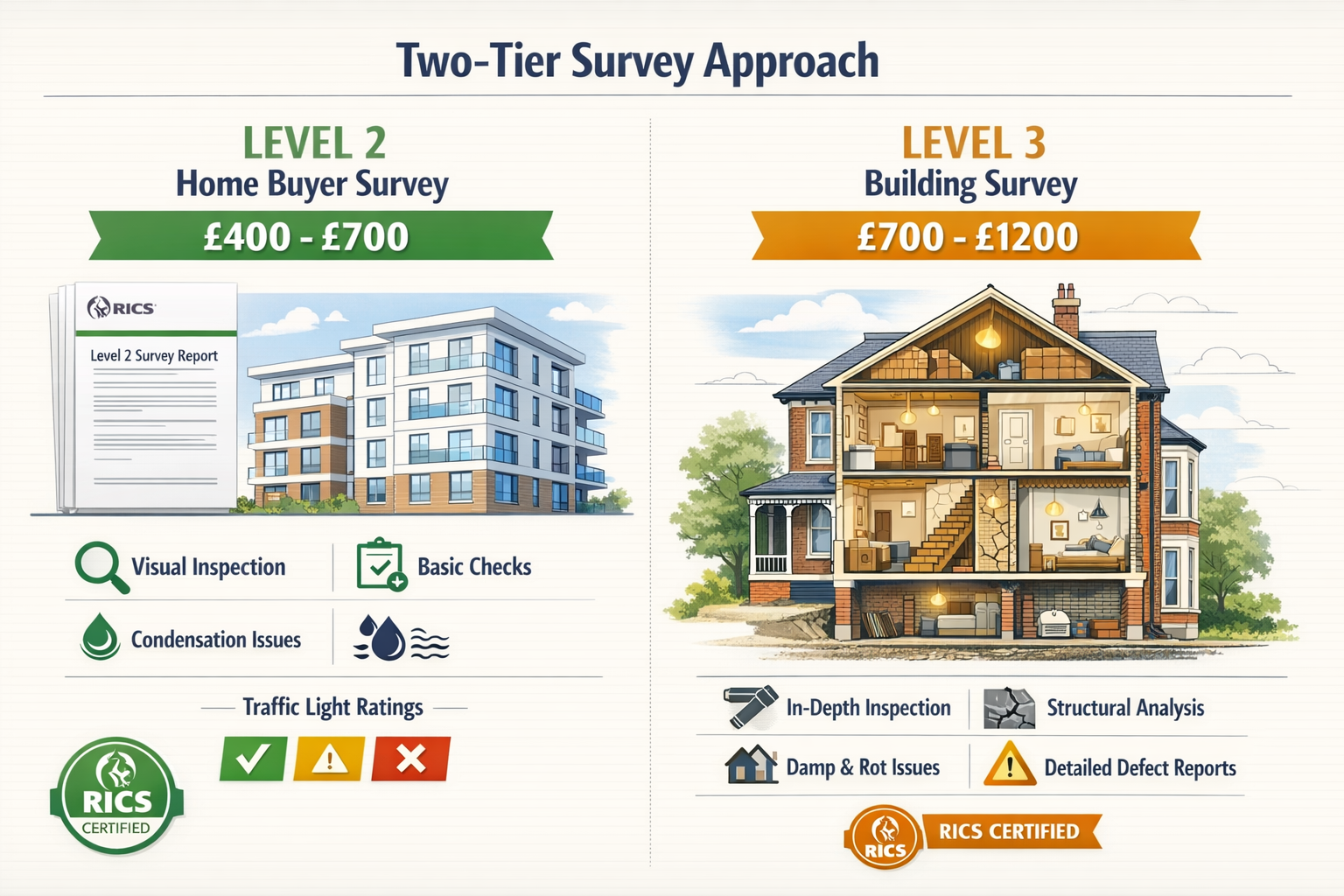
✅ Two-tier survey approach: Level 2 surveys (£400–£700) suit modern flats in good condition, while Level 3 surveys (£700–£1,200) are essential for older, converted, or high-rise properties requiring detailed structural assessment.[1]
✅ Lower-priced segment recovery: January 2026 data shows increased buyer activity particularly in lower-priced flats, with previously unsold stock attracting interest as prices adjust downward.[5]
✅ Enhanced RICS standards: Quality strengthening initiatives now mandate systematic identification of cladding compliance, damp penetration, structural defects, and service charge liabilities.[2][4]
✅ Specialist assessments required: Post-Grenfell regulations mean cladding and fire safety reports add £1,000+ to standard survey costs, reflecting heightened regulatory compliance needs.[1]
✅ Leasehold considerations critical: Surveys now emphasize leasehold obligations and shared repair responsibilities as key affordability factors influencing buyer decisions.[1]
Understanding Building Survey Protocols for Flats in London's Stabilising Market
The Current Market Context
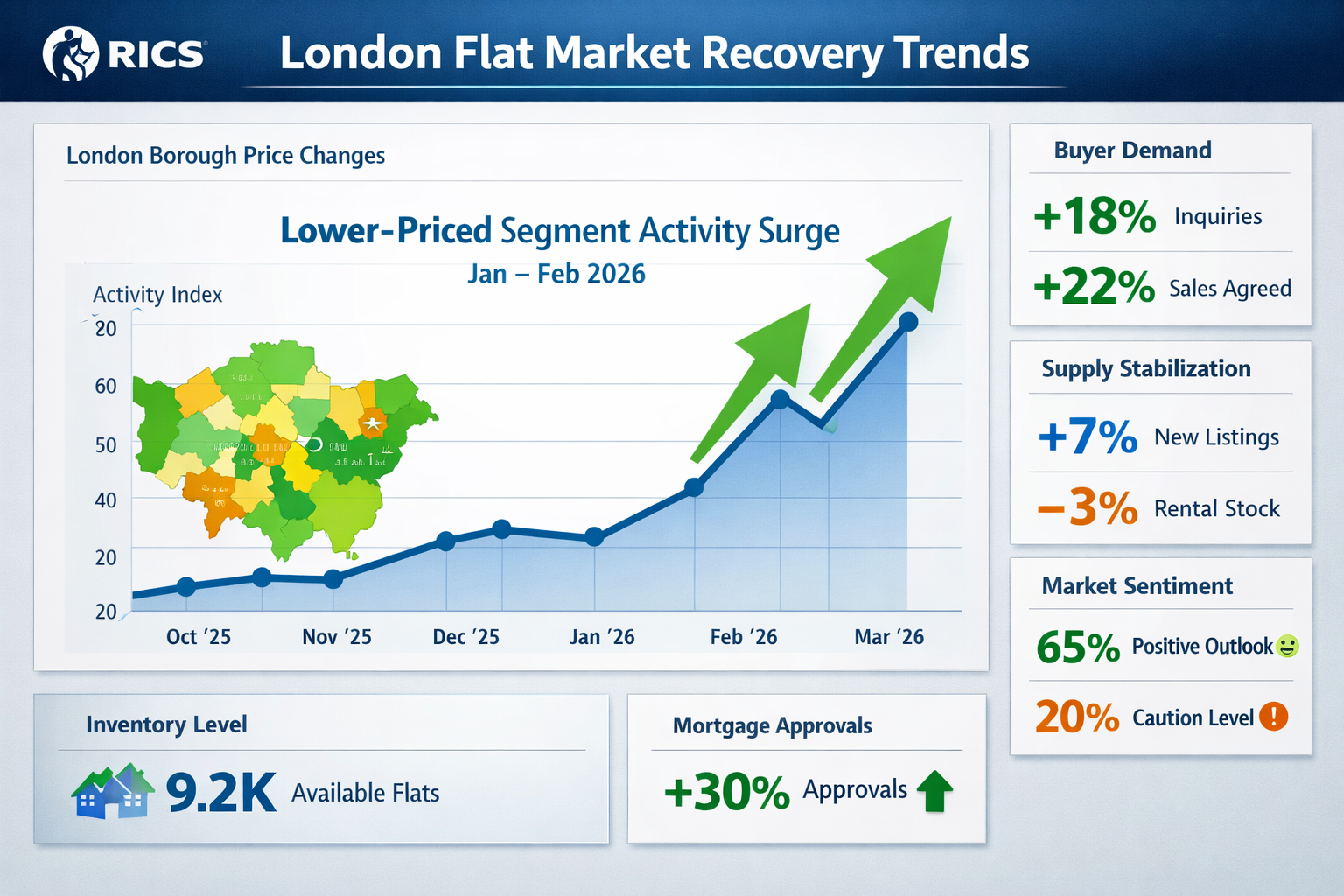
London's residential flat market entered 2026 with cautious optimism. The RICS UK Residential Market Survey documented early signs of increased buyer activity, particularly in lower-priced flats and mid-market family houses.[5] Previously unsold stock began attracting renewed interest as sellers adjusted asking prices to more realistic levels.
However, this recovery remains fragile. February 2026 data revealed buyer demand dipping amid renewed concerns over interest rate outlook.[3] Headline house prices remain broadly flat, though regional divergence is evident across different London markets. Forward-looking sentiment has turned more cautious since January, reflecting ongoing economic uncertainty.[3]
For surveyors, this stabilising market demands precision. Buyers exercise greater caution where defects are identified, with condition issues directly influencing agreed prices downward.[3] Increased listing availability provides buyers with greater choice, making thorough survey protocols essential for capturing accurate property conditions.
Why Flat Surveys Differ from House Surveys
Flats present unique inspection challenges that distinguish them from traditional house surveys:
🏢 Shared Structure Complexity: Unlike detached houses, flats involve shared walls, floors, ceilings, roofs, and foundations. Surveyors must assess both individual unit conditions and communal building integrity.
📋 Leasehold Obligations: Most flats are leasehold properties with specific maintenance responsibilities, service charge obligations, and lease term considerations affecting value and mortgageability.
🔥 Post-Grenfell Regulations: Fire safety requirements have intensified since the Grenfell Tower tragedy, with cladding materials, fire doors, and escape routes now subject to rigorous assessment.
🔊 Soundproofing and Insulation: Acoustic performance and thermal efficiency between units require specialized evaluation, particularly in converted properties.
🏗️ Access Limitations: Surveyors often cannot inspect roofs, external walls, or communal areas as thoroughly as in detached properties, requiring reliance on management information packs.
These distinctions necessitate specialized protocols that address flat-specific risks while maintaining RICS compliance standards.
RICS Tools for Capturing Lower-Priced Segment Recovery: Survey Level Selection
Level 2 Home Buyer Survey for Modern Flats
The Level 2 Home Buyer Survey (formerly RICS HomeBuyer Report) provides a cost-effective inspection option for modern, purpose-built flats in good condition. Priced between £400–£700, this survey suits buyers purchasing newer developments or well-maintained properties.[1]
What Level 2 Surveys Cover:
- Visual inspection of accessible areas
- Traffic light rating system (red/amber/green) for defect severity
- Market valuation and insurance reinstatement cost
- Brief assessment of communal areas
- Identification of urgent repairs and significant defects
Ideal Candidates for Level 2 Surveys:
✔️ Purpose-built flats less than 30 years old
✔️ Properties in good decorative order
✔️ Standard construction with no obvious alterations
✔️ Low-rise buildings (typically under six stories)
✔️ Flats with recent maintenance records
Level 2 surveys provide sufficient detail for buyers in the lower-priced segment where properties are relatively modern and well-maintained. However, they offer limited structural analysis and may miss hidden defects in older or converted properties.
Level 3 Building Survey for Complex Properties
The Level 3 Building Survey (formerly Full Structural Survey) represents the most comprehensive inspection option, priced between £700–£1,200 for flats.[1] This detailed assessment is recommended for older, converted, or high-rise flats requiring thorough structural evaluation.
What Level 3 Surveys Include:
- Extensive inspection of accessible elements
- Detailed analysis of construction methods and materials
- Comprehensive defect identification with repair recommendations
- Assessment of structural movement and stability
- Evaluation of alterations and unauthorized works
- Detailed communal area inspection (where accessible)
Properties Requiring Level 3 Surveys:
🏛️ Victorian or Edwardian conversions
🏗️ High-rise buildings (over six stories)
🔧 Properties with significant alterations or extensions
⚠️ Flats showing visible signs of structural movement
📅 Buildings over 50 years old
🏚️ Properties requiring renovation or refurbishment
For buyers targeting the recovering lower-priced segment—which often includes older converted properties—Level 3 Building Surveys provide essential protection. The comprehensive analysis helps buyers negotiate price reductions based on identified defects, potentially saving thousands of pounds.
Specialist Cladding and Fire Safety Assessments
Post-Grenfell regulatory requirements have made specialist cladding and fire safety assessments mandatory for many flats. These additional reports typically cost £1,000+ above standard survey fees.[1]
Key Assessment Components:
🔥 EWS1 Form Compliance: External Wall System certification confirming cladding materials meet fire regulations
🚪 Fire Door Inspections: Assessment of fire-rated doors in communal areas and individual units
🚨 Fire Detection Systems: Evaluation of smoke alarms, sprinklers, and emergency lighting
🏃 Escape Route Analysis: Review of stairwells, corridors, and emergency exits
📋 Building Safety Documentation: Verification of fire risk assessments and remediation plans
These specialist assessments are particularly critical for buildings over 18 meters (approximately six stories) or those with known cladding concerns. Mortgage lenders increasingly require EWS1 forms before approving financing, making these assessments essential for transaction completion.
Standardized Risk Identification in Building Survey Protocols for Flats
Systematic Defect Categories
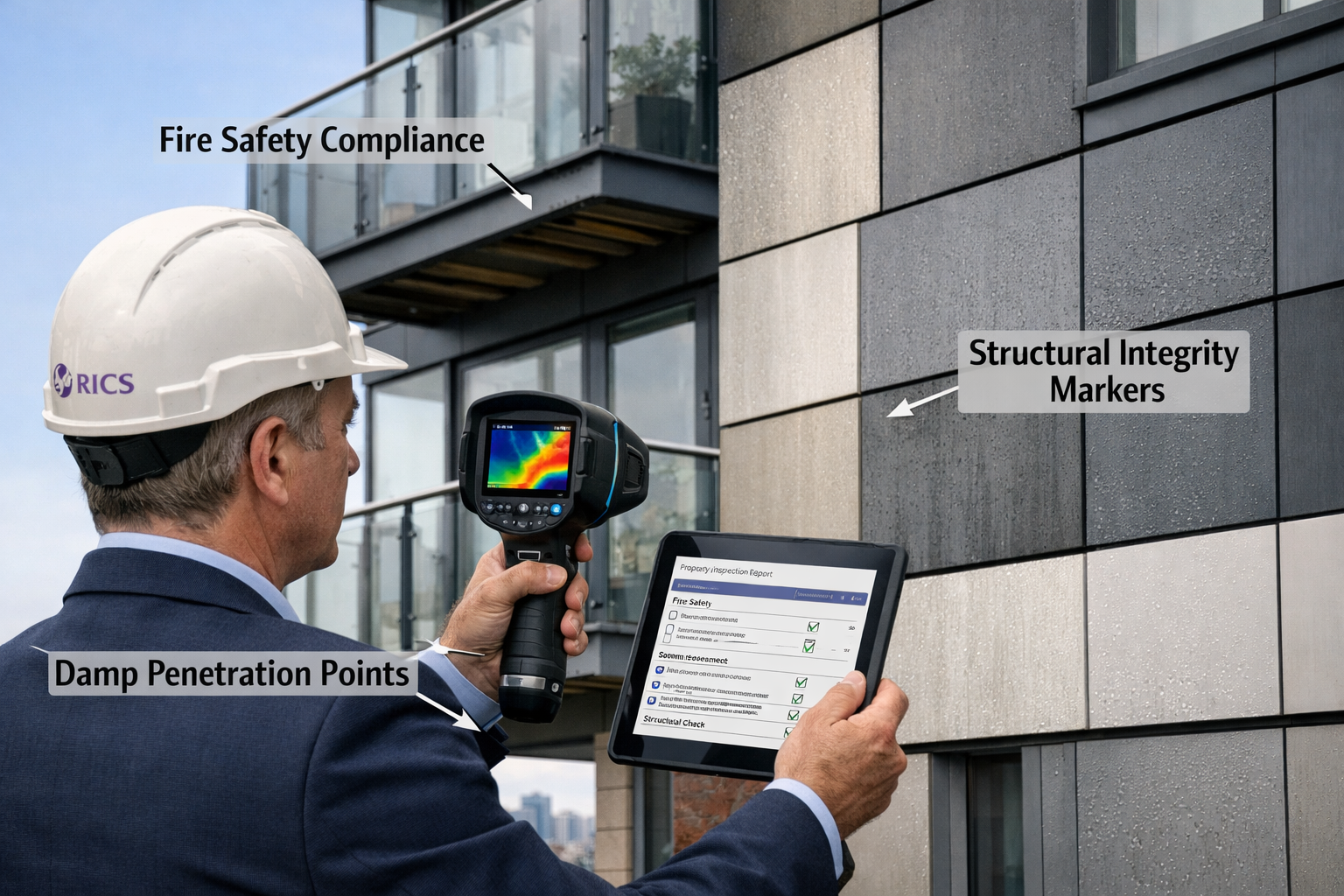
RICS surveyors now employ standardized protocols to systematically identify flat-specific defects. This structured approach ensures consistent risk assessment across the recovering lower-priced segment.[1][2]
Priority Risk Categories:
| Risk Category | Common Issues | Impact Level |
|---|---|---|
| Cladding Compliance | Non-compliant materials, missing EWS1 forms, remediation requirements | 🔴 Critical |
| Damp Penetration | Roof leaks, balcony water ingress, rising damp, condensation | 🟠 Significant |
| Structural Defects | Cracks in load-bearing walls, subsidence, foundation movement | 🔴 Critical |
| Soundproofing | Inadequate acoustic insulation, noise transmission between units | 🟡 Moderate |
| Service Charges | Upcoming major works, reserve fund deficiencies, disputed charges | 🟠 Significant |
| Mechanical Systems | Aging heating, plumbing, electrical installations requiring replacement | 🟡 Moderate |
Cladding Materials and Fire Regulations
Cladding compliance represents the highest priority risk in flat surveys. Surveyors must identify materials that fail current fire regulations and determine whether EWS1 forms are required.[1]
Assessment Protocol:
- Visual Inspection: Identify external cladding materials and construction methods
- Documentation Review: Check for existing EWS1 certificates or fire risk assessments
- Regulatory Compliance: Verify materials meet Building Regulations Approved Document B standards
- Remediation Status: Determine if remediation works are planned, ongoing, or completed
- Financial Implications: Assess potential costs and service charge impacts
Properties with non-compliant cladding may be unmortgageable until remediation is completed. This significantly affects value and transaction timelines, making accurate identification essential.
Damp, Water Ingress, and Weatherproofing
Water penetration represents one of the most common defects in flat surveys, particularly affecting older buildings and top-floor units.[1]
Key Inspection Points:
🌧️ Roof Structures: Flat roofs, pitched roofs, and parapet walls for water ingress
🏖️ Balconies: Waterproofing membranes, drainage systems, and structural connections
💧 Windows and Doors: Seals, frames, and surrounding masonry for water penetration
🧱 External Walls: Render, brickwork, and cladding for cracks or deterioration
⬆️ Rising Damp: Ground-floor units for damp-proof course failures
Chartered surveyors across London use moisture meters and thermal imaging cameras to detect hidden water ingress that may not be visible during standard inspections.
Structural Integrity in Converted Buildings
Victorian and Edwardian conversions—common in the lower-priced segment—present unique structural challenges. Original buildings were designed as single-family homes, not multi-unit dwellings.[1]
Conversion-Specific Risks:
⚠️ Inadequate Floor Soundproofing: Original timber floors lacking acoustic insulation
🔨 Unauthorized Alterations: Removed walls, modified staircases, or structural changes
🏗️ Insufficient Load Capacity: Floors not designed for modern occupancy loads
🪟 Window Replacement Issues: UPVC installations affecting building character and performance
🔌 Electrical Capacity: Original wiring inadequate for modern appliances
Surveyors must assess whether proper Building Control approval was obtained for conversion works and identify any structural compromises affecting safety or longevity.
Service Charge Liabilities and Reserve Funds
Leasehold service charges represent a critical affordability factor often overlooked by first-time buyers in the lower-priced segment.[1]
Financial Assessment Protocol:
📊 Historic Service Charges: Review three-year payment history for trends
🔮 Planned Major Works: Identify upcoming roof, facade, or system replacements
💰 Reserve Fund Status: Assess adequacy of sinking funds for future repairs
⚖️ Disputed Charges: Flag ongoing disputes or tribunal cases
📋 Management Quality: Evaluate management company performance and responsiveness
"Buyers are exercising caution where defects are identified, with condition issues influencing agreed prices downward, particularly where increased listing availability provides buyers with greater choice."[3]
Service charge liabilities can add thousands of pounds annually to ownership costs. Surveyors must clearly communicate these ongoing financial obligations, especially when major works are planned within five years.
Enhanced RICS Quality Standards Impacting Survey Practice
2026 Quality Strengthening Initiatives
RICS has implemented comprehensive quality strengthening initiatives that are transforming building survey standards and surveyor practice in 2026.[2][4] These enhanced requirements mandate greater consistency, transparency, and accountability across all survey levels.
Key Initiative Components:
✅ Mandatory Competency Assessments: Surveyors must demonstrate specialized flat inspection competencies
✅ Enhanced Reporting Standards: Standardized templates ensure consistent defect communication
✅ Continuing Professional Development: Annual training requirements covering emerging risks
✅ Quality Assurance Audits: Random inspection of survey reports for compliance verification
✅ Client Communication Protocols: Clear explanation of survey scope, limitations, and recommendations
These initiatives directly impact how surveyors approach flat inspections in London's recovering market. RICS-chartered building surveyors must now demonstrate specialized knowledge of flat-specific risks and regulatory requirements.
Communal Areas Inspection Scope
Communal area inspection represents a unique challenge in flat surveys. While surveyors inspect shared spaces, access limitations often prevent comprehensive assessment.[1]
Standard Communal Inspection Includes:
🚪 Entrance Halls: Condition of doors, flooring, lighting, and security systems
🪜 Stairwells: Structural integrity, handrails, fire safety equipment
🚰 Service Cupboards: Accessible plumbing, heating, and electrical installations
🗑️ Bin Stores: Waste management facilities and fire safety compliance
🚗 Car Parks: Structural condition, drainage, lighting (where included)
Inspection Limitations:
❌ Roof spaces (often inaccessible without management permission)
❌ Plant rooms and boiler houses (typically locked)
❌ Neighboring flats (privacy restrictions)
❌ Underground services (concealed infrastructure)
❌ External elevations (height and access constraints)
Surveyors rely heavily on management information packs for detailed communal building data. These packs should include recent maintenance records, planned works schedules, structural reports, and fire risk assessments.
Leasehold Compliance and Documentation Review
Enhanced RICS standards now require thorough leasehold compliance assessment as part of flat surveys.[1][2] This reflects the growing recognition that leasehold terms significantly affect property value and mortgageability.
Essential Leasehold Checks:
📅 Remaining Lease Term: Minimum 80-90 years typically required for mortgage approval
💷 Ground Rent Terms: Identify onerous escalation clauses or excessive charges
🔧 Repair Obligations: Clarify leaseholder vs. freeholder maintenance responsibilities
🏢 Subletting Restrictions: Review limitations on rental or commercial use
⚖️ Dispute History: Flag ongoing legal disputes or tribunal cases
📋 Lease Extension Costs: Estimate potential lease extension expenses
Properties with less than 80 years remaining on the lease face significant value depreciation and increased extension costs. Surveyors must clearly communicate these implications to buyers, particularly first-time purchasers unfamiliar with leasehold complexities.
Market Data Informing Survey Protocols in 2026
Lower-Priced Segment Activity Surge
The January 2026 RICS UK Residential Market Survey documented early signs of increased buyer activity, particularly in lower-priced flats and mid-market family houses.[5] This segment-specific recovery reflects several converging factors:
Recovery Drivers:
📉 Price Adjustments: Sellers reducing asking prices to realistic levels after extended listing periods
🏦 Improved Affordability: Lower-priced flats becoming accessible to first-time buyers
📊 Increased Choice: Previously unsold stock providing buyers with greater selection
💰 Deposit Availability: Government schemes and family assistance enabling purchases
🔍 Buyer Confidence: Stabilizing economic outlook encouraging market entry
This activity surge demands that surveyors develop specialized protocols for the lower-priced segment, which often includes older conversions, ex-local authority properties, and buildings requiring modernization.
Regional Price Variance Across London
While headline house prices remain broadly flat as of February 2026, significant regional divergence exists across London's diverse property markets.[3]
London Market Segmentation:
| Area Type | Price Trend | Survey Implications |
|---|---|---|
| Prime Central | Stable/Slight decline | Focus on high-end finishes, service quality |
| Inner London | Mixed performance | Emphasize transport links, cladding compliance |
| Outer London | Modest growth | Assess conversion quality, service charges |
| Ex-Authority | Increased activity | Detailed structural assessment, right-to-buy implications |
Chartered surveyors across East London, South East London, and West London must tailor inspection protocols to local market conditions and property types prevalent in each area.
Supply Stabilization and Buyer Behavior
New property listings remained in neutral territory with a net balance of +2% in February 2026, indicating broadly stable stock flow entering the market.[3] This supply stabilization affects survey practice in several ways:
Impact on Survey Protocols:
🔄 Increased Comparison: Buyers comparing multiple properties before committing, demanding detailed survey reports
💬 Negotiation Leverage: Condition issues used to negotiate price reductions, requiring precise defect quantification
⏱️ Extended Decision Times: Buyers taking longer to decide, allowing time for comprehensive surveys
📋 Due Diligence Emphasis: Greater scrutiny of documentation, service charges, and planned works
🎯 Targeted Inspections: Focus on specific concerns identified during viewings
Surveyors must provide clear, actionable recommendations that support buyer negotiation strategies while maintaining professional objectivity.
Forward Sentiment and Economic Uncertainty
While twelve-month price expectations remain positive, forward-looking sentiment has turned more cautious since January 2026.[3] This reflects ongoing economic uncertainty around interest rates, inflation, and employment stability.
Survey Practice Implications:
⚠️ Risk Communication: Clear explanation of defects and potential future costs
💰 Cost Estimates: Detailed repair cost projections for identified defects
📊 Market Context: Commentary on local market conditions affecting value
🔮 Future Liabilities: Emphasis on upcoming service charge increases or major works
🛡️ Buyer Protection: Comprehensive documentation supporting informed purchase decisions
In this cautious market environment, thorough survey protocols provide essential buyer protection and support confident decision-making despite economic uncertainty.
Practical Implementation: Survey Protocol Checklist
Pre-Inspection Preparation
Effective survey protocols begin before site visits. Thorough preparation ensures comprehensive assessment and efficient use of inspection time.
Essential Pre-Inspection Steps:
✅ Obtain property address, lease details, and management company contact
✅ Review listing particulars, floor plans, and Energy Performance Certificate
✅ Request management information pack (service charges, planned works, building insurance)
✅ Check planning portal for building control approvals and planning permissions
✅ Research building history, construction date, and conversion details
✅ Identify known local issues (flooding, subsidence, contaminated land)
✅ Confirm access arrangements for communal areas and external elevations
On-Site Inspection Protocol
Systematic on-site inspection ensures no critical elements are overlooked. RICS building survey protocols provide standardized frameworks adapted for flat-specific requirements.
Inspection Sequence:
- External Envelope: Cladding, windows, balconies, roof (if accessible)
- Communal Areas: Entrance, stairwells, corridors, service cupboards
- Individual Unit: Room-by-room assessment following standardized checklist
- Services: Heating, plumbing, electrical, ventilation systems
- Documentation: Photograph defects, take measurements, record observations
Specialized Equipment:
📸 High-resolution camera for defect documentation
🌡️ Thermal imaging camera for insulation and damp detection
💧 Moisture meter for quantifying dampness levels
📏 Laser measure for dimensional accuracy
🔦 Inspection torch for dark spaces
🪜 Ladders (where safe access permits)
Post-Inspection Reporting
Clear, comprehensive reporting transforms inspection findings into actionable buyer intelligence. Enhanced RICS standards mandate specific reporting requirements.[2][4]
Report Components:
📋 Executive Summary: Key findings, urgent defects, and overall condition rating
🏗️ Detailed Findings: Room-by-room assessment with defect descriptions
📸 Photographic Evidence: Annotated images illustrating identified issues
💰 Repair Cost Estimates: Approximate costs for addressing defects
⚠️ Risk Ratings: Traffic light system (red/amber/green) for defect severity
🔮 Future Considerations: Anticipated maintenance requirements and service charge implications
📚 Recommendations: Specialist investigations, further surveys, or legal advice
Reports should be delivered within 5-7 working days of inspection, allowing buyers sufficient time to review findings before exchange of contracts.
Conclusion
Building Survey Protocols for Flats in London's Stabilising Market: RICS Tools for Capturing Lower-Priced Segment Recovery represents an essential framework for navigating the evolving property landscape of 2026. As the lower-priced flat segment shows early signs of recovery, surveyors must employ targeted inspection protocols that address flat-specific risks while maintaining enhanced RICS quality standards.
The two-tier survey approach—Level 2 for modern properties and Level 3 for complex conversions—provides cost-effective options matched to property characteristics and buyer risk tolerance. Systematic risk identification covering cladding compliance, damp penetration, structural defects, and service charge liabilities ensures comprehensive buyer protection in a market where condition issues directly influence negotiated prices.
Enhanced RICS quality strengthening initiatives implemented in 2026 have raised professional standards, mandating greater consistency, transparency, and specialized competency. These improvements benefit buyers through more reliable assessments and clearer communication of risks and recommendations.
Actionable Next Steps
For buyers entering London's recovering flat market:
🔍 Select Appropriate Survey Level: Match survey type to property age, condition, and complexity
👨💼 Engage RICS-Chartered Surveyors: Ensure professional competency and regulatory compliance
📋 Request Management Information: Obtain service charge histories and planned works schedules before survey
💰 Budget for Specialist Assessments: Allow £1,000+ for cladding and fire safety reports where required
⚖️ Review Leasehold Terms: Understand obligations, restrictions, and extension costs
🤝 Use Findings for Negotiation: Leverage identified defects to negotiate price reductions
For surveyors serving this market:
✅ Implement standardized flat-specific inspection protocols
✅ Maintain current knowledge of cladding regulations and fire safety requirements
✅ Develop specialist competencies in leasehold compliance assessment
✅ Invest in thermal imaging and moisture detection equipment
✅ Build relationships with management companies for efficient information access
✅ Provide clear, actionable reports supporting buyer decision-making
The stabilising London flat market presents both opportunities and challenges. By employing rigorous survey protocols aligned with RICS quality standards, surveyors provide essential buyer protection while supporting confident participation in the recovering lower-priced segment.
References
[1] Survey For Flats Apartments 2025 – https://surveymatch.co.uk/survey-for-flats-apartments-2025/
[2] Building Survey Standards Evolution How Rics Quality Strengthening Initiatives Impact Surveyor Practice In 2026 – https://nottinghillsurveyors.com/blog/building-survey-standards-evolution-how-rics-quality-strengthening-initiatives-impact-surveyor-practice-in-2026
[3] Uk Residential Market Survey February 2026 – https://www.rics.org/content/dam/ricsglobal/documents/market-surveys/uk-residential-market-survey/UK-Residential-Market-Survey_February-2026.pdf
[4] Building Survey Quality Standards 2026 Navigating Rics Updates And Enhanced Home Inspection Requirements – https://nottinghillsurveyors.com/blog/building-survey-quality-standards-2026-navigating-rics-updates-and-enhanced-home-inspection-requirements
[5] Uk Residential Market Survey January 2026 – https://www.rics.org/content/dam/ricsglobal/documents/market-surveys/uk-residential-market-survey/UK-Residential-Market-Survey_January-2026.pdf