The electric vehicle revolution is transforming not just our roads, but our homes. As 2026 unfolds, thousands of homeowners across urban terraces and semi-detached properties are discovering an unexpected hurdle in their journey to sustainable transport: party wall compliance. When installing an EV charger requires drilling through or attaching equipment to a shared wall, the Party Wall Act suddenly becomes as important as electrical codes. Understanding Party Wall Surveys for 2026 EV Charging Retrofits: Compliance Amid Net Zero Mandates has never been more critical for property owners navigating the intersection of green technology and neighborly relations.
The surge in EV adoption—driven by net zero commitments and government incentives—is creating a new category of party wall work that many surveyors and homeowners are encountering for the first time. With electrical panel upgrades, conduit installations, and mounting hardware often impacting shared structures, the legal and technical requirements demand careful attention.
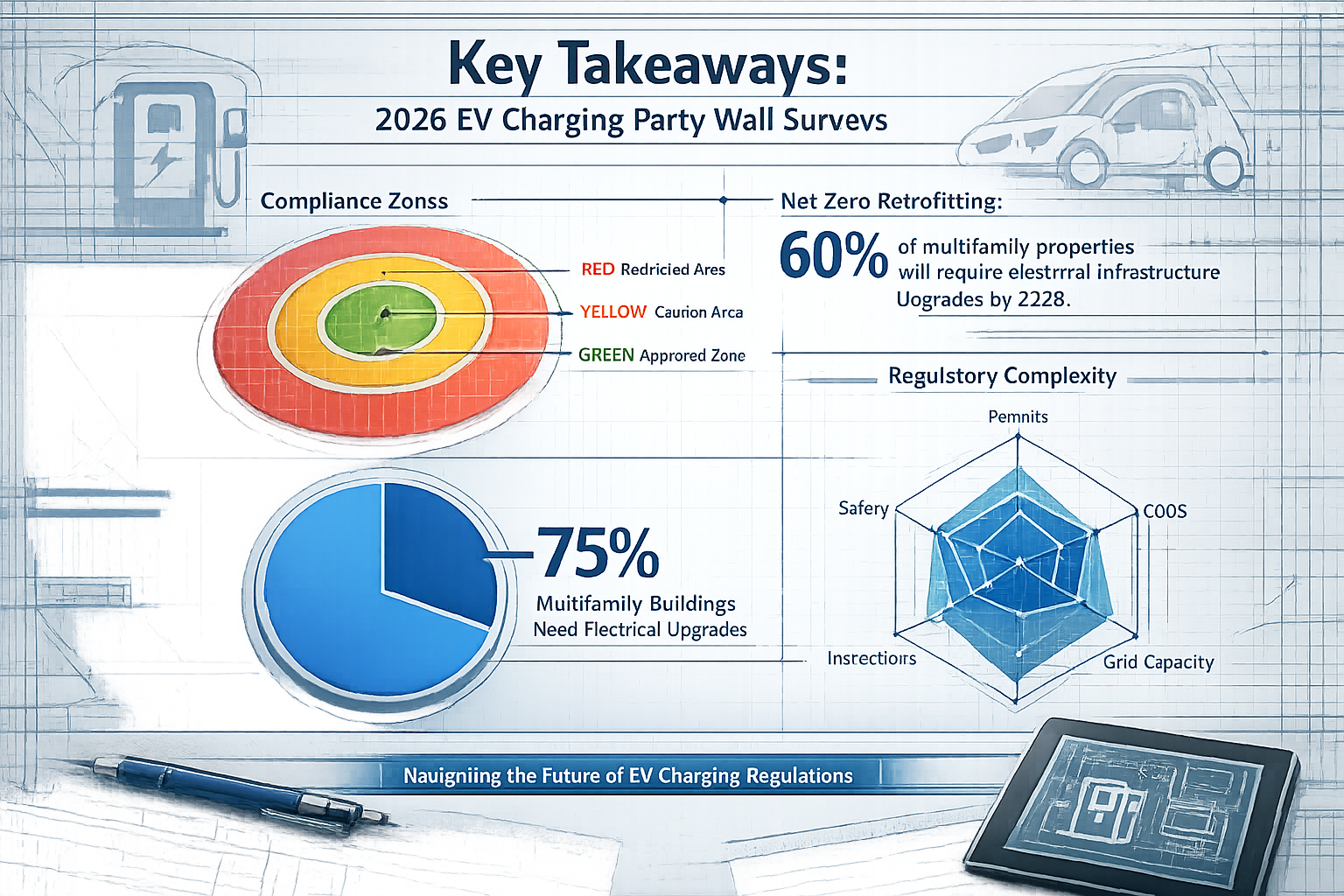
Key Takeaways
- Party wall notices are legally required when EV charger installations involve work on or near shared walls between properties, with at least two months' notice needed before work begins
- 2026 electrical code updates introduce stricter requirements for EV charging circuits, including dedicated 240V lines and enhanced panel capacity that may trigger party wall considerations[1]
- Net zero mandates are accelerating multifamily and terraced home EV infrastructure projects, making party wall surveys essential for compliance and dispute prevention[3]
- Professional surveyor involvement helps draft proper notices, assess structural impact, and mediate between neighbors to avoid costly legal disputes
- Federal incentives up to 30% of installation costs are available for residential EV chargers, but compliance with both electrical codes and party wall regulations is mandatory[6]
Understanding Party Wall Requirements for EV Charging Infrastructure
What Triggers a Party Wall Notice for EV Installations?
The Party Wall Act applies whenever work affects a shared wall, boundary, or structure between adjoining properties. For EV charging retrofits, several scenarios commonly trigger notice requirements:
Electrical conduit penetration through party walls ranks as the most frequent trigger. When routing cables from an outdoor charging point to an internal electrical panel, the most direct path often passes through a shared wall structure. Even small penetrations for cable runs require formal notice.
Mounting brackets and support structures attached to party walls also fall under the Act's scope. Wall-mounted EV chargers, electrical panels, or junction boxes fixed to shared walls constitute "works to a party wall" and need neighbor notification.
Structural modifications for upgraded electrical panels represent another common scenario. Many older terraced homes require panel upgrades to support the 240V, 40-60 amp circuits that modern EV chargers demand[1]. When these panels sit on or near party walls, the installation work triggers notice requirements.
Excavation for underground cabling near boundary lines can also invoke party wall procedures, particularly when trenching for dedicated circuits from detached garages or outbuildings. If excavation occurs within three meters of a neighbor's structure and goes below their foundation level, the excavation notice requirements apply.
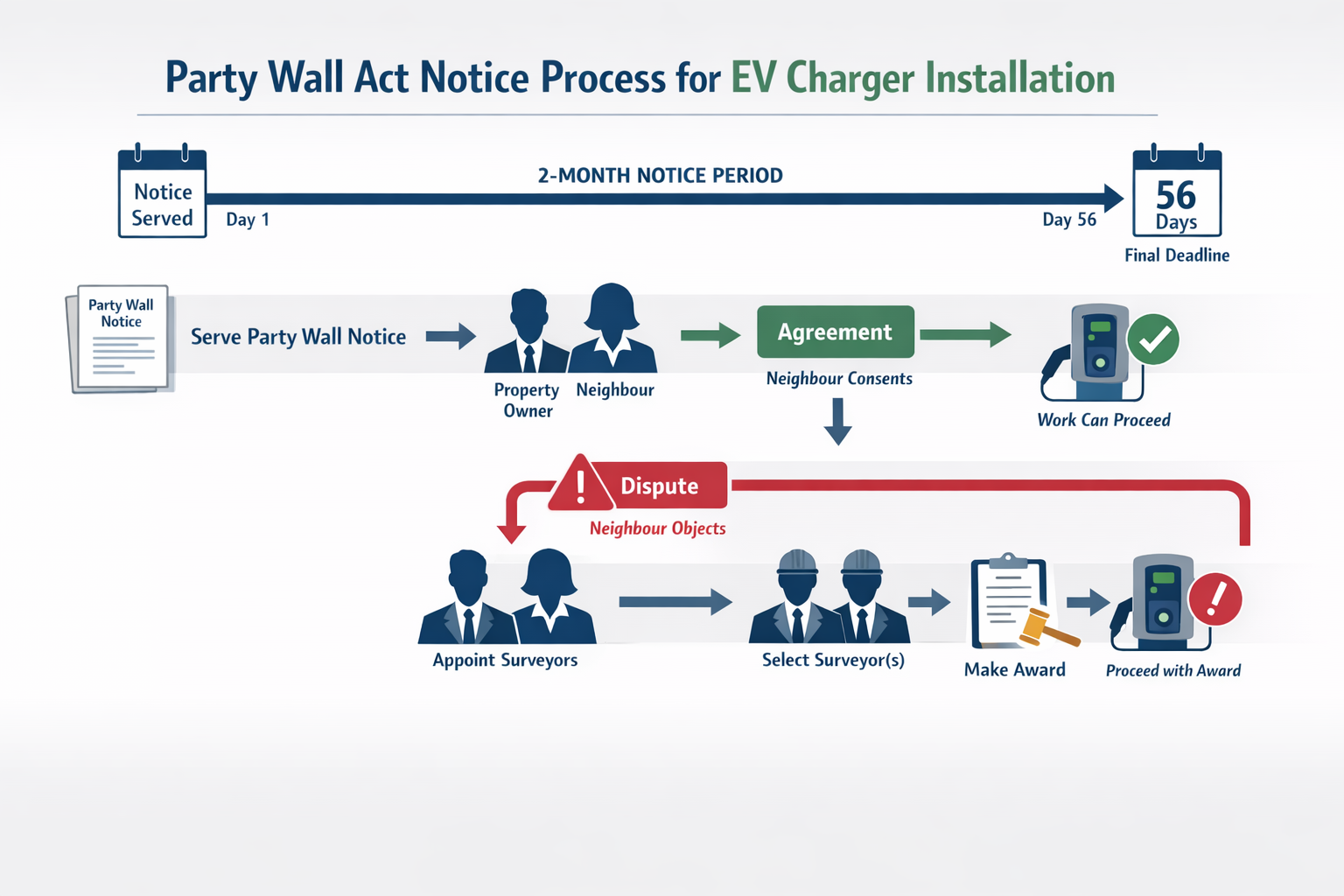
The Two-Month Notice Period
⏰ Timing is everything in party wall compliance. The Act mandates serving notice at least two months before work commences for most party wall matters. This timeline often surprises homeowners eager to install their new EV charger quickly.
The notice must include:
- Detailed description of proposed works
- Start date for the project
- Technical drawings showing impact on party structures
- Contact information for the building owner
Neighbors have 14 days to respond. Consent means work can proceed after the two-month period. Dissent—or no response—triggers the formal surveyor appointment process.
2026 Electrical Code Updates and Their Party Wall Implications
New NEC Requirements for EV Charging Circuits
The 2026 National Electrical Code introduces significant updates affecting residential EV charger installations. These changes have direct implications for party wall surveys and compliance[1].
Dedicated circuit requirements now mandate that EV charging stations operate on separate, dedicated circuits with no other loads. This often necessitates panel upgrades in older homes, particularly in urban terraces where electrical infrastructure may be decades old.
Enhanced overcurrent protection standards require updated breaker specifications and arc-fault circuit interrupter (AFCI) protection for all EV charging circuits. Installing these components may require panel modifications that impact party wall structures.
Grounding and bonding specifications have become more stringent, requiring proper grounding paths that may need to route through or near party walls. Surveyors must assess whether proposed grounding installations comply with both electrical codes and party wall regulations.
Panel Capacity and Structural Considerations
Many 2026 EV charging retrofits require upgrading from 100-amp to 200-amp service panels. This work often involves:
- Replacing existing panel boxes that may be mounted on or recessed into party walls
- Installing larger conduit runs through shared structures
- Upgrading meter bases and service entry points
A structural survey becomes essential when panel upgrades affect load-bearing party walls. The surveyor must verify that:
✅ The party wall can support additional mounting hardware
✅ Cable penetrations won't compromise structural integrity
✅ Fire-stopping measures meet building regulations
✅ Acoustic insulation remains effective after modifications
State-by-State Variations in 2026
While the NEC provides national standards, state and local jurisdictions add their own requirements. As of 2026, key variations include[2]:
| State/Region | Notable EV Charger Requirements | Party Wall Considerations |
|---|---|---|
| California | Mandatory EV-ready infrastructure in new construction | Enhanced seismic bracing for wall-mounted equipment |
| New York | Utility notification required for >7.2kW chargers | Co-op board approvals often exceed party wall requirements |
| Massachusetts | Electrical permit inspections within 48 hours | Historic district restrictions on external conduit routing |
| Illinois | Smart meter integration mandatory | Shared meter room access agreements needed |
Party Wall Surveys for 2026 EV Charging Retrofits: Best Practices
The Surveyor's Role in EV Retrofit Projects
Chartered surveyors bring essential expertise to EV charging retrofits involving party walls. Their responsibilities extend beyond simple notice drafting to encompass:
Pre-installation assessment involves examining the party wall structure, identifying potential issues, and recommending installation approaches that minimize neighbor impact. This may include alternative cable routing or mounting locations that avoid sensitive areas.
Technical specification review ensures that electrical contractor proposals comply with both NEC requirements and party wall regulations. Surveyors coordinate with electricians to develop installation methods that protect structural integrity.
Schedule of condition preparation documents the existing state of both properties before work begins. This photographic and written record proves invaluable if party wall disputes arise regarding damage claims.
Ongoing monitoring during installation ensures work proceeds according to agreed specifications. Surveyors conduct site visits at critical stages, particularly when penetrations are made or mounting hardware installed.
Drafting Effective Party Wall Notices for EV Projects
A well-drafted notice prevents disputes and expedites approvals. Key elements for EV charging retrofits include:
Detailed technical drawings showing:
- Exact location of cable penetrations through party walls
- Dimensions and specifications of mounting hardware
- Electrical panel locations and modifications
- Fire-stopping and acoustic insulation measures
Clear work descriptions using plain language that neighbors can understand, supplemented by technical specifications for surveyors and contractors.
Realistic timelines accounting for both the two-month notice period and actual installation duration. Many EV charger installations complete within 1-2 days, but panel upgrades may require longer.
Contact information for all parties, including the building owner, appointed surveyors, and electrical contractors.
"The most successful EV charging retrofit projects involve early neighbor engagement, transparent communication, and professional surveyor guidance from the outset. Treating party wall compliance as an afterthought invites delays and disputes." — Chartered Building Surveyor
Managing Neighbor Relations During EV Retrofits
🤝 Proactive communication prevents most party wall disputes. Best practices include:
Pre-notice discussions with neighbors about planned EV charger installation. Informal conversations before formal notices often reveal concerns that can be addressed in project planning.
Sharing benefits information about how EV infrastructure may enhance property values and support neighborhood sustainability goals. Some neighbors may be considering their own EV purchases and appreciate learning about the process.
Offering access for neighbors to inspect proposed work areas and ask questions. Transparency builds trust and reduces anxiety about construction impact.
Coordinating schedules to minimize disruption, particularly for noisy work like drilling through masonry walls. Weekend or evening work may require special consideration.
When disputes do arise, the formal surveyor appointment process provides structured resolution. Each party appoints a surveyor (or agrees on a single "agreed surveyor"), who then issues a party wall award specifying:
- Approved work scope and methods
- Protection measures for the adjoining property
- Access arrangements for inspections
- Dispute resolution procedures
For complex cases involving multiple properties or significant structural concerns, consulting specialists in specific defect reporting can provide additional technical clarity.
Net Zero Mandates and Multifamily EV Charging Solutions
The 2026 Net Zero Compliance Landscape
Government net zero commitments are driving unprecedented demand for residential EV charging infrastructure. This regulatory push creates both opportunities and challenges for property owners in terraced homes and multifamily buildings.
Building regulation updates in many jurisdictions now require EV-ready infrastructure in new residential construction and major renovations. While these mandates primarily affect new builds, they're creating pressure for retrofit installations in existing housing stock.
Carbon reduction targets at local authority levels increasingly include transportation emissions, spurring incentive programs for home EV charger installation. These programs often provide grants or expedited permitting—but party wall compliance remains mandatory regardless of incentive participation.
Energy performance certificate (EPC) considerations may soon reflect EV charging capability, potentially affecting property values and marketability. Forward-thinking homeowners are installing infrastructure now to enhance future sale prospects.
Multifamily Building Challenges
Apartment buildings, converted houses, and terraced properties present unique challenges for EV charging retrofits[3]. Common issues include:
Shared electrical infrastructure requiring upgrades that affect multiple party walls and common areas. Load management systems that distribute available power among multiple charging points may need extensive conduit runs through shared structures.
Complex ownership structures where freeholders, leaseholders, and management companies must all consent to installations. Party wall procedures layer additional complexity onto already intricate approval processes.
Limited parking configurations forcing creative solutions like curbside charging posts or shared charging stations. These alternatives may reduce party wall impacts but introduce new planning and access considerations.
Cost allocation questions when infrastructure upgrades benefit multiple units. Determining fair cost-sharing for panel upgrades or transformer installations requires careful negotiation.
Federal Incentives and Compliance Requirements
The federal Alternative Fuel Vehicle Refueling Property Credit (30C) offers significant financial support for residential EV charger installations[6]. For 2026, the credit provides:
💰 30% of installation costs up to $1,000 for residential properties
💰 Up to $100,000 for commercial and multifamily properties
However, accessing these incentives requires full code compliance, including party wall regulations where applicable. Documentation requirements include:
- Electrical permits and inspection certificates
- Proof of NEC compliance
- Party wall awards or neighbor consent letters
- Contractor licensing verification
Recent updates to federal infrastructure programs also emphasize Buy America requirements for charging equipment[7][9]. While these provisions primarily affect commercial installations, they signal increasing regulatory scrutiny that extends to residential projects.
Streamlined Permitting Initiatives
Many states are implementing measures to expedite EV charger permitting while maintaining safety and compliance standards[4]. These initiatives include:
Online permit applications that reduce processing times from weeks to days. Digital submission of party wall notices and awards can similarly accelerate approval timelines.
Pre-approved installation plans for common scenarios, allowing contractors to use standardized approaches that building departments have already reviewed. Developing similar templates for party wall notices in EV retrofit projects could streamline compliance.
Coordinated inspections combining electrical, building, and party wall compliance checks into single site visits. This integration reduces delays and ensures comprehensive oversight.
Avoiding Common Pitfalls in EV Charging Party Wall Projects
Technical Mistakes to Prevent
⚠️ Inadequate cable sizing for the charging load remains a frequent error. While party wall surveys focus on structural impacts, surveyors should verify that electrical specifications meet 2026 NEC requirements[1]. Undersized cables may require later replacement, necessitating additional party wall work.
Improper fire-stopping at party wall penetrations creates both safety hazards and compliance failures. All cable penetrations must include appropriate fire-resistant sealing materials that maintain the wall's fire rating. This requirement applies equally to loft conversions and basement electrical work.
Neglecting acoustic insulation when making party wall penetrations can lead to neighbor complaints about electrical humming or charging equipment noise. Proper acoustic sealing should be specified in party wall awards.
Ignoring future capacity is a strategic error. Installing infrastructure for only current EV needs may prove short-sighted as households add second EVs or upgrade to faster-charging models. Party wall notices should consider future expansion to avoid repeated compliance procedures.
Legal and Procedural Errors
Insufficient notice periods cause project delays and legal complications. The two-month requirement is mandatory—starting work earlier, even with verbal neighbor approval, violates the Act.
Incomplete technical descriptions in party wall notices lead to disputes about work scope. Vague descriptions like "install EV charger" provide insufficient detail. Notices must specify cable routes, penetration locations, and all party wall impacts.
Failing to appoint surveyors properly when neighbors dissent creates legal vulnerabilities. The Act prescribes specific procedures for surveyor selection and appointment that must be followed precisely.
Inadequate insurance coverage for party wall work exposes property owners to financial risk. Verify that contractors carry appropriate liability insurance covering party wall damage claims.
Cost Management Strategies
EV charging retrofits involving party walls typically cost more than simple installations due to surveyor fees, extended timelines, and compliance requirements. Typical cost breakdowns include:
| Cost Component | Typical Range | Notes |
|---|---|---|
| EV Charger Unit | £500-£1,500 | Smart chargers cost more but offer load management |
| Electrical Installation | £800-£2,000 | Increases with panel upgrades or complex routing |
| Party Wall Surveyor Fees | £500-£1,500 | Varies with project complexity and dispute resolution needs |
| Building Control Fees | £200-£500 | Required for notifiable electrical work |
| Remedial Work | £0-£2,000 | Budget contingency for unexpected issues |
Total project costs typically range from £2,000-£7,500 for party wall EV charging retrofits, compared to £1,000-£3,000 for straightforward installations without party wall complications.
Strategies to manage costs include:
✅ Using agreed surveyors (one surveyor representing both parties) reduces fees compared to appointing separate surveyors
✅ Combining projects with neighbors who also want EV chargers can share infrastructure and surveyor costs
✅ Optimizing cable routing to minimize party wall penetrations reduces both installation complexity and surveyor work
✅ Leveraging incentives like the 30C tax credit to offset compliance costs[6]
Future-Proofing EV Charging Infrastructure in Shared Properties
Anticipating 2027 and Beyond
The EV charging landscape continues evolving rapidly. Forward-thinking property owners should consider:
Higher power requirements as vehicle battery capacities increase. Today's 7kW chargers may prove inadequate for tomorrow's larger batteries. Installing conduit capacity for future upgrades avoids repeated party wall procedures.
Bidirectional charging capabilities that allow EVs to supply power back to homes during peak demand periods. Vehicle-to-home (V2H) technology requires more sophisticated electrical infrastructure that may impact party wall considerations.
Smart grid integration and time-of-use tariffs that optimize charging schedules. These systems require communication infrastructure that may need additional cable runs through party structures.
Wireless charging technology emerging for residential applications could eventually eliminate some party wall concerns related to cable routing, though power supply infrastructure will still require careful planning.
Building Positive Precedents
The 2026 wave of EV charging retrofits is establishing precedents for how party wall compliance integrates with green technology adoption. Property owners, surveyors, and neighbors who approach these projects collaboratively create positive examples that benefit entire communities.
Documenting successful projects through case studies and shared experiences helps others navigate similar challenges. Professional surveyor organizations are developing best practice guidance specifically for EV charging party wall work.
Advocating for streamlined procedures that maintain safety and fairness while reducing unnecessary complexity serves everyone's interests. Industry feedback to regulatory bodies shapes future party wall and electrical code updates.
Supporting neighborhood EV infrastructure collectively enhances property values and sustainability credentials. Streets where multiple properties install charging infrastructure benefit from shared learning and potentially reduced per-unit costs.
Conclusion
Party Wall Surveys for 2026 EV Charging Retrofits: Compliance Amid Net Zero Mandates represents a critical intersection of sustainable technology adoption and traditional property law. As EV ownership accelerates toward mainstream adoption, understanding party wall requirements becomes essential for thousands of homeowners in terraced and semi-detached properties.
The key principles remain straightforward: plan early, communicate transparently, and engage professional surveyors when EV charger installations affect shared walls. The two-month notice period, detailed technical specifications, and proper surveyor appointments aren't bureaucratic obstacles—they're protections that ensure fair treatment for all parties and prevent costly disputes.
2026's updated electrical codes, combined with federal incentives and net zero mandates, create both urgency and opportunity for residential EV infrastructure projects[1][6]. Property owners who navigate party wall compliance successfully position themselves at the forefront of sustainable living while maintaining positive neighbor relations.
Next Steps for Property Owners
If you're planning an EV charger installation that may affect party walls:
- Consult a chartered surveyor experienced in party wall matters before engaging electrical contractors
- Review your property deeds and existing party wall agreements for relevant provisions
- Discuss plans informally with neighbors before serving formal notices
- Obtain detailed proposals from qualified electrical contractors that specify all party wall impacts
- Budget appropriately for surveyor fees, extended timelines, and potential remedial work
- Document everything through photographs, correspondence records, and formal agreements
For complex projects involving multiple properties, significant structural modifications, or existing party wall disputes, professional guidance becomes even more valuable. The investment in proper compliance pays dividends through smoother installations, preserved neighbor relationships, and protected property values.
The transition to electric transportation is inevitable and beneficial. By understanding and respecting party wall requirements, property owners can embrace this change while honoring the legal frameworks that protect shared property interests. The 2026 generation of EV charging retrofits will establish precedents that shape residential sustainable infrastructure for decades to come.
References
[1] 3 New 2026 Rules To Pass Your Ev Panel Audit Without A Rewire – https://brightsparkzelectric.com/3-new-2026-rules-to-pass-your-ev-panel-audit-without-a-rewire/
[2] Ev Charger Installation Laws By State What Homeowners Must Know In 2025 – http://chargehomesolutions.com/ev-charger-installation-laws-by-state-what-homeowners-must-know-in-2025/
[3] Multifamily Ev Charging Solutions Guide – https://www.ampup.io/blog/multifamily-ev-charging-solutions-guide
[4] How States Help Streamline Ev Charging Deployment To Efficiently Meet Demand – https://www.ncsl.org/energy/how-states-help-streamline-ev-charging-deployment-to-efficiently-meet-demand
[6] Ev Charging Infrastructure 30c – https://pluginamerica.org/learn/federal-ev-tax-credits/ev-charging-infrastructure-30c/
[7] Trumps Transportation Secretary Sean P Duffy Updates Ev Charger Program Include Buy – https://www.transportation.gov/briefing-room/trumps-transportation-secretary-sean-p-duffy-updates-ev-charger-program-include-buy
[9] U S Proposes Boosting American Made Ev Charges – https://www.cbtnews.com/u-s-proposes-boosting-american-made-ev-charges/