The mortgage lending landscape is experiencing a dramatic shift in 2026, with transaction volumes surging following recent regulatory reforms. As homebuying accelerates, expert witness roles have become increasingly critical in defending property valuations, condition reports, and survey findings in legal disputes. Understanding Expert Witness Roles in Post-Reform Lending Volume Surges: Preparing for 2026 Homebuying Transformations is essential for surveyors, lenders, and legal professionals navigating this fast-paced market.
The intersection of increased lending activity and stricter upfront survey requirements has created new challenges—and opportunities—for expert witnesses. When transactions move quickly and stakes are high, disputes over property conditions, valuations, and survey accuracy can escalate rapidly. Expert witnesses provide the crucial bridge between technical surveying expertise and legal proceedings, ensuring that courts and tribunals understand complex property matters.
Key Takeaways
- 📈 Lending volume surges in 2026 are creating more disputes requiring expert witness testimony on property valuations and condition reports
- ⚖️ Expert witnesses in surveying and valuation play critical roles in defending technical assessments during faster-paced transactions
- 🏠 Post-reform requirements for upfront surveys increase the need for experts who can explain condition findings in legal settings
- 🔍 Chartered surveyors with RICS credentials are increasingly called upon to provide authoritative testimony in mortgage-related litigation
- 💼 Preparation and documentation standards have become more rigorous as expert witnesses face scrutiny in high-volume lending environments
Understanding Expert Witness Roles in Post-Reform Lending Volume Surges: Preparing for 2026 Homebuying Transformations
The Evolving Landscape of Lending Expert Testimony
The role of expert witnesses in mortgage and lending disputes has expanded significantly in 2026. Banking and lending expert witnesses now provide crucial testimony across multiple areas of law, including mortgage fraud, predatory lending practices, and loan underwriting standards [4]. These professionals bridge the gap between complex financial practices and legal proceedings, helping courts understand technical aspects of lending transactions.
Expert witnesses in the lending sector typically possess:
- Deep knowledge of mortgage underwriting standards and practices
- Understanding of property valuation methodologies
- Experience with regulatory compliance requirements
- Ability to explain technical concepts in accessible language
- Professional credentials from recognized industry bodies
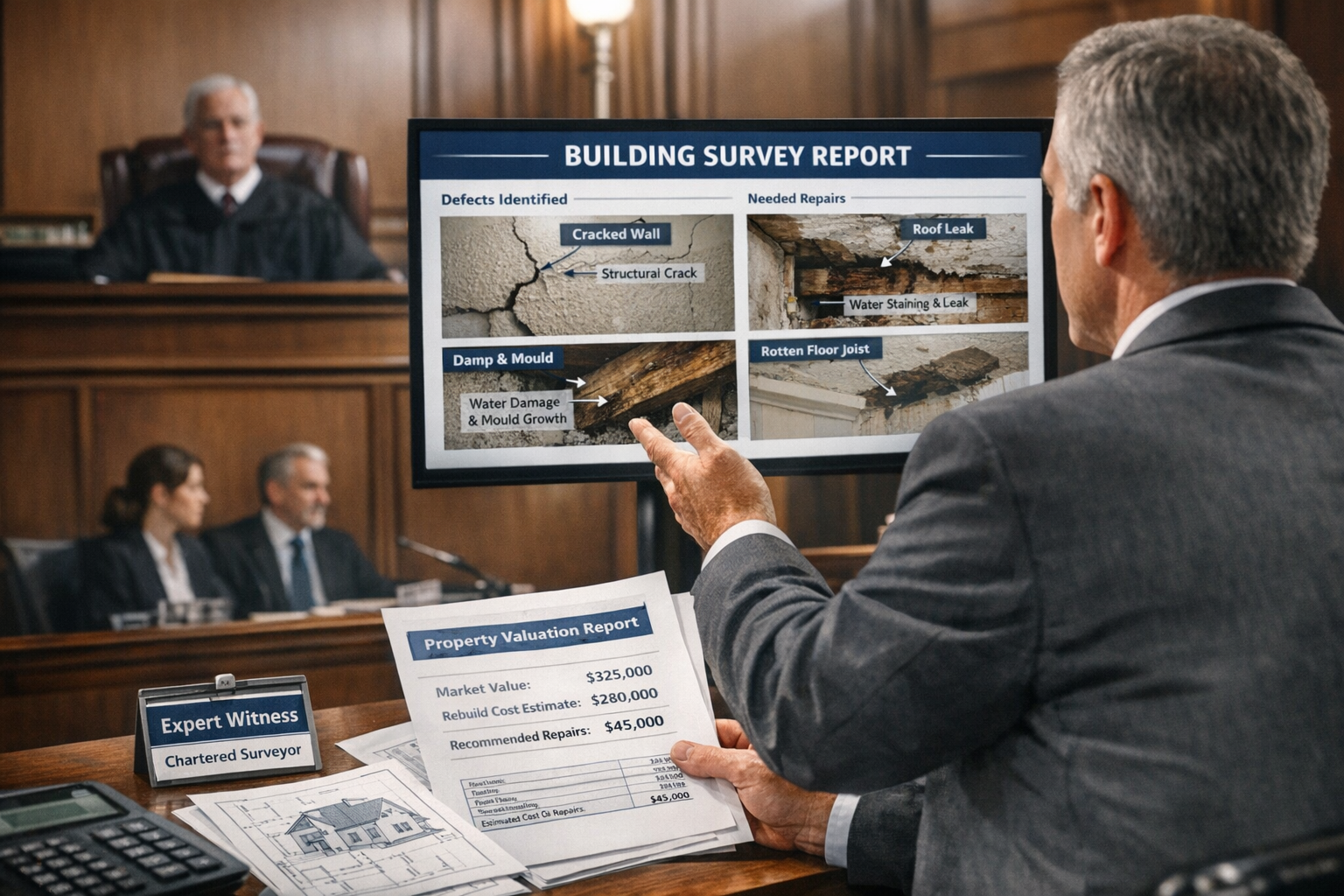
The surge in lending volumes has created a corresponding increase in disputes. When transactions move quickly, mistakes can happen—incorrect valuations, missed defects, or inadequate condition assessments. Expert witnesses help resolve these conflicts by providing objective, professional opinions based on industry standards and best practices [1].
Key Areas Where Expert Witnesses Add Value
Expert witnesses in lending and surveying matters contribute across several critical areas:
Property Valuation Disputes 🏘️
When buyers, sellers, or lenders disagree about property values, expert witnesses provide authoritative opinions based on comparable sales, market conditions, and property characteristics. Professional valuation services require deep market knowledge and adherence to RICS Red Book standards, which expert witnesses must demonstrate in their testimony.
Condition Report Accuracy 🔍
Disputes often arise when property defects emerge after purchase that weren't identified in pre-purchase surveys. Expert witnesses review the original building survey or homebuyer survey to determine whether the surveyor met professional standards or missed obvious defects.
Loan Underwriting Standards 📊
Expert witnesses evaluate whether lenders followed appropriate underwriting procedures, assessed risk correctly, and complied with regulatory requirements [2]. This becomes particularly important in cases involving loan defaults or allegations of negligent lending practices.
Mortgage-Backed Securities 💰
In complex financial litigation, experts analyze the quality of mortgage portfolios, the accuracy of risk assessments, and whether securities were properly structured and marketed [1]. These cases often involve substantial sums and require witnesses with sophisticated financial expertise.
The Impact of 2026 Regulatory Reforms
Recent regulatory changes have transformed how mortgages are originated and processed. Post-reform requirements emphasize:
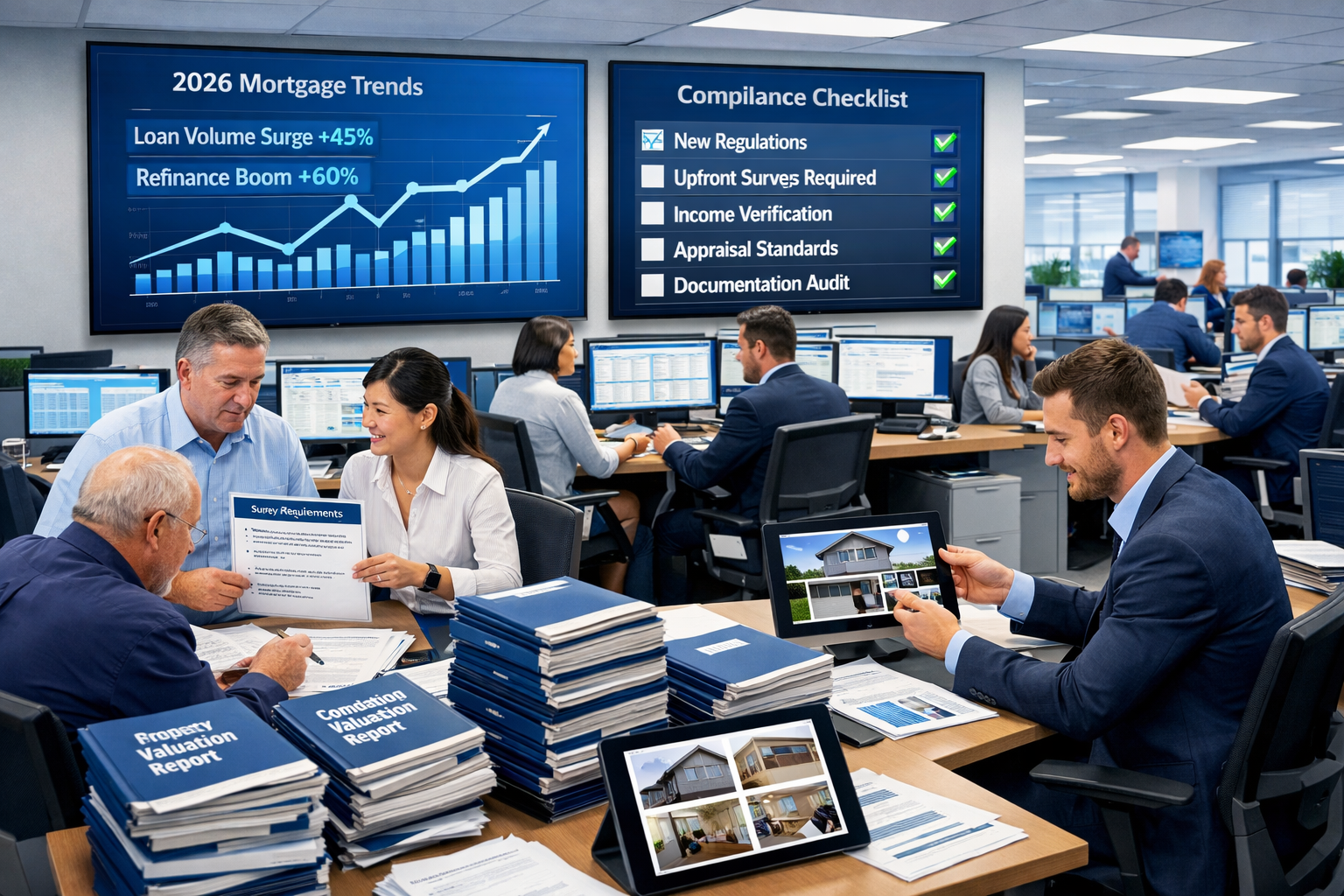
- Upfront survey requirements that mandate comprehensive property assessments before loan approval
- Enhanced disclosure standards requiring clearer communication of property conditions and risks
- Stricter valuation protocols to prevent over-lending and protect both borrowers and lenders
- Improved documentation standards that create clearer audit trails for transactions
These reforms aim to prevent the types of problems that led to previous market disruptions. However, they also create new areas where disputes can arise and expert testimony becomes necessary.
"The role of expert witnesses has evolved from simply providing opinions to becoming educators who help courts understand complex technical and financial matters in accessible terms."
Preparing Expert Witnesses for High-Volume Transaction Environments
Building Credibility and Maintaining Independence
The foundation of effective expert witness testimony is credibility. Courts and tribunals rely on expert witnesses to provide objective, unbiased opinions based on professional expertise rather than advocacy for either party [4]. In the high-pressure environment of surging lending volumes, maintaining this independence becomes even more critical.
Essential credibility factors include:
| Factor | Description | Why It Matters |
|---|---|---|
| Professional Credentials | RICS certification, relevant qualifications | Establishes baseline competence and authority |
| Practical Experience | Years in surveying, valuation, or lending | Demonstrates real-world knowledge beyond theory |
| Continuing Education | Current knowledge of regulations and standards | Shows commitment to staying current |
| Previous Testimony | Track record in legal proceedings | Builds reputation and demonstrates capability |
| Independence | No conflicts of interest | Ensures objectivity and trustworthiness |
Chartered surveyors with RICS credentials are particularly well-positioned to serve as expert witnesses because their professional standards explicitly require objectivity and adherence to established methodologies.
Documentation Standards in Fast-Paced Markets
When lending volumes surge, the temptation to cut corners on documentation can increase. However, expert witnesses must maintain rigorous standards regardless of market pressures. Proper documentation serves multiple purposes:
✅ Creates defensible records of observations and conclusions
✅ Demonstrates systematic methodology rather than arbitrary judgments
✅ Provides clear audit trails for review and cross-examination
✅ Supports professional liability protection for surveyors and valuers
For condition assessments, this means comprehensive schedule of condition reports that document property status with photographs, detailed descriptions, and clear findings. For valuations, it requires thorough comparable analysis, market research documentation, and clear explanation of valuation approaches used.
Common Dispute Scenarios in 2026 Homebuying
The post-reform lending environment has created several recurring dispute types where expert witnesses frequently testify:
Scenario 1: Hidden Defect Claims 🏚️
Buyers discover significant defects shortly after purchase and claim the surveyor should have identified them. Expert witnesses review the original survey scope, industry standards for that survey level, and whether the defects were reasonably discoverable. Understanding the differences between RICS Level 2 homebuyer surveys and Level 3 building surveys is crucial for these cases.
Scenario 2: Valuation Disputes 💷
Lenders, borrowers, or other parties challenge property valuations that seem too high or too low. Expert witnesses provide independent valuations and assess whether the original valuer followed proper methodology. Red Book valuations set the professional standard that expert witnesses use as benchmarks.
Scenario 3: Party Wall Damage Claims 🧱
Construction work on adjacent properties causes damage, leading to disputes about pre-existing conditions versus new damage. Expert witnesses review party wall schedules of condition and assess causation and extent of damage.
Scenario 4: Loan Underwriting Failures 📉
When loans default quickly, questions arise about whether lenders properly assessed borrower capacity and property value. Expert witnesses evaluate underwriting decisions against industry standards and regulatory requirements [2].
Expert Witness Preparation Strategies for 2026 Market Conditions
Technical Competence and Continuous Learning
The lending and surveying landscape continues evolving rapidly. Expert witnesses must maintain current knowledge of:
- Regulatory changes affecting mortgage lending and property assessment
- Technology advances in survey equipment and valuation tools
- Market trends influencing property values and transaction volumes
- Legal precedents from recent cases involving similar issues
- Professional standards updates from RICS and other governing bodies
Specialized knowledge in niche areas can enhance an expert witness's value. For example, expertise in matrimonial valuations, probate valuations, or capital gains tax assessments can be particularly valuable in specific dispute contexts.
Effective Communication Skills
Technical expertise alone doesn't make an effective expert witness. The ability to communicate complex concepts clearly to non-specialists is equally important [5]. This includes:
Written Communication ✍️
Expert reports must be clear, well-organized, and accessible to readers without technical backgrounds. Key elements include:
- Executive summaries that capture main conclusions
- Clear methodology sections explaining the approach taken
- Logical organization that builds toward conclusions
- Visual aids like photographs, diagrams, and charts
- Plain language explanations of technical terms
- Comprehensive but concise presentation
Oral Testimony 🗣️
Courtroom testimony requires different skills than written reports:
- Speaking clearly and at an appropriate pace
- Responding directly to questions without evasion
- Maintaining composure under cross-examination
- Using analogies and examples to clarify technical points
- Knowing when to acknowledge limitations of expertise
- Remaining professional and objective throughout
Understanding Legal Procedures and Expectations
Expert witnesses must understand their role within the legal system. This includes:
Duties to the Court ⚖️
Expert witnesses have primary duties to the court or tribunal, not to the party retaining them [4]. This means:
- Providing objective opinions regardless of which party benefits
- Acknowledging weaknesses in their own position
- Identifying areas of uncertainty or limitation
- Avoiding advocacy or partisan presentation
- Correcting errors if they emerge during proceedings
Report Requirements 📋
Expert reports typically must include specific elements:
- Statement of qualifications and experience
- List of documents and materials reviewed
- Summary of instructions received
- Detailed findings and opinions
- Basis for each opinion expressed
- Statement of truth and acknowledgment of duties
Pre-Trial Procedures 🤝
Experts may participate in joint meetings with opposing experts to identify areas of agreement and disagreement, narrowing issues for trial. This collaborative process can significantly streamline proceedings.
Practical Preparation Checklist
For surveyors and valuers preparing to serve as expert witnesses in the 2026 lending environment:
Before Accepting Instructions:
- ✅ Verify no conflicts of interest exist
- ✅ Confirm expertise matches the specific issues
- ✅ Understand the scope and timeline requirements
- ✅ Ensure adequate professional indemnity insurance
- ✅ Clarify fee arrangements and payment terms
During Investigation:
- ✅ Request all relevant documentation early
- ✅ Conduct thorough site inspections when appropriate
- ✅ Take comprehensive photographs and measurements
- ✅ Research comparable properties or transactions
- ✅ Review applicable standards and regulations
- ✅ Document methodology and reasoning throughout
When Preparing Reports:
- ✅ Follow prescribed format and content requirements
- ✅ Support all opinions with clear reasoning
- ✅ Acknowledge alternative interpretations where relevant
- ✅ Use clear, accessible language
- ✅ Proofread carefully for accuracy and clarity
- ✅ Include all required declarations and statements
Before Testimony:
- ✅ Review all materials and refresh memory
- ✅ Anticipate likely cross-examination questions
- ✅ Prepare visual aids if helpful
- ✅ Dress professionally and arrive early
- ✅ Meet with instructing solicitors to review procedures
- ✅ Maintain objectivity and composure
Specialized Survey Types and Expert Testimony
Different survey types serve different purposes, and expert witnesses must understand the scope and limitations of each:
Comprehensive Building Surveys
RICS building surveys provide the most detailed property assessments. When disputes arise from these surveys, expert witnesses evaluate whether the surveyor:
- Inspected all accessible areas thoroughly
- Identified defects that should have been apparent
- Provided appropriate advice about further investigations
- Followed RICS standards for reporting
- Made reasonable judgments about property condition
Homebuyer Reports
Homebuyer surveys offer less detail than full building surveys but must still meet professional standards. Expert witnesses assess whether the surveyor appropriately:
- Identified significant defects within the survey scope
- Used the traffic light rating system correctly
- Recommended further investigations where warranted
- Stayed within the defined limitations of this survey type
Specialized Assessments
Various specialized valuations require expert testimony in specific contexts:
- Freehold valuations for lease extension or enfranchisement disputes
- Lease extension valuations involving complex calculations
- Rent review assessments for commercial properties
- Insurance reinstatement valuations following damage claims
Each specialized area requires specific technical knowledge that expert witnesses must demonstrate convincingly.
The Future of Expert Witness Roles in Lending Litigation
Technology and Expert Testimony
Advancing technology is transforming both surveying practices and expert witness work. In 2026, expert witnesses increasingly utilize:
Digital Survey Tools 📱
- Thermal imaging cameras for detecting hidden defects
- Laser measurement devices for precise dimensions
- Drone photography for roof and exterior assessments
- 3D scanning for comprehensive property documentation
Expert witnesses must understand these technologies and evaluate whether surveyors used them appropriately.
Data Analytics 📊
Valuation experts increasingly rely on sophisticated data analysis, automated valuation models (AVMs), and market trend algorithms. Expert witnesses must assess the reliability and appropriate application of these tools while recognizing their limitations.
Virtual Inspections 💻
The rise of remote survey technologies creates new questions about inspection adequacy. Expert witnesses may need to evaluate whether virtual inspections met professional standards for specific circumstances.
Regulatory Evolution and Expert Standards
As lending regulations continue evolving, expert witnesses must stay current with:
- New consumer protection requirements
- Enhanced disclosure obligations
- Updated underwriting standards
- Changing professional practice guidelines
- Emerging case law precedents
The lending expert witness plays a crucial role in helping courts understand how these evolving standards apply to specific disputes [5].
Building an Expert Witness Practice
For surveyors and valuers interested in developing expert witness capabilities:
Develop Specialized Expertise 🎓
Focus on specific property types, valuation methods, or dispute categories where deep knowledge creates competitive advantage.
Build Professional Networks 🤝
Connect with solicitors, barristers, and other legal professionals who instruct expert witnesses. Reputation and relationships drive referrals.
Invest in Training 📚
Specialized expert witness training programs teach legal procedures, report writing, and testimony skills that complement technical expertise.
Maintain Impeccable Standards ⭐
Every assignment builds (or damages) reputation. Consistent professionalism, objectivity, and quality work create long-term success.
Document Everything 📝
Thorough documentation protects both the expert witness and their professional reputation. When work is defensible, testimony becomes more credible.
Conclusion
Expert Witness Roles in Post-Reform Lending Volume Surges: Preparing for 2026 Homebuying Transformations represent a critical intersection of property expertise, legal proceedings, and market dynamics. As lending volumes continue rising throughout 2026, the demand for qualified expert witnesses who can defend valuations, explain condition reports, and clarify technical surveying matters will only increase.
The most effective expert witnesses combine deep technical knowledge with clear communication skills, unwavering objectivity, and thorough understanding of legal procedures. They recognize that their primary duty is to the court, not to the party instructing them, and they maintain rigorous documentation standards regardless of market pressures.
For chartered surveyors and property professionals, developing expert witness capabilities offers both professional growth opportunities and the satisfaction of contributing to fair dispute resolution. The key is maintaining the highest standards of professional practice in every assignment—whether it's a routine property valuation, a comprehensive building survey, or expert testimony in complex litigation.
Actionable Next Steps
For Property Professionals:
- Assess your current documentation practices and identify areas for improvement
- Consider specialized training in expert witness procedures and testimony
- Build relationships with legal professionals in your area
- Stay current with regulatory changes and professional standards
- Maintain comprehensive professional indemnity insurance
For Legal Professionals:
- Identify qualified expert witnesses with relevant credentials and experience
- Engage experts early in disputes to assess technical merits
- Provide clear instructions and comprehensive documentation
- Allow adequate time for thorough investigation and reporting
- Prepare experts properly for testimony and cross-examination
For Homebuyers and Property Owners:
- Understand the scope and limitations of different survey types
- Choose appropriately qualified surveyors with relevant experience
- Request comprehensive documentation of all findings
- Address concerns promptly before completing transactions
- Seek expert opinions when disputes arise
The transformation of the 2026 homebuying market creates both challenges and opportunities. By understanding expert witness roles and maintaining the highest professional standards, the property and lending industries can navigate this dynamic environment while protecting all stakeholders' interests.
References
[1] Mortgage Backed Securities – https://www.expertinstitute.com/expert-witness/mortgage-backed-securities/
[2] Loan Underwriting – https://www.cahnlitigation.com/expert-discipline/loan-underwriting/
[4] Banking Expert Witness Roles And Areas Of Law – https://expertsdirect.com/banking-expert-witness-roles-and-areas-of-law/
[5] 698bd1edcd3a9facc17ed44fec18a735 – https://www.oreateai.com/blog/the-role-of-a-lending-expert-witness-bridging-finance-and-justice/698bd1edcd3a9facc17ed44fec18a735