
The UK property market stands on the brink of its most significant transformation in decades. As 2026 unfolds, mandatory upfront building surveys are poised to revolutionize how homes change hands across the nation. For building surveyors, estate agents, and property professionals, these reforms represent both a fundamental shift in operational protocols and an unprecedented business opportunity. The government's sweeping homebuying reforms, which include Mandatory Upfront Building Surveys Under 2026 Homebuying Reforms: RICS Protocols and Surveyor Opportunities, promise to reduce the £1.5 billion annual cost of failed property transactions while creating substantial new revenue streams for qualified professionals.[1]
The proposed changes require sellers and estate agents to publish comprehensive property condition assessments before listings go live—a transformative departure from the traditional buyer-commissioned survey model.[1][2] With average survey spending projected to surge from £38 to £380, and the Royal Institute of Chartered Surveyors (RICS) firmly backing these reforms, the surveying sector anticipates significant volume increases throughout 2026 and beyond.[4][5]
Key Takeaways
✅ Mandatory property condition assessments will be required before property listings go live, shifting survey costs and timing from buyers to sellers in the transaction process
📊 Survey spending is projected to increase tenfold, from an average of £38 to £380 per transaction, with total seller costs reaching approximately £710 under the new framework
🏗️ RICS protocols and qualifications will form the foundation of the new system, with chartered surveyors positioned to capture substantial market share from increased demand
⏰ Implementation follows a phased approach, with full roadmap details expected in early 2026 and consultation ongoing regarding specific timing and requirements
💼 Surveying firms must prepare strategically by investing in digital tools, expanding capacity, and ensuring RICS compliance to capitalize on the anticipated volume surge
Understanding the 2026 Homebuying Reforms Framework
The Scope of Mandatory Upfront Information
The government's reform package extends far beyond simple building surveys. The comprehensive mandatory upfront information list includes 15 critical data points that sellers must provide before marketing their property:
- Property condition assessment (tailored to age and type)
- Tenure details and title information
- Council tax band and EPC rating
- Seller identity verification
- Leasehold terms and service charges
- Building safety data and certificates
- Standard property searches
- Planning permissions and consents
- Flood risk assessments
- Chain status disclosure
- Detailed floor plans and measurements
This extensive information package represents a fundamental restructuring of the homebuying timeline.[1][3] Rather than buyers discovering critical defects or legal issues weeks into the process, all material information will be transparent from day one.
Economic Justification and Transaction Failure Reduction
Current property transaction failures cost the UK economy an estimated £1.5 billion annually.[1] These collapsed deals create financial and emotional distress for buyers and sellers while wasting professional resources across the conveyancing, surveying, and mortgage sectors.
The reforms aim to address this inefficiency by front-loading information disclosure. When buyers can review comprehensive property condition data before making offers, the likelihood of late-stage surprises diminishes significantly. This transparency should reduce the percentage of transactions that fall through after surveys reveal unexpected defects or when searches uncover problematic legal issues.
Timeline and Consultation Status
As of 2026, the reforms remain subject to active consultation. The government has explicitly stated that mandatory property condition assessments will not happen immediately, with implementation planned in phases as the industry develops capacity and protocols.[2]
A full roadmap for changes is expected to be published in early 2026, providing clarity on:
- Specific implementation dates for each reform element
- Transition periods for industry adaptation
- Detailed technical standards for property assessments
- Digital infrastructure requirements
- Enforcement mechanisms and compliance monitoring
For RICS chartered building surveyors, this consultation period offers a critical window to influence standards while preparing operational capacity.
RICS Protocols for Mandatory Upfront Building Surveys
RICS Official Position and Support
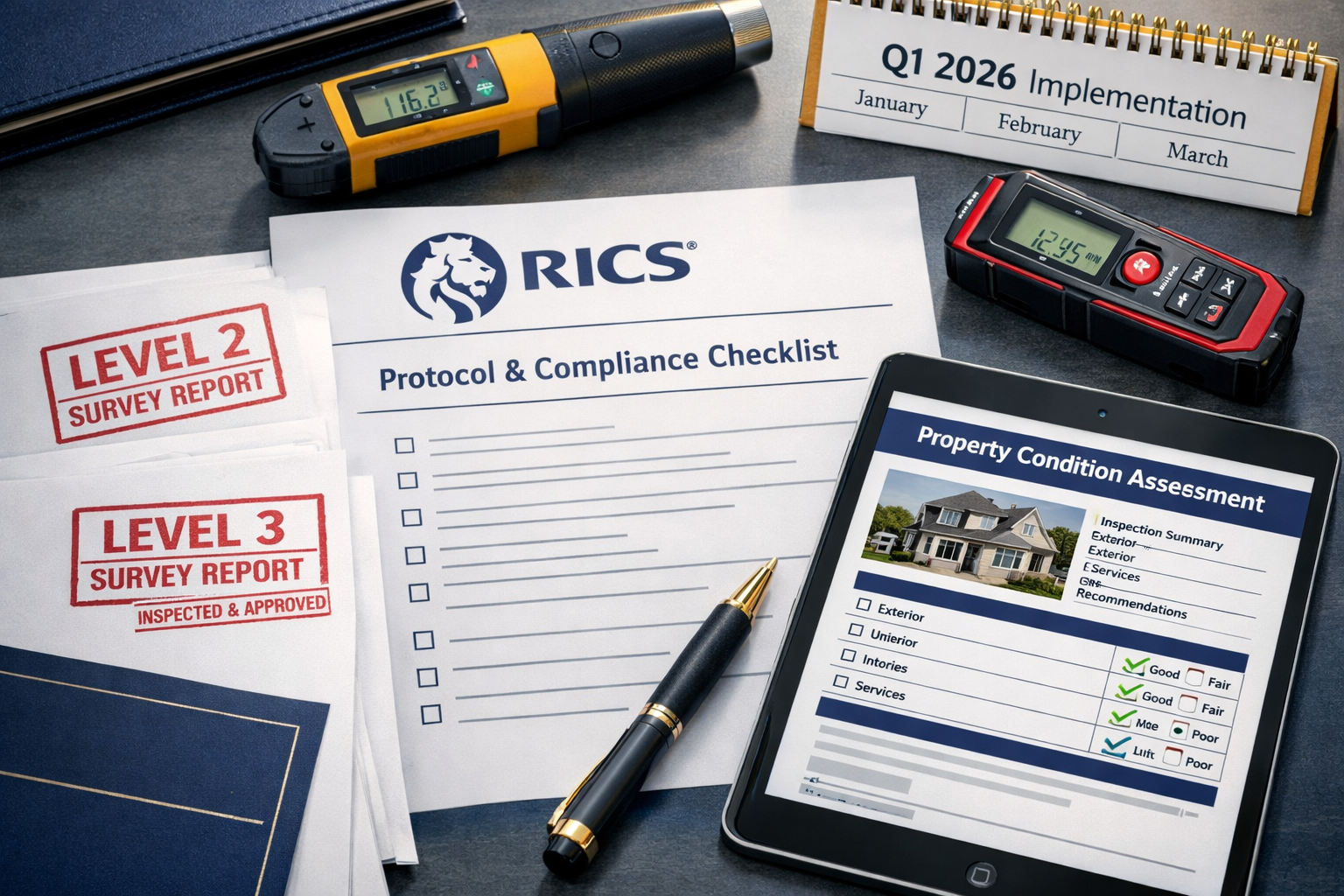
The Royal Institute of Chartered Surveyors has welcomed the proposal to establish consistent and comprehensive upfront information for buyers. RICS stated that these reforms would "ensure clarity at the beginning of the process and reduce failed transactions."[3]
This institutional support extends beyond general endorsement. RICS has actively engaged with government consultations and offered to collaborate on developing:
- Mandatory qualifications for estate agents and conveyancers
- Codes of practice governing professional conduct
- Technical standards for property condition assessments
- Quality assurance frameworks ensuring consistency
RICS has already developed a code of practice in partnership with the Property Ombudsman, demonstrating the organization's commitment to professional standards in this evolving landscape.[3]
Property Condition Assessment Standards
Under the proposed framework, property condition assessments must be tailored to the specific age and type of property being evaluated.[1][4] This customization requirement ensures that:
- Victorian terraced houses receive appropriate scrutiny for period-specific issues (damp, subsidence, original features)
- Modern developments are assessed for contemporary concerns (building regulations compliance, warranties, shared infrastructure)
- Listed buildings undergo specialized evaluation considering conservation requirements
- Non-standard construction properties receive expert analysis of unique structural systems
This tailored approach aligns with existing RICS building survey methodologies, particularly the comprehensive Level 3 Building Survey that provides detailed analysis of property condition.
Survey Types and Compliance Requirements
The reforms will likely standardize around established RICS survey levels, with modifications to suit the mandatory upfront context:
| Survey Type | Typical Use Case | Estimated Cost | RICS Compliance |
|---|---|---|---|
| Level 2 HomeBuyer Report | Standard properties in reasonable condition | £400-600 | RICS Home Survey Standard |
| Level 3 Building Survey | Older properties, unusual construction, extensive defects | £600-1,200+ | RICS Building Survey Standard |
| Specialist Assessments | Specific issues (subsidence, structural, damp) | £300-800 each | RICS specialist protocols |
For sellers, understanding different types of surveys becomes essential to selecting the appropriate assessment level for their property.
Digital Modernization and Standardized Reporting
The reforms propose digital tools including:
- Property logbooks that maintain comprehensive records throughout a property's lifecycle
- Digital ID verification for sellers and buyers
- Standardized data sharing platforms enabling seamless information exchange between professionals
These digital initiatives require surveyors to adopt new technologies and reporting formats. RICS protocols will likely mandate:
- Structured data output compatible with property logbook systems
- Standardized defect categorization and severity ratings
- Digital signature and authentication for survey reports
- API integration capabilities for data sharing with conveyancers and lenders
Cost Structures and Financial Impact of Mandatory Upfront Surveys
The Dramatic Cost Shift: From £38 to £380
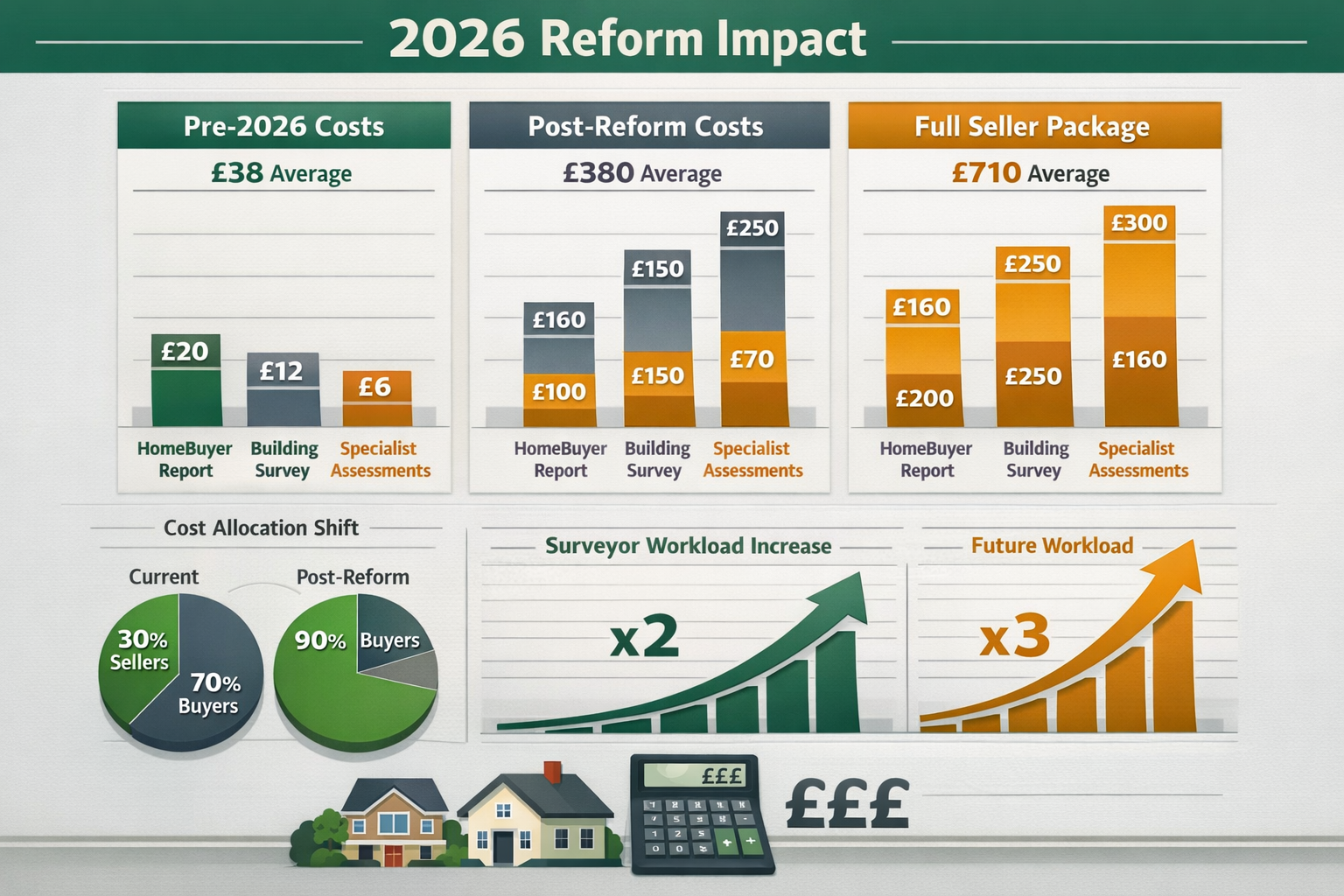
Perhaps the most striking aspect of the reforms is the projected tenfold increase in average survey spending—from £38 to £380 per transaction.[5] This dramatic shift reflects:
- Universal survey coverage replacing the current system where many buyers skip surveys entirely
- Higher quality assessments meeting mandatory RICS standards rather than basic valuations
- Comprehensive scope addressing property-specific risks and defects
- Professional liability requirements for qualified surveyors
Total Seller Cost Package: £710 Fixed Costs
Under the new framework, sellers face approximately £710 in fixed upfront costs, which includes:[5]
- Property condition assessment: £380-600
- Standard searches: £250-300
- EPC and other certificates: £80-150
- Digital property logbook setup: Variable
This represents a significant departure from the traditional model where sellers primarily paid estate agent fees while buyers absorbed most transaction costs. The cost reallocation aims to create better incentives—sellers invest in transparency upfront, reducing the risk of deals collapsing later.
Fee Structure Opportunities for Surveyors
For building surveyors, the mandatory survey requirement creates predictable revenue streams with several pricing models emerging:
Standard Pricing Tiers:
- Basic compliance assessment: £350-450 for straightforward modern properties
- Standard residential survey: £500-700 for typical period properties
- Comprehensive building survey: £800-1,200 for complex or older properties
- Premium service packages: £1,200+ including specialist assessments and rapid turnaround
Surveyors can explore survey pricing strategies that balance competitiveness with quality service delivery.
Volume Discount Structures:
Estate agents and developers may negotiate bulk arrangements with surveying firms, creating partnership opportunities:
- Estate agent referral programs: 10-15% discount for regular referrals
- Developer packages: Fixed-price assessments for new build developments
- Property portfolio services: Discounted rates for landlords with multiple properties
Specialist Assessment Add-Ons
Beyond the mandatory baseline assessment, surveyors can offer specialist services addressing specific property concerns:
- Subsidence surveys for properties with movement history: £400-800
- Roof surveys for properties with visible roof defects: £300-600
- Drainage surveys using CCTV inspection: £250-500
- Damp and timber surveys with laboratory testing: £300-500
- Structural engineering assessments for significant defects: £600-1,500
These add-ons provide additional revenue while delivering comprehensive risk assessment for buyers.
Surveyor Opportunities: Capitalizing on Volume Surges
Projected Volume Increases in 2026
The surveying sector anticipates significant uplift in volumes across both lending and survey work throughout 2026.[4] Several factors drive this projected surge:
- Universal coverage mandate: Every property sale requires an upfront survey, eliminating the current scenario where buyers often skip surveys
- Pent-up market activity: Property transactions delayed during the consultation period may accelerate once reforms are finalized
- Increased market confidence: Reduced transaction failures should encourage more people to enter the market
- Remortgage activity: Homeowners may require updated assessments for refinancing
Industry analysts describe the reforms as potentially "transformative" for surveying demand, creating capacity challenges for firms unprepared for the volume increase.[4]
Capacity Planning and Workforce Expansion
Surveying firms must strategically expand capacity to meet anticipated demand:
Recruitment Strategies:
- RICS-qualified surveyors: Recruit experienced professionals from related sectors (insurance, construction, valuation)
- Graduate training programs: Establish structured pathways for AssocRICS candidates working toward chartered status
- Specialist technicians: Hire support staff for report writing, photography, and administrative tasks
- Regional partnerships: Collaborate with chartered surveyors across different locations to manage overflow work
Technology Investment:
- Digital inspection tools: Thermal imaging cameras, moisture meters, laser measuring devices
- Report automation software: Streamline report generation with template systems and photo integration
- Scheduling and CRM platforms: Manage increased appointment volumes efficiently
- Mobile applications: Enable on-site data capture and real-time reporting
Marketing and Positioning Strategies
Surveyors should position themselves as trusted partners in the reformed homebuying process:
Direct-to-Seller Marketing:
- Educational content explaining mandatory survey requirements
- Transparent pricing and service level comparisons
- Fast turnaround guarantees (48-72 hours)
- Money-back quality assurances
Estate Agent Partnerships:
- Preferred supplier agreements with local agencies
- Joint marketing initiatives highlighting survey readiness
- Integrated booking systems for seamless seller experience
- Commission or referral fee structures
Digital Presence Optimization:
- SEO-optimized content targeting "mandatory property survey 2026"
- Google Business Profile optimization for local search visibility
- Online booking and instant quote systems
- Client testimonials and case studies
Compliance and Quality Assurance
With mandatory surveys comes increased regulatory scrutiny. Surveyors must prioritize:
Professional Standards:
- Maintain current RICS membership and continuing professional development (CPD)
- Adhere strictly to RICS Home Survey Standards and Building Survey protocols
- Carry appropriate professional indemnity insurance (minimum £1 million, preferably £2-5 million)
- Implement quality control processes for report review before release
Risk Management:
- Document inspection methodologies thoroughly
- Clearly state survey limitations and exclusions
- Recommend specialist assessments when encountering concerning defects
- Maintain detailed records of all inspections and communications
Firms offering RICS-certified expert services will be best positioned to capture market share in the reformed landscape.
Implementation Challenges and Industry Capacity Concerns
Government Consultation Questions on Capacity
The official government consultation explicitly addresses concerns about whether conveyancing lawyers, estate agents, and surveyors have the capacity and capability to implement these changes.[2] Key consultation questions include:
- Can the surveying sector scale to meet universal survey demand?
- What transition period is necessary for industry capacity building?
- How should quality standards be monitored and enforced?
- What support mechanisms should government provide during implementation?
These questions acknowledge the substantial operational challenges facing the property sector.
Surveyor Shortage and Training Pipeline
The UK already faces a shortage of qualified building surveyors, with demand outstripping supply even before the reforms. The mandatory survey requirement will exacerbate this gap unless addressed through:
Education Initiatives:
- University partnerships to increase surveying degree enrollment
- Apprenticeship programs combining practical experience with academic study
- Fast-track conversion courses for professionals from related disciplines
- Enhanced CPD offerings to upskill existing surveyors in new protocols
Retention Strategies:
- Competitive compensation reflecting increased demand
- Career progression pathways within surveying firms
- Work-life balance improvements to prevent burnout during volume surges
- Professional development support for RICS membership advancement
Technology and Digital Infrastructure Readiness
The proposed digital modernization requires significant technology investment across the sector:
Property Logbook Systems:
- Standardized platforms for storing and sharing property information
- Integration with Land Registry and local authority databases
- Secure access controls for sellers, buyers, and professionals
- Long-term data maintenance and archiving
Data Sharing Protocols:
- API standards enabling seamless information exchange
- Cybersecurity measures protecting sensitive property and personal data
- Interoperability between different software platforms used by surveyors, conveyancers, and lenders
- Mobile-responsive interfaces for on-the-go access
Smaller surveying firms may struggle with the capital investment required, creating opportunities for software-as-a-service (SaaS) providers to develop affordable, scalable solutions.
Transition Period Considerations
A phased implementation approach is essential to prevent market disruption:
Suggested Transition Framework:
- Phase 1 (Q2-Q3 2026): Voluntary adoption with incentives for early compliance
- Phase 2 (Q4 2026): Mandatory for new build sales and high-value transactions
- Phase 3 (2027): Universal mandatory requirement for all residential sales
- Ongoing: Continuous monitoring and protocol refinement based on market feedback
This gradual rollout allows surveyors to build capacity while maintaining service quality standards.
Strategic Preparation Steps for Building Surveyors
Immediate Action Items for 2026
Surveying firms should implement these priority actions to position for success:
✅ Operational Readiness:
- Audit current capacity: Assess how many surveys your team can realistically complete monthly
- Identify bottlenecks: Determine whether constraints exist in inspection capacity, report writing, or administrative support
- Develop scaling plan: Create recruitment, training, and technology roadmaps for 50-100% volume increase
- Review insurance coverage: Ensure professional indemnity policies adequately cover increased workload and liability
✅ RICS Compliance Verification:
- Confirm membership status: Ensure all surveyors hold current RICS chartered status
- Update CPD records: Complete any outstanding continuing professional development requirements
- Review survey protocols: Align internal procedures with latest RICS Home Survey and Building Survey standards
- Implement quality control: Establish peer review processes for survey reports
✅ Technology Infrastructure:
- Invest in inspection equipment: Upgrade to professional-grade thermal cameras, moisture meters, and measuring tools
- Adopt report automation: Implement software that streamlines report generation and photo integration
- Establish digital workflows: Create systems for electronic report delivery and digital signature collection
- Develop online booking: Enable clients to schedule surveys and receive quotes through your website
Partnership Development Strategies
Building strategic relationships positions surveyors to capture referral business:
Estate Agent Partnerships:
- Approach local estate agencies with preferred supplier proposals
- Offer competitive pricing for bulk referrals
- Provide co-branded marketing materials explaining mandatory surveys to sellers
- Develop integrated booking systems that streamline the seller experience
Conveyancer Relationships:
- Establish communication protocols for sharing survey findings relevant to legal searches
- Create referral networks where conveyancers recommend your services to seller clients
- Develop joint educational content about the reformed homebuying process
Developer Connections:
- Offer new build assessment packages for developers selling completed properties
- Provide snagging survey services for quality assurance
- Develop long-term contracts for volume work on large developments
Fee Structure Optimization
Strategic pricing balances competitiveness with profitability:
Tiered Service Offerings:
- Essential Package (£350-450): Baseline compliance survey meeting mandatory requirements
- Standard Package (£500-700): Comprehensive assessment with detailed defect analysis
- Premium Package (£800-1,200): Full building survey with specialist assessments and priority scheduling
Value-Added Services:
- Express turnaround: 48-hour report delivery for £100-150 premium
- Reinstatement valuations: Bundle RICS reinstatement cost assessments for insurance purposes
- Post-survey consultations: Offer 30-minute phone consultations to explain findings
- Contractor referrals: Provide vetted contractor recommendations for identified defects
Marketing and Client Education
Position your firm as the trusted authority on mandatory upfront surveys:
Content Marketing:
- Publish guides explaining the 2026 reforms to sellers and estate agents
- Create video content demonstrating the survey process and what sellers should expect
- Develop infographics comparing survey types and costs
- Write case studies showing how thorough surveys prevented transaction failures
Local Market Presence:
- Sponsor property sector events and homebuyer seminars
- Present at estate agent training sessions about the reforms
- Participate in local business networks and chambers of commerce
- Develop relationships with property journalists for media coverage
Digital Marketing:
- Optimize website content for "mandatory property survey 2026" and related search terms
- Implement Google Ads campaigns targeting sellers preparing to list properties
- Develop email nurture sequences for estate agent and seller leads
- Create downloadable resources (checklists, guides) that capture contact information
Conclusion: Positioning for Success in the Reformed Market
The Mandatory Upfront Building Surveys Under 2026 Homebuying Reforms: RICS Protocols and Surveyor Opportunities represent a watershed moment for the UK property sector. These transformative changes will fundamentally reshape how homes are bought and sold, creating unprecedented demand for qualified building surveyors while improving market transparency and reducing transaction failures.
For surveying professionals, success in this reformed landscape requires strategic preparation across multiple dimensions:
🏗️ Operational capacity must expand through recruitment, training, and technology investment to meet projected volume surges
📋 RICS compliance and quality standards become non-negotiable as mandatory surveys attract increased regulatory scrutiny
💰 Fee structures should balance competitive pricing with sustainable profitability, offering tiered services that meet diverse client needs
🤝 Strategic partnerships with estate agents, conveyancers, and developers create referral pipelines and market positioning
📱 Digital transformation enables efficient workflows, seamless client experiences, and integration with emerging property logbook systems
The firms that act decisively during this transition period—investing in capacity, maintaining rigorous quality standards, and building strong market relationships—will capture disproportionate market share as the reforms take effect. Those who delay risk being overwhelmed by demand or losing ground to better-prepared competitors.
Next Steps for Building Surveyors
Immediate actions to take in 2026:
- Assess your current capacity and develop a realistic scaling plan for 50-100% volume increases
- Verify RICS compliance across all surveyors and update professional development records
- Invest in technology including inspection equipment, report automation, and online booking systems
- Develop partnership proposals for estate agents and conveyancers in your target markets
- Create educational content positioning your firm as the trusted authority on mandatory surveys
- Monitor consultation updates and participate in industry discussions shaping final implementation details
The homebuying reforms of 2026 offer a rare opportunity to transform your surveying practice while contributing to a more transparent, efficient property market. By preparing strategically and maintaining unwavering commitment to professional standards, building surveyors can capitalize on this historic shift while delivering exceptional value to clients navigating the reformed homebuying process.
For expert guidance on RICS-compliant building surveys and professional property assessments, contact qualified chartered surveyors who can help you navigate these transformative changes.
References
[1] Uk Government Unveils Sweeping Reforms To Homebuying 507088 – https://evrimagaci.org/gpt/uk-government-unveils-sweeping-reforms-to-homebuying-507088
[2] Home Buying And Selling Reform – https://www.gov.uk/government/consultations/home-buying-and-selling-reform/home-buying-and-selling-reform
[3] Government Announces Biggest Shake Home Buying Process Countrys History – https://todaysconveyancer.co.uk/government-announces-biggest-shake-home-buying-process-countrys-history/
[4] Surveying In 2026 Reform Recovery And Renewed Demand – https://www.lrg.co.uk/news-and-insights/surveying-in-2026-reform-recovery-and-renewed-demand/
[5] Breaking Down The Home Buying Shake Up Key Reforms For Buyers Sellers And Agents – https://www.russell-cooke.co.uk/news-and-insights/news/breaking-down-the-home-buying-shake-up-key-reforms-for-buyers-sellers-and-agents