The landscape of residential property surveying is undergoing significant transformation in 2026. As the Royal Institution of Chartered Surveyors (RICS) advances through the critical analysis phase of the Home Survey Standard 2nd Edition Updates: What 2026 Building Surveyors Must Know for Consumer Compliance, building surveyors face a pivotal moment in their professional practice. With over 1,000 consultation comments under review and sweeping changes on the horizon, understanding these updates has never been more crucial for maintaining competitive advantage while ensuring consumer protection.
The stakes are high. The updated standard will reshape how residential surveys are conducted, reported, and delivered across the United Kingdom. For building surveyors committed to excellence and compliance, staying ahead of these changes isn't optional—it's essential for business survival and professional credibility.
Key Takeaways
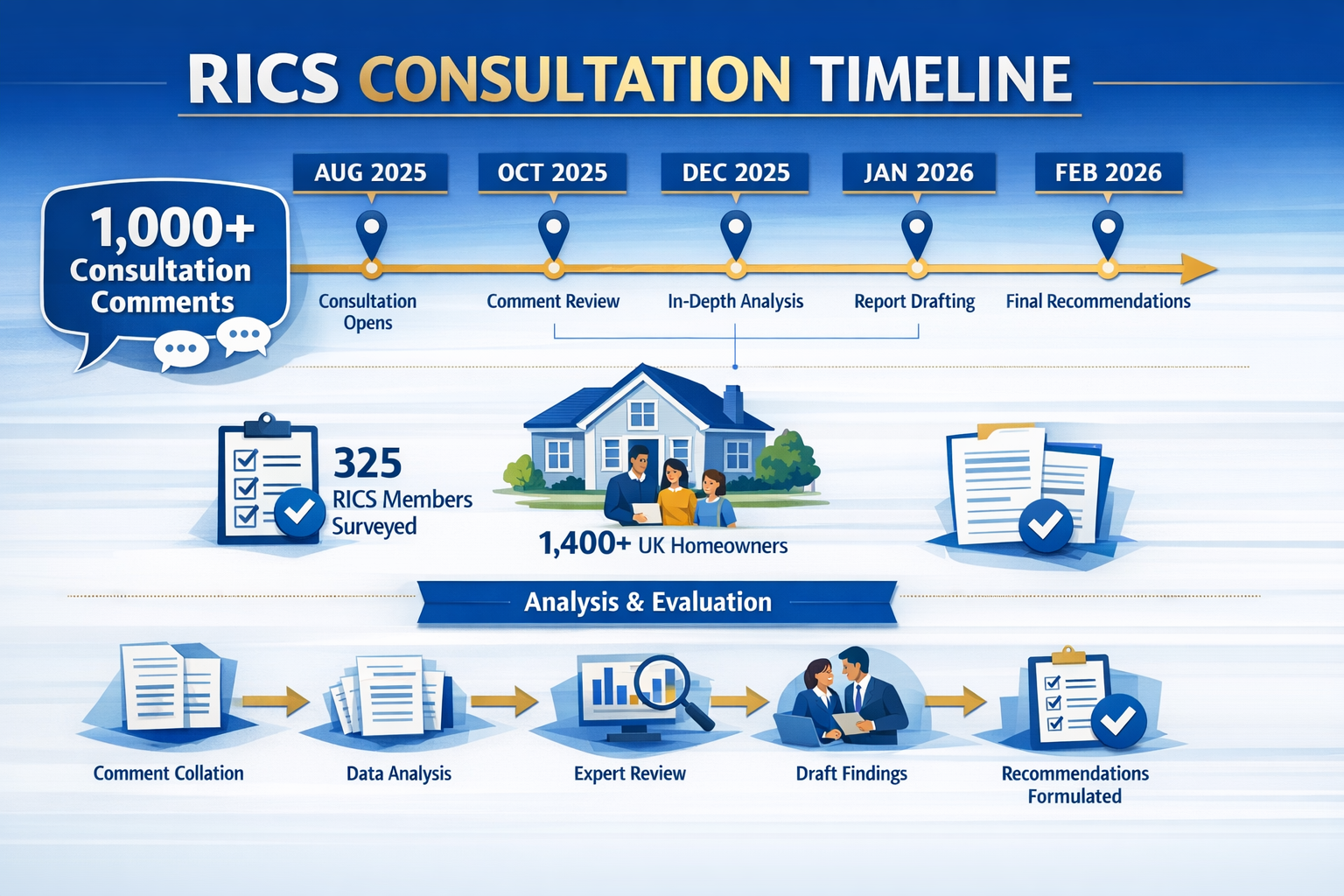
- 🔍 RICS is currently analyzing 1,000+ consultation comments received during the eight-week public consultation period (August-October 2025), with the standard progressing through multiple review stages before final publication
- 📋 Clarity and conciseness are top priorities based on industry feedback, with RICS working to distinguish mandatory requirements ('musts') from recommended practices ('shoulds')
- 💼 Competitiveness concerns are being addressed as surveyors need practical guidance on implementing new standards while remaining commercially viable
- 👥 Consumer protection remains the core focus, with extensive research involving 325 RICS members and 1,400+ UK homeowners shaping the standard's development
- ⏱️ Implementation timeline extends into 2026, with editorial review, panel review, committee approval, and final board approval still ahead before publication
Understanding the Home Survey Standard 2nd Edition Updates: Current Development Status
The Home Survey Standard 2nd Edition Updates: What 2026 Building Surveyors Must Know for Consumer Compliance represents the culmination of extensive industry collaboration and consumer research. As of February 2026, RICS confirmed the standard is firmly in the analysis phase, with the organization meticulously reviewing every piece of feedback received during the consultation period.[1]
The Consultation Journey
The development process has been remarkably comprehensive:
- 70+ hours of expert development involving more than 20 meetings with the Author and Expert Group
- Eight-week public consultation from August 19 to October 14, 2025
- 1,000+ detailed comments submitted by industry stakeholders
- Significant SME firm engagement, highlighting the standard's importance across all practice sizes
- Industry presentations to 1,600+ professionals at major events including Surventrix, SAVA training days, and the RICS Residential Property conference[1]
This level of engagement demonstrates the profession's commitment to getting these updates right. For RICS chartered building surveyors, the collaborative approach ensures the final standard reflects real-world practice challenges.
What the Analysis Phase Means
RICS isn't simply counting votes on proposed changes. The organization is conducting a line-by-line review of consultation feedback, examining:
- The underlying concerns behind each comment
- The practical implications of proposed changes
- How different requirements affect various practice sizes
- The balance between consumer protection and surveyor competitiveness
- Technical feasibility of implementation
This thorough approach ensures the final standard addresses genuine industry needs rather than making superficial adjustments. Building surveyors can expect a well-considered document that balances rigor with practicality.
Critical Changes Building Surveyors Must Prepare For
Clarity and Conciseness Requirements
One of the most consistent themes from consultation feedback centers on the need for clearer, more concise requirements.[1] Previous versions were perceived as overly complex or prescriptive, creating confusion about actual obligations versus best practice recommendations.
The revised standard will address this by:
Streamlining language to eliminate ambiguity
Reducing redundancy in requirements across different survey types
Providing clear examples of compliance in practice
Creating visual aids to illustrate complex concepts
Simplifying reporting templates without sacrificing thoroughness
For surveyors conducting RICS home surveys, this means easier compliance verification and reduced risk of inadvertent non-conformance.
Mandatory vs. Recommended Practices Distinction
A crucial update involves clearly distinguishing between:
| Requirement Type | Indicator | Compliance Level | Flexibility |
|---|---|---|---|
| Mandatory | "Must" | Absolute requirement | None – strict compliance required |
| Recommended | "Should" | Best practice guidance | Professional judgment allowed |
| Optional | "May" | Suggested approach | Full discretion |
This framework helps surveyors understand exactly where they have professional discretion and where strict compliance is non-negotiable. RICS is reviewing how prescriptive the standard should be to ensure this distinction is crystal clear throughout the document.[1]
Competitiveness Considerations
Feedback revealed significant concerns about maintaining competitive positioning while adhering to enhanced standards.[1] Building surveyors need to balance:
- Quality standards that protect consumers
- Operational efficiency that controls costs
- Service differentiation that attracts clients
- Compliance requirements that avoid regulatory issues
The updated standard will provide guidance on achieving this balance, recognizing that surveyors operate in competitive markets where price sensitivity matters. For those offering comparing different types of survey services, understanding these competitive dynamics is essential.
Consumer Protection Focus
At its core, the Home Survey Standard exists to establish best practice and high-quality standards in residential property surveys.[1] The 2nd Edition strengthens this focus by:
✅ Meeting changing consumer needs identified through research with 1,400+ UK homeowners
✅ Fostering trust in surveyors' work through transparent processes
✅ Ensuring excellence in service delivery across all survey types
✅ Protecting consumers from substandard survey practices
✅ Enhancing report clarity so homeowners understand findings
This consumer-centric approach reflects the profession's commitment to serving the public interest while maintaining professional standards.
Implementation Timeline and Review Stages
Understanding the remaining approval pathway helps surveyors prepare for implementation. The standard must progress through several critical stages:
1. Analysis Phase (Current – February 2026)
RICS is currently reviewing all consultation feedback, examining concerns, and determining necessary revisions. This phase involves:
- Categorizing comments by theme
- Assessing technical feasibility of suggestions
- Identifying conflicting feedback requiring resolution
- Drafting revised standard language
- Updating frequently asked questions[1]
2. Editorial Review
Professional editors will review the revised draft to ensure:
- Consistent terminology throughout
- Clear, accessible language
- Proper formatting and structure
- Cross-reference accuracy
- Readability at appropriate levels
3. Residential Professional Group Panel Review
Subject matter experts will evaluate the technical content, ensuring:
- Practical applicability across different property types
- Alignment with current best practices
- Feasibility of requirements for various practice sizes
- Technical accuracy of guidance
- Consistency with related RICS standards
4. Knowledge and Practice Committee Review and Approval
This committee provides strategic oversight, confirming:
- Alignment with RICS strategic objectives
- Consistency with professional standards framework
- Appropriate balance of rigor and flexibility
- Adequate stakeholder consultation
- Readiness for final approval
5. Standards and Regulation Board Approval
The final governance stage where the Board:
- Reviews the complete standard
- Considers the Basis for Conclusions document
- Ensures regulatory compliance
- Authorizes publication
- Sets effective implementation date
6. Publication and Implementation
Once approved, RICS will publish:
- The final Home Survey Standard 2nd Edition
- Comprehensive Basis for Conclusions document summarizing consultation responses and how RICS addressed them[1]
- Implementation guidance and FAQs
- Training materials and resources
- Transition timeline for existing practitioners
For building surveyors offering RICS building surveys or RICS homebuyer surveys level 2, this timeline provides crucial planning information.
Practical Implications for Building Surveyors in 2026
Training and Competence Development
The updated standard will likely require enhanced competence in several areas:
🎓 Technical Knowledge
- Understanding new reporting requirements
- Mastering updated terminology
- Applying revised inspection protocols
- Implementing enhanced quality controls
💻 Technology Integration
- Utilizing updated survey software
- Implementing digital reporting tools
- Managing electronic documentation
- Ensuring data security compliance
🤝 Consumer Communication
- Explaining findings more clearly
- Managing client expectations
- Providing accessible reports
- Handling consumer queries effectively
Surveyors should begin identifying training needs now to ensure readiness when the final standard publishes.
Business Process Adjustments
Firms will need to review and potentially revise:
- Standard Operating Procedures – Updating internal protocols to align with new requirements
- Quality Assurance Systems – Implementing enhanced review processes
- Report Templates – Redesigning formats to meet updated standards
- Fee Structures – Adjusting pricing to reflect any increased requirements
- Client Communication – Updating terms of engagement and service descriptions
Those providing chartered surveyors and valuers services should particularly focus on how valuation integration may be affected.
Risk Management Considerations
The updated standard creates both opportunities and obligations:
Reduced Risk Through:
- Clearer compliance requirements
- Better defined scope of service
- Enhanced consumer understanding
- Improved quality standards
Potential Challenges:
- Transition period confusion
- Increased compliance costs
- Competitive pressure during implementation
- Client education requirements
Proactive risk management involves staying informed, planning ahead, and engaging with RICS guidance materials as they become available.
Regional Considerations and Practice Variations
While the Home Survey Standard applies across the UK, regional variations in property types, market conditions, and consumer expectations require thoughtful application. Surveyors practicing in different regions should consider:
Urban vs. Rural Properties
Urban Areas (such as Central London, North London, or Hammersmith)
- Higher density housing
- More complex structural arrangements
- Greater prevalence of shared facilities
- Leasehold considerations
Suburban and Home Counties (including Hertfordshire, Buckinghamshire, and Surrey)
- Varied property ages
- Mix of construction types
- Garden and outbuilding considerations
- Different maintenance patterns
Property Type Specializations
The standard must accommodate surveys of:
- Period properties requiring specialist knowledge
- Modern new-builds needing snagging report expertise
- Converted properties with complex histories
- Properties with specific defects like subsidence
- Commercial-to-residential conversions
Understanding how the updated standard applies across these variations is essential for comprehensive compliance.
Preparing for the Transition: Actionable Steps
Immediate Actions (Now – Q2 2026)
1. Stay Informed
- Monitor RICS communications and updates
- Review the updated FAQ document
- Attend RICS webinars and training sessions
- Join professional discussion forums
2. Assess Current Practice
- Conduct gap analysis against draft requirements
- Identify areas requiring process changes
- Evaluate training needs
- Review current report templates
3. Plan Resources
- Budget for training and development
- Allocate time for process updates
- Consider technology investments
- Plan staff capacity during transition
Medium-Term Preparation (Q3-Q4 2026)
1. Implement Changes
- Update standard operating procedures
- Revise report templates
- Train staff on new requirements
- Test revised processes
2. Communicate with Clients
- Explain upcoming changes
- Update service descriptions
- Revise terms of engagement
- Manage expectations around timing
3. Quality Assurance
- Conduct internal audits
- Peer review updated reports
- Seek feedback from clients
- Refine processes based on experience
Long-Term Excellence (2027 and Beyond)
1. Continuous Improvement
- Regular compliance reviews
- Ongoing staff development
- Technology optimization
- Client feedback integration
2. Market Positioning
- Highlight compliance as competitive advantage
- Demonstrate commitment to quality
- Build consumer trust
- Differentiate through excellence
Frequently Asked Questions About the Updates
When will the final Home Survey Standard 2nd Edition be published?
While RICS hasn't announced a specific publication date, the standard must complete editorial review, panel review, committee approval, and board approval before publication. Based on the February 2026 update confirming the analysis phase is underway, publication is expected later in 2026.[1]
Will there be a transition period for implementation?
RICS typically provides transition periods for major standard updates, allowing surveyors time to adjust processes and complete training. Specific transition arrangements will be announced with the final publication.
How will the updates affect survey pricing?
Any impact on survey pricing will depend on the final requirements. RICS has acknowledged competitiveness concerns and is working to ensure requirements are practical and proportionate.[1]
What happens to surveys conducted under the current standard?
Surveys completed before the new standard takes effect will remain valid. The transition period will clarify how to handle surveys started under old requirements but completed after the new standard publishes.
Where can surveyors access training on the new standard?
RICS will provide official training materials, webinars, and guidance documents upon publication. Professional development providers will also offer specialized training courses.
The Basis for Conclusions: Transparency in Standard Development
A significant enhancement in the 2nd Edition process is the commitment to publishing a comprehensive Basis for Conclusions document.[1] This document will:
📄 Summarize all consultation responses received during the public consultation
📄 Explain how RICS addressed each major theme of feedback
📄 Provide rationale for decisions made during the revision process
📄 Demonstrate transparency in standard development
📄 Help surveyors understand the context behind requirements
This transparency allows building surveyors to understand not just what the requirements are, but why they exist and how they were developed through collaborative industry input.
Conclusion: Embracing Change for Professional Excellence
The Home Survey Standard 2nd Edition Updates: What 2026 Building Surveyors Must Know for Consumer Compliance represents more than regulatory revision—it's an opportunity to elevate the entire profession. As RICS works through the analysis phase, reviewing over 1,000 consultation comments with meticulous attention to detail, building surveyors have a unique window to prepare for transformative change.[1]
The emphasis on clarity and conciseness, the careful distinction between mandatory and recommended practices, and the focus on consumer protection all signal a standard designed for practical implementation while maintaining professional rigor. The extensive research involving 325 RICS members and 1,400+ UK homeowners ensures the final standard reflects both professional expertise and consumer needs.[1]
Your Next Steps
✅ Monitor RICS communications regularly for updates on publication timeline
✅ Review your current practices against emerging requirements to identify gaps
✅ Invest in professional development to ensure competence with updated standards
✅ Update business processes proactively rather than reactively
✅ Engage with the profession through forums, events, and peer discussions
✅ Plan your transition strategy including timing, resources, and training
✅ Communicate with clients about your commitment to the highest standards
The building surveyors who thrive in 2026 and beyond will be those who view these updates not as burdens but as opportunities—to differentiate their services, build consumer trust, and demonstrate professional excellence. By staying informed, preparing thoroughly, and embracing the spirit of continuous improvement that underlies the Home Survey Standard 2nd Edition, you position yourself at the forefront of the profession.
The journey from consultation to implementation continues, but the destination is clear: a residential surveying profession that serves consumers with unparalleled quality, clarity, and professionalism. Start preparing today to ensure you're ready when the final standard arrives.
References
[1] Home Survey Standard 2nd Edition A Progress Update – https://www.rics.org/news-insights/home-survey-standard-2nd-edition-a-progress-update