The buy-to-let market in 2026 continues to experience unprecedented growth, with institutional investors and portfolio landlords driving demand for property extensions to maximize rental yields. However, this construction boom brings complex legal obligations under the Party Wall etc. Act 1996. Understanding Party Wall Implications for 2026 Buy-to-Let Extensions: Surveyor Protocols Amid Investor-Led Demand has become essential for property professionals navigating this competitive landscape. As extension projects multiply across terraced and semi-detached rental properties, surveyors must implement rigorous protocols to protect both building owners and adjoining neighbors while ensuring compliance with statutory requirements.
Key Takeaways
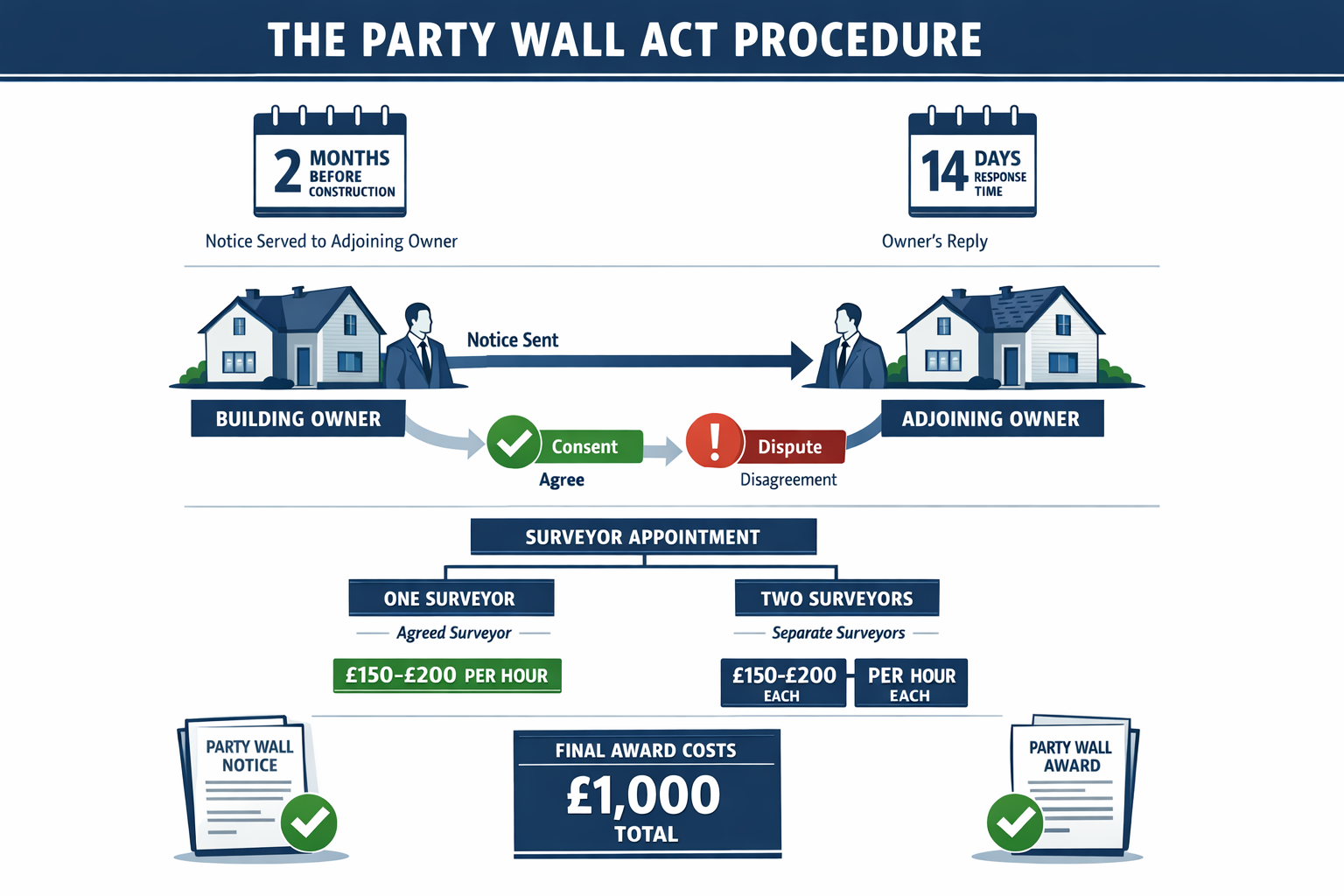
- Mandatory party wall agreements apply to all buy-to-let extensions involving shared walls, requiring formal notices at least 2 months before construction begins
- Professional surveyor costs range from £150-£200 per hour, with complete Party Wall Awards averaging £1,000—a critical budget consideration for investor returns
- Schedule of condition documentation must be completed before construction to establish baseline property conditions and minimize future disputes
- Appointing a single agreed surveyor reduces costs significantly compared to each party selecting separate surveyors
- Investor-led demand for rental property extensions requires surveyors to balance efficiency with thorough compliance protocols
Understanding Party Wall Legislation in the Buy-to-Let Context
The Party Wall etc. Act 1996 establishes legal frameworks that directly impact buy-to-let investors undertaking extension projects. This legislation applies whenever construction work affects shared walls, boundaries, or structures between properties.
What Triggers Party Wall Requirements?
Party wall agreements are mandatory for extensions involving shared walls between semi-detached and terraced properties, building works along garden boundaries, and loft conversions that cut into party walls.[1] For buy-to-let investors, these triggers are particularly relevant when:
- Extending ground floor space that requires excavation within 3 meters of a neighboring property
- Adding rear or side extensions that connect to or affect shared structural walls
- Converting lofts where work involves cutting into party walls for dormers or structural alterations
- Building new walls on or astride the boundary line between properties
The legislation protects adjoining owners while allowing building owners to proceed with legitimate improvements. Understanding these triggers helps investors plan projects effectively and budget for compliance costs.
Statutory Notice Periods and Response Timelines
Notification must occur at least 2 months before construction begins through a formal Party Wall Notice, with neighbors having 14 days to respond with written consent.[1] This timeline creates specific planning implications for buy-to-let investors:
Notice Period Requirements:
| Work Type | Minimum Notice Period | Neighbor Response Time |
|---|---|---|
| New building on boundary | 1 month | 14 days |
| Work to existing party wall | 2 months | 14 days |
| Excavation near boundary | 1 month | 14 days |
Investors must factor these statutory periods into project timelines, particularly when coordinating with tenant vacancies or targeting specific rental market windows. Failure to provide proper notice can result in injunctions halting construction, creating costly delays.
For guidance on managing situations where neighbours proceed without proper agreements, professional surveyor intervention becomes essential.

Surveyor Protocols for Buy-to-Let Extension Projects
Professional surveyors play a critical role in managing Party Wall Implications for 2026 Buy-to-Let Extensions: Surveyor Protocols Amid Investor-Led Demand. Their responsibilities extend beyond simple documentation to include dispute resolution, technical assessment, and protecting the interests of all parties.
The Agreed Surveyor Approach
A neutral, mutually-agreed surveyor should be appointed rather than each party selecting their own, to reduce costs and maintain impartiality.[1] This approach offers significant advantages for buy-to-let investors:
Benefits of Single Agreed Surveyor:
✅ Cost efficiency – One surveyor fee instead of two separate appointments
✅ Faster resolution – Streamlined decision-making without inter-surveyor negotiations
✅ Reduced complexity – Single point of contact for all parties
✅ Impartial assessment – No perceived bias toward either party
When neighbors consent to an agreed surveyor, investors can expect more predictable costs and timelines. However, if the adjoining owner insists on appointing their own surveyor, the building owner must cover both surveyors' reasonable fees—a factor that can significantly impact project budgets.
Schedule of Condition Documentation Standards
Schedule of condition documentation is essential, including photographs and measurements of adjoining properties before work begins, to minimize future disputes.[1] Professional surveyors follow rigorous protocols when preparing these critical documents:
Comprehensive Documentation Requirements:
- Photographic evidence – High-resolution images of all rooms, external walls, and existing defects
- Detailed measurements – Precise dimensions of cracks, settlement, or structural issues
- Written descriptions – Professional narrative of property condition using standardized terminology
- Date and witness verification – Timestamped records with witness signatures when possible
This baseline documentation protects both parties by establishing pre-construction conditions. For buy-to-let investors, thorough schedule of condition guidance prevents false claims of construction damage and provides evidence if legitimate damage occurs.
Cost Considerations and Fee Structures
Surveyor costs currently range from £150-£200 per hour, with full Party Wall Awards costing approximately £1,000.[1] For buy-to-let investors analyzing return on investment, these costs must be factored into extension project budgets:
Typical Fee Breakdown:
- Initial consultation and notice preparation: £300-£500
- Schedule of condition survey: £400-£600
- Party Wall Award preparation: £300-£400
- Site inspections during construction: £200-£400
- Final completion inspection: £200-£300
Total estimated cost: £1,400-£2,200 for straightforward projects
Complex projects involving multiple neighbors, disputes, or significant structural work can substantially increase these costs. Investors should obtain detailed fee proposals before appointing surveyors.
Understanding the overall cost of party wall procedures helps investors budget accurately and avoid project delays due to funding shortfalls.
Investor-Led Demand and Market Dynamics in 2026
The rental property market in 2026 has witnessed significant institutional investment, with portfolio landlords and property companies driving demand for value-adding extensions. This investor-led demand creates unique challenges for surveyors managing party wall procedures.
The Institutional Investment Factor
Large-scale investors approach buy-to-let extensions differently than individual landlords:
Institutional Investor Characteristics:
🏢 Portfolio scale – Multiple simultaneous projects requiring coordinated party wall management
📊 ROI focus – Strict cost-benefit analysis of extension projects versus party wall expenses
⚡ Timeline pressure – Compressed schedules to minimize void periods and maximize rental income
📋 Standardized processes – Preference for repeatable protocols across property portfolios
Surveyors working with institutional clients must balance efficiency with thoroughness. Template documentation, pre-approved surveyor panels, and streamlined communication protocols help manage multiple projects while maintaining compliance standards.
Common Extension Types in Buy-to-Let Properties
Investor demand concentrates on specific extension types that maximize rental yields:
High-Demand Extension Categories:
- Rear kitchen extensions – Adding 3-4 meters to create open-plan living spaces
- Loft conversions – Converting unused attic space into additional bedrooms
- Side return extensions – Utilizing narrow side passages in terraced properties
- Basement conversions – Excavating below ground level for additional living space
Each extension type presents distinct party wall implications. Loft conversions frequently require cutting into party walls for structural support, while basement excavations trigger deep excavation provisions under the Act.
Risk Management for Investor Projects
Buy-to-let investors face specific risks when undertaking extension projects:
Key Risk Areas:
⚠️ Tenant displacement – Managing existing tenancies during construction
⚠️ Neighbor disputes – Adjoining owners concerned about construction impact
⚠️ Cost overruns – Party wall expenses exceeding initial budgets
⚠️ Construction delays – Statutory notice periods extending project timelines
⚠️ Damage claims – Allegations of property damage from construction activities
Professional surveyors mitigate these risks through proactive communication, thorough documentation, and realistic timeline planning. Establishing clear protocols before construction begins prevents most disputes from escalating.
Best Practices for Surveyors Managing Investor Extensions
Surveyors handling Party Wall Implications for 2026 Buy-to-Let Extensions: Surveyor Protocols Amid Investor-Led Demand must implement proven best practices to deliver efficient, compliant services.
Pre-Construction Planning Protocols
Effective party wall management begins well before construction starts:
Essential Pre-Construction Steps:
- Early engagement – Involve surveyors during planning stages, not after designs are finalized
- Neighbor consultation – Informal discussions before formal notices reduce resistance
- Design review – Assess construction methods to minimize party wall impact
- Timeline coordination – Align statutory notice periods with project schedules
- Budget allocation – Ensure adequate funding for party wall costs and potential disputes
Investors benefit from surveyors who understand rental market dynamics and can advise on timing extensions to minimize tenant disruption and void periods.
Communication Strategies for Multiple Stakeholders
Buy-to-let extension projects involve numerous parties requiring coordinated communication:
Stakeholder Management:
- Building owner/investor – Regular updates on compliance status and costs
- Adjoining owners – Clear explanations of rights, responsibilities, and construction impact
- Contractors – Technical guidance on party wall protection measures
- Tenants – Information about construction timelines and access requirements
- Project managers – Integration of party wall requirements into overall schedules
Professional surveyors maintain detailed communication logs and use standardized templates to ensure consistency across multiple projects. This systematic approach prevents misunderstandings and reduces dispute likelihood.
Documentation and Record-Keeping Standards
Comprehensive documentation protects all parties and provides evidence if disputes arise:
Critical Documentation Elements:
📄 Party Wall Notices – Properly formatted statutory notices with accurate descriptions
📄 Acknowledgment records – Proof of delivery and neighbor responses
📄 Schedule of Condition – Detailed pre-construction property assessments
📄 Party Wall Award – Formal agreement specifying work scope and protections
📄 Inspection reports – Regular monitoring during construction
📄 Completion certificates – Final verification that work complies with the Award
Digital documentation systems enable efficient management of multiple investor projects while ensuring regulatory compliance. Cloud-based platforms allow real-time access for all authorized parties.
Dispute Resolution Mechanisms
Despite best efforts, disputes occasionally arise during buy-to-let extension projects:
Escalation Pathway:
- Informal resolution – Direct discussion between surveyors and parties
- Mediation – Third-party facilitation of agreement
- Third surveyor appointment – Independent expert determination under the Act
- Legal proceedings – Court intervention as last resort
Experienced surveyors resolve most disputes through professional dialogue and evidence-based assessment. Understanding common dispute triggers—noise complaints, access concerns, damage allegations—enables proactive mitigation.
For comprehensive information on managing party wall issues, investors can consult frequently asked questions covering typical scenarios.
Regulatory Compliance and Future Considerations
The regulatory landscape surrounding buy-to-let extensions continues evolving in 2026, with implications for party wall procedures.
Building Regulations Integration
Party wall compliance intersects with broader building control requirements:
Coordinated Compliance Areas:
- Structural calculations – Party wall awards must align with building regulation approvals
- Fire safety – Extensions affecting party walls require appropriate fire resistance measures
- Sound insulation – Acoustic performance standards for shared walls in rental properties
- Thermal efficiency – Insulation requirements where party walls are exposed during construction
Surveyors coordinate with building control officers to ensure party wall awards don't conflict with other regulatory requirements. This integrated approach prevents costly mid-project modifications.
Emerging Trends in Surveyor Technology
Technology adoption is transforming party wall surveying in 2026:
Technological Innovations:
🔧 3D laser scanning – Precise documentation of existing conditions
🔧 Drone inspections – External wall assessment without scaffolding
🔧 Digital collaboration platforms – Real-time document sharing among stakeholders
🔧 Automated notice generation – Template-based systems ensuring statutory compliance
🔧 Vibration monitoring – Continuous measurement of construction impact
These technologies improve accuracy, reduce costs, and provide objective evidence for condition assessments. Forward-thinking surveyors invest in digital tools to deliver competitive services to institutional investors.
Market Outlook for Buy-to-Let Extensions
Several factors will influence party wall demand in the coming years:
Market Drivers:
📈 Rental demand growth – Continued housing shortages supporting buy-to-let investment
📈 Yield optimization – Extensions offering superior returns compared to alternative investments
📈 Institutional capital – Large-scale investors entering previously individual-dominated markets
📈 Planning reforms – Permitted development rights encouraging extension projects
Surveyors who understand these market dynamics can position themselves as strategic advisors to investors, not merely compliance facilitators.
Conclusion
Understanding Party Wall Implications for 2026 Buy-to-Let Extensions: Surveyor Protocols Amid Investor-Led Demand is essential for property professionals navigating today's competitive rental market. The intersection of statutory compliance, investor expectations, and neighbor relations requires surveyors to implement rigorous protocols while maintaining cost efficiency.
Key success factors include appointing agreed surveyors to reduce costs, preparing comprehensive schedule of condition documentation, providing clear communication to all stakeholders, and integrating party wall procedures into broader project planning. As institutional investment drives buy-to-let extension demand, surveyors must balance efficiency with thoroughness, leveraging technology and standardized processes to manage multiple projects effectively.
Actionable Next Steps
For buy-to-let investors planning extension projects:
- Engage professional surveyors early in the planning process, before finalizing designs
- Budget appropriately for party wall costs, typically £1,400-£2,200 for straightforward projects
- Initiate neighbor discussions informally before serving formal notices
- Request detailed fee proposals from surveyors, specifying all anticipated costs
- Coordinate timelines to align statutory notice periods with tenant vacancies and construction schedules
- Maintain comprehensive documentation throughout the process for future reference
For surveyors serving investor clients:
- Develop standardized protocols for managing multiple simultaneous projects
- Invest in digital tools for efficient documentation and stakeholder communication
- Build relationships with institutional investors seeking reliable party wall expertise
- Stay current on regulatory changes affecting buy-to-let extensions
- Offer value-added services beyond basic compliance, such as strategic timing advice
The buy-to-let extension market in 2026 presents significant opportunities for investors and surveyors alike. Success requires professional expertise, systematic processes, and commitment to protecting all parties' legitimate interests under the Party Wall etc. Act 1996.
References
[1] Party Wall Agreement – https://hoa.org.uk/advice/guides-for-homeowners/i-am-improving/party-wall-agreement/