The property market in 2026 faces a seismic shift. With mandatory upfront surveys now becoming standard practice across the UK, disputes over property conditions are set to surge dramatically. Expert Witness Preparation for 2026 Homebuying Reform Disputes: Evidence Standards Under New Rules has never been more critical for chartered surveyors and property professionals navigating this transformed landscape. 🏠⚖️
As homebuying reforms take full effect this year, surveyors must adapt their evidence-gathering techniques to meet heightened courtroom standards. The days of casual property assessments are over. Today's expert witnesses need robust, defensible reports that can withstand rigorous legal scrutiny when condition disputes inevitably reach litigation.
Key Takeaways
- Mandatory upfront surveys under 2026 reforms will increase property condition disputes by an estimated 40-60%, requiring surveyors to prepare courtroom-ready evidence from day one
- Evidence standards have evolved significantly, demanding comprehensive photographic documentation, timestamped digital records, and detailed technical analysis that meets judicial requirements
- Expert witness roles differ fundamentally from standard surveying work, requiring specialized training in legal procedures, testimony techniques, and evidence presentation
- RICS compliance now mandates specific protocols for dispute-ready reporting, including enhanced documentation standards and quality control measures
- Regional variations in property markets create unique challenges for expert witnesses, particularly when valuation methodologies differ across jurisdictions
Understanding the 2026 Homebuying Reform Landscape
The homebuying reforms implemented in 2026 represent the most significant changes to property transactions in decades. These regulations mandate comprehensive upfront surveys before properties can be marketed, fundamentally altering the traditional buyer-seller dynamic.
Why Disputes Are Increasing
The new mandatory survey requirements have created unprecedented opportunities for disagreement. When every property must undergo detailed inspection before sale, the volume of documented defects increases exponentially. Buyers now possess detailed technical evidence before making offers, leading to more informed—but also more contentious—negotiations.
Property professionals report several emerging dispute patterns:
- Condition discrepancies between seller expectations and survey findings
- Valuation challenges when defects significantly impact property worth
- Repair cost disagreements over remediation estimates
- Timeline conflicts regarding when defects occurred or worsened
- Liability questions about disclosure obligations under new rules
These disputes frequently require expert witness testimony to resolve, placing chartered surveyors at the center of legal proceedings they may not have anticipated.
The Expert Witness vs. Standard Surveyor Distinction
Understanding Expert Witness Preparation for 2026 Homebuying Reform Disputes: Evidence Standards Under New Rules begins with recognizing a fundamental truth: expert witnesses serve a completely different function than surveyors conducting routine property assessments[1].
A standard surveyor provides information to clients. An expert witness provides independent, impartial evidence to the court. This distinction carries profound implications for how surveys must be conducted, documented, and presented.
| Standard Survey | Expert Witness Report |
|---|---|
| Client-focused recommendations | Court-focused objective analysis |
| Conversational documentation | Legally defensible evidence |
| Practical advice emphasis | Technical precision priority |
| Single-purpose inspection | Multi-purpose evidentiary record |
| Informal photographic evidence | Comprehensive timestamped documentation |
| General condition overview | Detailed defect analysis with causation |
The 2026 reforms blur these boundaries. Every survey now carries potential courtroom implications, requiring surveyors to adopt expert witness standards even for routine assessments.
Evidence Standards for Expert Witness Preparation in 2026
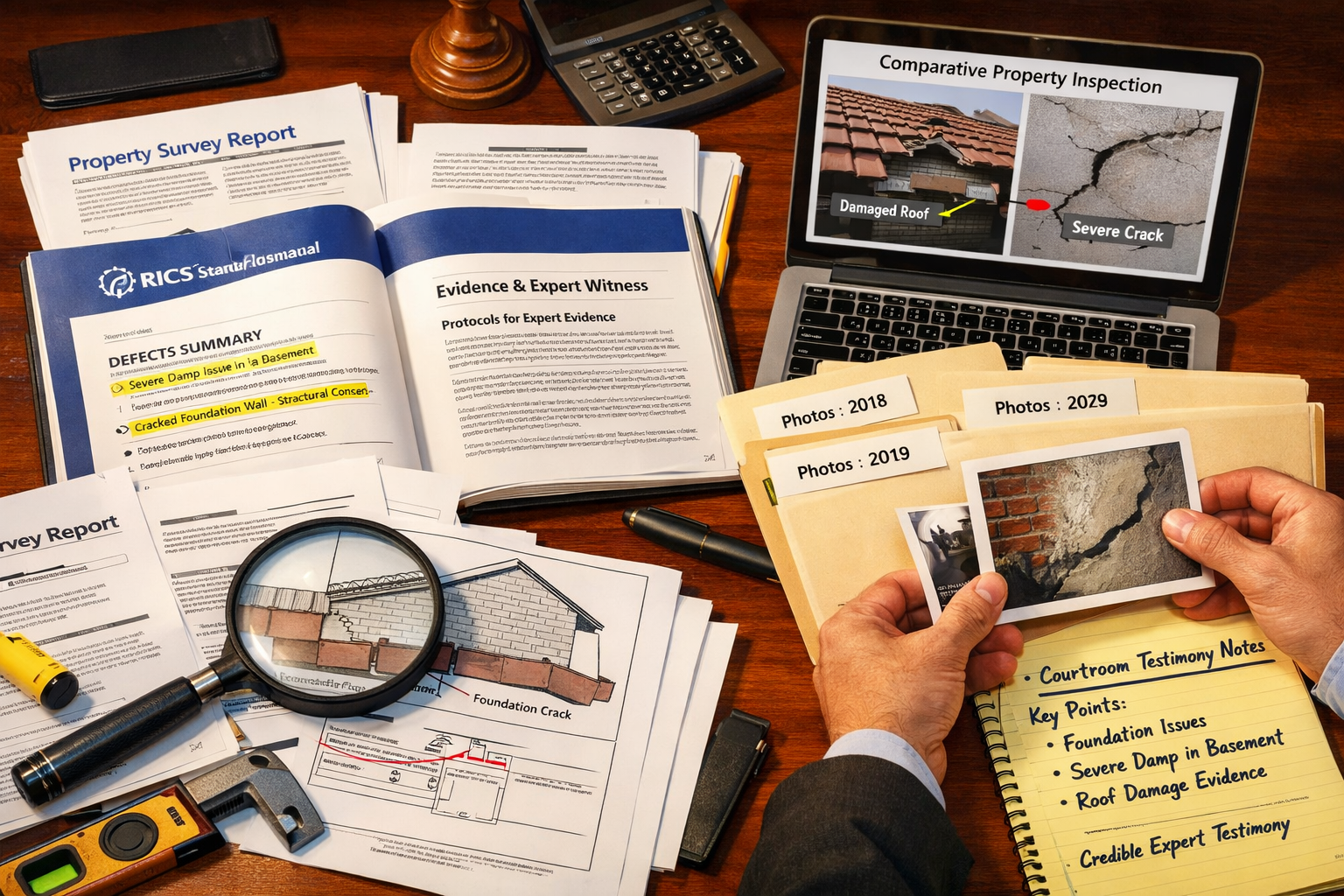
The cornerstone of effective Expert Witness Preparation for 2026 Homebuying Reform Disputes: Evidence Standards Under New Rules lies in understanding what courts actually require from property experts. Evidence standards have evolved considerably, driven by both technological capabilities and judicial expectations.
Documentation Requirements Under New Rules
Comprehensive photographic evidence forms the foundation of any defensible expert witness report. In 2026, courts expect far more than casual smartphone snapshots. Professional documentation must include:
- High-resolution images with proper lighting and scale references
- Timestamped metadata proving when observations were made
- Contextual photographs showing defect location within broader property context
- Comparative images demonstrating progression or severity
- Technical measurements captured with calibrated instruments
- Annotated diagrams explaining technical findings to non-experts
Many surveyors now employ specialized documentation systems that automatically organize evidence with proper chain-of-custody tracking. This prevents challenges to evidence authenticity—a growing concern in property disputes.
Technical Analysis and Causation Evidence
Courts don't simply want to know what defects exist; they need to understand why they occurred and when they developed. This requires expert witnesses to provide:
- Root cause analysis explaining defect origins
- Timeline reconstruction establishing when damage occurred
- Comparative market analysis for valuation disputes
- Industry standard benchmarking showing deviation from acceptable practice
- Scientific testing results from moisture readings, structural calculations, or material analysis
For complex disputes involving non-standard construction or subsidence issues, technical analysis must meet engineering standards, not just surveying conventions.
RICS Standards and Professional Compliance
The Royal Institution of Chartered Surveyors (RICS) has updated guidance specifically addressing expert witness work under 2026 reforms. Compliance with these standards isn't optional—it's essential for report admissibility.
Key RICS requirements include:
- Adherence to Practice Statement and Guidance Note on expert witness work
- Independence declarations confirming no conflicts of interest
- Continuing Professional Development (CPD) in legal procedures and evidence presentation
- Quality assurance protocols for all expert reports
- Professional indemnity insurance adequate for litigation work
Surveyors must also understand their duties extend beyond their client to the court itself. This fundamental principle means expert witnesses cannot act as advocates, regardless of who pays their fees[2].
Digital Evidence Management
Modern expert witness preparation relies heavily on digital evidence management systems. These platforms provide:
✅ Cloud-based storage ensuring evidence preservation and accessibility
✅ Automated backup preventing catastrophic data loss
✅ Version control tracking report revisions and updates
✅ Secure sharing with legal teams while maintaining confidentiality
✅ Audit trails documenting every access and modification
Courts increasingly expect expert witnesses to produce evidence electronically, with proper metadata intact. Understanding digital forensics basics has become essential for property professionals.
Courtroom-Ready Techniques for Surveyors
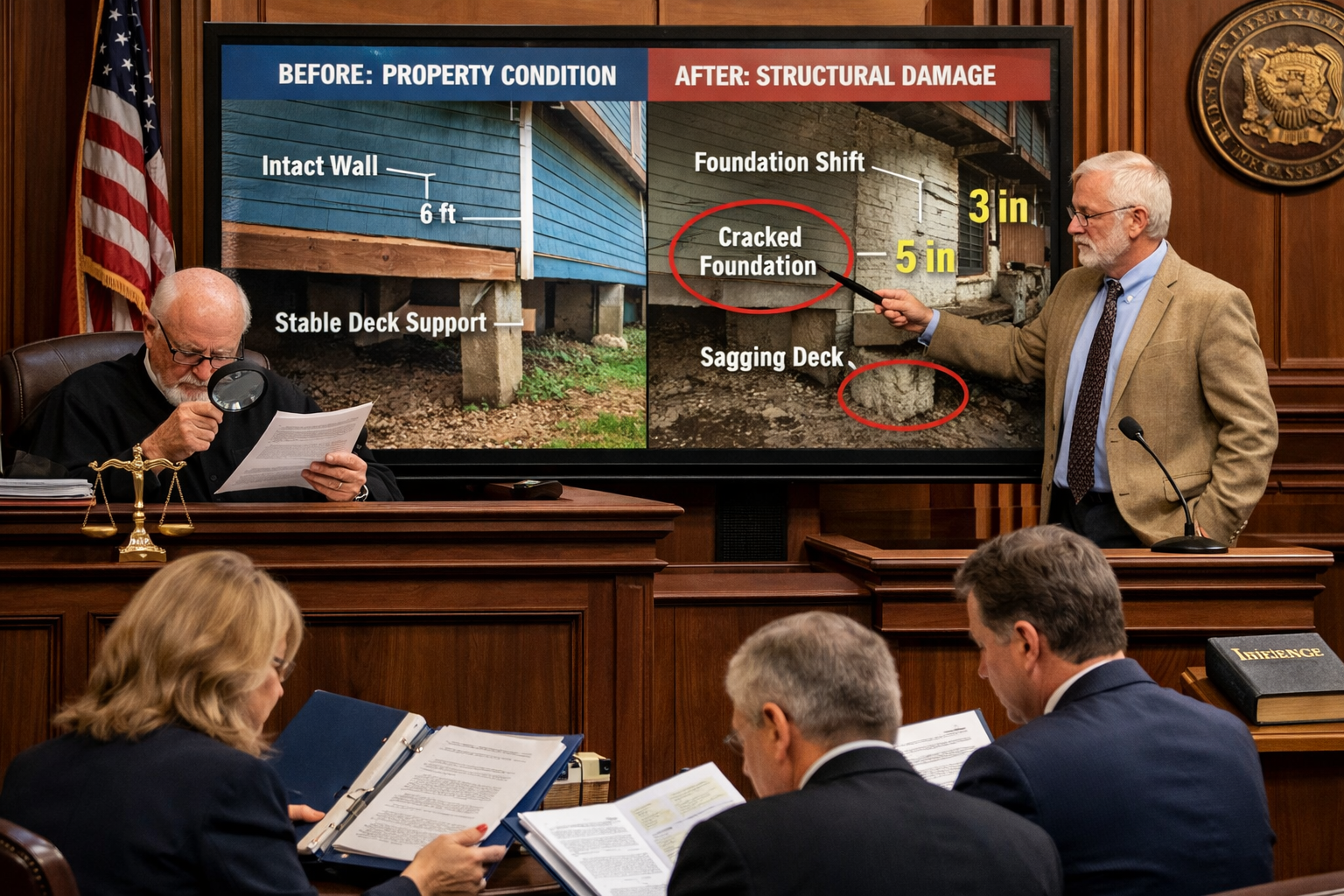
Preparing evidence is only half the battle. Expert Witness Preparation for 2026 Homebuying Reform Disputes: Evidence Standards Under New Rules also demands mastery of courtroom presentation techniques that many surveyors find unfamiliar and uncomfortable.
Report Writing for Legal Scrutiny
Expert witness reports face intense examination from opposing counsel. Every statement must withstand aggressive cross-examination. Effective report writing requires:
Clear structure following a logical progression:
- Executive summary of key findings
- Instructions and scope of work
- Methodology and inspection details
- Factual observations and measurements
- Technical analysis and opinions
- Conclusions and recommendations
- Qualifications and declarations
Precise language avoiding ambiguity:
- Replace "appears to be" with definitive statements or clear uncertainty acknowledgments
- Quantify observations with measurements, not subjective descriptions
- Distinguish between facts observed and opinions formed
- Define technical terms for lay readers
Comprehensive citations supporting all claims:
- Reference industry standards, building regulations, and technical literature
- Cite comparable cases or market data for valuation disputes
- Document all assumptions and limitations clearly
Testimony Preparation and Delivery
Standing in the witness box represents the ultimate test of expert witness preparation. Effective testimony requires specific skills:
Pre-trial preparation:
- Review all case materials thoroughly, including opposing expert reports
- Prepare responses to anticipated challenges
- Practice explaining technical concepts in plain language
- Coordinate with instructing solicitors on key points
- Visit the courtroom if possible to familiarize with the environment
During testimony:
- Speak clearly and directly to the judge, not the questioning barrister
- Pause before answering to ensure questions are fully understood
- Admit limitations or uncertainties honestly—credibility matters more than appearing omniscient
- Avoid defensive reactions to aggressive cross-examination
- Refer to notes and reports as needed without appearing unprepared
Common pitfalls to avoid:
- ❌ Using excessive jargon that confuses rather than clarifies
- ❌ Becoming argumentative with opposing counsel
- ❌ Straying beyond areas of genuine expertise
- ❌ Appearing biased toward the instructing party
- ❌ Failing to acknowledge reasonable alternative interpretations
Handling Cross-Examination Challenges
Cross-examination aims to undermine expert credibility and create doubt about opinions. Surveyors must anticipate common attack strategies:
Qualification challenges: Opposing counsel may question whether the expert possesses sufficient experience in the specific property type or defect category. Comprehensive CPD records and relevant case experience provide the best defense.
Methodology disputes: Expect challenges to inspection techniques, measurement methods, or analytical approaches. Following established RICS-certified protocols provides solid ground.
Alternative explanation attacks: Counsel will propose different causation theories or interpretations. Acknowledge plausible alternatives while explaining why your analysis remains most probable based on available evidence.
Bias implications: Questions about fee arrangements, prior work for the same solicitor, or financial interest in the outcome require straightforward, honest responses demonstrating independence.
Regional Variations and Specialized Disputes
The 2026 reforms affect different property markets uniquely, creating regional challenges for expert witnesses. Valuation methodologies that work in central London may not apply in suburban or rural contexts[2].
Expert witnesses must demonstrate familiarity with:
- Local market conditions affecting property values
- Regional construction practices and material preferences
- Area-specific defect patterns (coastal erosion, mining subsidence, flood risks)
- Planning and conservation constraints varying by jurisdiction
Surveyors working across multiple regions should maintain detailed knowledge of these variations or explicitly limit their expert opinions to areas where they possess genuine expertise.
For specialized disputes involving party wall matters, dilapidations, or lease extensions, additional technical knowledge beyond standard surveying becomes essential.
Building a Defensible Evidence Portfolio
Creating courtroom-ready evidence requires systematic approaches that many surveyors must develop specifically for expert witness work.
Inspection Protocols for Dispute-Ready Surveys
Every inspection should assume potential litigation. This mindset transforms how surveyors approach even routine assessments:
Pre-inspection preparation:
- Review all available documentation (previous surveys, planning records, title documents)
- Identify potential dispute areas based on property type and condition
- Prepare comprehensive equipment checklist including measurement and documentation tools
- Establish clear scope of work with defined limitations
During inspection:
- Follow systematic room-by-room methodology with detailed notes
- Photograph every significant defect from multiple angles with scale references
- Take measurements with calibrated instruments, recording all readings
- Document environmental conditions affecting observations (weather, lighting, access restrictions)
- Note any areas inaccessible for inspection with explanations
Post-inspection documentation:
- Organize evidence chronologically and by location
- Create annotated floor plans showing defect locations
- Compile photographic evidence with clear labeling and descriptions
- Prepare preliminary analysis while observations remain fresh
- Secure all digital evidence with proper backup procedures
Quality Control and Peer Review
Expert witness reports benefit enormously from independent peer review before submission. Many firms now mandate second-opinion reviews for all dispute-related work.
Quality control should verify:
- Technical accuracy of all measurements and calculations
- Logical consistency of analysis and conclusions
- Compliance with RICS standards and legal requirements
- Clarity and accessibility for non-technical readers
- Completeness of evidence supporting all opinions
- Proper disclosure of limitations and assumptions
Peer reviewers should possess equivalent or superior expertise in the relevant property type and defect category. Their feedback often identifies weaknesses opposing experts will exploit.
Continuing Professional Development
Expert Witness Preparation for 2026 Homebuying Reform Disputes: Evidence Standards Under New Rules requires ongoing education beyond standard surveying CPD. Essential training areas include:
📚 Legal procedures and court protocols
📚 Advanced report writing for litigation
📚 Expert witness testimony techniques
📚 Cross-examination preparation and response strategies
📚 Digital evidence management and forensics
📚 Updates on homebuying reform implementation and case law
Many professional bodies now offer specialized expert witness accreditation programs. These credentials demonstrate commitment to excellence in this demanding specialty.
Technology and Innovation in Evidence Gathering
Modern expert witnesses leverage technology far beyond basic photography:
Thermal imaging cameras reveal hidden moisture patterns and insulation defects invisible to conventional inspection. These provide compelling visual evidence courts readily understand.
3D laser scanning creates precise dimensional records of properties, enabling accurate measurements long after inspections conclude. This technology proves particularly valuable for complex structural disputes.
Drone photography captures roof conditions and site context without dangerous access requirements. Aerial perspectives often reveal defect patterns invisible from ground level.
Moisture meters and environmental sensors provide quantifiable data replacing subjective assessments. Documented readings carry far more weight than opinions about "damp conditions."
Cloud-based collaboration platforms enable secure sharing of evidence with legal teams while maintaining proper version control and access logs.
Strategic Considerations for Expert Witness Engagements
Beyond technical competence, successful expert witnesses understand the strategic dimensions of dispute resolution.
When to Accept Expert Witness Instructions
Not every surveyor should accept expert witness work, and not every case warrants acceptance. Careful evaluation prevents problematic engagements:
Accept when:
- The matter falls squarely within your genuine expertise
- You can maintain complete independence and objectivity
- Adequate time exists for thorough investigation and reporting
- Professional indemnity insurance covers the engagement
- Fee arrangements ensure independence (avoid contingency fees)
Decline when:
- Conflicts of interest exist with parties or properties
- The case requires expertise outside your competency
- Timeline pressures prevent proper investigation
- Instructions require advocacy rather than independent analysis
- Previous relationship with parties compromises objectivity
Declining inappropriate instructions protects professional reputation far more effectively than accepting marginal cases.
Fee Structures and Professional Independence
Expert witness fees must never create incentives compromising independence. Best practices include:
- Hourly rates for all work, avoiding success-based compensation
- Clear engagement letters defining scope, fees, and payment terms
- Regular invoicing preventing large outstanding balances
- Advance payments ensuring fees don't depend on favorable outcomes
- Transparent disclosure of all fee arrangements if questioned
Courts view fee structures skeptically when they suggest bias. Maintaining clearly independent compensation arrangements protects credibility.
Managing Client Expectations
Solicitors instructing expert witnesses often lack technical knowledge of property matters. Clear communication about realistic outcomes prevents misunderstandings:
- Explain limitations of available evidence honestly
- Identify weaknesses in the case early rather than at trial
- Distinguish between facts that can be proven and opinions that remain debatable
- Provide realistic ranges rather than precise predictions for uncertain matters
- Prepare clients for possibility that independent analysis may not support their position
The best expert witnesses serve truth and the court, not client preferences. This independence ultimately provides greatest value to instructing parties.
Conclusion
Expert Witness Preparation for 2026 Homebuying Reform Disputes: Evidence Standards Under New Rules represents both challenge and opportunity for chartered surveyors. The mandatory upfront survey requirements transforming property transactions will inevitably generate increased disputes requiring expert resolution. Surveyors who master courtroom-ready evidence gathering and presentation techniques will find themselves in high demand as trusted experts navigating this complex landscape.
Success requires fundamental shifts in how surveys are conducted, documented, and reported. Every inspection must assume potential litigation. Every photograph must meet evidentiary standards. Every opinion must withstand rigorous cross-examination. These elevated standards demand investment in training, technology, and quality control systems many surveyors haven't previously required.
Yet the rewards extend beyond individual cases. Surveyors who establish reputations for thorough, independent, and credible expert witness work become invaluable resources for the legal profession and property market alike. Their evidence helps courts reach just outcomes in disputes that might otherwise remain mired in conflicting claims and technical confusion.
Actionable Next Steps
For surveyors preparing to meet 2026's expert witness challenges:
- Invest in specialized training covering legal procedures, report writing, and testimony techniques beyond standard CPD requirements
- Upgrade documentation systems to capture comprehensive, timestamped evidence meeting courtroom standards
- Develop quality control protocols including peer review for all dispute-related work
- Review professional indemnity insurance ensuring adequate coverage for expert witness engagements
- Build relationships with legal professionals who can provide guidance on court expectations and procedures
- Join professional networks of expert witnesses to share experiences and best practices
- Consider specialized accreditation demonstrating commitment to excellence in this demanding field
The property market's evolution under 2026 reforms creates unprecedented demand for surveyors who can bridge technical expertise and legal requirements. Those who rise to this challenge will shape dispute resolution for years to come, ensuring property transactions proceed on foundations of solid, defensible evidence rather than speculation and disagreement.
For surveyors seeking to expand their expert witness capabilities or requiring specialized support for complex disputes, professional guidance from experienced practitioners provides invaluable insights into navigating this transformed landscape successfully.
References
[1] Expert Witness Essentials For 2026 Boundary Disputes Strengthening Cases In A Recovering Property Market – https://nottinghillsurveyors.com/blog/expert-witness-essentials-for-2026-boundary-disputes-strengthening-cases-in-a-recovering-property-market
[2] Preparing Building Surveyors For 2026 Homebuying Reforms Rics Training And Compliance Essentials – https://nottinghillsurveyors.com/blog/preparing-building-surveyors-for-2026-homebuying-reforms-rics-training-and-compliance-essentials