RICS Home Survey Updates 2026: Integrating Retrofit Standards for Energy-Efficient Building Assessments

nn

Cover Image

The UK property sector stands at a transformative crossroads in 2026. As energy costs continue their upward trajectory and climate commitments intensify, the Royal Institution of Chartered Surveyors (RICS) has responded with groundbreaking updates to home survey standards. These changes, catalyzed by insights from the Quality in Retrofit Summit held at RICS headquarters earlier this year, represent the most significant evolution in residential property assessment in decades. The RICS Home Survey Updates 2026: Integrating Retrofit Standards for Energy-Efficient Building Assessments initiative fundamentally reshapes how chartered surveyors evaluate properties, placing energy performance and retrofit potential at the heart of professional practice.

This comprehensive transformation arrives at a critical moment. UK homes currently account for approximately 16% of national carbon emissions, while the property market shows tentative signs of recovery following recent economic turbulence [1]. For property buyers, sellers, and homeowners, understanding these updated survey standards has never been more essential.

Key Takeaways

  • 🏠 RICS has launched a dedicated Residential Retrofit Surveying AssocRICS pathway to train professionals in retrofit testing, monitoring, evaluation, and building pathology assessment [1]
  • 📊 94% of occupiers value indoor environmental quality and 88% prioritize energy efficiency, driving demand beyond carbon reduction alone [1]
  • 🔄 The Home Survey Standard 2nd Edition is undergoing comprehensive review with over 1,000 consultation comments, focusing on retrofit integration and technological advances [2]
  • 💷 UK Government's Warm Homes Plan creates expanded surveyor roles in compliance assessment, whole-house upgrades, and minimum standards enforcement [1]
  • Fabric-first assessment methodologies now form the foundation of updated survey protocols, emphasizing building envelope performance before technology solutions [1]

Understanding the RICS Home Survey Updates 2026: Integrating Retrofit Standards for Energy-Efficient Building Assessments Framework

Section Image

The Retrofit Summit Catalyst

The Quality in Retrofit Summit, convened at RICS headquarters in early 2026, brought together industry leaders, policymakers, and surveying professionals to address the urgent need for standardized retrofit assessment protocols [1]. Taking place just one day before the UK Government's Warm Homes Plan launch, this gathering established the strategic direction for integrating retrofit considerations into mainstream surveying practice.

The summit highlighted a fundamental shift in professional priorities. Traditional RICS building surveys have historically focused on structural integrity, damp prevention, and maintenance requirements. While these elements remain critical, the 2026 updates expand the surveyor's remit to include comprehensive energy performance evaluation and retrofit opportunity identification.

The Home Survey Standard 2nd Edition Development

The Home Survey Standard 2nd Edition represents the culmination of extensive consultation and professional input. With over 1,000 comments received during the review process, RICS has undertaken a thorough analysis phase involving member-led professional panel review groups [2]. This collaborative approach ensures the updated standards reflect both cutting-edge technical expertise and practical implementation realities.

Key development priorities include:

  • Enhanced clarity and conciseness in survey reporting formats
  • Integration of consumer insights from property buyers and homeowners
  • Technological adaptation to incorporate thermal imaging, airtightness testing, and digital assessment tools
  • Retrofit pathway guidance aligned with national frameworks across England, Scotland, Wales, and Northern Ireland
  • Regulatory compliance mechanisms ensuring surveys support emerging legislation

The comprehensive review programme remains in the analysis phase as of 2026, with regulatory approval processes still pending [2]. However, forward-thinking chartered surveyors are already incorporating retrofit assessment principles into their professional practice.

Consumer Demand Driving Change

The statistics reveal compelling market dynamics. According to RICS' Sustainability Report 2025, 94% of property occupiers value indoor environmental quality as a critical factor in their housing decisions, while 88% rate energy efficiency as a top priority [1]. These figures demonstrate that consumer expectations have evolved far beyond basic shelter requirements.

This shift creates significant opportunities for RICS chartered building surveyors who can effectively communicate retrofit potential alongside traditional condition reporting. Property buyers increasingly seek properties that offer:

Lower ongoing energy costs through improved thermal performance
Enhanced comfort levels via better insulation and ventilation
Future-proofed compliance with evolving regulatory standards
Improved property values linked to superior EPC ratings
Reduced environmental impact supporting personal sustainability goals

The RICS Residential Retrofit Surveying Pathway and Professional Development

AssocRICS Pilot Programme Launch

One of the most significant outcomes from the 2026 Retrofit Summit was the announcement of the RICS Residential Retrofit Surveying AssocRICS pilot pathway [1]. This dedicated entry route provides structured professional development for surveyors specializing in retrofit assessment and implementation.

The pathway encompasses comprehensive training across five core competency areas:

Competency Area Key Skills Developed Practical Applications
Retrofit Testing Airtightness measurement, thermal imaging, moisture detection Pre and post-retrofit performance verification
Monitoring & Evaluation Energy consumption analysis, indoor air quality assessment Long-term retrofit effectiveness tracking
Risk Assessment Unintended consequence identification, moisture risk evaluation Safe retrofit specification and quality control
Building Pathology Historic construction understanding, material compatibility Appropriate retrofit solutions for older properties
Regulatory Compliance EPC requirements, Awaab's Law standards, building regulations Legal compliance assurance and documentation

This structured pathway addresses a critical skills gap in the UK construction sector. As retrofit demand accelerates, the industry requires thousands of qualified professionals capable of delivering high-quality assessments that protect consumer interests while advancing energy efficiency goals.

Fabric-First Methodology Integration

The fabric-first approach forms the philosophical foundation of the RICS Home Survey Updates 2026: Integrating Retrofit Standards for Energy-Efficient Building Assessments framework [1]. This methodology prioritizes improvements to the building envelope—walls, roof, floors, windows, and doors—before considering technological solutions like heat pumps or solar panels.

Surveyors trained in fabric-first assessment evaluate:

🔍 Wall insulation potential including cavity wall, external wall, and internal wall insulation options
🔍 Roof and loft insulation performance and upgrade opportunities
🔍 Window and door thermal efficiency with recommendations for replacement or secondary glazing
🔍 Floor insulation feasibility for solid and suspended floors
🔍 Airtightness current performance and improvement strategies
🔍 Thermal bridging identification and mitigation approaches

This comprehensive building envelope assessment provides the foundation for effective retrofit planning. By addressing fabric performance first, surveyors help homeowners achieve maximum energy savings with minimal ongoing maintenance requirements.

Awaab's Law Compliance and Damp Management

The tragic death of two-year-old Awaab Ishak from prolonged exposure to mould in 2020 led to the introduction of Awaab's Law, establishing strict timeframes for landlords to address damp and mould hazards [1]. The RICS Home Survey Updates 2026 explicitly incorporate compliance assessment for these critical health and safety standards.

Surveyors now play an expanded role in:

  • Conducting detailed condition surveys identifying damp, mould, and condensation risks
  • Assessing ventilation adequacy and recommending improvements
  • Evaluating moisture management in retrofit specifications to prevent unintended consequences
  • Documenting compliance evidence for landlord regulatory obligations
  • Providing risk mitigation strategies balancing energy efficiency with healthy indoor environments

This integration reflects the holistic nature of modern building assessment, where energy performance cannot be separated from occupant health and wellbeing considerations.

Implementing RICS Home Survey Updates 2026: Integrating Retrofit Standards for Energy-Efficient Building Assessments in Practice

Enhanced Survey Deliverables

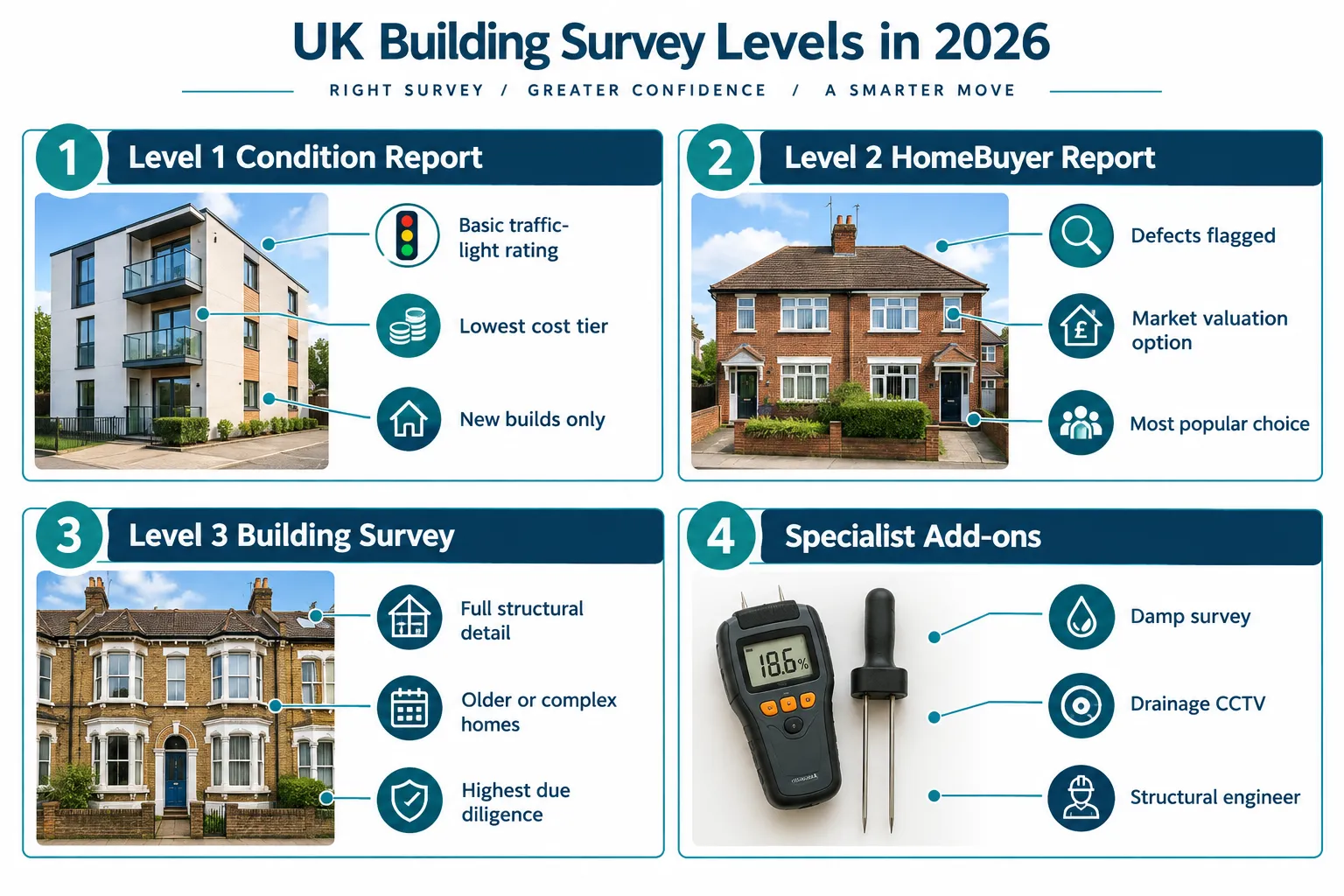
The updated survey standards transform what property buyers and homeowners receive from their RICS Level 3 building surveys. Traditional reports focused primarily on defects, maintenance requirements, and structural condition. The 2026 enhancements add comprehensive retrofit assessment sections including:

Energy Performance Analysis

  • Current EPC rating with detailed breakdown
  • Heat loss calculations for major building elements
  • Identification of primary energy efficiency deficiencies
  • Comparative analysis against similar property types

Retrofit Opportunity Roadmap

  • Prioritized improvement recommendations
  • Fabric-first upgrade pathway
  • Estimated cost ranges for interventions
  • Projected energy savings and payback periods
  • EPC rating improvement trajectory

Future-Proofing Guidance

  • Renewable energy integration potential (solar PV, heat pumps, battery storage)
  • Electric vehicle charging infrastructure readiness
  • Smart home technology compatibility
  • Net-zero pathway alignment

Regulatory Compliance Assessment

  • Current building regulation compliance status
  • Anticipated regulatory changes impact
  • Minimum Energy Efficiency Standards (MEES) compliance for rental properties
  • Awaab's Law damp and mould risk evaluation

This expanded scope provides property buyers with actionable intelligence for long-term ownership planning, while sellers can better understand value-adding improvement opportunities.

The UK Government Warm Homes Plan Integration

The UK Government's Warm Homes Plan, launched in early 2026, establishes a three-pillar approach to residential energy efficiency [1]:

1️⃣ Targeted Support for Low-Income Households – Fully-funded whole-house upgrades for eligible properties
2️⃣ Universal Offer for All Households – Financial incentives and support for homeowners able to co-invest
3️⃣ Stronger Protections for Renters – Enhanced minimum standards and enforcement mechanisms

Each pillar creates distinct roles for chartered surveyors:

Low-Income Support Programme

  • Pre-retrofit condition assessments
  • Specification development for whole-house upgrades
  • Quality assurance inspections
  • Post-installation verification and performance testing

Universal Household Offer

  • Independent retrofit advice and planning
  • Cost-benefit analysis for improvement options
  • Contractor specification review
  • Project management and oversight

Renter Protection Enforcement

  • Minimum standards compliance auditing
  • Landlord obligation verification
  • Tenant complaint investigation support
  • Regulatory reporting and documentation

These expanded professional services create significant opportunities for chartered surveyors while ensuring quality and consumer protection throughout the retrofit acceleration.

Regional Variations and Devolved Nation Considerations

The RICS Residential Retrofit Standard recognizes the importance of aligning with pre-existing national frameworks across the UK's devolved nations [1]. Scotland, in particular, has identified retrofit programme acceleration as a priority, addressing skills and capacity challenges while promoting high-quality data and professional standards [3].

Regional considerations include:

Scotland

  • Integration with Scottish Government's Heat in Buildings Strategy
  • Alignment with Energy Efficient Scotland Route Map
  • Support for rural and island community retrofit challenges
  • Historic building conservation balance

Wales

  • Welsh Government Warm Homes Programme coordination
  • Innovative Housing Programme retrofit requirements
  • Welsh language survey reporting options
  • Traditional construction preservation

Northern Ireland

  • Affordable Warmth Scheme integration
  • Boiler Replacement Scheme coordination
  • Cross-border harmonization with Republic of Ireland standards
  • Unique building stock characteristics

England

  • Social Housing Decarbonisation Fund alignment
  • Local Authority Delivery scheme coordination
  • Historic England guidance integration
  • Regional climate variation considerations

Surveyors operating across multiple regions must understand these nuanced differences while maintaining consistent professional standards and quality assurance.

Technology Integration and Digital Assessment Tools

The 2026 survey updates explicitly acknowledge technological advances transforming professional practice [2]. Modern surveyors increasingly deploy:

Thermal Imaging Cameras

  • Heat loss visualization and quantification
  • Insulation deficiency identification
  • Thermal bridging detection
  • Pre and post-retrofit performance comparison

Airtightness Testing Equipment

  • Blower door testing for air leakage measurement
  • Infiltration point identification
  • Ventilation strategy development
  • Building regulation compliance verification

Moisture Meters and Hygrometers

  • Damp detection and measurement
  • Condensation risk assessment
  • Retrofit moisture risk evaluation
  • Indoor air quality monitoring

Digital Reporting Platforms

  • Interactive survey reports with embedded images and videos
  • Client portal access for ongoing reference
  • Automated EPC improvement pathway visualization
  • Integration with property transaction platforms

Building Information Modeling (BIM)

  • 3D property modeling and visualization
  • Retrofit scenario modeling
  • Whole-life cost analysis
  • Collaborative design development

These technological capabilities enhance survey accuracy, improve client communication, and support evidence-based retrofit planning.

Market Implications and Property Transaction Considerations

Section Image

Impact on Property Valuations

The integration of retrofit standards into home surveys creates significant implications for RICS property valuations. Properties with superior energy performance increasingly command premium prices, while those requiring substantial retrofit investment face valuation adjustments.

Key valuation considerations include:

💰 EPC Rating Premium – Properties with A or B ratings achieve 5-15% price premiums in many markets
💰 Retrofit Cost Deductions – Significant energy efficiency deficiencies reduce offers by estimated improvement costs
💰 Future-Proofing Value – Properties ready for net-zero compliance attract environmentally-conscious buyers
💰 Running Cost Capitalization – Lower energy bills translate to higher affordable purchase prices
💰 Regulatory Risk Discounting – Properties at risk of future compliance requirements face valuation penalties

Surveyors conducting Red Book valuations must now explicitly consider energy performance and retrofit potential as material valuation factors, particularly for investment and lending purposes.

Mortgage Lending and Energy Efficiency

Major UK lenders are increasingly incorporating energy performance criteria into mortgage decision-making. Some institutions offer:

  • Green mortgages with preferential rates for high-EPC properties
  • Retrofit financing integrated into purchase mortgages
  • Energy efficiency improvement conditions for properties below minimum standards
  • Valuation adjustments reflecting retrofit requirements

The RICS Home Survey Updates 2026: Integrating Retrofit Standards for Energy-Efficient Building Assessments directly support these lending innovations by providing standardized, reliable energy performance assessments that lenders can confidently incorporate into risk evaluation.

Rental Market Minimum Standards

The private rental sector faces escalating energy efficiency requirements. Current Minimum Energy Efficiency Standards (MEES) prohibit letting properties with EPC ratings below E, with further tightening anticipated. The Warm Homes Plan's third pillar strengthens protections for renters, creating compliance obligations for landlords [1].

Surveyors support landlord compliance through:

  • Portfolio energy audits identifying properties requiring improvement
  • Prioritized upgrade planning maximizing investment efficiency
  • Regulatory compliance certification providing evidence for enforcement purposes
  • Tenant dispute resolution offering independent technical assessment

These services protect both landlord investments and tenant welfare while advancing national energy efficiency objectives.

Property Transaction Timeline Considerations

The enhanced survey scope may extend property transaction timelines, particularly when significant retrofit requirements are identified. Buyers and sellers should anticipate:

Extended Survey Periods

  • Comprehensive retrofit assessments require additional time beyond traditional surveys
  • Thermal imaging and airtightness testing may need specific weather conditions
  • Detailed cost estimation requires multiple specialist consultations

Negotiation Complexities

  • Retrofit cost allocation between buyer and seller
  • Completion condition specifications for energy improvements
  • Warranty and guarantee transfer arrangements

Financing Coordination

  • Green mortgage application processes
  • Retrofit grant and incentive claim procedures
  • Staged payment arrangements for improvement works

Working with experienced RICS chartered surveyors helps navigate these complexities efficiently while protecting all parties' interests.

Challenges and Opportunities for the Surveying Profession

Skills Development and Capacity Building

The retrofit revolution creates both challenges and opportunities for the surveying profession. The RICS AssocRICS pathway addresses immediate training needs, but broader capacity building remains essential [1]. Key challenges include:

Workforce Expansion

  • Attracting new entrants to the profession
  • Retaining experienced practitioners
  • Competitive pressure from other construction sectors
  • Geographic distribution ensuring rural area coverage

Continuing Professional Development

  • Keeping pace with evolving technologies
  • Understanding emerging retrofit materials and methods
  • Regulatory change adaptation
  • Cross-disciplinary collaboration skills

Quality Assurance

  • Maintaining professional standards during rapid expansion
  • Preventing unqualified practitioners entering the market
  • Consumer protection through robust regulation
  • Professional indemnity insurance adaptation

RICS commitment to structured professional development pathways helps address these challenges while ensuring consumer confidence in surveyor competence.

Business Model Evolution

Traditional surveying practices must evolve business models to capitalize on retrofit opportunities. Successful adaptation strategies include:

Service Diversification

  • Expanding from one-time surveys to ongoing retrofit advisory relationships
  • Developing project management capabilities for retrofit implementation
  • Creating monitoring and verification services for post-retrofit performance
  • Offering energy performance optimization consultancy

Technology Investment

  • Acquiring thermal imaging and testing equipment
  • Implementing digital reporting platforms
  • Developing client relationship management systems
  • Investing in continuing education and training

Partnership Development

  • Collaborating with retrofit contractors and installers
  • Building relationships with energy efficiency financing providers
  • Engaging with local authority retrofit programmes
  • Networking with housing association clients

Marketing Repositioning

  • Emphasizing retrofit expertise in client communications
  • Demonstrating value beyond traditional survey services
  • Building thought leadership through content and education
  • Targeting environmentally-conscious property buyers

These adaptations position surveying practices for long-term success in the evolving property market.

Consumer Education and Expectation Management

The RICS Home Survey Updates 2026: Integrating Retrofit Standards for Energy-Efficient Building Assessments success depends partly on effective consumer education. Property buyers and homeowners must understand:

Survey Scope and Limitations

  • What retrofit assessments include and exclude
  • The difference between identification and specification
  • Indicative versus detailed cost estimates
  • The role of specialist consultants for complex interventions

Retrofit Decision-Making

  • Fabric-first principles and their importance
  • Whole-house approach benefits versus piecemeal improvements
  • Payback period realism and long-term value creation
  • Quality versus cost trade-offs

Implementation Considerations

  • Choosing qualified retrofit contractors
  • Managing disruption during improvement works
  • Warranty and guarantee importance
  • Performance monitoring and verification

Surveyors who effectively educate clients build trust, manage expectations, and create opportunities for ongoing professional relationships beyond initial survey commissions.

Future Developments and Emerging Trends

Net-Zero Pathway Integration

The UK's commitment to achieving net-zero carbon emissions by 2050 necessitates comprehensive residential sector transformation. Future survey standard iterations will likely incorporate:

  • Whole-life carbon assessment evaluating embodied and operational emissions
  • Renewable energy integration planning beyond current basic recommendations
  • Circular economy principles promoting material reuse and recycling
  • Climate adaptation measures addressing overheating, flooding, and extreme weather resilience
  • Smart grid readiness enabling demand response and energy storage integration

Forward-thinking surveyors are already developing competencies in these emerging areas, positioning themselves as essential advisors for the transition to sustainable housing.

Artificial Intelligence and Data Analytics

Technological innovation continues accelerating, with artificial intelligence and data analytics offering transformative potential:

Automated Defect Detection

  • AI-powered image analysis identifying building defects
  • Thermal imaging interpretation and quantification
  • Pattern recognition across large property portfolios
  • Predictive maintenance recommendations

Retrofit Optimization Algorithms

  • Cost-benefit analysis automation
  • Scenario modeling for improvement combinations
  • Performance prediction based on similar property data
  • Personalized recommendations reflecting occupant behavior

Market Intelligence Integration

  • Comparative energy performance benchmarking
  • Regional retrofit cost databases
  • EPC improvement value impact analysis
  • Regulatory change impact forecasting

These technologies augment rather than replace professional judgment, enabling surveyors to deliver enhanced value through data-driven insights.

Policy Evolution and Regulatory Tightening

The regulatory landscape continues evolving, with anticipated developments including:

Stricter EPC Requirements

  • Potential minimum C rating requirements for all properties by 2030
  • Enhanced EPC assessment methodologies
  • In-use performance verification requirements
  • Penalties for non-compliance escalation

Embodied Carbon Regulations

  • Whole-life carbon assessment mandates
  • Material specification restrictions
  • Retrofit versus demolition decision frameworks
  • Carbon budget allocation systems

Occupant Health Standards

  • Indoor air quality minimum requirements
  • Overheating prevention mandates
  • Accessibility and adaptability integration
  • Wellbeing outcome measurement

Surveyors must maintain awareness of policy developments, adapting professional practice to support compliance while advocating for practical, evidence-based regulatory frameworks.

Conclusion

Section Image

The RICS Home Survey Updates 2026: Integrating Retrofit Standards for Energy-Efficient Building Assessments represents a watershed moment for the UK property sector. By placing energy performance and retrofit potential at the heart of professional surveying practice, RICS has positioned chartered surveyors as essential facilitators of the transition to sustainable, healthy, and affordable housing.

The comprehensive framework emerging from the Quality in Retrofit Summit, the Home Survey Standard 2nd Edition development, and the new AssocRICS pathway creates unprecedented opportunities for surveyors while delivering tangible benefits for property buyers, homeowners, landlords, and society as a whole.

Success requires commitment from all stakeholders. Surveyors must invest in skills development, embrace technological innovation, and evolve business models to meet expanding client needs. Property buyers and homeowners should recognize the value of comprehensive retrofit assessment in informing purchase decisions and long-term ownership planning. Policymakers must continue supporting professional development while ensuring regulatory frameworks remain practical and evidence-based.

Actionable Next Steps

For Property Buyers:
✅ Commission surveys from RICS chartered surveyors with retrofit assessment expertise
✅ Request detailed retrofit opportunity roadmaps as part of survey deliverables
✅ Factor energy performance and improvement costs into purchase negotiations
✅ Explore green mortgage and retrofit financing options early in the transaction process

For Homeowners:
✅ Consider retrofit assessments even without immediate property transactions
✅ Prioritize fabric-first improvements for maximum long-term value
✅ Investigate Warm Homes Plan eligibility and available support programmes
✅ Engage qualified surveyors for independent advice before commissioning retrofit works

For Surveyors:
✅ Pursue RICS Residential Retrofit Surveying AssocRICS pathway training
✅ Invest in thermal imaging, airtightness testing, and digital reporting capabilities
✅ Develop partnerships with retrofit contractors, installers, and financing providers
✅ Build client education resources explaining retrofit assessment value and implementation pathways

For Landlords:
✅ Conduct portfolio energy audits identifying compliance risks and improvement opportunities
✅ Develop prioritized retrofit investment plans aligned with regulatory timelines
✅ Engage surveyors for Awaab's Law compliance assessment and risk mitigation
✅ Explore available grants, incentives, and financing mechanisms for rental property improvements

The integration of retrofit standards into RICS home surveys marks not an endpoint but a beginning—the start of a comprehensive transformation ensuring UK housing stock meets the challenges of climate change, energy security, and occupant wellbeing. By embracing these changes, the surveying profession fulfills its fundamental purpose: protecting public interest through professional excellence and technical expertise.


References

[1] Retrofit Leaders Meet Rics Hq Discuss Importance Transformative Projects – https://www.rics.org/news-insights/retrofit-leaders-meet-rics-hq-discuss-importance-transformative-projects

[2] Home Survey Standard 2nd Edition A Progress Update – https://www.rics.org/news-insights/home-survey-standard-2nd-edition-a-progress-update

[3] Uk Influence And Advocacy Update January 2026 – https://www.rics.org/news-insights/uk-influence-and-advocacy-update-january-2026

[4] Building Surveys For Energy Performance Certificates In 2026 Navigating Epc Upgrades And Retrofit Mandates For Uk Buyers – https://nottinghillsurveyors.com/blog/building-surveys-for-energy-performance-certificates-in-2026-navigating-epc-upgrades-and-retrofit-mandates-for-uk-buyers

Share:

More Posts

Scroll to Top