By 2026, the oldest baby boomers are turning 80 — and that single demographic fact is reshaping the entire built environment. Senior housing occupancy has climbed for 19 consecutive quarters, reaching 89.5% in Q1 2026, while new supply sits at its lowest level since 2012 [2]. For chartered surveyors, structural engineers, and property professionals, Surveying for Senior Housing Boom: Opportunities in the 2026 Demographic Shift is not a future trend to monitor — it is an active, urgent, and highly profitable professional frontier.
The convergence of surging demand, constrained supply, and investor confidence creates a window that rewards those who understand the technical and regulatory complexity of senior housing development. This article breaks down the demographic drivers, the surveying disciplines most in demand, the site selection challenges, and the technology-enabled adaptations that define the sector in 2026.
Key Takeaways
- The U.S. 80+ population is projected to grow 36.6% over the next decade, driving unprecedented demand for senior housing and specialist surveying services.
- Senior housing occupancy reached 89.5% in Q1 2026, with supply growth at a record low of 0.4% year-over-year, creating a structural gap that favors development.
- Transaction volumes hit a decade high of $24 billion, with 86% of investors planning to increase sector exposure in 2026.
- Wellness-focused senior facilities require multi-disciplinary surveying expertise, from structural and accessibility assessments to zoning overlays and ground condition analysis.
- Geographic variation in occupancy rates means site selection and local market knowledge are critical competitive advantages for surveyors and developers alike.
The Demographic Engine Behind the 2026 Senior Housing Surge
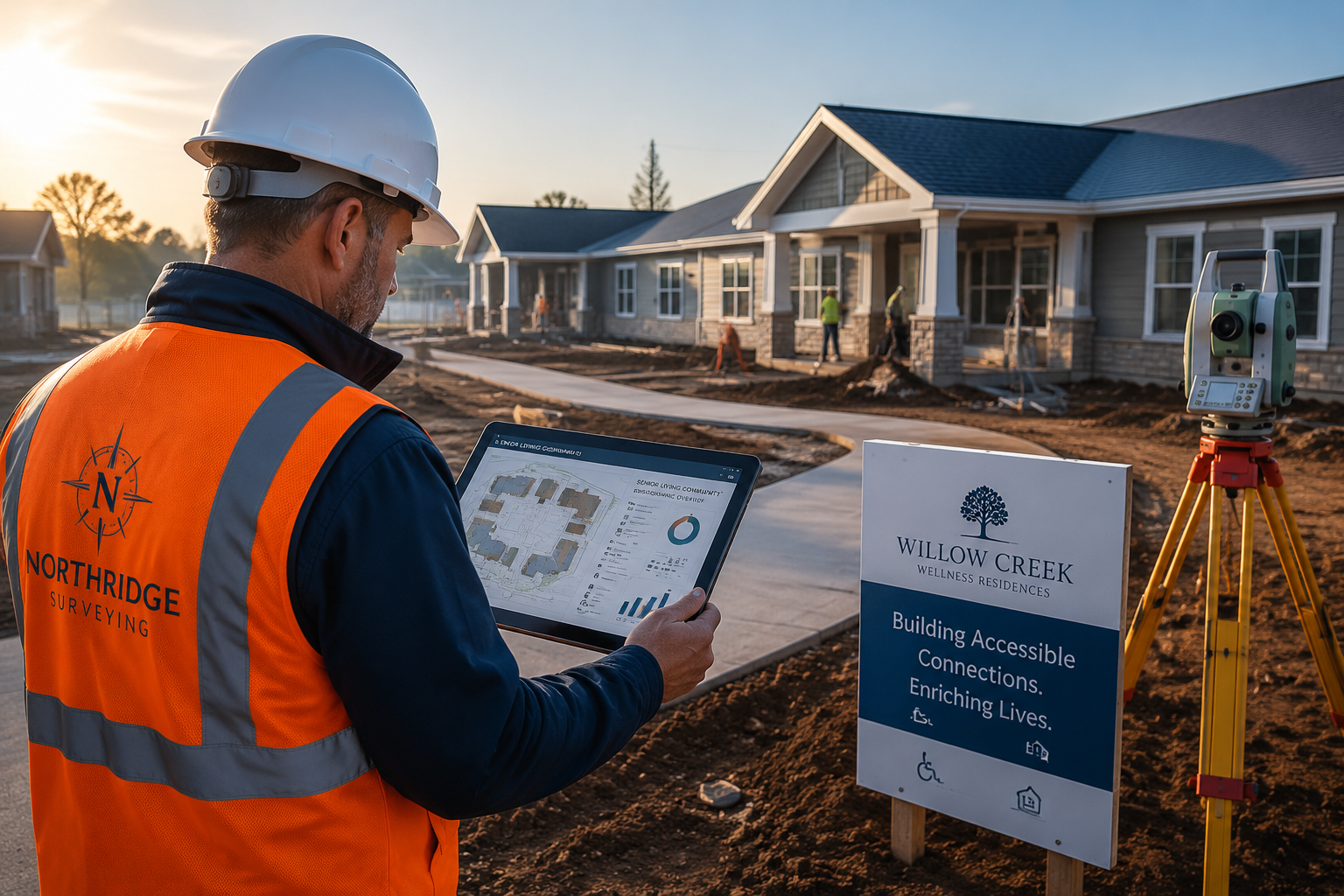
The numbers behind Surveying for Senior Housing Boom: Opportunities in the 2026 Demographic Shift are striking in their scale. The U.S. 80-and-older population is forecast to grow by 36.6% over the next decade, against a total population growth of just 5% [1]. This is not a gradual shift — it is a structural demographic event with direct consequences for land use, building design, and property valuation.
Occupancy Rates and the Supply Gap
Senior housing occupancy reached 89.5% in Q1 2026, marking the 19th consecutive quarter of growth. Independent living communities exceeded 91% occupancy, while assisted living reached 87.9% [2]. These figures would be impressive in any asset class. In senior housing, they reflect a market where demand is systematically outpacing new supply.
New units under construction have fallen to their lowest level since 2012, with year-over-year inventory growth at a record low of 0.4% [2]. Net absorption outpaced supply growth by a ratio of 4.8 to 1 in 2025, with units under construction representing only 2.3% of total inventory [4]. The arithmetic is clear: without a significant acceleration in development, occupancy rates are on course to exceed 90% across the sector in 2026.
This supply-demand imbalance is not uniform across geographies. In Q1 2026, Boston recorded occupancy of 93.6%, Baltimore 91.8%, and San Francisco 91.6%. At the lower end, Atlanta stood at 86.0%, Miami at 86.2%, and Las Vegas at 87.0% [8]. For surveyors and developers, these variations make local market intelligence a decisive competitive asset.
Investor Confidence at a Decade High
The financial community has taken note. Rolling four-quarter transaction volumes reached $24 billion by the end of 2025, the highest level since Q2 2015 [3]. A survey of investors found that 86% plan to increase their exposure to senior housing in 2026, and 85% anticipate that capitalization rates will decrease further over the next 12 months [1].
Assisted living leads investor preference, with 44% identifying it as their top opportunity in 2026, up from 41% in 2025 [5]. Active adult communities are also gaining traction, with stabilized occupancy at 95.7% and operating expenses aligning closely with conventional multifamily properties [4]. Annual rent growth has stabilized above 4%, signaling a healthy, sustained market rather than a speculative bubble [7].
"86% of investors plan to increase their exposure to the senior housing sector in 2026 — a level of consensus rarely seen in commercial real estate." [1]
Surveying Disciplines in Demand: What the Senior Housing Boom Requires
The technical demands of senior housing development are distinct from standard residential or commercial projects. Wellness-focused facilities, accessible design requirements, and the regulatory complexity of care environments mean that surveyors need a broad and specialist skill set.
Structural Surveys and Building Condition Assessments
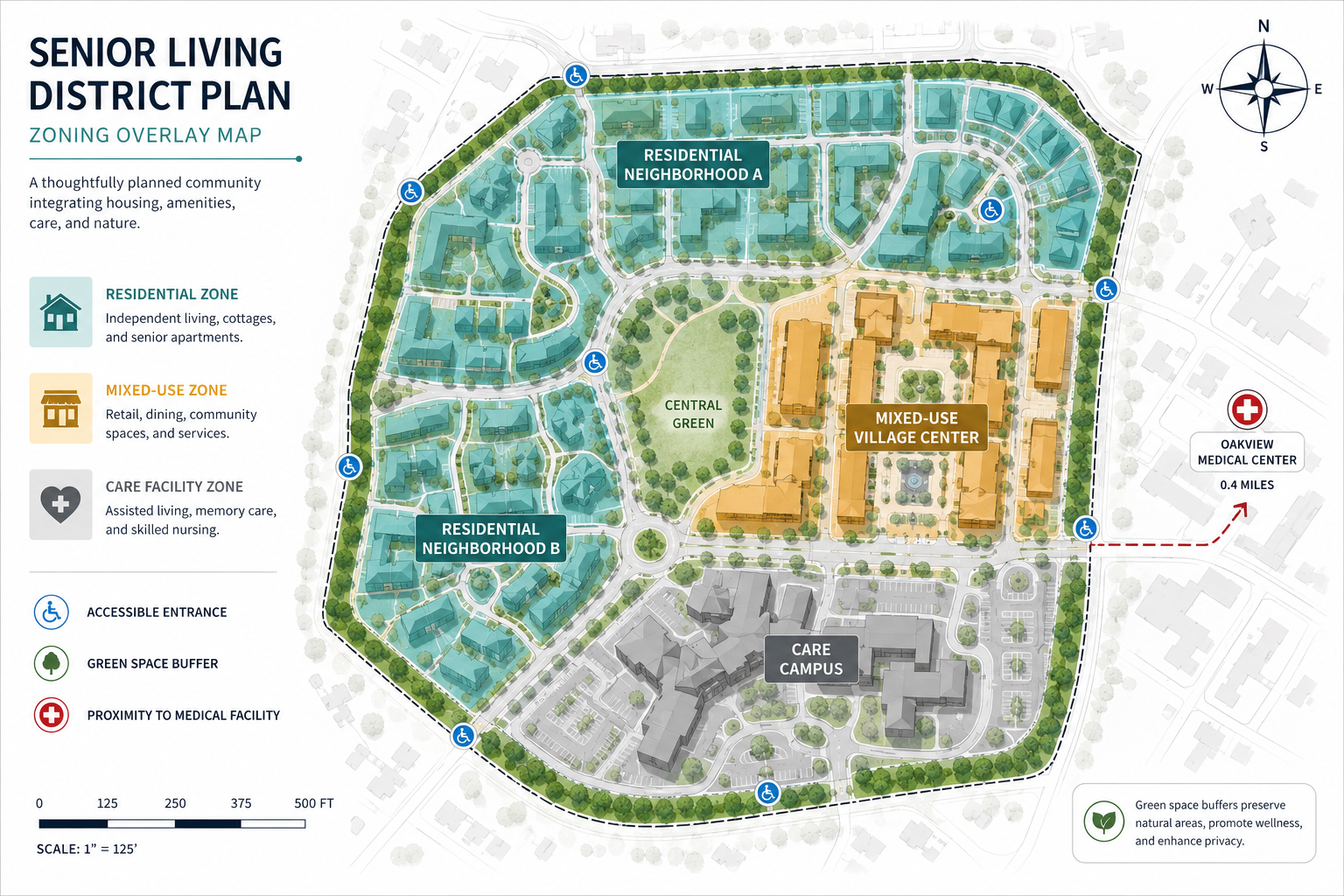
Many senior housing projects involve the conversion or extension of existing buildings — former hotels, care homes, or institutional properties. Before any development proceeds, a thorough structural survey is essential. These assessments identify load-bearing constraints, subsidence risk, and the condition of foundations — all critical factors when designing accessible, single-story, or low-rise extensions suited to elderly residents.
For conversion projects, a RICS specific defect survey can isolate the precise issues that affect habitability and compliance, from damp ingress to roof integrity, without requiring a full building survey where targeted analysis is more cost-effective.
Ground Conditions and Solid Floor Assessments
Wellness-focused senior facilities often include hydrotherapy pools, accessible wet rooms, and underfloor heating systems. These features place specific demands on ground conditions and floor slab integrity. A solid floor slab survey is a standard requirement before installing such systems, identifying voids, moisture issues, or inadequate bearing capacity that could compromise both the installation and the safety of residents.
Ground investigation is equally important on greenfield senior housing sites. Groundwater sampling and contamination assessments are required where sites have prior industrial use — a common scenario as developers seek affordable land within accessible urban locations.
Roof Surveys for Accessible and Low-Rise Designs
Single-story and low-rise designs dominate wellness-focused senior housing, partly because they eliminate vertical circulation barriers and partly because they allow for garden access and natural light — both proven contributors to resident wellbeing. These design choices increase the proportion of roof area relative to floor area, making roof surveys a more significant line item in the due diligence process. Flat roof systems, green roofs, and solar panel installations are common on new senior housing developments, each requiring specialist assessment.
Party Wall Matters in Dense Urban Settings
In urban locations, where land scarcity is most acute and demand is highest, senior housing developments frequently adjoin existing residential properties. The Party Wall etc. Act 1996 applies to any work that affects a shared boundary, and failure to comply can halt construction entirely. Surveyors working in this sector must be fluent in party wall procedures, including schedule of condition guidance to protect both the developer and neighboring owners from disputed damage claims.
Site Selection, Zoning Overlays, and the Planning Complexity of Senior Housing
Selecting the right site for a senior housing development is one of the most technically demanding stages of the entire process. The intersection of planning policy, accessibility requirements, and community expectations creates a complex overlay that rewards thorough pre-application surveying.
Zoning and Use Class Considerations
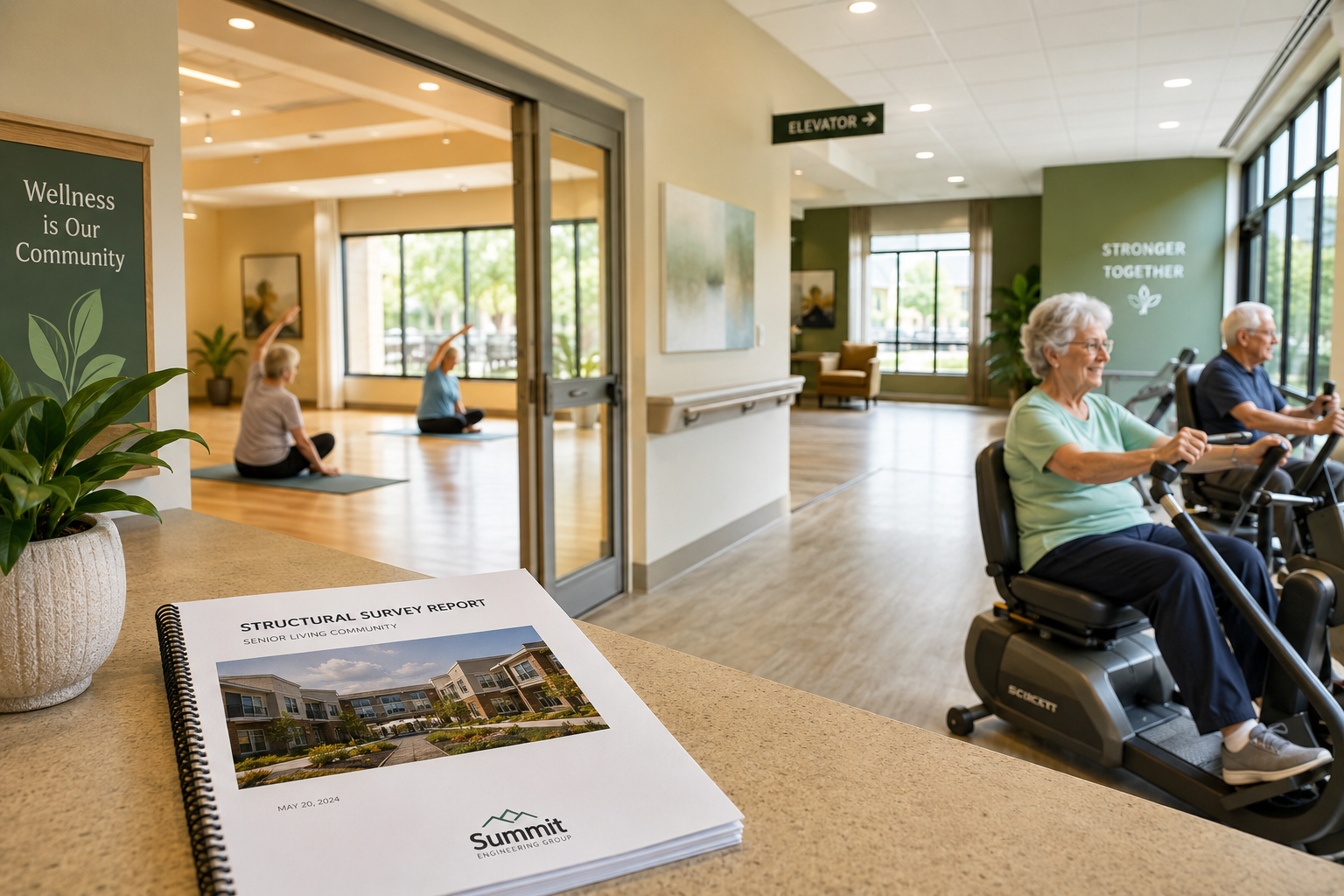
Senior housing sits at the intersection of residential and healthcare use classes, and local planning authorities treat it differently depending on the level of care provided. Independent living communities may fall within standard residential use, while assisted living and nursing care facilities require specific planning permissions and may trigger additional consultation requirements.
Surveyors conducting site feasibility work must assess:
- Current use class and the planning history of the site
- Permitted development rights and whether any prior approvals apply
- Accessibility requirements under Part M of the Building Regulations
- Proximity to healthcare, retail, and transport infrastructure, which directly affects planning viability and resident quality of life
- Environmental constraints, including flood risk zones, protected species surveys, and heritage designations
A commercial property surveying assessment at the pre-application stage can identify material planning constraints before significant capital is committed, saving developers from costly abortive work.
The Construction Financing and Labor Challenge
Despite strong demand and investor appetite, the sector faces real headwinds. Construction financing remains constrained, and labor shortages are limiting the pace at which new senior housing can be delivered [6]. These pressures are contributing to the supply gap described above and are also pushing up build costs, which in turn affects viability assessments and the affordability of completed units.
For surveyors, this environment creates both challenge and opportunity. Developers need accurate cost assessments, robust viability reports, and experienced project management to navigate a market where margins are tighter and timelines are longer than anticipated. Structural engineering input at the design stage can identify cost efficiencies — particularly in the specification of accessible features, which can be expensive if retrofitted but cost-effective when designed in from the outset.
Geographic Hotspots and Regional Variation
The geographic variation in occupancy rates has direct implications for site selection strategy. Markets with occupancy above 91% — such as Boston, Baltimore, and San Francisco — present the strongest immediate development case, but also the highest land costs and most competitive planning environments. Markets with lower occupancy, such as Atlanta and Miami, may offer better land economics but require more careful demand analysis before commitment [8].
The following table summarizes Q1 2026 occupancy data for key U.S. markets:
| Market | Q1 2026 Occupancy Rate |
|---|---|
| Boston | 93.6% |
| Baltimore | 91.8% |
| San Francisco | 91.6% |
| Las Vegas | 87.0% |
| Miami | 86.2% |
| Atlanta | 86.0% |
Source: [8]
For UK-based surveyors and developers, analogous patterns are emerging in major metropolitan areas where the 75+ population is growing fastest and purpose-built senior housing supply remains significantly below projected need.
Technology-Enabled Adaptations: How Surveying Practice Is Evolving
The senior housing boom is not only changing what gets built — it is changing how surveyors work. Technology-enabled adaptations are improving the accuracy, speed, and scope of assessments across the sector.
Digital Site Assessment and BIM Integration
Building Information Modelling (BIM) is now standard on larger senior housing projects, enabling surveyors, architects, and engineers to collaborate on a single digital model that captures structural, mechanical, and accessibility data simultaneously. For surveyors, this means that site assessment data — including floor slab conditions, roof geometry, and party wall positions — can be fed directly into the design model, reducing errors and rework.
Drone-based roof surveys and 3D laser scanning are increasingly used on senior housing conversion projects, where access to upper levels may be restricted and the cost of traditional scaffold-based inspection is prohibitive. These technologies produce highly accurate point cloud data that supports both structural analysis and planning submissions.
Accessibility and Wellness Design Standards
Wellness-focused senior facilities are held to a higher standard of accessibility than standard residential development. Surveyors assessing existing buildings for conversion must be familiar with:
- Lifetime Homes standards and their application to senior housing
- BS 8300 (Design of an accessible and inclusive built environment)
- HAPPI principles (Housing our Ageing Population: Panel for Innovation), which emphasize natural light, space, and adaptability
- Fire safety requirements specific to care environments, including evacuation strategy for residents with limited mobility
A damp survey is often a prerequisite for compliance assessments in older buildings being converted to senior use, as moisture ingress poses particular health risks for elderly residents with respiratory conditions.
Solar and Energy Efficiency Considerations
Operating costs are a significant factor in senior housing viability, and energy efficiency is increasingly central to both planning policy and investor due diligence. Solar panel roof engineer calculations are now a standard part of the feasibility toolkit for new senior housing developments, assessing whether roof geometry, orientation, and structural capacity support photovoltaic installation. With energy costs directly affecting service charges paid by residents, energy efficiency improvements have a measurable impact on affordability and occupancy.
Non-Standard Construction and Modular Build
The labor and financing constraints affecting senior housing development are accelerating interest in modular and non-standard construction methods. Prefabricated timber frame, cross-laminated timber (CLT), and volumetric modular systems can reduce on-site labor requirements and shorten construction programs. However, they also require specialist surveying input, particularly for mortgage and valuation purposes. Understanding non-standard construction methods is increasingly important for surveyors working in this sector, both at the design stage and when assessing completed buildings for lending or sale purposes.
Conclusion: Actionable Steps for Surveyors Entering the Senior Housing Market
Surveying for Senior Housing Boom: Opportunities in the 2026 Demographic Shift represents one of the most significant structural opportunities in the property profession today. The demographic fundamentals are clear, the investment capital is committed, and the supply gap is measurable. What the sector needs now is surveying expertise that matches its complexity.
For chartered surveyors and property professionals looking to build a position in this market, the following steps are practical and immediate:
- Develop specialist knowledge of accessibility standards, care facility planning requirements, and wellness design principles. These are the differentiators that command premium fees.
- Build relationships with senior housing developers and operators before the next development cycle peaks. The pipeline is constrained, and early relationships translate into preferred supplier status.
- Invest in technology capability — drone surveys, BIM integration, and digital reporting are no longer optional on larger senior housing projects.
- Understand geographic demand variations and position services in markets where occupancy pressure is strongest and development activity is most likely to accelerate.
- Broaden the service offering to include party wall, structural engineering, ground investigation, and energy assessments — the senior housing sector rewards multi-disciplinary capability.
- Stay current with planning policy changes affecting senior housing use classes, as local authority approaches are evolving rapidly in response to demographic pressure.
The 2026 demographic shift is not a temporary spike. The 80+ population will continue growing for the next two decades. Surveyors who build specialist capability now will be positioned to serve a market that is, by every measurable indicator, only at the beginning of its growth cycle.
References
[1] Seniors Housing Care Investor Survey And Trend Outlook – https://www.jll.com/en-us/insights/market-perspectives/seniors-housing-care-investor-survey-and-trend-outlook?utm_source=openai
[2] Senior Living Occupancy Grows Amid Construction Slowdown Limiting Options For Older Adults – https://www.nicmap.com/news/senior-living-occupancy-grows-amid-construction-slowdown-limiting-options-for-older-adults/?utm_source=openai
[3] Seniors Housing Investment Reaches Decade High Of 24 Billion – https://www.jll.com/en-us/newsroom/seniors-housing-investment-reaches-decade-high-of-24-billion?utm_source=openai
[4] Senior Living And Care Investor Survey And Trends Report – https://www.cushmanwakefield.com/en/united-states/insights/senior-living-and-care-investor-survey-and-trends-report?utm_source=openai
[5] Investors See Assisted Living Active Adult As Best Bets Pricing Returning To Equilibrium – https://seniorhousingnews.com/2026/02/09/investors-see-assisted-living-active-adult-as-best-bets-pricing-returning-to-equilibrium/?utm_source=openai
[6] Senior Housing A Sector Moving At Two Speeds Entering 2026 – https://www.nic.org/blog/senior-housing-a-sector-moving-at-two-speeds-entering-2026/?utm_source=openai
[7] Senior Housing Five Key Trends To Watch In 2026 – https://www.nicmap.com/blog/senior-housing-five-key-trends-to-watch-in-2026/?utm_source=openai
[8] Ups And Downs Senior Living Occupancy Grows Construction Slows Limiting Options – https://www.icaa.cc/industrynews/2026-06/UPS-AND-DOWNS-Senior-living-occupancy-grows-construction-slows-limiting-options.htm?utm_source=openai