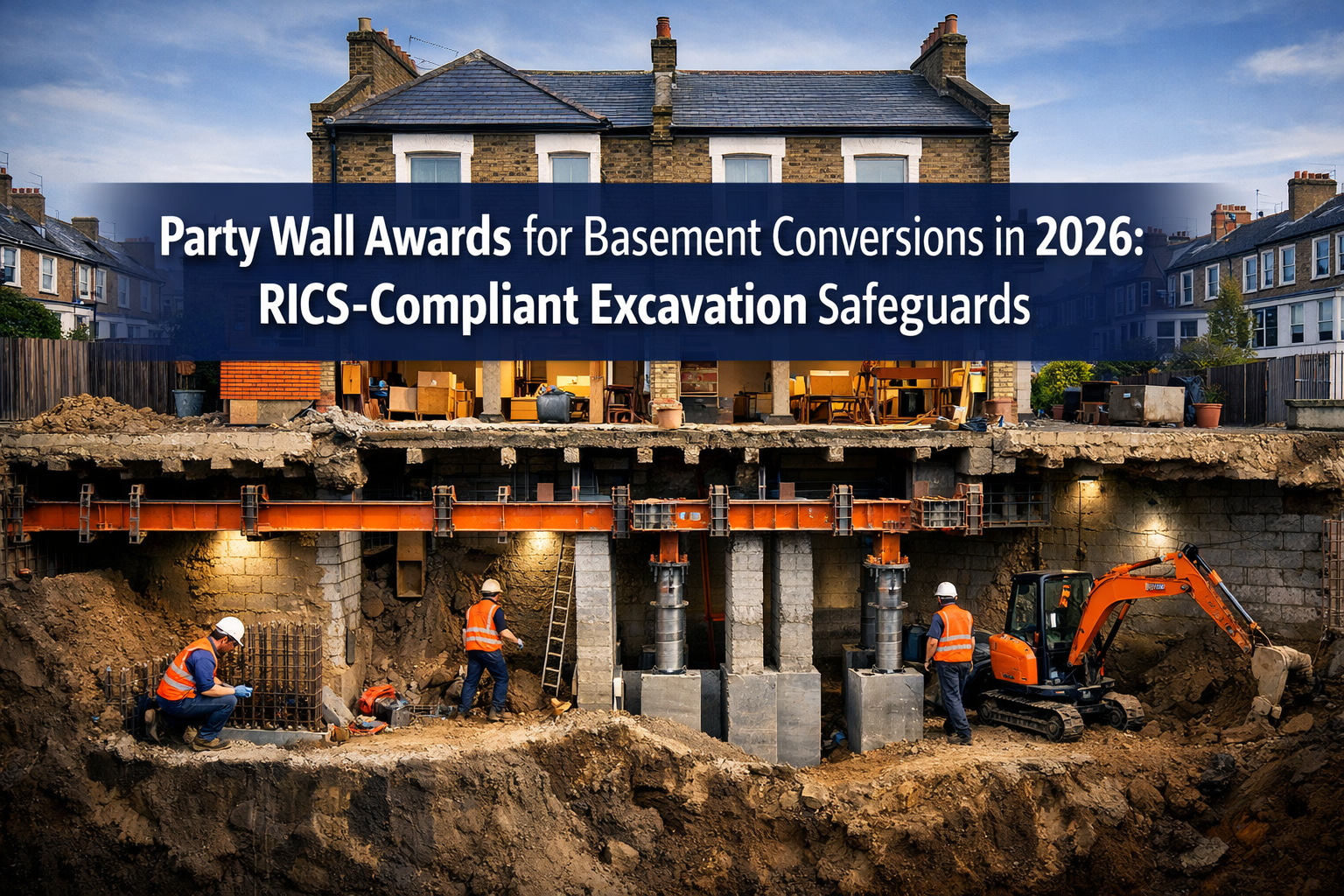
Urban housing density in England's major cities has increased by 23% since 2020, with basement conversions now accounting for over 40% of all party wall notices served in high-demand metropolitan areas. As construction activity rebounds in 2026, surveyors face unprecedented demand for technically robust party wall awards that protect both building owners and adjoining neighbours during complex excavation works.
Understanding Party Wall Awards for Basement Conversions in 2026 Urban Densification: RICS-Compliant Clauses and Excavation Safeguards has become essential for property professionals navigating today's dense residential landscapes. The stakes are higher than ever—basement excavations involve significant structural risks, substantial financial exposure, and potential for costly disputes if proper protocols aren't followed from the outset.
Key Takeaways
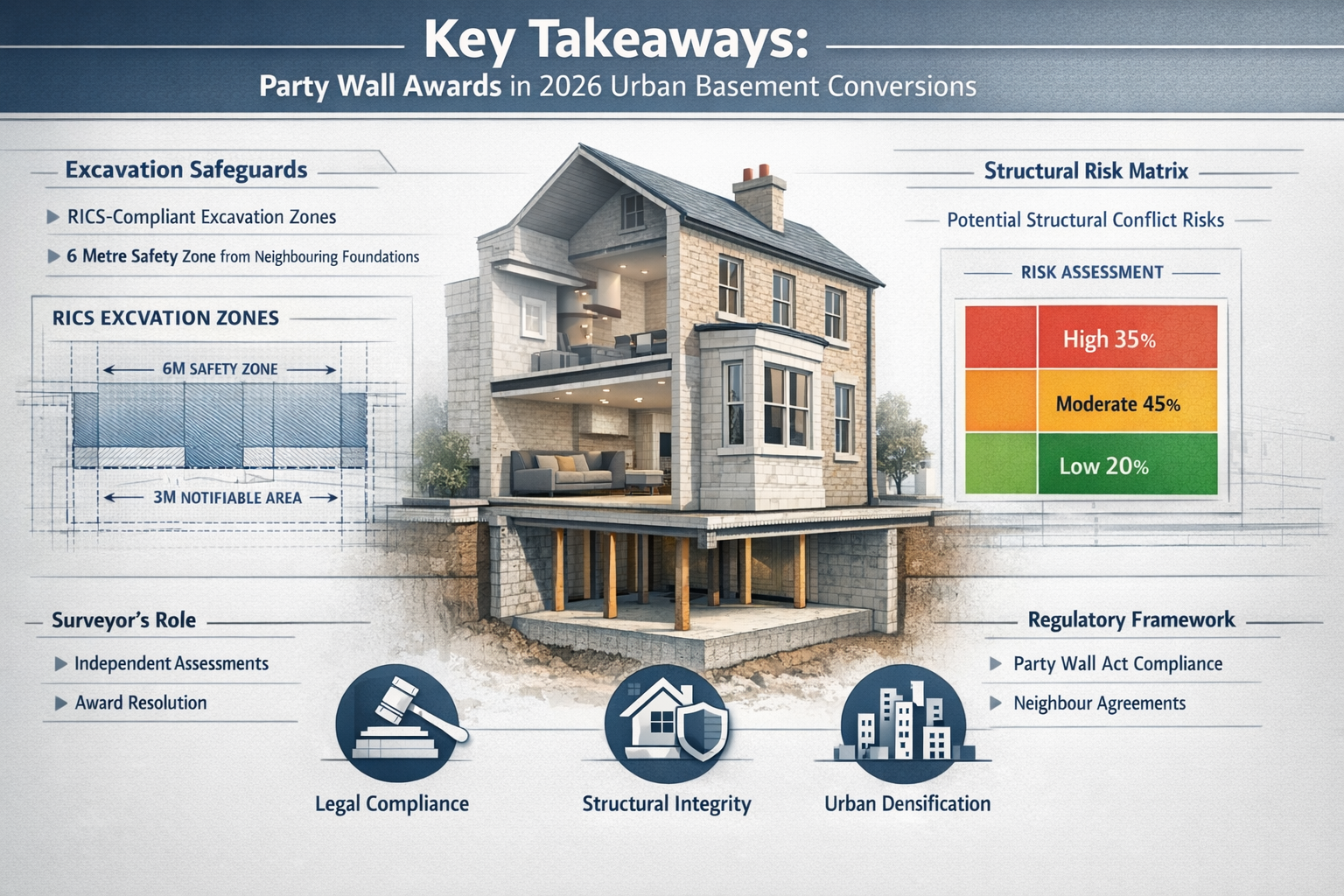
- Basement excavations trigger specific Party Wall Act requirements when works occur within 3 meters (or 6 meters for deeper excavations) of neighbouring foundations, requiring detailed awards with enhanced safeguards
- RICS-qualified surveyors bring essential credibility to the 2026 construction landscape, ensuring awards contain proper monitoring clauses, security provisions, and excavation-specific protections
- Schedules of condition are mandatory for basement works, providing photographic and written evidence of pre-existing conditions to resolve future damage claims
- Standard notice periods are 2 months for party structure works and 1 month for excavation notices, with neighbours having 14 days to respond before dissent is deemed
- Comprehensive awards must address underpinning methodology, temporary works, monitoring protocols, and access arrangements to prevent disputes during high-risk excavation phases
Understanding the Party Wall Act Framework for Basement Works
The Party Wall etc. Act 1996 provides the legal framework governing basement conversions that affect shared boundaries or neighbouring foundations. When property owners plan basement excavations in densely populated urban areas, they must navigate three key sections of the Act that determine notice requirements and procedural obligations.
The 3-Meter and 6-Meter Excavation Rules
Basement excavations trigger specific requirements under the Party Wall Act based on proximity to neighbouring properties. Excavating within 3 meters of a neighbouring property's foundations automatically triggers notice requirements under Section 6 of the Act[5]. This applies to the vast majority of urban basement conversions in terraced or semi-detached properties where houses share boundaries or sit in close proximity.
For deeper excavations, the 6-meter rule extends these requirements further. When proposed basement works occur beyond 3 meters but within 6 meters of a party wall, additional notice obligations apply if excavations undercut the adjoining neighbour's foundation by a 45-degree angle below ground level[5]. This geometric calculation becomes critical in determining whether formal party wall procedures must be followed.
Types of Notices Required for Basement Conversions
Basement works typically require serving multiple notice types depending on the specific construction methodology:
- Section 1 notices for new walls built at the boundary line
- Section 3 notices for underpinning or other works directly affecting an existing party wall structure
- Section 6 notices for excavations within the 3-meter or 6-meter zones described above
Party wall surveyors typically serve notices with a 2-month notice period for party structure works (such as basement underpinning affecting shared walls) and 1 month for line of junction and adjacent excavation works[3]. These timelines are statutory minimums that cannot be shortened, making early planning essential for project scheduling.
The 14-Day Response Window and Deemed Dissent
Once notice is properly served, adjoining owners have exactly 14 days to provide written consent, refuse consent, or serve a counter notice[3]. This narrow response window often catches neighbours by surprise, particularly in areas where party wall procedures aren't widely understood.
Crucially, failure to respond within 14 days is deemed dissent under the Act[3]. This automatic dissent provision protects adjoining owners by ensuring that silence cannot be interpreted as agreement to potentially risky construction works. When dissent occurs (whether explicit or deemed), the formal party wall award process must commence through appointed surveyors.
Understanding these fundamental requirements helps building owners avoid common pitfalls. Many basement conversion projects face costly delays when notices are served incorrectly or too late in the planning process. For comprehensive guidance on the notice process, refer to our excavation notice requirements.
What Makes Party Wall Awards for Basement Conversions More Complex
Basement excavations represent some of the highest-risk works covered by the Party Wall Act. Unlike simpler projects such as installing wall insulation or removing a chimney breast, basement conversions involve substantial ground removal, foundation disturbance, and prolonged construction periods that increase the potential for structural movement and neighbour disputes.
Enhanced Risk Factors in Basement Excavations
Where works involve basement excavation and underpinning, the Party Wall Award is typically more detailed to reflect the greater risk profile[1]. Several factors contribute to this increased complexity:
Foundation exposure and underpinning requirements – Excavating below existing foundation levels exposes neighbouring foundations to lateral soil pressure changes and potential settlement. Underpinning works to strengthen party walls add further structural intervention that must be carefully specified and monitored.
Temporary works and shoring systems – Basement excavations require temporary support structures to prevent collapse during construction. Awards must specify responsibilities for designing, installing, and maintaining these temporary works, including who bears liability if temporary supports fail.
Extended construction timelines – Basement conversions typically take 4-6 months or longer, creating extended periods of vibration, noise, and structural stress on adjoining properties. Awards must address construction hours, access arrangements, and neighbour notification protocols throughout this period.
Water table and drainage considerations – Excavating below ground level can affect groundwater flow and drainage patterns. Awards should address tanking (waterproofing), drainage systems, and provisions for monitoring water-related damage to neighbouring properties.
RICS-Compliant Provisions for 2026 Construction Standards
In 2026's complex construction environment, RICS-qualified party wall surveyors bring essential expertise and credibility to the process[2]. The Royal Institution of Chartered Surveyors (RICS) provides professional standards that go beyond the statutory minimum requirements of the Party Wall Act, ensuring awards reflect current best practices.
Key RICS-compliant provisions that should appear in basement conversion awards include:
✅ Detailed specifications of excavation methodology – Including sequence of works, depth increments, and support installation procedures
✅ Comprehensive monitoring protocols – Specifying frequency of inspections, types of monitoring equipment (crack gauges, settlement markers, tilt sensors), and trigger levels for stopping works
✅ Security for expenses clauses – Provisions requiring the building owner to provide financial security (often through insurance or deposit) to cover potential repair costs
✅ Special foundation considerations – Technical specifications for underpinning depth, concrete mix designs, curing periods, and structural calculations
✅ Access rights and working hours – Clear provisions for surveyor access to both properties for inspections, with reasonable restrictions on timing and frequency
The importance of working with RICS-qualified professionals cannot be overstated. These surveyors understand the technical complexities of basement excavations and can draft awards that withstand legal scrutiny if disputes arise. Learn more about the importance of RICS-certified expertise in complex construction projects.
Security for Expenses: Financial Protection Mechanisms
One of the most critical clauses in basement conversion awards is the security for expenses provision. This clause requires the building owner to provide financial security—typically through a deposit, bond, or insurance policy—to cover potential repair costs if damage occurs during excavation works[1].
Security amounts vary based on project scope but typically range from £5,000 to £25,000 for residential basement conversions. Factors influencing the security amount include:
- Depth and extent of excavation
- Condition and age of adjoining properties
- Complexity of temporary works required
- Historical ground conditions and subsidence risk in the area
This financial safeguard protects adjoining owners from bearing repair costs if the building owner becomes insolvent or disputes responsibility for damage. Awards should specify the security amount, form (cash deposit, insurance policy, or bank guarantee), timing of release, and conditions under which funds can be drawn.
Essential Components of Party Wall Awards for Basement Conversions in 2026 Urban Densification: RICS-Compliant Clauses and Excavation Safeguards
A comprehensive party wall award for basement excavation works must address multiple technical, procedural, and legal elements. The following components represent industry best practices for 2026 urban construction projects.
Schedule of Condition: The Foundation of Dispute Prevention
Schedules of condition are mandatory for basement works, providing detailed photographic and written evidence of the pre-existing condition of adjoining properties before excavation commences. This document becomes the baseline for assessing any damage claims that arise during or after construction.
A thorough schedule of condition should include:
📸 Comprehensive photographic evidence – Interior and exterior photographs of all rooms, structural elements, finishes, and existing defects in the adjoining property
📝 Written descriptions – Detailed narrative descriptions of existing cracks, settlement, dampness, or other defects, with measurements and locations precisely recorded
📏 Measured surveys – Floor levels, wall plumb measurements, and other quantifiable data that can be re-measured post-construction to identify movement
🗓️ Date and witness signatures – Clear documentation of when the inspection occurred and agreement from both parties (or their surveyors) on the recorded conditions
The schedule of condition protects both parties. Building owners avoid liability for pre-existing defects, while adjoining owners have clear evidence if new damage occurs. Without this baseline documentation, disputes become difficult to resolve objectively. For detailed guidance on preparing schedules, visit our schedule of condition reporting page.
Excavation Methodology and Sequencing Requirements
Awards must specify the approved excavation methodology in sufficient detail to ensure safe execution. This typically includes:
Excavation sequence – Whether works will proceed in stages (e.g., excavating in bays rather than along the entire length simultaneously) to minimize structural risk
Support installation timing – Requirements for installing temporary shoring or underpinning supports before excavating to specific depths
Underpinning specifications – Concrete grades, reinforcement schedules, curing periods, and inspection requirements before backfilling
Vibration limits – Maximum permitted vibration levels during excavation, pile driving, or breaking of existing foundations, with monitoring requirements
Working hours – Permitted construction hours (typically 8am-6pm Monday-Friday, 8am-1pm Saturday, with no Sunday working) to minimize neighbour disruption
These specifications should reference British Standards and building regulations where applicable, ensuring the methodology meets current engineering standards for 2026 construction practices.
Monitoring and Inspection Protocols
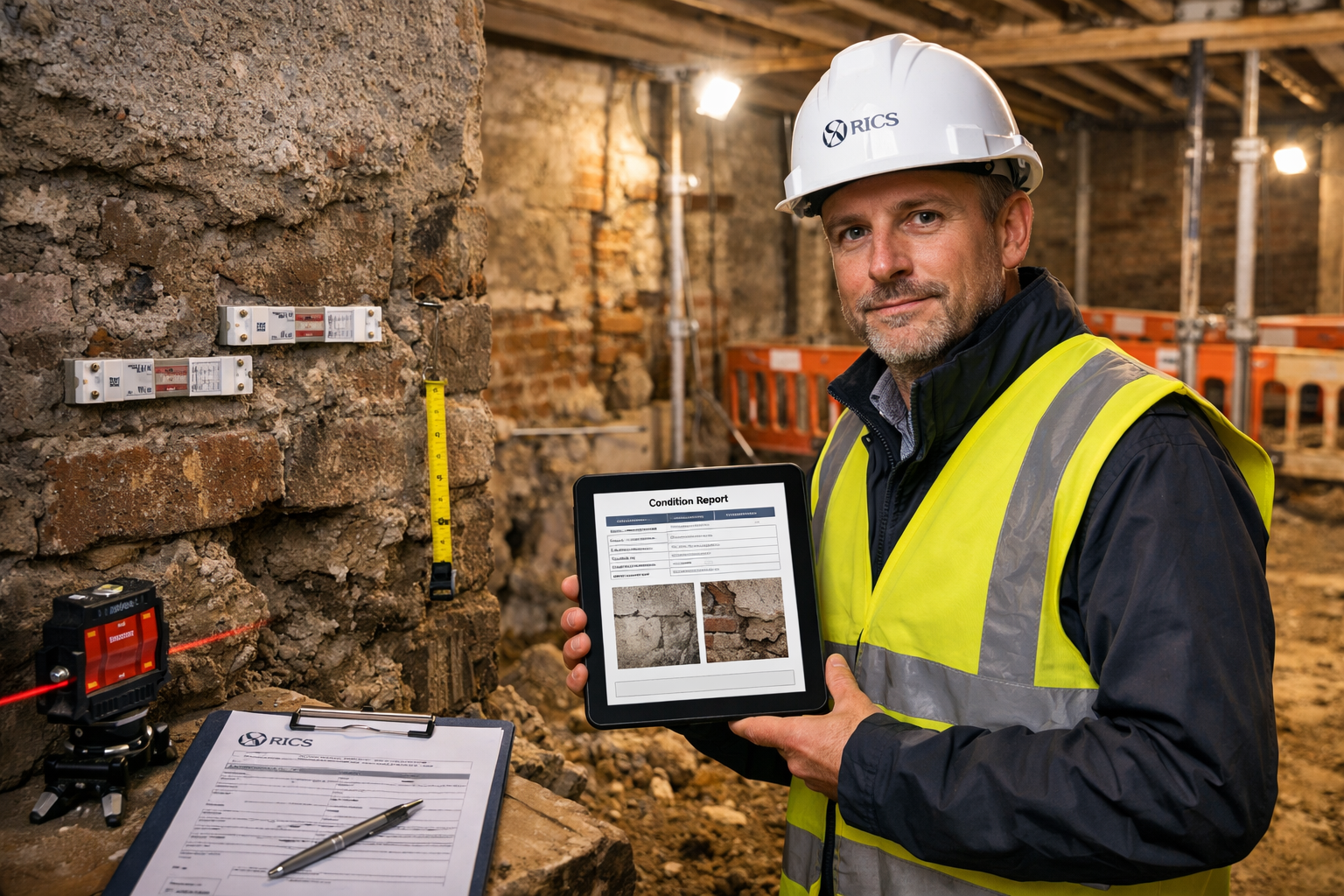
Continuous monitoring throughout the excavation phase is essential for early detection of structural movement. Awards should mandate:
Pre-commencement monitoring – Installation of crack monitoring gauges, settlement markers, and tilt sensors before excavation begins to establish baseline readings
Regular inspection schedule – Weekly inspections during active excavation, with increased frequency during critical phases such as underpinning or temporary support removal
Trigger levels for work stoppage – Specific movement thresholds (e.g., crack widening exceeding 2mm, settlement exceeding 5mm) that require immediate work stoppage and remedial action
Surveyor access rights – Clear provisions allowing appointed surveyors to access both properties for inspections with reasonable notice (typically 24-48 hours)
Reporting requirements – Frequency and format of monitoring reports to be provided to all parties, ensuring transparency throughout the construction process
These monitoring provisions transform the party wall award from a static document into an active risk management tool throughout the project lifecycle.
Access, Indemnity, and Liability Clauses
Clear contractual provisions regarding access, liability, and indemnification prevent disputes during construction:
Access rights – Specific provisions for when and how contractors can access adjoining property (if required for external shoring or monitoring), with advance notice requirements and restrictions on scope
Indemnity provisions – Clear statements that the building owner indemnifies the adjoining owner against all claims, damages, and losses arising from the works
Insurance requirements – Specifications for minimum insurance coverage (typically £5-10 million public liability insurance for residential projects) and requirements to name adjoining owners as additional insured parties
Damage repair obligations – Clear procedures for reporting damage, obtaining repair quotations, and timelines for completing remedial works
Cost recovery mechanisms – How the adjoining owner can recover costs if the building owner fails to fulfill repair obligations, often linked to the security for expenses provision
These clauses provide clear contractual remedies if problems arise, reducing the likelihood of protracted disputes or litigation.
Checklist for Building Owners Planning Basement Conversions
Building owners can avoid common pitfalls by following this systematic checklist when planning basement excavation projects:
Pre-Planning Phase (3-6 months before construction)
✅ Engage a RICS-qualified party wall surveyor early – Ideally during the design phase to identify party wall implications before finalizing plans
✅ Conduct preliminary foundation investigations – Understand existing foundation depths on both your property and adjoining properties to inform excavation design
✅ Review title deeds and restrictive covenants – Ensure no additional legal restrictions beyond the Party Wall Act affect your proposed works
✅ Obtain initial structural engineering input – Confirm the feasibility of proposed excavation depth and underpinning requirements
✅ Budget for party wall costs – Including surveyor fees, schedule of condition costs, monitoring expenses, and potential security deposits
Notice Period (2-3 months before construction)
✅ Serve compliant party wall notices – Ensure notices contain all required information and are served on all affected adjoining owners
✅ Allow full statutory notice periods – Don't schedule construction start dates before notice periods expire
✅ Respond promptly to neighbour questions – Maintain positive relationships by addressing concerns transparently
✅ Appoint agreed or agreed-upon surveyors – If dissent occurs, move quickly to appoint surveyors to avoid project delays
✅ Commission the schedule of condition – Arrange for detailed pre-commencement condition surveys of all affected properties
Award Preparation Phase (1-2 months before construction)
✅ Review draft award carefully – Ensure all excavation methodology, monitoring, and safeguard provisions are technically feasible and clearly specified
✅ Confirm insurance coverage – Verify that your contractor's insurance meets award requirements and obtain additional coverage if needed
✅ Provide required security – Arrange deposits, bonds, or insurance policies as specified in the award
✅ Finalize construction sequencing – Ensure your contractor understands and can comply with all award requirements
✅ Establish communication protocols – Set up systems for regular updates to surveyors and neighbours throughout construction
Construction Phase
✅ Install monitoring equipment – Ensure all required crack gauges, settlement markers, and other monitoring devices are in place before excavation begins
✅ Maintain inspection schedule – Facilitate regular surveyor inspections as specified in the award
✅ Document compliance – Keep photographic records and written logs demonstrating compliance with award provisions
✅ Report issues immediately – Notify surveyors promptly if unexpected conditions arise or monitoring indicates concerning movement
✅ Maintain neighbour communication – Provide regular updates on construction progress and anticipated timelines
For additional guidance on the overall party wall process, see our comprehensive party wall guidance.
Common Pitfalls and How to Avoid Them
Even experienced property developers encounter problems with party wall procedures for basement conversions. Understanding these common pitfalls helps avoid costly delays and disputes.
Pitfall 1: Inadequate Notice or Late Serving
The Problem: Many building owners serve party wall notices too late in the project timeline or with insufficient detail about proposed works. This creates scheduling conflicts when the statutory notice period extends beyond the planned construction start date.
The Solution: Serve notices at least 3-4 months before your target construction start date to accommodate the statutory notice periods plus time for award preparation if dissent occurs. Ensure notices include detailed descriptions of excavation methodology, depths, and underpinning requirements.
Pitfall 2: Proceeding Without an Award When Required
The Problem: Some building owners mistakenly believe that serving notice alone is sufficient, or they proceed with works after the notice period expires even though no consent was received. Proceeding without a proper party wall agreement when one is required exposes building owners to injunctions, stop notices, and personal liability for all damages[3].
The Solution: Never commence works until either written consent is received or a formal party wall award is in place. If you're uncertain about requirements, consult our guide on what happens if you don't have a party wall agreement.
Pitfall 3: Insufficient Schedule of Condition Detail
The Problem: Rushed or superficial schedules of condition lack the photographic and written detail needed to resolve damage disputes objectively. This leads to protracted disagreements about whether defects existed before construction or resulted from excavation works.
The Solution: Allocate sufficient time and budget for comprehensive condition surveys. Professional surveyors should spend several hours documenting each affected property, with hundreds of photographs and detailed written descriptions of all structural elements and existing defects.
Pitfall 4: Inadequate Monitoring During Construction
The Problem: Building owners install monitoring equipment but fail to check readings regularly or respond promptly when movement exceeds trigger levels. This allows minor problems to escalate into significant structural damage.
The Solution: Establish weekly monitoring routines during active excavation phases, with immediate surveyor notification if readings approach trigger levels. Consider engaging a specialist monitoring surveyor for complex projects with high-risk profiles.
Pitfall 5: Poor Contractor Briefing on Award Requirements
The Problem: Contractors proceed with excavation methodology that differs from award specifications, either through misunderstanding or because they believe their approach is superior. This constitutes a breach of the award and can trigger work stoppages.
The Solution: Hold a pre-commencement meeting with contractors, surveyors, and key stakeholders to review all award requirements in detail. Provide contractors with highlighted copies of relevant award sections and confirm their understanding of all obligations.
Understanding these pitfalls helps building owners navigate the party wall process more smoothly. For information on resolving issues when they do arise, see our guide on party wall disputes.
The Role of RICS-Qualified Surveyors in 2026's Construction Landscape
The construction boom of 2026 has intensified demand for qualified party wall surveyors who can navigate complex urban excavation projects. RICS qualification provides assurance that surveyors possess the technical knowledge, professional standards, and ethical framework needed for high-stakes basement conversion awards.
Why RICS Qualification Matters
RICS members must meet rigorous education, experience, and competency requirements, including:
- Relevant academic qualifications in surveying, construction, or related fields
- Minimum experience periods working under supervision of qualified professionals
- Assessment of professional competence through written submissions and interviews
- Continuing professional development requirements to maintain current knowledge
- Adherence to professional ethics and conduct standards
These requirements ensure that RICS-qualified surveyors understand not only the Party Wall Act's legal framework but also the structural engineering, construction methodology, and risk management principles essential for basement excavation projects.
Technical Expertise for Complex Excavations
Basement conversions require surveyors to evaluate complex technical issues including:
Foundation engineering – Understanding different foundation types (strip, pad, raft, piled), load transfer mechanisms, and how excavation affects foundation stability
Soil mechanics – Assessing ground conditions, bearing capacity, lateral earth pressure, and groundwater effects on excavation stability
Temporary works design – Evaluating the adequacy of shoring systems, propping, and temporary supports proposed by contractors
Structural movement assessment – Interpreting monitoring data to distinguish between acceptable construction-related movement and concerning structural distress
Building pathology – Identifying pre-existing defects and distinguishing them from construction-related damage
RICS-qualified surveyors bring this multi-disciplinary expertise to party wall awards, ensuring provisions are technically sound and enforceable. Learn more about the value of RICS-certified surveyors for property-related matters.
Dispute Resolution and Professional Independence
When disagreements arise during basement excavation projects, RICS-qualified surveyors provide professional independence and dispute resolution skills. The Party Wall Act allows for appointment of:
Agreed surveyors – A single surveyor appointed by both building owner and adjoining owner, reducing costs and streamlining the process
Two surveyors – Separate surveyors appointed by each party, who then select a third surveyor to resolve any disagreements between them
RICS professional standards require surveyors to act impartially even when appointed by one party, prioritizing accurate technical assessment over partisan advocacy. This professional independence helps resolve disputes efficiently and fairly.
For complex projects with multiple adjoining owners, coordinating the party wall process requires sophisticated project management skills. RICS-qualified surveyors can manage these multi-party situations effectively, ensuring all stakeholders receive proper notice and protection.
Cost Considerations for Party Wall Awards in Basement Conversions
Understanding the financial implications of party wall procedures helps building owners budget accurately for basement conversion projects. Costs vary significantly based on project complexity, property values, and whether disputes arise.
Typical Cost Components
Surveyor fees – Building owner's surveyor fees typically range from £1,500-£5,000 for straightforward basement conversions, increasing to £5,000-£15,000 for complex projects with multiple adjoining properties. The building owner is responsible for paying both their own surveyor's fees and the adjoining owner's surveyor's fees under the Party Wall Act.
Schedule of condition costs – Comprehensive condition surveys typically cost £500-£1,500 per adjoining property, depending on property size and complexity.
Monitoring costs – Installation and regular monitoring of crack gauges, settlement markers, and other equipment typically costs £1,000-£3,000 for the duration of excavation works.
Security deposits – As discussed earlier, security for expenses provisions typically require £5,000-£25,000 in financial security, though this is refundable if no damage occurs.
Insurance premiums – Additional party wall insurance coverage may increase construction insurance premiums by 10-20%.
For detailed cost breakdowns, see our guide on party wall costs.
Cost-Benefit Analysis: Professional Fees vs. Dispute Costs
While party wall professional fees may seem substantial, they pale in comparison to costs incurred when disputes arise due to inadequate procedures:
Litigation costs – Legal disputes over party wall matters can easily exceed £50,000-£100,000 in legal fees, expert witness costs, and court expenses
Injunction and work stoppage – Court injunctions stopping construction can cost tens of thousands in contractor standby time, extended project timelines, and financing costs
Repair costs – Unmonitored excavation damage can require extensive structural repairs costing £50,000-£200,000 or more for serious foundation damage
Property devaluation – Poorly executed basement conversions with ongoing disputes can reduce property values by 10-20% or more
Investing in proper party wall procedures with qualified professionals represents sound risk management that protects the substantial investment in basement conversion works.
Conclusion: Mastering Party Wall Protocols for 2026 Urban Basement Conversions
As urban densification continues throughout 2026, basement conversions will remain a primary strategy for creating additional living space in constrained metropolitan areas. Success requires mastering the party wall protocols that protect all stakeholders during high-risk excavation works.
Party Wall Awards for Basement Conversions in 2026 Urban Densification: RICS-Compliant Clauses and Excavation Safeguards represent the gold standard for managing these complex projects. By incorporating detailed excavation specifications, comprehensive monitoring protocols, robust financial safeguards, and clear procedural requirements, properly drafted awards prevent disputes and ensure construction proceeds safely.
Actionable Next Steps
For building owners planning basement conversions:
- Engage a RICS-qualified party wall surveyor at least 4-6 months before your planned construction start date
- Commission preliminary foundation investigations to understand existing conditions and inform excavation design
- Budget comprehensively for all party wall costs including surveyor fees, schedules of condition, monitoring, and security provisions
- Serve compliant notices with full statutory notice periods before commencing any works
- Prioritize thorough schedules of condition to establish clear baseline documentation of neighbouring properties
- Maintain proactive communication with neighbours throughout the process to preserve positive relationships
For adjoining owners receiving party wall notices:
- Respond within the 14-day statutory period to preserve your rights under the Act
- Consider appointing your own surveyor for complex basement excavation projects to ensure your interests are fully protected
- Participate in schedule of condition surveys to ensure accurate documentation of your property's pre-existing condition
- Review draft awards carefully before agreeing, ensuring monitoring provisions and security arrangements are adequate
- Maintain records of all communications, inspection reports, and monitoring data throughout construction
The party wall framework provides robust protection for both building owners pursuing legitimate development and neighbours concerned about construction impacts. By following proper procedures with qualified professionals, basement conversion projects can proceed smoothly while maintaining the structural integrity and value of all affected properties.
For comprehensive support throughout your party wall journey, explore our full range of party wall services and connect with RICS-qualified surveyors who understand the complexities of 2026's urban construction landscape.
References
[1] Building Owner Party Wall Information – https://www.houricanassociates.com/party-wall-news/building-owner-party-wall-information/
[2] Party Wall Surveys Amid 2026 Construction Boom Handling Disputes In High Demand Uk Housing Markets – https://nottinghillsurveyors.com/blog/party-wall-surveys-amid-2026-construction-boom-handling-disputes-in-high-demand-uk-housing-markets
[3] Party Wall Awards – https://westvilleassociates.com/party-wall-surveyor/party-wall-awards
[5] Party Wall Awards – https://efficientpartywall.co.uk/party-wall-awards/