Two percentage points. That is all it took in the Autumn Budget of 28 October 2026 to push the top rate of tax on rental income to 49%. For a higher-rate landlord in Manchester with a modest buy-to-let portfolio, that single announcement could reshape the entire economics of holding property. This article, written in November 2026, sets out exactly what changed and what Manchester landlords should consider doing next.
The landlord property income tax rise April 2027 Budget 2026 announcement was one of the most significant property tax moves in recent years. It builds on a rise announced the previous year, meaning two consecutive increases have landed on individual landlords in quick succession.
Key Takeaways
- From 6 April 2027, income tax on rental profits for individual landlords in England, Wales and Northern Ireland rises to 24% (basic rate), 44% (higher rate) and 49% (additional rate).
- The increase does not apply to property held through a limited company structure.
- Propertymark's Timothy Douglas called it a "steep and punitive rise" that "will hit existing landlords badly."
- Stamp Duty Land Tax is being removed from rent under assured tenancies in England from 1 May 2026, following the Renters' Rights Act 2025.
- The North West housing market remains comparatively strong, with Zoopla reporting prices up 3.2% (£6,600) year-on-year, while London prices have fallen 1%.
Understanding the Landlord Property Income Tax Rise April 2027 Budget 2026
The Chancellor confirmed in the Autumn Budget that income tax rates on property income will increase by a further two percentage points from 6 April 2027. This is on top of a rise already announced the year before, meaning landlords face a cumulative and rapid increase in the tax taken from rental profits after allowable expenses.
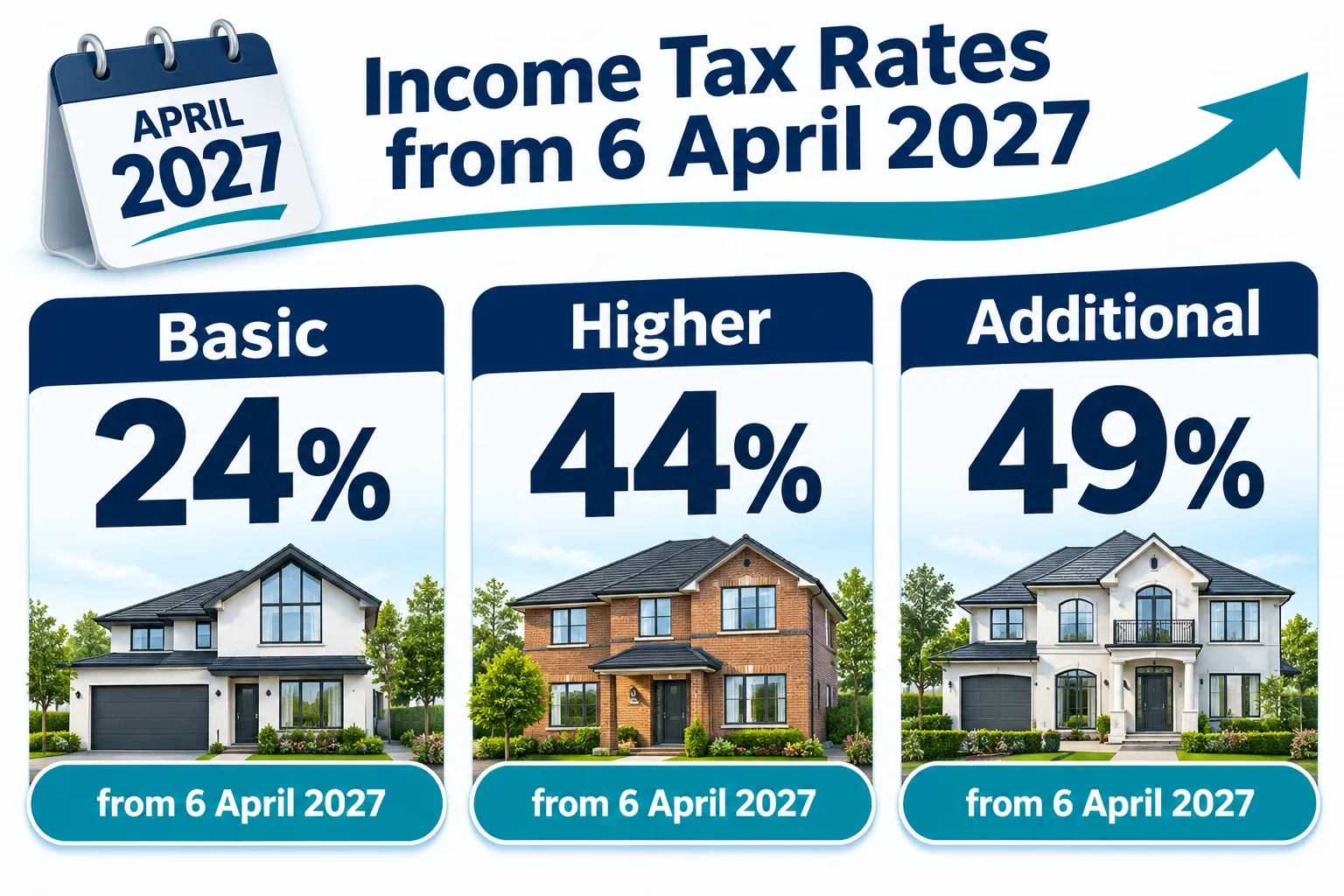
For individual landlords in England, Wales and Northern Ireland, the new rates from April 2027 will be:
| Tax Band | Current Approach | From April 2027 |
|---|---|---|
| Basic rate | Standard rate | 24% |
| Higher rate | Standard rate | 44% |
| Additional rate | Standard rate | 49% |
Crucially, this change applies only to individually held rental property. Landlords who hold property through a limited company are unaffected by this specific rise, which is already prompting renewed conversations about incorporation.
Timothy Douglas, Propertymark's Head of Policy and Campaigns, described the move bluntly as a "steep and punitive rise in income tax on property income from April 2027" that "will hit existing landlords badly." He also called for wider reform, specifically citing Stamp Duty as an area needing attention alongside this change.
Other Budget Measures Affecting Landlords and Tenants
The landlord property income tax rise April 2027 Budget 2026 did not arrive in isolation. Several other measures from the same Budget will shape the Manchester rental market over the coming year.
Stamp Duty removed from rent. From 1 May 2026, Stamp Duty Land Tax will no longer apply to rent paid under assured tenancies in England. This follows directly from the Renters' Rights Act 2025 and is a welcome, if modest, offset for tenants and the wider rental system.
New funding for affordable housing. The Budget included an extra £1.5 billion for the Social and Affordable Homes Programme, expected to deliver around 10,000 additional homes. This signals continued government focus on housing supply even as landlord taxation tightens.
A market still showing demand pressure. RICS's September survey recorded a net balance of +23% for tenant demand, with landlord instructions running negative and rent expectations at +37%. In other words, demand for rented homes remains strong even as the supply of landlords willing to let may be shrinking.
Why Manchester's Market Context Matters
According to Zoopla's 27 October 2026 report, North West house prices are up 3.2% (£6,600) year-on-year, among the strongest regional performances in the country. This contrasts sharply with London, where prices have fallen by 1% over the same period.
This divergence matters for Manchester landlords weighing their next move. Selling into a market where local prices are rising, while demand nationally is patchier, is a different proposition to selling in a falling market. Pricing realistically, informed by sound local comparable evidence, will matter more than ever.
Hold, Sell or Restructure: The Decision Facing Manchester Landlords
Manchester landlords affected by the landlord property income tax rise April 2027 Budget 2026 broadly face three choices: continue holding the property as an individual, sell up, or restructure ownership, commonly through incorporation into a limited company.
Each path carries different practical and professional requirements.
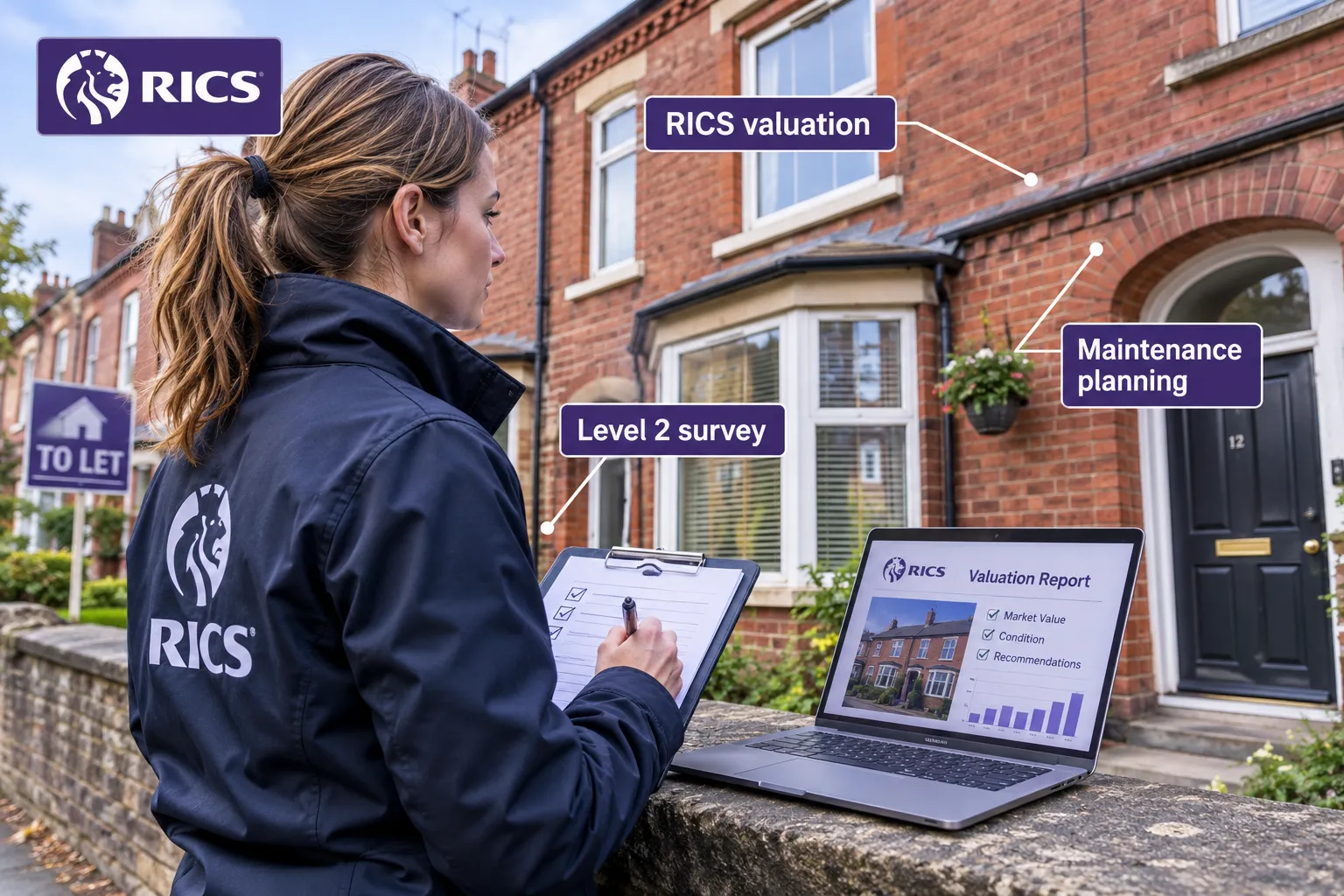
If holding: Landlords need a clear picture of ongoing maintenance liabilities to budget accurately now that more rental profit will be taxed away. A Level 2 Homebuyer-style survey or stock condition survey across a portfolio can flag costly repairs before they become emergencies, protecting net income.
If selling: With the North West market outperforming London, realistic, evidence-based pricing is essential. An independent valuation from a RICS-regulated surveyor provides a defensible, professional basis for asking price and negotiation, particularly important where buyers are increasingly price-sensitive.
If restructuring: Moving property into a limited company is a significant decision involving Capital Gains Tax, Stamp Duty and lending considerations. An independent RICS valuation can provide the base-cost evidence needed to support CGT calculations and incorporation discussions with an accountant.
Where a RICS Valuation or Survey Helps
Several decisions in this process depend on accurate, independently evidenced figures rather than estimates:
- CGT base-cost evidence when transferring property into a company structure.
- Refinancing valuations to support new lending terms if restructuring debt.
- Stock condition surveys across multi-property portfolios to plan maintenance budgets realistically.
- Pre-sale valuations to set a defensible asking price in a market where national conditions vary sharply by region.
None of these replace advice from an accountant or solicitor on the tax or legal mechanics of incorporation or disposal. A RICS valuation provides the factual, professional foundation; the structuring decision itself must sit with qualified tax and legal advisers.
What This Means in Practice
"A steep and punitive rise in income tax on property income from April 2027… will hit existing landlords badly.", Timothy Douglas, Propertymark Head of Policy and Campaigns
This quote captures the mood among landlord representative bodies. For Manchester landlords specifically, the practical response should start with information gathering, not immediate action. Understanding the current condition and value of a property, and how that compares with local market trends, gives a solid base from which to take professional tax and legal advice.
Conclusion and Next Steps
The landlord property income tax rise April 2027 Budget 2026 represents a material change for individual landlords, raising rates to 24%, 44% and 49% from 6 April 2027. Combined with other Budget measures, including the removal of Stamp Duty from rent and increased affordable housing funding, the rental sector in Manchester and across England faces a period of adjustment.
Manchester landlords should treat the coming months as a planning window rather than a deadline for panic decisions. Practical next steps include:
- Commission an independent RICS valuation to understand current market value accurately.
- Arrange a stock condition or Level 2 survey if holding, to budget for maintenance under tighter margins.
- Speak to an accountant or solicitor about incorporation, CGT implications and the merits of restructuring ownership.
- Monitor local Manchester and North West price trends rather than relying solely on national headlines.
Manchester Surveyors, RICS chartered surveyors based in Greater Manchester, can provide independent valuations and property surveys to support these decisions. Tax and legal structuring advice should always come from a qualified accountant or solicitor.
Frequently Asked Questions
When does the landlord property income tax rise take effect?
The new rates of 24%, 44% and 49% apply to rental income from 6 April 2027, as announced in the Autumn Budget on 28 October 2026.
Does this tax rise apply to limited companies?
No. The increase applies only to individual landlords in England, Wales and Northern Ireland. Property held through a limited company structure is not affected by this specific change.
Is Stamp Duty changing for landlords too?
Yes, separately. Stamp Duty Land Tax will be removed from rent paid under assured tenancies in England from 1 May 2026, following the Renters' Rights Act 2025.
Should I sell my Manchester rental property now?
That depends on individual circumstances, including your tax position and long-term goals. An independent RICS valuation can provide accurate pricing evidence, but decisions on selling should involve an accountant or solicitor.
How is the Manchester market performing compared to the rest of the UK?
According to Zoopla (27 October 2026), North West prices rose 3.2% (£6,600) year-on-year, outperforming London, which fell 1% over the same period.
Can a RICS survey help with maintenance budgeting?
Yes. A Level 2 Homebuyer survey or stock condition survey identifies repair and maintenance needs, helping landlords plan spending more accurately as rental profits face higher taxation.