Less than 5% of party wall matters ever reach a Third Surveyor — yet when they do, the financial and procedural stakes rise sharply, with fees alone potentially exceeding £37,500 per dispute [3]. For property owners and surveyors navigating the Party Wall etc. Act 1996, understanding Third Surveyor Procedures in Party Wall Deadlocks: Resolving 2026 Disputes Without Court is no longer optional knowledge. In 2026, the Royal Institution of Chartered Surveyors (RICS) has initiated a landmark consultation on its draft 8th edition Party Wall guidance, placing the Third Surveyor's role under renewed scrutiny and offering clearer procedural rules than ever before [1].
Key Takeaways
- The Third Surveyor is a statutory safety valve under the Party Wall etc. Act 1996, invoked when two appointed surveyors cannot agree.
- RICS launched a consultation on its draft 8th edition Party Wall guidance in April 2026, significantly clarifying Third Surveyor powers and procedures.
- Appointing owners can approach the Third Surveyor directly, even before a formal deadlock is declared, to expedite resolution.
- Third Surveyor fees range from £350 to £1,250 per hour, with total costs potentially reaching £37,500 — costs typically borne by the party found at fault.
- Procedural accuracy is critical: awards challenged in court have often failed due to surveyors acting outside their jurisdiction.

What Is a Third Surveyor and Why Does the Role Exist
The Party Wall etc. Act 1996 created a structured dispute resolution framework designed to keep neighbour disagreements out of court. At its core sits a three-surveyor panel: the building owner's surveyor, the adjoining owner's surveyor, and a Third Surveyor selected jointly by the first two.
The Third Surveyor does not act as an arbitrator in the traditional legal sense. Instead, this person holds statutory authority to make binding decisions on specific points of disagreement when the two appointed surveyors cannot reach consensus. The role is preventive by design — the Third Surveyor is named at the outset of any party wall matter, not recruited only after a deadlock forms [4].
Understanding what a party wall dispute actually involves helps clarify why this three-tier structure matters. Disputes can range from disagreements over the scope of a party wall award to arguments about access rights, construction methods, or damage liability. Having a named Third Surveyor ready from the beginning removes a significant procedural bottleneck.
Statutory Basis Under the Party Wall etc. Act 1996
Section 10 of the Act governs the appointment and powers of surveyors. It requires that, where two surveyors are appointed, they must select a Third Surveyor before any substantive work begins. This is not discretionary. Failure to select a Third Surveyor at the correct stage can compromise the entire process and expose any subsequent award to legal challenge [6].
The Act gives the Third Surveyor authority to:
- Determine any matter referred to them by either appointed surveyor
- Make a binding award on the disputed point
- Compel the two appointed surveyors to incorporate that determination into the formal Party Wall Award
Critically, the Third Surveyor's decision does not replace the full award — it resolves the specific point of contention so that the appointed surveyors can complete their work.
How the Appointment Process Works in Practice
Joint Selection at the Outset
The two appointed surveyors must agree on a Third Surveyor together. This joint selection is mandatory and must happen early — typically at the same time the two surveyors confirm their own appointments [4]. The purpose is straightforward: selecting a neutral figure under pressure, after a deadlock has already formed, invites delay and accusations of bias.
The Third Surveyor must satisfy strict impartiality requirements. They must have:
- No prior connection to either property owner
- No involvement in the current project
- No financial interest in the outcome [3]
In practice, surveyors often maintain informal lists of trusted colleagues who regularly serve in this capacity. The RICS 8th edition draft encourages greater transparency around this selection process to prevent any perception of partiality [2].
When the Third Surveyor Is Actually Called In
Despite being appointed at the start, the Third Surveyor remains dormant unless needed. The trigger for invoking their authority is typically one of the following:
| Trigger | Description |
|---|---|
| Formal deadlock | The two appointed surveyors cannot agree on a specific point in the award |
| Surveyor inaction | One appointed surveyor fails to respond or engage within a reasonable timeframe |
| Direct owner referral | An appointing owner bypasses the surveyors and approaches the Third Surveyor directly |
| Jurisdictional dispute | A disagreement arises about whether a particular matter falls within the Act at all |
The 2026 RICS consultation draft introduces an important clarification on direct owner referral. Under the proposed guidance, appointing owners have the right to approach the Third Surveyor directly to resolve disputes, even if the two appointed surveyors have not formally declared a deadlock [2]. This provision is significant for high-volume development projects where delays carry substantial financial consequences.
Third Surveyor Powers, Fee Structures, and Cost Strategies

The Binding Authority of Third Surveyor Decisions
Once the Third Surveyor makes a determination, that decision is final and binding on both appointed surveyors. They are compelled to incorporate it into the Party Wall Award without modification of the determined point [5]. This finality is what makes the Third Surveyor mechanism so powerful — and so costly when invoked unnecessarily.
"The Third Surveyor's determination is not a recommendation. It is a statutory decision that carries the same legal weight as the award itself."
There is a right of appeal to the County Court within 14 days of the award being served, but courts have consistently shown reluctance to interfere with awards made by surveyors acting within their jurisdiction. The RICS consultation specifically highlights that awards have been overturned where surveyors acted without proper jurisdiction, making procedural accuracy essential [6].
For a comprehensive overview of how party wall awards function, the party wall award guidance resource provides a detailed breakdown of what these documents must contain and how they are enforced.
Fee Structures: What Owners Should Expect
Third Surveyor fees are among the most significant cost variables in any party wall matter. Current market rates reflect the seniority and specialist knowledge required:
| Fee Component | Typical Range |
|---|---|
| Hourly rate | £350 to £1,250 per hour |
| Site inspection | £500 to £2,000 per visit |
| Total dispute resolution cost | Up to £37,500 for complex cases |
The party deemed to be at fault — or the party who triggered the referral unnecessarily — typically bears these costs [3]. This cost allocation rule creates a powerful incentive for both surveyors and owners to resolve disputes at the appointed-surveyor level before escalating.
Strategies to Expedite Resolution and Control Costs
For high-volume projects such as large residential developments or commercial schemes with multiple party wall notices, the risk of Third Surveyor escalation multiplies. The following strategies help manage that risk:
Appoint experienced surveyors from the outset. Surveyors with deep party wall experience are less likely to reach deadlock because they understand the boundaries of reasonable professional disagreement.
Use joint inspections proactively. The RICS 8th edition draft places renewed emphasis on joint inspections as a tool for preventing disputes. When both appointed surveyors visit the site together and document conditions jointly, the scope for later disagreement narrows considerably. A thorough schedule of condition prepared at the start of works provides an agreed baseline that reduces arguments about pre-existing versus new damage.
Communicate transparently with all parties. The draft 8th edition strengthens guidance on transparency, encouraging surveyors to keep both owners informed throughout the process [1]. Owners who understand what is happening are less likely to make premature or ill-advised referrals to the Third Surveyor.
Address jurisdictional questions early. One of the most common triggers for Third Surveyor involvement is a dispute about whether the Act applies to a particular element of work. Resolving this question at the notice stage — rather than mid-award — saves significant time and cost. Understanding the 3-metre rule for excavations and serving the correct excavation notice from the start eliminates one of the most frequent sources of jurisdictional argument.
RICS 8th Edition Guidance: What Changes in 2026
The Consultation and Its Scope
In April 2026, RICS opened an eight-week consultation on the draft 8th edition of its Party Wall Legislation and Procedure guidance [1]. This is the most significant update to the guidance in years, and it directly addresses gaps and ambiguities that have caused procedural problems in practice.
Key areas of change relevant to Third Surveyor Procedures in Party Wall Deadlocks: Resolving 2026 Disputes Without Court include:
- Clearer definition of when the Third Surveyor can be invoked — removing ambiguity about whether a formal deadlock must exist before referral
- Enhanced impartiality requirements — stricter rules about the Third Surveyor's prior relationships with either party
- Guidance on fee transparency — surveyors are expected to provide cost estimates before undertaking Third Surveyor work
- Joint inspection protocols — detailed guidance on how joint inspections should be conducted and documented to prevent disputes escalating
- Direct owner access — formal recognition that owners can approach the Third Surveyor without waiting for the two appointed surveyors to declare an impasse [2]
Procedural Accuracy as a Risk Management Tool
The consultation draft is unambiguous on one point: procedural errors are the most common reason awards are successfully challenged in court [6]. Surveyors who act outside their jurisdiction — for example, by making determinations on matters not properly referred to them — expose their awards to appeal.
This has direct implications for Third Surveyor Procedures in Party Wall Deadlocks: Resolving 2026 Disputes Without Court. The Third Surveyor must:
- Confirm that the referral has been properly made
- Verify that the matter falls within the scope of the Act
- Ensure both parties have had the opportunity to make representations
- Issue a written determination that clearly identifies the point decided
Skipping any of these steps risks an award being set aside, which defeats the entire purpose of avoiding court proceedings.
Implications for Loft Conversions and High-Volume Projects
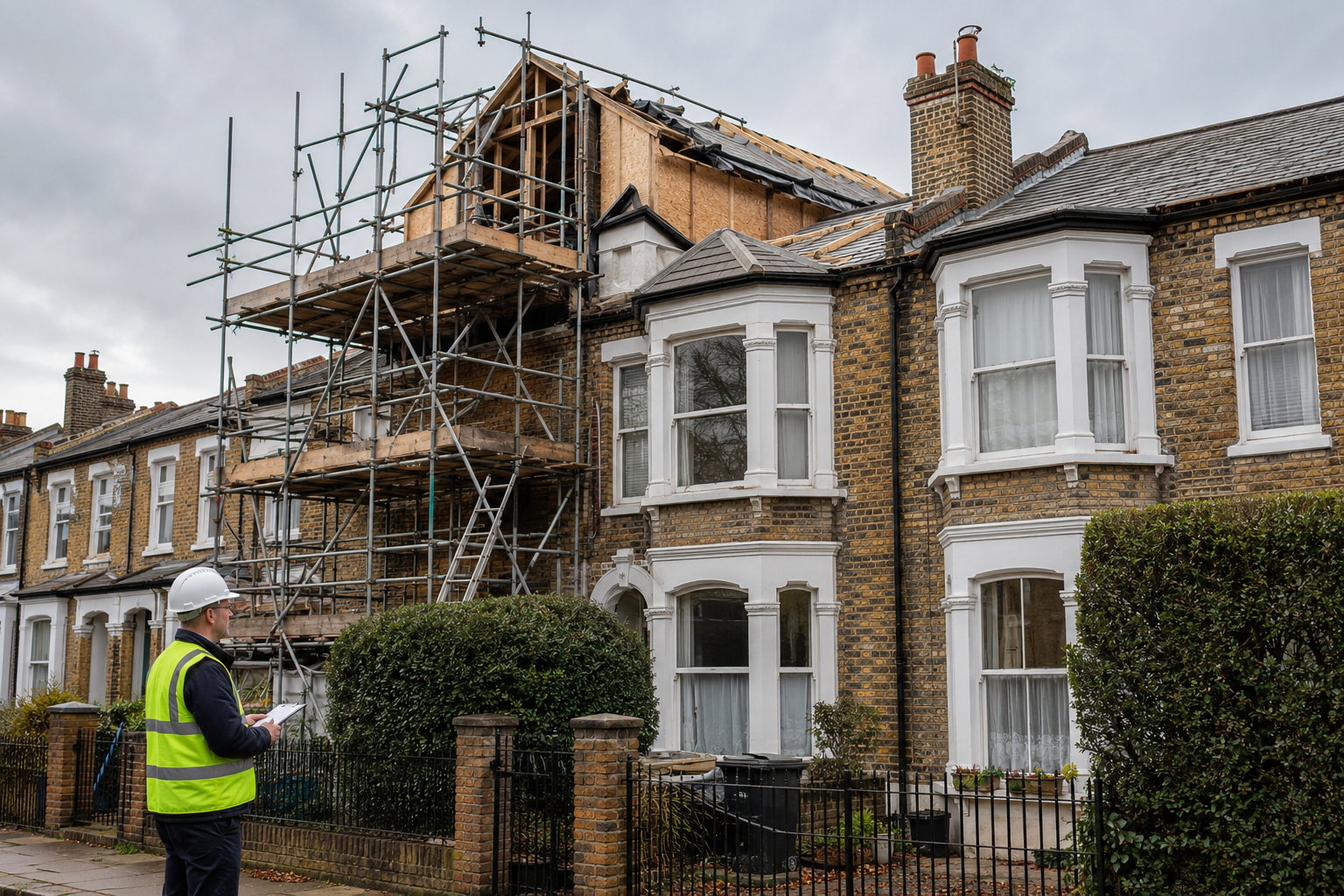
Loft conversions are among the most common triggers for party wall disputes in urban areas. The structural work involved — cutting into party walls, installing steel beams, raising ridge heights — creates multiple points of potential disagreement between surveyors. For anyone undertaking loft conversions with party wall implications, understanding the Third Surveyor mechanism before works begin is essential.
Similarly, where a neighbour is carrying out works without proper notice or agreement, the situation can escalate rapidly. Knowing the procedural options — including Third Surveyor referral — is critical. If a neighbour is carrying out works without a party wall agreement, the affected owner's surveyor may need to invoke the Third Surveyor to establish jurisdiction and protect their client's position.
Common Misconceptions About Third Surveyor Procedures
Several persistent misunderstandings complicate party wall matters and lead to unnecessary costs:
Misconception 1: The Third Surveyor replaces the two appointed surveyors.
The Third Surveyor resolves specific disputed points only. The two appointed surveyors remain responsible for the full award.
Misconception 2: Either party can choose the Third Surveyor.
The Third Surveyor must be selected jointly by the two appointed surveyors, not by the owners or their solicitors [4].
Misconception 3: Third Surveyor involvement always means the dispute goes to court.
The opposite is true. Third Surveyor Procedures in Party Wall Deadlocks: Resolving 2026 Disputes Without Court are specifically designed to keep matters out of the court system. A Third Surveyor determination is a statutory alternative to litigation.
Misconception 4: The Third Surveyor's decision can be ignored if both owners disagree.
The determination is binding. Both appointed surveyors must incorporate it into the award, regardless of the owners' preferences [5].
Misconception 5: Third Surveyor fees are always split equally.
Cost allocation depends on who triggered the referral and whether that referral was justified. Unnecessary or vexatious referrals can result in the referring party bearing the full cost [3].
Conclusion
Third Surveyor Procedures in Party Wall Deadlocks: Resolving 2026 Disputes Without Court represent one of the most effective — and most misunderstood — tools available under the Party Wall etc. Act 1996. The mechanism exists precisely to prevent neighbour disputes from consuming court time and owner resources. Used correctly, it delivers binding, expert-led resolutions in a fraction of the time and cost of litigation.
The 2026 RICS consultation on the 8th edition guidance marks a turning point. Clearer rules on direct owner access, joint inspection protocols, fee transparency, and impartiality requirements will reduce procedural uncertainty and make the Third Surveyor mechanism more accessible and reliable for all parties.
Actionable next steps for property owners and surveyors:
- Ensure a Third Surveyor is named jointly at the very start of any party wall matter — before any award work begins
- Request a written fee estimate from any Third Surveyor before referral proceeds
- Use joint site inspections and a detailed schedule of condition to narrow the scope for later disagreement
- Review the RICS 8th edition draft guidance and understand how the new direct-access provisions affect your rights
- Seek advice from an experienced chartered surveyor before making or responding to any Third Surveyor referral
For a full overview of the party wall process, the rights and obligations involved, and how disputes are typically resolved, the party wall FAQ is an authoritative starting point. Where damage has already occurred, the damage to property in party wall guidance sets out the remedies available.
The Third Surveyor exists so that professional expertise — not courtroom procedure — resolves building disputes. In 2026, that principle is more relevant and better supported than ever.
References
[1] Rics Opens Consultation On Party Wall Guidance Update – https://www.propertywire.com/news/uk/rics-opens-consultation-on-party-wall-guidance-update/?utm_source=openai
[2] Viewcompounddoc – https://consultations.rics.org/party_walls_8th_edition_guidance/viewCompoundDoc?docid=16799988&partid=16803956&pfv=y&utm_source=openai
[3] Third Surveyor Party Wall London – https://builderr.co.uk/answers/third-surveyor-party-wall-london?utm_source=openai
[4] Party Wall Complexity Third Surveyors – https://www.simplesurvey.co.uk/uncategorised/party-wall-complexity-third-surveyors/?utm_source=openai
[5] Appointing The Third Surveyor When Disagreements Arise And Why This Costly Step Is Necessary – https://www.partywallslimited.com/blog/appointing-the-third-surveyor-when-disagreements-arise-and-why-this-costly-step-is-necessary?utm_source=openai
[6] Rics 8th Edition Party Wall Guidance 2026 Implementation Challenges And Surveyor Compliance Strategies – https://wimbledonsurveyors.com/rics-8th-edition-party-wall-guidance-2026-implementation-challenges-and-surveyor-compliance-strategies/?utm_source=openai