Fewer than one in five commercial lease dilapidations disputes in England and Wales ever reach a courtroom — yet the financial stakes routinely run into six figures. That gap between threat and trial is where a skilled dilapidations expert witness earns their value. Building Dilapidations as Expert Witness Services: Unbiased Valuations and CPR-Compliant Reporting for 2026 Disputes sits at the crossroads of property law, construction knowledge, and forensic reporting — and in 2026, the demand for practitioners who can deliver all three has never been higher.
Inspired by the approach championed by specialists such as Brian Gale of Dilap Solutions [1], this article covers the full lifecycle of a dilapidations expert witness instruction: from the initial site inspection, through the structured reporting requirements of Practice Direction 35 (PD35), to practical tips for lease-end negotiations that keep disputes out of court wherever possible.
Key Takeaways 📋
- Impartiality is non-negotiable. A dilapidations expert witness owes their primary duty to the court, not to the instructing party.
- CPR Part 35 and Practice Direction 35 govern how expert reports must be structured and what declarations they must contain.
- The inspection process is the foundation. Thorough, photographic, and methodical site surveys underpin every defensible valuation.
- The Section 18(1) cap on landlord claims is a critical legal constraint that every expert must address in their report.
- Early expert involvement at lease-end can prevent costly litigation and facilitate faster, fairer settlements.
What Are Building Dilapidations Expert Witness Services?
When a commercial lease ends, landlords and tenants frequently disagree about the condition of the property and the cost of remedying any breaches of the tenant's repairing, decorating, and reinstatement obligations. These disagreements can escalate into formal legal proceedings — and that is precisely when building dilapidations expert witness services become essential.
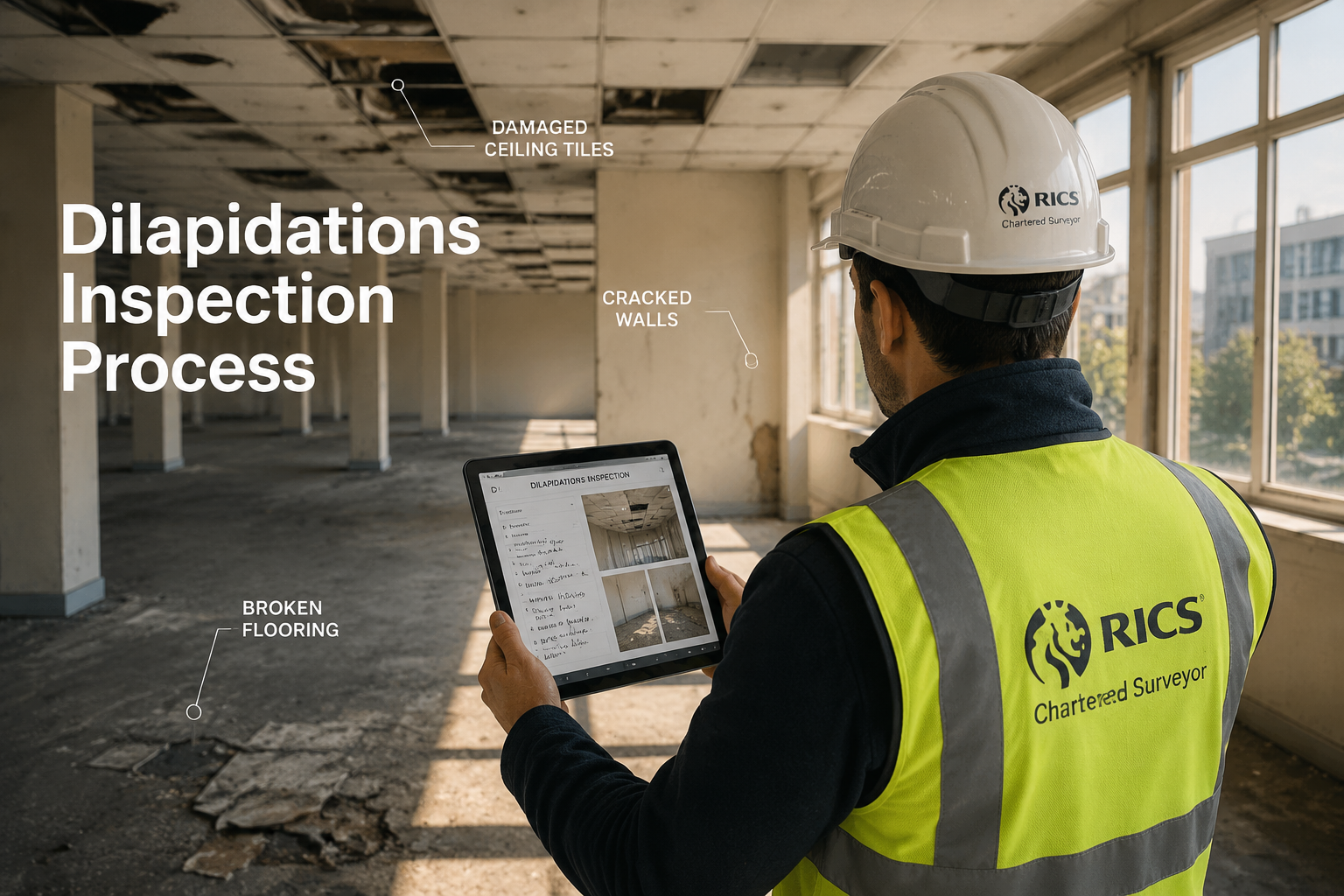
A dilapidations expert witness is a chartered surveyor (typically RICS-qualified) who is appointed to provide an independent, impartial opinion on technical and valuation matters in dispute. Their role is fundamentally different from that of a party-appointed advocate. As CPR Part 35 makes clear, the expert's overriding duty is to the court, not to the client who pays their fee.
Specialist firms offer expert surveyor support across building surveying, commercial property valuations, and construction claims [1]. Dedicated expert witness directories also catalogue practitioners with specific expertise in dilapidations valuations and dispute resolution [7], reflecting how recognised this sub-discipline has become within the wider expert witness ecosystem.
The Scope of Dilapidations Disputes in 2026
Dilapidations disputes in 2026 typically involve one or more of the following:
| Dispute Type | Common Issues |
|---|---|
| Repair obligations | Structural defects, roof failures, damp ingress |
| Decoration obligations | Internal and external redecoration cycles |
| Reinstatement obligations | Removal of tenant fit-out, partitions, mezzanines |
| Statutory compliance | Fire safety upgrades, asbestos management |
| Diminution in value | Section 18(1) cap assessment |
For a thorough understanding of the survey process that underpins these assessments, see dilapidation surveys and the detailed guidance on schedule of condition reporting.
The Inspection Process: Building the Foundation for an Unbiased Valuation
"A dilapidations expert witness is only as credible as the evidence they gathered on the day of inspection."
The inspection is the cornerstone of every dilapidations expert witness instruction. A poorly conducted survey — one that misses defects, misidentifies their cause, or fails to record evidence photographically — will undermine even the most elegantly written report.
Pre-Inspection Preparation
Before setting foot on site, a competent expert will:
- Review the lease in full, including all schedules, licences for alterations, and any side letters
- Obtain and study the schedule of condition (if one was agreed at lease commencement)
- Examine any prior correspondence, including the landlord's terminal schedule of dilapidations and the tenant's response
- Research the building's age, construction type, and planning history
- Identify any relevant statutory obligations (e.g., asbestos regulations, fire safety requirements)
A schedule of condition prepared at lease commencement is one of the most powerful tools available to tenants — it limits their liability to the condition documented at the start of the term.
Conducting the Site Inspection
On site, the expert should work systematically through the property, element by element, using a structured inspection methodology. Key practices include:
- 📷 Extensive photography — every defect, every area of dispute, every element of tenant's fit-out
- 📐 Measurements and dimensions where relevant to quantifying remedial works
- 🔍 Probing and testing of suspect areas (with appropriate permissions)
- 📝 Contemporaneous notes recorded during the inspection, not reconstructed afterwards
- 🏗️ Assessment of cause — distinguishing between fair wear and tear, tenant's breach, and landlord's supersession
For complex buildings, a RICS Level 3 Building Survey methodology provides the most rigorous framework for identifying and categorising defects.
Quantifying the Remedial Works
Once defects are identified, the expert must quantify the cost of remediation. This involves:
- Preparing a Scott Schedule — a tabular document listing each item of disrepair, the landlord's claimed cost, the tenant's response, and the expert's independent assessment
- Obtaining or verifying contractor pricing — either from first principles or by reference to published cost data (e.g., BCIS)
- Applying the Section 18(1) diminution cap — assessing whether the landlord's claim is capped by the diminution in the value of the landlord's reversion
The Section 18(1) cap is one of the most technically demanding aspects of a dilapidations valuation. It requires the expert to assess what the property would have been worth in full repair versus its actual condition — a task that draws heavily on RICS valuation methodology and a deep understanding of factors of valuation.
CPR-Compliant Reporting: Structuring Your Expert Witness Report Under Practice Direction 35
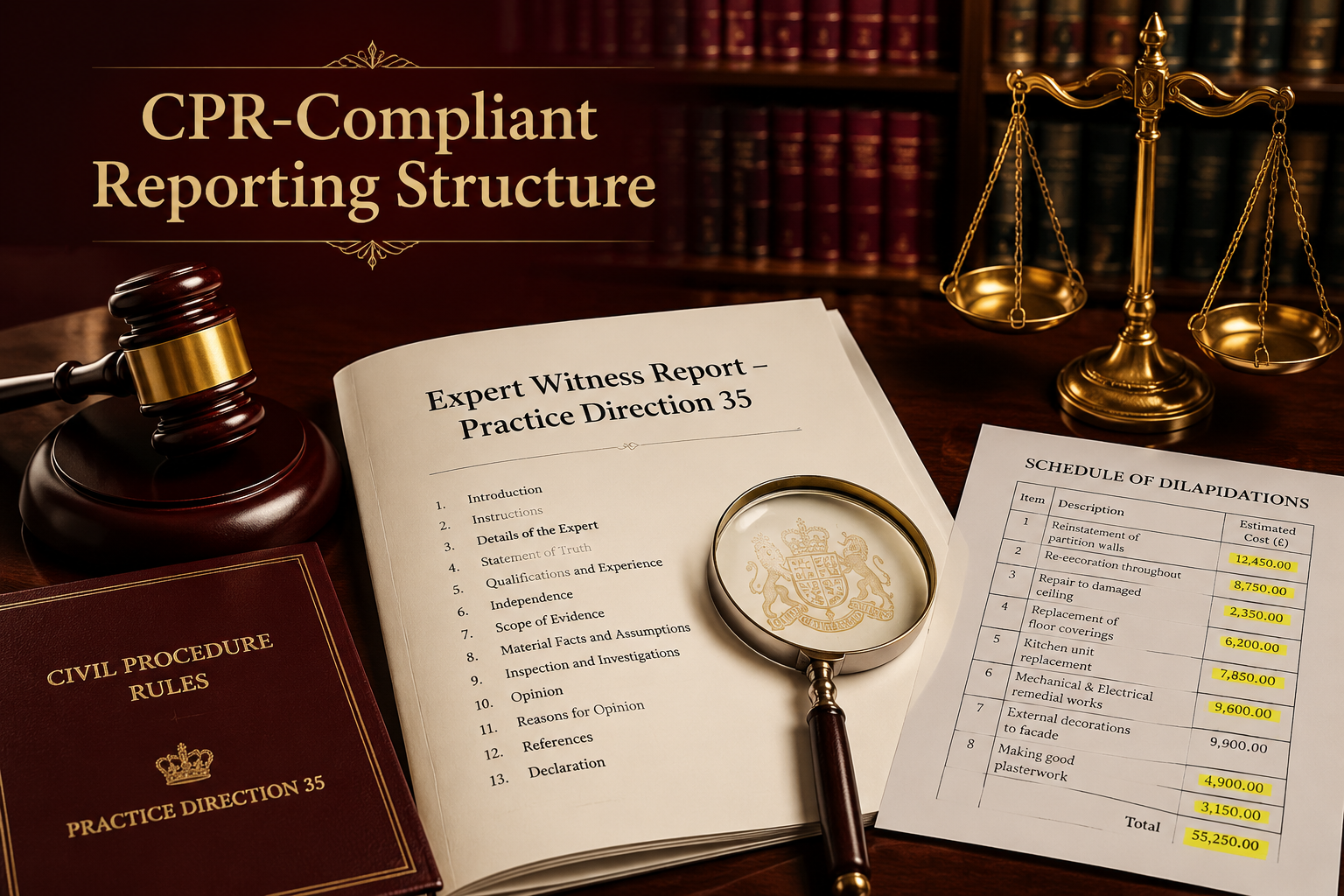
Building Dilapidations as Expert Witness Services: Unbiased Valuations and CPR-Compliant Reporting for 2026 Disputes demands more than technical knowledge — it demands procedural precision. The Civil Procedure Rules (CPR) Part 35 and its accompanying Practice Direction 35 set out mandatory requirements for expert reports used in English and Welsh civil litigation.
Failure to comply with these requirements can result in the report being excluded from evidence, costs sanctions, or — in serious cases — the expert being found to have breached their duty to the court.
Mandatory Elements of a PD35-Compliant Report
Every dilapidations expert witness report must include the following:
- ✅ Details of the expert's qualifications and relevant experience
- ✅ A statement of the facts and instructions upon which the opinion is based
- ✅ A summary of the range of opinion on each disputed issue (where there is a range)
- ✅ A summary of conclusions in plain, accessible language
- ✅ A statement of truth — confirming the report is a true and complete statement of the expert's professional opinion
- ✅ The Part 35 declaration — confirming the expert understands their duty to the court and has complied with it
Pull Quote: "An expert witness who advocates for their client rather than advising the court is not an expert witness — they are a hired gun. Courts have zero tolerance for this distinction being blurred."
Structuring the Report for Maximum Clarity
A well-structured dilapidations expert witness report typically follows this order:
- Introduction — identity of the expert, instructions received, documents reviewed
- Background — property description, lease terms, history of the dispute
- Inspection methodology — when, how, and with whom the inspection was conducted
- Schedule of findings — element-by-element analysis, cross-referenced to photographs
- Valuation of remedial works — with supporting cost evidence
- Section 18(1) analysis — diminution in value assessment
- Areas of agreement and disagreement — particularly important in joint expert reports
- Summary of opinion — clear, numbered conclusions
- Declarations and statement of truth
Joint Statements and Single Joint Experts
In many 2026 dilapidations disputes, the court will direct the parties' experts to meet and produce a joint statement identifying areas of agreement and narrowing the issues in dispute. This is a critical stage — a well-prepared expert can significantly reduce the scope of the trial (and the costs exposure for their client) at this point.
In lower-value disputes, the court may appoint a Single Joint Expert (SJE) — one expert instructed by both parties. This places an even greater premium on impartiality and transparency, as the SJE's report will be the primary technical evidence before the court.
Practitioners offering expert witness report services should be fully conversant with both the party-appointed and SJE models, and should be prepared to adapt their approach accordingly.
Practical Tips for Lease-End Dilapidations Negotiations in 2026
Not every dilapidations dispute needs an expert witness in the litigation sense. In many cases, early involvement of a specialist surveyor — acting in a without prejudice advisory capacity — can resolve disputes through negotiation before formal proceedings are issued.
Tip 1: Instruct Early — Before the Terminal Schedule Arrives
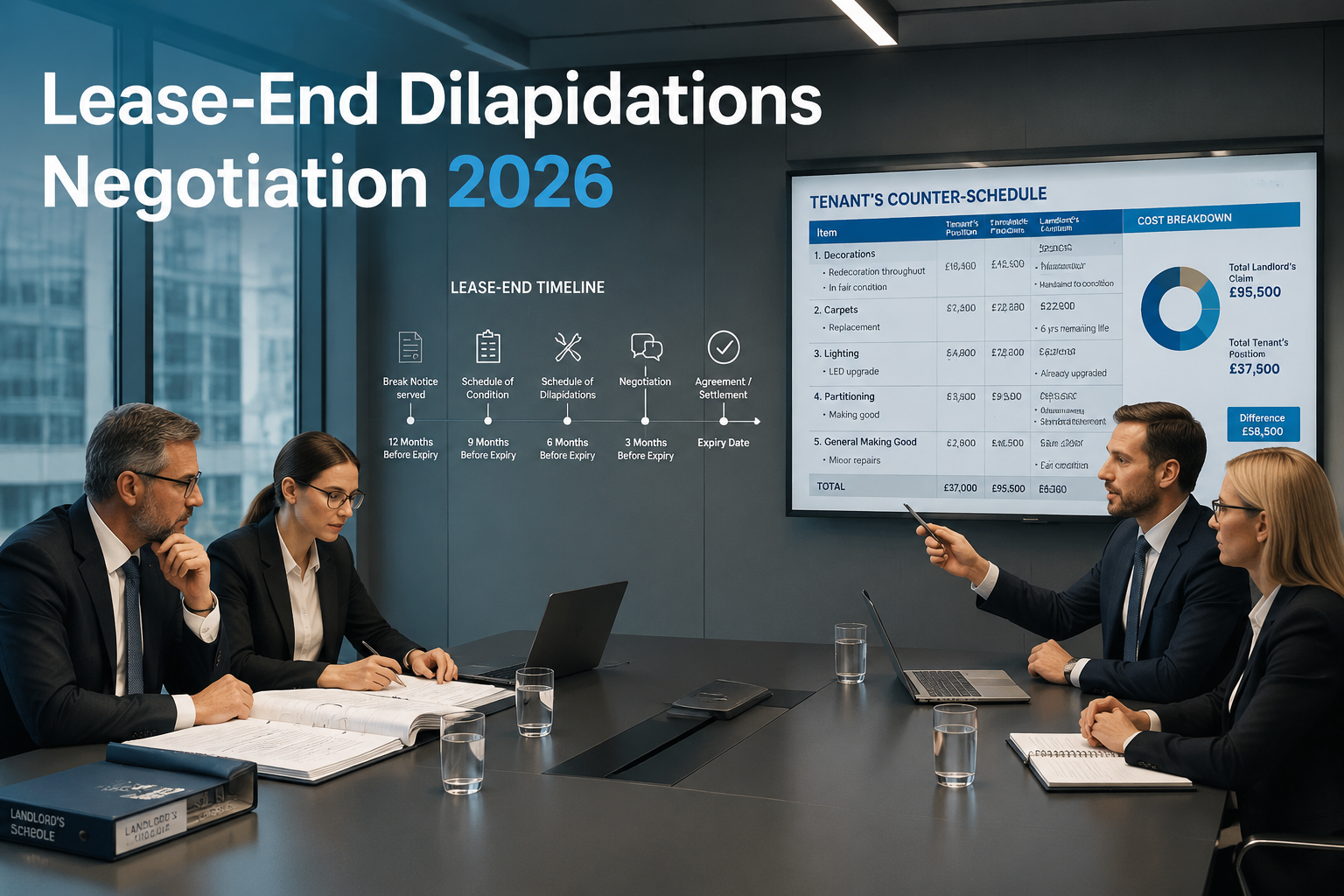
Tenants often make the mistake of waiting until they receive the landlord's terminal schedule of dilapidations before seeking specialist advice. By then, the landlord has already framed the dispute on their own terms. Early instruction — ideally 12 to 18 months before lease expiry — allows the tenant's surveyor to:
- Commission a dilapidations survey to assess the likely scope of liability
- Carry out remedial works before lease-end (often cheaper than a landlord's claim)
- Prepare a robust counter-schedule in response to the landlord's claim
Tip 2: Challenge the Section 18(1) Cap Robustly
Landlords frequently serve schedules that exceed the Section 18(1) cap — sometimes significantly. A well-evidenced diminution in value analysis, supported by commercial property valuation data, can dramatically reduce the tenant's exposure.
Key questions to address in the Section 18(1) analysis:
- Has the landlord already re-let or sold the property? If so, the actual transaction price provides strong evidence of the diminution (or lack thereof).
- Is the landlord intending to redevelop? If so, the cost of repairs may be irrelevant — the Section 18(1) cap may reduce the claim to nil.
- What is the current market for this type of property? A weak letting market may mean that repair works add little or no value to the reversion.
Tip 3: Use the Scott Schedule as a Negotiation Tool
The Scott Schedule — the tabular document setting out each item of dispute — is not just a litigation tool. It is an excellent framework for structured negotiation. By presenting the tenant's position item by item, with supporting evidence and pricing, it forces the landlord to engage with the detail of each claim rather than simply defending a global figure.
Tip 4: Consider Mediation
In 2026, courts actively encourage parties to consider Alternative Dispute Resolution (ADR), including mediation, before proceeding to trial. A dilapidations expert witness can play a valuable role in mediation — providing technical input to the mediator and helping parties understand the strengths and weaknesses of their respective positions.
Tip 5: Document Everything
Whether acting as expert witness or negotiating adviser, meticulous documentation is essential:
- Keep all inspection photographs with metadata (date, time, location)
- Retain all correspondence, including without prejudice communications (in a separate file)
- Record all instructions in writing
- Maintain a clear audit trail of all cost evidence and valuation data
Why Impartiality Is the Expert Witness's Most Valuable Asset
The single most important quality a dilapidations expert witness can bring to a 2026 dispute is genuine impartiality. Courts and opposing parties can quickly identify experts who have lost their objectivity — and the consequences are severe.
Real estate expert witness services address property standard of care and habitability disputes [5], and the same principle applies in dilapidations: the expert who gives a balanced, evidence-based opinion — even where that opinion is unfavourable to their instructing party — will always carry more weight than one who simply advocates for the highest (or lowest) possible figure.
Specialist firms offering expert witness services emphasise that their professionals provide support across building surveying, commercial property valuations, and construction claims [1], with the ability to address both quantum (the cost of works) and liability (whether the works are properly within the tenant's obligations under the lease).
Dedicated directories cataloguing practitioners in this field [7] reflect the growing recognition that dilapidations expert witnessing is a distinct professional discipline — one that requires not just technical surveying skill, but also a thorough understanding of civil procedure, evidence law, and court etiquette.
Choosing the Right Dilapidations Expert Witness for Your 2026 Dispute
When selecting an expert, consider the following criteria:
| Criteria | Why It Matters |
|---|---|
| RICS membership | Ensures adherence to professional standards and ethics |
| Specific dilapidations experience | General surveyors may lack the depth needed for complex disputes |
| Court experience | An expert who has given oral evidence is better prepared for cross-examination |
| Report writing quality | Clarity and structure are as important as technical accuracy |
| Independence | No commercial relationship with either party that could compromise impartiality |
| Geographic knowledge | Familiarity with local property markets is essential for Section 18(1) analysis |
For parties based in the North West or requiring coverage across England and Wales, engaging chartered surveyors with RICS-certified expertise ensures both technical rigour and local market knowledge.
Conclusion: Actionable Next Steps for 2026 Dilapidations Disputes
Building Dilapidations as Expert Witness Services: Unbiased Valuations and CPR-Compliant Reporting for 2026 Disputes is a specialist field that rewards preparation, precision, and procedural discipline. Whether acting for landlord or tenant, the quality of the expert witness instruction — from the first site inspection to the final court declaration — will often determine the outcome of the dispute.
Here are the key actionable steps to take right now:
- Instruct a specialist dilapidations surveyor early — ideally 12-18 months before lease expiry, not after the terminal schedule arrives.
- Commission a schedule of condition at the start of any new lease to cap future liability.
- Ensure your expert is CPR Part 35 compliant — check that they understand PD35 requirements and have court experience.
- Challenge the Section 18(1) cap with robust valuation evidence — do not accept the landlord's headline figure without scrutiny.
- Explore ADR options — mediation can resolve disputes faster and more cheaply than litigation.
- Choose an RICS-qualified expert with specific dilapidations and commercial property valuation experience.
For specialist support with dilapidations surveys, expert witness reports, and lease-end negotiations, get a quote from a qualified chartered surveyor today.
References
[1] Expert Witness – https://www.dilapsolutions.com/services/expert-witness/
[2] jurispro – https://www.jurispro.com/category/building-contractor-liability-s-671/CA
[3] Construction Expert Witness – https://seakexperts.com/specialties/construction-expert-witness?state=california
[4] Expert Witness And Litigation Services – https://caconsultants.tech/expert-witness-and-litigation-services/
[5] Expert Witness – https://edringtonandassociates.com/expert-witness/
[6] Civil Engineering Expert Witness – https://seakexperts.com/specialties/civil-engineering-expert-witness?state=california
[7] Dilapidations – https://www.jspubs.com/expert-witness/si/d/dilapidations/