
The UK property market stands at a pivotal crossroads in 2026. While buyer demand has weakened significantly and near-term sentiment remains cautious, lenders maintain remarkably optimistic forecasts for increased mortgage volumes throughout the year. This paradox creates both challenges and opportunities for chartered surveyors navigating Building Surveys Under 2026 Lending Volume Uplift: RICS Protocols for Accelerated Transaction Demands. As transaction timelines compress and expectations for rapid turnaround intensify, the surveying profession must adapt without compromising the thoroughness that protects buyers and satisfies lender requirements.
The landscape has shifted dramatically. February 2026 data reveals new buyer enquiries posted a net balance of -26%, down from -15% in January, reflecting renewed concerns over interest rates and macroeconomic uncertainty[2]. Yet despite this near-term weakness, lenders forecast strong momentum continuing throughout 2026, creating an environment where surveyors must prepare for potential volume surges while current activity remains subdued[3].

Key Takeaways
- Lenders forecast increased mortgage volumes throughout 2026 despite current market weakness, requiring surveyors to prepare for accelerated transaction demands
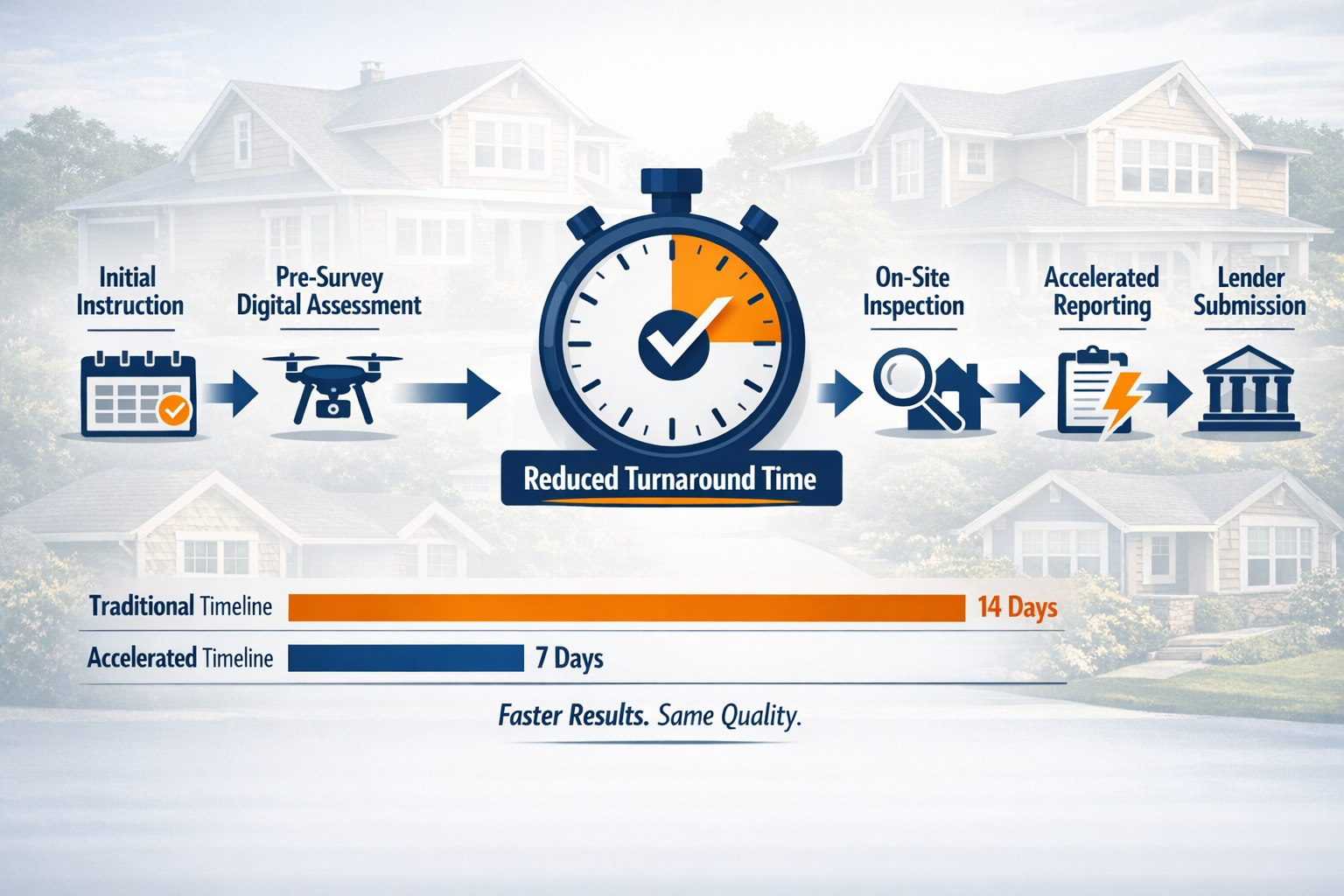
- RICS protocols provide structured frameworks for maintaining survey quality while reducing turnaround times from traditional 14-day standards to 7-10 days
- Digital integration and pre-survey assessments enable faster on-site inspections without compromising thoroughness or professional standards
- Government homebuying reforms under consultation could make property condition assessments mandatory upfront requirements, fundamentally transforming survey demand patterns
- Strategic capacity planning and technology adoption separate surveyors who capitalize on lending volume uplifts from those overwhelmed by demand surges
Understanding the 2026 Lending Volume Uplift Context
Market Dynamics Creating Survey Demand Pressure
The current market presents a complex picture. Agreed sales remain subdued, with a net balance of -12% in February, marginally weaker than the -9% recorded in January[4]. Near-term price expectations turned sharply negative, falling to -18% net balance in February from -6% in January, reflecting heightened inflation and energy price concerns[2].
However, the 12-month outlook tells a different story. A net balance of +17% of respondents expect sales activity to rise over the next 12 months, though sentiment is more moderate than earlier in the year[4]. This cautiously optimistic longer-term view aligns with lender forecasts of increased volumes, creating a scenario where surveyors must prepare infrastructure and processes now for demand that may materialize rapidly.
The Reform Factor: Government Consultation Impact
Government homebuying process reforms under consultation could transform surveying demand fundamentally. Proposed reforms would require property condition assessments as standard upfront requirements, potentially significantly increasing demand for surveys earlier in the transaction process[5]. This regulatory shift would move surveys from optional buyer protections to mandatory transaction prerequisites, dramatically altering volume projections and timing expectations.
For chartered surveyors, this represents both opportunity and challenge. The RICS Home Survey framework provides established protocols, but adapting these to accelerated timelines while maintaining quality requires strategic planning.
Regional Variations in Demand Patterns
Market sentiment varies significantly by region. London market sentiment deteriorated sharply, with 12-month price expectations dropping dramatically to +7% from +56%, reflecting significant loss of confidence in the capital market[2]. Conversely, other regions maintain more stable outlooks, suggesting survey demand patterns will vary geographically.
Understanding these regional dynamics helps surveyors allocate resources effectively. Areas with stronger sentiment may experience earlier volume increases, while markets like London may see delayed recovery but potentially sharper demand surges once confidence returns.
Building Surveys Under 2026 Lending Volume Uplift: Streamlined RICS Protocols
Level 3 Building Survey Adaptations for Speed
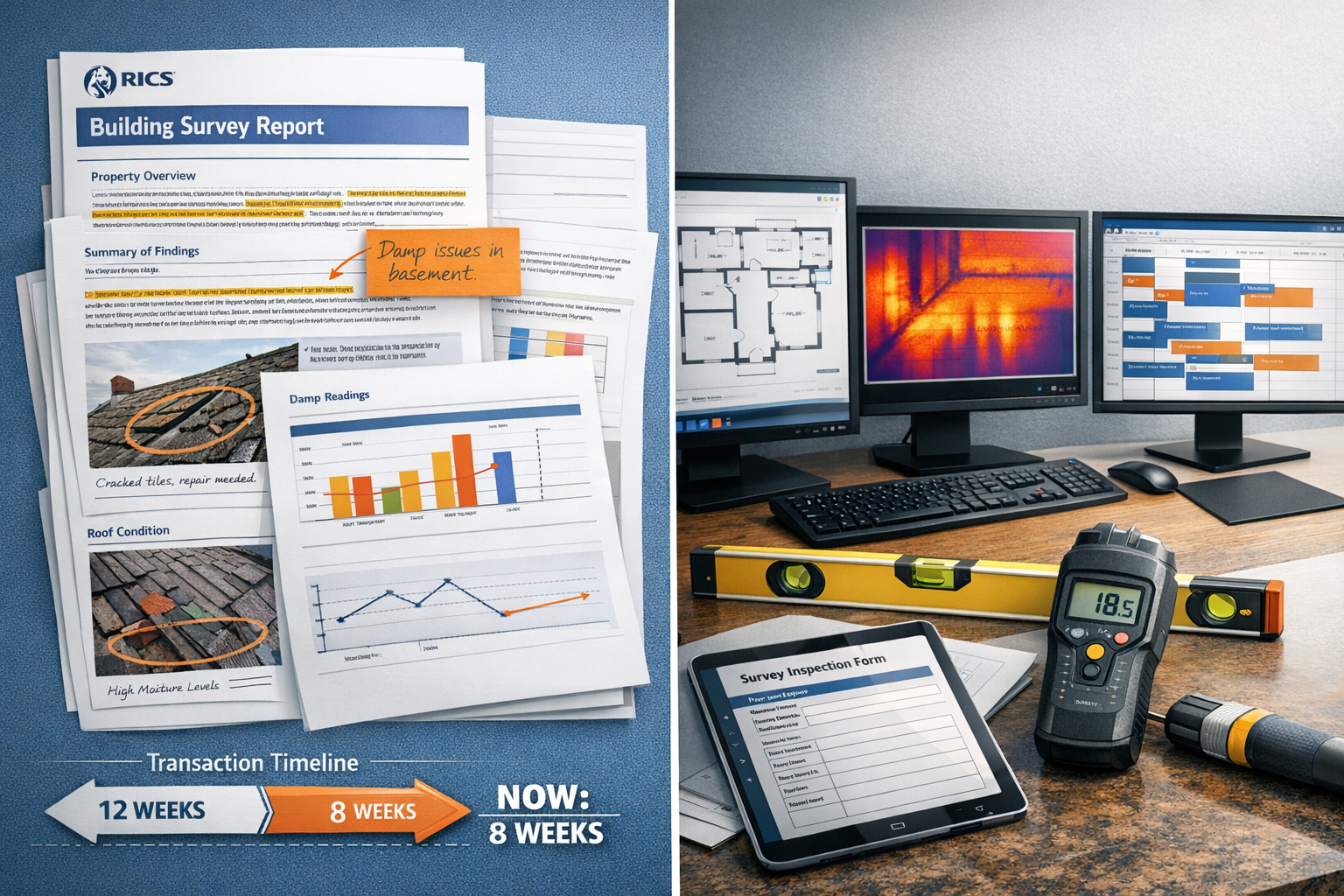
The RICS Level 3 Building Survey represents the most comprehensive inspection option, traditionally requiring extensive on-site time and detailed reporting. Under accelerated transaction demands, maintaining this thoroughness while reducing turnaround times requires systematic process optimization.
Key protocol adaptations include:
- Pre-survey digital assessments: Utilizing Land Registry data, EPC certificates, and satellite imagery to identify potential issues before site visits
- Structured inspection checklists: Digital forms ensuring no elements are overlooked while enabling real-time data capture
- Photographic documentation protocols: Systematic image capture with geo-tagging for efficient report compilation
- Prioritized defect categorization: Immediate flagging of critical issues requiring urgent lender notification
These adaptations can reduce traditional 14-day turnaround times to 7-10 days without compromising inspection quality. The key lies in front-loading preparation and back-loading automation while maintaining thorough on-site inspection standards.
Level 2 Homebuyer Survey Efficiency Gains
The RICS Homebuyer Survey Level 2 represents the middle ground between basic valuations and comprehensive building surveys. This survey type often experiences highest volume during lending uplifts, making efficiency optimization critical.
Accelerated Level 2 protocols focus on:
| Protocol Element | Traditional Approach | Accelerated Approach | Time Savings |
|---|---|---|---|
| Initial instruction | Phone/email exchange | Digital portal with instant confirmation | 1-2 days |
| Property research | Manual searches | Automated data aggregation | 0.5 days |
| Site inspection | Paper-based notes | Tablet-based digital capture | 0.5 days |
| Report drafting | Manual compilation | Template automation with photo integration | 2-3 days |
| Quality review | Sequential review | Parallel review workflows | 1 day |
These optimizations can compress traditional 10-12 day timelines to 5-7 days, significantly improving transaction velocity while maintaining RICS standards.
Specialist Survey Integration for Complex Properties
Complex properties requiring specialist assessments present particular challenges under accelerated timelines. Structural surveys, roof surveys, and drainage surveys may be necessary for comprehensive risk assessment.
Coordination strategies include:
✅ Concurrent scheduling: Arranging specialist surveys simultaneously rather than sequentially
✅ Integrated reporting: Creating unified reports incorporating specialist findings
✅ Pre-identified triggers: Establishing clear criteria for specialist survey requirements during initial assessment
✅ Preferred specialist networks: Maintaining relationships with responsive specialists who understand urgency requirements
The subsidence survey process exemplifies this approach. Rather than waiting for initial survey completion before commissioning structural assessments, pre-survey research can identify properties in high-risk areas, enabling proactive specialist scheduling.
Valuation and Survey Coordination
Lenders require both valuations and condition assessments, creating coordination opportunities. RICS valuations conducted by RICS-registered valuers can be coordinated with building surveys to minimize property access requirements and accelerate overall timelines.
Understanding the distinction remains important: mortgage valuations differ from surveys, serving different purposes. However, coordinated scheduling and information sharing (with appropriate permissions) can streamline processes significantly.
RICS Quality Standards Under Accelerated Transaction Timelines
Maintaining Professional Standards During Volume Surges
The fundamental challenge of Building Surveys Under 2026 Lending Volume Uplift: RICS Protocols for Accelerated Transaction Demands centers on preserving quality while increasing throughput. RICS professional standards provide non-negotiable frameworks that protect both surveyors and clients.
Critical quality maintenance strategies:
🔍 Standardized inspection protocols: Ensuring every survey follows comprehensive checklists regardless of time pressure
📋 Mandatory peer review: Implementing quality checks before report release, even under tight deadlines
⚖️ Transparent limitation disclosure: Clearly communicating any constraints affecting inspection scope
📊 Performance monitoring: Tracking turnaround times against quality metrics to identify process bottlenecks
"The temptation to cut corners during volume surges can be overwhelming, but maintaining RICS standards protects professional reputation and client interests. Speed gains must come from process efficiency, not inspection shortcuts." – Industry Best Practice Guidance
Technology Integration Without Compromise
Digital tools enable acceleration without quality compromise when properly implemented. Modern surveying technology includes:
- Thermal imaging cameras: Rapidly identifying insulation defects, moisture ingress, and heating system issues
- Laser measuring devices: Accurate dimensional capture without manual measurement time
- Drone photography: Comprehensive roof and chimney inspection without scaffolding delays
- Digital moisture meters: Immediate damp detection with data logging capabilities
- Cloud-based reporting platforms: Real-time report compilation with automated formatting
These technologies reduce on-site time while often improving inspection thoroughness. A roof survey conducted with drone technology may provide more comprehensive coverage than traditional ladder inspection, while completing in a fraction of the time.
Risk Management and Professional Indemnity Considerations
Accelerated timelines increase professional liability risks. Rushed inspections may miss defects, creating potential professional indemnity claims. Robust risk management protocols become essential:
Risk mitigation framework:
- Documented procedures: Written protocols demonstrating systematic approach regardless of timeline pressure
- Limitation clauses: Clear scope definitions protecting against unrealistic expectations
- Insurance notification: Informing professional indemnity insurers of process changes and volume increases
- Continuing professional development: Regular training on accelerated inspection techniques and technology
- Client expectation management: Transparent communication about what accelerated timelines can and cannot deliver
The specific defect report process illustrates appropriate limitation. When time constraints prevent comprehensive inspection, clearly defined scope protects both surveyor and client.
Operational Strategies for Capitalizing on Lending Volume Growth
Capacity Planning and Resource Allocation
Preparing for potential volume surges requires strategic capacity planning. The mismatch between current subdued activity and forecast increases creates planning challenges. Surveyors must balance:
- Fixed cost management: Avoiding premature expansion that becomes unsustainable if forecasts don't materialize
- Flexible capacity: Developing associate networks and subcontractor relationships for surge absorption
- Technology investment: Implementing efficiency tools that improve productivity regardless of volume levels
- Training programs: Upskilling existing staff to handle increased throughput
Scenario planning approaches:
| Volume Scenario | Probability Assessment | Response Strategy |
|---|---|---|
| Gradual 20% increase | High (60%) | Optimize existing processes, selective hiring |
| Rapid 50% surge | Moderate (30%) | Activate associate network, extend hours |
| Flat/declining volume | Low (10%) | Focus on service quality, market share gains |
This structured approach enables responsive adaptation as market conditions evolve throughout 2026.
Client Communication and Expectation Management
Transparent communication about accelerated survey capabilities prevents misunderstandings and builds client confidence. Key messaging elements include:
✉️ Realistic timeline commitments: Promising deliverable timeframes rather than aspirational targets
📞 Progress updates: Proactive communication during survey process
📄 Clear scope definitions: Explaining what accelerated surveys include and exclude
💡 Value proposition articulation: Demonstrating how efficiency improvements benefit clients
The survey pricing structure should reflect service level differentiation. Standard timelines at base rates, with premium pricing for expedited service, creates clear value propositions while managing demand.
Lender Relationship Development
Strong lender relationships facilitate smooth transaction processing during volume increases. Lenders appreciate surveyors who:
- Understand lending criteria: Tailoring reports to address specific lender concerns
- Provide consistent quality: Delivering reliable assessments that support lending decisions
- Communicate proactively: Flagging critical issues immediately rather than waiting for final reports
- Demonstrate flexibility: Accommodating urgent instructions when possible
Building these relationships positions surveyors as preferred providers when lending volumes increase, creating competitive advantages in capturing market share.
Institutional and Buy-to-Let Market Opportunities
Professional and institutional landlords continue bullish investment strategies and demonstrate strong engagement with property professionals[5]. This sector represents significant opportunity during lending volume uplifts, as institutional investors:
- Value professional assessments: Understanding survey importance for portfolio protection
- Require rapid turnaround: Operating under tight acquisition timelines
- Generate repeat business: Building long-term relationships with reliable surveyors
- Accept premium pricing: Recognizing quality service value
Developing expertise in commercial building surveys and multi-unit residential properties positions surveyors to capitalize on this growing market segment.
Future-Proofing Survey Practices for Sustained Demand
Preparing for Regulatory Reform Implementation
The proposed government reforms requiring mandatory property condition assessments represent potential fundamental market transformation[5]. Surveyors should prepare by:
- Monitoring consultation progress: Staying informed about reform development and implementation timelines
- Developing standardized assessment products: Creating survey products specifically designed for mandatory requirement compliance
- Building scalable infrastructure: Ensuring capacity to handle potentially dramatic demand increases
- Engaging with policy development: Contributing professional expertise to reform design
Early preparation positions surveyors advantageously when reforms implement, potentially creating first-mover advantages in new mandatory assessment markets.
Continuing Professional Development Priorities
Maintaining competitive advantages during market evolution requires focused professional development. Priority areas for 2026 include:
📚 Digital tool proficiency: Mastering survey technology for efficiency gains
🏗️ Modern construction methods: Understanding contemporary building techniques and materials
⚡ Energy efficiency assessment: Developing expertise in EPC-related property performance
🌍 Sustainability considerations: Incorporating environmental factors into property assessments
📊 Data analytics: Utilizing market data for comparative analysis and valuation support
These competencies enhance survey value propositions while improving efficiency and quality.
Building Resilient Business Models
Market volatility requires business model resilience. Successful surveying practices in 2026 will:
- Diversify service offerings: Providing multiple survey types and specialist assessments
- Maintain geographic flexibility: Serving multiple markets to balance regional variations
- Develop multiple client channels: Balancing lender, estate agent, and direct buyer relationships
- Invest in technology: Continuously improving operational efficiency
- Build strong teams: Developing staff capabilities for quality and capacity
This diversification protects against market fluctuations while positioning practices to capitalize on opportunities across multiple segments.
Conclusion
Building Surveys Under 2026 Lending Volume Uplift: RICS Protocols for Accelerated Transaction Demands represents both significant opportunity and considerable challenge for the surveying profession. While current market conditions show weakness—with buyer enquiries at -26% and agreed sales at -12%[2][4]—lender forecasts of increased volumes throughout 2026 require strategic preparation now.
The path forward requires balancing speed with thoroughness, leveraging technology without compromising professional standards, and building operational capacity while managing current market realities. RICS protocols provide robust frameworks for maintaining quality, but successful implementation requires systematic process optimization, strategic technology adoption, and transparent client communication.
Surveyors who prepare proactively—developing streamlined workflows, investing in efficiency-enhancing technology, building flexible capacity, and maintaining unwavering quality standards—will be positioned to capitalize on lending volume increases when they materialize. Those who wait for demand surges before adapting will find themselves overwhelmed and unable to capture market opportunities.
Actionable Next Steps
🎯 Immediate actions (next 30 days):
- Audit current survey processes to identify efficiency improvement opportunities
- Evaluate technology investments that could reduce turnaround times without quality compromise
- Develop standardized digital inspection checklists and reporting templates
- Review professional indemnity insurance coverage for increased volume scenarios
📈 Medium-term strategies (next 90 days):
- Establish associate surveyor networks for surge capacity absorption
- Build lender relationships through proactive communication and service quality demonstrations
- Implement pilot programs for accelerated survey protocols on selected instructions
- Develop client communication materials explaining accelerated service options
🚀 Long-term positioning (next 12 months):
- Monitor government reform consultations and prepare for mandatory assessment requirements
- Invest in continuing professional development focused on efficiency and modern construction methods
- Build diversified service portfolios across residential, commercial, and specialist survey types
- Develop data analytics capabilities for enhanced market insights and comparative analysis
The 2026 lending volume uplift presents a defining moment for the surveying profession. Success requires embracing change while maintaining the professional standards that protect clients and uphold industry reputation. By implementing RICS protocols adapted for accelerated demands, surveyors can deliver the speed modern transactions require without sacrificing the thoroughness that makes professional surveys invaluable.
References
[1] Rics January 2026 Survey Insights Building Survey Protocols For Surging Buyer Enquiries In North West England – https://nottinghillsurveyors.com/blog/rics-january-2026-survey-insights-building-survey-protocols-for-surging-buyer-enquiries-in-north-west-england
[2] Uk Residential Survey February 2026 – https://www.rics.org/news-insights/uk-residential-survey-february-2026
[3] Lending Volume Surge And Survey Demand How Surveyors Can Capitalize On 2026s Increased Mortgage Activity – https://nottinghillsurveyors.com/blog/lending-volume-surge-and-survey-demand-how-surveyors-can-capitalize-on-2026s-increased-mortgage-activity
[4] Uk Residential Market Survey February 2026 – https://www.rics.org/content/dam/ricsglobal/documents/market-surveys/uk-residential-market-survey/UK-Residential-Market-Survey_February-2026.pdf
[5] Surveying In 2026 Reform Recovery And Renewed Demand – https://www.lrg.co.uk/news-and-insights/surveying-in-2026-reform-recovery-and-renewed-demand/