
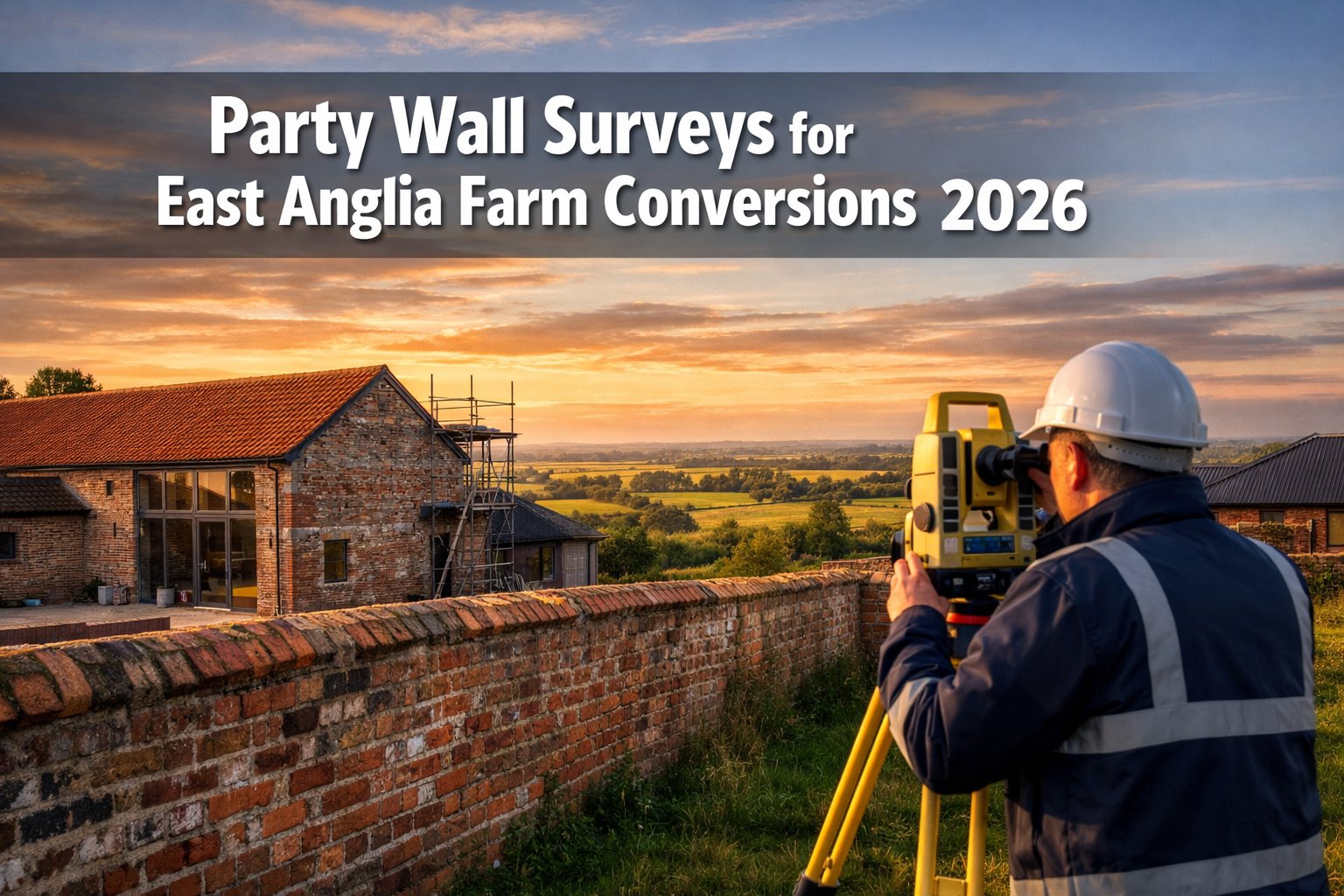
The rolling countryside of East Anglia is experiencing an unprecedented transformation in 2026. Historic barns, agricultural outbuildings, and farmsteads are being converted into desirable residential properties at record rates, driven by remote work trends and rural lifestyle preferences. However, beneath the rustic charm of these conversions lies a complex web of party wall considerations that many developers and property owners overlook until disputes arise. Understanding Party Wall Surveys for East Anglia Farm Conversions 2026: Navigating Rural Revitalisation Agreements has become essential for anyone involved in agricultural property transformation across Norfolk, Suffolk, Cambridgeshire, and Essex.
The convergence of rural revitalisation policies, increased demand for countryside living, and the unique structural characteristics of agricultural buildings creates a perfect storm of potential party wall issues. Unlike typical urban residential conversions, farm buildings often share structural elements in unexpected ways, with adjoining barns, shared chimney stacks, and interconnected foundation systems that predate modern building regulations.
Key Takeaways
- Party wall legislation applies equally to rural farm conversions as it does to urban developments, with the Party Wall Act 1996 governing shared boundaries between converted agricultural properties
- East Anglia's agricultural heritage creates unique party wall scenarios including shared barn walls, interconnected outbuildings, and historical structural dependencies that require specialist surveyor expertise
- Rural revitalisation agreements in 2026 demand proactive party wall surveys to prevent costly disputes, with proper documentation through schedules of condition being critical before conversion work begins
- RICS-accredited surveyors familiar with agricultural structures provide essential guidance on navigating complex shared boundary situations in converted farmsteads
- Early engagement with adjoining property owners through proper party wall notices can prevent delays and maintain positive rural community relationships during farm conversion projects
Understanding Party Wall Requirements in Agricultural Conversions
The transformation of agricultural buildings into residential properties presents distinctive challenges that differ significantly from conventional urban development. When multiple barns or outbuildings are converted simultaneously or sequentially, the party wall implications can be substantial and complex.
What Constitutes a Party Wall in Farm Conversions?
In the context of East Anglia farm conversions, party walls extend beyond the traditional understanding of shared walls between terraced houses. Agricultural properties frequently feature:
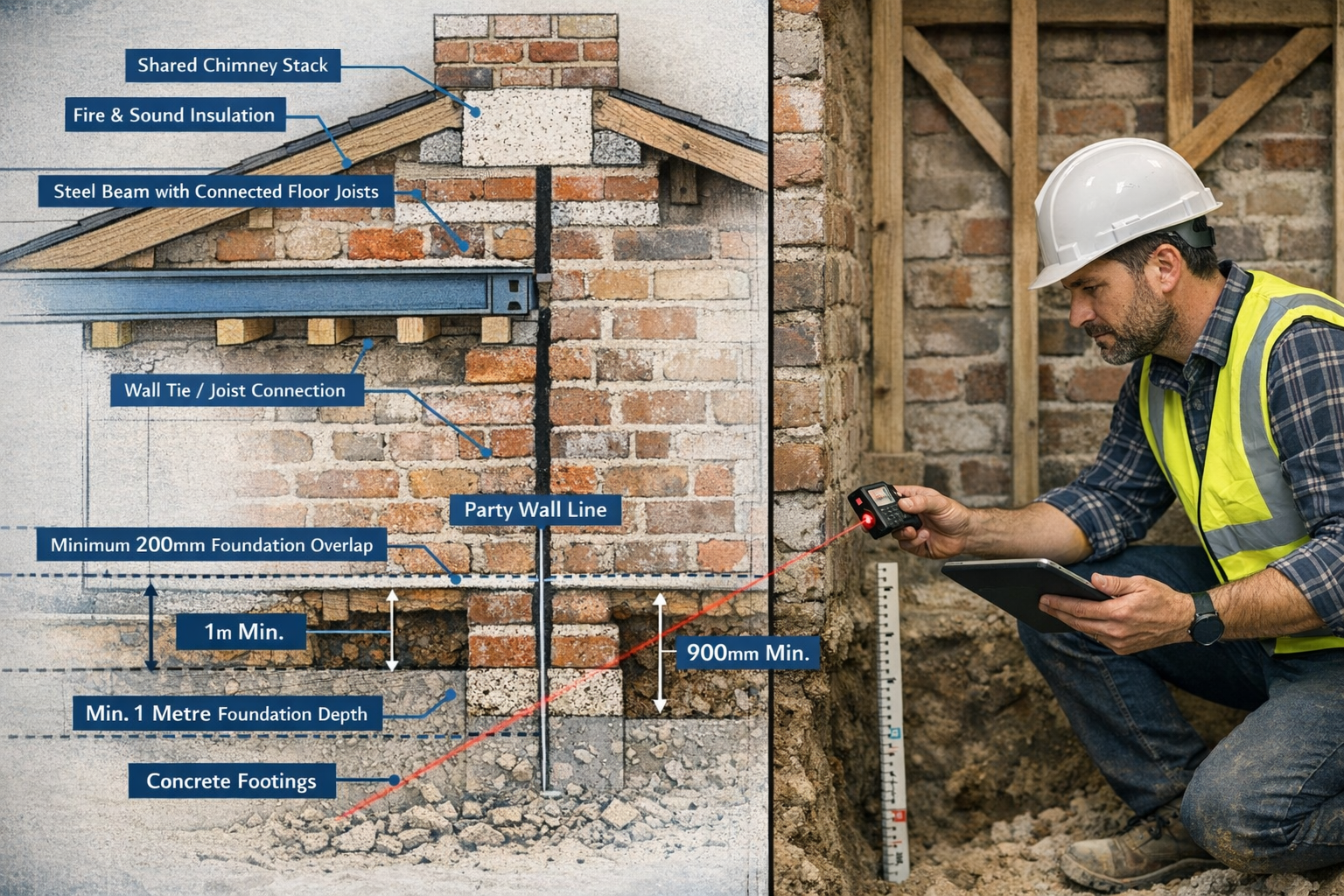
Shared structural walls between adjoining barns that were originally designed as a single agricultural complex but are now being divided into separate residential units. These walls often carry loads from multiple roof structures and may contain shared chimney breasts or flues [1].
Interconnected foundations where historical construction methods mean that seemingly separate buildings actually share foundation systems or have interdependent structural support. This is particularly common in Victorian and Edwardian farm complexes across Suffolk and Norfolk.
Common boundary walls that separate different ownership parcels but were constructed as part of the original farmstead infrastructure. These may include walls around farmyards, between paddocks that now form residential curtilages, or separating converted dwellings from remaining agricultural operations.
The Party Wall Act 1996 applies to all these scenarios, requiring proper procedures regardless of the rural setting [2]. Many property owners mistakenly believe that countryside locations somehow exempt them from party wall legislation, leading to significant legal and financial complications.
When Party Wall Surveys Become Essential
For anyone undertaking Party Wall Surveys for East Anglia Farm Conversions 2026, understanding the trigger points for survey requirements is crucial:
🏗️ Structural alterations to shared walls, including inserting steel beams, creating new openings, or removing sections of wall to create interconnected living spaces
📏 Excavation work within three metres of an adjoining property where the work goes deeper than the neighbour's foundations – particularly relevant given the 3-metre rule that governs foundation proximity
🔨 Building on boundary lines when constructing new extensions or linking structures between converted barns
🏠 Raising party walls or cutting into them to install damp-proof courses, insulation, or updated building services
Without proper party wall procedures, work cannot legally proceed. The consequences of carrying out works without a party wall agreement can include injunctions, forced work stoppage, and liability for any resulting damage.
Party Wall Surveys for East Anglia Farm Conversions 2026: Regional Considerations
East Anglia's unique architectural heritage and agricultural landscape create specific considerations for party wall surveys that differ from other UK regions. The area's concentration of historic farm buildings, combined with 2026's rural revitalisation initiatives, demands specialised knowledge.
East Anglia's Agricultural Building Characteristics
The region's farm buildings exhibit distinctive construction methods that impact party wall assessments:
Traditional brick and flint construction is prevalent throughout Norfolk and Suffolk, with walls often exceeding 18 inches in thickness. These substantial structures may appear robust but can contain hidden structural issues including lime mortar deterioration, cavity problems, and inadequate foundations by modern standards.
Timber-framed barns with weatherboard cladding are common across Essex and Cambridgeshire. When these buildings share structural timbers or roof plates with adjoining conversions, the party wall implications become highly technical, requiring surveyors with specific timber-frame expertise [4].
Victorian model farms built during agricultural improvements often feature interconnected courtyard layouts where multiple buildings share walls, drainage systems, and structural support. Converting these complexes requires comprehensive understanding of how alterations to one unit affect the entire structure.
The 2026 Rural Revitalisation Context
Government initiatives in 2026 have accelerated farm conversion activity across East Anglia, creating both opportunities and challenges:
Permitted development rights have been extended for certain agricultural conversions, but these do not override party wall legislation. Many developers incorrectly assume that planning permission exemptions also exempt them from party wall requirements – a costly misconception.
Heritage considerations frequently overlap with party wall issues in East Anglia, where many farm buildings have listed status or lie within conservation areas. Surveyors must balance preservation requirements with necessary structural interventions, often requiring specialist heritage expertise alongside party wall knowledge [3].
Community dynamics in rural areas differ from urban settings. Neighbouring landowners may have decades-long relationships, making professional party wall procedures both more sensitive and more critical for maintaining community harmony.
Selecting Appropriate Party Wall Surveyors
Choosing the right surveyor for Party Wall Surveys for East Anglia Farm Conversions 2026 requires careful consideration:
| Qualification | Why It Matters for Farm Conversions |
|---|---|
| RICS Accreditation | Ensures professional standards and insurance coverage for complex rural projects |
| Agricultural Building Experience | Understanding of traditional construction methods and rural structural systems |
| Local Knowledge | Familiarity with East Anglia building types, soil conditions, and regional practices |
| Heritage Expertise | Ability to work with listed buildings and conservation requirements |
| Dispute Resolution Skills | Experience mediating rural neighbour disagreements professionally |
Specialist East Anglia party wall surveyors understand regional nuances, including local building traditions, typical foundation depths in different soil types, and the specific challenges of converting agricultural structures [2][4].
Navigating the Party Wall Survey Process for Farm Conversions
Successfully managing Party Wall Surveys for East Anglia Farm Conversions 2026: Navigating Rural Revitalisation Agreements requires a structured approach that respects both legal requirements and rural community relationships.
Step 1: Initial Assessment and Planning
Before serving any notices, conduct a thorough preliminary assessment:
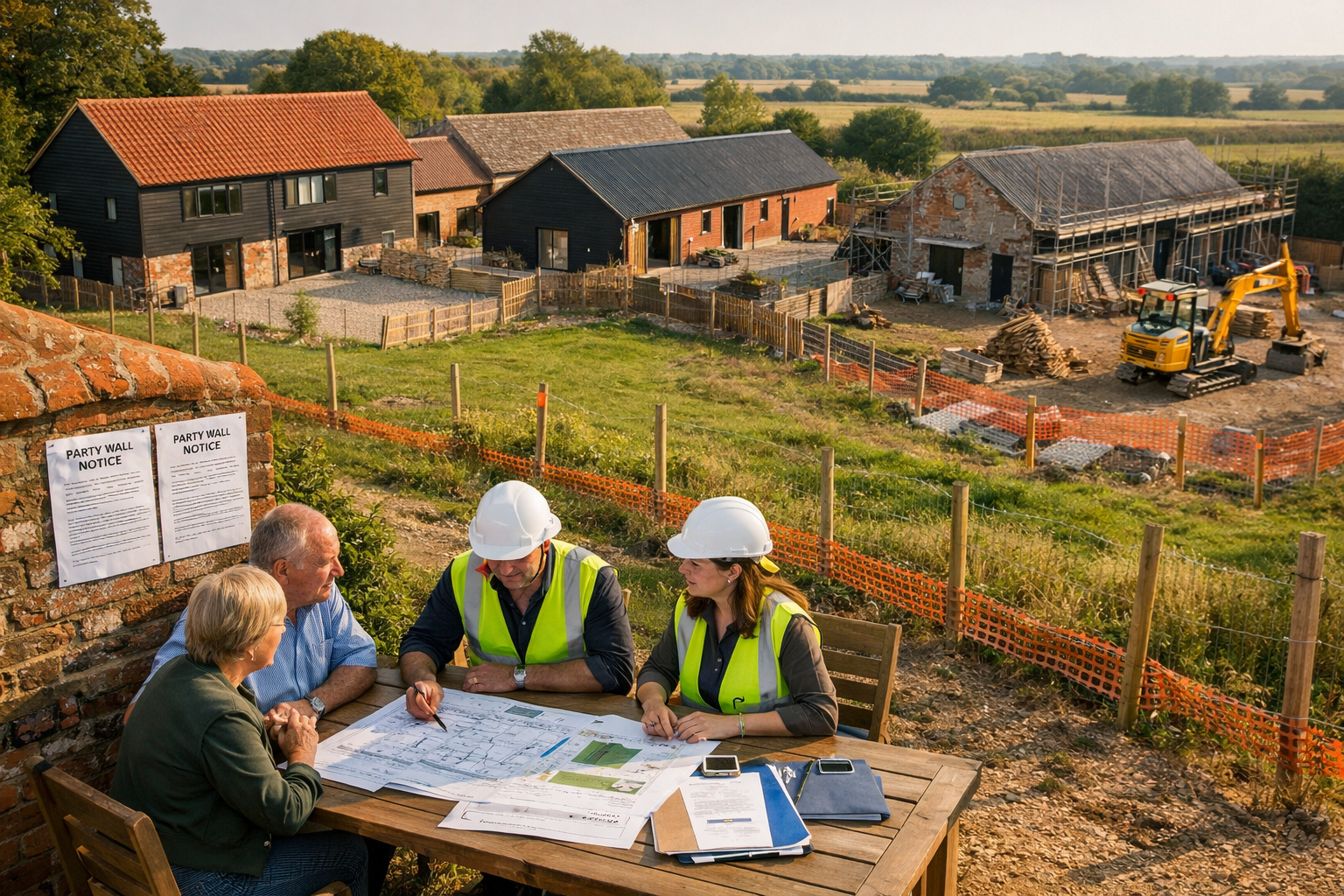
Identify all affected parties – In farm conversions, this may include not just immediate neighbours but also owners of buildings within excavation distance, holders of rights of way, and parties with easements across the property.
Document existing conditions through a comprehensive schedule of condition that records the current state of all potentially affected structures. This baseline documentation proves invaluable if damage to property occurs during conversion work.
Assess structural interdependencies by engaging a structural engineer familiar with agricultural buildings to identify hidden connections between structures that may not be immediately apparent.
Step 2: Serving Party Wall Notices
Proper notice service is legally mandated and must follow specific procedures:
✅ Two months' notice for work to party walls or building on boundary lines
✅ One month's notice for excavation work near boundaries
✅ Written format with detailed descriptions of proposed works
✅ Accurate service to all affected parties at correct addresses
Many rural property owners question whether formal notices are necessary when they have good relationships with neighbours. The answer is unequivocally yes – informal agreements provide no legal protection and can lead to disputes years later. Understanding what happens when no party wall notice is served illustrates the serious consequences of skipping this step.
Step 3: Obtaining Consent or Appointing Surveyors
After notice service, adjoining owners have three options:
Option 1: Consent – The neighbour agrees to the works in writing. While this seems straightforward, it's still advisable to conduct a schedule of condition to protect both parties.
Option 2: Dissent – The neighbour formally objects, triggering the appointment of surveyors. This isn't necessarily adversarial – it simply means professional oversight of the process.
Option 3: No response – After 14 days of silence, the building owner can appoint a surveyor on the neighbour's behalf, ensuring the process moves forward [1].
The single surveyor approach can be cost-effective when both parties agree, with one impartial professional representing both interests. However, complex farm conversions often benefit from each party having their own surveyor, with an agreed surveyor appointed to resolve any disputes [3].
Step 4: The Party Wall Award
Surveyors produce a party wall award that legally documents:
- Detailed description of permitted works
- Timing and methods of construction
- Access arrangements for inspections
- Protection measures for adjoining properties
- Procedures for handling any damage
- Cost allocation for surveyor fees
For farm conversions, awards often include specific provisions for:
🔧 Temporary support systems during structural alterations
🚧 Access routes across rural properties for construction vehicles
📸 Enhanced monitoring of heritage structures during works
⏰ Restricted working hours respecting rural tranquility
🌾 Agricultural consideration for ongoing farming operations
Step 5: Implementation and Monitoring
The award provides the framework, but successful implementation requires ongoing attention:
Pre-commencement inspections verify baseline conditions documented in the schedule of condition. Professional photography and detailed notes create an indisputable record.
Progress monitoring ensures work proceeds according to the award specifications. For complex conversions, this may involve multiple site visits by the appointed surveyor(s).
Completion verification confirms that works have been executed as agreed and that no damage has occurred to adjoining properties. Any issues discovered trigger the award's dispute resolution mechanisms.
Understanding common party wall disputes helps anticipate and prevent problems before they escalate.
Special Considerations for Shared Agricultural Features
Farm conversions present unique party wall scenarios that require specialist attention:
Shared Chimney Stacks and Flues
Many historic farm buildings feature substantial chimney stacks serving multiple fireplaces across what are now separate dwellings. These shared chimneys require careful consideration when converting agricultural buildings, particularly when:
- Installing wood-burning stoves or reopening fireplaces
- Repointing or rebuilding chimney stacks
- Removing redundant flues or chimney breasts
- Installing flue liners or ventilation systems
Party wall awards must address maintenance responsibilities, access for repairs, and cost-sharing for shared chimney infrastructure.
Boundary Walls and Historic Enclosures
Farm properties often include substantial boundary walls that predate current ownership arrangements. These may be:
Estate walls built to enclose entire farm complexes, now serving as boundaries between multiple converted properties
Livestock enclosures repurposed as garden boundaries but retaining agricultural characteristics and shared maintenance obligations
Access walls forming part of shared driveways or rights of way serving multiple converted dwellings
The party wall legislation applies to these structures when work affects their structural integrity or when building occurs on the boundary line [5].
Drainage and Service Infrastructure
Agricultural buildings frequently share:
- Septic systems or treatment plants serving multiple conversions
- Water supplies from shared wells or boreholes
- Access roads and hardstanding areas
- Utility connections brought to the site for the original farm operation
While not strictly party wall matters, these shared services often become contentious during conversions. Comprehensive party wall awards address access for maintenance and upgrading of shared infrastructure.
Cost Considerations and Budget Planning
Understanding the financial implications of Party Wall Surveys for East Anglia Farm Conversions 2026 helps developers and property owners budget appropriately:
Typical Survey Costs
Party wall surveyor fees vary based on project complexity:
| Project Type | Typical Cost Range | Factors Affecting Price |
|---|---|---|
| Simple conversion (single shared wall) | £700 – £1,200 | Straightforward works, consenting neighbour |
| Moderate conversion (multiple walls, excavation) | £1,200 – £2,500 | Multiple notices, schedule of condition required |
| Complex conversion (interconnected buildings) | £2,500 – £5,000+ | Multiple parties, heritage considerations, disputes |
The building owner typically pays all reasonable surveyor fees, including those of the adjoining owner's surveyor [6]. For detailed guidance, review information about the cost of party wall surveys.
Hidden Costs to Consider
Beyond surveyor fees, budget for:
💰 Enhanced construction methods required by the award to protect adjoining properties
💰 Monitoring and inspection visits throughout the construction period
💰 Remedial works if damage occurs despite precautions
💰 Delay costs if disputes arise or work must be modified
Value Protection Through Proper Procedures
While party wall surveys represent an additional cost, they provide significant value:
✨ Legal protection against future claims and disputes
✨ Clear documentation of responsibilities and rights
✨ Professional mediation preventing neighbour conflicts
✨ Insurance validation ensuring coverage remains valid
✨ Property value protection through proper documentation
Skipping proper party wall procedures to save initial costs often results in exponentially greater expenses when disputes arise or when undocumented work affects property sales.
Best Practices for Successful Farm Conversion Party Wall Management
Drawing on RICS guidance and East Anglia-specific experience, these best practices ensure smooth Party Wall Surveys for East Anglia Farm Conversions 2026: Navigating Rural Revitalisation Agreements:
Early Engagement Strategy
🎯 Begin party wall considerations during planning stages, not as an afterthought when construction is about to commence
🎯 Communicate openly with neighbours before formal notices, explaining your plans and addressing concerns informally
🎯 Engage specialist surveyors early to identify potential issues and plan mitigation strategies
🎯 Coordinate with other consultants including architects, structural engineers, and heritage specialists to ensure party wall requirements integrate with overall project design
Documentation Excellence
Comprehensive documentation prevents disputes and protects all parties:
📋 Photographic records of existing conditions from multiple angles and distances
📋 Written descriptions complementing photographs with detailed condition notes
📋 Structural assessments identifying existing defects, movements, or weaknesses
📋 Video surveys providing dynamic records of spaces and conditions
📋 Third-party verification through independent witnesses when documenting contentious areas
Professional schedule of condition guidance ensures nothing is overlooked.
Communication and Relationship Management
Rural communities value long-term relationships:
🤝 Respect agricultural operations by scheduling noisy or disruptive works to minimize impact on neighbouring farms
🤝 Provide regular updates keeping adjoining owners informed of progress and any issues
🤝 Address concerns promptly rather than allowing small problems to escalate
🤝 Maintain access ensuring neighbours can reach their properties despite construction activity
🤝 Clean up thoroughly respecting the rural environment and neighbouring properties
Technical Compliance
Ensure all work meets both party wall requirements and building regulations:
🔨 Follow award specifications exactly – variations require surveyor approval
🔨 Use qualified contractors experienced with heritage and agricultural structures
🔨 Implement protection measures before commencing work on or near party walls
🔨 Allow inspection access for appointed surveyors as specified in the award
🔨 Document variations if site conditions require changes to planned methods
Common Pitfalls and How to Avoid Them
Learning from typical mistakes helps prevent costly errors:
Pitfall 1: Assuming Rural Exemptions
The Mistake: Believing that countryside locations or agricultural buildings are exempt from party wall legislation.
The Reality: The Party Wall Act 1996 applies equally to rural and urban properties. Location and building type do not create exemptions [2].
The Solution: Treat farm conversions with the same rigorous party wall procedures as any urban development project.
Pitfall 2: Relying on Informal Agreements
The Mistake: Accepting a neighbour's verbal consent without formal documentation or survey procedures.
The Reality: Informal agreements provide no legal protection and can be disputed later, particularly if properties change ownership.
The Solution: Always follow formal procedures including written notices, party wall consent documentation, and professional surveys.
Pitfall 3: Inadequate Pre-Work Documentation
The Mistake: Failing to conduct thorough schedules of condition before commencing work.
The Reality: Without baseline documentation, proving that damage was pre-existing becomes impossible, leaving building owners liable for all defects.
The Solution: Invest in comprehensive pre-commencement surveys with professional photography and detailed written records.
Pitfall 4: Underestimating Structural Interdependencies
The Mistake: Assuming that visually separate buildings are structurally independent.
The Reality: Agricultural buildings often share foundations, roof structures, or support systems in ways that aren't immediately apparent.
The Solution: Engage structural engineers familiar with traditional farm construction to identify hidden connections before planning works.
Pitfall 5: Delayed Notice Service
The Mistake: Serving party wall notices too close to planned construction start dates.
The Reality: Neighbours have 14 days to respond, surveyors need time to inspect and prepare awards, and disputes can cause significant delays.
The Solution: Serve notices at least three months before planned construction commencement, allowing time for the full process.
Future Trends: Party Wall Considerations Beyond 2026
Looking ahead, several trends will shape Party Wall Surveys for East Anglia Farm Conversions in coming years:
Technology Integration
Digital tools are transforming party wall surveys:
- 3D scanning and modeling creating precise records of existing structures
- Drone surveys documenting roof conditions and site context
- Digital awards with embedded photographs and interactive plans
- Remote monitoring using sensors to detect movement during construction
Regulatory Evolution
Anticipated changes include:
- Enhanced heritage protections for agricultural buildings
- Updated permitted development rights with clearer party wall guidance
- Climate adaptation requirements affecting structural alterations
- Energy efficiency mandates creating new party wall scenarios for insulation works
Understanding party wall insulation requirements becomes increasingly important as retrofit regulations tighten.
Market Pressures
East Anglia's farm conversion market continues evolving:
- Increased competition for suitable agricultural buildings
- Rising conversion costs emphasizing the importance of avoiding party wall disputes
- Investor interest in farm conversion developments requiring professional party wall management
- Community concerns about rural character preservation affecting neighbour relations
Conclusion
Party Wall Surveys for East Anglia Farm Conversions 2026: Navigating Rural Revitalisation Agreements represents a critical intersection of heritage preservation, legal compliance, and community relationships. As the region's agricultural buildings continue their transformation into desirable residential properties, understanding and properly implementing party wall procedures becomes non-negotiable for successful projects.
The unique characteristics of East Anglia's farm buildings – from shared structural systems in Victorian model farms to interconnected barn complexes – create party wall scenarios that demand specialist expertise. RICS-accredited surveyors with agricultural building experience provide essential guidance through the complexities of shared boundaries, structural interdependencies, and heritage considerations that define the region's conversion landscape.
Key Actions for Success
For anyone embarking on a farm conversion project in East Anglia:
✅ Engage specialist party wall surveyors early in the planning process, ideally before finalizing architectural designs
✅ Conduct comprehensive pre-work documentation through detailed schedules of condition, protecting all parties from future disputes
✅ Follow formal procedures meticulously, serving proper notices and obtaining awards before commencing any work
✅ Maintain open communication with adjoining owners, balancing legal requirements with rural community relationships
✅ Budget appropriately for party wall costs as an essential project element, not an optional extra
✅ Choose contractors experienced with both party wall requirements and agricultural building characteristics
Taking the Next Step
If you're planning a farm conversion in East Anglia, don't leave party wall considerations until construction is imminent. Early professional guidance prevents costly delays, protects valuable rural relationships, and ensures your project proceeds smoothly within the legal framework.
For expert assistance with party wall surveys tailored to East Anglia's unique agricultural conversion challenges, professional surveyors can provide the specialist knowledge your project demands. Whether you're converting a single barn or developing an entire farmstead complex, proper party wall management forms the foundation of successful rural revitalisation.
The transformation of East Anglia's agricultural heritage into contemporary living spaces represents an exciting opportunity – one that deserves the protection and professionalism that comprehensive party wall surveys provide. By following RICS best practices and engaging specialist expertise, your farm conversion can proceed with confidence, legal compliance, and the goodwill of your rural community intact.
References
[1] Single Surveyor – https://fpws.org.uk/single-surveyor/
[2] eastangliapartywallsurveyors.co.uk – https://eastangliapartywallsurveyors.co.uk
[3] Our Party Wall Surveyor Service – https://www.route5qs.co.uk/party-wall-surveyor-service/our-party-wall-surveyor-service
[4] East Anglia – https://faulknersurveyors.co.uk/east-anglia/
[5] Party Walls – https://www.ricsfirms.com/residential/legal-issues/party-walls/?search=true&location=PE
[6] bluegrass-surveying – https://www.bluegrass-surveying.com