
The property market in 2026 faces unprecedented challenges. With transaction volumes showing a -12% net balance and buyers demanding greater certainty before committing to purchases, the role of comprehensive property assessments has never been more critical. Level 3 Building Surveys for Buyer Certainty in 2026: Protocols Amid Transaction Pipeline Pressures represent the gold standard for property due diligence, offering buyers the detailed intelligence needed to make confident decisions in uncertain times.
As the industry pivots toward prioritizing certainty over speed, Level 3 surveys have emerged as essential tools for reducing transaction fall-through rates and protecting buyer interests. These comprehensive assessments provide the forensic detail necessary to identify costly defects before exchange, enabling buyers to negotiate effectively and proceed with confidence—or walk away when properties present unacceptable risks.

Key Takeaways
- Level 3 surveys provide the most comprehensive non-invasive property assessment, including mandatory roof space entry, drainage system inspection, and detailed grounds assessment—critical for older, larger, or complex properties
- Enhanced inspection protocols in 2026 focus on reducing transaction fall-through rates by identifying defects early, with surveys costing £630-£1,500+ depending on property complexity
- Priority-based reporting with timescale guidance helps buyers make informed decisions quickly, supporting faster completions despite subdued market conditions
- Service system inspections during normal operation reveal functionality issues that visual-only assessments miss, protecting buyers from expensive post-purchase surprises
- Comprehensive defect documentation with remedial options empowers buyers to negotiate price reductions or require seller repairs before exchange
Understanding Level 3 Building Surveys for Buyer Certainty in 2026
What Defines a Level 3 Survey?
RICS Home Survey Level 3 represents the most detailed non-invasive property inspection available to residential buyers. Previously known as a "Building Survey" before RICS reformatted survey standards in March 2021, this assessment level provides comprehensive descriptions of construction materials and methods for each building element[3].
The survey is specifically positioned for older, larger, and complex properties—particularly buildings that are unusual, significantly altered, or where buyers plan major renovation works[3]. In 2026's cautious market environment, Level 3 surveys have become increasingly popular even for standard properties as buyers seek maximum certainty before committing.
Cost Considerations in 2026
The typical cost range for Level 3 surveys in 2026 spans £630 to £1,500 or more, depending on property characteristics and complexity[3]. This represents the premium tier of non-invasive survey services, reflecting the extensive time commitment and expertise required.
| Property Type | Typical Cost Range | Key Factors Affecting Price |
|---|---|---|
| Standard 3-bed semi | £630-£850 | Age, accessibility, location |
| Large detached home | £900-£1,200 | Square footage, outbuildings |
| Period/listed property | £1,000-£1,500+ | Complexity, specialist knowledge required |
| Properties with extensive grounds | £1,200-£1,800+ | Land area, additional structures |
While representing a significant upfront investment, Level 3 surveys consistently deliver value by identifying defects that would cost substantially more to remedy post-purchase. In 2026's subdued market, this upfront certainty helps maintain transaction momentum by eliminating nasty surprises during the conveyancing process.
When Level 3 Surveys Are Essential
Buyers should strongly consider building surveys at Level 3 when:
✅ Property age exceeds 50 years – Older construction methods and materials require specialist assessment
✅ Significant alterations are evident – Extensions, conversions, or structural changes need evaluation
✅ Property condition appears poor – Visible defects suggest hidden problems requiring investigation
✅ Unusual construction methods – Non-standard materials or techniques demand expert analysis
✅ Major renovation plans – Understanding existing structure informs renovation feasibility
✅ Commercial to residential conversions – Complex building history requires comprehensive assessment
For buyers uncertain about which survey level meets their needs, understanding which survey do you need helps match assessment depth to property characteristics and risk tolerance.
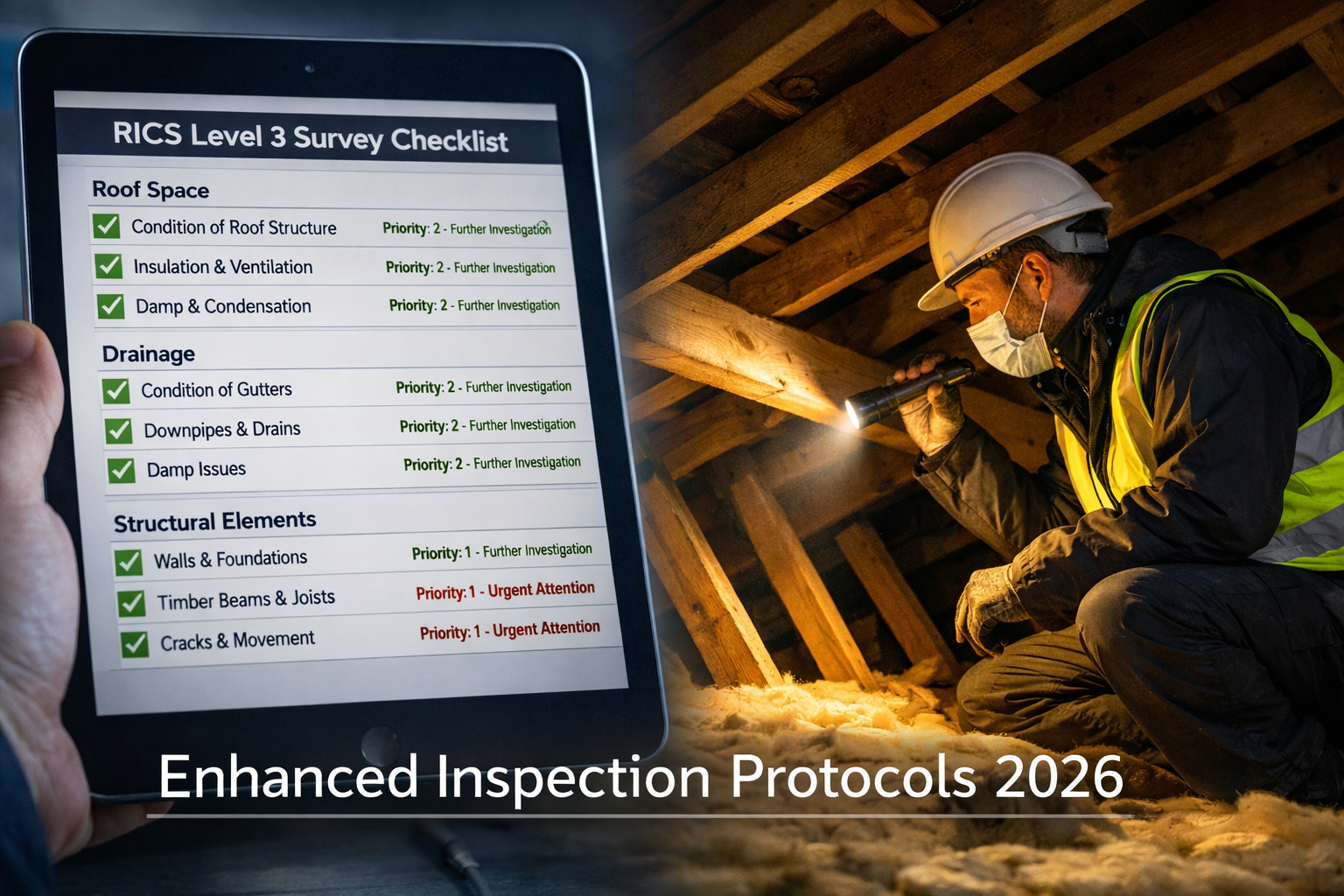
Enhanced Inspection Protocols: Level 3 Building Surveys for Buyer Certainty in 2026
Mandatory Roof Space Inspection
One of the defining features distinguishing Level 3 surveys from lower assessment levels is the mandatory entry into roof spaces. Surveyors physically access loft areas to visually inspect structural timbers, identify vulnerability points, and assess overall condition[2].
During roof space inspections, surveyors:
- Examine structural timber condition for rot, insect infestation, or stress damage
- Assess roof covering condition from the interior where visible
- Identify water ingress evidence including staining, dampness, or active leaks
- Evaluate ventilation adequacy to prevent condensation-related problems
- Lift small corners of thermal insulation to identify thickness, type, and underlying ceiling nature where safe to do so[2]
This hands-on approach identifies problems invisible from ground level or external inspection alone, including interstitial condensation issues that standard inspections frequently overlook[4].
Comprehensive Drainage System Assessment
Drainage problems represent some of the costliest defects buyers can inherit. Level 3 surveys include notably more thorough drainage inspection than lower survey levels, providing essential protection against expensive underground issues[2].
The enhanced drainage protocol includes:
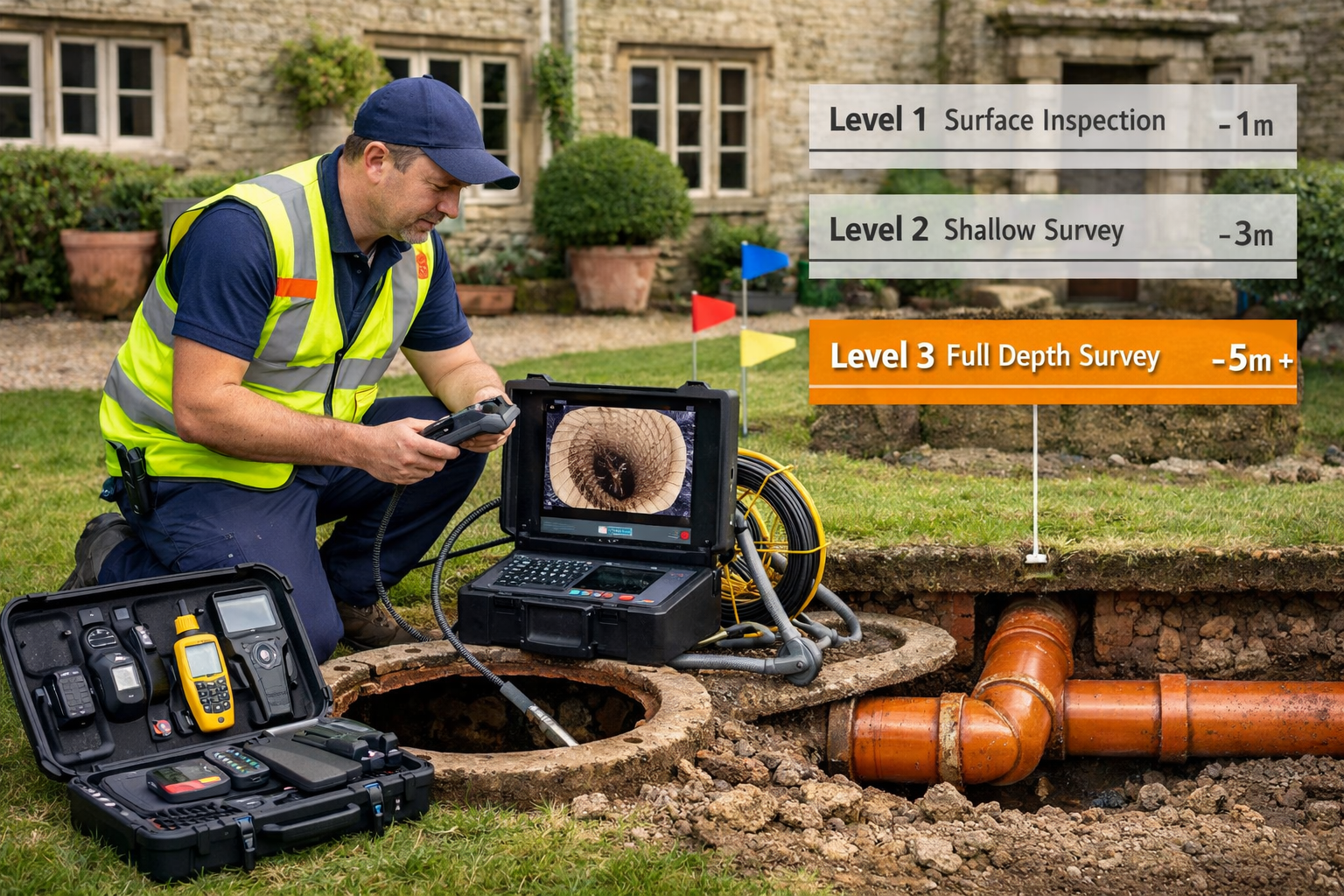
🔍 Lifting accessible inspection chamber covers to drains and septic tanks
🔍 Observing normal operation of drainage systems during everyday use
🔍 Identifying drainage route layouts and connection points
🔍 Assessing visible pipe condition where accessible
🔍 Noting evidence of blockages, leaks, or structural damage
While Level 3 surveys don't include specialist CCTV drainage surveys (which remain optional extras), the visual inspection of accessible drainage components provides significantly more intelligence than the external-only assessment conducted at lower levels.
For properties with complex drainage arrangements or suspected issues, buyers may commission additional structural surveys focusing specifically on underground services.
Detailed Grounds and Boundary Assessment
Level 3 surveys include comprehensive grounds assessment extending beyond the building envelope to evaluate land, boundaries, and external structures within property boundaries[2].
Surveyors perform detailed inspections of:
- Boundary walls, fences, and gates – condition, stability, and ownership responsibility
- Driveways and hardstanding areas – surface condition, drainage, and subsidence evidence
- Outbuildings and garages – structural condition and weather-tightness
- Garden retaining walls – stability and drainage adequacy
- Trees and vegetation – proximity concerns and potential subsidence risks
- Ground levels and drainage patterns – water flow and potential flooding issues
Surveyors trace suspected problems from adjoining public property where necessary, identifying costly defective features that might otherwise remain hidden until after purchase[2]. This is particularly valuable for properties with extensive grounds or complex boundary arrangements.
Service Systems During Normal Operation
Unlike lower survey levels that rely primarily on visual inspection of visible components, Level 3 surveys assess service systems during normal operation[2]. This functional testing approach reveals problems that static visual inspection cannot detect.
The service inspection protocol includes:
Electrical Systems:
- Operating a sample of lights throughout the property
- Testing extractor fans in bathrooms and kitchens
- Observing consumer unit condition and labeling
- Identifying visible wiring condition and compliance concerns
Heating Systems:
- Requesting occupier demonstration of heating system operation
- Observing boiler function during normal use
- Assessing radiator distribution and functionality
- Evaluating visible pipework condition
Plumbing Systems:
- Running taps to assess water pressure and flow
- Observing drainage from sinks, baths, and showers
- Identifying visible pipework condition and materials
- Assessing water tank condition where accessible
This operational assessment provides buyers with confidence that essential systems function adequately, not merely that they appear satisfactory when dormant. For properties requiring more specialized assessment, structural engineering services can provide additional technical analysis.
Enhanced Window and Door Inspection
Window and door inspection protocols are significantly more rigorous at Level 3 compared to lower survey levels. Where safe and with permission, surveyors attempt to open all windows to assess condition and functionality[2].
This hands-on approach identifies:
- Operational problems – sticking, binding, or failed mechanisms
- Seal failures – condensation between double-glazed panes
- Rot or decay – particularly in timber frames and sills
- Security concerns – failed locks or inadequate hardware
- Ventilation adequacy – particularly important for building regulations compliance
The comprehensive window assessment proves particularly valuable for period properties where original joinery may appear satisfactory externally but harbor significant decay or functional problems requiring expensive remediation.
Priority-Based Reporting: Accelerating Transactions Through Certainty
Understanding Priority Classifications
Level 3 survey reports include priority recommendations and timescale guidance for repairs, helping buyers understand not just what needs attention, but when action becomes necessary[2]. This structured approach to defect reporting supports faster decision-making in 2026's transaction-pressured environment.
Reports typically classify defects using a three-tier system:
🔴 Priority 1 (Urgent):
Defects requiring immediate attention to prevent serious deterioration or safety hazards. Examples include active roof leaks, structural instability, or dangerous electrical installations. Buyers typically negotiate these repairs before exchange or adjust offers accordingly.
🟡 Priority 2 (Short-term):
Defects requiring attention within the next 12-24 months to prevent accelerated deterioration. Examples include failed external decoration, minor roof repairs, or aging boiler replacement. These inform buyers' immediate post-purchase budget planning.
🟢 Priority 3 (Long-term):
Maintenance items requiring attention beyond 24 months or general observations about building condition. Examples include eventual window replacement programs or long-term external redecoration schedules. These inform lifecycle cost planning.
Cost Indication Services
While not included as standard, many surveyors offer probable cost indication as an additional service[2]. This optional enhancement provides buyers with ballpark figures for remedial works, supporting more informed negotiation and financial planning.
Cost indications prove particularly valuable when:
- Buyers lack construction industry knowledge or contacts
- Multiple defects require prioritization based on budget constraints
- Negotiating price reductions requires evidence-based justification
- Mortgage lenders require repair cost estimates before lending approval
For buyers considering properties requiring significant work, combining Level 3 survey findings with commercial building surveys expertise can provide comprehensive renovation planning intelligence.
Addressing Hidden Defects and Potential Risks
A distinguishing feature of Level 3 reports is their treatment of both identifiable and potential hidden defects[3]. Surveyors describe identifiable risks and causes of potential defects in areas not inspected, outlining likely scope of appropriate remedial work and consequences of non-repair.
This forward-looking approach helps buyers understand:
- Where further investigation is recommended – areas requiring specialist assessment
- What problems might exist in inaccessible areas – based on visible evidence and building pathology knowledge
- Likely remediation scope – even for problems not fully visible during survey
- Consequences of deferring repairs – how minor issues escalate without intervention
For example, surveyors might note that visible external cracking suggests potential foundation movement requiring further investigation by structural engineers, or that roof covering age indicates replacement will become necessary within specific timeframes even if currently watertight.
This comprehensive approach to risk assessment supports buyer certainty by eliminating the "unknown unknowns" that derail transactions or lead to buyer's remorse post-purchase. When comparing survey options, reviewing different types of survey helps buyers understand the value proposition of comprehensive Level 3 assessments.
Reducing Transaction Fall-Through in 2026's Subdued Market
The Certainty Premium
In 2026's challenging market environment, characterized by subdued sales volumes and cautious buyer sentiment, upfront certainty has become more valuable than speed. Level 3 Building Surveys for Buyer Certainty in 2026: Protocols Amid Transaction Pipeline Pressures directly address the industry's need to reduce fall-through rates that waste time and resources.
Properties assessed through comprehensive Level 3 surveys demonstrate:
📊 Lower renegotiation rates – defects identified before offer acceptance
📊 Faster conveyancing progression – fewer surprises during legal process
📊 Reduced mortgage valuation complications – major issues flagged early
📊 Higher buyer confidence – informed decisions reduce cold feet
📊 Clearer renovation planning – buyers understand scope before completion
This certainty premium proves particularly valuable in 2026's market where buyers have greater negotiating power and less tolerance for unexpected problems discovered late in transactions.
Strategic Timing for Maximum Impact
The timing of Level 3 survey commissioning significantly impacts transaction efficiency. Best practice in 2026 involves:
Pre-Offer Survey Strategy:
Some buyers commission surveys before making offers, particularly in competitive situations or when property condition uncertainty exists. This approach provides maximum negotiating intelligence but requires upfront investment before securing the property.
Post-Offer, Pre-Exchange Strategy:
The traditional approach involves commissioning surveys after offer acceptance but with sufficient time for findings to inform negotiations. This balances cost risk with comprehensive assessment before legal commitment.
Seller-Commissioned Strategy:
Increasingly, sellers in 2026 commission Level 3 surveys before marketing, providing transparency that attracts serious buyers and accelerates transactions by eliminating survey-related delays.
Integration with Transaction Management
Effective use of Level 3 surveys in 2026 requires integration with broader transaction management processes. Buyers should:
✓ Share findings with conveyancing solicitors promptly – legal implications of defects need early assessment
✓ Coordinate with mortgage lenders – significant defects may affect lending decisions
✓ Obtain specialist follow-up assessments quickly – where surveys recommend further investigation
✓ Engage contractors for quotations – evidence-based negotiation requires cost substantiation
✓ Maintain transaction momentum – address survey findings decisively rather than deferring decisions
For properties with specific complexities, supplementary assessments such as homebuyer surveys for newer properties or specialist structural investigations provide additional layers of certainty.
Special Considerations for Complex Properties
Period and Listed Buildings
Properties with heritage designations or significant age require particularly comprehensive assessment. Level 3 surveys for period properties should address:
- Traditional construction methods – lime mortar, solid walls, breathable construction
- Historic alterations – previous modifications and their structural implications
- Conservation requirements – restrictions affecting future maintenance and alterations
- Specialist materials – sourcing and working with period-appropriate materials
- Regulatory compliance – building control and listed building consent implications
Buyers of period properties should ensure surveyors possess specific heritage property expertise, as standard residential surveying knowledge may prove insufficient for complex historic buildings.
Properties with Extensive Alterations
Buildings with significant extension or conversion history present unique assessment challenges. Level 3 surveys must evaluate:
- Building regulation compliance – whether alterations received proper approvals
- Structural adequacy – whether alterations compromise original structure
- Integration quality – how well additions connect with original building
- Future alteration implications – how existing changes affect planned works
For properties with complex structural modifications, combining Level 3 surveys with specialist structural engineering input provides comprehensive assessment of alteration quality and implications.
Non-Standard Construction
Properties built using non-standard construction methods require specialized assessment approaches. Level 3 surveys should specifically address:
- Construction system identification – precise determination of building method
- Mortgage lending implications – many lenders restrict lending on certain construction types
- Insurance availability – some construction types face insurance challenges
- Repair methodology – specialist knowledge required for maintenance
- Lifespan expectations – some systems have known longevity limitations
Buyers considering non-standard construction properties benefit from surveyors with specific experience in the relevant building system, as generic surveying knowledge may miss system-specific vulnerabilities.
Maximizing Value from Your Level 3 Survey Investment
Preparing for Survey Day
Buyers can enhance survey effectiveness through proper preparation:
Provide Comprehensive Property Information:
- Share any documentation about previous works, guarantees, or warranties
- Provide access to all areas including lofts, cellars, and outbuildings
- Ensure utilities are connected and operational for service testing
- Arrange for occupiers to be available to demonstrate systems
Communicate Specific Concerns:
- Highlight particular areas of concern for surveyor attention
- Mention any planned alterations for feasibility assessment
- Request specific additional services if required (e.g., cost indications)
Ensure Access:
- Coordinate with sellers/agents to ensure full property access
- Arrange for keys to all locked areas and windows
- Ensure gardens and grounds are accessible
- Consider arranging concurrent attendance for immediate clarification
Understanding Report Limitations
While comprehensive, Level 3 surveys remain non-invasive assessments with inherent limitations buyers should understand:
- No destructive investigation – surveyors don't lift floorboards, remove fixtures, or damage finishes
- No specialist testing – electrical testing, boiler servicing, and drainage CCTV remain separate services
- Weather-dependent elements – some observations require specific conditions
- Access limitations – some areas may prove inaccessible despite best efforts
- Professional judgment – reports represent professional opinion, not guarantees
Understanding these limitations helps buyers determine when additional specialist investigations provide value beyond the Level 3 survey scope.
Acting on Survey Findings
Effective response to Level 3 survey findings requires strategic decision-making:
For Serious Defects:
- Obtain specialist quotations for remedial works
- Renegotiate purchase price or require seller remediation
- Consider whether defects make property unsuitable for your needs
- Assess mortgage lending implications with your broker
For Moderate Issues:
- Budget for post-purchase remediation
- Prioritize repairs based on urgency and cost
- Consider negotiating modest price adjustments
- Plan renovation schedules around survey recommendations
For Minor Observations:
- Incorporate into long-term maintenance planning
- Use findings to inform building insurance arrangements
- Maintain records for future reference
- Consider preventative maintenance to avoid deterioration
Buyers uncertain about appropriate responses to survey findings should seek professional advice from surveyors, solicitors, or construction professionals before making final decisions.
Conclusion
Level 3 Building Surveys for Buyer Certainty in 2026: Protocols Amid Transaction Pipeline Pressures represent essential tools for navigating today's challenging property market. As transaction volumes remain subdued and buyers demand greater certainty before committing, comprehensive property assessment has evolved from optional due diligence to fundamental transaction infrastructure.
The enhanced protocols characterizing Level 3 surveys in 2026—including mandatory roof space entry, comprehensive drainage inspection, operational service system assessment, and priority-based defect reporting—provide buyers with the detailed intelligence necessary to make confident decisions. While representing a significant upfront investment at £630-£1,500+, these surveys consistently deliver value by identifying costly defects before exchange, supporting effective negotiation, and reducing transaction fall-through rates.
For buyers considering older, larger, or complex properties, Level 3 surveys offer unmatched assessment depth. The comprehensive approach to both visible defects and potential hidden problems eliminates the "unknown unknowns" that derail transactions or lead to expensive post-purchase surprises. In 2026's market environment, this certainty premium proves increasingly valuable as buyers prioritize informed decision-making over transaction speed.
Next Steps for Buyers
✅ Assess whether your target property warrants Level 3 survey depth based on age, condition, complexity, and planned alterations
✅ Commission surveys early in the transaction process to maximize findings' impact on negotiation and decision-making
✅ Choose surveyors with relevant specialist expertise particularly for period, listed, or non-standard construction properties
✅ Integrate survey findings with broader transaction management including legal, mortgage, and renovation planning considerations
✅ Act decisively on survey findings to maintain transaction momentum while protecting your interests
For expert guidance on comprehensive property assessment and to commission a Level 3 survey that delivers buyer certainty in 2026's challenging market, get a quote from experienced chartered surveyors who understand the protocols necessary to support confident property purchases amid transaction pipeline pressures.
References
[1] Level 3 Building Surveys For First Time Buyers In 2026 Spotting Risks Amid Affordability Improvements – https://nottinghillsurveyors.com/blog/level-3-building-surveys-for-first-time-buyers-in-2026-spotting-risks-amid-affordability-improvements
[2] Scope Of Inspection Home Survey Level Three – https://www.rics.org/profession-standards/rics-standards-and-guidance/sector-standards/building-surveying-standards/home-surveys/scope-of-inspection-home-survey-level-three
[3] What Sort Of Survey Should I Have – https://hoa.org.uk/advice/guides-for-homeowners/i-am-buying/what-sort-of-survey-should-i-have/
[4] Things About Building Surveying You Need To Know In 2026 – https://mcessex.co.uk/2026/01/23/things-about-building-surveying-you-need-to-know-in-2026/
[5] Building Survey Protocols For New Build Properties In 2026 Spotting Defects Amid 2 5 Price Growth Forecasts – https://nottinghillsurveyors.com/blog/building-survey-protocols-for-new-build-properties-in-2026-spotting-defects-amid-2-5-price-growth-forecasts