The property market landscape has shifted dramatically in favour of first-time buyers in 2026. With Rightmove predicting improved affordability, wages outpacing house prices, and plentiful housing supply across Scotland, Wales, and northern England markets, valuing first-time buyer properties in 2026: RICS adjustments for lower mortgage rates and negotiation leverage has become essential knowledge for both buyers and property professionals. This transformation means that accurate property valuations must now account for enhanced buyer power, reduced borrowing costs, and regional market variations that create unprecedented opportunities.
Understanding how RICS-qualified surveyors adjust their valuation methodologies to reflect these market conditions can mean the difference between overpaying and securing a property at true market value. The combination of lower mortgage rates and increased negotiation leverage requires a sophisticated approach to property assessment that goes beyond traditional valuation metrics.
Key Takeaways
- Lower mortgage rates in 2026 (averaging 4.5-5%) significantly impact property valuations by increasing buyer affordability and purchasing power
- RICS valuation standards require surveyors to incorporate current market conditions, including buyer leverage and regional supply dynamics, into residential property assessments
- First-time buyers in northern markets possess enhanced negotiation power due to increased housing supply and improved wage-to-price ratios
- Professional RICS surveys provide critical leverage in price negotiations by identifying defects and market value discrepancies
- Regional variations between Scotland, Wales, and northern England require location-specific valuation adjustments
Understanding RICS Valuation Standards for Residential Properties in 2026
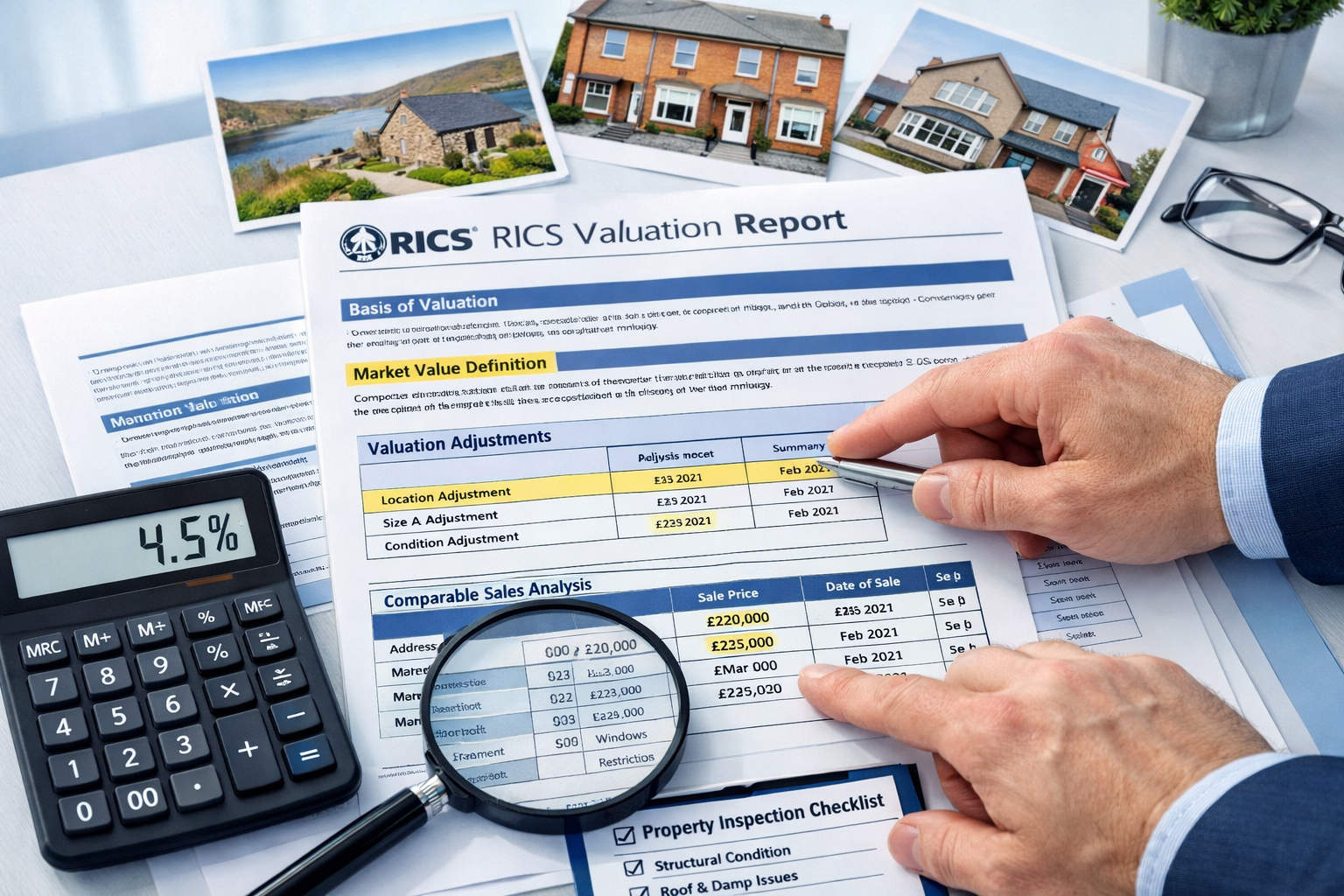
The Royal Institution of Chartered Surveyors (RICS) sets the professional standards that govern property valuations across the UK. While recent updates to RICS standards have focused on ESG and sustainability in commercial property valuation[1][6], the fundamental principles of residential valuation remain grounded in the RICS Red Book, which provides comprehensive guidance for property professionals.
The RICS Red Book Framework
The RICS Valuation – Global Standards, commonly known as the Red Book, establishes the framework for all professional valuations. For first-time buyer properties, this means:
- Market value assessments based on comparable sales data
- Condition reports that identify defects affecting value
- Location analysis considering local market dynamics
- Regulatory compliance ensuring valuations meet lender requirements
Professional RICS building surveys provide the foundation for accurate property valuations by thoroughly examining structural condition, identifying defects, and assessing repair costs that directly impact market value.
Key Valuation Principles for First-Time Buyer Properties
When valuing properties for first-time buyers in 2026, RICS-qualified surveyors must consider:
- Comparable evidence from recent sales in the immediate area
- Property condition and any deferred maintenance costs
- Market sentiment reflecting current buyer confidence
- Mortgage lending criteria that influence achievable prices
- Regional market trends specific to Scotland, Wales, and northern England
The distinction between a mortgage valuation and a survey is crucial for first-time buyers to understand. While mortgage valuations protect the lender, comprehensive RICS surveys protect the buyer's interests.
2026 Market Context for Valuations
The valuation landscape in 2026 differs significantly from previous years. With mortgage rates stabilizing around 4.5-5% compared to the 6%+ rates of 2023-2024, property affordability has improved substantially. RICS surveyors must now adjust their market value assessments to reflect:
- Enhanced buyer purchasing power due to lower borrowing costs
- Increased housing supply in many northern markets
- Wage growth outpacing house price inflation in key regions
- Buyer market conditions favouring negotiation
How Lower Mortgage Rates Impact Property Valuations and Buyer Power
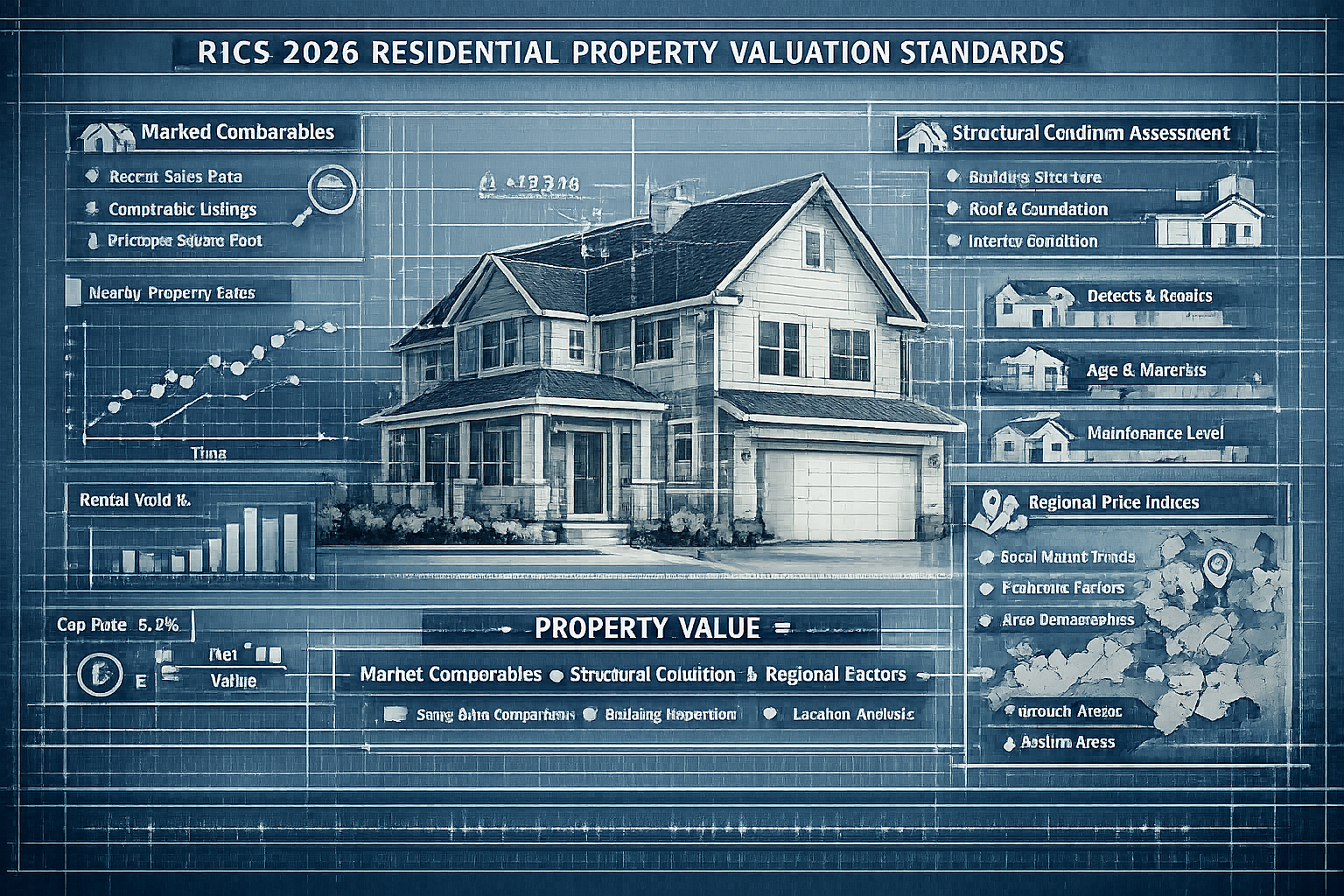
The reduction in mortgage rates throughout 2025 and into 2026 has fundamentally altered the property valuation equation. Understanding this impact is central to valuing first-time buyer properties in 2026: RICS adjustments for lower mortgage rates and negotiation leverage.
The Affordability Calculation
Lower mortgage rates directly increase what buyers can afford to borrow. Consider this comparison:
| Mortgage Rate | Monthly Payment (£200k loan, 25 years) | Annual Cost Saving vs 6.5% |
|---|---|---|
| 6.5% | £1,350 | Baseline |
| 5.5% | £1,230 | £1,440 |
| 4.5% | £1,111 | £2,868 |
This improved affordability means that properties previously out of reach for first-time buyers now fall within their budget. However, RICS valuations must balance this increased purchasing power against actual market conditions.
Valuation Adjustments for Rate Changes
RICS-qualified surveyors incorporate mortgage rate impacts into valuations through several mechanisms:
Demand Analysis 📊
Lower rates typically increase buyer demand, which can support higher valuations. However, in markets with plentiful supply (such as many northern England locations), this demand increase may not translate to price rises.
Comparable Sales Adjustments
Recent comparable sales reflect the prevailing mortgage rate environment. Surveyors must adjust older comparables to account for the rate differential at the time of sale versus current conditions.
Lending Criteria Assessment
Banks and building societies adjust their lending criteria based on interest rate environments. Lower rates may allow higher loan-to-value ratios, affecting achievable prices.
Regional Variations in Rate Impact
The effect of lower mortgage rates varies significantly across the UK:
Northern England Markets 🏘️
- Abundant supply limits price growth despite lower rates
- Buyers gain negotiation leverage rather than facing price competition
- Valuations reflect buyer market conditions
Scotland and Wales
- More balanced supply-demand dynamics
- Lower rates support modest price stability
- First-time buyer activity increases without dramatic price rises
Southern England (for context)
- Supply constraints mean lower rates drive competition
- Valuations reflect seller market conditions
- First-time buyers face different challenges
A comprehensive homebuyer survey becomes even more valuable in a lower-rate environment, as it provides the detailed condition information needed to negotiate effectively.
Wage Growth and Affordability Ratios
One of the most significant factors in 2026 is that wage growth has begun outpacing house price inflation in many regions. This improves the fundamental affordability ratio that RICS surveyors consider when assessing market value:
- Traditional affordability: House price to income ratio of 4-5x
- 2026 improvements: Ratios declining in northern markets
- Valuation impact: Properties must be priced within achievable multiples
Negotiation Leverage Strategies Based on RICS Valuations

The combination of lower mortgage rates, increased supply, and improved affordability creates substantial negotiation leverage for first-time buyers in 2026. Professional RICS valuations and surveys provide the evidence base for effective negotiation strategies.
Using Survey Findings as Negotiation Tools
A detailed RICS Level 3 building survey identifies defects and issues that directly impact property value. These findings become powerful negotiation tools:
Structural Issues 🏗️
- Subsidence or settlement problems
- Roof defects requiring replacement
- Damp penetration or rising damp
- Timber decay or insect infestation
Each identified defect comes with estimated repair costs that can justify price reductions. For example, if a survey identifies £15,000 of necessary repairs, buyers have concrete evidence to negotiate a price reduction.
Deferred Maintenance
Properties with significant deferred maintenance present negotiation opportunities:
- Outdated heating systems
- Aging electrical installations
- Exterior decoration requirements
- Window replacements needed
Market Value vs Asking Price Discrepancies
In 2026's buyer-favourable market, asking prices often exceed true market value. A professional RICS valuation provides independent evidence of market value, which may differ significantly from the seller's expectations.
Negotiation Approach:
- Obtain RICS valuation before making final offer
- Present valuation evidence to estate agent and seller
- Reference comparable sales data from valuation report
- Request price adjustment to align with professional assessment
Regional Market Conditions and Leverage
Scotland 🏴
The Scottish property market in 2026 shows:
- Stable prices with limited growth
- Increased time on market for many properties
- Sellers more willing to negotiate
- First-time buyer schemes supporting demand
Wales 🏴
Welsh markets demonstrate:
- Affordable entry-level pricing
- Rural and urban variations
- Improved accessibility for first-time buyers
- Less competitive bidding environments
Northern England
Markets across Manchester, Liverpool, Leeds, Newcastle, and smaller northern towns feature:
- Substantial housing supply
- Reduced seller pricing power
- Opportunities for below-asking-price purchases
- Longer negotiation windows
Timing and Market Intelligence
Understanding local market timing enhances negotiation leverage:
Seasonal Factors
- Winter months (January-February) often see reduced competition
- Properties listed for extended periods indicate motivated sellers
- End of financial year (March) may prompt seller flexibility
Supply Analysis
Monitor local supply levels:
- High inventory of similar properties increases buyer power
- New build completions adding supply pressure
- Properties re-listed after failed sales show negotiation potential
The Professional Survey Advantage
Engaging RICS chartered building surveyors provides multiple negotiation advantages:
✅ Independent professional assessment carries weight with sellers
✅ Detailed defect identification justifies price adjustments
✅ Comparable evidence supports market value arguments
✅ Lender confidence ensures mortgage approval at negotiated price
✅ Future cost visibility helps determine maximum affordable price
Negotiation Tactics for 2026 Markets
Evidence-Based Offers
Rather than arbitrary low offers, present evidence-based proposals:
- "The RICS survey identifies £12,000 of essential repairs"
- "Comparable sales show similar properties achieving £X"
- "The professional valuation indicates market value of £Y"
Multiple Issue Approach
Combine various factors to build negotiation case:
- Survey-identified defects
- Market value assessment
- Time on market
- Local supply conditions
- Comparable sales evidence
Flexibility and Creativity
Consider non-price negotiation elements:
- Extended completion timelines
- Including fixtures and fittings
- Sharing legal costs
- Flexible moving dates
Practical Steps for First-Time Buyers in 2026
Successfully navigating valuing first-time buyer properties in 2026: RICS adjustments for lower mortgage rates and negotiation leverage requires a systematic approach.
Pre-Purchase Preparation
Financial Assessment 💰
- Obtain mortgage agreement in principle
- Calculate true affordability including all costs
- Factor in survey and legal fees
- Maintain deposit protection
Market Research
- Study recent sales in target areas
- Understand local price trends
- Identify areas with strong supply
- Monitor time-on-market statistics
Engaging Professional Support
RICS Surveyor Selection
Choose experienced professionals who understand:
- Local market conditions
- First-time buyer priorities
- Current valuation standards
- Negotiation support
The chartered surveyors and valuers provide comprehensive property inspection services that identify critical issues affecting value.
Survey Type Selection
Different survey levels suit different properties:
| Survey Type | Best For | Key Benefits |
|---|---|---|
| RICS Level 2 (HomeBuyer) | Standard properties in reasonable condition | Balance of detail and cost |
| RICS Level 3 (Building Survey) | Older properties, significant defects suspected | Comprehensive defect identification |
| RICS Valuation | Negotiation evidence needed | Independent market value assessment |
The Offer and Negotiation Process
Initial Offer Strategy
- Base offer on comparable evidence
- Leave room for negotiation
- Demonstrate seriousness with mortgage approval
- Set clear timelines
Survey-Informed Renegotiation
After receiving survey results:
- Review findings with surveyor
- Obtain repair cost estimates
- Assess impact on value
- Present evidence to seller
- Propose adjusted price
Documentation and Evidence
Maintain professional approach:
- Provide written survey summaries
- Include repair cost quotations
- Reference comparable sales
- Present valuation reports
Post-Negotiation Considerations
Final Valuation Confirmation
Ensure mortgage lender's valuation aligns with negotiated price. If discrepancies arise, the detailed RICS survey provides supporting evidence.
Completion Planning
- Budget for identified repairs
- Prioritize essential works
- Plan improvement timeline
- Maintain contingency funds
Regional Market Analysis: Scotland, Wales, and Northern England
Understanding regional variations is essential for valuing first-time buyer properties in 2026: RICS adjustments for lower mortgage rates and negotiation leverage.
Scotland Market Characteristics
Price Trends 📈
- Average first-time buyer property: £145,000-£180,000
- Annual price growth: 1-2% (modest and sustainable)
- Regional variations between cities and rural areas
- Glasgow and Edinburgh show different dynamics
Buyer Advantages
- Home Report system provides upfront survey information
- Less gazumping due to Scottish legal system
- Fixed price or offers over structure
- Strong first-time buyer support schemes
Valuation Considerations
RICS surveyors in Scotland must account for:
- Home Report valuations as baseline
- Local market sentiment
- Condition reflected in Home Report
- Comparable sales within Scottish system
Wales Market Dynamics
Affordability Profile 🏴
- Excellent affordability ratios for first-time buyers
- Average entry-level property: £130,000-£165,000
- Strong wage growth in Cardiff and Swansea
- Rural properties offering value
Market Conditions
- Balanced supply and demand
- Reasonable time-on-market periods
- Negotiation opportunities available
- Less competitive than peak years
Valuation Factors
- Welsh language considerations in some areas
- Leasehold prevalence in certain regions
- Ground rent and service charge impacts
- Local authority variations
Northern England Opportunities
Major Cities 🏙️
Manchester
- Vibrant first-time buyer market
- New build supply creating options
- Excellent transport links supporting values
- Average FTB property: £160,000-£200,000
Liverpool
- Strong affordability
- Regeneration supporting long-term values
- Diverse property stock
- Average FTB property: £135,000-£175,000
Leeds
- Growing employment market
- Student to first-time buyer transition
- Good value compared to southern markets
- Average FTB property: £155,000-£195,000
Newcastle
- Excellent affordability ratios
- Quality housing stock
- Strong community infrastructure
- Average FTB property: £125,000-£165,000
Smaller Northern Towns
Towns across Yorkshire, Lancashire, and the North East offer:
- Exceptional value for first-time buyers
- Properties from £90,000-£140,000
- Strong local employment
- Community-focused living
Comparative Advantage Analysis
Why Northern Markets Favour First-Time Buyers in 2026:
✅ Supply abundance reduces competition
✅ Wage growth improving affordability ratios
✅ Lower absolute prices require smaller deposits
✅ Quality housing stock at accessible prices
✅ Infrastructure investment supporting long-term value
✅ Community amenities enhancing quality of life
RICS Valuation Adjustments by Region
Professional valuers adjust their assessments based on regional factors:
Scotland-Specific Adjustments
- Home Report integration
- Scottish legal system impacts
- Regional price variations
- Local market sentiment
Wales-Specific Adjustments
- Leasehold considerations
- Rural vs urban differentials
- Local authority variations
- Community infrastructure
Northern England Adjustments
- City vs town differentials
- Transport link proximity
- Employment market strength
- Regeneration area potential
Common Valuation Challenges and Solutions
Even in favourable market conditions, first-time buyers encounter valuation challenges that require professional navigation.
Valuation Shortfalls
The Challenge ⚠️
When a mortgage lender's valuation comes in below the agreed purchase price, it creates financing difficulties.
The Solution
- Present detailed RICS survey evidence
- Provide comparable sales data
- Request lender's valuation review
- Renegotiate purchase price with seller
- Consider alternative lender valuations
Hidden Defects Impact
The Challenge
Significant defects discovered during survey affect both value and mortgage ability.
The Solution
- Obtain specialist reports (structural engineer, damp specialist)
- Get detailed repair cost estimates
- Present evidence to seller for renegotiation
- Consider retention arrangements with lender
- Reassess affordability including repair costs
Market Value Disputes
The Challenge
Disagreement between buyer's valuation, seller's expectations, and estate agent's assessment.
The Solution
- Commission independent RICS home survey
- Compile comprehensive comparable evidence
- Present professional valuation report
- Engage estate agent with evidence
- Be prepared to walk away if overpriced
New Build Valuations
The Challenge 🏗️
New build properties often carry premium pricing that may not reflect market value.
The Solution
- Obtain independent new build valuation
- Compare with resale properties in area
- Assess builder incentives' true value
- Consider future resale implications
- Negotiate based on market evidence
Leasehold Complications
The Challenge
Leasehold properties with short leases or high ground rents affect valuations significantly.
The Solution
- Assess lease extension costs
- Factor ground rent capitalization
- Consider service charge impacts
- Negotiate price reduction for lease issues
- Budget for future lease extension
Future-Proofing Your Property Investment
While focusing on current market conditions, first-time buyers should consider long-term value factors.
Sustainability and Energy Efficiency
Although recent RICS standards updates have focused on commercial property ESG factors[1][6], residential energy efficiency increasingly impacts values:
EPC Ratings 🌱
- Properties with ratings C or above command premiums
- Future regulations may require improvements
- Energy costs affect ongoing affordability
- Green mortgages offer better rates for efficient properties
Improvement Potential
- Assess cost of EPC improvements
- Factor into purchase price negotiations
- Consider long-term running costs
- Evaluate renewable energy potential
Location Fundamentals
Transport Links
- Proximity to public transport
- Road network access
- Future infrastructure plans
- Commuting time considerations
Local Amenities
- Schools and education facilities
- Healthcare access
- Shopping and leisure
- Green spaces and recreation
Employment Markets
- Local job market strength
- Industry diversity
- Remote working infrastructure
- Economic development plans
Property Characteristics
Adaptability 🏠
- Potential for extension or conversion
- Flexible room layouts
- Garden or outside space
- Parking availability
Maintenance Profile
- Age and condition of major elements
- Anticipated maintenance costs
- Warranty coverage (new builds)
- Ease of future improvements
Market Cycle Awareness
Understanding property cycles helps with timing:
2026 Position
- Recovery phase after 2023-2024 rate rises
- Improved affordability creating opportunity
- Supply-demand balance favouring buyers
- Potential for modest medium-term growth
Long-Term Perspective
- Property as 5-10 year investment minimum
- Cycles of growth and correction
- Personal circumstances more important than timing
- Quality locations maintain value through cycles
Legal and Financial Considerations
Professional valuation is one component of a comprehensive purchase process.
Conveyancing Integration
Survey and Legal Coordination
- Share survey findings with conveyancer
- Address defects in legal documentation
- Negotiate retention arrangements if needed
- Ensure mortgage offer reflects final price
Title and Boundary Issues
- Survey may identify boundary discrepancies
- Legal verification of title essential
- Easements and rights of way considerations
- Building regulation compliance verification
Mortgage Arrangement
Lender Requirements 💷
- Mortgage valuation vs RICS survey distinction
- Lender's valuation protects their interests
- Additional survey protects buyer interests
- Both may be required
Loan-to-Value Optimization
- Lower mortgage rates improve LTV options
- Higher LTV reduces deposit requirement
- Balance between deposit size and rate
- Consider mortgage guarantee schemes
Insurance Considerations
Buildings Insurance
- Survey findings affect insurance costs
- Subsidence history impacts premiums
- Flood risk considerations
- Listed building or non-standard construction
Life and Income Protection
- Mortgage payment protection
- Life insurance requirements
- Income protection insurance
- Critical illness cover
Tax and Stamp Duty
First-Time Buyer Relief 🎯
- Available on properties up to £625,000
- No stamp duty on first £425,000
- 5% on portion £425,001-£625,000
- Significant saving versus standard rates
Future Tax Considerations
- Capital gains exemption on main residence
- Potential for rental income (with restrictions)
- Council tax band assessment
- Energy efficiency tax incentives
Working with RICS Professionals
Maximizing the value of professional surveying services requires effective collaboration.
Selecting the Right Surveyor
Qualifications and Experience 👨💼
- RICS chartered status essential
- Local market knowledge valuable
- First-time buyer experience helpful
- Specializations (period properties, new builds)
Service Scope
- Clear understanding of survey type
- Valuation services if required
- Follow-up consultation included
- Report clarity and detail
Briefing Your Surveyor
Information to Provide
- Your concerns and priorities
- Known issues or seller disclosures
- Intended use and future plans
- Budget constraints for repairs
Questions to Ask
- Typical defects in property type/age
- Estimated repair costs
- Urgent vs deferred maintenance
- Impact on market value
Understanding Survey Reports
Report Structure
- Executive summary of key findings
- Condition ratings (1-3 scale)
- Detailed defect descriptions
- Recommendations for action
- Valuation (if included)
Using Findings Effectively
- Prioritize issues by urgency and cost
- Obtain specialist reports if recommended
- Factor into negotiation strategy
- Plan post-purchase works
Post-Survey Consultation
Follow-Up Discussion 📞
- Clarify technical terminology
- Discuss negotiation approach
- Understand repair priorities
- Assess value implications
Specialist Referrals
- Structural engineers for serious issues
- Damp specialists for moisture problems
- Timber treatment companies
- Building contractors for estimates
Conclusion
Valuing first-time buyer properties in 2026: RICS adjustments for lower mortgage rates and negotiation leverage represents a critical skill set in today's transformed property market. The combination of improved mortgage affordability, increased housing supply in key regions, and wages outpacing house prices has created unprecedented opportunities for first-time buyers across Scotland, Wales, and northern England.
Professional RICS valuations and surveys provide the evidence base that transforms market conditions into tangible negotiation power. By understanding how chartered surveyors adjust their assessments to reflect current market dynamics, first-time buyers can approach property purchases with confidence and clarity.
Key Success Factors
✅ Professional survey investment pays dividends through negotiation leverage
✅ Regional market understanding identifies best opportunities
✅ Evidence-based negotiation achieves fair prices
✅ Long-term perspective ensures sound investment decisions
✅ Expert professional support navigates complex processes
Actionable Next Steps
- Assess your financial position with current mortgage rates and calculate true affordability
- Research target markets in Scotland, Wales, or northern England based on your priorities
- Engage RICS professionals early in your property search process
- Obtain comprehensive surveys on properties you're serious about purchasing
- Use valuation evidence confidently in price negotiations
- Plan for identified repairs and future maintenance in your budget
- Consider long-term value factors alongside immediate affordability
The 2026 property market offers first-time buyers a window of opportunity that combines favourable financing conditions with genuine negotiation power. By leveraging professional RICS valuations and understanding the adjustments that reflect current market realities, buyers can secure properties at fair prices that represent solid long-term investments.
Whether purchasing in Glasgow or Manchester, Cardiff or Liverpool, Newcastle or Leeds, the principles of thorough professional assessment, evidence-based negotiation, and informed decision-making remain constant. The improved market conditions of 2026 simply amplify the value of these approaches, making professional guidance more valuable than ever.
Take advantage of this buyer-favourable market by investing in professional RICS surveys and valuations that provide the foundation for confident property purchases and successful negotiations. Your first property purchase is a significant financial commitment—ensure it's based on accurate, professional assessment that protects your interests and secures fair value. Get a quote for professional RICS surveying services today.
References
[1] Rics Publishes Updated Global Standard Esg Sustainability Commercial Property Valuation – https://www.rics.org/news-insights/rics-publishes-updated-global-standard-esg-sustainability-commercial-property-valuation
[2] Valuation Standards – https://www.rics.org/profession-standards/rics-standards-and-guidance/sector-standards/valuation-standards
[3] Rics Publishes New Guidance – https://propertyindustryeye.com/rics-publishes-new-guidance/
[4] Expert Witness Valuations In 2026s Stabilizing Market Rics Standards For Mortgage Disputes And Property Disagreements – https://nottinghillsurveyors.com/blog/expert-witness-valuations-in-2026s-stabilizing-market-rics-standards-for-mortgage-disputes-and-property-disagreements
[5] Valution Guidance February 2026 – https://www.aref.org.uk/static/876eb543-e485-4702-800c35df69930ac8/Valution-Guidance-February-2026.pdf
[6] Esg And Sustainability In Commercial Property Valuation – https://www.rics.org/profession-standards/rics-standards-and-guidance/sector-standards/valuation-standards/esg-and-sustainability-in-commercial-property-valuation