}
The Welsh housing market is experiencing a remarkable resurgence in 2026, defying broader UK trends with optimism that hasn't been seen in years. As RICS surveyors across Wales report a net balance of 21% expecting increased home sales in Q1 2026[1], the region stands out as a beacon of recovery in an otherwise flat national landscape. This uptick presents both opportunity and risk for first-time buyers and investors entering the market—making professional building surveys more critical than ever.
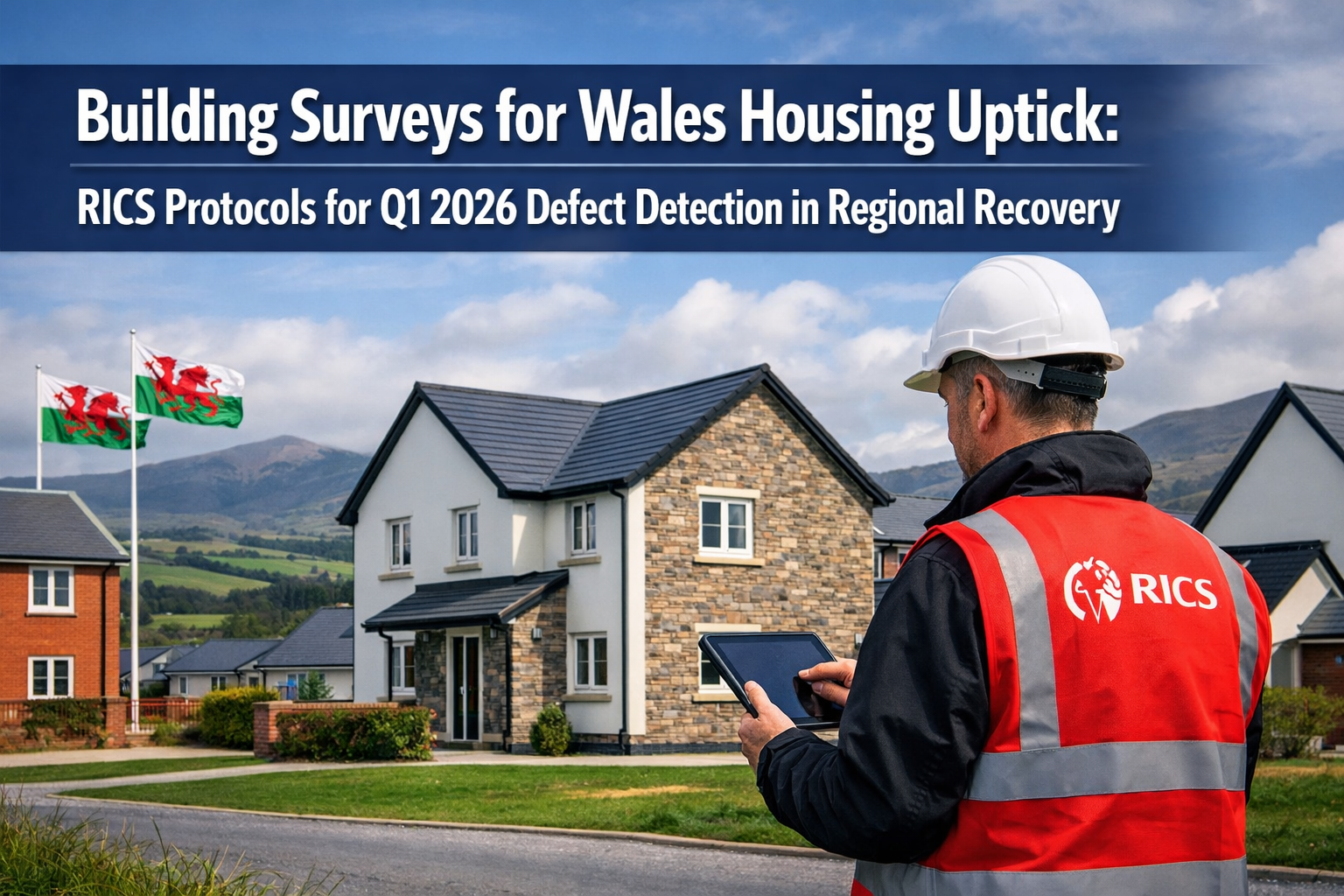
Building Surveys for Wales Housing Uptick: RICS Protocols for Q1 2026 Defect Detection in Regional Recovery represents a comprehensive approach to property assessment during this pivotal period. With new builds proliferating across Cardiff, Swansea, and the valleys, and existing stock changing hands at accelerated rates, understanding RICS protocols for defect detection has become essential for protecting investments and ensuring property quality standards are maintained.
Key Takeaways
- 🏴 Wales leads UK recovery: RICS data shows 21% net balance of surveyors expecting increased sales in Q1 2026, significantly outperforming national trends
- 🔍 Enhanced defect detection: New RICS AI standards and traditional protocols combine to provide comprehensive property assessment during market acceleration
- 💰 Cost-effective protection: Professional surveys starting at £320 offer valuable insurance against costly post-completion repairs in new build properties
- 📋 Tailored checklists: Wales-specific building survey protocols address regional construction challenges including climate-related dampness and valley development concerns
- 🎯 Strategic timing: Market uptick creates urgency for thorough pre-purchase inspections as competition intensifies and buying decisions accelerate
Understanding the Wales Housing Market Recovery in 2026
The Welsh property landscape has transformed dramatically as 2026 unfolds. While much of the UK grapples with stagnant sales figures and buyer hesitancy, Wales has emerged as a regional success story with measurable momentum building across multiple sectors.
Market Indicators Driving the Uptick
The 21% net balance of RICS surveyors expecting increased home sales[1] represents more than statistical noise—it signals genuine confidence among professionals who observe market conditions daily. This optimism stems from several converging factors:
- First-time buyer activity: Government schemes and improved mortgage accessibility have energized entry-level segments
- New build completions: Major developments across Cardiff Bay, Newport, and Swansea are delivering fresh inventory
- Regional migration: Remote work flexibility continues driving relocations from higher-cost English markets
- Infrastructure investment: Transport improvements and digital connectivity upgrades enhance regional appeal
RICS Wales Manifesto 2026 and Policy Context
The timing of this market recovery aligns with RICS's strategic advocacy efforts. The RICS Wales Manifesto 2026, launched ahead of Senedd elections, calls for comprehensive housing delivery strategies through cross-tenure targets and ambitious development frameworks[2]. This policy push emphasizes:
✅ Modernization of residential leasehold standards to align with UK-wide protections
✅ Functional planning systems embedding specialist surveying skills
✅ Large-scale housing retrofit programmes meeting green targets
✅ Increased investment in built environment education and apprenticeships[2]
These initiatives create a supportive ecosystem for sustainable growth—but also underscore the need for robust quality assurance as development accelerates.
Building Surveys for Wales Housing Uptick: RICS Survey Types and Selection
Navigating the Welsh property market requires understanding which survey type matches your specific needs. RICS offers standardized assessment levels, each designed for different property conditions and buyer requirements.
RICS Level 3 Building Surveys: Comprehensive Assessment
For older properties, unconventional construction, or homes requiring renovation, a RICS Level 3 Building Survey provides the most thorough examination available. This comprehensive inspection includes:
- Detailed structural analysis of foundations, walls, roofs, and load-bearing elements
- In-depth defect identification with severity ratings and repair cost estimates
- Services assessment covering electrical, plumbing, heating, and drainage systems
- Materials analysis identifying construction methods and potential issues
- Maintenance recommendations with prioritized action plans
The Level 3 survey proves particularly valuable in Wales's diverse housing stock, where Victorian terraces, stone cottages, and converted agricultural buildings present unique challenges that demand specialist expertise.
RICS Level 2 HomeBuyer Surveys: Standard Properties
For conventional properties in reasonable condition, the RICS HomeBuyer Survey offers balanced coverage at moderate cost. This mid-tier option provides:
| Feature | Level 2 Coverage |
|---|---|
| Visual inspection | All accessible areas without invasive investigation |
| Condition ratings | Traffic light system (1-3) for major elements |
| Defect reporting | Significant issues affecting value or safety |
| Market valuation | Optional professional property valuation |
| Repair advice | General guidance on urgent and significant matters |
This survey type suits most modern homes and standard new builds where major structural concerns are unlikely but professional verification remains prudent.
Specific Defect Surveys: Targeted Investigation
When particular concerns arise—perhaps from a previous survey, visible symptoms, or known regional issues—a specific defect report provides focused investigation. Common applications in Wales include:
- Dampness investigation: Addressing Wales's high rainfall impact on building fabric
- Subsidence assessment: Particularly relevant in valley developments and clay soil areas
- Roof condition surveys: Critical for exposed locations facing prevailing westerly weather
- Structural movement: Evaluating cracking patterns in older properties
These targeted assessments complement broader surveys or address specific buyer concerns before exchange of contracts.
RICS Protocols for Q1 2026 Defect Detection in Regional Recovery
The acceleration of Wales's housing market in early 2026 demands heightened vigilance in defect detection. Rushed transactions, competitive bidding, and new build volume all increase risk exposure for buyers who skip thorough professional assessment.
New RICS AI Standards in Surveying Practice
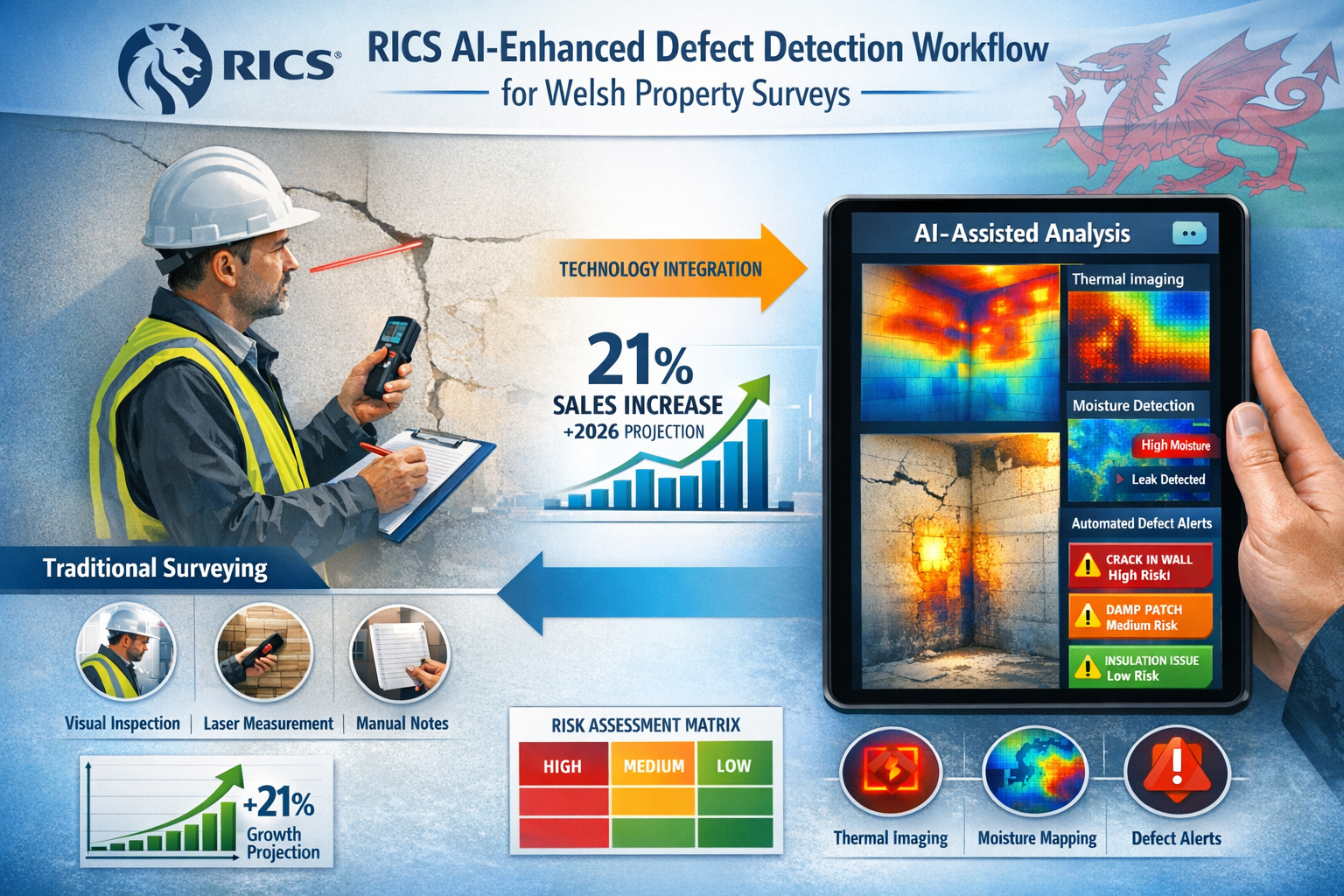
A significant development for 2026 is the implementation of RICS's new global standard on responsible AI use in surveying practice[5]. This groundbreaking framework establishes mandatory requirements across four key areas:
- Governance and Risk Management: Firms must establish clear AI oversight structures and risk assessment protocols
- Professional Judgement and Oversight: AI tools supplement rather than replace chartered surveyor expertise
- Transparency: Clear disclosure of AI tool usage in survey reports and methodologies
- Additional Compliance Measures: Data protection, algorithmic bias prevention, and quality assurance processes[5]
These standards enable surveyors to leverage advanced technologies—thermal imaging analysis, moisture detection algorithms, structural assessment software—while maintaining professional accountability and quality standards.
Wales-Specific Defect Detection Priorities
Regional construction characteristics and climate conditions create unique defect patterns in Welsh properties. Building Surveys for Wales Housing Uptick must address these priority areas:
Climate-Related Issues 🌧️
Wales's high rainfall and exposure to Atlantic weather systems make moisture-related defects particularly prevalent:
- Penetrating dampness: Failed pointing, damaged render, and inadequate flashings
- Rising dampness: Compromised damp-proof courses in older properties
- Condensation: Poor ventilation in modern airtight construction
- Roof deterioration: Accelerated wear from wind-driven rain and exposed locations
Valley Development Challenges ⛰️
Properties in South Wales valleys face specific structural considerations:
- Ground movement: Historic mining activity and geological instability
- Drainage issues: Hillside locations and surface water management
- Access constraints: Narrow streets limiting construction quality and future maintenance
- Retaining wall condition: Terraced properties built into steep slopes
New Build Snagging in Accelerated Markets 🏗️
As development pace increases to meet demand, quality control becomes more challenging. Common new build defects include:
"Survey costs for new build properties start at £320 for independent professional assessments, positioning surveys as valuable insurance against costly post-completion repairs."[4]
- Incomplete finishes: Rushed completion leaving minor defects unaddressed
- Services installation: Poorly fitted heating, plumbing, or electrical work
- External works: Inadequate drainage, unfinished landscaping, or poor boundary treatments
- Energy efficiency failures: Gaps in insulation, thermal bridging, or ventilation shortfalls
Professional building surveys identify these issues before legal completion, providing leverage for remediation or price negotiation.
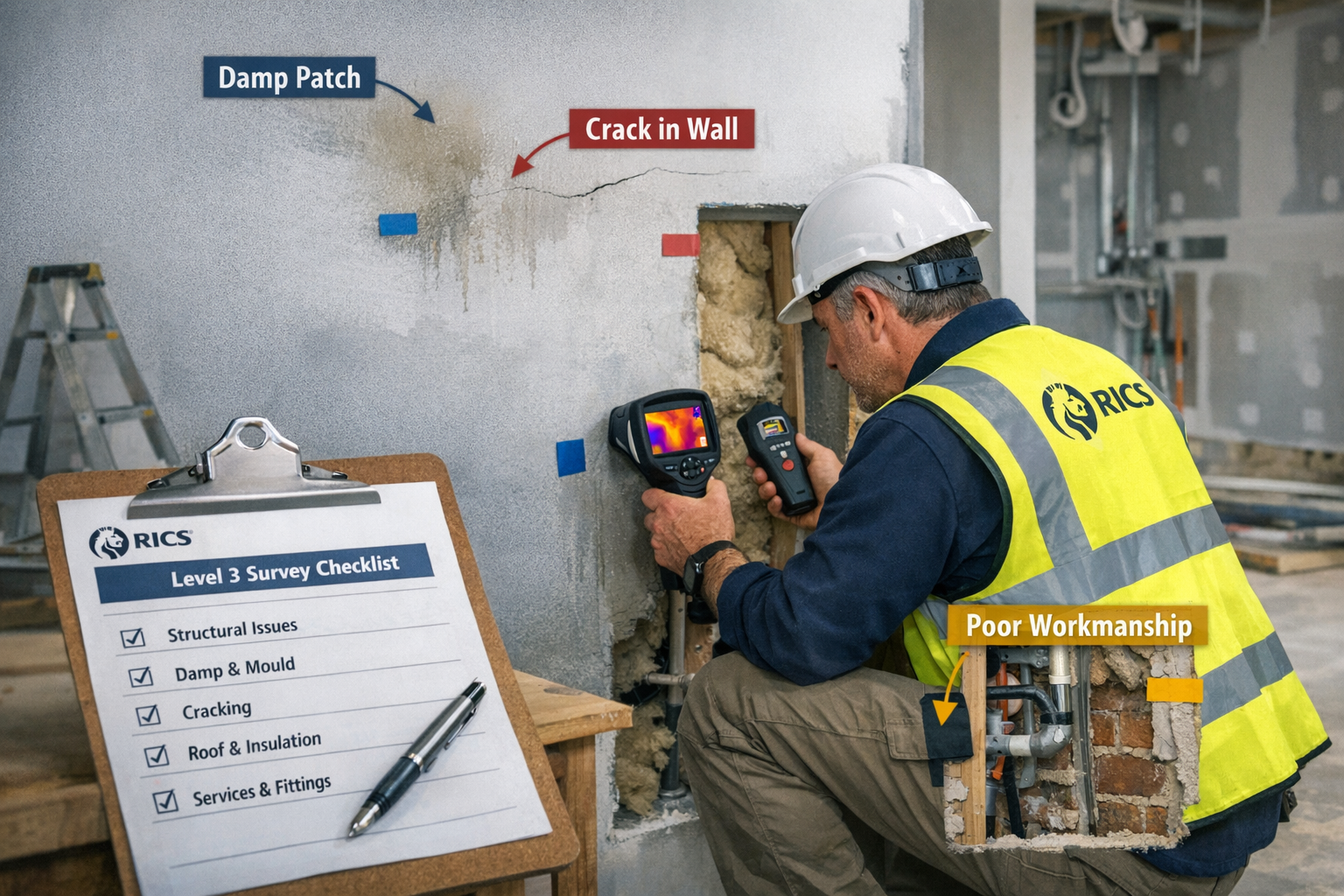
Comprehensive Defect Detection Checklist
A thorough survey following RICS protocols examines multiple property elements systematically:
Structural Elements:
- Foundation condition and visible settlement
- Wall construction, stability, and vertical alignment
- Floor structure, levels, and load-bearing capacity
- Roof structure, coverings, and water-tightness
- Chimney condition and stability
Building Fabric:
- External wall condition, pointing, and render
- Window and door condition, operation, and weatherproofing
- Internal wall finishes and evidence of movement
- Floor finishes and underlying construction
- Ceiling condition and evidence of leaks
Services and Systems:
- Electrical installation safety and capacity
- Plumbing condition and water pressure
- Heating system operation and efficiency
- Drainage functionality and condition
- Ventilation adequacy
Environmental Factors:
- Dampness presence and causes
- Timber condition and pest infestation
- Asbestos presence in pre-2000 properties
- Energy efficiency and thermal performance
- External drainage and ground levels
For properties with specific concerns, additional specialist investigations may include subsidence surveys, drainage surveys, or structural engineering assessments.
Implementing Building Surveys for Wales Housing Uptick: Practical Guidance
Understanding survey protocols means little without effective implementation. Buyers navigating Wales's recovering market need actionable strategies for commissioning surveys, interpreting results, and making informed decisions.
Timing Your Survey in a Competitive Market
The 21% uptick in expected sales creates time pressure that can compromise due diligence. Strategic timing protects your interests:
Pre-Offer Surveys: In highly competitive situations, commissioning a survey before making an offer provides:
- Confident bidding: Knowledge of true condition informs offer price
- Faster progression: Eliminating post-offer survey delays
- Negotiation leverage: Defect awareness enables immediate price adjustment discussions
Post-Offer Surveys: The traditional approach remains viable when:
- Subject to survey clauses: Offers explicitly conditional on satisfactory survey
- Less competitive properties: Multiple viewings or longer marketing periods
- Budget constraints: Avoiding survey costs on unsuccessful offers
Selecting the Right RICS Surveyor
Not all chartered surveyors possess equal expertise in Welsh regional construction. Selection criteria should include:
✅ RICS membership verification: Confirm current chartered status and professional indemnity insurance
✅ Local knowledge: Experience with Welsh property types and regional defect patterns
✅ Relevant specializations: Expertise matching property characteristics (period properties, new builds, specific construction types)
✅ Clear reporting standards: Sample reports demonstrating comprehensive, accessible communication
✅ Professional references: Testimonials from recent Welsh property transactions
Comparing different types of survey helps clarify which level of inspection matches your property and risk tolerance.
Interpreting Survey Results and Taking Action
Survey reports can appear daunting, particularly comprehensive Level 3 assessments running to 40+ pages. Effective interpretation focuses on:
Priority Classification:
- Category 1 (Green): No repair currently needed
- Category 2 (Amber): Repairs or replacement requiring future attention
- Category 3 (Red): Urgent defects requiring immediate action
Financial Implications:
Understanding repair costs enables informed negotiation:
| Defect Type | Typical Cost Range | Negotiation Strategy |
|---|---|---|
| Minor dampness treatment | £500-£2,000 | Request seller remedy or small price reduction |
| Re-roofing (small terrace) | £8,000-£15,000 | Significant price negotiation or walk away |
| Structural underpinning | £15,000-£50,000 | Major price reduction or transaction withdrawal |
| Full rewiring | £3,500-£6,000 | Price reduction or seller contribution |
| New boiler installation | £2,500-£4,000 | Request replacement or price adjustment |
Professional Follow-Up:
Complex defects may require specialist investigation:
- Structural surveys for significant movement or stability concerns
- Roof surveys for detailed covering and structure assessment
- Damp specialists for persistent moisture issues
- Building control for regulatory compliance verification
Leveraging Survey Results in Negotiations
Survey findings provide objective evidence supporting price renegotiation or remediation requests:
Effective Negotiation Approaches:
- Quantified adjustment requests: Present specific repair cost estimates from qualified contractors
- Retention proposals: Suggest holding funds in escrow pending remediation completion
- Seller remedy options: Offer opportunity for seller to address defects before completion
- Proportionate responses: Match negotiation intensity to defect severity and market conditions
In Wales's strengthening market, sellers may resist significant concessions. Buyers must balance defect concerns against market opportunity and alternative property availability.
New Build Snagging and NHBC Warranties
New build properties require different survey approaches. While NHBC or similar warranties provide protection, independent pre-completion snagging surveys identify issues before handover:
Pre-Completion Inspection Benefits:
- Comprehensive defect list for developer remediation
- Evidence of construction quality and finish standards
- Identification of warranty-covered defects requiring formal notification
- Peace of mind before final payment and legal completion
Post-Completion Surveys:
Even after moving in, professional snagging reports document defects within warranty periods, ensuring developer obligations are fulfilled.
Professional Development and Industry Evolution
The Building Surveys for Wales Housing Uptick: RICS Protocols for Q1 2026 Defect Detection in Regional Recovery framework reflects broader industry evolution toward higher standards and continuous professional development.
RICS Wales Conference 2026
The RICS Wales Conference scheduled for June 16, 2026 at Sophia Gardens Cricket Ground in Cardiff offers 6.0 hours of formal CPD with registration from £83.98[3]. This event provides professionals opportunities to:
- Stay informed on latest regulatory developments
- Network with regional surveying specialists
- Learn emerging technologies and methodologies
- Understand market trends and economic forecasts
For surveyors operating in Wales's recovering market, such professional development ensures service quality matches increasing transaction volumes.
Education and Skills Development
RICS's manifesto emphasis on increased investment in built and natural environment education[2] recognizes workforce capacity as critical to sustainable market growth. Initiatives include:
- Apprenticeship expansion: Creating pathways into surveying professions
- Upskilling programmes: Enhancing existing practitioner capabilities
- Technology training: Ensuring AI and digital tool competency
- Specialist qualifications: Developing expertise in retrofit, sustainability, and modern construction methods
These investments support the next generation of surveyors capable of delivering the rigorous assessments Wales's housing recovery demands.
Conclusion: Protecting Your Investment in Wales's Housing Recovery
The Welsh housing market's Q1 2026 uptick represents genuine opportunity for buyers, investors, and the regional economy. However, market acceleration increases risk exposure for those who compromise on due diligence. Building Surveys for Wales Housing Uptick: RICS Protocols for Q1 2026 Defect Detection in Regional Recovery provides the framework for informed, protected property transactions during this pivotal period.
Key actions for buyers navigating this market:
- Commission appropriate surveys: Match survey level to property type, age, and condition—don't economize on assessment quality
- Engage RICS-qualified professionals: Chartered surveyors bring standardized expertise and professional accountability
- Understand regional defect patterns: Wales-specific climate and construction challenges require tailored inspection focus
- Leverage new technologies responsibly: AI-enhanced tools improve detection when combined with professional judgement
- Act on survey findings decisively: Use objective evidence to negotiate fairly or withdraw from unsuitable purchases
- Plan for future maintenance: Survey reports inform long-term ownership costs and improvement priorities
The £320+ investment in professional survey services[4] represents exceptional value compared to potential repair costs running to thousands or tens of thousands of pounds. As RICS surveyors report sustained optimism about Wales's housing trajectory, thorough defect detection ensures this recovery benefits buyers through quality transactions rather than costly post-purchase surprises.
Whether purchasing a Cardiff new build, a Swansea Victorian terrace, or a valley cottage, professional RICS building surveys provide the knowledge foundation for confident property decisions. In a recovering market where competition intensifies and transaction pace accelerates, this professional guidance becomes not just valuable but essential for protecting what will likely be your largest financial commitment.
The Wales housing uptick of 2026 offers genuine opportunity—but only for those who combine market optimism with rigorous due diligence and professional expertise.
References
[1] Party Wall Surveys For Wales Housing Boom Rics Compliance Amid Accelerating Regional Demand In Q1 2026 – https://nottinghillsurveyors.com/blog/party-wall-surveys-for-wales-housing-boom-rics-compliance-amid-accelerating-regional-demand-in-q1-2026
[2] Wales Manifesto 2026 Launch – https://www.rics.org/news-insights/wales-manifesto-2026-launch
[3] Wales Conference – https://www.rics.org/training-events/conferences/wales-conference
[4] Building Survey Protocols For New Build Properties In 2026 Spotting Defects Amid 2 5 Price Growth Forecasts – https://nottinghillsurveyors.com/blog/building-survey-protocols-for-new-build-properties-in-2026-spotting-defects-amid-2-5-price-growth-forecasts
[5] Rics Global Standard On Responsible Ai Use In Surveying Practice Now In Effect – https://www.lexisnexis.co.uk/legal/news/rics-global-standard-on-responsible-ai-use-in-surveying-practice-now-in-effect