The Welsh housing market is experiencing a remarkable resurgence in early 2026, with buyer confidence returning and property transactions stabilizing after years of uncertainty. As Building Survey Protocols for Wales Housing Recovery: Spotting Defects in Q1 2026 Market Uptick becomes increasingly critical, surveyors face heightened demand to identify structural issues in aging housing stock that's driving renewed market activity. With mortgage rates falling to 3.95% for five-year fixed deals—the lowest since September 2022—and supply levels reaching eight-year highs, the pressure is on professionals to deliver thorough, accurate assessments[2][4].
The recovery isn't uniform across Wales. Regional variations show Blaenau Gwent leading price growth at 6.7%, followed by Swansea at 5.1% and Wrexham at 5.0%[2][4]. This geographical diversity demands tailored survey approaches that account for local building characteristics, from Victorian terraces in South Wales valleys to post-war estates in coastal towns. Understanding Building Survey Protocols for Wales Housing Recovery: Spotting Defects in Q1 2026 Market Uptick requires surveyors to adapt their methodologies to both market conditions and regional building typologies.
Key Takeaways
✅ Market momentum has returned with January 2026 transactions totaling 94,680 and mortgage rates at their lowest in over three years, creating increased demand for thorough building surveys[2][4]
✅ Regional variations require localized approaches as price growth ranges from 6.7% in Blaenau Gwent to lower rates in other areas, each with distinct housing stock characteristics[2][4]
✅ Older Welsh housing stock presents specific challenges including damp penetration, structural movement, and aging building materials that demand systematic defect identification protocols
✅ Professional RICS standards provide essential frameworks for conducting comprehensive surveys that protect buyers during this market uptick period
✅ Technology integration enhances survey accuracy through thermal imaging, moisture meters, and digital documentation systems that capture defects traditional methods might miss
Understanding the Q1 2026 Wales Housing Market Context
The first quarter of 2026 marks a significant turning point for Welsh property markets. After years of uncertainty driven by economic pressures and rising interest rates, the landscape has shifted dramatically. Supply levels have reached their highest point in over eight years, with estate agents marketing an average of 32 properties—a clear indicator of renewed market confidence[2][4].
This increased activity creates both opportunities and risks for property buyers. The surge in available properties means more choice, but it also increases the likelihood that buyers may rush decisions without proper due diligence. Professional building surveys become essential safeguards during these periods of heightened market activity.
Key Market Indicators for Q1 2026
| Metric | Q1 2026 Value | Significance |
|---|---|---|
| Five-year fixed mortgage rate | 3.95% | Lowest since September 2022[2][4] |
| January transactions | 94,680 | Stable activity levels[2][4] |
| Average properties per agent | 32 properties | Highest in 8+ years[2][4] |
| Blaenau Gwent price growth | 6.7% | Leading regional growth[2][4] |
| Swansea price growth | 5.1% | Strong coastal market[2][4] |
The data reveals a "bottom-up" recovery pattern where activity returns before significant price increases materialize[5]. This creates a unique window where buyers can secure properties at relatively stable prices while benefiting from improved mortgage conditions. However, this same environment increases competition and can pressure buyers to skip essential survey work.
Regional Variations Across Wales
Wales isn't a homogeneous market. The 6.7% price growth in Blaenau Gwent contrasts sharply with more modest increases elsewhere[2][4]. These variations reflect different local economies, housing stock characteristics, and buyer demographics. Former industrial areas often feature Victorian and Edwardian terraced housing with specific structural vulnerabilities, while coastal regions present different challenges related to exposure and weathering.
Understanding these regional nuances is crucial for implementing effective Building Survey Protocols for Wales Housing Recovery: Spotting Defects in Q1 2026 Market Uptick. A surveyor working in Swansea must consider coastal exposure effects, while those assessing properties in valley towns need expertise in mining subsidence risks and terraced housing construction methods.
Building Survey Protocols for Wales Housing Recovery: Essential Defect Identification Methods
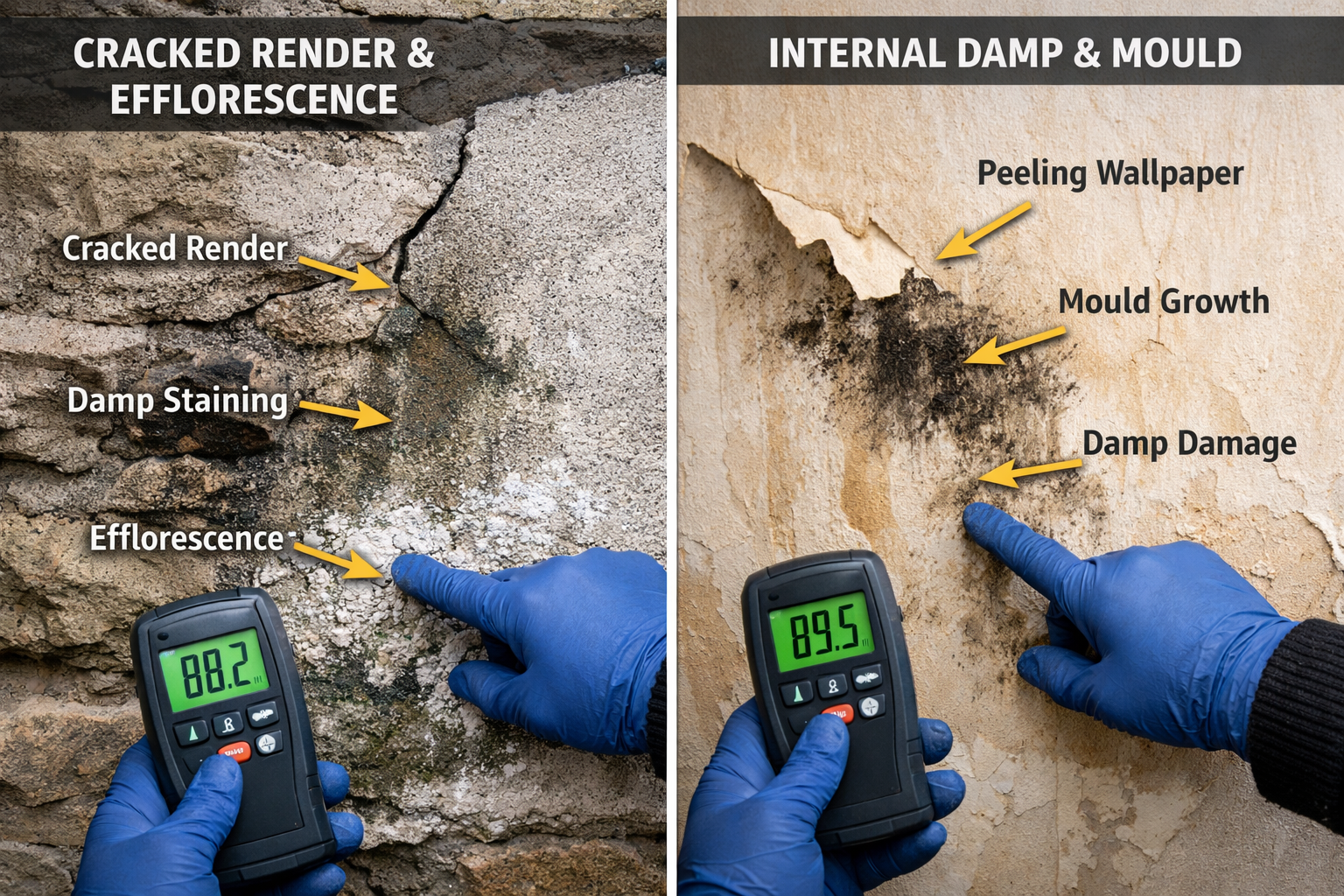
Effective defect identification requires systematic protocols that account for Wales-specific building characteristics. The Building Survey Protocols for Wales Housing Recovery: Spotting Defects in Q1 2026 Market Uptick must address the predominance of older housing stock, regional construction methods, and common failure patterns that emerge during market recovery periods when previously neglected properties enter the market.
Pre-Survey Research and Documentation
Before setting foot on a property, thorough preparation establishes the foundation for comprehensive assessment. This phase includes:
🔍 Historical research – Examining property records, previous survey reports, and local authority planning documentation
🏛️ Construction period identification – Determining build date to anticipate typical materials and construction methods
📍 Location-specific risks – Assessing mining history, flood zones, coastal exposure, and ground conditions
🗺️ Comparative analysis – Reviewing similar properties in the area to establish baseline expectations
Professional RICS chartered building surveyors emphasize this preparatory work as essential for efficient on-site inspection. Understanding that a property was built in 1890 in a former mining area immediately flags specific investigation priorities that might otherwise be overlooked.
Systematic External Inspection Protocol
External surveys follow a methodical top-to-bottom approach that ensures no element is missed:
Roof and Chimneys 🏠
- Slate or tile condition and alignment
- Valley and flashing integrity
- Chimney stack stability and pointing
- Guttering and downpipe functionality
Welsh slate roofs, while durable, develop characteristic failure patterns after 100+ years. Roof surveys should identify nail fatigue, delamination, and missing or slipped slates that indicate imminent replacement needs.
Walls and Structural Elements 🧱
- Render condition and adhesion
- Pointing quality and erosion
- Crack patterns indicating movement
- Damp penetration evidence
- Lintel condition above openings
Traditional Welsh construction often features solid stone walls with lime render. Understanding the difference between cosmetic render cracks and those indicating structural movement is critical. Stepped cracking following mortar joints typically suggests foundation settlement or subsidence—particularly relevant in former mining areas.
Windows and Doors 🚪
- Frame condition and rot (timber)
- Glazing seal integrity
- Operation and security
- Weatherproofing effectiveness
Period properties with original timber sash windows require careful assessment. While these features add character and value, they also represent significant maintenance liabilities if deteriorated.
Internal Inspection and Testing Protocols
Internal surveys reveal defects that external inspection cannot detect:
Moisture and Damp Assessment 💧
- Rising damp in solid wall construction
- Penetrating damp from external defects
- Condensation and ventilation issues
- Basement or cellar moisture ingress
Damp surveys using calibrated moisture meters provide objective data. Welsh terraced houses with solid walls and limited damp-proof courses frequently exhibit rising damp affecting ground floor rooms. Distinguishing between rising damp, penetrating damp, and condensation requires both equipment and experience.
"The key to effective defect identification during market upturns is maintaining rigorous standards despite time pressures. Buyers need comprehensive information, not rushed assessments that miss critical issues." – RICS Professional Standards
Structural Movement Indicators 🏗️
- Floor level variations
- Door and window alignment
- Crack patterns in plasterwork
- Ceiling distortion
- Wall lean or bulging
Traditional construction methods and aging foundations mean structural movement is common in older Welsh properties. The surveyor's role is determining whether movement is historic and stable or ongoing and progressive—a distinction with significant cost implications.
Building Services Assessment ⚡
- Electrical installation age and safety
- Heating system condition and efficiency
- Plumbing materials and condition
- Drainage functionality
While not full services engineers' inspections, building surveys should identify obvious deficiencies. Many Welsh properties retain outdated electrical installations, single-glazed windows, and inefficient heating systems that represent substantial upgrade costs.
Technology-Enhanced Survey Methods
Modern survey protocols integrate technology to enhance accuracy:
📱 Thermal imaging cameras detect heat loss, moisture ingress, and insulation defects invisible to visual inspection
📏 Laser measuring devices provide precise dimensional data for calculating floor areas and identifying structural irregularities
💻 Digital reporting systems enable on-site photo documentation with annotations, creating comprehensive visual records
🔬 Moisture meters deliver objective readings that supplement visual assessment of damp conditions
These technologies complement rather than replace traditional survey skills. A thermal image showing a cold spot requires professional interpretation—it might indicate missing insulation, a thermal bridge, or moisture penetration. Understanding the building's construction informs correct diagnosis.
Implementing Comprehensive Building Survey Protocols for Wales Housing Recovery
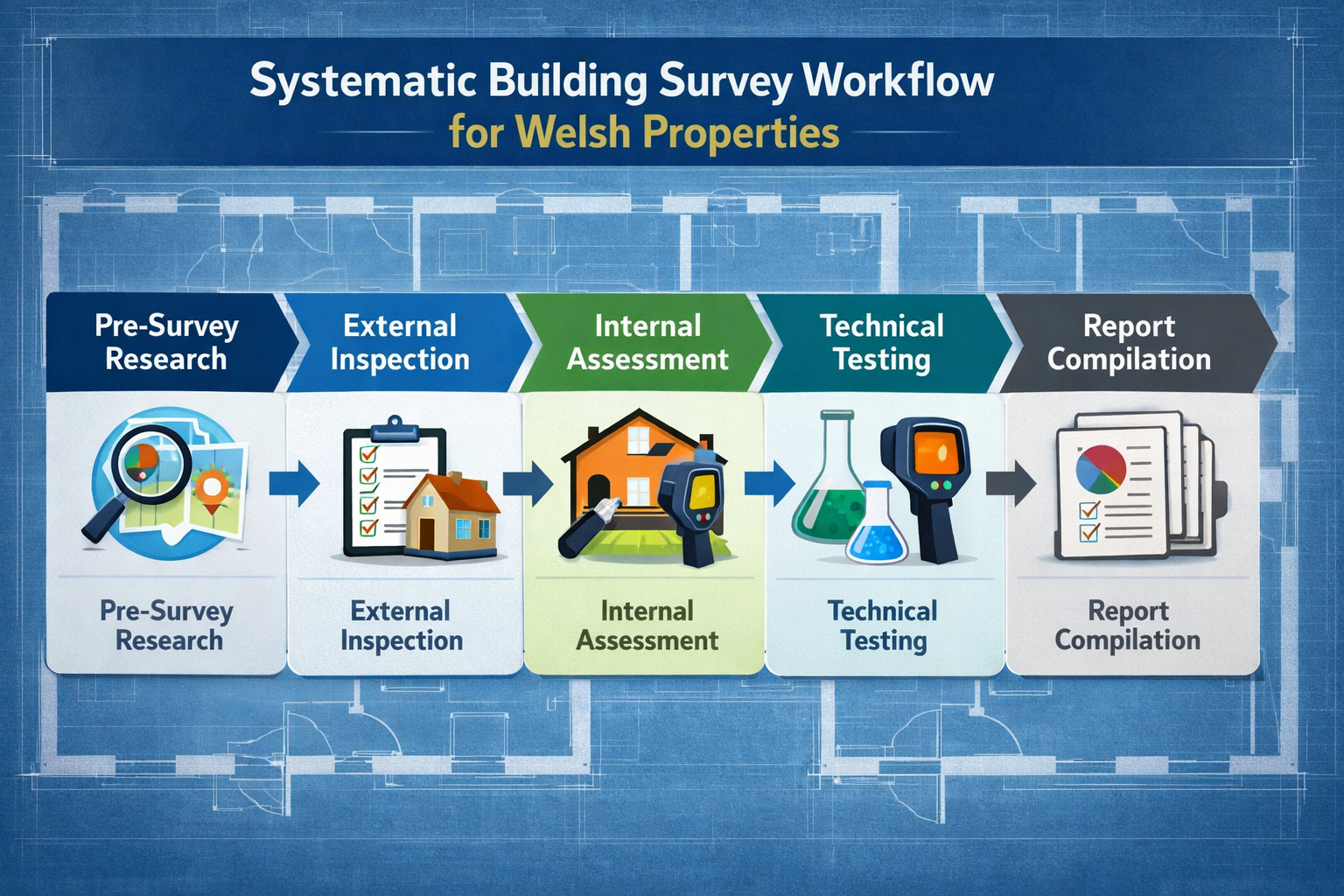
The practical implementation of Building Survey Protocols for Wales Housing Recovery: Spotting Defects in Q1 2026 Market Uptick requires structured workflows that balance thoroughness with efficiency. As market activity increases, surveyors face pressure to deliver rapid turnaround times without compromising quality standards.
RICS Level 2 and Level 3 Survey Standards
The Royal Institution of Chartered Surveyors provides clear frameworks for residential surveys:
RICS Level 2 (HomeBuyer Report) 📋
- Suitable for conventional properties in reasonable condition
- Visual inspection of accessible areas
- Traffic light rating system for defects
- Advice on urgent repairs and ongoing maintenance
- Market valuation included
RICS Homebuyer Surveys Level 2 represent the most common survey type for properties built after 1900 in generally good condition. However, many Welsh properties fall outside this scope due to age, construction type, or condition.
RICS Level 3 (Building Survey) 🏛️
- Comprehensive inspection for older, altered, or unusual properties
- Detailed analysis of construction and condition
- Extensive defect reporting with repair recommendations
- No valuation (unless specifically requested)
- Technical detail suitable for renovation planning
Properties built before 1900, those with significant alterations, or any property showing structural concerns warrant Level 3 surveys. The additional cost is justified by the depth of investigation and detailed reporting that informs purchase decisions and renovation budgets.
Defect Prioritization and Reporting
Effective survey reports categorize defects by urgency and significance:
Category 1: Urgent Defects Requiring Immediate Action 🚨
- Structural instability risks
- Serious damp penetration
- Roof failures causing water ingress
- Dangerous electrical installations
- Unsafe heating systems
These defects require immediate attention and often justify renegotiating purchase prices or withdrawing from transactions.
Category 2: Significant Defects Requiring Planned Intervention ⚠️
- Progressive structural movement
- Aging building services nearing end-of-life
- Weatherproofing deterioration
- Moderate damp issues
- Window and door replacements needed
Category 2 defects inform medium-term maintenance planning and renovation budgets. Buyers should obtain specialist quotes before completing purchases.
Category 3: Minor Defects and Maintenance Items ℹ️
- Cosmetic repairs
- Routine maintenance requirements
- Minor weatherproofing improvements
- Decorative updates
While individually minor, accumulated Category 3 items can represent significant costs. Comprehensive documentation helps buyers understand total property investment requirements.
Regional Considerations for Welsh Properties
Implementing Building Survey Protocols for Wales Housing Recovery: Spotting Defects in Q1 2026 Market Uptick requires awareness of region-specific issues:
South Wales Valleys ⛰️
- Mining subsidence risks in former coalfield areas
- Terraced housing with shared structural elements
- Solid stone construction with render finishes
- Steep site drainage challenges
Properties in areas like Blaenau Gwent—experiencing 6.7% price growth[2][4]—often feature traditional construction requiring specialist knowledge. Subsidence surveys may be necessary where mining activity occurred.
Coastal Areas 🌊
- Salt exposure affecting render and metalwork
- Wind-driven rain penetration
- Elevated maintenance requirements
- Flood risk considerations
Swansea's 5.1% price growth[2][4] reflects strong coastal market demand. However, properties in these locations face accelerated weathering that surveys must thoroughly document.
Urban Centers 🏙️
- Converted properties with complex layouts
- Shared services and party walls
- Limited access for inspection
- Parking and external space constraints
Cardiff and other urban areas feature diverse property types requiring flexible survey approaches. Understanding commercial building survey techniques helps when assessing converted properties.
Cost Implications and Budget Planning
Survey findings directly inform purchase negotiations and renovation budgets. Providing clear cost guidance helps buyers make informed decisions:
Immediate Repair Costs 💷
- Urgent structural repairs: £5,000-£50,000+
- Roof replacements: £8,000-£15,000 (typical terraced)
- Damp-proofing: £2,000-£8,000
- Electrical rewiring: £3,500-£6,000
Medium-Term Improvements 💰
- Window replacement: £800-£1,500 per window
- Heating system upgrade: £4,000-£8,000
- External repointing: £3,000-£10,000
- Drainage repairs: £1,500-£5,000
Understanding survey pricing helps buyers budget appropriately for both the survey itself and subsequent remedial work.
Quality Assurance and Professional Standards
Maintaining high standards during busy market periods requires systematic quality assurance:
✅ Standardized checklists ensure consistent coverage across all surveys
✅ Peer review processes catch errors before report delivery
✅ Continuing professional development keeps surveyors updated on emerging issues and techniques
✅ Professional indemnity insurance protects both surveyors and clients
✅ RICS compliance ensures adherence to professional and ethical standards
The RICS chartered surveyor framework provides quality assurance that protects consumers during property transactions.
Advanced Defect Detection Techniques for Complex Properties
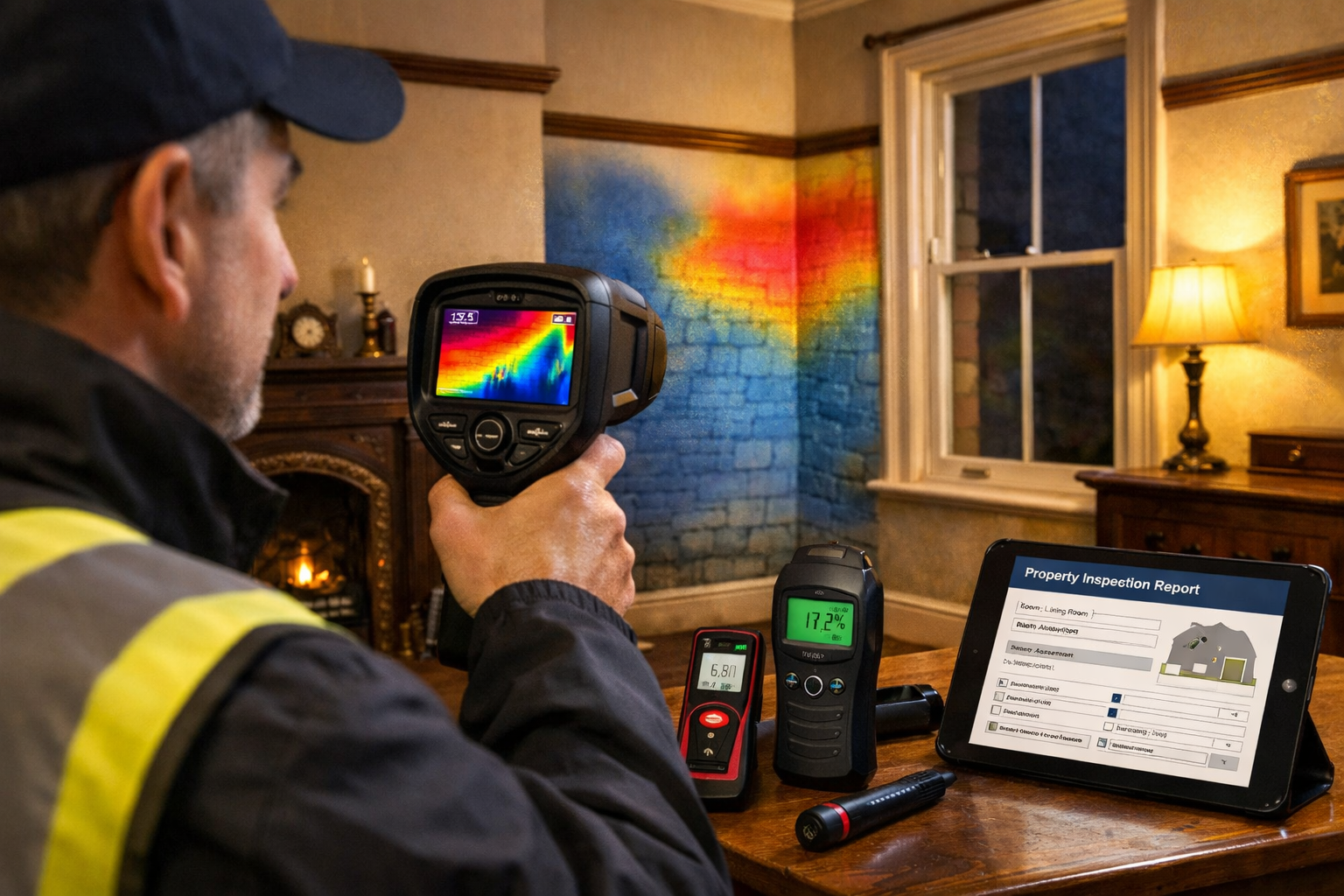
Complex properties require enhanced investigation techniques beyond standard visual inspection. As the Building Survey Protocols for Wales Housing Recovery: Spotting Defects in Q1 2026 Market Uptick evolves, surveyors increasingly deploy specialist methods for challenging assessments.
Structural Engineering Referrals
When surveys identify potential structural issues, specialist structural engineering input becomes essential:
🔧 Foundation investigations – Trial pits or boreholes to assess foundation adequacy
🔧 Movement monitoring – Installing tell-tales or crack monitors to track ongoing movement
🔧 Load calculations – Assessing structural adequacy for alterations or additional loads
🔧 Repair specifications – Detailed engineering designs for structural remediation
Structural engineers provide technical analysis beyond general surveying expertise. Their involvement is particularly important for properties showing significant cracking, distortion, or where major alterations are planned.
Specialist Testing and Investigation
Certain defects require laboratory analysis or specialist equipment:
Timber Decay Assessment 🪵
- Moisture content measurement
- Fungal decay identification
- Insect infestation detection
- Structural timber strength testing
Drainage Investigation 🚿
- CCTV drainage surveys for blockages and defects
- Dye testing for leak detection
- Flow testing for capacity assessment
Professional drainage surveys identify issues invisible during standard inspections. Victorian and Edwardian properties often have deteriorated clay drainage systems requiring replacement.
Contamination Testing ⚗️
- Asbestos identification in pre-2000 buildings
- Lead paint testing in period properties
- Radon gas assessment in affected areas
- Soil contamination on brownfield sites
These investigations protect buyers from hidden health hazards and costly remediation requirements.
Party Wall Considerations
Welsh terraced housing creates party wall complexities requiring careful assessment:
📐 Shared structural elements – Walls, chimneys, and foundations affecting multiple properties
📐 Maintenance responsibilities – Determining ownership and repair obligations
📐 Alteration implications – Understanding Party Wall Act requirements for planned works
Understanding party wall schedules of condition protects buyers when neighboring properties undergo construction work.
Documentation and Reporting Best Practices
Comprehensive documentation ensures survey findings are clearly communicated:
📸 Photographic evidence – High-quality images with annotations showing defect locations
📊 Diagrams and sketches – Visual representations of structural issues
📝 Clear technical descriptions – Accessible language explaining complex defects
💡 Actionable recommendations – Specific guidance on remediation approaches and priorities
Modern digital reporting platforms enable interactive documents with embedded images, hyperlinks to relevant guidance, and clear navigation. This accessibility helps buyers understand findings and make informed decisions.
Ongoing Monitoring and Follow-Up Surveys
Some defects require monitoring over time to assess progression:
⏱️ Crack monitoring – Tracking structural movement over 6-12 months
⏱️ Moisture monitoring – Assessing seasonal damp variations
⏱️ Settlement observation – Determining whether foundation movement has stabilized
Monitoring surveys provide objective data that informs repair decisions and helps avoid unnecessary expensive interventions for historic, stable defects.
Navigating the Recovery: Strategic Advice for Buyers and Professionals
The Q1 2026 market uptick creates both opportunities and challenges. Strategic approaches help buyers and professionals navigate this dynamic environment effectively.
For Property Buyers
Don't Rush Due Diligence ⏳
Market competition shouldn't compromise thorough investigation. Properties have waited decades for buyers—another week for a comprehensive survey is insignificant compared to the financial commitment involved.
Budget Realistically 💷
Survey findings should inform total acquisition costs. A property priced £20,000 below market value isn't a bargain if it requires £30,000 of immediate structural repairs.
Prioritize Professional Expertise 👷
RICS chartered surveyors provide professional indemnity insurance and regulatory oversight that protect consumers. The modest additional cost over unqualified inspectors delivers significant risk mitigation.
Consider Long-Term Ownership 🏡
Survey findings inform not just immediate purchase decisions but long-term maintenance planning. Understanding a property's condition helps budget for future improvements and avoid unexpected expenses.
For Surveying Professionals
Maintain Rigorous Standards ✅
Market pressure shouldn't compromise survey quality. Professional reputation depends on consistent, thorough assessments regardless of market conditions.
Invest in Technology 📱
Thermal imaging, moisture meters, and digital reporting systems enhance survey quality and efficiency. Initial equipment costs are quickly recovered through improved service delivery.
Develop Regional Expertise 🗺️
Understanding local building characteristics, construction methods, and common defects enhances survey accuracy and client value.
Clear Communication 💬
Technical expertise must be communicated accessibly. Buyers need to understand findings, implications, and recommended actions without requiring construction industry knowledge.
Professional Development 📚
Continuous learning about emerging defects, new construction methods, and updated regulations maintains professional competence and service quality.
Market Outlook Considerations
The Building Survey Protocols for Wales Housing Recovery: Spotting Defects in Q1 2026 Market Uptick exists within a broader market context:
📈 Sustained recovery expected – Falling mortgage rates and improved supply suggest continued market strength[2][4]
📈 Regional variations will persist – Different areas will experience varying growth rates based on local factors[2][4]
📈 Quality properties will command premiums – Well-maintained homes with comprehensive survey reports will attract competitive offers
📈 Defect-laden properties may struggle – Buyers are increasingly sophisticated and survey-aware, making problematic properties harder to sell
This environment rewards thorough preparation, honest disclosure, and realistic pricing based on actual property condition rather than optimistic aspirations.
Conclusion
The Building Survey Protocols for Wales Housing Recovery: Spotting Defects in Q1 2026 Market Uptick represents a critical intersection of market opportunity and professional responsibility. As Wales experiences renewed housing market momentum with mortgage rates at three-year lows and supply at eight-year highs[2][4], the demand for comprehensive, accurate building surveys has never been greater.
Effective defect identification requires systematic protocols that account for Wales-specific building characteristics, regional variations, and the predominance of older housing stock. From pre-survey research through detailed external and internal inspection to technology-enhanced investigation methods, professional surveyors must maintain rigorous standards despite market pressures for rapid turnaround.
The regional diversity across Wales—with Blaenau Gwent leading price growth at 6.7%, Swansea at 5.1%, and Wrexham at 5.0%[2][4]—demands localized expertise. Victorian terraces in former mining areas present different challenges than coastal properties or urban conversions. Understanding these nuances separates competent surveys from truly comprehensive assessments.
Actionable Next Steps
For Property Buyers: 🏠
- Commission RICS Level 2 or Level 3 surveys appropriate to property age and condition
- Review survey findings carefully and obtain specialist quotes for identified defects
- Use survey evidence in purchase negotiations to reflect actual property condition
- Budget realistically for both immediate repairs and medium-term maintenance
For Surveying Professionals: 👷
- Implement systematic inspection protocols ensuring consistent coverage
- Invest in technology that enhances detection accuracy and reporting quality
- Develop region-specific expertise in local construction methods and common defects
- Maintain CPD engagement to stay current with emerging issues and best practices
For the Industry: 📊
- Promote professional standards that protect consumers during market upturns
- Develop guidance addressing Wales-specific building characteristics and defects
- Facilitate knowledge sharing about regional construction methods and failure patterns
- Support technology adoption that improves survey quality and efficiency
The Q1 2026 market recovery presents opportunities for buyers to secure properties at relatively stable prices while benefiting from improved mortgage conditions. However, these opportunities come with responsibilities—for buyers to conduct proper due diligence and for professionals to deliver comprehensive assessments that inform purchase decisions.
As the Welsh housing market continues its recovery trajectory, the role of thorough, professional building surveys becomes increasingly important. Whether assessing a Victorian terrace in Blaenau Gwent or a coastal property in Swansea, systematic defect identification protocols protect buyers from costly surprises and support sustainable property transactions that benefit all market participants.
The foundation of successful property transactions in 2026 and beyond rests on accurate information, professional expertise, and realistic expectations—all delivered through comprehensive building survey protocols that spot defects others might miss.
References
[1] Early 2026 Shows Busy Housing Market In Wales – https://www.wales247.co.uk/early-2026-shows-busy-housing-market-in-wales
[2] Article – https://www.homesearchsales.co.uk/news/article.html?id=1772636158
[3] Wales Regional Market Report – https://www.fineandcountry.co.uk/insights/property-market-reports/wales-regional-market-report
[4] Article – https://www.stevensestateagents.com/blog/article.html?id=1772636158
[5] Bottom Up Recovery Predicted For Housing Market In 2026 As Activity Returns – https://nation.cymru/news/bottom-up-recovery-predicted-for-housing-market-in-2026-as-activity-returns/