A yield of 7.9% sounds like a headline number plucked from a glossy investment brochure. It is not. It is the real, measured average rental yield across England and Wales for July to September 2026, according to data published on 6 October 2026. And it is rising, not falling, at a time when mortgage rates, regulation and tax pressure were all supposed to be squeezing landlords out of the market.
The story behind buy-to-let rental yields 7.9% October 2026 is not one of retreat. It is one of consolidation. Experienced landlords are buying more property, not less, while smaller investors quietly step back. For anyone holding or considering rental property in Greater Manchester, understanding why this shift is happening matters more than the headline figure itself.
Key Takeaways
- Average buy-to-let rental yields reached 7.9% in Q3 2026 across England and Wales, up from 7.5% a year earlier.
- The North West recorded an 8.3% average yield, slightly down year-on-year but still well above London's 6.4%.
- Landlord portfolios are growing: the average applicant now holds 18 properties, up from 16 in the previous quarter.
- Rental cover has fallen to 132% from 144%, as five-year fixed mortgage rates reached 6.00% in early October 2026.
- A Level 3 building survey or RICS valuation protects real returns on older North West terraced stock before yield numbers can be trusted.
Buy-to-Let Rental Yields 7.9% October 2026: The National Picture
The figures come from Fleet Mortgages' Rental Barometer, a quarterly snapshot built from actual landlord mortgage applications rather than advertised rents. For July to September 2026, the average yield across England and Wales hit 7.9%, climbing from 7.5% in the same quarter of 2025.
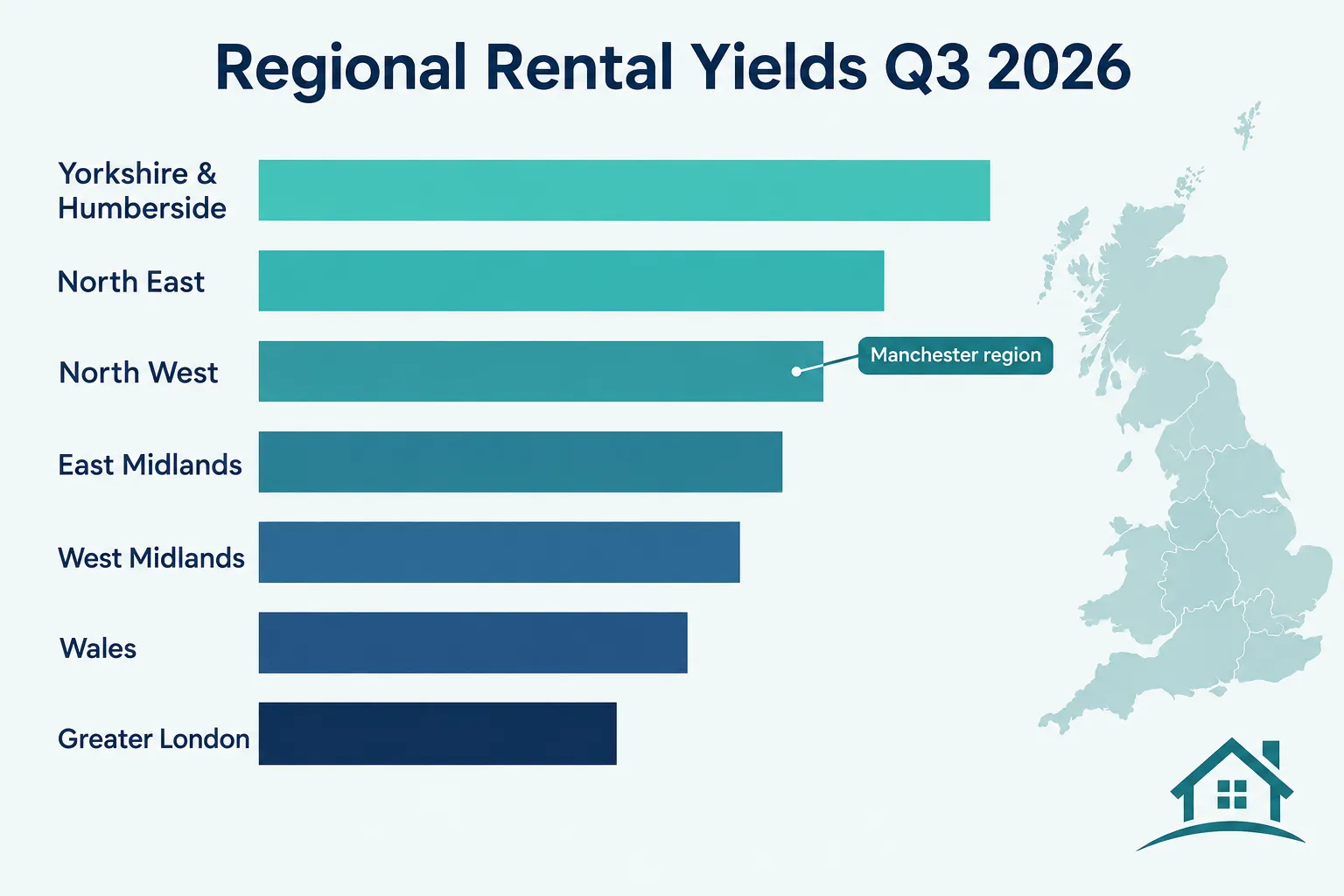
Regional variation tells the real story. Yorkshire and Humberside led the table at 9.3%, up sharply from 8.2% a year earlier. The North East followed close behind at 9.2%. The East Midlands and West Midlands both pushed above 8%. Wales slipped to 7.5%, down on the previous year. Greater London remained the laggard at just 6.4%, despite commanding the highest average rent in the country at £2,597 a month.
"Despite everything the sector has dealt with during 2026, experienced landlords are continuing to invest and new landlords are still entering the market," said Steve Cox of Fleet Mortgages.
That quote captures the paradox at the heart of these numbers. Higher borrowing costs, tighter regulation and political uncertainty have not stopped capital flowing into rental property. They have simply changed who is supplying it.
North West and Manchester: How Do Local Yields Compare?
The North West recorded an average rental yield of 8.3% in Q3 2026, a slight dip compared with the same period a year earlier but still comfortably ahead of the national average pull from London and the South East. The region sits in a strong middle position: not quite matching the 9%-plus yields of Yorkshire and the North East, but far outperforming southern markets where high purchase prices continue to suppress returns.
Zoopla's September 2026 rental market report found rents nationally running 2.6% higher than a year ago, a trend that has supported yield growth in areas like Greater Manchester where purchase prices remain accessible relative to rental demand. Manchester's mix of city-centre apartments, suburban family lets and older terraced conversions means outcomes vary street by street. No single figure captures every ward, and this article does not claim a Manchester-specific yield beyond the regional 8.3% North West average.
What this regional context does confirm is that North West landlords remain well placed relative to most of England and Wales, provided they manage rising finance costs carefully.
Why Landlords Are Expanding Portfolios Despite Rising Costs
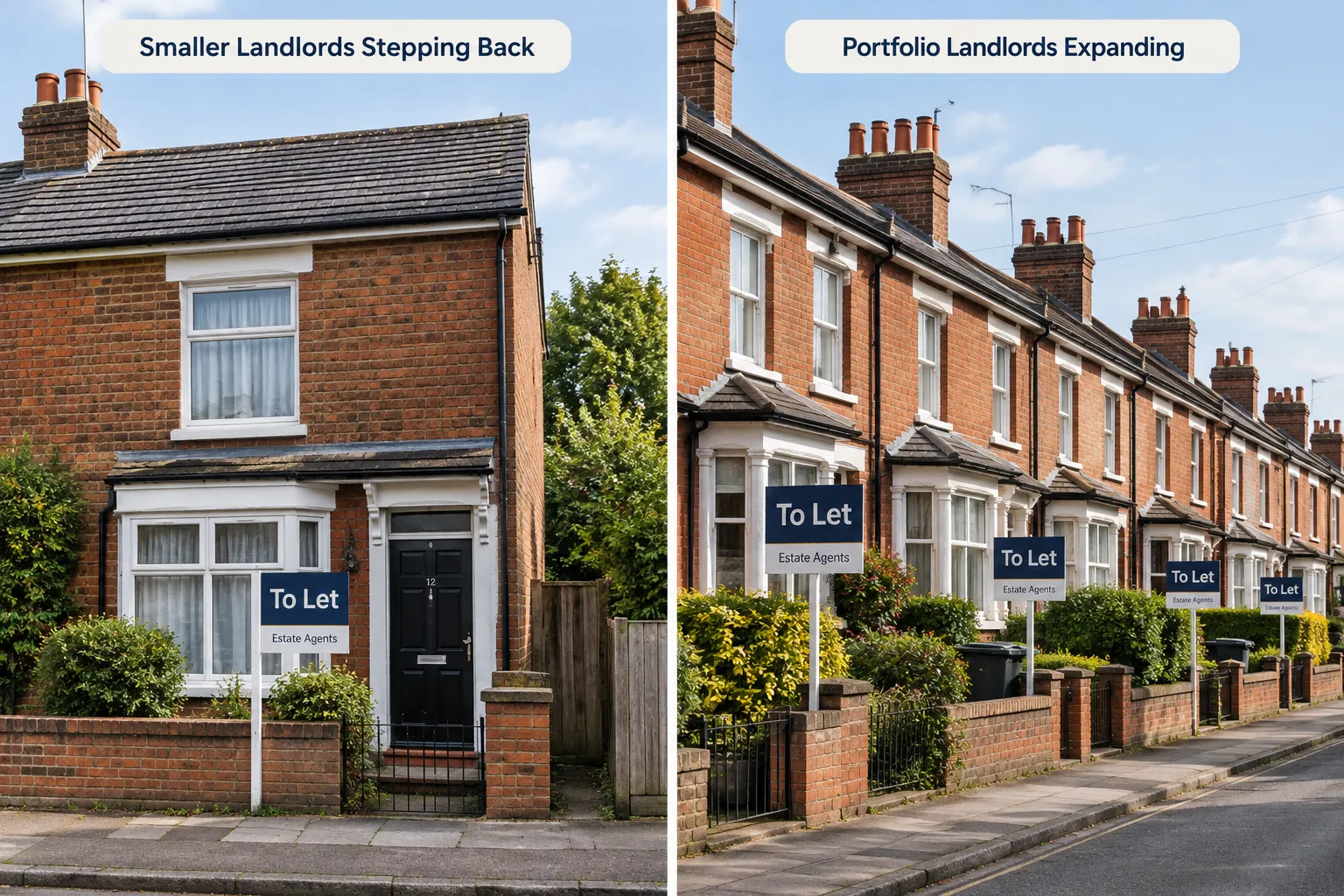
The headline yield figure only tells half the story. The landlord profile behind buy-to-let rental yields 7.9% October 2026 shows a market consolidating around larger, more professional investors.
| Metric | Previous reading | Jul, Sep 2026 |
|---|---|---|
| Average properties per landlord | 16 | 18 |
| Applications from landlords with 15+ properties | 26% | 30% |
| Landlords with four or more properties | n/a | 66% |
| Landlords with one to three properties | 29% | 24% |
| First-time landlords | 9% | 10% |
| Average rental cover | 144% | 132% |
| Limited-company applications | 78% | 71% |
Two trends stand out. First, portfolio landlords are buying more aggressively, pushing the average holding to 18 properties. Second, rental cover, the ratio lenders use to check that rent comfortably exceeds mortgage costs, has dropped from 144% to 132%. That fall directly reflects mortgage pricing: Moneyfacts reported the average five-year fixed mortgage rate reaching 6.00% in early October 2026, squeezing the margin between rent collected and interest paid.
Interestingly, first-time landlords grew slightly too, from 9% to 10% of applications, suggesting the market is not closing to newcomers entirely. But the overall shift toward limited-company borrowing easing slightly from 78% to 71% hints at a more varied mix of investors entering the sector, not purely the large corporate players.
The Renters' Rights Act and the New Landlord Database Fee
No discussion of landlord sentiment in late 2026 is complete without the Renters' Rights Act. Ahead of the private rented sector landlord database's December 2026 launch, the National Residential Landlords Association has sharply criticised the £65-per-property annual fee.
NRLA chief executive Ben Beadle made the comparison blunt: the fee, he said, costs more than a car MOT. For a landlord with a modest four-property portfolio, that is £260 annually in compliance cost alone, before accounting for other regulatory obligations introduced under the Act. For the professional landlords driving the 18-property average portfolio size, the fee becomes a genuine line-item cost that erodes already-thinning rental cover margins.
This regulatory backdrop helps explain why smaller, less experienced landlords are the ones stepping back, down from 29% to 24% of the one-to-three property segment, while bigger operators absorb the cost and keep expanding.
Protecting Your Yield: Surveys and Due Diligence for North West Investors
A 7.9% headline yield is only as reliable as the condition of the property generating it. Manchester's rental stock includes a large share of older terraced housing and converted period buildings, both prone to costly hidden defects: damp, roof issues, outdated electrics, or structural movement in solid-wall construction.
A single unexpected repair bill can wipe out a year's margin on a property already running at 132% rental cover rather than 144%. Before completing a purchase, North West investors should commission either:
- A Level 3 building survey, essential for pre-1930s terraces, converted flats, or any property showing visible signs of disrepair.
- A RICS valuation, which confirms the lender's view of market value but does not replace a full condition survey.
Skipping this step to save a few hundred pounds is a false economy when mortgage rates sit at 6.00% and margins are tightening across the sector.
Frequently Asked Questions
What does a 7.9% rental yield actually mean for landlords?
It means the annual rent collected equals 7.9% of the property's value, before costs like mortgage interest, maintenance and fees. It is a gross figure, not take-home profit.
Why did buy-to-let rental yields reach 7.9% in October 2026 while mortgage rates are rising?
Rents have grown faster than property prices in many regions, particularly the North and Midlands, while borrowing costs have risen separately. Yield reflects rent versus value, not profitability after finance costs.
Is the North West a good place to invest compared with London?
On yield alone, yes. The North West averaged 8.3% against London's 6.4% in Q3 2026, though London rents remain far higher in absolute terms at £2,597 a month.
How will the Renters' Rights Act landlord database fee affect returns?
At £65 per property per year, the fee adds a modest but real annual cost, particularly for landlords with large portfolios, further compressing already reduced rental cover margins.
Should smaller landlords be worried by this data?
The data shows smaller landlords are a shrinking share of new applications, down from 29% to 24%, suggesting rising costs and compliance burdens are harder for them to absorb than for larger, professional operators.
Conclusion
Buy-to-let rental yields 7.9% October 2026 confirm a rental market that is strengthening in headline terms while quietly restructuring underneath. Experienced, well-capitalised landlords are expanding portfolios and absorbing higher borrowing costs and new compliance fees. Smaller and first-time landlords face a tougher calculation as rental cover tightens.
For Greater Manchester and North West investors, the regional 8.3% yield remains attractive relative to the national picture, but only when purchase decisions are backed by proper due diligence. Before buying, commission a Level 3 building survey or RICS valuation on any older terraced or converted property, factor the new £65 annual database fee into running costs, and stress-test rental cover against mortgage rates near 6.00%. A strong yield figure only holds up when the property behind it is structurally sound and the numbers are checked by a qualified professional.
buy-to-let rental yields, rental yields 2026, Manchester property investment, North West landlords, Fleet Mortgages Rental Barometer, Renters Rights Act, landlord database fee, RICS building survey, buy-to-let mortgage rates, property investment North West, rental cover, limited company landlords