
The property market in 2026 presents a challenging landscape for building surveyors. With builder confidence declining to 37 in January and 40% of builders cutting prices, the construction and property sectors are experiencing significant headwinds[1]. Yet within these challenges lies opportunity. Building Survey Defect Identification in Subdued Markets: How to Add Value When Transaction Volumes Are Still Low isn't just about survival—it's about strategic differentiation that builds lasting client relationships during gradual recovery.
When transaction volumes remain suppressed, building surveyors must pivot from volume-based business models to value-based approaches. The key lies in demonstrating unmatched expertise through thorough defect identification and comprehensive reporting that justifies professional fees even when clients are more cost-conscious than ever.

Key Takeaways
- Market conditions remain challenging with 63% of contractors reporting project delays and non-residential construction spending projected to grow only 2.0% in 2026[2][3]
- Thorough defect identification differentiates professional surveyors from basic inspection services during periods of reduced transaction volumes
- Enhanced reporting quality justifies premium fees and builds client loyalty that extends beyond market recovery
- Specialized survey services including thermal imaging, drone surveys, and detailed defect schedules create additional revenue streams
- Client education and transparency transform one-time surveys into long-term professional relationships
Understanding the Current Market Landscape 📉
The subdued property market of 2026 reflects multiple converging pressures. Builder sentiment has lost ground at the start of the year, with the future sales component falling below 50 for the first time since September[1]. This pessimism isn't unfounded—financing challenges and affordability pressures continue to constrain both new construction and property transactions.
Key Market Indicators
The data paints a clear picture of ongoing challenges:
| Metric | Current Status | Impact on Surveyors |
|---|---|---|
| Builder Confidence | 37 (January 2026) | Reduced new build inspections |
| Price Reductions | 40% of builders cutting prices by 6% | Increased scrutiny on property values |
| Project Delays | 63% reporting delays or cancellations | Fewer commercial survey opportunities |
| Funding Challenges | 37% cite lack of funding | Clients more fee-sensitive |
| Construction Growth | 2.0% projected for 2026 | Limited market expansion |
For building surveyors, these conditions create a paradox. Lower transaction volumes mean fewer potential clients, but those who do proceed with property purchases or development projects are more risk-averse and detail-focused than ever. This shift in client psychology represents the foundation for value-based differentiation.
Why Defect Identification Matters More Now
When markets are buoyant, some buyers accept superficial surveys or even waive detailed inspections in competitive bidding situations. In subdued markets, the opposite occurs. Buyers have negotiating power and time to conduct thorough due diligence. They're not just looking for a survey—they're seeking comprehensive risk assessment that protects their investment in uncertain economic conditions.
RICS chartered building surveyors who can demonstrate superior defect identification capabilities position themselves as essential advisors rather than optional service providers. This distinction becomes critical when clients are evaluating where to allocate limited budgets.
Building Survey Defect Identification Techniques That Add Value 🔍
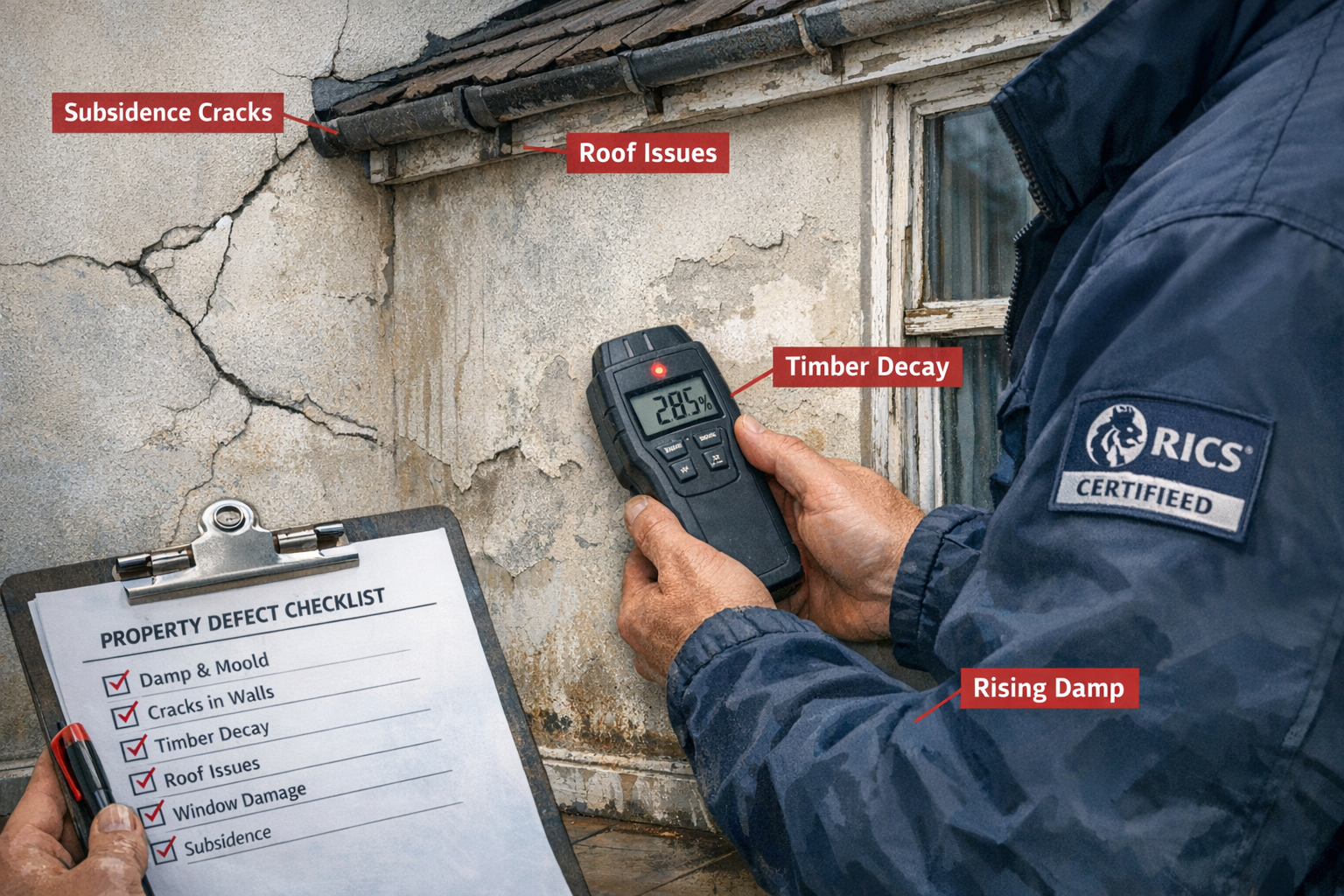
Superior defect identification requires more than walking through a property with a clipboard. In 2026's competitive environment, building surveyors must employ advanced techniques and technology that reveal issues invisible to standard inspections.
Advanced Diagnostic Technologies
Modern building survey practices incorporate specialized equipment that transforms defect identification from subjective observation to objective measurement:
Thermal Imaging Cameras 📸
- Detect hidden moisture penetration behind finished surfaces
- Identify insulation deficiencies and thermal bridging
- Reveal electrical hotspots indicating potential fire hazards
- Document evidence with visual heat maps that clients easily understand
Moisture Meters and Hygrometers
- Quantify dampness levels with precise measurements
- Differentiate between surface condensation and structural water ingress
- Track moisture patterns indicating hidden leaks or rising damp
- Provide data that supports remediation cost estimates
Endoscopic Inspection Equipment
- Access concealed spaces without destructive investigation
- Examine cavity walls, underfloor voids, and roof spaces
- Document conditions in areas inaccessible during standard surveys
- Reduce client costs by avoiding unnecessary exploratory works
Drone surveys have revolutionized roof and chimney inspections, particularly for multi-story buildings where access is expensive or dangerous. High-resolution aerial photography captures defects that would otherwise require scaffolding or cherry picker hire, delivering both cost savings and superior documentation.
Systematic Inspection Methodology
Technology alone doesn't guarantee thorough defect identification. Professional surveyors employ structured methodologies that ensure consistency and completeness:
- Pre-inspection research: Review planning records, previous surveys, and local geology
- Systematic progression: Work through property in logical sequence to avoid overlooking areas
- Multiple observation techniques: Combine visual, tactile, and instrumental assessment
- Contextual analysis: Understand how defects relate to building age, construction type, and local conditions
- Comparative assessment: Benchmark findings against typical conditions for similar properties
This systematic approach distinguishes professional property inspections from cursory walk-throughs. Clients recognize the difference when they receive comprehensive reports that demonstrate methodical investigation rather than superficial observations.
Common Defects That Require Expert Identification
Some defects are obvious to any observer—missing roof tiles, cracked windows, or peeling paint. The value-adding surveyor identifies subtle indicators of more serious underlying issues:
Structural Movement Indicators 🏗️
- Diagonal cracking patterns suggesting subsidence or heave
- Stepped cracking in brickwork indicating foundation settlement
- Distorted door frames and binding doors revealing structural shift
- Sloping floors and out-of-plumb walls quantified with precise measurements
Hidden Water Damage
- Staining patterns indicating historic leaks even after cosmetic repairs
- Musty odors suggesting concealed mold growth
- Efflorescence on masonry revealing moisture migration
- Soft or springy floors indicating timber decay beneath finishes
Building Services Defects
- Outdated electrical installations requiring rewiring
- Inadequate heating system capacity or efficiency
- Drainage issues including collapsed pipes or inadequate falls
- Ventilation deficiencies contributing to condensation problems
Maintenance Neglect Indicators
- Deferred maintenance that will require significant near-term expenditure
- Inappropriate previous repairs that may have worsened underlying problems
- Missing or inadequate damp-proof courses and membranes
- Deteriorating external decorations allowing water penetration
Professional surveyors don't just identify these defects—they explain their significance, estimate remediation costs, and prioritize actions. This contextual information transforms a list of problems into actionable intelligence that clients can use for negotiation or project planning.
Enhancing Report Quality to Justify Professional Fees 📋
In subdued markets where clients scrutinize every expense, report quality directly influences perceived value. The difference between a basic survey report and a comprehensive document that clients reference for years lies in presentation, detail, and usability.
Essential Report Components
Executive Summary
- Concise overview of critical findings
- Risk ratings for major defects (high, medium, low priority)
- Estimated total remediation costs
- Clear recommendations for immediate actions
Detailed Defect Schedule
Every identified defect should include:
- Precise location with reference to floor plans
- Photographic evidence with annotations
- Technical description of the issue
- Explanation of causes and implications
- Recommended remediation approach
- Cost estimate ranges
- Urgency rating
Visual Documentation
- High-resolution photographs with clear labeling
- Thermal imaging results with temperature scales
- Annotated diagrams highlighting defect locations
- Comparative images showing progression of issues where available
Technical Appendices
- Structural engineering calculations where relevant
- Specialist sub-contractor recommendations
- Regulatory compliance notes
- Maintenance schedules for ongoing property care
Digital Delivery and Accessibility
Modern clients expect digital-first delivery with features that enhance usability:
✅ Interactive PDF reports with clickable navigation and bookmarks
✅ Cloud-based access allowing clients to review reports on any device
✅ Searchable content enabling quick reference to specific defects
✅ Embedded video walkthroughs for complex issues requiring explanation
✅ Integration with project management tools for renovation planning
These digital enhancements cost little to implement but significantly elevate perceived professionalism and value. Clients appreciate the ability to share reports with contractors, architects, and family members without printing hundreds of pages.
Comparative Analysis and Benchmarking
Value-adding reports don't just describe what exists—they provide context and comparison:
"The property shows typical wear patterns consistent with 1930s semi-detached construction in this area. However, the absence of cavity wall insulation and single-glazed windows throughout represents below-average energy efficiency compared to 78% of similar properties that have undergone thermal upgrades."
This comparative approach helps clients understand whether identified defects represent normal conditions requiring routine maintenance or significant departures from expected standards warranting concern.
For commercial properties, stock condition surveys that benchmark building performance against portfolio averages or industry standards provide particularly valuable decision-making intelligence.
Building Survey Defect Identification Strategies for Client Retention 🤝
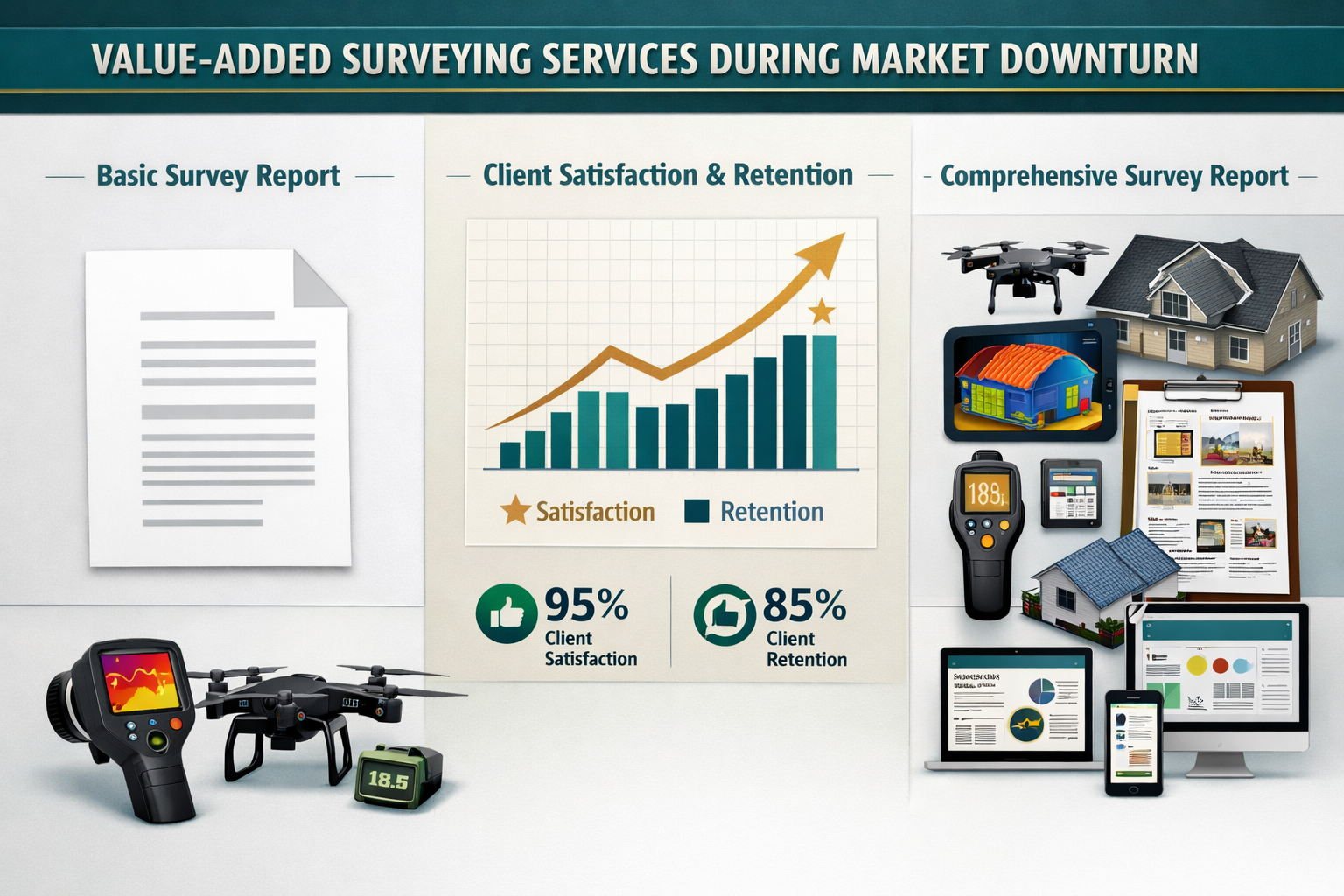
Surviving subdued markets requires more than excellent technical work—it demands strategic client relationship management that converts one-time surveys into ongoing professional partnerships.
Education-Based Marketing
Clients who understand the survey process value it more highly. Educational approaches include:
Pre-Survey Consultations
- Explain what different survey levels include and exclude
- Set realistic expectations about access limitations
- Discuss how property age and type influence likely findings
- Clarify the distinction between mortgage valuations and surveys
Post-Survey Debriefs
- Schedule phone or video calls to walk through major findings
- Answer questions and clarify technical terminology
- Discuss remediation priorities and budget planning
- Provide contractor referrals and project sequencing advice
Ongoing Advisory Services
- Offer annual property health checks for existing clients
- Provide monitoring surveys for properties with identified structural movement
- Conduct pre-sale condition assessments to identify issues before marketing
- Deliver maintenance planning advice that prevents minor issues becoming major defects
Transparent Pricing and Value Communication
In cost-conscious markets, pricing transparency builds trust and reduces client anxiety:
| Service Level | Typical Inclusions | Appropriate For | Price Range |
|---|---|---|---|
| Basic Visual Survey | Walk-through inspection, brief report | Modern properties in good condition | £300-500 |
| Homebuyer Survey | Detailed inspection, traffic light ratings | Standard residential properties | £500-800 |
| Building Survey | Comprehensive investigation, detailed defect schedule | Older properties, complex construction | £800-1,500+ |
| Specialist Surveys | Roof surveys, drainage surveys, etc. | Properties with specific concerns | £400-1,000 |
Clear pricing structures help clients understand what they're paying for and why comprehensive surveys cost more than basic inspections. The key is demonstrating that higher fees deliver proportionally greater value through superior defect identification and risk mitigation.
Specialization and Niche Positioning
Generalist surveyors face intense fee competition in subdued markets. Specialists command premium pricing by offering expertise that generalists cannot match:
🏛️ Period Property Specialists: Deep knowledge of traditional construction methods and appropriate repair techniques
🏢 Commercial Building Experts: Understanding of complex building services and regulatory compliance
🏗️ New Build Snagging: Detailed defect identification in recently completed properties
🏚️ Dilapidations Specialists: Schedule of dilapidations expertise for commercial lease situations
🌊 Flood Risk Assessment: Properties in flood-prone areas requiring specialized evaluation
Geographic specialization also creates competitive advantage. Being known as the definitive expert for chartered surveyors in specific locations builds referral networks and repeat business within defined territories.
Leveraging Technology for Efficiency
Maintaining quality while managing costs requires operational efficiency through technology adoption:
- Digital inspection tools reduce report preparation time
- Template libraries ensure consistency while allowing customization
- Photo annotation software speeds up documentation
- Client portals reduce administrative communication overhead
- Automated scheduling systems optimize surveyor utilization
These efficiencies allow firms to maintain competitive pricing without compromising on the thoroughness that differentiates professional building surveys from basic inspections.
Adapting Service Offerings to Market Conditions 🔄
Subdued markets require service innovation that addresses client needs created by current economic conditions rather than simply waiting for transaction volumes to recover.
Pre-Purchase Advisory Services
When fewer people are buying, those who do proceed want maximum confidence. Enhanced pre-purchase services include:
Phased Investigation Approaches
- Initial desktop review of planning records and environmental data
- Preliminary site visit to identify obvious deal-breakers before full survey costs
- Detailed building survey only after preliminary assessment confirms viability
- Specialist investigations (structural engineer, asbestos surveys) targeted to specific concerns
This staged approach reduces client risk by allowing early exit before major survey expenditure if fundamental problems emerge.
Owner-Occupied Property Services
Current homeowners unable or unwilling to move in subdued markets represent an underserved client segment:
Maintenance Planning Surveys
- Comprehensive condition assessment for long-term ownership planning
- Prioritized maintenance schedules with budget forecasting
- Energy efficiency recommendations and upgrade sequencing
- Defect monitoring programs for issues requiring observation over time
Pre-Sale Preparation Surveys
- Identify defects likely to concern buyers before property marketing
- Recommend cost-effective repairs that maximize sale price
- Provide documentation demonstrating proactive maintenance
- Reduce transaction fall-through risk by addressing issues upfront
Commercial Property Services
Commercial property owners face particular challenges with 63% of contractors reporting project delays or cancellations[2]. Services addressing these concerns include:
Condition-Based Maintenance Programs
- Regular inspections identifying emerging defects before failure
- Predictive maintenance scheduling reducing emergency repair costs
- Compliance monitoring for health and safety regulations
- Reinstatement valuations for insurance purposes
Lease-Related Services
- Schedule of condition documentation at lease commencement
- Interim condition monitoring during lease terms
- Dilapidations assessments preparing for lease end negotiations
- Expert witness services for disputed dilapidations claims
These specialized commercial services often command higher fees than residential surveys while requiring similar inspection time, improving profitability during periods of reduced residential transaction volumes.
Future-Proofing Your Surveying Practice 🚀
While current market conditions remain challenging, strategic positioning during subdued periods creates competitive advantages that persist through recovery and beyond.
Building Digital Presence
Professional credibility increasingly depends on digital visibility:
- Comprehensive website showcasing survey types, methodologies, and sample reports
- Educational blog content addressing common property concerns
- Video content explaining complex defects and repair approaches
- Client testimonials and case studies demonstrating value delivery
- Active presence on professional networking platforms
Quality digital content establishes expertise and generates organic client inquiries even when transaction volumes are low, reducing dependence on estate agent referrals that may dry up in subdued markets.
Professional Development and Credentials
Maintaining RICS certification and pursuing additional qualifications differentiates professionals from unqualified competitors who may undercut fees:
- Specialist accreditations in thermal imaging, drone operation, or specific property types
- Continuing professional development in emerging construction technologies
- Expert witness training for litigation support services
- Building pathology qualifications demonstrating technical expertise
These credentials justify premium pricing and attract clients seeking assured competence rather than lowest-cost options.
Strategic Partnerships
Collaborative relationships expand service capabilities without requiring direct investment:
- Structural engineers for complex stability assessments
- Specialist contractors for accurate remediation cost estimates
- Environmental consultants for contamination and asbestos surveys
- Legal professionals for party wall matters and boundary disputes
- Estate agents and mortgage brokers for reciprocal referral arrangements
These partnerships create comprehensive service ecosystems that address all client needs, increasing transaction capture and client satisfaction.
Data-Driven Business Intelligence
Tracking key performance metrics enables evidence-based adaptation to changing market conditions:
📊 Conversion rates from inquiry to instruction
📊 Average fee per survey type
📊 Client acquisition costs by marketing channel
📊 Repeat client percentage
📊 Referral source analysis
📊 Report preparation time efficiency
Regular analysis of these metrics identifies which services and marketing approaches deliver optimal returns, allowing resource allocation adjustments that maximize profitability even in challenging markets.
Conclusion
Building Survey Defect Identification in Subdued Markets: How to Add Value When Transaction Volumes Are Still Low requires fundamental shifts from volume-based to value-based business models. The construction and property sectors face continued headwinds in 2026, with builder confidence remaining depressed and financing challenges constraining activity[1][2].
Yet these challenges create opportunities for building surveyors who differentiate through:
✅ Superior technical capabilities employing advanced diagnostic technologies
✅ Comprehensive reporting that transforms data into actionable intelligence
✅ Client education building long-term relationships beyond individual transactions
✅ Service innovation addressing needs created by current market conditions
✅ Strategic positioning establishing expertise that commands premium pricing
The surveyors who thrive during subdued markets won't be those who simply reduce fees and wait for recovery. Success belongs to professionals who demonstrate unmatched value through thorough defect identification, exceptional reporting quality, and advisory services that extend beyond basic property inspection.
Actionable Next Steps
- Audit your current survey methodology against best practices outlined above—identify gaps in diagnostic technology or reporting quality
- Review your service portfolio—add specialized offerings addressing current market needs rather than relying solely on standard residential surveys
- Enhance your digital presence—create educational content demonstrating expertise and value to potential clients researching options online
- Develop strategic partnerships—build referral networks and collaborative relationships that expand service capabilities
- Implement performance tracking—establish metrics measuring conversion rates, client retention, and profitability by service type
The property market will eventually recover. Building surveyors who use this subdued period to elevate their technical capabilities, reporting standards, and client relationships will emerge stronger, with competitive advantages that persist long after transaction volumes normalize.
References
[1] Builder Sentiment Loses Ground At Start Of 2026 – https://www.nahb.org/news-and-economics/press-releases/2026/01/builder-sentiment-loses-ground-at-start-of-2026
[2] Contractors Have Subdued Expectations For 2026 – https://www.naiop.org/research-and-publications/magazine/206/Spring-2026/business-trends/contractors-have-subdued-expectations-for-2026/
[3] Construction Market Outlook 2026 – https://www.gallagherbassett.com/-/media/files/gallagher-bassett/us/news-and-insights/construction-market-outlook-2026.pdf