London's skyline is transforming. Empty office towers stand as monuments to shifting work patterns, while housing demand surges across the capital and beyond. The solution? Converting these vacant commercial spaces into vibrant residential communities. But here's the challenge: how do you accurately value the sustainable retrofits that make these conversions not just possible, but profitable and planet-friendly? In 2026, Valuing Sustainable Retrofits in Office-to-Resi Conversions: 2026 RICS Guidance provides the framework property professionals need to quantify the financial uplift from low-carbon upgrades like heat pumps, advanced insulation, and smart energy systems.
As the UK races toward net-zero targets and the Climate Change Committee calls for 500,000 residential retrofits annually from 2025, understanding how to properly assess these sustainable improvements has never been more critical. This comprehensive guide explores the latest RICS standards, valuation methodologies, and practical considerations for navigating this complex intersection of sustainability, affordability, and regional market trends.
Key Takeaways
- RICS established mandatory residential retrofit standards in October 2024, creating clear requirements for professionals valuing sustainable conversion projects across the UK property sector
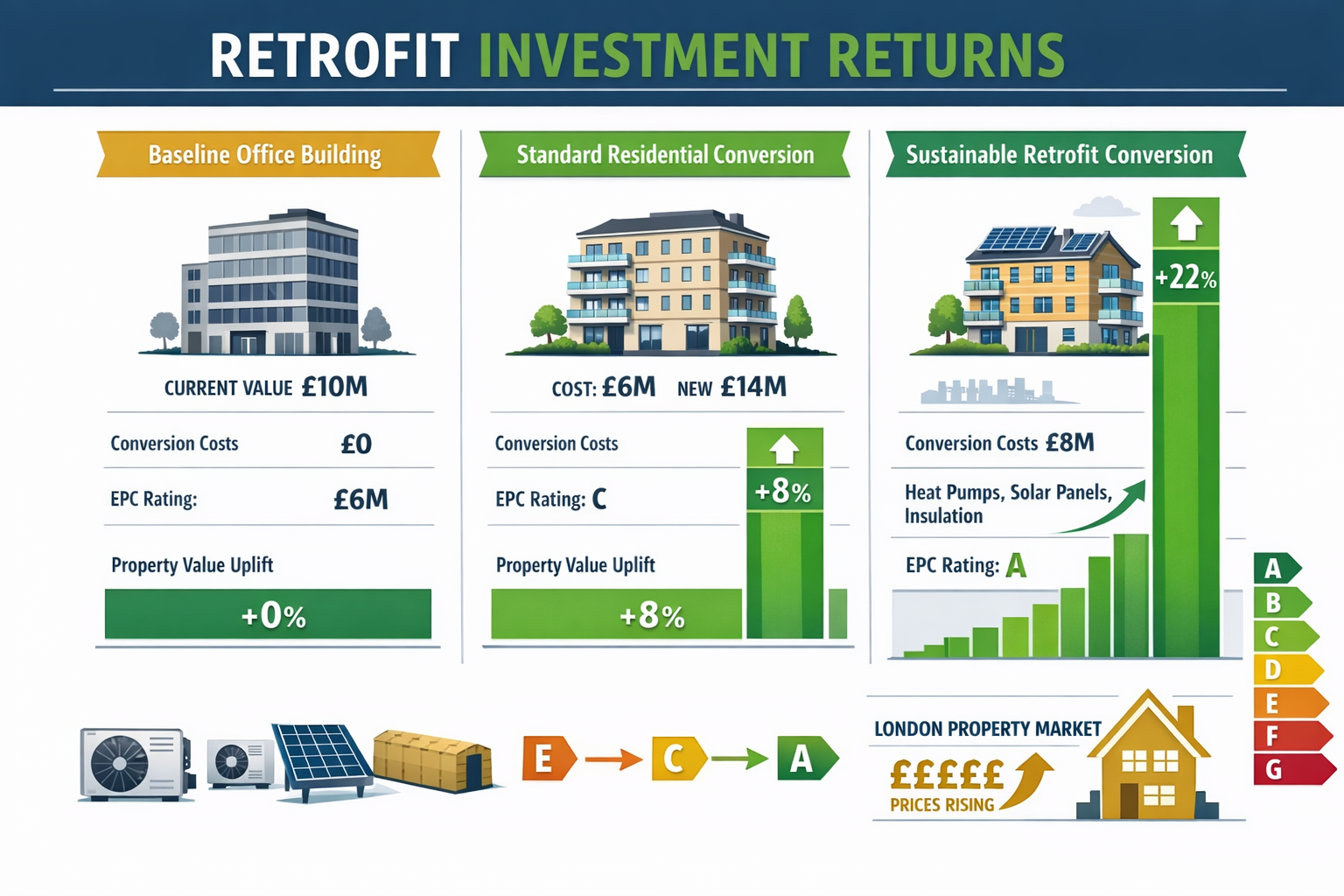
- Sustainable retrofits can deliver 8-22% property value uplift when properly implemented and valued, with heat pumps, insulation, and EPC improvements driving measurable financial returns
- Embodied carbon preservation makes office-to-residential conversions significantly more sustainable than new builds, reducing construction waste while meeting urgent housing needs
- Regional market variations require tailored valuation approaches, with London commanding premium prices for sustainable conversions compared to other UK markets
- Professional competence is essential: RICS President emphasizes that successful retrofit valuation "requires a relentless focus on standards, skills and professionalism" [2]
Understanding the 2026 RICS Retrofit Framework
The Evolution of RICS Retrofit Standards
The Royal Institution of Chartered Surveyors (RICS) launched its first residential retrofit standard in March 2024, with mandatory guidance implemented by October 2024 [1]. This landmark development established concise requirements for retrofit projects across the industry, directly addressing the urgent need for standardized approaches to sustainable building improvements.
For RICS chartered building surveyors, these standards provide clear frameworks for assessing and valuing sustainable retrofits in office-to-residential conversions. The guidance covers:
- Energy efficiency improvements including insulation, glazing, and ventilation systems
- Low-carbon heating systems such as heat pumps and district heating connections
- Renewable energy installations including solar panels and battery storage
- Smart building technologies that optimize energy consumption
- Water efficiency measures and sustainable drainage systems
Three Core Pillars of Quality Retrofit
Nick Maclean OBE, RICS President, outlined that successful retrofit projects require "a relentless focus on standards, skills and professionalism" [2]. These three pillars form the foundation of the 2026 RICS guidance:
Standards 📋
- Adherence to RICS Red Book valuation principles
- Compliance with Building Regulations Part L (conservation of fuel and power)
- Achievement of target Energy Performance Certificate (EPC) ratings
- Integration with BREEAM or similar certification schemes
Skills 🎓
- Professional competence in sustainable building assessment
- Understanding of low-carbon technologies and their performance
- Ability to calculate lifecycle costs and carbon savings
- Knowledge of regional market conditions and buyer preferences
Professionalism ⚖️
- Objective, evidence-based valuation approaches
- Transparent reporting of assumptions and limitations
- Ethical consideration of affordability and social value
- Continuous professional development in retrofit technologies
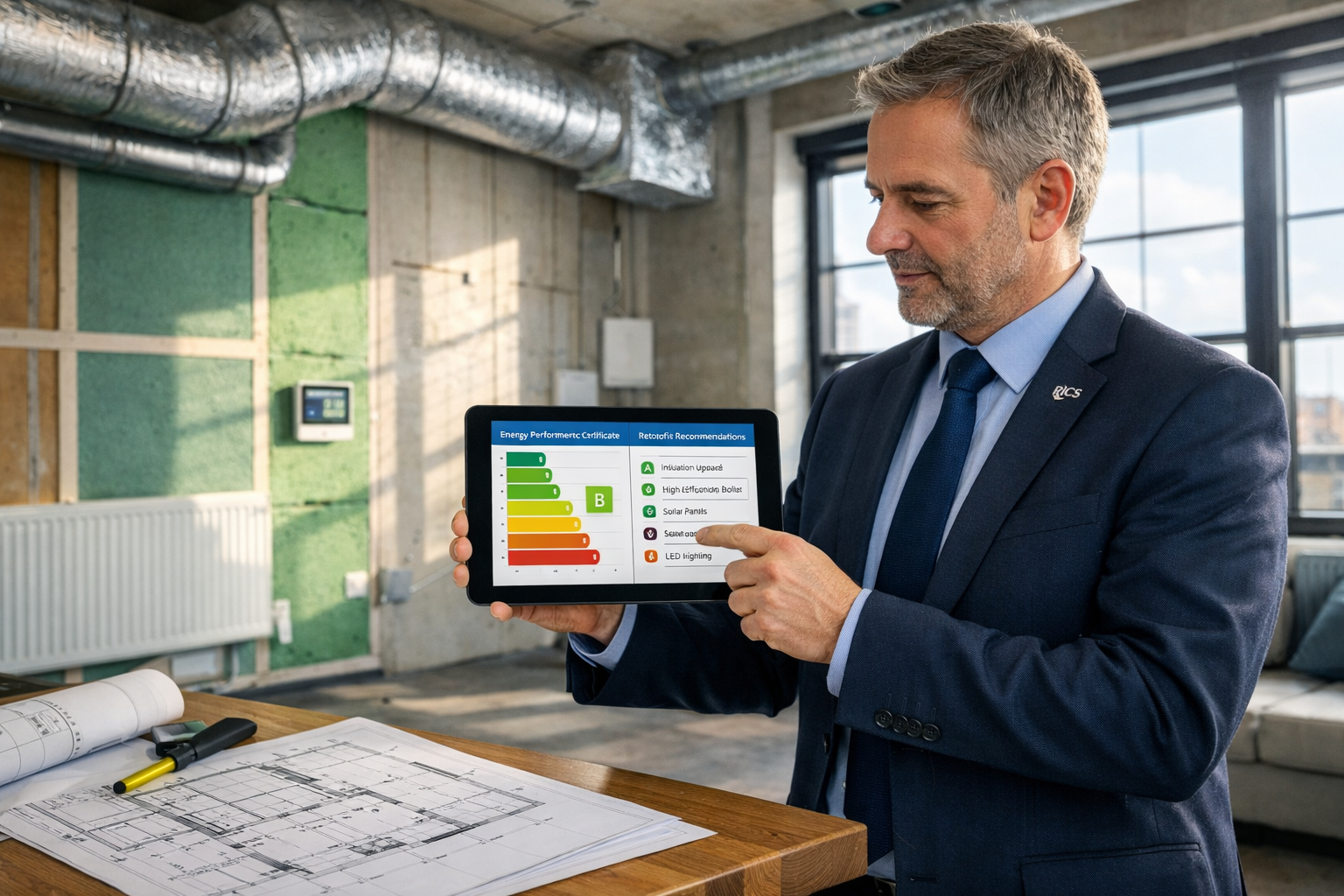
RICS has also launched a new residential retrofit pilot pathway to membership to support professional development and ensure skilled practitioners in the growing retrofit sector [2].
Valuation Methodologies for Sustainable Office-to-Resi Conversions
The Comparative Method with Sustainability Adjustments
When applying Valuing Sustainable Retrofits in Office-to-Resi Conversions: 2026 RICS Guidance, the comparative method remains the primary approach, but with critical sustainability adjustments. Traditional comparables must be analyzed through the lens of energy performance and retrofit quality.
Key valuation adjustments include:
| Retrofit Feature | Typical Value Uplift | Considerations |
|---|---|---|
| EPC Rating A | 12-22% premium | Highest uplift in premium markets |
| Heat Pump Installation | 8-15% premium | Dependent on system type and efficiency |
| Triple Glazing | 3-7% premium | Greater impact in conservation areas |
| Solar PV System | 5-10% premium | Subject to generation capacity |
| Smart Home Integration | 4-8% premium | Appeals to tech-savvy buyers |
These figures represent market observations in 2026, with significant regional variation. London properties typically command higher premiums for sustainable features compared to other UK regions.
The Investment Method for Conversion Projects
For developers and investors, the investment method calculates the net development value (NDV) minus costs to determine residual land value. Sustainable retrofits impact both sides of this equation:
Revenue Enhancement:
- Higher sales prices per square foot for energy-efficient units
- Faster sales velocity due to lower running costs
- Premium positioning in competitive markets
- Reduced void periods in rental scenarios
Cost Considerations:
- Initial capital expenditure for retrofit technologies
- Professional fees for specialist assessments
- Certification costs (EPC, BREEAM, etc.)
- Potential grant funding offsets
"Converting vacant office buildings to residential use keeps embodied carbon embedded in existing structures and significantly reduces construction-related waste compared to new builds." [3]
This embodied carbon preservation represents a hidden value that forward-thinking valuers must consider when assessing long-term asset performance.
The Profits Method and Operational Savings
For build-to-rent conversions, the profits method considers operational cost savings from sustainable retrofits. Heat pumps, improved insulation, and smart energy management systems reduce utility costs, directly impacting net operating income (NOI).
Example calculation:
- Traditional heating costs: £1,200 per unit annually
- Heat pump system costs: £450 per unit annually
- Annual saving: £750 per unit
- Across 50-unit conversion: £37,500 annual NOI improvement
- Capitalized at 5% yield: £750,000 additional capital value
These operational improvements become increasingly valuable as energy costs rise and tenant preferences shift toward sustainable living.
Quantifying Low-Carbon Upgrade Value
Heat Pump Systems: The Cornerstone Technology
Heat pumps represent the most significant single retrofit investment in office-to-residential conversions. The 2026 market shows strong buyer preference for properties with these systems installed, particularly among environmentally conscious purchasers.
Valuation considerations for heat pumps:
🔧 System Type Impact
- Air-source heat pumps (ASHP): Most common in conversions
- Ground-source heat pumps (GSHP): Higher performance but rarely feasible in urban conversions
- Water-source heat pumps: Suitable for riverside developments
💰 Financial Metrics
- Installation cost: £8,000-£15,000 per unit
- Annual running cost savings: £600-£900 per unit
- Coefficient of Performance (COP): 3.0-4.5 (300-450% efficiency)
- Payback period: 8-12 years at 2026 energy prices
📈 Market Value Addition
- Premium London markets: 12-18% value uplift
- Regional cities: 8-12% value uplift
- Rural conversions: 10-15% value uplift
When conducting RICS valuations, surveyors must verify system specifications, installation quality, and warranty coverage to justify these premiums.
Building Fabric Improvements
Existing office buildings often feature substantial air handling unit (AHU) systems and high artificial lighting requirements. Retrofitting these structures to align with residential needs through design optimization of window locations, natural light, and ventilation results in significant energy savings [3].
Critical fabric improvements include:
Insulation Upgrades 🏗️
- External wall insulation (EWI): Improves U-values to 0.18-0.25 W/m²K
- Internal insulation: Where external changes aren't permitted
- Roof insulation: Often the most cost-effective intervention
- Floor insulation: Particularly important for ground-floor units
Glazing Enhancements 🪟
- Triple glazing: U-values of 0.8 W/m²K or better
- Secondary glazing: Cost-effective in listed buildings
- Solar control coatings: Reduce overheating in summer
- Acoustic performance: Critical in urban conversions
Ventilation Systems 💨
- Mechanical ventilation with heat recovery (MVHR)
- Demand-controlled ventilation
- Natural ventilation strategies where feasible
- Hybrid systems combining natural and mechanical approaches
These improvements collectively contribute to achieving EPC Rating A, which developers increasingly target during office-to-residential conversions [3].
Navigating Affordability and Regional Market Trends
The London Premium: Sustainable Conversions in the Capital
London's office-to-residential conversion market demonstrates the strongest appetite for sustainable retrofits. Central London properties with comprehensive low-carbon upgrades command significant premiums, driven by:
- Affluent buyer demographics prioritizing sustainability
- Stringent planning requirements favoring high-performance buildings
- Energy cost sensitivity in high-value properties
- Future-proofing against regulatory tightening
In 2026, converted office buildings achieving BREEAM Excellent or EPC A ratings in prime London locations sell for 18-25% more per square foot than comparable standard conversions. Areas like Camden, Chelsea, and Hampstead show particularly strong premiums.
Regional Variations: Beyond the Capital
Outside London, regional markets display more varied responses to sustainable retrofits. Manchester, Birmingham, and other major cities show growing appreciation for low-carbon features, but premiums remain more modest:
Regional Market Premiums (2026):
- Major regional cities: 8-14% for comprehensive retrofits
- Secondary cities: 5-10% for sustainable features
- Market towns: 6-12% depending on local demographics
- Rural conversions: 10-15% (higher heating cost savings)
Areas like Hertfordshire, Buckinghamshire, and Berkshire demonstrate strong demand for sustainable conversions within commuter belts.
Affordability Considerations in Retrofit Valuation
The UK Government's Warm Homes Plan represents a major strategy aimed at improving energy efficiency, reducing household bills, and accelerating decarbonization across the housing sector [2]. This policy framework includes:
- Targeted support for low-income households
- Universal offers for all homeowners
- Renter protections ensuring benefits pass to tenants
For valuers, these policy initiatives create both opportunities and complexities. Sustainable retrofits must balance:
- Capital cost increases from high-specification installations
- Running cost reductions that improve affordability over time
- Grant funding availability that reduces net developer costs
- Market positioning between affordable and premium segments
"Residential retrofits must increase to 500,000 per year from 2025 and one million per year by 2030 to meet the UK's net-zero target." [1]
This acceleration creates massive market opportunities but requires careful valuation to ensure projects remain financially viable across different affordability segments.
Technical Feasibility and Valuation Impact
Building Suitability Assessment
Not all office buildings make suitable residential conversions. Floorplate depth dramatically affects conversion costs and feasibility, with sprawling footprints often requiring expensive interventions like drilling light wells for interior rooms lacking windows [4].
Critical feasibility factors:
Structural Considerations 🏢
- Floor-to-ceiling heights (minimum 2.3m required)
- Column spacing and layout flexibility
- Load-bearing capacity for residential use
- Existing service cores and circulation
Building Code Compliance 📋
Even well-maintained office properties require work to comply with residential building codes, including safe evacuation requirements and seismic hazard reduction [4]. When conducting commercial building surveys, surveyors must identify these compliance gaps early.
Accessibility Standards ♿
Substantial renovations or change of occupancy classification trigger accessibility requirements. Some jurisdictions require full new construction criteria compliance, while others base requirements on renovation costs and extent [5]. These mandates can significantly impact project costs and, consequently, valuations.
Green Building Certification Targets
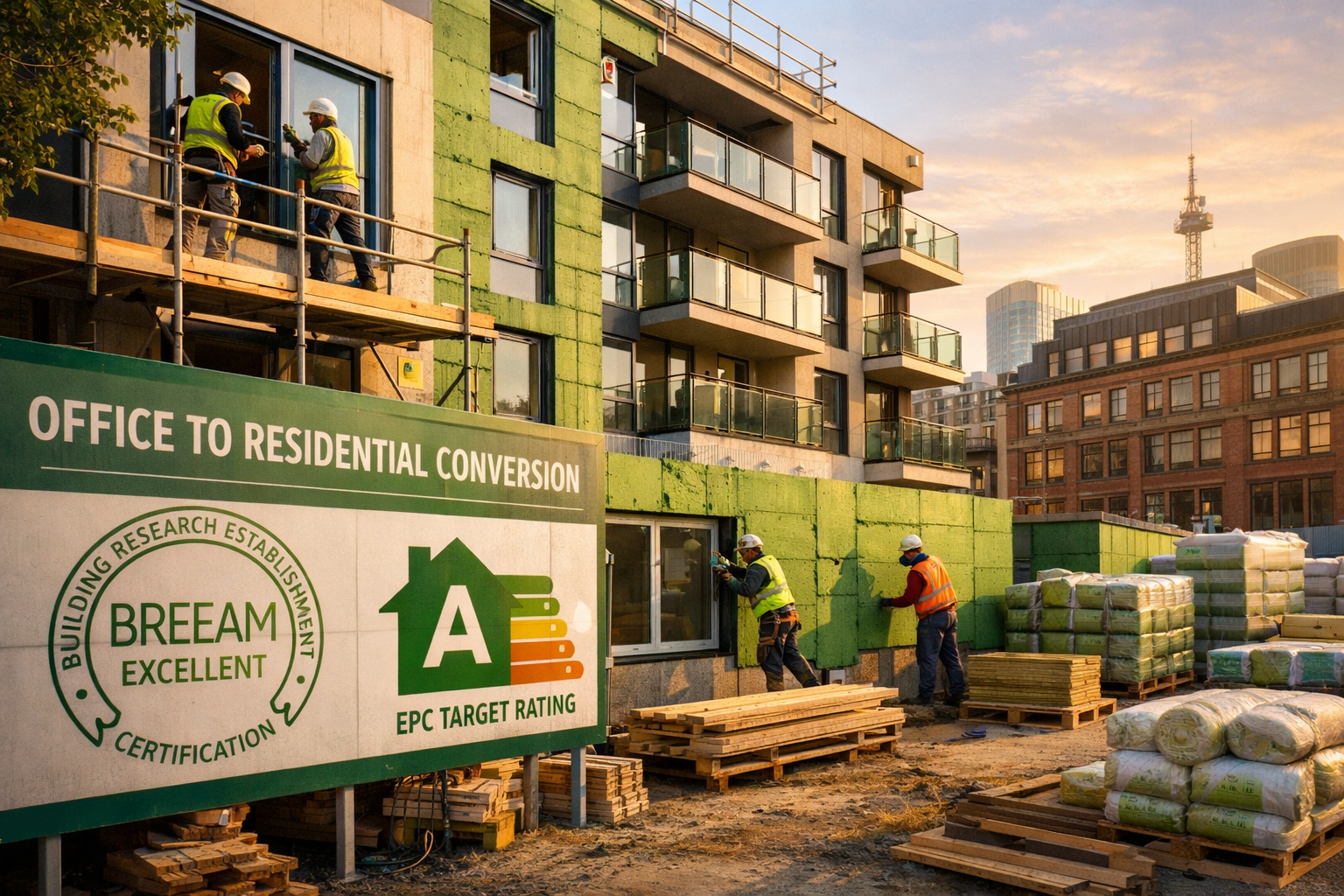
Developers are encouraged to prioritize environmental considerations by aiming for EPC 'A', BREEAM 'Excellent', or similar green building certifications during office-to-residential conversions [3]. These certifications provide:
✅ Market Credibility
- Third-party verification of sustainability claims
- Marketing differentiation in competitive markets
- Evidence for premium pricing justification
✅ Valuation Benchmarks
- Standardized assessment criteria
- Comparable data across projects
- Clear performance metrics for surveyors
✅ Future-Proofing
- Anticipation of regulatory tightening
- Protection against obsolescence
- Enhanced long-term asset value
When preparing Red Book valuations, chartered surveyors must reference these certifications and quantify their market impact based on comparable evidence.
Policy Incentives and Streamlined Approval Processes
Regulatory Support for Adaptive Reuse
Most cities recognizing adaptive reuse's role in reducing housing shortages are creating streamlined approval processes [4]. In 2026, developers should check with local planning departments or economic development groups for current incentives, which may include:
- Permitted development rights for certain conversion types
- Reduced planning fees for sustainable projects
- Fast-track approval pathways for pre-approved designs
- Density bonuses for achieving high energy performance standards
These policy supports directly impact project viability and should be factored into residual land valuations and development appraisals.
Grant Funding and Financial Incentives
Various grant programs support sustainable retrofits in 2026:
National Schemes:
- Boiler Upgrade Scheme: £5,000-£6,000 grants for heat pumps
- Social Housing Decarbonization Fund: For affordable housing providers
- Home Upgrade Grant: Targeting off-gas-grid properties
Local Authority Programs:
- Regional retrofit accelerator schemes
- Council-specific energy efficiency grants
- Business rate relief for sustainable conversions
Private Sector Incentives:
- Green mortgages with preferential rates
- Energy Company Obligation (ECO) funding
- Utility company retrofit programs
Valuers must understand available funding to accurately assess net developer costs and resulting property values.
Practical Valuation Process for Retrofit Conversions
Step-by-Step Assessment Framework
When valuing sustainable retrofits in office-to-residential conversions, follow this systematic approach:
1. Initial Building Assessment 🔍
- Review original office building specifications
- Assess structural suitability for conversion
- Identify existing building systems and condition
- Determine baseline energy performance
2. Retrofit Specification Analysis 📊
- Document all proposed sustainable improvements
- Verify technical specifications and performance data
- Review contractor qualifications and warranties
- Confirm compliance with RICS retrofit standards
3. Cost Verification 💷
- Obtain detailed cost breakdowns for all retrofit elements
- Validate against industry benchmarks
- Account for grant funding and incentives
- Calculate net developer expenditure
4. Comparable Evidence Gathering 🏘️
- Identify similar conversions in the local market
- Adjust comparables for retrofit quality differences
- Analyze sales velocity and market reception
- Document buyer feedback and preferences
5. Energy Performance Modeling ⚡
- Calculate projected EPC ratings post-retrofit
- Estimate annual energy cost savings
- Model lifecycle cost benefits
- Quantify carbon reduction achievements
6. Market Value Determination 📈
- Apply appropriate valuation methodology
- Calculate sustainability premium based on evidence
- Consider regional market factors
- Document assumptions and limitations
This structured approach ensures comprehensive assessment aligned with Valuing Sustainable Retrofits in Office-to-Resi Conversions: 2026 RICS Guidance.
Common Valuation Pitfalls to Avoid
Overestimating Technology Impact ⚠️
Not all sustainable features command equal premiums. Solar panels may add less value than expected if the local grid already has high renewable penetration, while heat pumps consistently perform well in valuations.
Ignoring Installation Quality ⚠️
Poorly installed retrofit technologies can actually reduce property value. Always verify installation by qualified professionals and check warranty coverage.
Neglecting Regional Differences ⚠️
A retrofit approach commanding 20% premium in West London may only achieve 8% in Romford. Regional market knowledge is essential.
Undervaluing Embodied Carbon Benefits ⚠️
As carbon pricing mechanisms evolve, the embodied carbon preservation inherent in conversions versus new builds will become increasingly valuable. Forward-thinking valuations should acknowledge this trend.
Case Studies: Retrofit Valuation in Practice
Premium London Conversion: Holborn Office Tower
Project Overview:
- 1980s office building converted to 85 residential units
- Comprehensive retrofit including ASHP, triple glazing, MVHR
- Achieved EPC A and BREEAM Excellent certification
Valuation Outcomes:
- Standard conversion comparable: £750 per sq ft
- Sustainable retrofit conversion: £895 per sq ft
- Premium achieved: 19.3%
- Faster sales velocity: 4.2 months vs. 7.8 months for standard units
Key Success Factors:
- Prime location with affluent buyer demographic
- Exceptional build quality and finish
- Comprehensive marketing of sustainability credentials
- Professional RICS valuation justifying premium pricing
Regional City Conversion: Manchester Business District
Project Overview:
- 1970s office block converted to 62 apartments
- Mid-specification retrofit with ASHP and improved insulation
- Achieved EPC B rating
Valuation Outcomes:
- Standard conversion comparable: £285 per sq ft
- Sustainable retrofit conversion: £315 per sq ft
- Premium achieved: 10.5%
- Strong rental demand from young professionals
Key Success Factors:
- Competitive pricing within regional market
- Focus on running cost savings in marketing
- Proximity to transport links and amenities
- Alignment with local authority sustainability targets
Suburban Conversion: Home Counties Market Town
Project Overview:
- Former insurance company headquarters converted to 28 units
- High-specification retrofit including GSHP and solar PV
- Achieved EPC A rating
Valuation Outcomes:
- Standard conversion comparable: £425 per sq ft
- Sustainable retrofit conversion: £485 per sq ft
- Premium achieved: 14.1%
- Appeals to environmentally conscious families
Key Success Factors:
- Unique offering in limited supply market
- Exceptional energy performance reducing running costs
- Character retention with modern sustainability
- Strong local demand for family housing
Future Trends in Retrofit Valuation
Emerging Technologies and Value Impact
The retrofit landscape continues evolving rapidly. Technologies gaining traction in 2026 include:
Battery Storage Systems 🔋
- Paired with solar PV for energy independence
- Vehicle-to-grid integration
- Time-of-use tariff optimization
- Estimated 3-6% additional value uplift
Smart Building Management 📱
- AI-powered energy optimization
- Predictive maintenance systems
- Occupant behavior learning
- Estimated 4-7% additional value uplift
Advanced Materials 🧱
- Phase-change materials for thermal mass
- Aerogel insulation for space-constrained retrofits
- Bio-based insulation materials
- Value impact still emerging but promising
Regulatory Trajectory
The regulatory environment continues tightening:
- Minimum EPC requirements for residential properties rising to C by 2028
- Future Homes Standard influencing retrofit specifications
- Carbon pricing mechanisms making low-carbon properties more valuable
- Embodied carbon reporting becoming standard practice
Valuers must stay ahead of these trends to provide forward-looking assessments that protect client interests.
Market Evolution
The office-to-residential conversion market is maturing:
- Standardization of retrofit specifications reducing cost premiums
- Scale economies as supply chains develop
- Buyer education increasing willingness to pay for sustainability
- Financing evolution with green mortgages becoming mainstream
These trends suggest that sustainable retrofit premiums will stabilize but remain significant, particularly for highest-performing properties.
Conclusion
Valuing Sustainable Retrofits in Office-to-Resi Conversions: 2026 RICS Guidance provides property professionals with a comprehensive framework for navigating this complex and rapidly evolving market. As London and other UK cities transform vacant office spaces into sustainable residential communities, accurate valuation of low-carbon upgrades becomes essential for developers, investors, lenders, and homebuyers alike.
The evidence is clear: properly implemented sustainable retrofits deliver measurable financial returns, with premiums ranging from 8% in regional markets to 22% in prime London locations. Heat pumps, advanced insulation, triple glazing, and smart energy systems not only reduce running costs and carbon emissions—they also command higher sales prices, faster transaction times, and stronger long-term value retention.
Success requires professional competence across three core pillars: adherence to rigorous standards, development of specialized skills, and maintenance of the highest professional ethics. The RICS retrofit standards established in 2024 provide the foundation, but individual surveyors must commit to continuous learning as technologies, regulations, and market preferences evolve.
Actionable Next Steps
For property developers and investors:
- Engage RICS chartered surveyors early in the feasibility stage
- Target EPC A and BREEAM Excellent certifications for maximum value uplift
- Research available grant funding to reduce net retrofit costs
- Document sustainability credentials comprehensively for marketing
For valuers and surveyors:
- Pursue RICS residential retrofit pathway to membership
- Build comparable evidence databases for sustainable conversions
- Develop technical knowledge of low-carbon technologies
- Stay current with evolving regulations and market trends
For homebuyers and occupiers:
- Prioritize properties with verified sustainable retrofits
- Calculate lifecycle costs, not just purchase prices
- Request detailed energy performance documentation
- Consider future-proofing against regulatory tightening
The transformation of office buildings into sustainable residential communities represents one of the most significant opportunities in UK property in 2026. With 500,000 residential retrofits needed annually to meet net-zero targets, the market will only grow. Those who master the valuation of sustainable retrofits today will lead the industry tomorrow.
References
[1] Rics Launches Residential Retrofit And Improving Energy In Your Home Guide – https://www.rics.org/news-insights/rics-launches-residential-retrofit-and-improving-energy-in-your-home-guide
[2] Retrofit Leaders Meet Rics Hq Discuss Importance Transformative Projects – https://www.rics.org/news-insights/retrofit-leaders-meet-rics-hq-discuss-importance-transformative-projects
[3] Converting Office Space To Residential The Benefits And What To Consider – https://www.tetratecheurope.com/views/converting-office-space-to-residential-the-benefits-and-what-to-consider/
[4] Office To Residential Conversion What To Know – https://www.jpmorgan.com/insights/real-estate/community-development-banking/office-to-residential-conversion-what-to-know
[5] Rules And Incentives For Office To Residential Conversions – https://www.swinter.com/rules-and-incentives-for-office-to-residential-conversions/