RICS data from February 2026 reveals a striking contradiction: buyer enquiries plummeted by 26%, yet 33% of surveyors expect prices to rise over the next 12 months. Meanwhile, London's market sentiment cooled dramatically to just +7%, while other regions showed divergent patterns.[3] This paradox presents chartered surveyors with one of the most challenging valuation environments in recent memory. Understanding Valuation Surveys in Uncertain Markets: Techniques for Handling Mixed Buyer Sentiment and Regional Price Divergence in Spring 2026 has become essential for professionals navigating this contradictory landscape.
The spring 2026 housing market defies simple categorization. Early optimism driven by interest rates below 6% quickly reversed as economic uncertainty took hold.[3] With roughly 51% of agents expecting price rises, 26% anticipating stability, and 23% predicting declines, the professional consensus has fractured.[4] For surveyors conducting property valuations, these conflicting signals demand sophisticated analytical techniques that go beyond traditional comparable sales methods.

Key Takeaways
- Buyer enquiries dropped 26% in February 2026, yet price expectations remain positive (+33%), creating a valuation paradox requiring nuanced analytical approaches
- Regional divergence is extreme: London sentiment cooled to +7% while other areas show different trajectories, demanding location-specific valuation adjustments
- Economic volatility from commodity prices (oil up 40%) and inflation concerns necessitates scenario-based valuation modeling rather than single-point estimates
- Income growth outpacing home prices (3.8% vs 1.8%) shifts negotiating power to buyers, affecting realistic market value assessments
- Inventory normalization and increased buyer negotiating power require surveyors to weight recent comparable sales more heavily than historical data
Understanding the Contradictory Signals in Spring 2026 Market Data
The spring 2026 property market presents surveyors with seemingly incompatible data points that challenge conventional valuation wisdom. The Veros Housing Market Hotness Index jumped seven points from early February to mid-March 2026, only to contract shortly afterward due to economic uncertainty.[3] This volatility within a single season creates significant challenges for professionals preparing valuation reports that must remain defensible for months.
The Buyer Enquiry Paradox
The 26% decline in buyer enquiries represents one of the sharpest drops in recent years, yet this hasn't translated into proportional price pessimism among professionals. Several factors explain this apparent contradiction:
Supply Constraints 🏘️ Despite weakening demand signals, housing inventory remains constrained in many markets. The fundamental supply-demand imbalance continues to provide price support even as transaction volumes decline.
Quality of Enquiries vs. Quantity Agents report that while enquiry numbers have fallen, serious buyers with approved financing represent a higher proportion of the remaining pool. This shift in buyer composition affects how surveyors should interpret market activity levels.
Regional Variation Masking National Trends National statistics obscure significant regional divergence. London's cooling to +7% sentiment contrasts sharply with more resilient regional markets, making aggregate data less useful for specific property valuations.
Economic Indicators Creating Uncertainty
The economic backdrop for spring 2026 valuations includes several destabilizing factors that surveyors must consider when preparing factors of valuation analyses:
| Economic Indicator | Early 2026 Status | Impact on Valuations |
|---|---|---|
| Oil Prices | +40% increase | Inflation concerns affecting buyer affordability |
| Inflation Rate | 2.4% (moderate but volatile) | Uncertain trajectory complicates long-term projections |
| Income Growth | 3.8% (outpacing home prices) | Improves affordability but creates buyer caution |
| Interest Rates | Below 6% | Supportive but vulnerable to inflation pressures |
| Economic Growth Outlook | 47% expect slow growth, 20% strengthening | Divided sentiment affects buyer confidence |
This economic uncertainty directly impacts how surveyors should approach comparable sales analysis. Properties sold in January 2026 under optimistic conditions may not provide reliable guidance for April valuations conducted amid heightened caution.[5]
The London Cooling Effect
London's dramatic sentiment shift to +7% represents the most significant regional divergence requiring specialized valuation treatment. This cooling reflects several London-specific factors:
- Affordability ceiling reached in prime central locations
- Post-pandemic work patterns reducing demand for city-center properties
- International buyer caution amid global economic uncertainty
- Stamp duty considerations affecting higher-value transactions
Surveyors conducting RICS valuations in London must adjust their methodology significantly compared to regional approaches, potentially applying location-specific discounts to comparable sales from the optimistic early-2026 period.
Regional Price Divergence: Valuation Techniques for Location-Specific Analysis
The geographic fragmentation of the UK property market in spring 2026 demands that surveyors abandon one-size-fits-all valuation approaches. Valuation Surveys in Uncertain Markets: Techniques for Handling Mixed Buyer Sentiment and Regional Price Divergence in Spring 2026 must incorporate sophisticated regional analysis that accounts for local economic conditions, employment patterns, and buyer demographics.
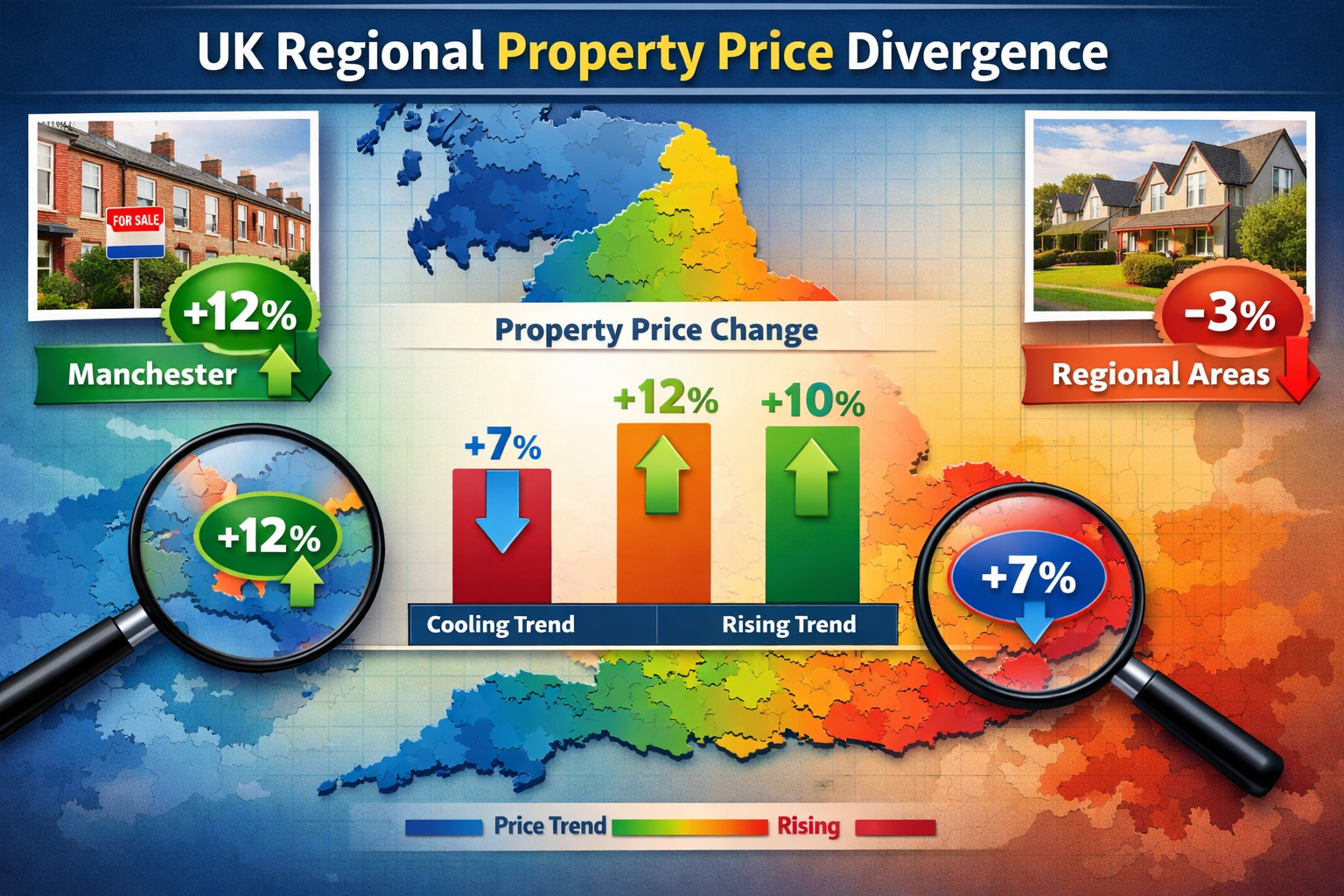
Mapping Regional Sentiment Variations
Professional surveyors should develop a systematic framework for categorizing regional markets based on multiple indicators:
High-Sentiment Regions (Strong positive outlook)
- Characteristics: Employment growth, infrastructure investment, in-migration
- Valuation approach: Standard comparable sales with minimal downward adjustments
- Risk factors: Potential for sentiment reversal if national economy weakens
Moderate-Sentiment Regions (Balanced outlook)
- Characteristics: Stable employment, modest price growth expectations
- Valuation approach: Weighted comparable sales with scenario analysis
- Risk factors: Vulnerability to national economic shocks
Low-Sentiment Regions (Cautious outlook, including London)
- Characteristics: Affordability constraints, out-migration, economic uncertainty
- Valuation approach: Conservative comparable selection with significant adjustments
- Risk factors: Potential for price corrections if sentiment deteriorates further
Adjusting Comparable Sales Across Regional Boundaries
When preparing RICS Homebuyer Surveys that include valuation components, surveyors must apply region-specific adjustment factors that reflect local market conditions:
Time Adjustments ⏰ In volatile markets like spring 2026, the standard practice of using comparables from the past 3-6 months may be insufficient. Consider:
- Recent transactions (0-2 months): Weight most heavily, minimal adjustment
- Mid-term transactions (2-4 months): Moderate weighting, adjust for sentiment shifts
- Older transactions (4-6 months): Use cautiously, apply significant adjustments for market changes
Location Adjustments 📍 Geographic proximity becomes less reliable in divergent markets. A property in outer London may require different analysis than one just miles away in a commuter town with different sentiment drivers.
Condition and Quality Adjustments The relationship between property condition and price premium varies by region. In high-sentiment areas, buyers may pay substantial premiums for turnkey properties, while in cautious markets like London, even renovated properties face pricing pressure.
Incorporating Local Economic Indicators
Sophisticated valuation surveys in spring 2026 must integrate local economic data beyond traditional property metrics:
- Employment growth rates by region and sector
- Wage growth patterns affecting affordability
- Migration patterns (both domestic and international)
- Infrastructure investment timelines and impact
- Local planning permissions and supply pipeline
For commercial property valuations, these factors become even more critical as business location decisions directly reflect regional economic health.
Case Study: Contrasting Valuation Approaches
Consider two similar properties requiring valuation in spring 2026:
Property A: Central London, Zone 2
- Recent comparable sale (January 2026): £650,000
- Current valuation approach: Apply -5% adjustment for sentiment cooling
- Consider buyer negotiating power: Additional -3% adjustment
- Economic uncertainty factor: -2% contingency
- Adjusted valuation: £585,000 (10% below January comparable)
Property B: Manchester suburb
- Recent comparable sale (January 2026): £325,000
- Current valuation approach: Apply -2% adjustment for modest cooling
- Consider stable local employment: No additional adjustment
- Regional resilience factor: +1% premium
- Adjusted valuation: £321,750 (1% below January comparable)
This divergence illustrates why Valuation Surveys in Uncertain Markets: Techniques for Handling Mixed Buyer Sentiment and Regional Price Divergence in Spring 2026 require location-specific analytical frameworks rather than national-level assumptions.
Practical Methodologies for Handling Mixed Buyer Sentiment in Valuations
The fractured professional consensus on price direction—with 51% expecting rises, 26% stability, and 23% declines—creates unique challenges for surveyors preparing defensible valuations.[4] Traditional single-point valuation estimates may not adequately capture the range of possible outcomes in such uncertain conditions.

Scenario-Based Valuation Modeling
Rather than providing a single market value figure, sophisticated surveyors in spring 2026 should consider scenario-based approaches that acknowledge uncertainty while maintaining professional standards:
Base Case Scenario (Most Likely Outcome)
- Probability: 50-60%
- Assumptions: Moderate economic growth continues, inflation remains controlled, interest rates stable
- Valuation approach: Standard comparable sales with modest adjustments
- Application: Primary valuation figure for most purposes
Optimistic Scenario (Market Strengthens)
- Probability: 20-25%
- Assumptions: Economic growth accelerates, buyer confidence returns, inventory constraints persist
- Valuation approach: Comparable sales with minimal or no downward adjustments
- Application: Upper bound for range valuations, relevant for matrimonial valuations requiring ranges
Pessimistic Scenario (Market Weakens)
- Probability: 20-25%
- Assumptions: Economic uncertainty deepens, inflation resurges, buyer caution intensifies
- Valuation approach: Conservative comparable selection with significant downward adjustments
- Application: Lower bound for range valuations, relevant for lending decisions requiring prudence
This approach provides instructing parties with a more complete picture of valuation uncertainty while maintaining the professional requirement for a primary market value opinion.
Weighting Recent Market Activity More Heavily
In the volatile spring 2026 market, the recency of comparable sales becomes paramount. The Veros Housing Market Hotness Index's seven-point swing within weeks demonstrates how quickly market conditions can shift.[3] Surveyors should implement a time-decay weighting system:
Weighting Formula for Comparable Sales:
- 0-4 weeks old: 100% weight (full relevance)
- 4-8 weeks old: 80% weight (high relevance with minor adjustment)
- 8-12 weeks old: 60% weight (moderate relevance, significant adjustment needed)
- 12+ weeks old: 40% weight (use only if recent comparables unavailable)
This systematic approach ensures that valuations reflect current market sentiment rather than outdated optimism from the early-2026 period.
Incorporating Buyer Negotiating Power Shifts
Zillow's Agent Sentiment Survey confirms that buyers gained negotiating power in 2026, a fundamental shift affecting realistic market values.[4] Surveyors must account for this in several ways:
Asking Price vs. Achieved Price Analysis 💰 Track the gap between listing prices and final sale prices in the specific locality. In spring 2026, this gap has widened in many markets as sellers' expectations lag behind buyer caution.
Time-on-Market Adjustments Properties requiring extended marketing periods signal buyer selectivity. Comparables that sold quickly may overstate current market values, while those requiring price reductions provide more realistic guidance.
Condition Premiums Reassessment In buyer-favorable markets, condition issues that might have been overlooked in competitive bidding situations now result in significant price discounts. RICS Building Surveys identifying defects have greater valuation impact in spring 2026 than in previous seller-favorable periods.
Adjusting for Income Growth vs. Price Growth Dynamics
The favorable dynamic of income growth (3.8%) outpacing home price growth (1.8%) in early 2026 affects affordability calculations and buyer psychology.[3] Surveyors should consider:
Affordability Ratio Analysis Calculate the income required to purchase the subject property at various price points. If the required income exceeds local median wages by excessive multiples, downward valuation pressure likely exists regardless of comparable sales data.
First-Time Buyer Accessibility In markets dependent on first-time buyers, improved affordability ratios support valuations. In move-up markets where buyers already own property, the impact may be less significant.
Rental Yield Comparisons For investment properties, compare purchase prices to rental yields. In spring 2026's uncertain environment, investors demand higher yields to compensate for risk, potentially limiting valuation growth.
Communicating Uncertainty in Valuation Reports
Professional standards require surveyors to communicate the limitations and assumptions underlying their valuations. In spring 2026's contradictory market, this becomes especially important:
Enhanced Assumptions and Special Assumptions Sections Clearly articulate the market conditions prevailing at the valuation date, including:
- Recent sentiment shifts and their timing
- Regional market characteristics
- Economic uncertainty factors
- Comparable sales limitations
Market Conditions Commentary Provide context about the mixed signals in the market, explaining why the valuation approach differs from standard methodology. This protects both the surveyor and the client by acknowledging uncertainty.
Validity Period Limitations Consider shortening the typical valuation validity period from 90 days to 60 days or less in rapidly changing conditions. This ensures that valuations aren't relied upon when market conditions have materially changed.
Leveraging Technology and Data Analytics
Modern surveyors have access to data tools that can enhance valuation accuracy in uncertain markets:
Automated Valuation Models (AVMs) as Cross-Checks While not substitutes for professional judgment, AVMs can provide useful reference points and identify outliers in comparable sales selection.
Market Sentiment Tracking Tools Real-time monitoring of listing activity, price changes, and time-on-market data helps surveyors stay current with rapidly shifting conditions.
Regional Economic Dashboards Integrate local employment data, wage statistics, and demographic trends into the valuation process, moving beyond purely property-specific factors.
For professionals seeking to understand valuation costs in this complex environment, the additional analysis required for spring 2026 conditions may justify premium fees that reflect the enhanced due diligence necessary.
Specialized Valuation Scenarios in Uncertain Markets
Certain property types and valuation purposes require additional consideration in the mixed-sentiment environment of spring 2026.
Help to Buy and Government Scheme Valuations
Help to Buy valuations face unique challenges when buyer sentiment is divided. Government equity loan calculations depend on accurate current market values, but uncertainty about future price trajectories complicates exit planning for participants.
Surveyors conducting these valuations should:
- Apply conservative assumptions given the government's stake in future value
- Consider regional divergence carefully, as scheme popularity varies by location
- Document market uncertainty thoroughly to protect all parties
Matrimonial and Probate Valuations
Matrimonial valuations and probate work in spring 2026 may benefit from range valuations that acknowledge market uncertainty. Courts and executors increasingly recognize that single-point valuations may not adequately reflect market reality in volatile conditions.
Freehold and Leasehold Valuations
Freehold valuations and leasehold enfranchisement calculations require long-term growth assumptions that become particularly challenging when professional sentiment is divided. Conservative growth assumptions may be prudent given economic uncertainty, even if this disadvantages certain parties.
Conclusion: Navigating Valuation Challenges in Spring 2026's Contradictory Market
The spring 2026 property market presents chartered surveyors with one of the most challenging valuation environments in recent memory. The contradiction between weakening buyer enquiries (-26%) and positive price expectations (+33%), combined with dramatic regional divergence exemplified by London's cooling to +7%, demands sophisticated analytical approaches that go beyond traditional methodology.[3][4]
Valuation Surveys in Uncertain Markets: Techniques for Handling Mixed Buyer Sentiment and Regional Price Divergence in Spring 2026 require professionals to embrace complexity rather than oversimplify. The techniques outlined in this article—scenario-based modeling, enhanced time-weighting of comparables, regional sentiment mapping, and explicit uncertainty communication—provide a framework for producing defensible valuations that acknowledge market realities.
Actionable Next Steps for Surveyors
✅ Implement systematic regional analysis frameworks that categorize markets by sentiment and economic indicators rather than relying on national-level assumptions
✅ Adopt time-decay weighting systems for comparable sales that heavily favor recent transactions in volatile conditions
✅ Enhance valuation report commentary to explicitly address market uncertainty, protecting both professional standards and client interests
✅ Consider scenario-based approaches for complex instructions where single-point valuations may inadequately represent market uncertainty
✅ Monitor local economic indicators beyond traditional property metrics, including employment, wages, and migration patterns
✅ Shorten validity periods for valuations in rapidly changing market segments to ensure opinions remain current
✅ Invest in continuing professional development focused on valuation in uncertain markets, as these skills will remain relevant beyond spring 2026
The professionals who successfully navigate spring 2026's contradictory market signals will be those who combine traditional valuation principles with enhanced analytical techniques that acknowledge complexity. By implementing the methodologies discussed in this article, surveyors can provide clients with valuations that are both professionally defensible and practically useful in uncertain times.
For those requiring professional valuation services that incorporate these sophisticated techniques, chartered surveyors and valuers with RICS certification offer the expertise necessary to navigate spring 2026's challenging market conditions. Whether you need a RICS Building Survey with valuation component or a standalone valuation report, selecting professionals who understand current market complexities ensures you receive analysis that reflects reality rather than outdated assumptions.
The spring 2026 market may be contradictory and challenging, but with the right analytical frameworks and professional expertise, accurate valuations remain achievable even amid uncertainty.
References
[1] Cathie Woods 2026 Outlook – https://www.ark-invest.com/articles/market-commentary/cathie-woods-2026-outlook
[2] High Valuations Higher Stakes Were Expecting Volatile Markets 2026 – https://www.morningstar.com/economy/high-valuations-higher-stakes-were-expecting-volatile-markets-2026
[3] Optimism To Caution Spring 2026 Housing Market – https://www.veros.com/optimism-to-caution-spring-2026-housing-market
[4] Agents See A More Balanced Housing Market Taking Shape In 2026 – https://www.zillow.com/news/agents-see-a-more-balanced-housing-market-taking-shape-in-2026/
[5] Four Possible Market Pitfalls To Watch 2026 – https://www.schwab.com/learn/story/four-possible-market-pitfalls-to-watch-2026
[6] Sell Now Or Wait 5 Home Seller Fears In 2026 According To A Survey Of Agents,137043 – https://www.hsvvoice.com/premium/stacker/stories/sell-now-or-wait-5-home-seller-fears-in-2026-according-to-a-survey-of-agents,137043
[7] Article315278253 – https://www.miamiherald.com/news/business/article315278253.html