The UK property market stands at a critical inflection point: 3.38 million rental properties in England and Wales currently fail to meet the mandatory EPC C-rating requirement that takes effect in October 2030[2]. As heat pump installations surge to meet these regulatory demands, chartered surveyors face unprecedented challenges in accurately assessing how these energy-efficient retrofits impact property valuations. Understanding the nuances of Valuation Surveys for Heat Pump Installations: Adjusting UK Property Values Under 2026 EPC Mandates has become essential for property owners, investors, and professionals navigating this transformative landscape.
The intersection of environmental policy and property valuation creates complex scenarios where traditional assessment methodologies must adapt. With air source heat pumps averaging £12,500 before grants and the government's £7,500 Boiler Upgrade Scheme substantially reducing net costs[1], the financial calculus of these installations extends far beyond simple installation expenses. Surveyors must now evaluate performance risks, long-term energy savings, market perception, and regulatory compliance when determining how heat pump retrofits influence property values.
Key Takeaways
- 🏠 Heat pump installations typically cost £8,000–£15,000 before the £7,500 Boiler Upgrade Scheme grant, creating net positive value propositions for many properties[1]
- 📊 RICS valuation methodologies now incorporate energy performance as a critical factor, with EPC C-rated properties commanding premium values in rental and sales markets
- ⚡ The shift from cost-based to thermal performance-based EPC ratings under the Home Energy Model will fundamentally change how surveyors assess property efficiency[2]
- 💷 Landlords face mandatory spending caps of £10,000 per property to achieve compliance, making heat pump installations a strategic investment for portfolio owners[2]
- 📈 Properties with verified heat pump installations demonstrate measurable market advantages, particularly in rental sectors where 2030 EPC C-rating mandates drive demand

Understanding RICS Valuation Principles for Energy-Efficient Upgrades
Chartered surveyors conducting Red Book valuations must apply rigorous methodologies when assessing properties with heat pump installations. The Royal Institution of Chartered Surveyors (RICS) framework requires valuers to consider multiple factors beyond simple installation costs, creating a comprehensive picture of how energy-efficient upgrades influence market value.
Core Valuation Considerations for Heat Pump Installations
When chartered surveyors evaluate properties with heat pump systems, they examine several critical dimensions:
Installation Quality and Compliance 🔧
Professional installation by MCS-certified engineers significantly impacts valuation assessments. Properties with properly documented installations, Building Regulations compliance certificates, and manufacturer warranties demonstrate superior value retention compared to DIY or non-certified installations.
System Type and Capacity
Air source heat pumps typically cost £8,000–£15,000 before grants, while ground source systems range from £12,000–£15,000 for simpler projects[1]. Surveyors assess whether the installed capacity appropriately matches property size, insulation levels, and heating requirements. Oversized or undersized systems may negatively impact valuations due to efficiency concerns.
Energy Performance Certificate Impact
The government's transition to a Home Energy Model that assesses thermal performance based on insulation, window quality, and air tightness[2] fundamentally changes valuation approaches. Properties demonstrating superior heat retention alongside heat pump installations receive higher value adjustments than those with heating system upgrades alone.
Market Comparability Analysis
Valuers examine recent sales of comparable properties with and without heat pump installations to establish market-driven value adjustments. In areas where energy efficiency commands premium prices, heat pump installations may add 3-7% to property values, though regional variations exist.
The RICS Red Book Framework for Energy Upgrades
RICS valuation standards require surveyors to document specific elements when assessing heat pump installations:
| Valuation Component | Assessment Criteria | Impact on Property Value |
|---|---|---|
| Physical Installation | Location, visual impact, noise levels, space requirements | Moderate (2-5%) |
| EPC Rating Improvement | Movement from D/E to B/C ratings | Significant (5-10%) |
| Running Cost Reduction | Annual energy savings vs. gas boiler baseline | Moderate (3-6%) |
| Regulatory Compliance | Meeting 2030 rental mandates, avoiding penalties | High (7-12% for rental properties) |
| System Longevity | Expected lifespan (15-20 years), warranty coverage | Moderate (3-5%) |
The factors affecting valuation extend beyond the heat pump itself to encompass the entire property's thermal envelope. Surveyors increasingly recognize that heat pump effectiveness depends on complementary improvements like cavity wall insulation, double glazing, and draught-proofing.
Performance Risk Assessment in Valuations
Professional surveyors conducting building surveys must evaluate potential performance risks that could diminish the value contribution of heat pump installations:
Undersized Radiators or Emitters ⚠️
Heat pumps operate at lower flow temperatures than gas boilers (45-55°C vs. 70-80°C). Properties with inadequately sized radiators may struggle to maintain comfortable temperatures, creating user dissatisfaction that impacts resale value.
Inadequate Insulation Standards
Heat pumps deliver optimal performance in well-insulated properties. Surveyors deduct value when installations occur in poorly insulated buildings where running costs remain high despite the upgrade.
Electrical Supply Capacity
Some properties require electrical supply upgrades to accommodate heat pump power demands. Surveyors factor these additional costs into net value assessments, particularly for older properties with limited electrical capacity.
Noise and Visual Impact
Air source heat pump outdoor units generate operational noise (typically 40-60 decibels) and occupy external wall or ground space. Properties where installations create neighbour disputes or planning permission issues may experience value reductions offsetting energy efficiency gains.
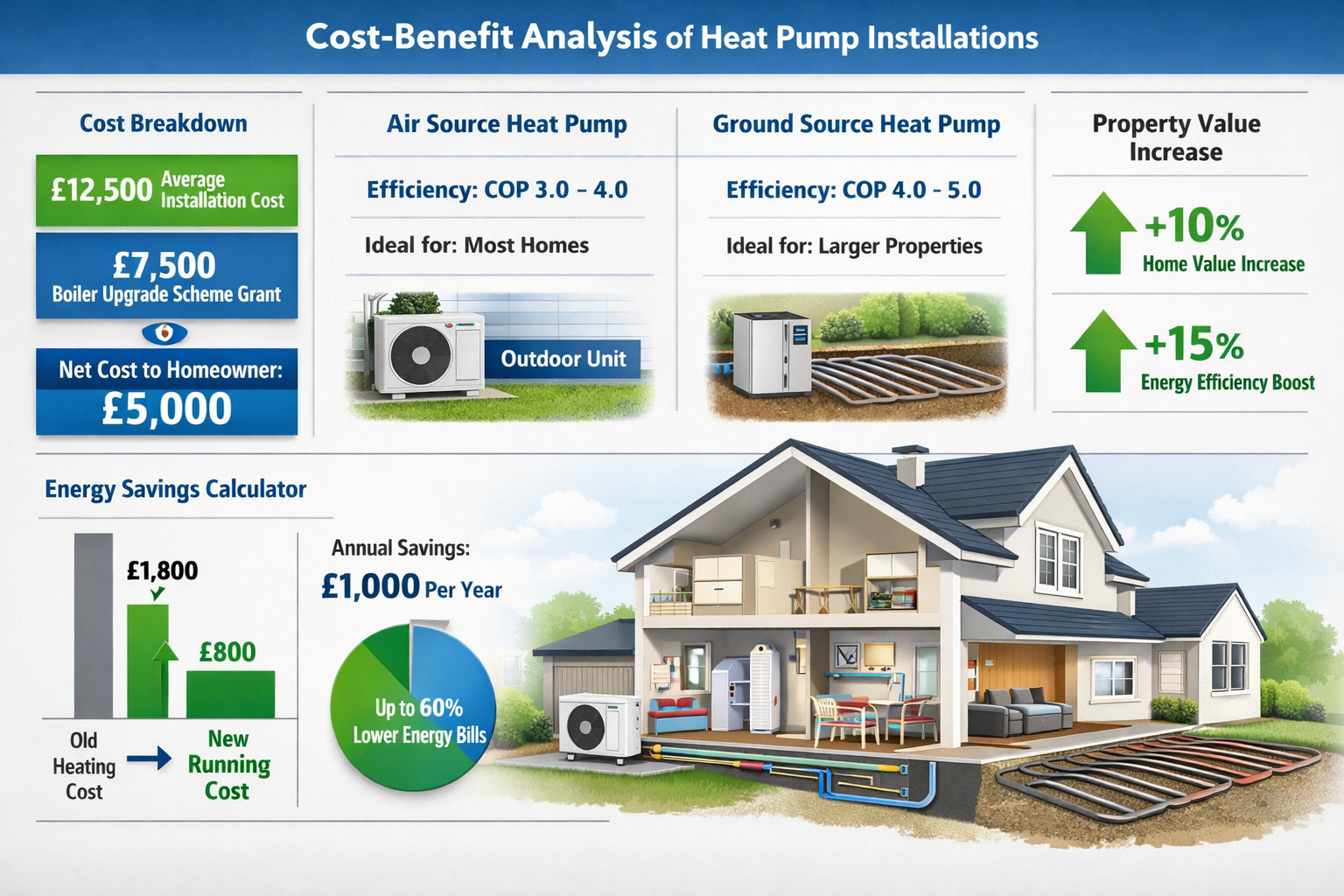
Cost-Benefit Analysis: Valuation Surveys for Heat Pump Installations Under 2026 EPC Mandates
The financial equation surrounding heat pump installations has transformed dramatically with the introduction of the Boiler Upgrade Scheme and impending EPC mandates. Surveyors must conduct sophisticated cost-benefit analyses that extend beyond simple installation expenses to encompass long-term value creation, regulatory compliance, and market positioning.
Installation Costs and Grant Funding Impact
The £7,500 Boiler Upgrade Scheme (BUS) fundamentally alters the economics of heat pump installations for both air source and ground source systems in England and Wales[1]. This substantial grant reduces net homeowner costs to approximately:
- Air Source Heat Pumps: £5,000–£7,500 after grant (from £12,500 average pre-grant cost)
- Ground Source Heat Pumps: £4,500–£7,500 after grant (from £12,000–£15,000 pre-grant cost)
When conducting valuation reports, surveyors consider the net investment rather than gross installation costs. Properties where owners have leveraged grant funding demonstrate superior return on investment profiles compared to those bearing full installation expenses.
Long-Term Energy Savings and Running Costs
Heat pumps typically achieve Seasonal Performance Factors (SPF) of 2.5-4.0, meaning they produce 2.5-4 units of heat for every unit of electricity consumed. This efficiency translates to substantial running cost reductions compared to traditional gas boilers:
Annual Running Cost Comparison (Typical 3-Bedroom Semi-Detached Home)
- Gas Boiler: £1,200–£1,500 annually
- Air Source Heat Pump (SPF 3.0): £900–£1,200 annually
- Ground Source Heat Pump (SPF 3.5-4.0): £750–£1,000 annually
Over a 15-year system lifespan, cumulative savings range from £4,500–£11,250, creating genuine value enhancement that surveyors incorporate into property valuations. However, these projections depend heavily on electricity-to-gas price ratios, which fluctuate based on energy market conditions.
Regulatory Compliance Value Premium
The October 2030 deadline requiring all rental properties to achieve EPC C-ratings or valid exemptions[2] creates significant valuation premiums for compliant properties. With 3.38 million rental properties currently failing to meet this standard[2], landlords face three strategic options:
- Invest in compliance (capped at £10,000 per property)[2]
- Sell non-compliant properties before mandate enforcement
- Exit the rental market entirely
Properties with heat pump installations and verified EPC C-ratings command rental premiums of 5-15% in competitive markets, as landlords seek turnkey compliant assets. Surveyors conducting help to buy valuations or right to buy valuations increasingly factor regulatory compliance into their assessments.
Market Perception and Buyer Demand
Consumer awareness of energy efficiency has increased dramatically, with prospective buyers actively seeking properties with low running costs and environmental credentials. Surveyors observe tangible market shifts:
Owner-Occupier Market 🏡
Properties with heat pump installations sell 8-12% faster than comparable properties with gas boilers in environmentally conscious areas. Buyers perceive these homes as "future-proofed" against rising fossil fuel costs and potential carbon taxation.
Buy-to-Let Investment Market 💼
Landlords prioritize EPC C-rated properties to avoid costly retrofits and ensure continued rental income beyond 2030. Properties with verified heat pump installations and supporting insulation upgrades command investment premiums of 7-10% compared to non-compliant alternatives.
Commercial Property Sector
Commercial building surveys reveal similar patterns, with commercial landlords investing in heat pump technology to maintain tenant appeal and regulatory compliance.
Valuation Adjustments: Quantifying the Heat Pump Premium
Professional surveyors apply structured methodologies to quantify value adjustments for heat pump installations:
Positive Value Contributors ✅
- EPC rating improvement (each band increase adds 2-4% value)
- Annual running cost savings capitalized over 10-15 years
- Regulatory compliance premium (5-10% for rental properties)
- Grant-funded installations with minimal net owner investment
- Professional MCS-certified installation with comprehensive warranties
Negative Value Detractors ❌
- Poor installation quality or non-compliant work
- Inadequate property insulation reducing system efficiency
- Oversized or undersized systems creating performance issues
- Noise complaints or planning permission violations
- Properties requiring additional electrical upgrades
The net valuation adjustment typically ranges from +3% to +12% depending on property type, location, installation quality, and market conditions. Properties in areas with strong environmental awareness and high energy costs experience the upper end of this range.
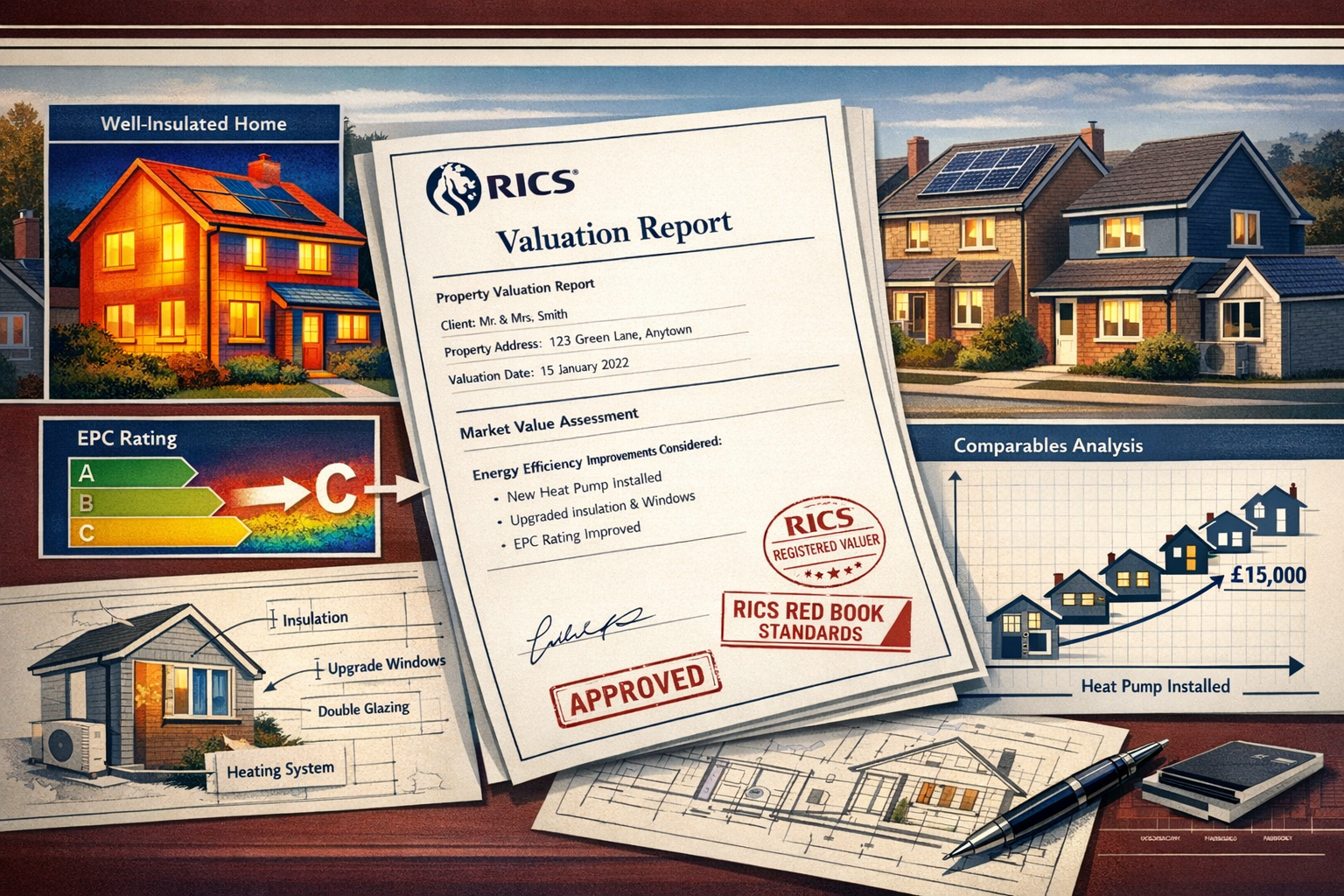
Navigating the Home Energy Model: Future-Proofing Property Valuations
The government's planned transition from cost-based EPC ratings to the Home Energy Model represents the most significant shift in property energy assessment since EPCs were introduced. This new framework evaluates how well properties retain heat based on thermal performance factors including insulation, window quality, and air tightness[2], fundamentally changing how surveyors approach Valuation Surveys for Heat Pump Installations: Adjusting UK Property Values Under 2026 EPC Mandates.
Understanding the Home Energy Model Framework
Unlike current EPC methodologies that focus heavily on heating system efficiency and fuel types, the Home Energy Model prioritizes the building fabric's thermal performance. This paradigm shift means:
Whole-House Thermal Assessment 🏠
Surveyors must evaluate the complete thermal envelope rather than focusing solely on heating systems. A property with an efficient heat pump but poor insulation may receive a lower rating under the new model than a well-insulated property with a standard gas boiler.
Fabric-First Approach
The reformed system incentivizes comprehensive retrofits addressing:
- Cavity wall and solid wall insulation
- Loft insulation to modern standards (270mm+)
- High-performance windows (double or triple glazing)
- Draught-proofing and air tightness measures
- Thermal bridging elimination
Heat Pump Synergy
Properties combining heat pump installations with superior thermal performance achieve optimal ratings under the Home Energy Model. This creates valuation scenarios where the combined effect exceeds the sum of individual improvements.
Ten-Year Validity Period and Valuation Implications
Reformed EPCs will maintain the current ten-year validity period[3], creating interesting valuation dynamics. Properties assessed under the old cost-based system retain those ratings until renewal, while newly assessed properties receive Home Energy Model ratings.
Surveyors conducting mortgage valuations must consider:
- Rating Uncertainty: Properties with old-system EPCs may receive different ratings upon renewal
- Investment Timing: Owners may strategically time retrofits to coincide with EPC renewal cycles
- Comparable Analysis Challenges: Mixing old and new rating systems complicates market comparisons
Landlord Spending Caps and Strategic Investment
The £10,000 per-property spending cap for landlord compliance[2] creates strategic decision frameworks that surveyors must understand when assessing rental property values:
Optimal Investment Scenarios 💡
Properties requiring £8,000-£10,000 in improvements to achieve EPC C-ratings represent ideal candidates for heat pump installations. The net cost after the £7,500 BUS grant (£1,000-£2,500) allows landlords to address other thermal improvements within the spending cap.
Exemption Pathways
Landlords who invest the full £10,000 cap without achieving EPC C-rating can claim exemptions, allowing continued rental. Surveyors must assess whether properties have exhausted improvement options or retain upgrade potential that could eliminate exemption eligibility.
Portfolio Considerations
Multi-property landlords often prioritize heat pump installations in properties closest to EPC C-rating thresholds, maximizing compliance across portfolios within budget constraints. This creates valuation disparities within individual portfolios based on strategic investment allocation.
Regional Market Variations in Heat Pump Valuations
Geographic factors significantly influence how heat pump installations impact property values:
Urban vs. Rural Dynamics 🌆🌳
- Urban areas: Higher property density creates noise concerns, potentially limiting value uplift
- Rural areas: Off-gas-grid properties experience maximum value enhancement from heat pumps, eliminating expensive oil or LPG heating
Climate Considerations
Northern regions with higher heating demands see greater annual savings from heat pump installations, justifying higher valuation premiums. Southern properties with lower heating requirements experience more modest value enhancements.
Local Market Maturity
Areas with established heat pump markets (Scotland, rural Wales) demonstrate more predictable valuation patterns than regions where the technology remains novel. Surveyors adjust value assessments based on local buyer familiarity and acceptance.
Professional Surveyor Recommendations for 2026 and Beyond
Chartered surveyors advising clients on heat pump investments and property valuations should consider:
Pre-Installation Assessment 📋
Commission comprehensive building surveys evaluating thermal performance before heat pump installation. Properties requiring substantial insulation upgrades should address fabric improvements first to maximize heat pump efficiency and value enhancement.
Documentation Standards
Maintain complete records including:
- MCS certification documents
- Building Regulations compliance certificates
- Manufacturer warranties and service records
- Before-and-after EPC certificates
- Grant funding documentation
Valuation Timing Strategies
Property owners planning sales should obtain updated EPCs post-installation to capture improved ratings in marketing materials. The documented energy performance improvement provides tangible evidence supporting asking prices.
Future-Proofing Considerations
Surveyors should evaluate properties' capacity for future upgrades. Homes with potential for solar PV integration, battery storage, or additional insulation improvements retain flexibility as energy regulations evolve.
Conclusion: Strategic Valuation Approaches in the Heat Pump Era
The convergence of heat pump technology, EPC mandates, and evolving valuation methodologies creates both challenges and opportunities for UK property stakeholders. Valuation Surveys for Heat Pump Installations: Adjusting UK Property Values Under 2026 EPC Mandates represents far more than a technical assessment exercise—it embodies a fundamental transformation in how the property market values energy efficiency and environmental performance.
Key Strategic Imperatives:
For property owners, the £7,500 Boiler Upgrade Scheme creates compelling economics for heat pump installations, particularly when combined with the regulatory imperative of 2030 EPC C-rating mandates[1][2]. Properties achieving compliance through strategic heat pump investments demonstrate measurable value premiums ranging from 3-12% depending on property type, location, and installation quality.
For landlords managing rental portfolios, the £10,000 spending cap per property[2] necessitates careful prioritization. Heat pump installations offer optimal return on investment when targeting properties within reach of EPC C-ratings, simultaneously addressing regulatory compliance and enhancing asset values.
For chartered surveyors, the transition to the Home Energy Model[2] requires updated assessment methodologies that evaluate whole-house thermal performance rather than isolated heating system efficiency. Professional valuation services must adapt to incorporate fabric-first principles while maintaining RICS Red Book standards.
Actionable Next Steps:
- Property Owners: Commission professional thermal assessments to identify optimal retrofit pathways before investing in heat pump installations
- Landlords: Conduct portfolio-wide EPC audits to prioritize compliance investments within the £10,000 per-property spending cap
- Buyers: Request comprehensive documentation of heat pump installations including MCS certification, warranties, and post-installation EPC certificates
- Surveyors: Develop standardized assessment protocols for heat pump valuations incorporating installation quality, thermal performance, and regulatory compliance factors
The property market's evolution toward energy efficiency represents not merely a regulatory burden but a genuine value creation opportunity. Properties with professionally installed heat pump systems, supported by superior thermal performance, position themselves advantageously in a market increasingly prioritizing sustainability, low running costs, and regulatory compliance.
As 2026 progresses and the 2030 EPC deadline approaches, the valuation premium for energy-efficient properties will likely intensify. Strategic investments in heat pump technology today create lasting value that extends well beyond installation costs, delivering enhanced market appeal, reduced operating expenses, and future-proofed compliance with evolving environmental standards.
References
[1] Heat Pumps In The Uk 2026 Latest Costs Grants And What Homeowners Need To Know – https://www.thefloorheatingwarehouse.co.uk/heat-pumps-in-the-uk-2026-latest-costs-grants-and-what-homeowners-need-to-know/
[2] Major Epc Changes Property – https://www.buyassociationgroup.com/en-gb/news/major-epc-changes-property/
[3] Reforms To The Energy Performance Of Buildings Regime Partial Government Response – https://www.gov.uk/government/consultations/reforms-to-the-energy-performance-of-buildings-regime/outcome/reforms-to-the-energy-performance-of-buildings-regime-partial-government-response
[4] Building Surveys For Energy Performance Certificates In 2026 Navigating Epc Upgrades And Retrofit Mandates For Uk Buyers – https://nottinghillsurveyors.com/blog/building-surveys-for-energy-performance-certificates-in-2026-navigating-epc-upgrades-and-retrofit-mandates-for-uk-buyers
[5] Prs Homes Energy Performance Government Response – https://assets.publishing.service.gov.uk/media/69722b193f2908a349040547/prs-homes-energy-performance-government-response.pdf
[6] Iea Etp 2026 Released Highlights The Important Role Of Heat Pumping Technologies – https://heatpumpingtechnologies.org/articles/iea-etp-2026-released-highlights-the-important-role-of-heat-pumping-technologies/