The UK property market in 2026 tells two contrasting stories. While northern regions experience robust growth and renewed buyer confidence, East Anglia finds itself among the weakest-performing markets, struggling with affordability challenges that continue to constrain activity. This divergence presents unique challenges for property valuers and surveyors who must navigate increasingly complex regional dynamics when conducting Valuation Surveys for East Anglia Lagging Markets: RICS Adjustments Amid Widening Regional Disparities in 2026.
Recent RICS data reveals East Anglia experiencing significant downward price pressure with a net balance of -26% for price expectations—placing it firmly among underperforming southern regions alongside London (-40%) and the South East (-24%)[4]. This stark contrast with Scotland and Northern Ireland, which report the strongest growth, underscores the widening regional disparities that are reshaping valuation methodologies across the country.
Key Takeaways
- 📉 East Anglia records -26% net balance for price expectations, making it one of the weakest-performing UK regions in early 2026
- 🏘️ Regional disparities are widening significantly, with northern markets outperforming southern regions by substantial margins
- 🔍 RICS surveyors are deploying specialized valuation techniques to address affordability constraints and market weakness in lagging areas
- 📊 National recovery masks local challenges, with East Anglia not benefiting equally from improved buyer enquiries and agreed sales
- 💼 Professional valuation adjustments are essential for accurate property assessments in markets experiencing divergent performance from national trends
Understanding East Anglia's Market Challenges in 2026
The Affordability Crisis Constraining Market Activity
East Anglia's property market faces a fundamental affordability challenge that distinguishes it from stronger-performing northern regions. Despite being geographically positioned between London and more affordable rural areas, the region suffers from acute affordability constraints that continue to suppress buyer activity[2].
The persistent affordability gap stems from several interconnected factors:
- Wage-to-price ratios that remain unfavorable compared to northern markets
- Limited employment growth in high-paying sectors
- Competition from London commuters inflating prices beyond local affordability
- Mortgage affordability stress particularly affecting first-time buyers
These challenges require surveyors conducting RICS valuations to carefully consider local economic fundamentals rather than relying solely on comparable sales data that may not reflect current market realities.
Comparing Regional Performance: The North-South Divide
The January 2026 RICS survey data reveals striking regional disparities that fundamentally impact valuation approaches:
| Region | Price Expectations (Net Balance) | Market Sentiment |
|---|---|---|
| Scotland | +15% | Strong growth 📈 |
| Northern Ireland | +12% | Robust demand 💪 |
| North West | +8% | Positive momentum ✅ |
| East Anglia | -26% | Significant weakness ⚠️ |
| London | -40% | Severe constraints 🔻 |
| South East | -24% | Continued pressure 📉 |
This divergence represents the most significant regional variation in recent years, with southern markets including East Anglia experiencing fundamentally different conditions than their northern counterparts[2][3].
National Trends Masking Local Realities
While national indicators show improvement—with buyer enquiries strengthening to a net balance of -15% in January 2026 (up from -21% in December)[2]—East Anglia has not participated equally in this recovery. The region's unique challenges include:
Limited buyer pool expansion: Unlike northern regions where affordability improvements have attracted new buyers, East Anglia's price levels continue to exclude many potential purchasers.
Investor capital flight: Property investors increasingly target northern regions offering lower entry prices and stronger rental demand, shifting capital away from East Anglia despite its traditionally established nature[4].
Mortgage lending caution: Lenders apply more conservative loan-to-value ratios in markets showing persistent weakness, further constraining demand.
For professionals conducting RICS building surveys, understanding these local dynamics is essential for providing accurate valuations that reflect actual market conditions rather than outdated assumptions.
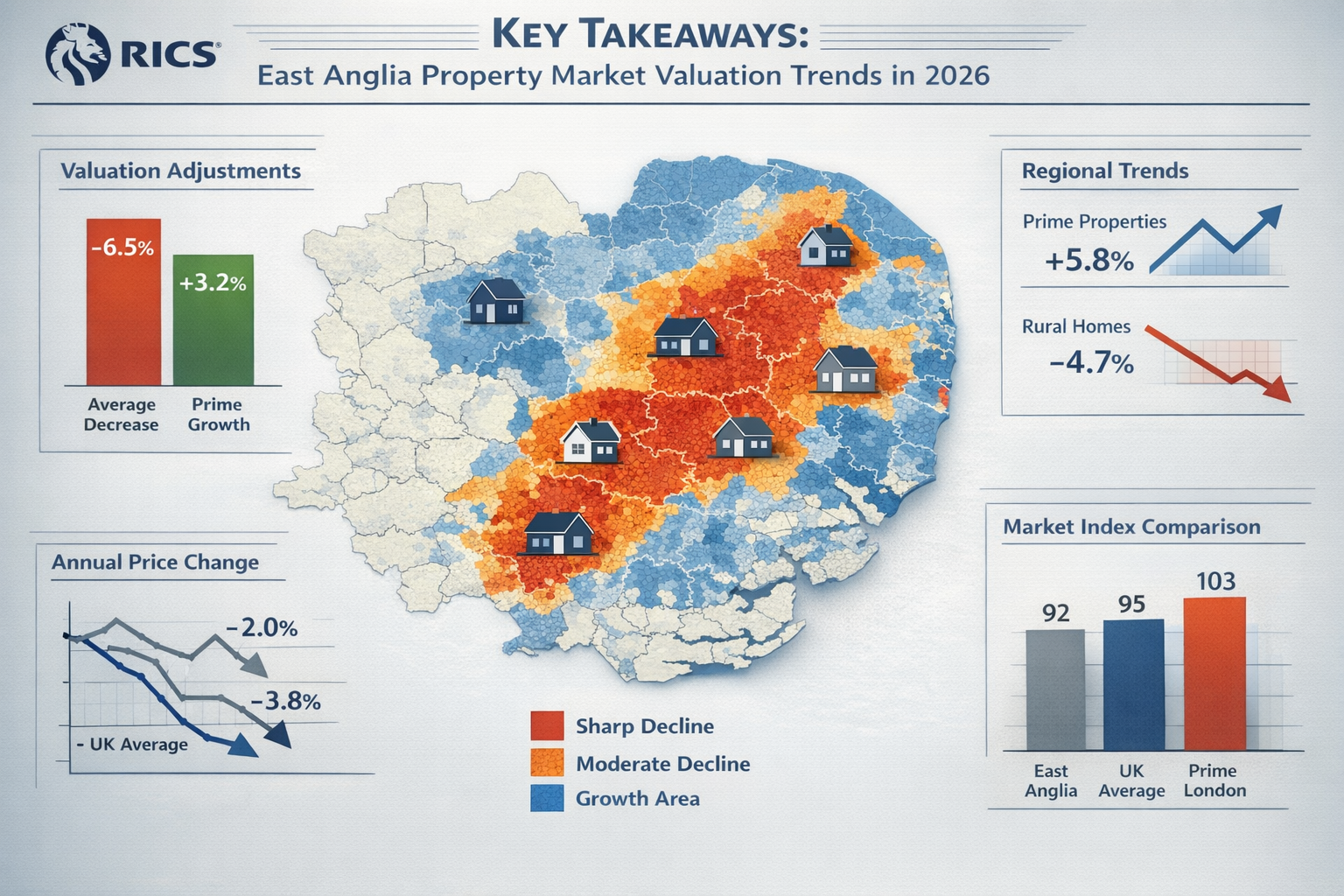
RICS Valuation Adjustments for Lagging Markets
Specialized Techniques for Affordability-Challenged Areas
RICS surveyors operating in East Anglia and similar lagging markets are deploying specialized valuation techniques to address the unique challenges these regions present. These methodologies go beyond standard comparable sales analysis to incorporate broader market dynamics[5].
Comparative Market Analysis Adjustments
Traditional comparable sales approaches assume relatively stable market conditions. In Valuation Surveys for East Anglia Lagging Markets: RICS Adjustments Amid Widening Regional Disparities in 2026, surveyors must apply additional adjustments:
Time-based depreciation factors: Sales from even 3-6 months ago may overstate current values in rapidly weakening markets. Surveyors apply percentage reductions based on monthly market movement data.
Regional performance differentials: Comparing East Anglia properties to national averages requires adjustment factors that account for the -26% regional underperformance relative to stabilized national conditions[4].
Affordability-constrained buyer pools: Valuations must reflect the limited number of qualified buyers at various price points, particularly affecting properties above local median prices.
Income Capitalization Refinements
For investment properties and rental valuations, RICS professionals are refining income capitalization approaches to reflect regional realities:
- Rental yield compression: East Anglia rental yields may not keep pace with northern markets, requiring adjusted capitalization rates
- Tenant demand variations: Employment growth differentials impact long-term rental sustainability
- Void period adjustments: Weaker markets experience longer vacancy periods that must be factored into valuations
Red Book Compliance in Divergent Markets
The RICS Valuation – Global Standards (Red Book) provides the framework for professional valuations, but application in divergent regional markets requires careful interpretation. Surveyors must balance standardized methodologies with market-specific realities[5].
Market value definition challenges: The Red Book defines market value as "the estimated amount for which an asset should exchange on the valuation date between a willing buyer and a willing seller in an arm's length transaction." In constrained markets like East Anglia, determining what constitutes a "willing buyer" at current price levels becomes more complex.
Assumptions and special assumptions: Valuers must clearly document assumptions about market conditions, particularly when regional performance diverges significantly from national trends. This transparency protects both clients and professionals.
For those seeking professional assessments, understanding which survey you need becomes particularly important in challenging market conditions.
Cost Implications and Competitive Pressures
Survey costs in East Anglia face downward pressure as market activity slows. Level 2 Home Buyer Reports typically cost £450–£800 nationally, but regional market conditions influence actual fees[1].
Competitive dynamics in weak markets:
- Surveyors reduce fees to win business in lower-demand regions 💷
- Reduced profitability may impact service quality if not managed carefully
- Clients benefit from competitive pricing but should prioritize qualified professionals
- RICS accreditation ensures minimum standards regardless of fee pressure
The RICS home survey process maintains consistent quality standards even as market conditions vary regionally.
Strategic Considerations for Property Stakeholders
For Buyers: Navigating Valuation Uncertainties
Prospective buyers in East Anglia face unique challenges when interpreting professional valuations in 2026:
Understanding valuation ranges: In stable markets, valuations typically fall within narrow ranges. In lagging markets experiencing Valuation Surveys for East Anglia Lagging Markets: RICS Adjustments Amid Widening Regional Disparities in 2026, wider valuation ranges reflect genuine market uncertainty.
Negotiation leverage: Downward price pressure creates buyer advantages, but professional valuations provide the evidence needed to negotiate effectively. A RICS valuation demonstrating market weakness supports price reduction requests.
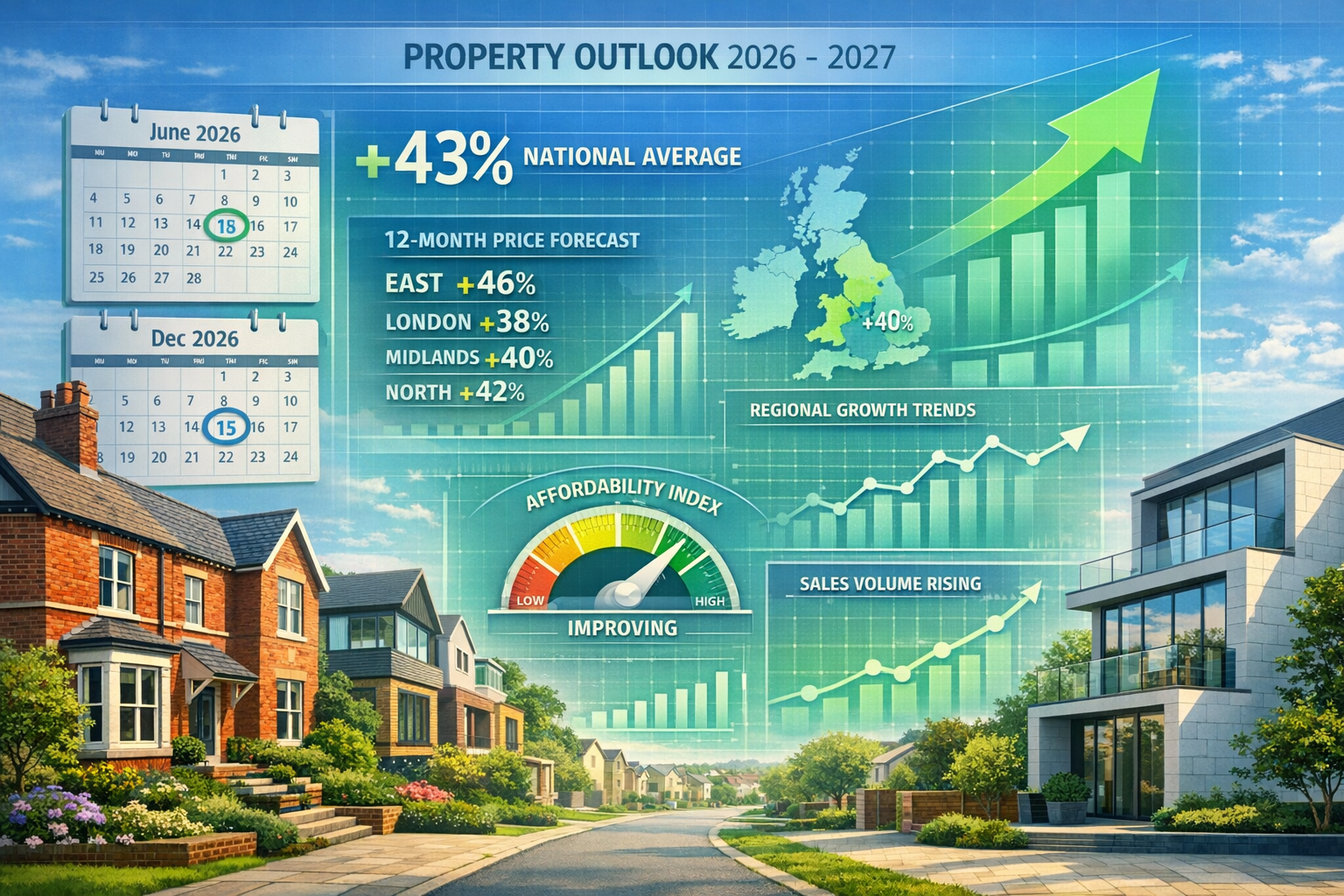
Long-term value considerations: While current conditions favor buyers, understanding whether East Anglia's weakness is cyclical or structural impacts investment decisions. The 12-month price expectations of +43% nationally suggest optimism, but this may be concentrated in northern regions[2].
Mortgage valuation alignment: Lenders' valuations may come in below purchase prices in weakening markets, requiring buyers to bridge gaps with additional deposits or renegotiate terms.
For Sellers: Realistic Pricing Strategies
Sellers in East Anglia must confront challenging market realities when pricing properties:
Accepting market conditions: The -26% net balance for price expectations indicates significant downward pressure[4]. Overpricing properties relative to professional valuations extends time on market and may ultimately result in lower achieved prices.
Timing considerations: While medium-term sales optimism has surged to +35% nationally, short-term caution reflected in 3-month expectations dropping to +4% suggests waiting may not improve outcomes[2].
Presentation and condition: In buyer's markets, property condition becomes increasingly important. Investing in specific defect reports before listing can identify issues that might reduce valuations and allow proactive remediation.
For Investors: Recalibrating Regional Strategies
Property investors traditionally favored established southern markets like East Anglia, but 2026's regional disparities require strategy recalibration:
Yield-focused analysis: With capital appreciation constrained, rental yields become the primary return driver. East Anglia properties must deliver sufficient income returns to justify investment despite limited price growth prospects.
Diversification across regions: The stark performance differences between northern and southern markets suggest portfolio diversification strategies that balance exposure across regions rather than concentrating in traditionally favored areas.
Value-add opportunities: Weakening markets create opportunities to acquire properties below replacement cost, particularly those requiring renovation. Professional building surveys identify properties where strategic improvements can create value even in challenging markets.
Long-term demographic trends: East Anglia's aging population and limited employment growth present structural challenges that investors must weigh against cyclical market factors.

Future Outlook: Recovery Prospects and Continued Challenges
Short-Term Market Expectations
The immediate outlook for Valuation Surveys for East Anglia Lagging Markets: RICS Adjustments Amid Widening Regional Disparities in 2026 reflects cautious optimism tempered by regional realities:
Three-month outlook remains subdued: While national 3-month price expectations reached +4% in January 2026, this modest improvement masks continued weakness in southern regions including East Anglia[2].
Agreed sales improving nationally: The net balance for agreed sales hit -9% in January 2026, the least negative reading since June 2025[2]. However, this national improvement does not guarantee proportional recovery in lagging markets.
Seasonal factors: Spring typically brings increased market activity, but whether East Anglia participates fully in seasonal uplift depends on affordability improvements and buyer confidence restoration.
Medium-Term Recovery Scenarios
Looking beyond immediate challenges, several factors could influence East Anglia's recovery trajectory:
Interest rate environment: Mortgage affordability improvements through rate reductions would disproportionately benefit affordability-constrained markets like East Anglia. However, any rate changes affect all regions simultaneously, potentially maintaining relative disparities.
Employment and wage growth: Fundamental improvement requires local economic strengthening that increases buyer purchasing power. Regional economic development initiatives may gradually improve conditions.
Infrastructure investment: Transportation improvements connecting East Anglia to employment centers could enhance the region's appeal, though such projects typically deliver benefits over years rather than months.
Migration patterns: Remote work flexibility continues reshaping location preferences, potentially benefiting East Anglia if lifestyle factors outweigh affordability constraints for some buyer segments.
Structural Challenges Requiring Long-Term Solutions
Beyond cyclical market factors, East Anglia faces structural challenges that complicate recovery prospects:
Housing supply constraints: Planning restrictions and development challenges limit new supply that could improve affordability over time.
Economic diversification needs: Reducing dependence on sectors offering limited wage growth requires long-term economic development strategies.
Demographic headwinds: An aging population creates housing market dynamics different from regions attracting younger, growing populations.
Regional policy responses: Government interventions targeting regional disparities could influence outcomes, though policy effectiveness remains uncertain.
For property professionals, understanding these long-term factors informs valuation approaches that distinguish temporary market weakness from permanent value impairment.
Professional Standards and Best Practices
Maintaining Valuation Integrity in Challenging Markets
RICS professionals conducting valuations in East Anglia must uphold rigorous standards despite market challenges:
Transparent methodology documentation: Clear explanation of adjustment factors, assumptions, and limitations ensures clients understand valuation basis and inherent uncertainties.
Appropriate use of comparable evidence: In rapidly changing markets, surveyors must critically evaluate comparable sales timing, adjusting for market movement between transaction dates and valuation dates.
Market conditions commentary: Professional valuations should include contextual market analysis explaining regional performance relative to national trends, helping clients understand the broader environment.
Uncertainty and sensitivity analysis: When market conditions create valuation uncertainty, providing sensitivity analysis showing value ranges under different scenarios offers clients valuable decision-making information.
Continuing Professional Development
The evolving market landscape requires surveyors to maintain current knowledge:
- Regional market intelligence: Regular review of RICS survey data and local market indicators
- Valuation methodology updates: Staying current with Red Book guidance and emerging best practices
- Economic analysis skills: Understanding macroeconomic factors influencing regional disparities
- Technology adoption: Leveraging data analytics and market intelligence tools
RICS members can access resources through the organization's professional development programs, ensuring skills remain current despite rapidly changing market conditions[7].
Client Communication and Expectation Management
Effective communication becomes particularly important when valuations deliver unwelcome news:
Setting realistic expectations: Educating clients about market conditions before conducting valuations helps prepare them for results that may differ from their assumptions.
Explaining regional context: Clients may be unaware of the extent to which East Anglia underperforms national averages. Clear explanation of the -26% regional disparity provides necessary context[4].
Distinguishing property condition from market factors: Clients sometimes attribute low valuations to property-specific issues when broader market weakness is the primary driver. Clear distinction helps clients make informed decisions about potential improvements.
Ongoing market updates: In rapidly changing markets, valuations have shorter shelf lives. Advising clients about the temporal limitations of valuations helps them make timely decisions.
Conclusion
The Valuation Surveys for East Anglia Lagging Markets: RICS Adjustments Amid Widening Regional Disparities in 2026 represent a critical challenge for property professionals navigating increasingly divergent regional markets. With East Anglia experiencing a -26% net balance for price expectations while northern regions show robust growth, surveyors must deploy specialized techniques that go beyond standard methodologies to deliver accurate, reliable valuations.
The widening regional disparities reflect fundamental affordability challenges that constrain East Anglia's market activity even as national indicators show modest improvement. RICS professionals respond by refining comparative market analyses, adjusting income capitalization approaches, and maintaining rigorous documentation standards that ensure valuation integrity despite market complexity.
Key Actions for Property Stakeholders
For buyers: Leverage professional RICS valuations to negotiate effectively in markets experiencing downward price pressure, but balance short-term opportunities against long-term value considerations.
For sellers: Accept current market realities reflected in professional valuations rather than overpricing properties based on outdated assumptions or aspirational thinking.
For investors: Recalibrate regional strategies to account for structural differences between northern and southern markets, focusing on yield-driven returns where capital appreciation remains constrained.
For surveyors: Maintain professional standards through transparent methodology, appropriate adjustments for regional market conditions, and clear client communication that manages expectations while providing actionable intelligence.
Looking Ahead
While national 12-month price expectations of +43% suggest optimism for 2026-2027[2], East Anglia's recovery trajectory remains uncertain. The region's structural affordability challenges require more than cyclical market improvement to restore parity with stronger-performing areas.
Property professionals conducting valuations in East Anglia must balance hope for recovery against realistic assessment of persistent constraints. By applying rigorous RICS standards adapted to regional realities, surveyors provide the accurate valuations that enable informed decision-making in one of the UK's most challenging property markets.
Whether you're buying, selling, or investing in East Anglia, partnering with qualified RICS professionals who understand regional market dynamics ensures you receive valuations that reflect actual conditions rather than outdated assumptions. In markets experiencing the widest regional disparities in recent memory, professional expertise becomes not just valuable but essential for navigating successfully.
References
[1] Rics Survey Cost – https://surveymatch.co.uk/rics-survey-cost/
[2] Uk Resi Survey Jan 2026 Report Shows Early Signs Market Recovery Despite Caution – https://www.rics.org/news-insights/uk-resi-survey-jan-2026-report-shows-early-signs-market-recovery-despite-caution
[3] Uk Residential Market Survey January 2026 – https://www.rics.org/content/dam/ricsglobal/documents/market-surveys/uk-residential-market-survey/UK-Residential-Market-Survey_January-2026.pdf
[4] Latest Rics Survey Reveals Global Headwinds Are Weighing On Housing Market Confidence – https://www.buyassociationgroup.com/en-gb/news/latest-rics-survey-reveals-global-headwinds-are-weighing-on-housing-market-confidence/
[5] Regional Valuation Divergences In 2026 Recovery Rics Tactics For North South Price Shifts In Building Surveys – https://nottinghillsurveyors.com/blog/regional-valuation-divergences-in-2026-recovery-rics-tactics-for-north-south-price-shifts-in-building-surveys
[7] Uk Influence And Advocacy Update January 2026 – https://www.rics.org/news-insights/uk-influence-and-advocacy-update-january-2026