Nearly 90% of M&A respondents predict increased transaction volume in 2026, creating unprecedented pressure on valuation accuracy [4]. Yet in 85% of transactions, Quality of Earnings findings directly alter the effective purchase price through EBITDA adjustments [2]. For portfolio acquisitions involving multiple properties, this margin for error narrows even further when structural defects, environmental liabilities, and reinstatement costs enter the equation.
Valuation Due Diligence in 2026 M&A Deals: Surveyor Checklists for Portfolio Acquisitions represents the critical intersection where financial analysis meets physical property assessment. Building surveyors now integrate technical inspections with corporate valuation methodologies, ensuring that property portfolios don't carry hidden liabilities that erode deal value post-completion.
This comprehensive guide examines how chartered surveyors conduct valuation due diligence for portfolio acquisitions, emphasizing defect identification, reinstatement cost assessment, and RICS-compliant valuation standards that protect both buyers and sellers in 2026's competitive M&A landscape.

Key Takeaways
- Quality of Earnings analysis reveals purchase price adjustments in 85% of M&A deals, making accurate property valuations essential for portfolio acquisitions [2]
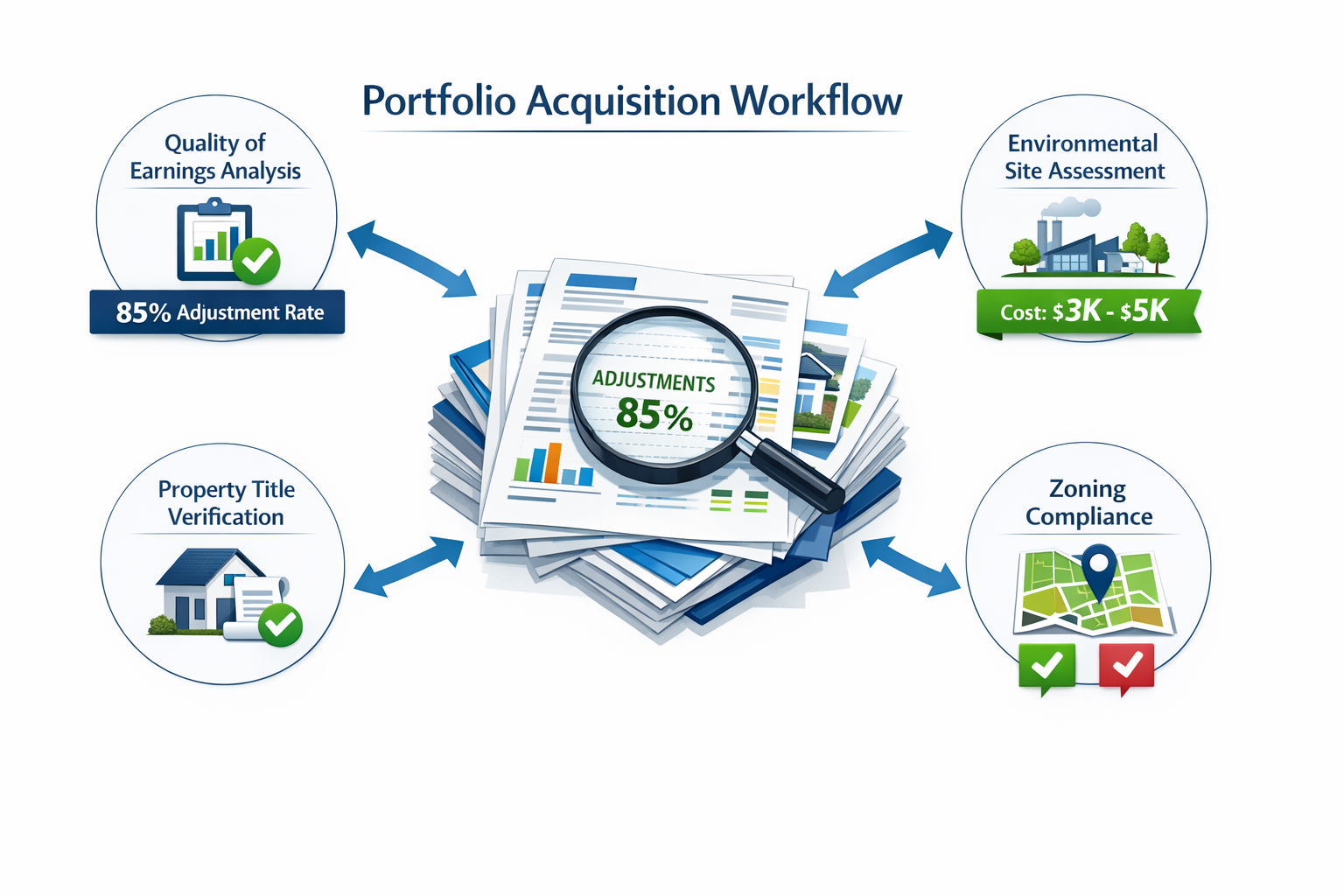
- Environmental site assessments cost $3K-$5K per property and are mandatory for deals involving real estate, as liabilities follow properties regardless of ownership [2]
- Strategic fit assessment increases deal success rates by 30% when technical due diligence integrates with financial valuation [4]
- Building surveyors must assess structural defects, reinstatement costs, and RICS Red Book compliance to prevent post-acquisition surprises
- Comprehensive surveyor checklists covering title, lease agreements, zoning, and physical condition form the foundation of successful portfolio acquisitions
Understanding the Role of Building Surveyors in M&A Valuation Due Diligence
Building surveyors occupy a unique position in Valuation Due Diligence in 2026 M&A Deals: Surveyor Checklists for Portfolio Acquisitions. Unlike financial auditors who focus on balance sheets and earnings quality, chartered surveyors assess the physical assets that underpin property portfolio valuations.
The Integration of Technical and Financial Due Diligence
Modern portfolio acquisitions require surveyors to work alongside M&A attorneys and financial analysts. Real property due diligence led by M&A attorneys covers title reports, lease agreements, zoning compliance, surveys, and encumbrances—all critical components for deals involving multiple properties [2].
Building surveyors contribute specialized expertise in:
✅ Structural integrity assessment – identifying defects that impact property value
✅ Reinstatement cost calculations – determining accurate insurance valuations
✅ RICS Red Book compliance – ensuring valuations meet professional standards
✅ Building condition surveys – documenting current state and future liabilities
✅ Environmental risk identification – flagging potential contamination issues
This integration ensures that financial models reflect actual property conditions rather than optimistic assumptions. When surveyors identify major structural defects during due diligence, purchase price adjustments typically follow—protecting buyers from overpaying for distressed assets.
Why Portfolio Acquisitions Demand Enhanced Surveyor Scrutiny
Portfolio deals differ fundamentally from single-asset transactions. When acquiring ten, twenty, or fifty properties simultaneously, the risk multiplies exponentially. A single property might harbor:
- Hidden structural defects requiring immediate remediation
- Underinsured reinstatement values leaving gaps in coverage
- Zoning violations that restrict future development
- Environmental contamination triggering cleanup obligations
- Lease complications reducing rental income projections
Professional RICS valuations provide the standardized framework that makes portfolio comparisons possible. Without consistent valuation methodology across all properties, buyers cannot accurately assess relative value or identify outliers requiring additional investigation.
Core Components of Valuation Due Diligence in 2026 M&A Deals: Surveyor Checklists for Portfolio Acquisitions
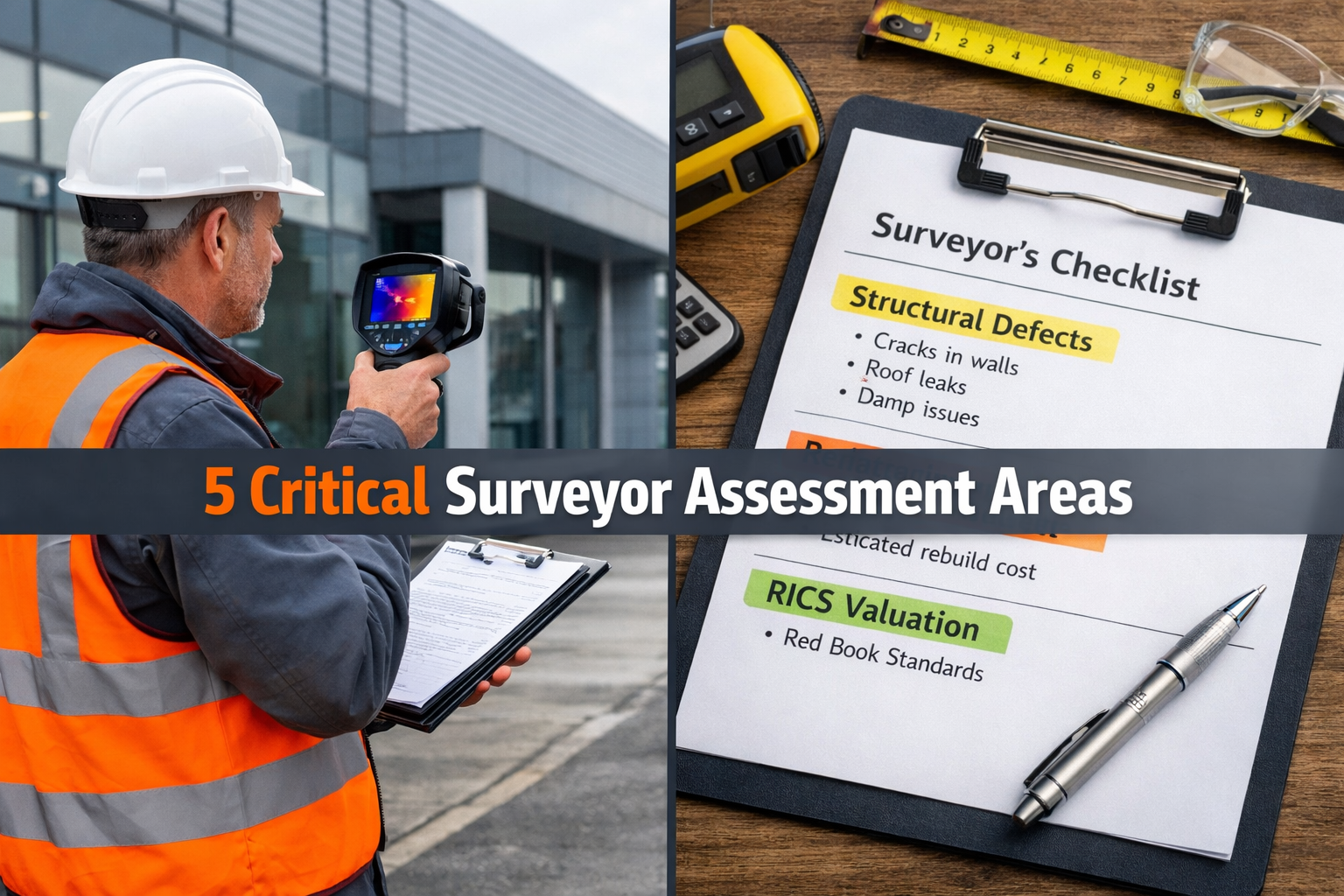
Effective Valuation Due Diligence in 2026 M&A Deals: Surveyor Checklists for Portfolio Acquisitions requires systematic assessment across multiple dimensions. Chartered surveyors employ comprehensive checklists that address both individual property characteristics and portfolio-level considerations.
Property and Asset Valuation Review
Property and asset valuation reviews must include equipment valuations, deeds, leases, subleases, rental income streams, and conditional sale agreements [1]. For portfolio acquisitions, this checklist expands to encompass:
🏢 Title and Ownership Verification
- Registered title documents and ownership chains
- Encumbrances, easements, and restrictive covenants
- Outstanding mortgages or charges
- Rights of way affecting property access
- Boundary disputes or unclear demarcations
📋 Lease and Tenancy Analysis
- Current lease terms and expiration dates
- Rental income verification against market rates
- Tenant creditworthiness and payment history
- Break clauses and renewal options
- Service charge arrangements and recovery rates
🔧 Physical Condition Assessment
- Structural integrity and load-bearing elements
- Roof condition and remaining lifespan
- Mechanical and electrical systems functionality
- Damp, subsidence, or settlement evidence
- Fire safety compliance and building regulations adherence
Professional commercial building surveys provide the detailed technical analysis required for informed valuation decisions. These surveys identify defects that directly impact property value and future capital expenditure requirements.
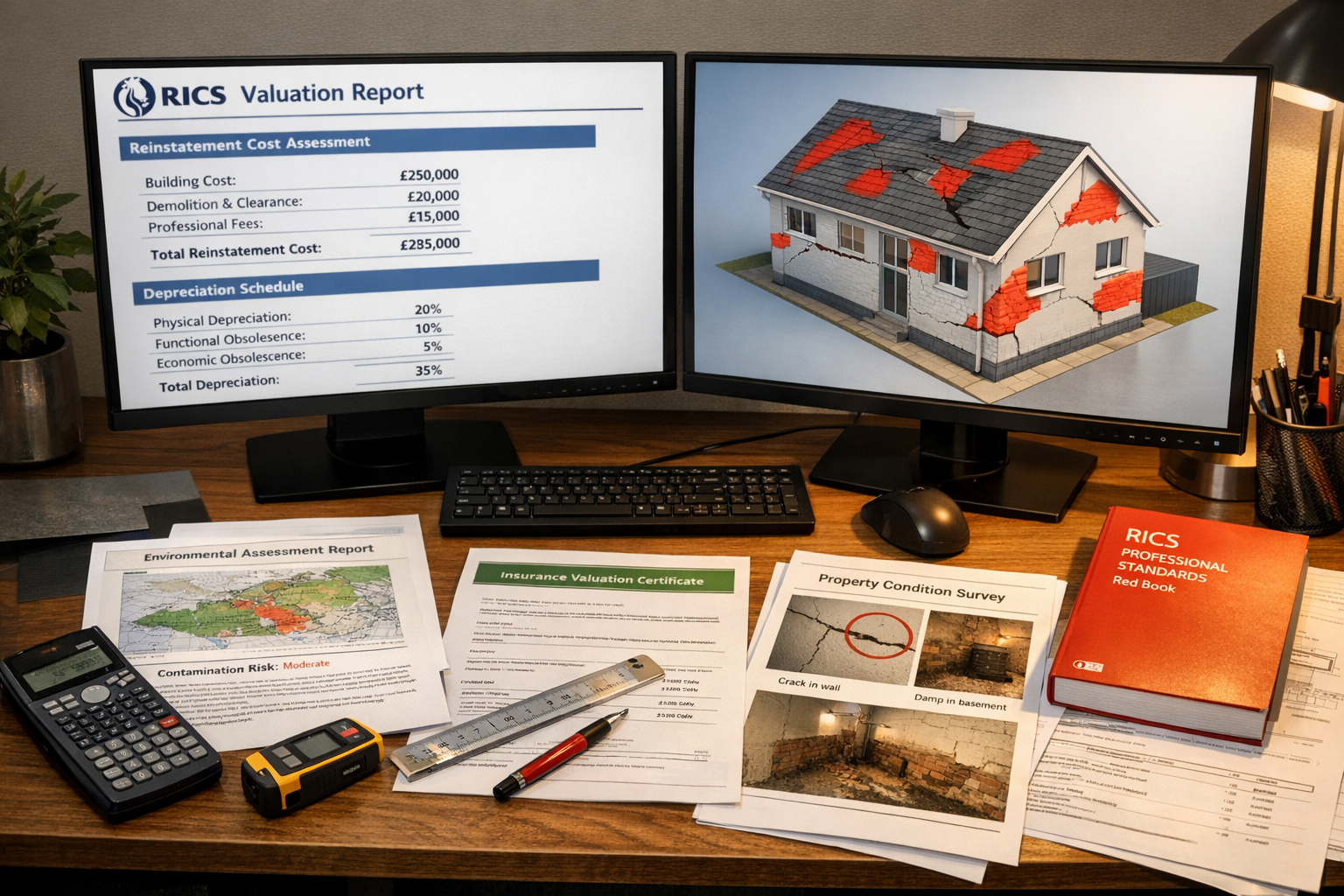
Reinstatement Cost Assessment for Insurance Purposes
Insurance reinstatement valuations represent a critical but often overlooked component of portfolio due diligence. Many properties carry inadequate insurance coverage based on outdated reinstatement cost assessments.
Key reinstatement valuation factors include:
| Assessment Area | Valuation Impact | Risk if Undervalued |
|---|---|---|
| Building reconstruction costs | ⭐⭐⭐⭐⭐ | Total loss not covered |
| Professional fees (10-20%) | ⭐⭐⭐⭐ | Partial coverage gap |
| Demolition and site clearance | ⭐⭐⭐ | Out-of-pocket expenses |
| Local authority requirements | ⭐⭐⭐⭐ | Compliance costs uncovered |
| Temporary accommodation | ⭐⭐⭐ | Business interruption losses |
Accurate reinstatement valuations protect buyers from discovering insurance shortfalls post-acquisition. When multiple properties transfer ownership simultaneously, verifying adequate coverage across the entire portfolio becomes essential risk management.
Environmental Site Assessments and Compliance
Environmental site assessments cost $3K-$5K and are required for any deal involving real property, as environmental liabilities can follow properties regardless of ownership history [2]. This principle makes environmental due diligence non-negotiable for portfolio acquisitions.
Chartered surveyors coordinate with environmental consultants to assess:
🌍 Phase I Environmental Site Assessments
- Historical land use and previous occupants
- Potential contamination sources
- Regulatory compliance history
- Hazardous materials presence (asbestos, lead paint)
- Underground storage tanks and waste disposal
🌍 Phase II Environmental Testing (when Phase I raises concerns)
- Soil sampling and laboratory analysis
- Groundwater contamination testing
- Air quality measurements
- Remediation cost estimates
- Regulatory approval requirements
Environmental liabilities represent one of the few risks that cannot be eliminated through contractual indemnities. Contamination discovered post-acquisition becomes the buyer's responsibility regardless of when it occurred. This makes pre-acquisition environmental assessment absolutely critical for portfolio deals.
RICS Red Book Compliance and Valuation Standards
The RICS Red Book valuation standards provide the professional framework for consistent, defensible property valuations. In 2026, RICS compliance has become the expected standard for M&A transactions involving UK property portfolios.
RICS Red Book requirements include:
- Independence and objectivity – surveyors must be free from conflicts of interest
- Competence – valuers must possess appropriate skills and knowledge
- Transparency – valuation basis and assumptions must be clearly stated
- Disclosure – limitations and special assumptions must be documented
- Consistency – methodology must align with International Valuation Standards
For portfolio acquisitions, RICS compliance ensures that all properties receive consistent treatment. This consistency enables meaningful comparison across the portfolio and supports accurate aggregation of total portfolio value.
Professional valuation services conducted by RICS-qualified chartered surveyors provide the credibility that lenders, investors, and regulators expect in 2026's M&A environment.
Building the Comprehensive Surveyor Checklist for Portfolio Acquisitions
Creating effective Valuation Due Diligence in 2026 M&A Deals: Surveyor Checklists for Portfolio Acquisitions requires systematic organization and prioritization. The following framework provides structure for complex portfolio assessments.
Pre-Acquisition Desktop Analysis
Before conducting physical inspections, surveyors perform comprehensive desktop reviews:
📊 Document Collection and Review
- Property information packs from sellers
- Previous survey reports and valuations
- Planning permissions and building control approvals
- Energy Performance Certificates (EPCs)
- Asbestos registers and management plans
- Fire risk assessments and compliance certificates
📊 Market Analysis and Benchmarking
- Comparable property transactions in local markets
- Rental yield analysis versus market averages
- Capital appreciation trends by location
- Vacancy rates and tenant demand indicators
- Development pipeline and future supply
This desktop phase identifies properties requiring enhanced scrutiny during physical inspections. Properties with incomplete documentation, unusual transaction histories, or below-market performance warrant additional investigation time.
Physical Inspection Protocols
Systematic physical inspections form the core of surveyor due diligence. For portfolio acquisitions, inspection protocols must balance thoroughness with efficiency.
🔍 Structural Assessment Priorities
Critical elements requiring detailed inspection:
- Foundation integrity and settlement indicators
- Load-bearing walls and structural frames
- Roof structure and weather-tightness
- Damp penetration and water damage
- Cracks, movement, or structural distress
🔍 Building Services Evaluation
- Heating, ventilation, and air conditioning systems
- Electrical installations and capacity
- Plumbing and drainage systems
- Fire detection and suppression systems
- Lift installations and maintenance records
🔍 External Envelope Condition
- Facade materials and weathering
- Window and door condition
- Guttering and rainwater disposal
- Hard standings and access roads
- Boundary walls and fencing
Professional building surveys document these findings with photographic evidence and detailed condition ratings. This documentation supports valuation adjustments and informs future capital expenditure planning.
Defect Quantification and Cost Estimation
Identifying defects represents only the first step. Surveyors must quantify remediation costs to inform purchase price negotiations.
Defect categorization typically follows this hierarchy:
Category 1 (Urgent) 💥
- Immediate health and safety risks
- Structural instability requiring emergency support
- Active water ingress causing progressive damage
- Non-compliant fire safety systems
- Estimated cost range: £10,000 – £500,000+ per property
Category 2 (Essential) ⚠️
- Defects requiring remediation within 12 months
- Building services approaching end of life
- Weather-tightness issues causing gradual deterioration
- Regulatory compliance gaps with enforcement risk
- Estimated cost range: £5,000 – £100,000 per property
Category 3 (Desirable) ℹ️
- Improvements enhancing property value or efficiency
- Cosmetic upgrades improving marketability
- Preventative maintenance extending asset life
- Energy efficiency enhancements
- Estimated cost range: £2,000 – £50,000 per property
Accurate cost estimation requires current construction pricing knowledge and understanding of regional variations. In 2026's construction market, material costs and labor availability significantly impact remediation budgets.
Valuation Synthesis and Reporting
The final checklist stage synthesizes all findings into coherent valuation advice supporting M&A decision-making.
📝 Valuation Report Components
Executive Summary
- Portfolio overview and property count
- Aggregate valuation and range
- Material defects affecting value
- Recommended purchase price adjustments
- Conditions precedent for completion
Individual Property Valuations
- Market value in current condition
- Market value assuming repairs completed
- Reinstatement cost for insurance
- Investment value based on income
- Forced sale value (if relevant)
Risk Assessment
- Environmental liability exposure
- Regulatory compliance gaps
- Structural defect remediation costs
- Title and lease complications
- Market risk factors
Recommendations
- Properties suitable for acquisition
- Properties requiring price renegotiation
- Properties recommended for exclusion
- Post-acquisition priority actions
- Further investigation requirements
This structured reporting enables buyers to make informed decisions about proceeding with portfolio acquisitions, negotiating price adjustments, or excluding problematic properties from the transaction.
Strategic Considerations for 2026 Portfolio Acquisitions
Valuation Due Diligence in 2026 M&A Deals: Surveyor Checklists for Portfolio Acquisitions must adapt to evolving market conditions and regulatory requirements shaping the current M&A landscape.
Data Compliance and Digital Due Diligence
The 2026 M&A environment places unprecedented emphasis on data security and compliance. Property portfolios often include tenant databases, security systems, and building management platforms containing personal information subject to data protection regulations [7].
Surveyors now coordinate with IT specialists to assess:
- Building management system cybersecurity
- Tenant data storage and protection measures
- Access control system vulnerabilities
- CCTV footage retention compliance
- Third-party service provider data handling
This digital dimension adds complexity to traditional surveyor checklists but cannot be ignored in 2026's regulatory environment.
Quality of Earnings Integration
Financial due diligence forms the foundation of valuations, with Quality of Earnings (QoE) analysis revealing purchase price adjustments in 85% of deals [2]. Surveyors must understand how their physical condition findings impact financial projections.
Key integration points include:
💰 Rental Income Sustainability
- Do physical defects justify tenant complaints or rent withholding?
- Will required repairs force temporary vacancies?
- Are service charge recoveries achievable given building condition?
💰 Operating Expense Validation
- Do maintenance budgets reflect actual building condition?
- Are capital expenditure reserves adequate for known defects?
- Will remediation costs exceed seller's estimates?
💰 Exit Value Projections
- How do structural issues impact future sale prospects?
- Will environmental liabilities constrain buyer pool?
- Do planning restrictions limit value enhancement opportunities?
This integration ensures that surveyor findings directly inform financial models rather than existing as separate technical reports disconnected from valuation conclusions.
Strategic Fit and Portfolio Optimization
Research shows that strategic fit assessment demonstrated 30% higher deal success rates when prioritized during due diligence [4]. For property portfolios, strategic fit extends beyond financial returns to encompass operational compatibility.
Surveyors contribute strategic fit assessment by evaluating:
🎯 Portfolio Coherence
- Do properties share similar characteristics enabling economies of scale?
- Are management requirements compatible with buyer capabilities?
- Do geographic concentrations create diversification risks?
🎯 Value Enhancement Potential
- Which properties offer repositioning opportunities?
- Where can capital investment generate outsized returns?
- Are there underutilized development rights?
🎯 Risk Concentration
- Do multiple properties share common defect patterns?
- Are environmental risks correlated across the portfolio?
- Would simultaneous lease expiries create vacancy risk?
This strategic perspective elevates surveyor input from technical reporting to strategic advisory, increasing the value surveyors deliver in M&A transactions.
Post-Acquisition Planning and Handover
Effective due diligence extends beyond transaction completion. Surveyors should provide post-acquisition roadmaps guiding the buyer's first 100 days of ownership.
Post-acquisition priorities typically include:
Immediate Actions (Days 1-30)
- Address Category 1 urgent defects
- Verify insurance coverage adequacy
- Establish tenant communication protocols
- Implement critical compliance measures
- Secure vacant properties
Short-term Actions (Days 31-90)
- Complete Category 2 essential repairs
- Conduct detailed building condition surveys
- Establish planned maintenance programs
- Review and renegotiate service contracts
- Implement energy efficiency quick wins
Medium-term Planning (Days 91-365)
- Execute capital improvement programs
- Pursue planning permissions for enhancements
- Implement asset management strategies
- Conduct tenant satisfaction surveys
- Review portfolio optimization opportunities
This forward-looking approach ensures that due diligence findings translate into actionable management plans rather than filing cabinet archives.
Technology and Innovation in Surveyor Due Diligence
The 2026 M&A landscape increasingly incorporates technological tools that enhance surveyor efficiency and accuracy during portfolio acquisitions.
Digital Survey Tools and Building Information Modeling
Modern surveyors employ digital tools that accelerate data collection and improve documentation quality:
🔧 Laser Scanning and 3D Modeling
- Rapid capture of accurate building dimensions
- Creation of as-built Building Information Models (BIM)
- Identification of structural irregularities
- Measurement verification without repeated site visits
🔧 Thermal Imaging and Moisture Detection
- Non-invasive identification of insulation defects
- Water ingress detection behind finishes
- Electrical system hot spot identification
- Energy efficiency assessment
🔧 Drone Surveys for Roof and Facade Inspection
- Safe access to difficult-to-reach areas
- High-resolution photographic documentation
- Rapid assessment of large building portfolios
- Reduced inspection time and cost
These technologies enable surveyors to assess portfolio properties more thoroughly within compressed M&A timelines, improving due diligence quality without extending transaction schedules.
Data Analytics and Portfolio Benchmarking
Advanced analytics transform raw survey data into actionable intelligence for M&A decision-makers:
📈 Portfolio Performance Dashboards
- Condition scoring across all properties
- Defect cost aggregation and prioritization
- Maintenance backlog quantification
- Energy performance benchmarking
📈 Predictive Maintenance Modeling
- Building component lifecycle forecasting
- Capital expenditure requirement projections
- Maintenance cost optimization
- Asset replacement timing recommendations
📈 Market Comparison Analytics
- Portfolio value versus comparable transactions
- Rental yield benchmarking by property type
- Capital appreciation trend analysis
- Investment return scenario modeling
These analytical capabilities enable buyers to understand portfolio characteristics at both granular and aggregate levels, supporting more confident acquisition decisions.
Conclusion
Valuation Due Diligence in 2026 M&A Deals: Surveyor Checklists for Portfolio Acquisitions represents the essential bridge between financial analysis and physical property reality. As M&A transaction volumes surge in 2026, the cost of valuation mistakes escalates proportionally. Quality of Earnings analysis reveals purchase price adjustments in 85% of deals, with property condition findings frequently driving these adjustments.
Chartered surveyors provide indispensable expertise through systematic assessment of structural integrity, reinstatement costs, environmental liabilities, and RICS-compliant valuations. Comprehensive surveyor checklists covering title verification, lease analysis, physical condition assessment, and regulatory compliance protect buyers from costly post-acquisition surprises.
The integration of technical due diligence with financial analysis creates synergies that enhance deal success rates by 30%. Strategic fit assessment, portfolio optimization analysis, and post-acquisition planning transform surveyor input from compliance requirement to strategic advantage.
Actionable Next Steps
For organizations planning portfolio acquisitions in 2026:
✅ Engage RICS-qualified chartered surveyors early in the M&A process to maximize due diligence effectiveness
✅ Implement comprehensive surveyor checklists covering all critical assessment areas outlined in this guide
✅ Integrate surveyor findings with Quality of Earnings analysis to ensure financial models reflect physical property reality
✅ Budget adequate time and resources for thorough property inspections across portfolio holdings
✅ Leverage digital survey technologies to enhance efficiency without compromising thoroughness
✅ Develop post-acquisition action plans based on surveyor recommendations to capture value immediately after completion
Professional RICS valuations and comprehensive building surveys provide the foundation for confident M&A decision-making. In 2026's competitive acquisition environment, thorough valuation due diligence conducted by qualified chartered surveyors represents not an optional expense but an essential investment protecting transaction value and long-term portfolio performance.
Organizations that prioritize rigorous surveyor-led due diligence position themselves to capitalize on M&A opportunities while avoiding the costly defects, environmental liabilities, and compliance gaps that derail less disciplined acquirers. The comprehensive surveyor checklists outlined in this guide provide the roadmap for successful portfolio acquisitions in 2026 and beyond.
References
[1] Creating An Ma Due Diligence Checklist – https://www.wolterskluwer.com/en/expert-insights/creating-an-ma-due-diligence-checklist
[2] Ma Due Diligence Guide – https://acquisitionstars.com/blog/ma-due-diligence-guide
[3] Due Diligence Period – https://smartroom.com/blog/due-diligence/due-diligence-period/
[4] Due Diligence Checklist For Buying A Profitable Company – https://www.uspec.org/blog/due-diligence-checklist-for-buying-a-profitable-company
[5] M A Technology Due Diligence Checklist – https://www.l40.com/insights/m-a-technology-due-diligence-checklist
[6] Software Ma Technical Due Diligence – https://dextralabs.com/blog/software-ma-technical-due-diligence/
[7] 2026 Mergers And Acquisitions Data Compliance Checklist – https://www.congruity360.com/blog/2026-mergers-and-acquisitions-data-compliance-checklist/
[8] Due Diligence – https://www.pwc.com/us/en/services/consulting/deals/acquisitions/due-diligence.html